
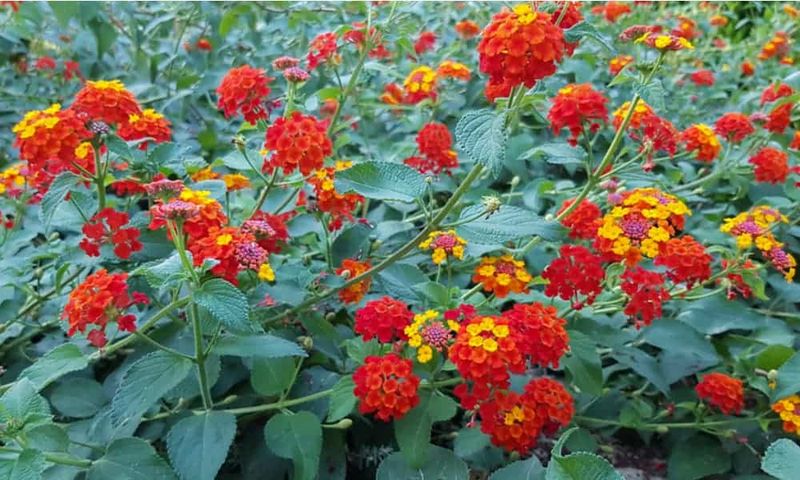
Some pretty flowers do not stay where you plant them. In Florida, a few popular perennials spread by seed, roots, runners, or even broken stem pieces after storms and yard work.
That matters because they can crowd out native plants, slip under fences, and make your beds harder to manage. Here are seven flowering plants to recognize before they turn one yard problem into a whole-neighborhood problem.
1. Mexican Petunia
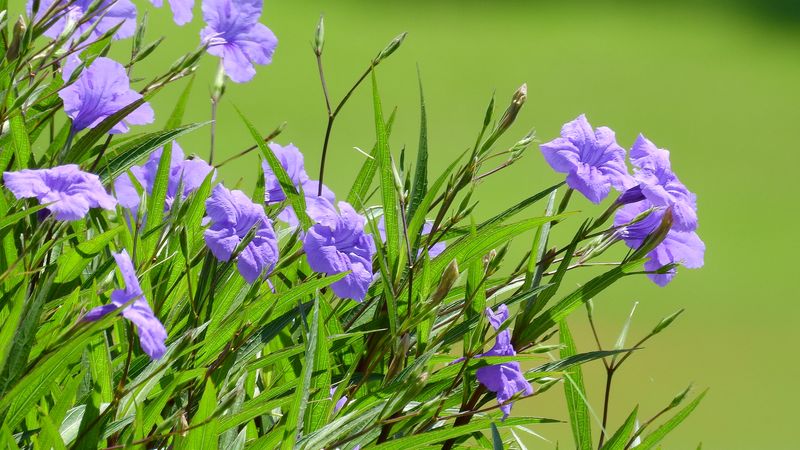
A purple bloom by the mailbox can look harmless until the same plant shows up three houses down. Mexican petunia, often sold or shared because it flowers so freely, is one of Florida’s best-known invasive yard escapees.
The problem is its staying power. Ruellia simplex spreads by underground rhizomes and by seed capsules that can pop open and scatter seeds, especially after rain or irrigation.
Once it gets into a damp swale, drainage ditch, pond edge, or low spot in the lawn, it can form thick patches that are hard to pull cleanly.
What makes Mexican petunia different from many other plants on this list is how innocent it looks in a tidy border. It may sit politely for a season, then creep under edging, through mulch, and into a neighbor’s bed where regular mowing does not fully stop it.
For Florida gardeners, the smarter move is to skip the invasive form and choose sterile cultivars when appropriate, or use native blue curls, tropical sage, or other UF-IFAS-friendly flowering choices suited to your site. If you already have it, remove roots carefully, bag seed heads, and watch the area after summer rains.
2. Lantana camara
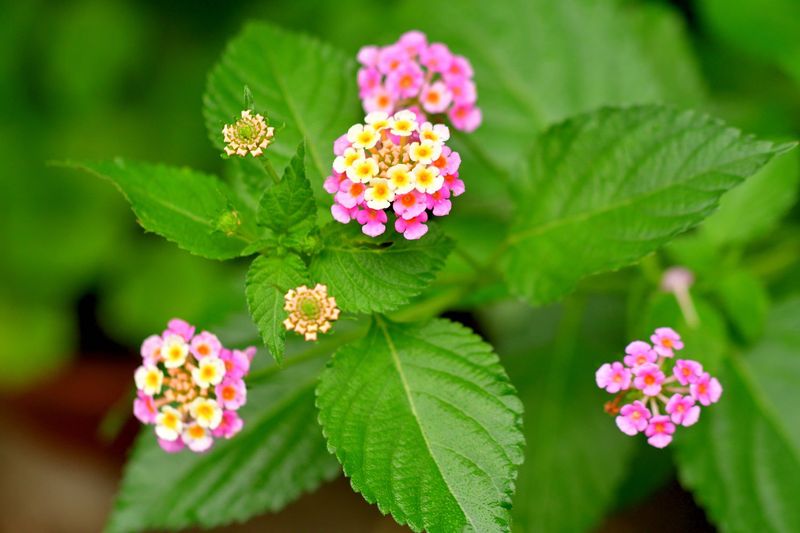
Butterflies may visit it, but that does not make every lantana a good neighbor. Lantana camara is the old-fashioned, many-colored lantana that has escaped cultivation across Florida and is listed as invasive by the Florida Invasive Species Council.
Its bright flower clusters turn into small berries that birds can carry far beyond the original planting. In warm Florida weather, plants can grow into woody thickets, especially in sunny, disturbed places like vacant lots, fence edges, pastures, roadsides, and the back corner of a yard that does not get much attention.
Lantana camara stands out because it fools people with wildlife value. Yes, pollinators may use the flowers, but the plant can displace native shrubs and groundcovers that support a wider web of insects and birds over time.
In some areas, it also hybridizes with native lantanas, adding another reason to be careful.
If you love the look, ask for Florida-friendly sterile lantana cultivars or plant native alternatives such as wild sage, firebush in suitable areas, or native lantana where it is locally appropriate. Remove volunteer seedlings while they are small, and do not toss berry-covered trimmings into brush piles where birds can keep spreading the seed.
3. Wedelia
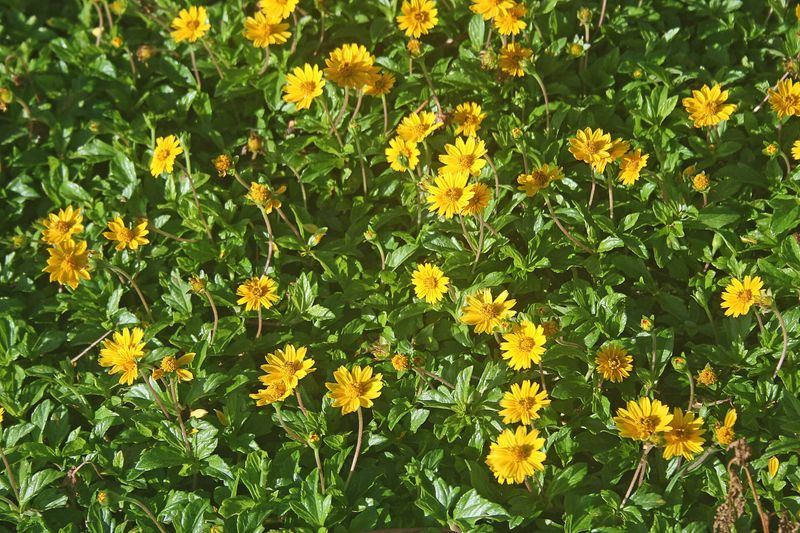
That cheerful yellow groundcover can act like it owns the whole block. Wedelia, also called creeping oxeye or Sphagneticola trilobata, spreads low and fast, making it especially sneaky in Florida yards where bare sandy soil begs to be covered.
Unlike taller invaders, wedelia creeps. Its stems root at the nodes as they touch soil, so a small patch can become a living carpet along driveways, under shrubs, and through open beds.
Broken pieces moved by mowing, edging, flooding, or storm cleanup can restart growth somewhere else.
Its big difference is the way it turns maintenance into transportation. A string trimmer can chop and fling stem bits, while yard waste piles can hold living pieces long enough to root again.
That is why it so often appears along shared property lines and in places where neighbors both mow up to the same fence.
For a better behaved ground layer, Florida gardeners can look at sunshine mimosa, frogfruit, native beach sunflower in the right coastal or sunny conditions, or mulch plus grouped native perennials. When removing wedelia, lift runners carefully, collect every piece you can, and recheck after rain because missed nodes can come back quickly.
4. Oyster Plant
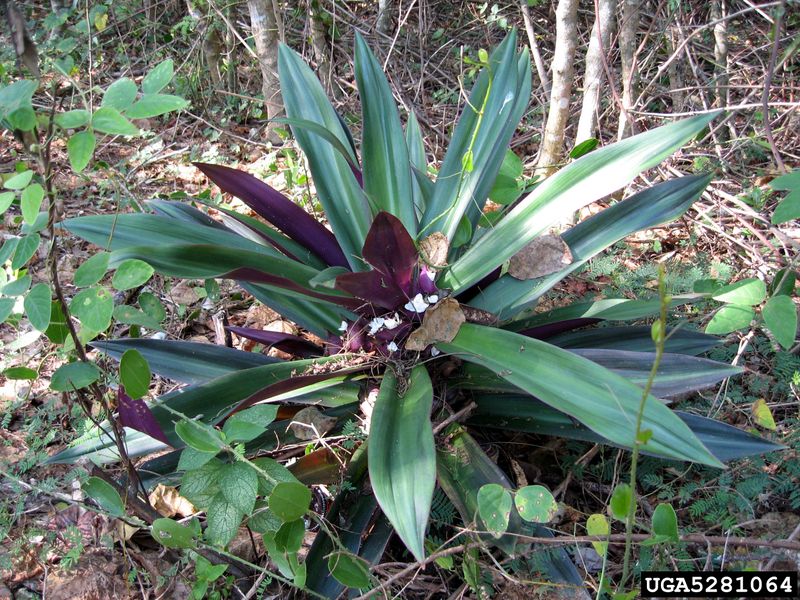
Shade beds often need tough plants, and oyster plant is almost too tough for the job. Tradescantia spathacea has purple-backed leaves, tidy rosettes, and small white flowers tucked into boat-shaped bracts, which is why it became a common pass-along plant in Florida landscapes.
In warm, frost-free parts of the state, it can spread into dense colonies under palms, hedges, and oak canopies. Seeds and plant fragments help it move, and the thick leaf clumps shade the soil so heavily that small native seedlings struggle to come through.
Oyster plant is different because it thrives where many showier flowers sulk. Dry shade, root competition, and sandy soil do not scare it much, so homeowners may keep it simply because it survives.
That survival skill becomes a problem when pieces wash out of beds during heavy rain or get dumped with yard waste near natural areas.
Consider native or better-mannered shade choices such as coontie, wild coffee, rouge plant, or ferns matched to your region and moisture level. Wear gloves when pulling oyster plant because the sap can bother some skin, then bag the material instead of composting it in an open pile.
5. Coral Ardisia
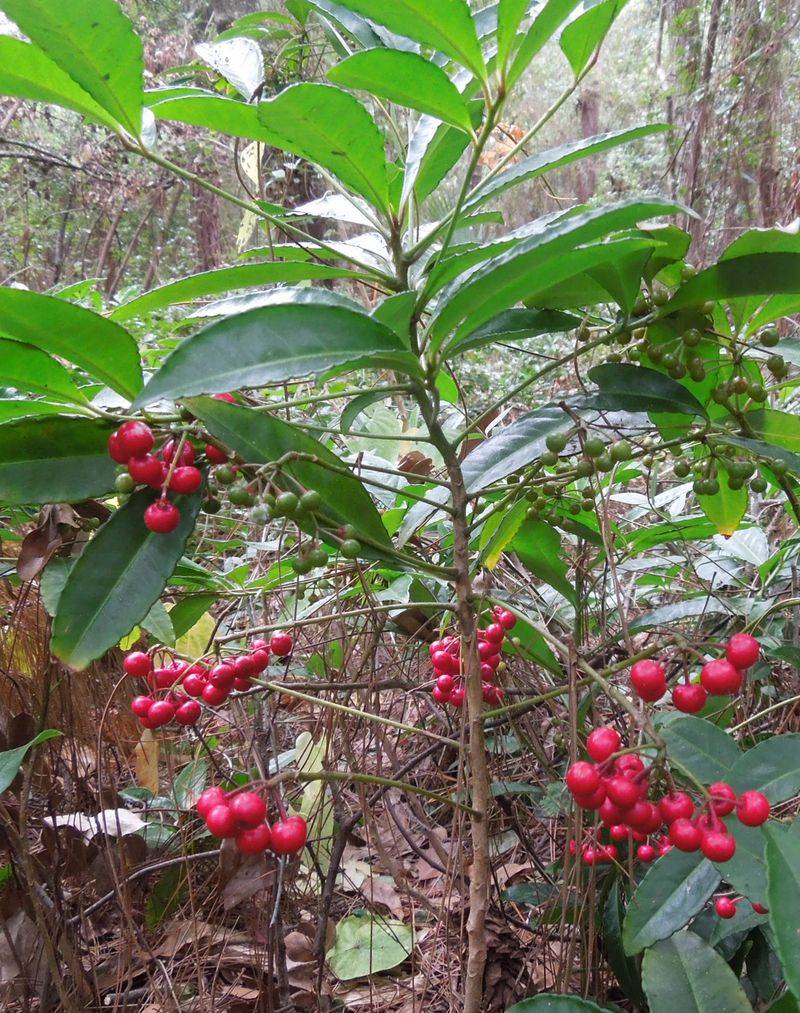
Walk under an older oak in some Florida neighborhoods and you may spot glossy little shrubs with red berries like holiday beads. Coral ardisia, Ardisia crenata, has small pale flowers followed by showy fruit, and those berries are the real trouble.
Birds and other wildlife eat the berries and drop the seeds in shady places. That gives coral ardisia a path into hammocks, wooded lots, fence rows, and the damp back corners of yards where seedlings can grow unnoticed for years.
Over time, it can create a thick understory that crowds out native seedlings.
Coral ardisia earns its place here because it is not usually a flower people brag about. The blooms are modest, but the plant is still a flowering perennial shrub, and its fruit display is what keeps it moving through neighborhoods.
A single mature plant can become a seed source for many nearby properties.
Pull young plants when the soil is moist, making sure to remove the roots. For larger shrubs, cut and treat according to local extension guidance or hire a licensed professional if herbicide is needed.
Replace it with Florida natives such as marlberry, beautyberry, wild coffee, or Simpson’s stopper, chosen for your light and soil conditions.
6. Nandina
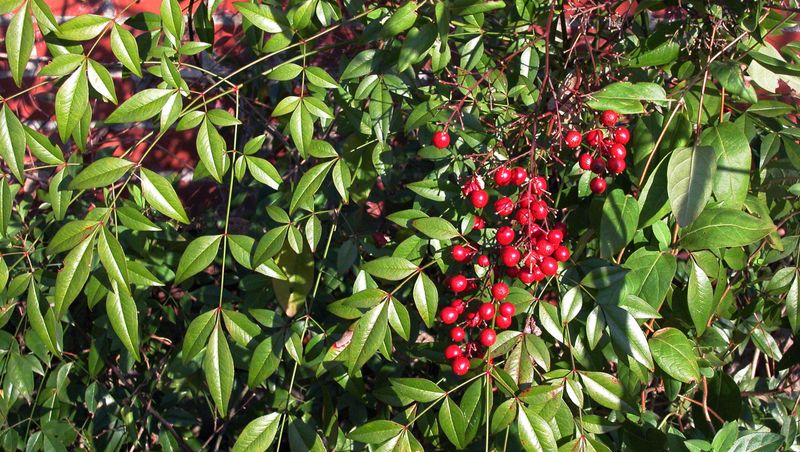
Plenty of Florida front walks still have nandina standing like little green fountains from an older landscape plan. Nandina domestica, often called heavenly bamboo, produces white flower clusters and red berries, giving it year-round appeal that once made it a go-to foundation plant.
The catch is that birds can spread the seeds into nearby beds and natural areas. Seedlings may pop up under hedges, along fences, and near tree lines where they are easy to miss.
In parts of Florida, it is recognized as invasive and is best avoided in new plantings.
Nandina is different from the others because it often arrives with a sense of tradition. Many homeowners did not plant it recently.
They inherited it with the house, trimmed it for years, and only notice the spread when little copies begin appearing near the property line.
If you have nandina, removing berry clusters before wildlife disperses them can reduce spread, but removal and replacement is the cleaner long-term fix. Choose native shrubs with better habitat value, such as yaupon holly, Walter’s viburnum, wax myrtle, or beautyberry where space and conditions fit.
In small entry beds, compact native selections can give structure without feeding the next wave of seedlings.
7. Air Potato Vine
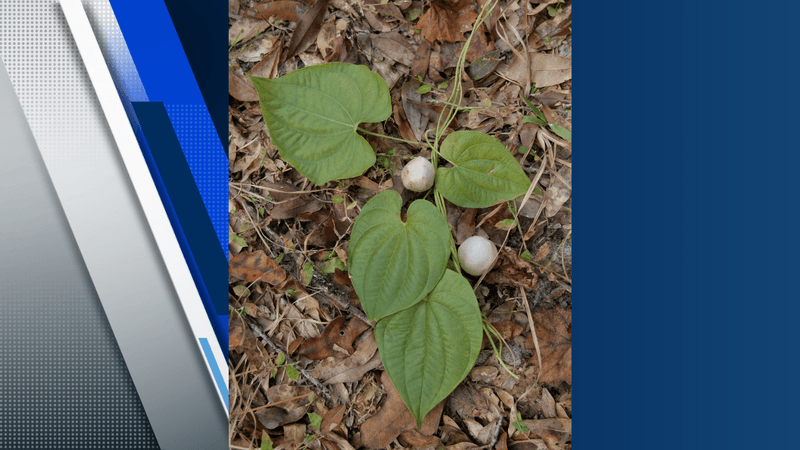
One strange little potato falling from a vine can start a whole new mess. Air potato vine, Dioscorea bulbifera, is a flowering perennial vine in Florida, but most gardeners recognize it by the aerial bulbils that hang like lumpy beads and drop to the ground.
Its vines grow fast in warm weather, scrambling over fences, shrubs, citrus trees, sheds, and native vegetation. The small flowers are not the show, but the plant still belongs in a flowering perennial roundup because it uses the long Florida growing season to build heavy vines and produce more bulbils.
Each dropped bulbil can become a new plant if left in place.
Air potato is the climber on this list, and that makes it extra visible once it gets going. Instead of staying in a bed, it heads upward and outward, crossing fence lines and smothering plants that were not part of the original problem.
Storms can scatter bulbils, and cleanup piles can accidentally move them to new areas.
Hand-collect bulbils and bag them for disposal, then remove vines before they cover desirable plants. In many Florida counties, biological control beetles have helped reduce air potato growth, but homeowners should still manage patches on their own property.
Replant cleared areas with native vines or shrubs so bare soil and open fence lines do not invite another takeover.