
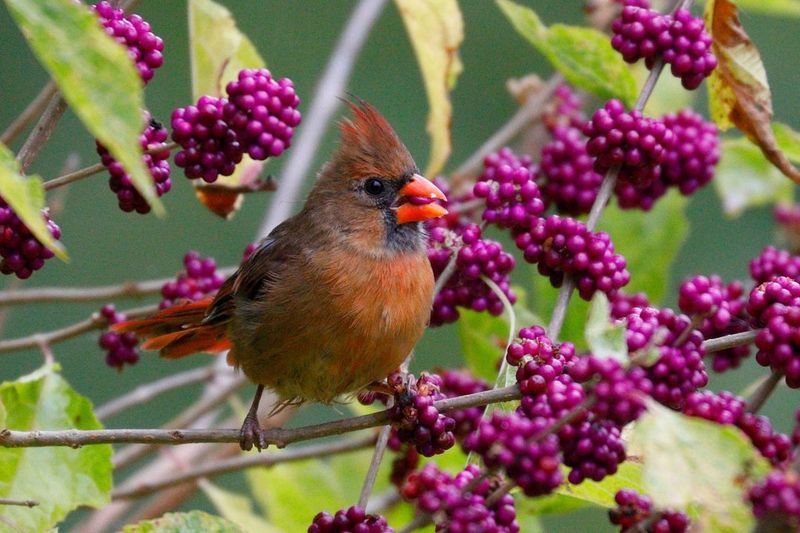
September in Florida can feel like summer forgot to leave. For songbirds, that sticky heat comes at a busy time, when many are feeding, molting, or passing through on migration.
Native berry shrubs give them quick food while also making your yard look fuller and more alive. Plant the right mix, and your garden can become a small, shady snack stop when birds need it most.
1. Beautyberry
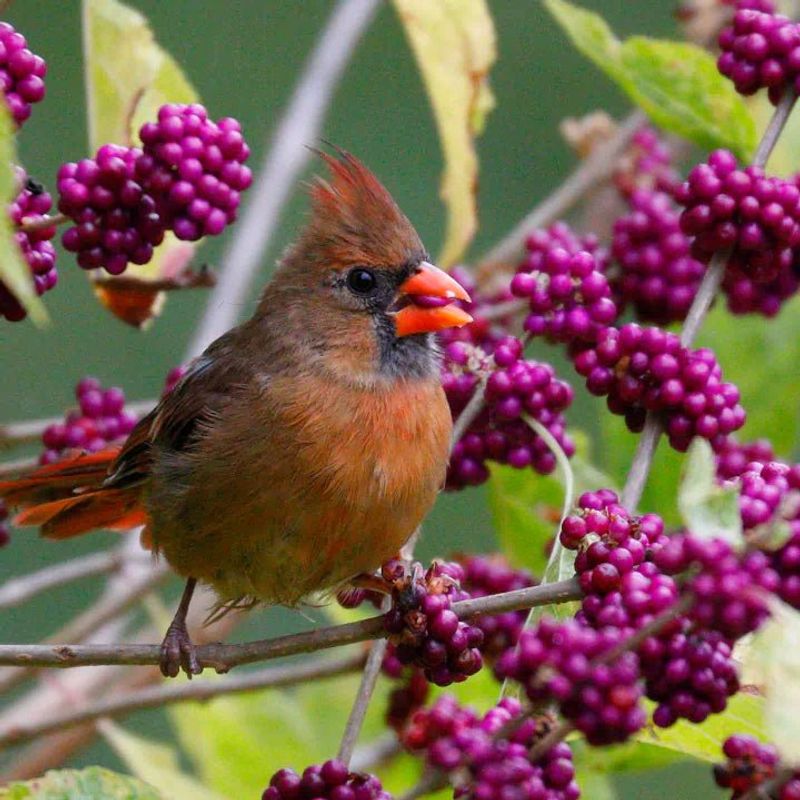
One glance at those glossy purple berry clusters and it is easy to see why beautyberry earns a place near patios, fences, and woodland edges. The berries sit tight against the stems like beads, turning a simple green shrub into a bird buffet right when Florida yards can look tired from heat.
American beautyberry, Callicarpa americana, is one of the most useful native shrubs for September because its fruit often lines up with late-summer bird activity. Cardinals, mockingbirds, catbirds, thrashers, and migrants may all visit once the berries ripen.
The plant also handles Florida’s sandy, fast-draining soils better than many fussy ornamentals, especially after it gets established.
Give it part sun to light shade for the fullest growth, though it can manage in brighter spots with enough moisture during establishment. In home landscapes, beautyberry works well behind lower perennials, along a loose property line, or in a naturalized corner where its arching shape can relax.
Prune in late winter if you want a neater plant, since berries form on new growth.
What makes beautyberry different from the others on this list is its visibility. Birds find the fruit, but people notice it too, so it brings both wildlife value and a strong pop of color during a month when many gardens are fading.
2. Yaupon Holly
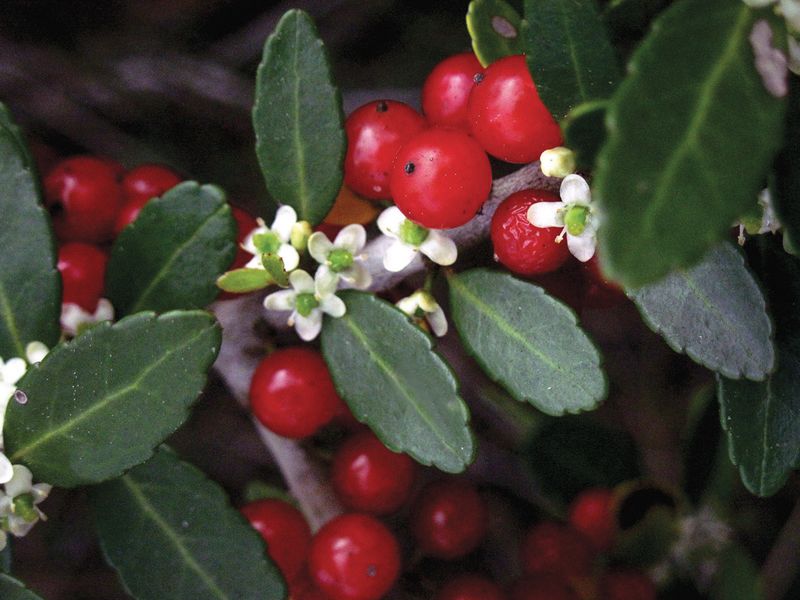
A tough little holly that can take pruning, salt, heat, and sandy soil deserves attention in a Florida yard. Yaupon holly, Ilex vomitoria, is the kind of native shrub that quietly does several jobs at once without asking for much in return.
Female plants produce small red berries that are valuable to songbirds, especially as the warm season stretches toward fall. The fruit may persist if birds do not strip it right away, giving your landscape a longer feeding window than shrubs that fruit all at once.
Robins, cedar waxwings, mockingbirds, and other birds use hollies as food sources, while the dense branching also gives cover from predators and afternoon sun.
For homeowners, yaupon holly is especially practical because it can be shaped into a hedge, left informal, or trained as a small specimen. It tolerates full sun to part shade and is useful in coastal or inland gardens where heat, drought spells, and poor soil can make plant choices tricky.
Plant at least one male nearby if you want reliable berries on female plants.
The standout feature here is structure. While beautyberry gives a loose, colorful display, yaupon holly brings evergreen bones to the garden.
It can screen an AC unit, soften a driveway edge, or anchor a front bed while still feeding birds when September feels heavy and hot.
3. Walter’s Viburnum
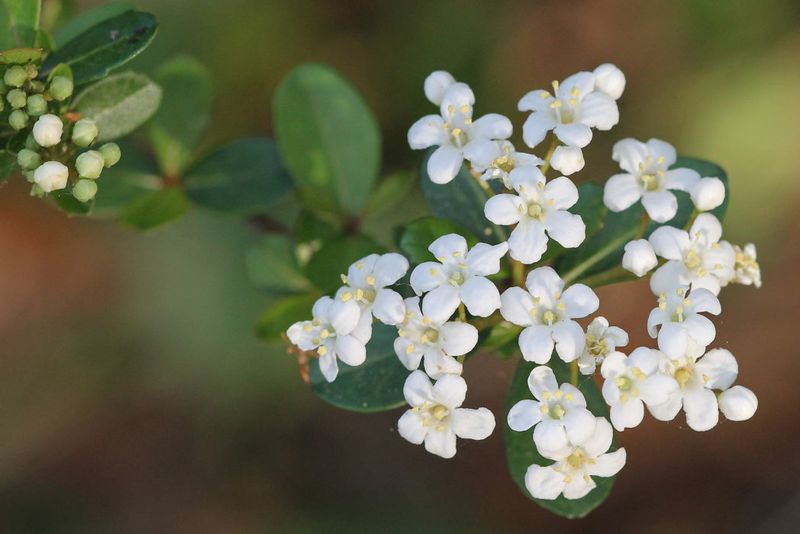
Need a shrub that feels tidy enough for the front yard but still belongs in a wildlife garden? Walter’s viburnum, Viburnum obovatum, fits that middle ground beautifully.
It has a polished look, yet it supports birds far better than many common foundation shrubs.
In spring, small white flower clusters feed pollinators, and later the plant can produce berries that birds use as they ripen. By late summer and early fall, the dense foliage is just as important as the fruit.
Small songbirds often need shade, hiding places, and quick escape routes, not just berries, during Florida’s draining September heat.
Walter’s viburnum is also flexible in design. Compact selections can work in tighter beds, while larger forms can become screening shrubs or informal hedges.
It grows in sun or part shade, with better density in brighter light, and once established it is generally a reliable Florida native for low-maintenance yards.
Its reason for making the list is balance. Some berry shrubs look wild, and some wildlife plants look too casual for curb appeal, but Walter’s viburnum can bridge that gap.
Use it where you want a neat, green background that still gives cardinals, wrens, catbirds, and other visitors a reason to linger.
4. Simpson’s Stopper
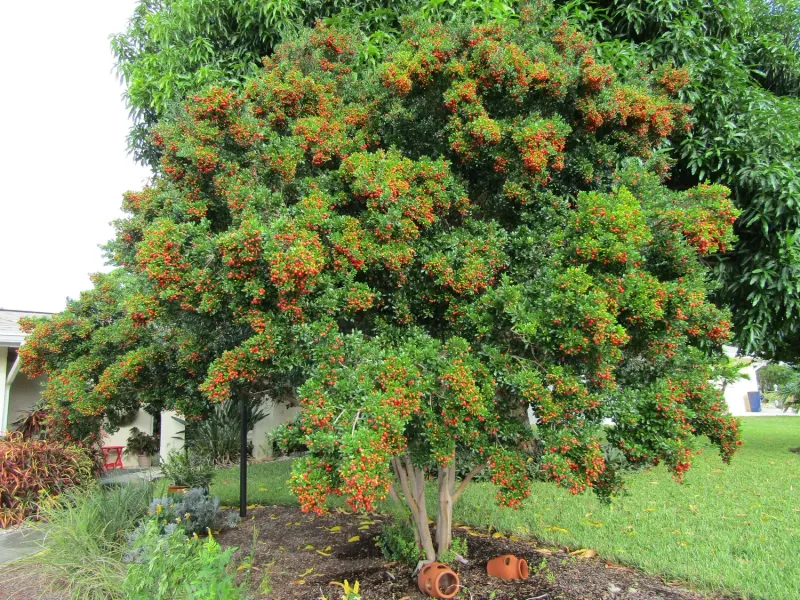
Walk past Simpson’s stopper on a warm morning and you may catch a faint spicy fragrance from its leaves. That small surprise is part of its charm, along with showy berries that shift from orange to red and draw hungry birds into the garden.
Myrcianthes fragrans is especially useful in Central and South Florida, where it can become a handsome evergreen shrub or small tree. Birds are attracted to the fruit, and the plant’s dense form offers cover during exposed, hot weather.
In a month when lawns can look scorched and annuals may be worn out, Simpson’s stopper still looks composed.
Plant it in full sun to part shade, and give it room if you want the natural shape to develop. It can be clipped into a hedge, but its peeling bark, glossy leaves, and rounded habit are worth showing off.
It handles many Florida landscape conditions once established, though young plants appreciate steady water while roots settle into sandy soil.
Compared with more familiar native shrubs, Simpson’s stopper feels a little special. It brings a refined, almost courtyard-garden look while still serving wildlife.
For bird lovers who also care about a clean entry bed or side-yard screen, that mix of elegance and function is hard to beat.
5. Wild Coffee
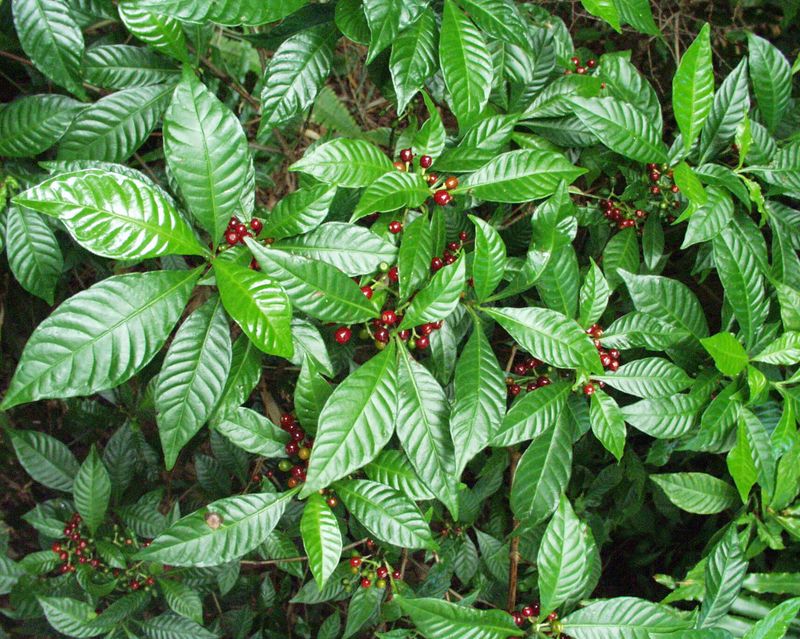
Shady Florida corners do not have to be empty, bare, or filled with plants that sulk through summer. Wild coffee, Psychotria nervosa or Psychotria sulzneri, brings glossy leaves and bright red berries to places where many flowering shrubs struggle.
Despite the name, wild coffee is not the plant used for your morning cup, but its fruit is valuable in wildlife plantings. Birds visit the berries, and the shrub’s rich green foliage creates a cool, layered look under trees, along north-facing walls, or beside a shaded porch.
In September, that shade matters because songbirds often move through protected cover to avoid heat and predators.
Wild coffee does best in part shade to shade and prefers some organic matter, so it is a strong candidate for beds improved with leaf litter, pine needles, or compost. It is not a salt-tough beach shrub, but in the right protected spot it can look lush with modest care.
Avoid planting it where blazing afternoon sun reflects off pavement.
The best thing about wild coffee is its understory value. Many yards have sunny hedge plants, but fewer have native shrubs that feed birds in the shade.
If your oaks, palms, or fence lines cast shadows, wild coffee can turn that difficult space into a quiet feeding lane for visiting songbirds.
6. Firebush
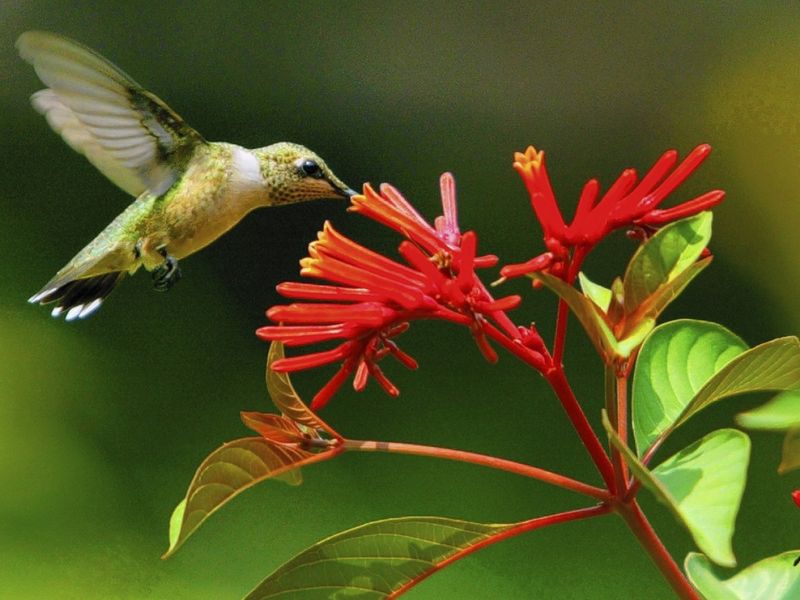
Few native shrubs look as awake in late summer as firebush. While other plants seem to be waiting for cooler weather, Hamelia patens keeps pushing out red-orange flowers, followed by small dark fruits that birds can use.
Firebush is a favorite for gardeners who want motion in the yard. Hummingbirds and butterflies often work the flowers, while songbirds may take the berries as they ripen.
That double role makes it especially helpful in September, when nectar and fruit can both matter in a wildlife-friendly Florida landscape.
Use firebush in full sun for the heaviest flowering, though it can take part shade with a looser shape. It is well suited to hot borders, backyard habitat beds, and sunny fence lines where reflected heat would punish softer plants.
In colder parts of North Florida, it may die back in winter and return from the roots, while farther south it can become a larger shrub.
Firebush stands apart because it feeds more than one crowd. It is not just a berry plant, and it is not just a flower plant.
For a homeowner who wants one native shrub to make the yard feel lively, colorful, and bird-friendly through steamy September afternoons, firebush is a smart pick.
7. Wax Myrtle
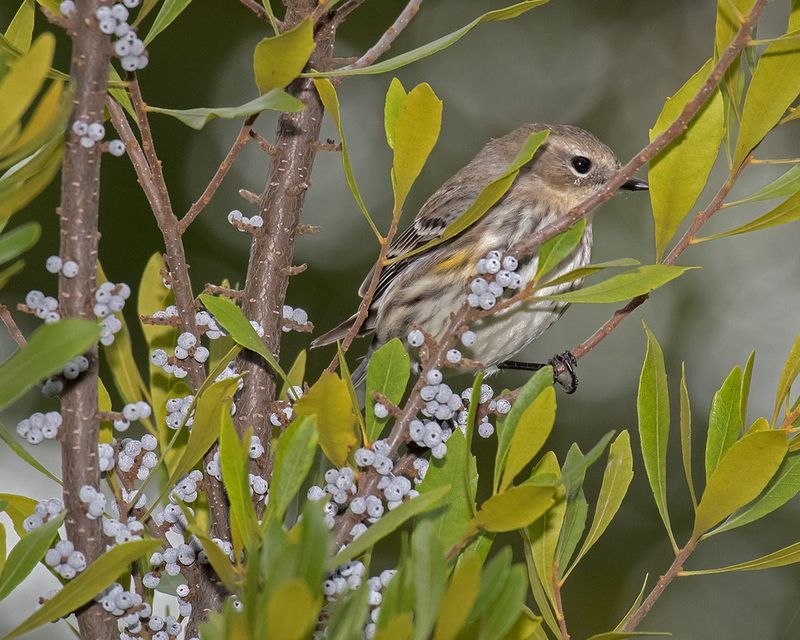
When a yard needs privacy, wind protection, and bird value all in one plant, wax myrtle earns its space. Morella cerifera is not flashy in the same way as beautyberry or firebush, but songbirds do not judge a shrub by garden-center glamour.
The small waxy berries are especially useful for birds that can handle their high-energy coating, including yellow-rumped warblers and other species that use bayberry relatives. Dense foliage gives birds a place to duck out of sun, storms, and neighborhood cats.
In Florida’s September weather, that cover can be as helpful as the food itself.
Wax myrtle grows quickly in many Florida conditions, including sandy soils, moist areas, and coastal-influenced sites. It can become a large shrub or small tree, so place it where its size is an advantage.
Use it as a loose screen, back-of-border native planting, or habitat edge instead of squeezing it into a narrow foundation bed.
The special value of wax myrtle is toughness at scale. It can fill space faster than many native shrubs and create the kind of layered shelter birds actually use.
If your yard feels too open, too hot, or too exposed after summer storms, wax myrtle can help build a cooler, more protective backyard habitat.