
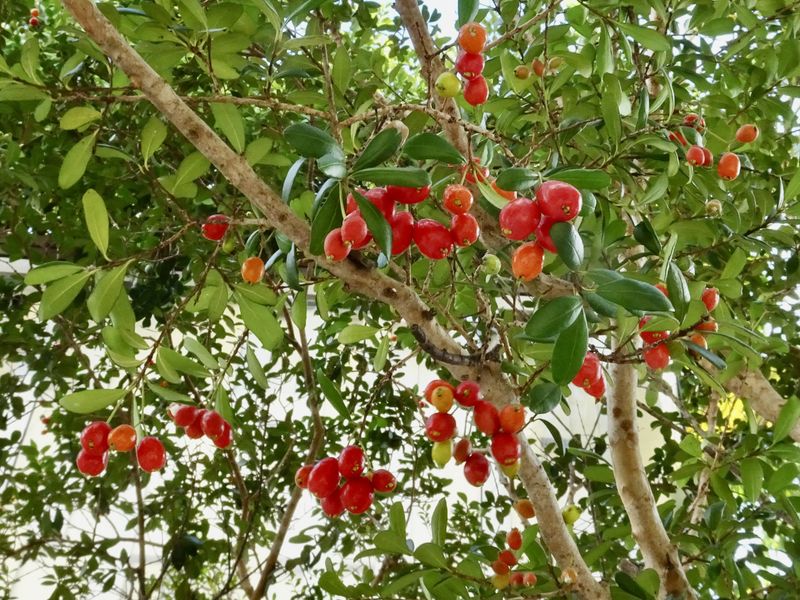
A small Florida yard can still grow real food if you choose the right trees. Native edible trees are built for local heat, sandy soil, storms, and wildlife, so they often need less fuss than many imported fruit trees.
The trick is picking compact or easily managed species that give fruit, shade, flowers, or habitat without taking over the whole space. Here are seven Florida natives that can earn their keep for years in a home landscape.
1. Chickasaw Plum
A little cloud of white flowers in late winter can make Chickasaw plum feel like the first cheerful sign that your yard is waking up. For Florida gardeners with tight spaces, its smaller size is the big win.
It often grows as a thicket if allowed, but with light pruning and sucker control, it can be shaped into a handsome small tree or loose edible hedge.
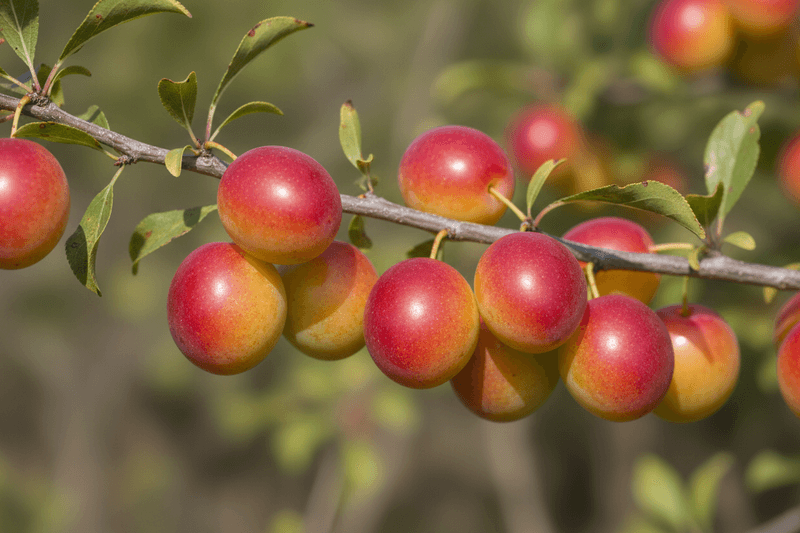
The fruit is usually small, tart, and golden to red when ripe. Many people enjoy it best in jelly, jam, syrup, or wildlife-friendly harvest sharing, because birds and mammals notice the fruit quickly.
Planting more than one can improve fruiting, so a pair along a sunny fence line can be more useful than one lonely tree.
Chickasaw plum suits North and Central Florida especially well and handles sandy, well-drained soil once established. Give it full sun for the best flowers and fruit, and avoid planting it where suckers would be annoying, such as right beside a narrow walkway.
Its main difference from the other trees on this list is its spring show: it feeds people, pollinators, and songbirds while adding a bright ornamental moment before many yards have much color.
2. Red Mulberry
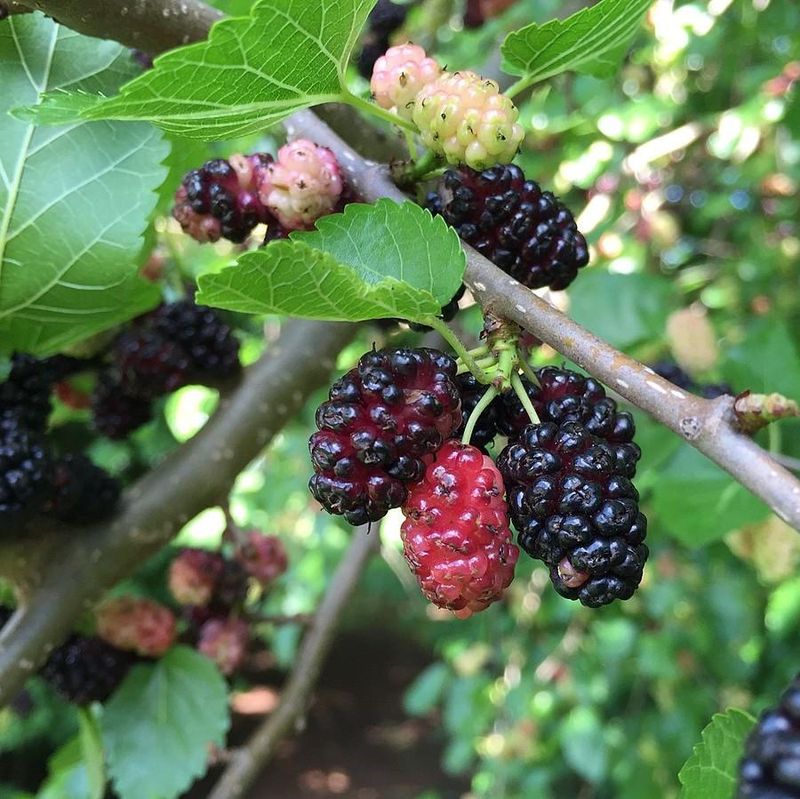
Sticky purple fingers are almost part of the red mulberry experience. When the fruit ripens, it feels less like a formal harvest and more like a backyard snack stop.
The berries are sweet, soft, and loved by birds, so you will want to pick them as soon as they color up.
Red mulberry is native to Florida and can become a medium tree, but it responds well to thoughtful placement and pruning. In a smaller yard, use it where a little shade is welcome, such as the west side of a patio or near the back corner of a lot.
Avoid planting it over driveways, pale pavers, or outdoor rugs, because ripe fruit can stain.
What makes red mulberry stand out is speed and abundance. While some edible native trees ask for patience, a healthy mulberry can become productive fairly young.
It also supports wildlife, including birds and butterfly larvae, which gives it extra value in a Florida habitat garden.
For best results, plant it in sun to part sun and give it room for air flow. It tolerates many Florida soils, but like most young trees, it appreciates regular water while getting established.
If your goal is a tree that feels generous without demanding a large orchard setup, red mulberry is hard to ignore.
3. Cocoplum
In South Florida, cocoplum is the edible native that can look polished enough for the front of the house. Its rounded, glossy leaves have a clean landscape look, and the plant can be kept as a hedge, screen, or small multi-trunk tree.
That makes it especially useful where homeowners want food without a messy orchard feel.
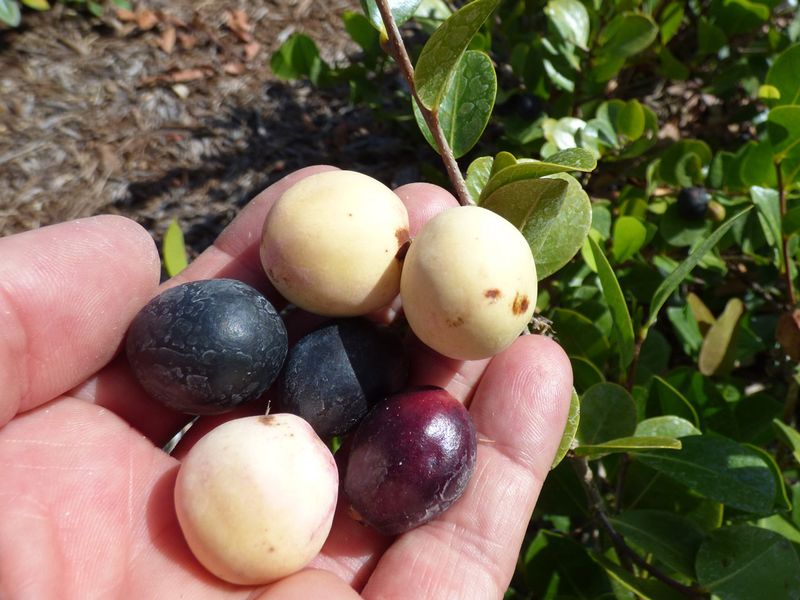
The plum-like fruits range from pinkish white to deep purple depending on the type. The flesh is mild and slightly sweet, while the large seed takes up plenty of space inside.
Some gardeners eat the fruit fresh, and others use it for preserves, but wildlife will gladly help with any extras.
Cocoplum is best for warm parts of Florida, especially South Florida and coastal areas where frost is rare. It handles sandy soil and salt exposure better than many fruiting plants, which is a major advantage near the coast.
Once established, it can be fairly low maintenance if planted in the right zone.
Its reason for belonging on this list is simple: it doubles as edible landscaping. Use it along a property line, near a pool enclosure, or as a clipped privacy plant where a larger fruit tree would feel out of place.
Keep it trimmed after fruiting or during active growth to hold the size you want.
4. Simpson Stopper
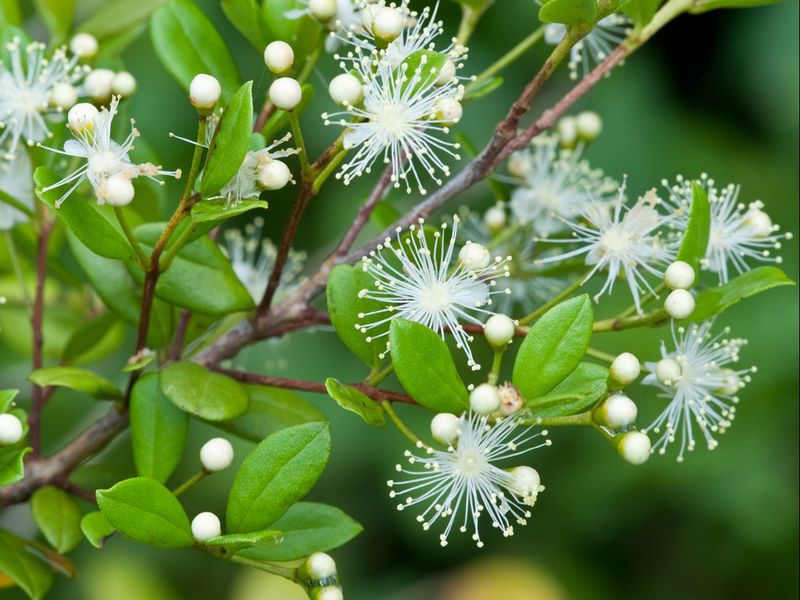
If a tree could quietly do everything, Simpson stopper would be a strong candidate. It flowers, fruits, feeds wildlife, handles pruning, and stays civilized in spaces where larger trees would crowd the house.
The fluffy white blooms also bring in pollinators, adding movement and life to a small yard.
The small red to orange berries are edible, with a resinous, spicy quality that not everyone loves fresh. They are more of a nibble, jelly, or backyard curiosity than a bowl-filling fruit like mulberries.
Even so, they give gardeners another native edible option that looks tidy and supports birds.
Simpson stopper is especially useful in Central and South Florida, including many coastal landscapes. It can grow as a shrub or small tree, and regular pruning keeps it compact.
The peeling bark and dense evergreen foliage make it attractive even when it is not flowering or fruiting.
Where it shines most is in tight ornamental spots. Try it near a patio, along a side yard, or as a small privacy screen where you also want native habitat value.
It is not the heaviest food producer here, but it may be one of the easiest to fit into a neat home landscape. For gardeners who want edible, native, and good-looking in one plant, that balance matters.
5. Mayhaw
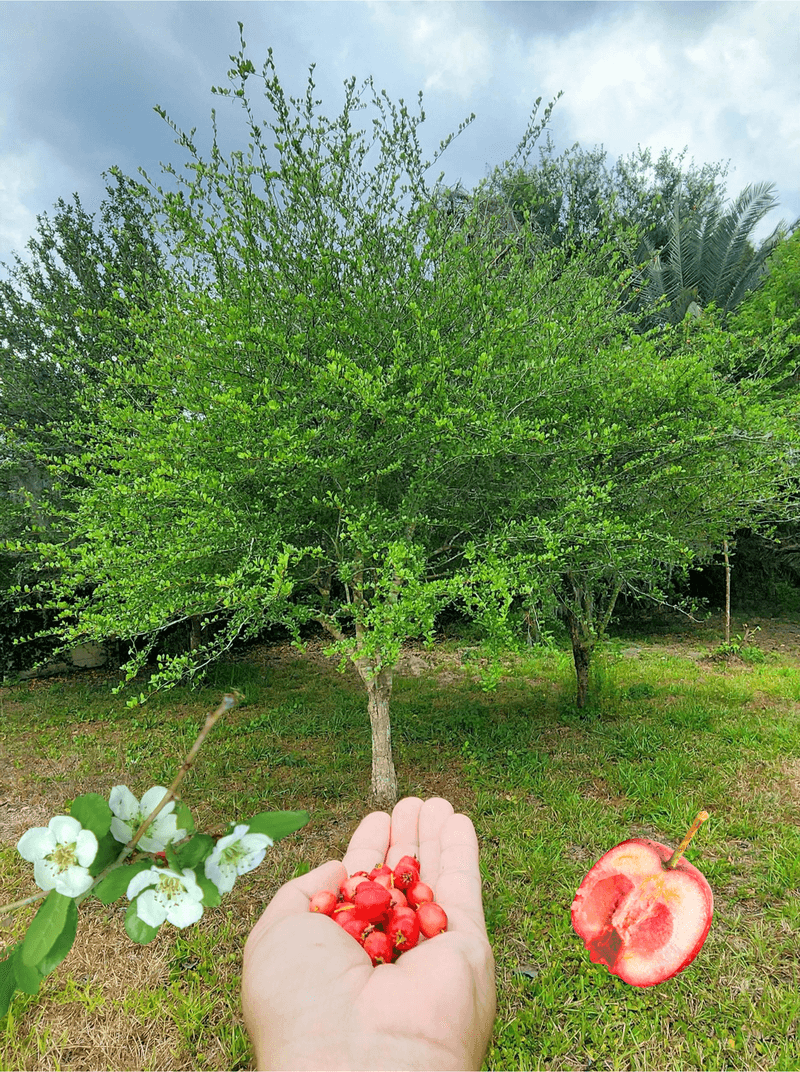
Old Southern jelly jars have kept mayhaw famous for a reason. The small red fruits are tart, fragrant, and excellent for jelly, syrup, and sauces.
In the right Florida yard, this native hawthorn relative can turn a damp problem spot into a productive feature.
Mayhaw is a smart choice for North Florida and parts of the Panhandle, where winter chill and moist soils suit it better than hot, dry southern sites. Unlike many fruit trees that hate wet feet, mayhaw naturally grows in low, damp areas.
That makes it helpful near a rain garden, swale, or lower corner of a yard that stays moist after summer storms.
The tree usually stays modest in size compared with big shade trees, though exact height depends on site and species. Spring flowers support pollinators, and the fruit ripens early enough to feel like a special seasonal event.
Thorns may be present, so do not place it where children run or where you need frequent close access.
Mayhaw earns its place because it fills a niche the others do not: edible production in wetter ground. Many Florida homeowners struggle with either sand that drains too fast or spots that flood during heavy rain.
If your small yard has the wet version of that problem, mayhaw can be both practical and delicious.
6. Common Persimmon
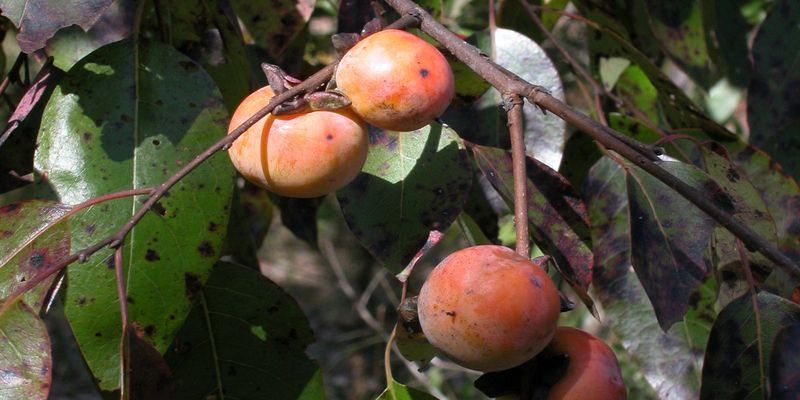
Patience pays off with common persimmon. Bite an unripe fruit and you will remember the puckery lesson, but wait until it is soft and fully ripe, and the flavor turns rich, sweet, and almost dessert-like.
For gardeners who enjoy seasonal rewards, few native fruits feel more autumnal.
Common persimmon is native in Florida and is best suited to North and Central Florida landscapes. It can grow larger than some trees on this list, so the small-yard strategy is careful placement and early pruning.
Put it toward the back of the property or where its eventual height will not interfere with rooflines, power lines, or tight walkways.
One key detail matters: trees can be male or female, and female trees produce the fruit. Some named selections or grafted plants can give you more predictable results than random seedlings.
If space is limited, ask a native nursery or local extension office about suitable fruiting choices for your area.
Persimmon stands apart because of its fall food value. Many edible trees peak in spring or summer, but persimmon carries the harvest later in the year and feeds wildlife too.
Deer, foxes, raccoons, birds, and people may all compete for the fruit. In a wildlife-aware yard, that shared harvest can be part of the appeal.
7. Sea Grape
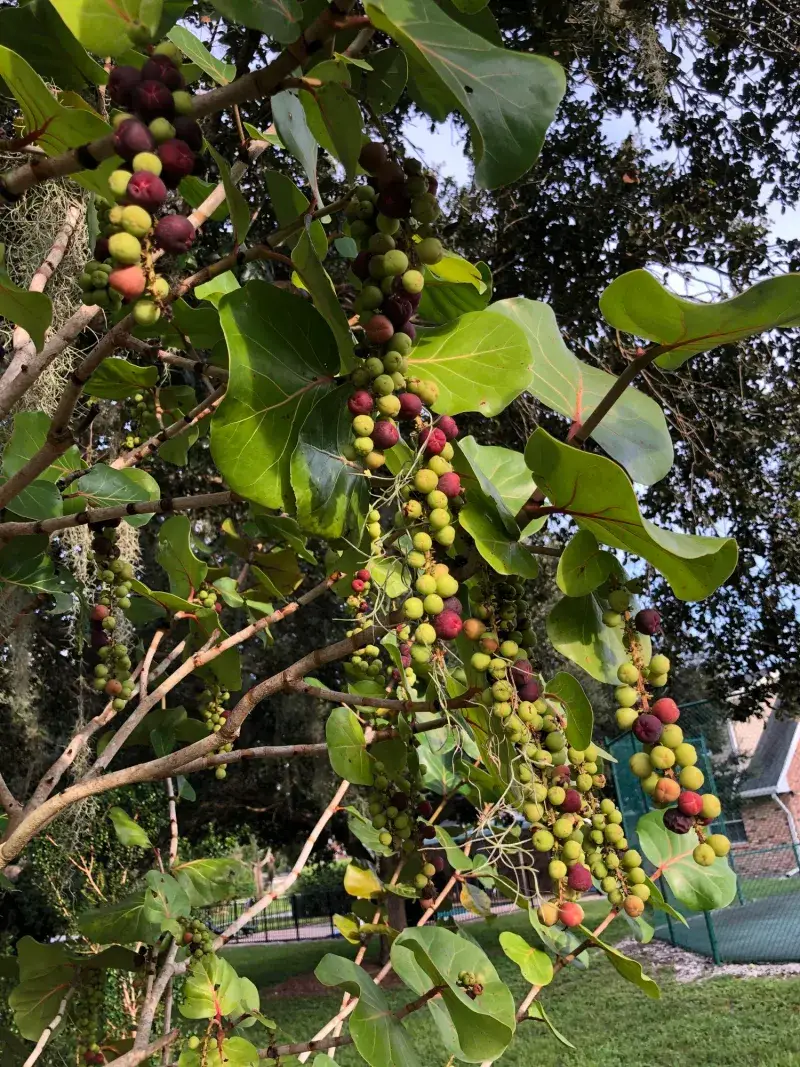
Big round leaves give sea grape a bold, vacation-like look even before the fruit appears. In coastal Florida yards, it can act as a wind-tough screen, a sculptural small tree, or a native edible accent.
The grape-like clusters ripen to purple and can be eaten fresh or used for jelly.
Sea grape is naturally built for salt, wind, sand, and bright sun, which is why it is so common near beaches. It is most appropriate for South Florida and frost-free coastal areas.
Inland gardeners in colder pockets should choose another tree from this list, because freezes can damage it.
Left alone, sea grape can become much too large for a small yard. The good news is that it handles pruning well, and many homeowners maintain it as a clipped screen or trained specimen.
Plant it where its broad leaves and spreading habit have room, not right against a narrow entry path.
Its special role is storm-smart coastal usefulness. Sea grape can help buffer wind, provide privacy, support wildlife, and offer edible fruit in places where fussier fruit trees struggle.
In some shoreline areas, pruning or removal may be regulated because sea grape helps protect dunes, so check local rules before heavy cutting near beaches. For the right coastal yard, it is one of Florida’s most practical native edible choices.