
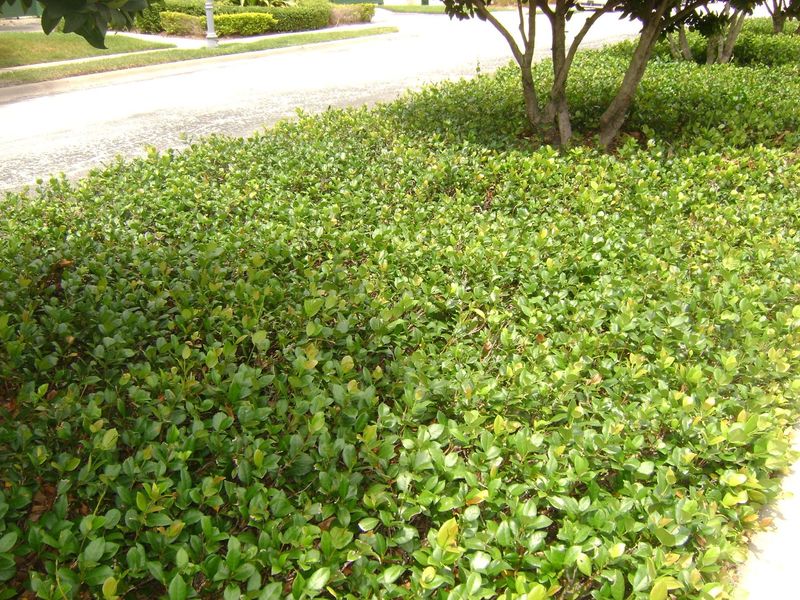
Bark mulch looks tidy for a while, then a hard Florida storm can send it floating down the driveway. Native ground covers solve the problem in a living way by holding soil, shading roots, and coming back after rough weather.
The best picks also handle sandy soil, heat, and bursts of heavy rain without asking for constant fuss.
1. Sunshine Mimosa
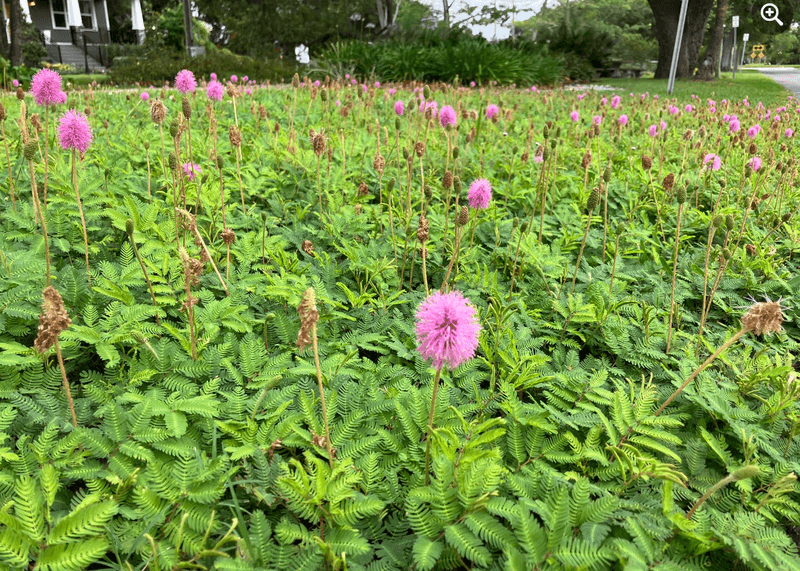
Step on a patch of sunshine mimosa and the tiny leaflets may fold like they are playing shy. That little trick makes it fun near paths, but its real value is tougher: it forms a living mat that stays put when bark mulch would float away.
Sunshine mimosa, also called powderpuff, is one of the most useful native ground covers for sunny Florida yards. It spreads by runners, roots along the way, and helps cover bare sandy soil that can erode during storm season.
The pink puffball blooms are a bonus for small pollinators, especially in warm months when many yards look tired.
Use it in full sun to light shade, along driveway edges, between stepping stones, or in open beds where mulch never seems to last. It can go brownish in cold snaps in North Florida, but it usually rebounds when warmth returns.
Give it water while it gets established, then trim edges if it wanders beyond its space.
What makes it different from the others on this list is its lawn-like feel. For gardeners who want a low, soft, walkable look without replacing mulch every storm, sunshine mimosa is one of Florida’s most cheerful answers.
2. Frogfruit
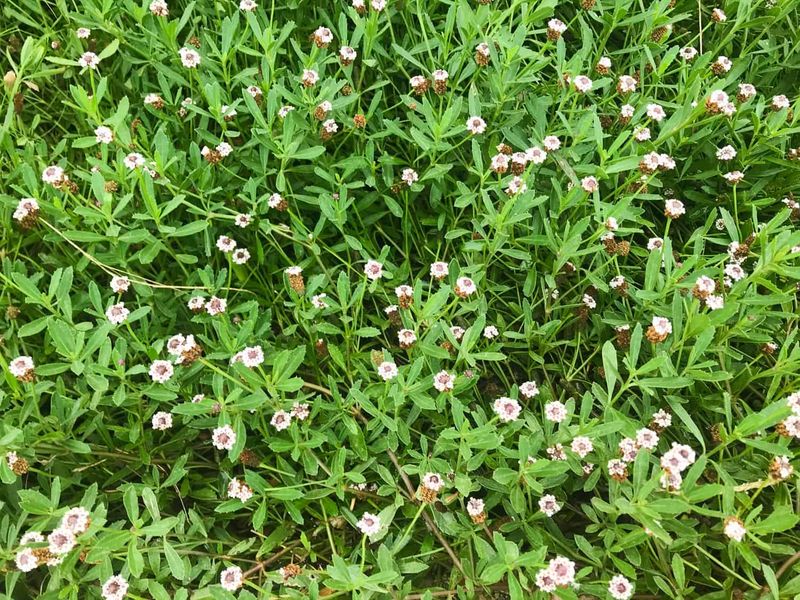
A butterfly landing strip does not have to be tall, messy, or hard to maintain. Frogfruit keeps close to the ground, blooms in tiny button-like flowers, and turns a bare mulch bed into a busy little wildlife zone.
Florida gardeners like frogfruit because it is adaptable. It handles sun, part shade, sandy soil, and short wet spells better than many ornamental ground covers.
Once it fills in, the stems help shield soil from pounding rain, which can reduce the splashing and washing that happen when bark chips sit loose on top.
Frogfruit is especially useful around pollinator gardens, rain garden edges, and open spaces where you want something more alive than mulch but less demanding than turf. It is a host plant for several butterfly species, so a few chewed leaves can be a sign that the yard is doing its job.
That wildlife value gives it a strong reason to earn space in a Florida landscape.
Keep expectations realistic in high-traffic areas. Frogfruit can tolerate light foot traffic, but it is happiest where people mostly look, weed, and pass through occasionally.
Mow or shear it lightly if you want a shorter, neater carpet.
3. Beach Sunflower
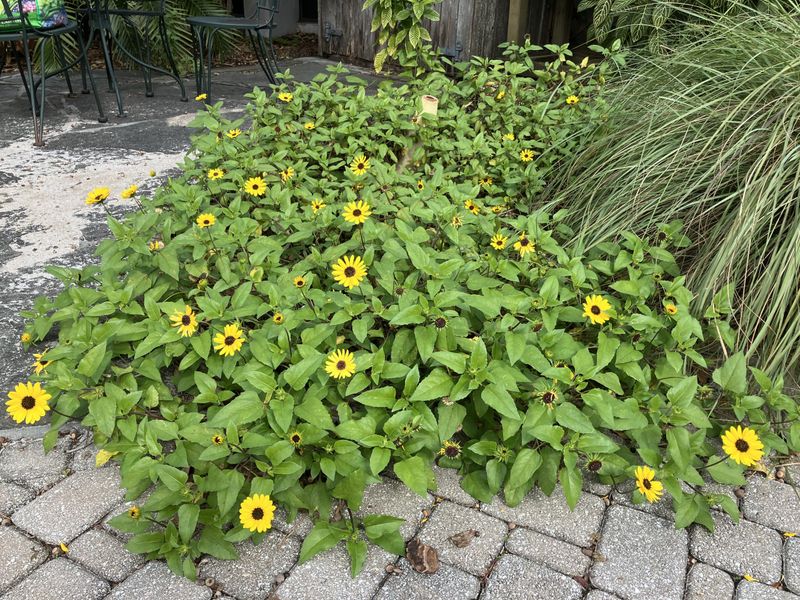
Few plants look as sunny right after rough weather as beach sunflower. Its golden flowers pop against sand, shell paths, and coastal-style beds, giving the yard a fresh look even when storm season has been unkind.
Beach sunflower is a Florida native that fits hot, sunny, fast-draining sites. It spreads wider than it grows tall, making it a good living mulch for large open beds where bark often washes into the street or piles against drains.
In coastal areas, it also brings salt tolerance, which is a major advantage for gardeners near the Gulf or Atlantic.
The plant’s personality is bold and casual. It is not the best choice for a tiny formal bed where every stem must stay in line, but it shines in relaxed Florida landscapes, mailbox plantings, slopes, and sunny strips that bake in summer.
Bees and butterflies visit the flowers, so it adds movement as well as soil coverage.
Trim it back when it gets leggy, and avoid planting it where irrigation keeps the soil constantly wet. Its special strength is bright coverage in harsh sun, especially where ordinary mulch fades, floats, or breaks down fast.
If your problem area looks like a mini beach after every rain, this native feels right at home.
4. Coontie
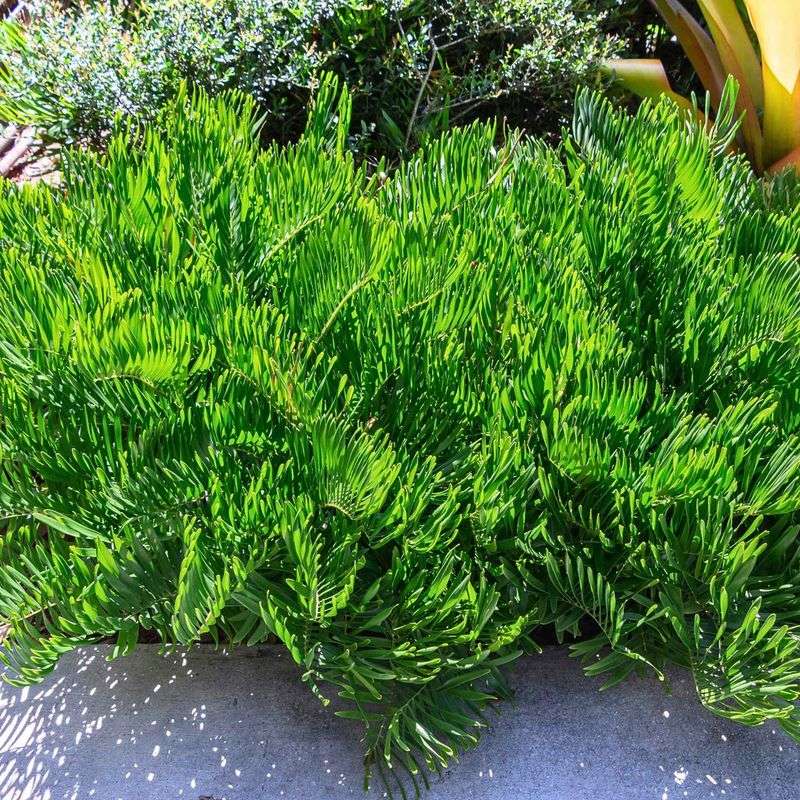
Old Florida landscapes had a secret workhorse, and it looked a bit like a small palm crossed with a fern. Coontie brings that timeless look back while doing something bark mulch cannot do: it creates a sturdy, evergreen layer with real structure.
Coontie is a native cycad, not a true fern, and it is well suited to Florida’s sandy soils once established. It grows in clumps rather than racing across the bed, so it works beautifully where you want a reliable, tidy mass under trees, around foundations, or along shaded walkways.
During heavy rain, its roots and dense crowns help interrupt runoff and keep the bed from looking stripped.
Gardeners also love coontie because it supports the atala butterfly, a Florida conservation success story. The plant was once heavily harvested for starch, and its comeback in landscapes has helped bring attention to native habitat gardening.
That small history lesson makes a coontie bed feel more meaningful than a fresh bag of mulch.
Give it part shade to sun, but expect slower growth in deeper shade. It is drought tolerant after establishment, though new plantings need regular water.
Coontie is the choice for gardeners who want a more permanent, architectural mulch replacement instead of a spreading carpet.
5. Twinflower
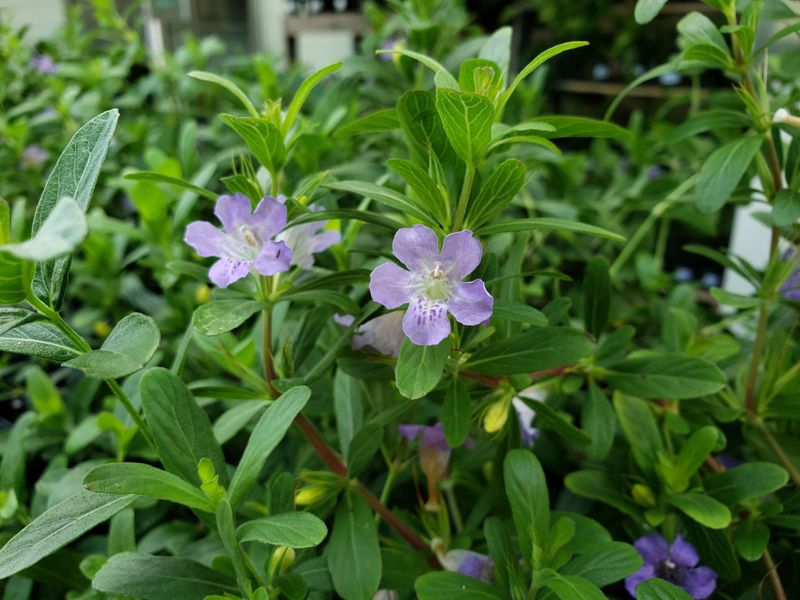
In the damp corners where bark turns soggy, scattered, or moldy-looking, twinflower can feel like a quiet fix. Its paired purple blooms are small, but they give shady beds a gentle sparkle when you notice them up close.
Twinflower is a low Florida native that suits part shade and moist, well-drained spots. It can spread into a soft mat, making it useful under shrubs, near rain garden edges, or in low beds that catch extra water during summer storms.
Instead of loose chips moving with runoff, the plant knits across the surface and helps soften the force of falling rain.
Its best role is not as a rugged walkway plant. Think of twinflower as a living understory layer for places that need coverage, pollinator value, and a cooler soil surface.
It can mix nicely with ferns, coontie, and other shade-friendly natives in a layered Florida bed.
One reason it stands apart from beach sunflower or sunshine mimosa is its comfort with a little more moisture and shade. Many Florida mulch problems happen where roof runoff dumps water into a bed, and twinflower can be a smart candidate for those tricky transition areas.
Water it during establishment, keep weeds down at first, and let the patch thicken over time.
6. Lyreleaf Sage
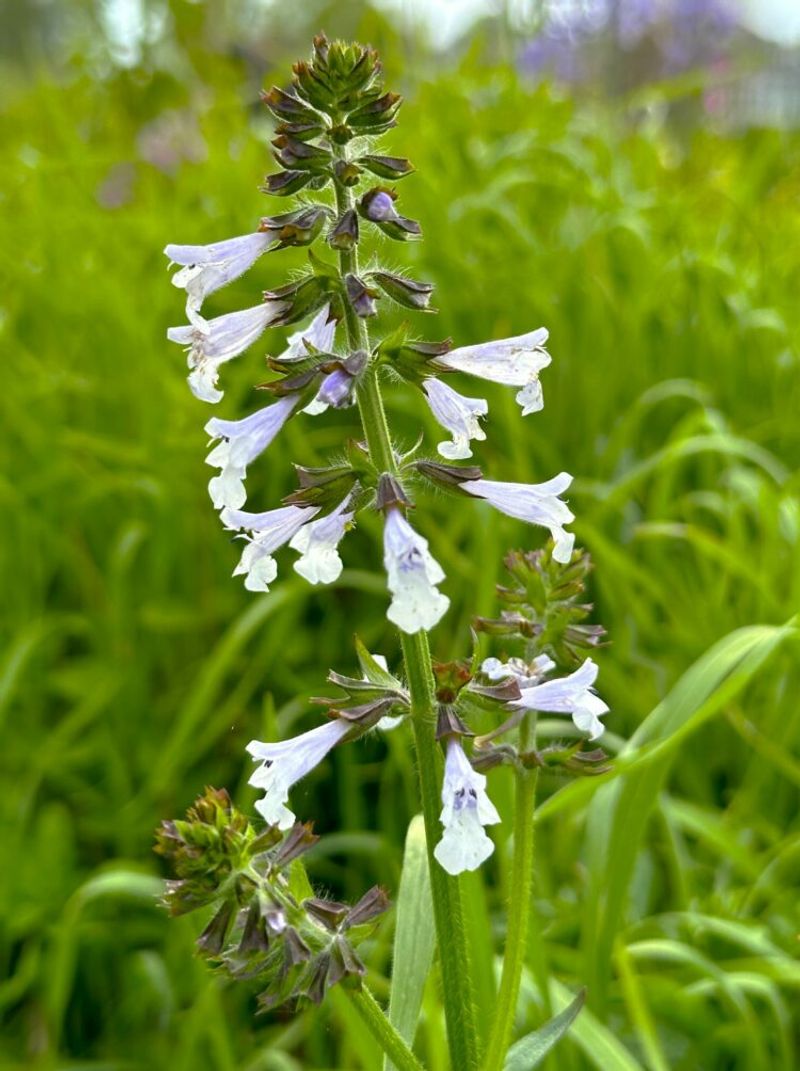
Every yard has that awkward edge where grass thins, mulch slides, and weeds seem to hold a meeting after every rain. Lyreleaf sage can turn that in-between zone into something useful, blooming in purple spikes while keeping the ground covered.
This native wildflower behaves like a ground cover because its low rosettes spread and fill open soil. In spring, flower stalks rise above the leaves and feed bees, then the plant settles back into a low green presence.
It does well in part shade but can take more sun if it has enough moisture, which makes it handy under open oaks or along the edge of shrub beds.
Lyreleaf sage is a good choice when you want a more meadow-like look instead of a perfectly flat mat. It can reseed, which is helpful in natural areas but may need editing in very formal spaces.
Pull extras where you do not want them, or let them fill thin spots that would otherwise need another layer of mulch.
Its standout trait is seasonal color with ground-hugging coverage. Bark mulch gives one texture, but lyreleaf sage changes through the year, bringing flowers, seedheads, and wildlife activity.
For Florida gardeners easing away from high-maintenance beds, that natural rhythm can be a welcome trade.
7. Railroad Vine
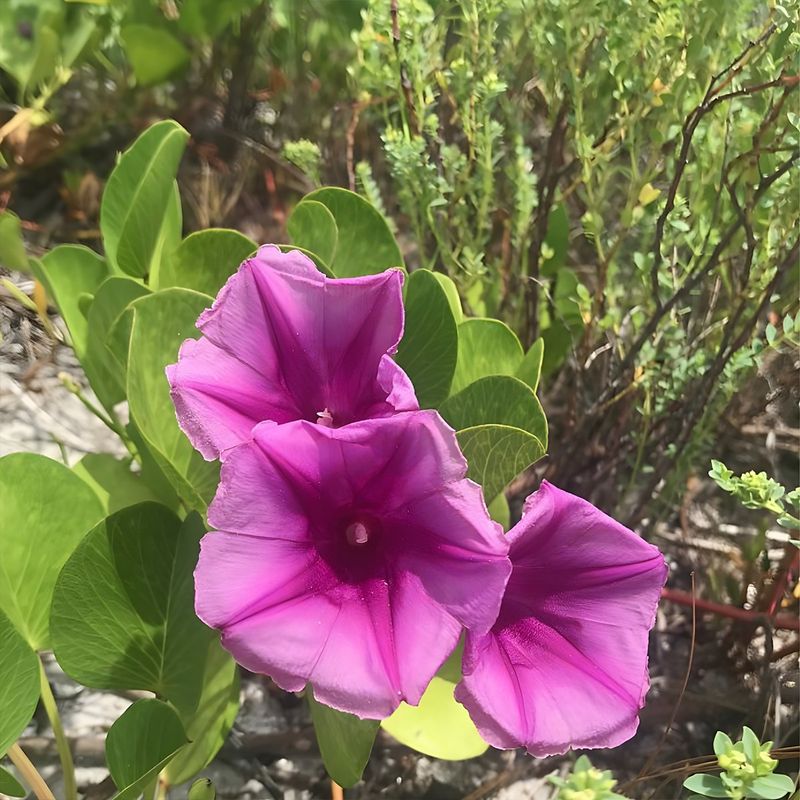
For the hottest, sandiest places in a Florida yard, railroad vine brings a beach-day attitude. It sprawls boldly, roots as it goes, and seems almost designed for places where loose mulch has no chance of staying put.
Railroad vine is a native coastal plant with thick trailing stems and purple morning-glory-like flowers. It is excellent for sandy, sunny areas, especially near the coast where salt, wind, and fast drainage create tough planting conditions.
The vines can help stabilize open sand, which is why the plant is often associated with dunes and beach restoration.
Use it where it has room to run. A small courtyard bed is usually not the right match, but a broad slope, coastal strip, or open sandy bank can be perfect.
In the right site, railroad vine reduces the need for repeated mulch replacement because the living stems cover ground and slow surface movement during hard rain.
Its personality is the most adventurous on this list. While coontie stays composed and frogfruit stays modest, railroad vine wants space and sunshine.
Prune edges to keep it out of paths, and check local planting guidance if you live near protected dune systems. For storm-prone sandy ground, few native ground covers feel more naturally fitted to Florida.