
Plumeria looks tropical and cheerful in warm weather, but cooler nights can slow its blooms fast. Florida gardeners do not have to stare at bare branches while waiting for warmth to return.
Native plants can keep color moving through fall, mild winter spells, and early spring while also feeding local pollinators. Here are seven Florida natives that earn their space when plumeria starts acting fussy.
1. Firebush
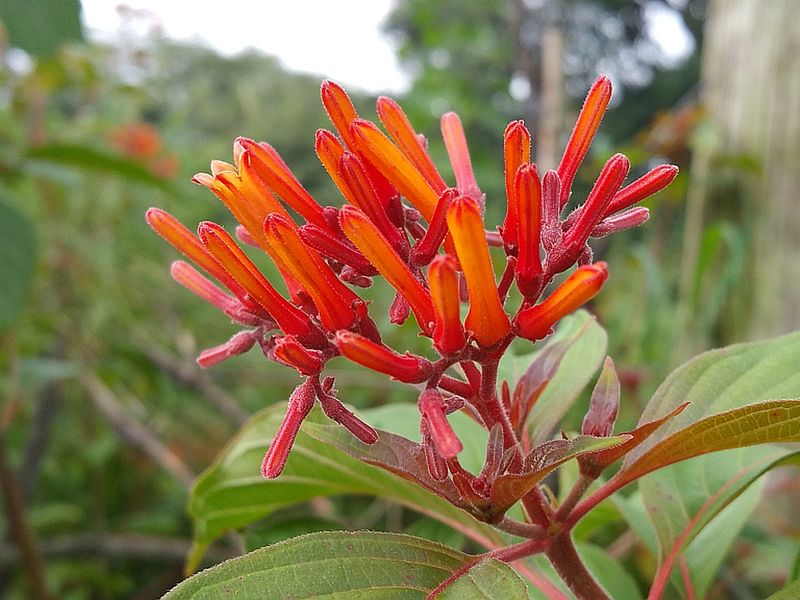
Hummingbirds seem to find firebush before people even notice the first red-orange tubes opening. In a Florida yard, that is a pretty strong reason to give it a prime spot near a patio, fence, or sunny side yard where you can watch the action.
Firebush stands out because it keeps a tropical look without behaving like a delicate tropical plant. Once established, it handles heat, sandy soil, and ordinary dry spells better than many high-color ornamentals.
In South Florida it can flower nearly year-round, while in Central and North Florida it often blooms hard until frost cuts it back.
Use it where plumeria may start dropping leaves or slowing down as nights cool. Firebush fills that gap with warm color, glossy foliage, and steady nectar for hummingbirds, butterflies, and other pollinators.
It can be pruned into a fuller shrub, allowed to grow loose and natural, or tucked into a wildlife border.
Give it sun to part sun and avoid soggy soil for best results. Native forms are the better choice for wildlife value, so check plant tags carefully when shopping.
2. Muhly Grass
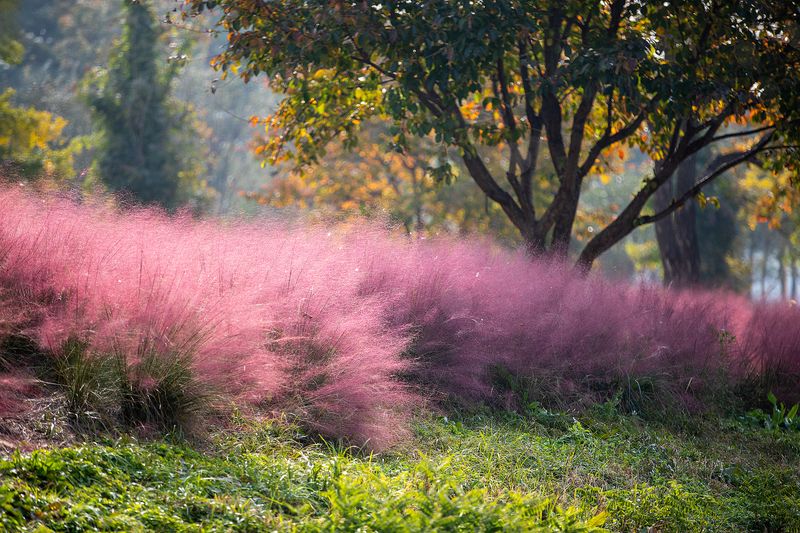
Some plants bloom like fireworks, and muhly grass waits until the yard needs drama most. When its airy pink-purple plumes rise in fall, even a plain driveway bed can suddenly look planned and polished.
Muhly grass belongs on this list because its bloom is not a typical flower show. Instead of petals, it gives you a soft cloud of color that catches low evening sun and moves with the breeze.
That texture looks especially good when plumeria has gone quiet and the garden needs shape, not just more green.
Florida gardeners often use muhly grass in groups, and that is where it shines. Three, five, or seven plants can create a sweep of fall color along a walkway, mailbox bed, pool screen, or dry sunny border.
It fits modern yards, cottage gardens, and low-water landscapes without looking out of place.
Plant it in full sun and well-drained soil. Too much shade or rich, wet ground can make it flop or bloom poorly.
Once established, it is a low-maintenance native that handles sandy soil and coastal-style exposure better than many fussier ornamentals.
A late winter trim refreshes the clump before new growth begins. After that, it mostly asks to be left alone.
3. Simpson’s Stopper
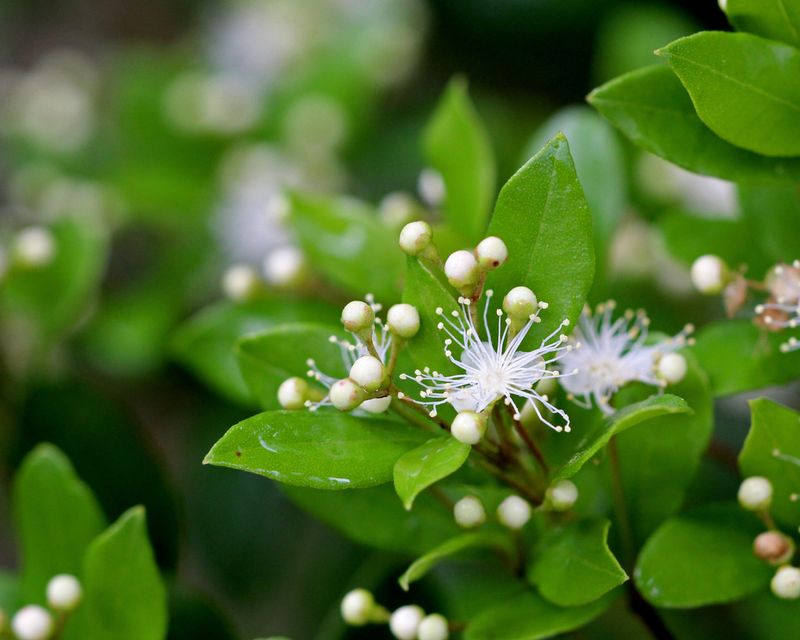
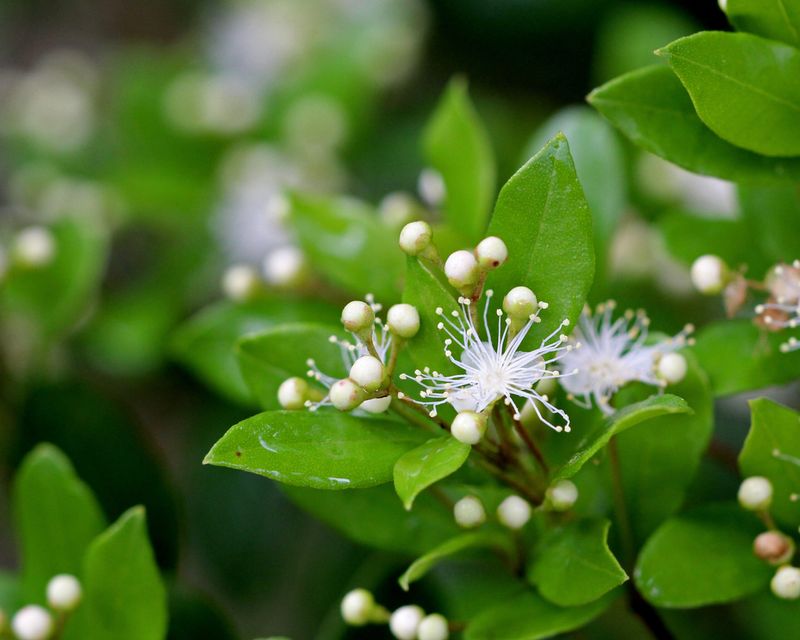
For gardeners who want flowers but hate the look of a messy off-season bed, Simpson’s stopper is a quiet hero. It does not shout from across the street, but up close it offers fragrant white blooms, glossy leaves, and bright berries that birds notice quickly.
Its biggest advantage is structure. While plumeria can look bare and awkward in cooler months, Simpson’s stopper keeps a tidy evergreen presence.
That makes it useful near entries, along property lines, or in mixed foundation beds where the garden must look decent every week of the year.
The flowers are small, but they have charm and can appear in several flushes, especially in warmer parts of Florida. After bloom, red to orange berries add another layer of interest and help support backyard wildlife.
Birds often visit when the fruit ripens, which gives this shrub more value than a simple green hedge.
Simpson’s stopper grows in sun or part shade and can be clipped lightly or allowed to form a more natural screen. It is also more storm-sensible than brittle, overgrown ornamentals when kept at a reasonable size.
Choose it if you want a native that feels polished, not wild. It brings bloom, fruit, and year-round backbone in one dependable package.
4. Seaside Goldenrod
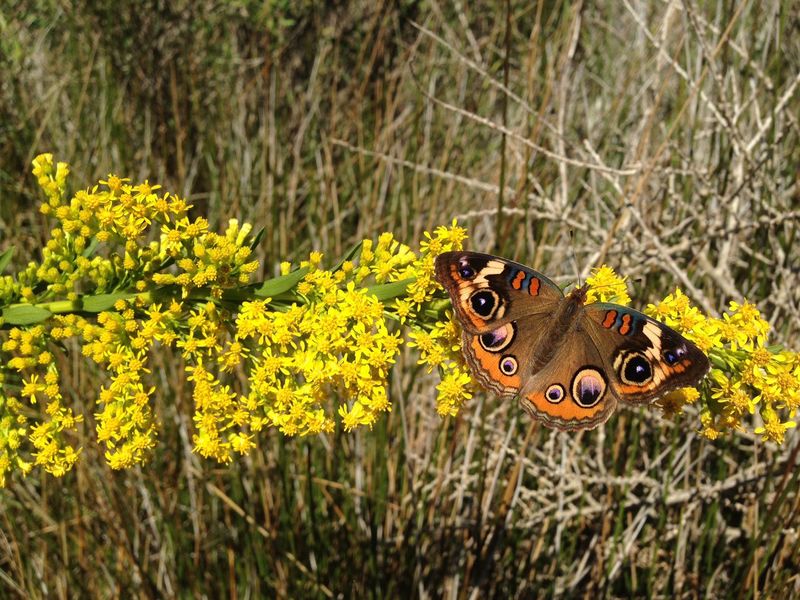
Goldenrod gets blamed for sneezes it usually did not cause, and that bad reputation keeps too many gardeners from enjoying its fall color. The real payoff is a burst of golden bloom right when many tropical-looking plants are slowing down.
Seaside goldenrod is especially useful in Florida because it handles tough sites. Sunny, sandy, salty, and breezy conditions do not scare it the way they scare many bedding plants.
That makes it a smart choice for coastal gardens, hot curb strips, and naturalized corners where irrigation is limited.
The plant sends up bright yellow flower clusters that are magnets for bees, butterflies, and other beneficial insects. In a wildlife-aware yard, that late-season nectar matters because pollinators still need food after the big summer bloom rush fades.
It gives your garden a living purpose as well as color.
Place seaside goldenrod where it has room to stand tall and look natural. It pairs well with muhly grass, dune sunflower, blanketflower, and other sun-loving natives.
If a formal look is your goal, use it toward the back of a bed rather than right at the front door.
Do not confuse goldenrod with ragweed, which releases windblown pollen. Goldenrod pollen is heavier and is mostly moved by insects, which is why so many pollinators crowd its flowers.
5. Walter’s Viburnum
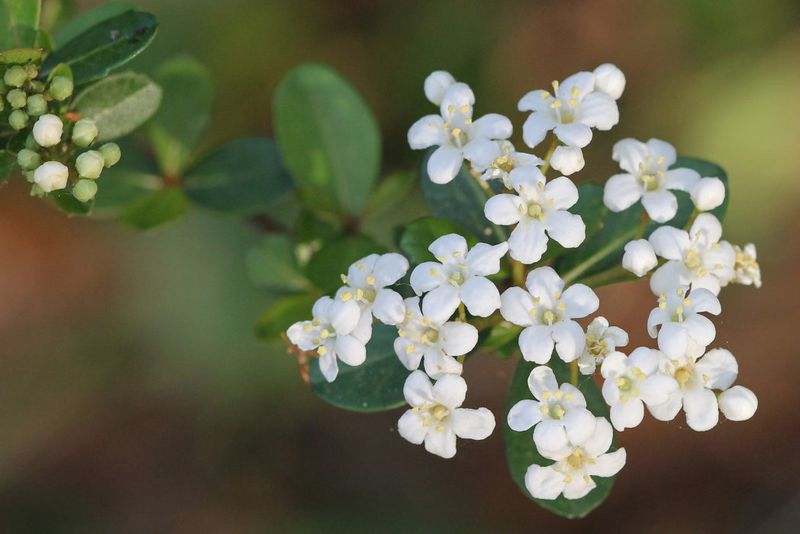
A front yard can look unfinished when its showy tropicals take a break, and Walter’s viburnum solves that problem with backbone first and flowers second. It is the kind of native shrub that makes a landscape feel settled, even before the bloom show starts.
Walter’s viburnum earns its place because it bridges curb appeal and habitat value. In many Florida yards, it works as a hedge, screen, specimen shrub, or small tree, depending on pruning and cultivar choice.
Its small white flower clusters often appear in late winter to spring, giving the garden a clean, fresh look before plumeria has fully regained its rhythm.
Pollinators visit the blooms, and birds can use the berries that follow. The evergreen foliage also helps hide bare stems, utility boxes, or tired seasonal beds.
For homeowners who want less replanting and fewer high-maintenance annuals, that year-round presence is a major win.
Walter’s viburnum can grow in sun to part shade and is adaptable once established. It appreciates reasonable drainage, which matters in sandy Florida soil as well as in yards that get heavy rain during storms.
Avoid shearing it into a hard green wall if you want the best flowering and wildlife value.
Use it as the dependable framework around flashier plants. When plumeria sulks, this shrub still looks like it came to work.
6. Coral Honeysuckle
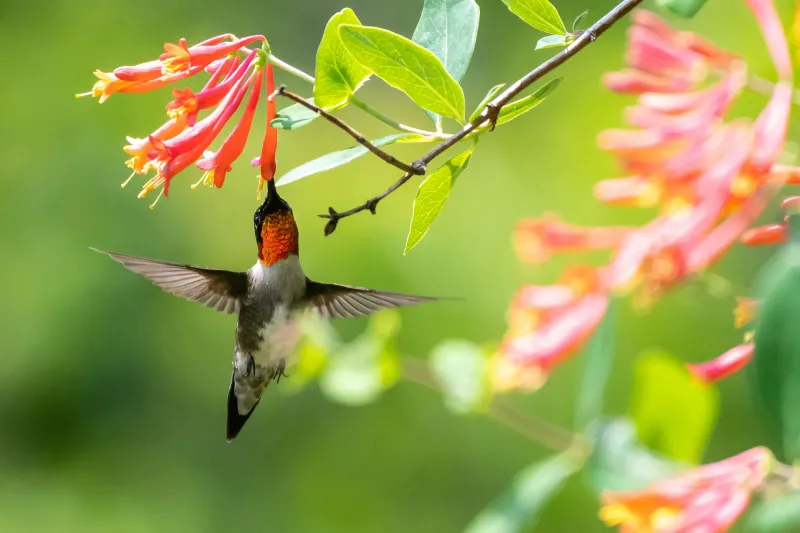
Give coral honeysuckle a trellis, and it will turn a bare vertical space into a nectar stop with real personality. The coral-red tubular flowers look bright without feeling gaudy, and hummingbirds often treat them like a standing invitation.
Unlike some aggressive vines, native coral honeysuckle can be a better-behaved choice when placed with care. It climbs fences, arbors, mailbox posts, and porch railings, bringing color upward instead of taking up more bed space.
That is helpful in small Florida yards where every sunny patch is already spoken for.
Bloom timing can vary by region and weather, but coral honeysuckle often flowers from spring into fall, with mild winter blooms possible in warmer areas. When plumeria slows because nights are cooling, this vine may still push out scattered color in protected spots.
Its blue-green leaves and twining stems also soften hard edges.
Plant it in sun to part sun for the strongest flowering. Provide support early, then guide stems rather than letting them tangle through shrubs.
A light trim after major bloom periods can keep it neat.
Coral honeysuckle is especially good near outdoor seating because it brings wildlife close. Instead of waiting for plumeria to wake back up, you get movement, color, and a little garden theater at eye level.
7. Dune Sunflower
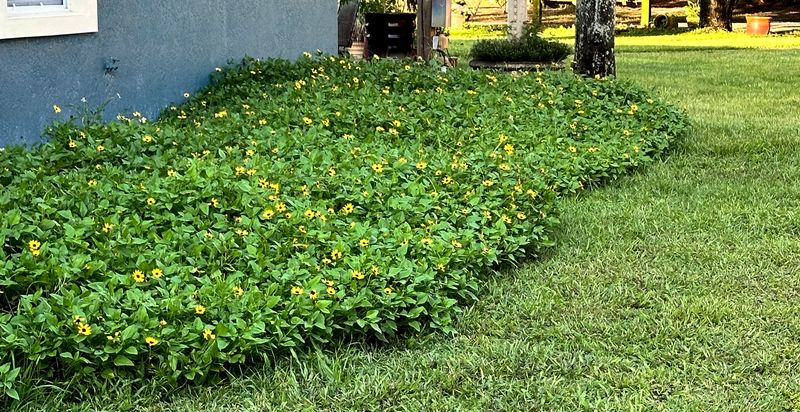
Hot sand, bright sun, and little pampering sound like trouble for many flowers. Dune sunflower treats that setup like home, which is why it is such a practical pick for Florida gardeners tired of replacing worn-out bedding plants.
Dune sunflower is different from the others on this list because it works as a blooming groundcover. Instead of standing tall or forming a hedge, it spreads low and fills open soil with cheerful yellow daisy-like flowers.
That makes it useful along sidewalks, slopes, mailbox beds, and sunny spots where mulch keeps washing or blowing away.
In frost-free parts of Florida, it may bloom through much of the year. Farther north, it can still deliver a long warm-season show and often keeps going into cooler weather until cold snaps slow it.
While plumeria is pausing, dune sunflower can keep the bed looking alive and sunny.
Pollinators visit the flowers, and the plant’s spreading habit helps reduce bare, weedy gaps. It prefers full sun and fast drainage, so sandy soil is not a problem.
Avoid planting it where the ground stays wet after rain.
Use dune sunflower when you want color with a relaxed, coastal feel. It is not a stiff formal plant, but in the right place, its easy sprawl looks bright, useful, and very Florida.