
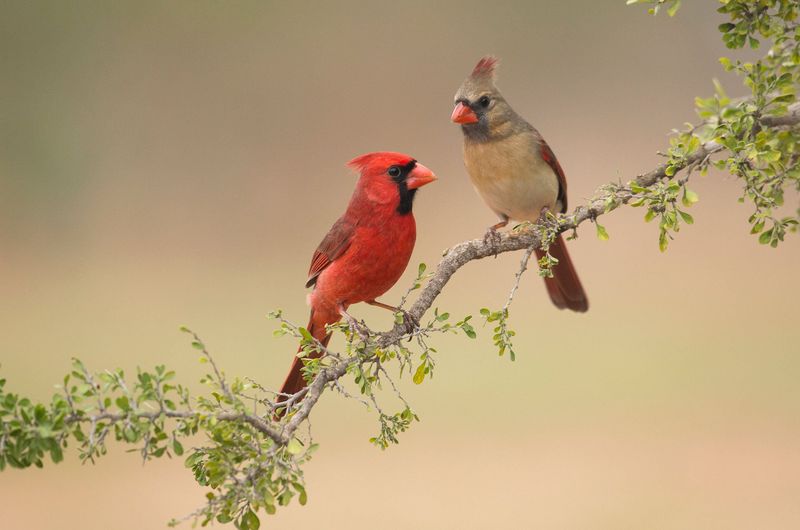
Cardinals do not need a fancy feeder to notice your yard. They look for safe cover, seeds, berries, and insects, and many Florida native plants offer all of that at once.
The right mix can make your garden prettier while giving these bright red birds a reason to visit through more of the year. Here are seven native choices that fit Florida yards and help turn a plain space into better bird habitat.
1. American Beautyberry
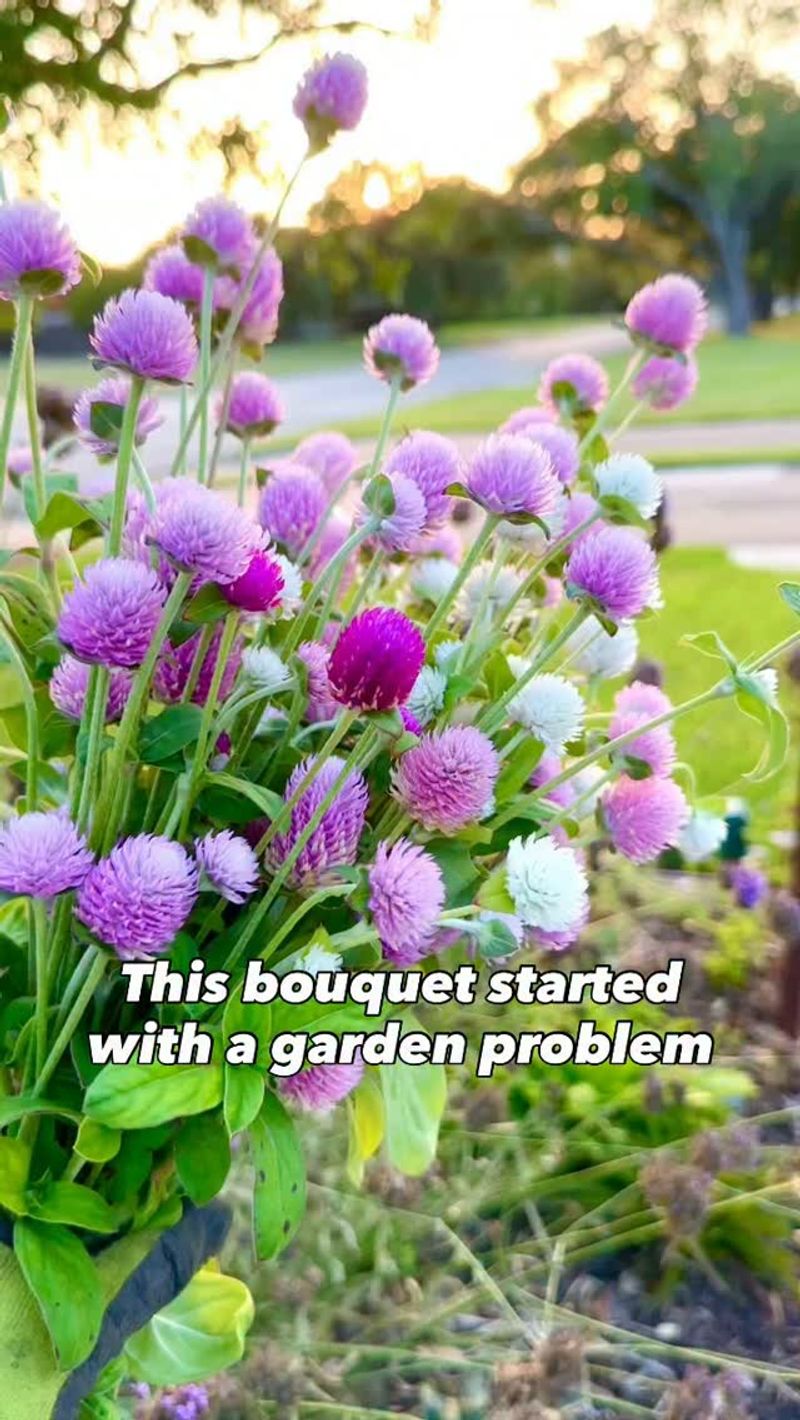
A flash of purple berries in fall can stop you in your tracks, and cardinals seem to notice too. American beautyberry is one of the easiest Florida natives to recognize because its berries hug the stems in bright, bead-like clusters.
Cardinals eat many kinds of fruits and seeds, and beautyberry adds a strong berry source during the season when many yards start looking tired. The shrub also gives them a place to duck into when hawks, cats, or loud yard activity make the open lawn feel unsafe.
For Florida gardeners, the payoff is practical. Beautyberry handles sandy soil once established, tolerates part shade, and can be cut back in late winter if it gets too loose or wide for the spot.
It works especially well along fence lines, woodland edges, or the back of a mixed native bed where its arching shape has room to spread.
Plant it where you can see the berry show from a window or patio. Add a shallow birdbath nearby, and you create a simple stopover with food, cover, and water in one corner of the yard.
2. Yaupon Holly
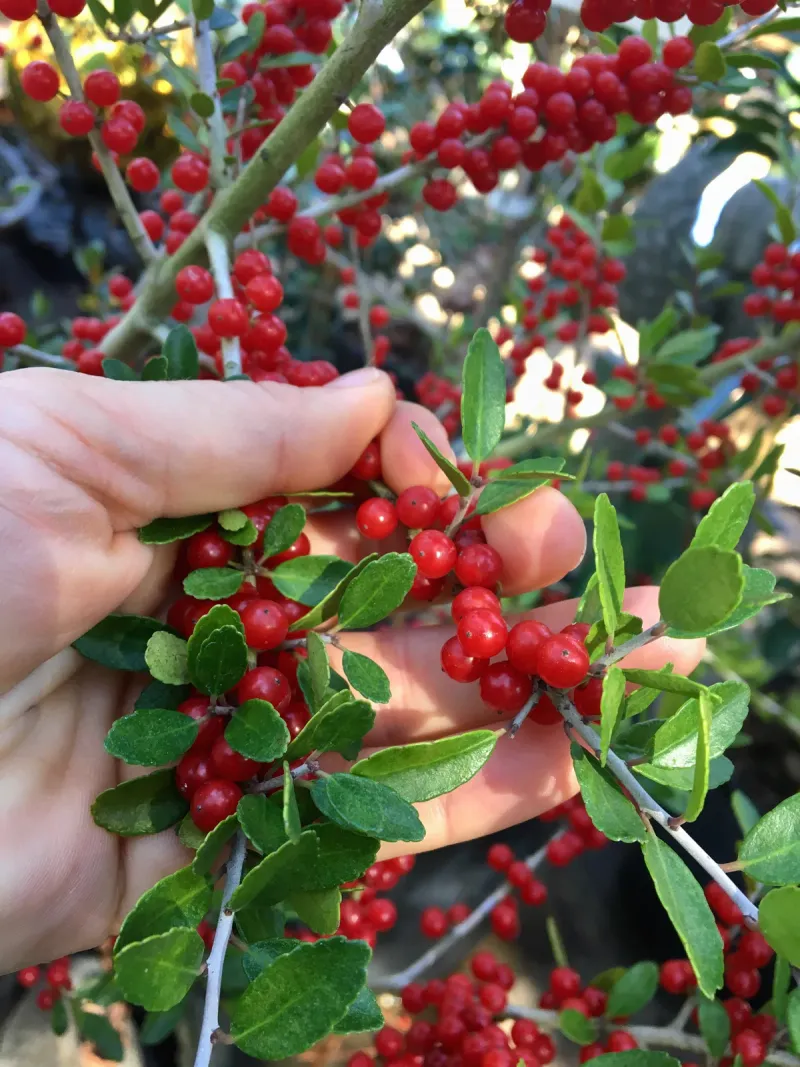
Some plants feel like they were built for busy birds. Yaupon holly has the tight branching, evergreen leaves, and berry display that make cardinals linger instead of just passing through.
Female yaupon hollies produce red berries that can feed birds when other foods are limited. Cardinals also use the dense growth as a safe waiting room between trips to feeders, birdbaths, or berrying shrubs.
That cover matters in Florida yards, where open turf can leave birds exposed.
Yaupon is also friendly to homeowners who want a neat, useful native. It can be trained as a small tree, clipped into a hedge, or allowed to grow as a natural screen.
In many parts of Florida, it stands up well to heat and periodic dry spells once established, though young plants still need steady water while roots settle in.
Choose a female plant if berries are your goal, and plant more than one if space allows. A row along a property edge can soften the view, add privacy, and give cardinals a sheltered path through the yard.
3. Wax Myrtle
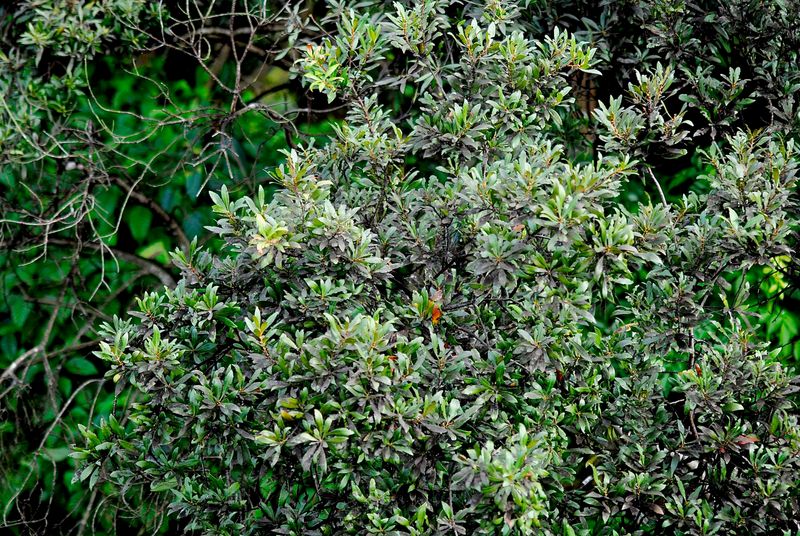
Need a fast green wall that does more than hide the neighbor’s trash bins? Wax myrtle brings privacy, wildlife value, and a natural look that suits Florida landscapes.
Cardinals are often drawn to yards with layered cover, and wax myrtle builds that layer quickly. Its evergreen foliage gives birds a protected place to perch, preen, and watch for danger.
The small waxy fruits are especially valued by many birds, and the plant also supports insects that cardinals may feed to their young during nesting season.
For gardeners dealing with Florida’s sandy soil, wax myrtle is a useful problem-solver. It adapts to a range of moisture levels, from fairly dry spots to areas that stay damp after rain, as long as the site is appropriate for the plant’s natural tolerance.
It can be left informal for habitat or lightly pruned into a tidy screen.
Give wax myrtle room because it can become a large shrub or small tree. Place it along the back fence, near a swale, or at the edge of a natural area, then add lower native plants in front so cardinals can move through the garden in steps instead of crossing open ground.
4. Simpson’s Stopper
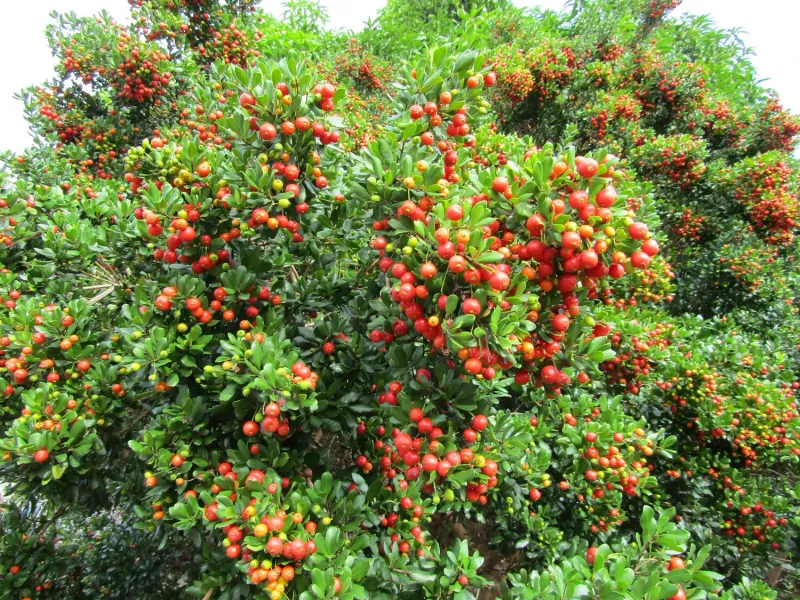
Small yards deserve bird plants too, and Simpson’s stopper is a polished native that does not look wild or messy when used near patios and entry walks. Its glossy leaves, white flowers, and colorful berries make it feel ornamental while still helping wildlife.
Cardinals benefit from the berries and the twiggy shelter this shrub provides. Because it can grow as a hedge, small tree, or clipped accent, it fits places where a looser thicket would be too much.
That makes it a smart pick for homeowners who want cardinals without giving up a clean, cared-for look.
In Florida landscapes, Simpson’s stopper is often appreciated for its tolerance of heat and its ability to handle many well-drained sites once established. It can work in sun to part shade, though flowering and fruiting are usually stronger with good light.
The fragrant flowers also draw pollinators, which helps build a more active food web in the yard.
Try it near a porch corner, along a side yard path, or as part of a native foundation planting. If you want berries, avoid constant hard shearing because flowers and fruit form better when the plant is allowed to grow more naturally between trims.
5. Firebush
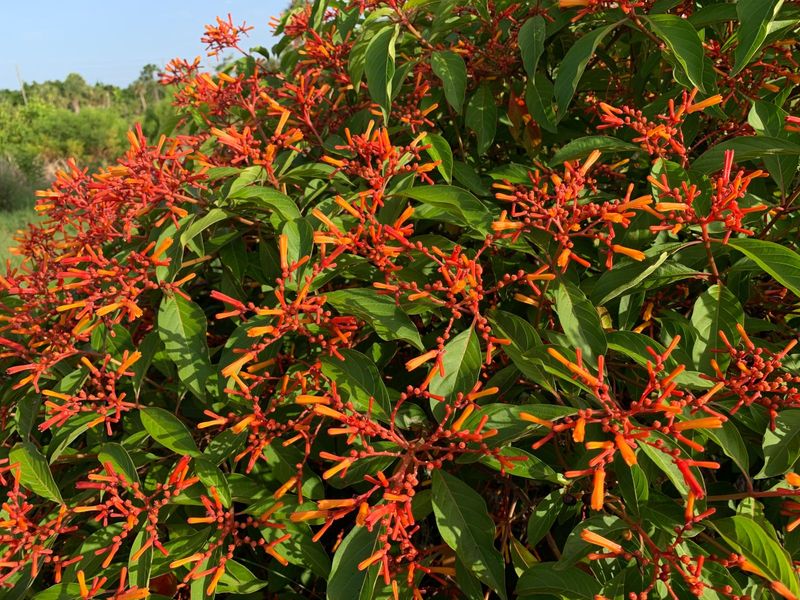
Firebush brings the kind of color that makes a garden feel alive before you even spot the birds. Its red-orange tubular flowers pull in butterflies and hummingbirds, while the berries and insect activity help make the area more interesting to cardinals.
Cardinals are seed and fruit eaters, but they also rely on insects, especially when raising young. A firebush can act like a small wildlife station, bringing in pollinators and other tiny creatures that support the backyard food chain.
The shrub’s branching also gives cardinals a place to pause close to the ground, which they often prefer.
Florida gardeners like firebush because it looks at home in the heat. In warm parts of the state it can grow into a large shrub, while in cooler parts it may die back after cold snaps and return from the roots.
It performs best in sun to part sun and usually becomes tougher after it is established.
Use firebush where you want color without constant pampering, such as a sunny fence corner, pollinator bed, or backyard border. Leave some room around it, since a happy plant can grow wide during Florida’s long warm season.
6. Wild Coffee
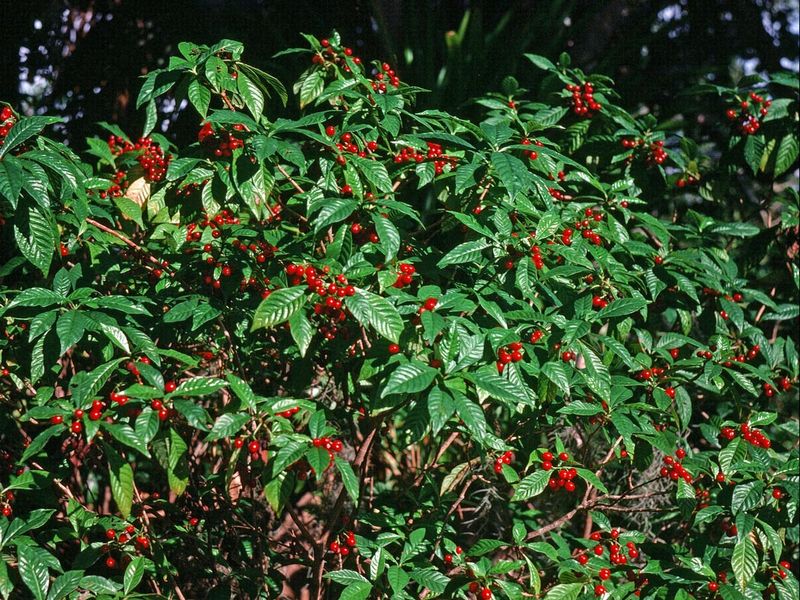
Shady spots under oaks or palms can be tricky, but wild coffee makes them feel intentional. Instead of fighting the shade with weak lawn grass, this native shrub fills the understory with glossy leaves and red berries.
Cardinals often feed low and move through shrubs rather than soaring across open space. Wild coffee suits that behavior by creating a leafy middle layer where birds can forage, rest, and stay hidden.
Its berries are used by wildlife, and its small flowers can support pollinators, adding more life to quiet shade beds.
Despite the name, wild coffee is not the same as your morning coffee plant for brewing. The common name comes from the look of the fruit and seeds, which makes it a fun plant to point out to visitors.
For Florida yards, its best role is in part shade to shade, especially in protected areas with leaf litter or mulch. It can handle many home landscape settings when watered during establishment, but it is not a plant for baking-hot, dry, exposed corners.
Place it beneath trees, along a shaded fence, or near a sitting area where the red fruit and visiting birds are easy to enjoy.
7. Elderberry
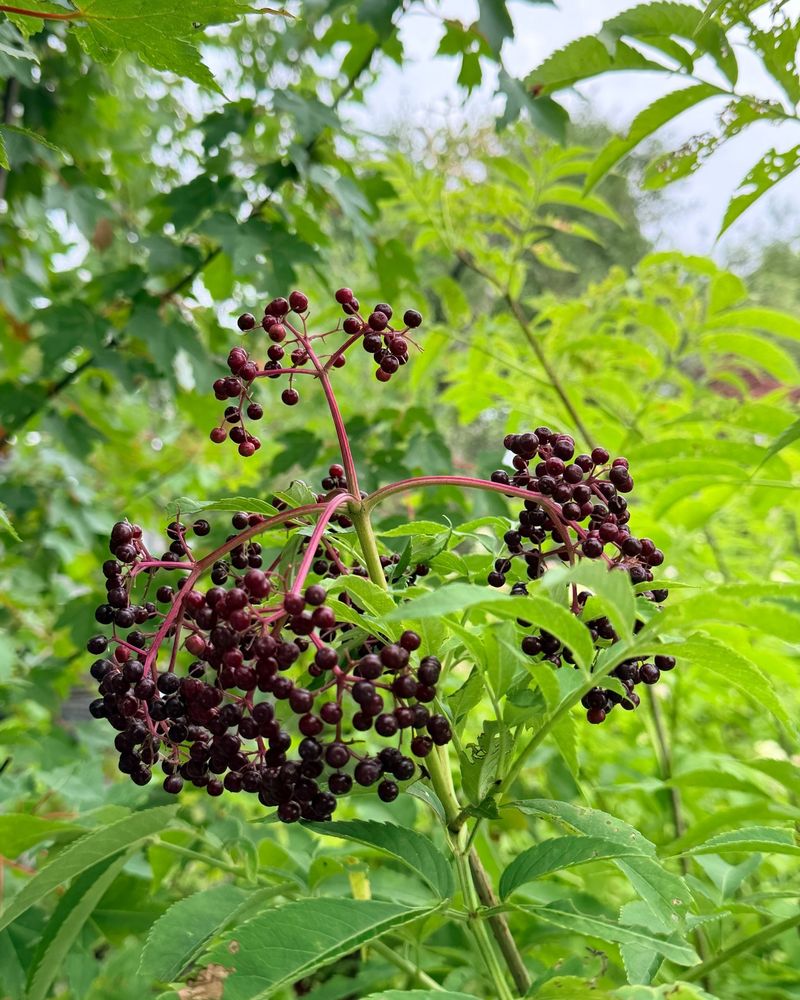
If your yard has a damp edge that stays soggy after summer rain, elderberry can turn that problem spot into a bird-friendly feature. Its broad flower clusters and dark berries bring a soft, old-fashioned look to low areas that many ornamentals dislike.
Cardinals may visit elderberry for fruit, and the plant’s flowers draw insects that help feed nesting birds. Because elderberry can grow into a loose, multi-stemmed shrub, it also adds the slightly tangled cover that cardinals appreciate.
A little messiness in the right place can be a real habitat advantage.
Florida gardeners should site elderberry with care. It usually does best where soil has more moisture than a dry upland bed, such as pond edges, rain garden areas, ditch banks, or the back of a larger wildlife border.
In very sandy yards, mulch and watering during establishment can help, but a naturally moist spot is the better match.
Give it space and avoid planting it where you need a formal clipped shrub. Pair it with wax myrtle or firebush nearby, and you create a layered planting that offers flowers, berries, insects, and cover across a longer stretch of the year.