
A tree frog on the patio can turn a buggy evening into a small wildlife show. Frogs eat mosquitoes and other insects, but they need cool, sheltered places to spend the day.
The right Florida native plants can make the space around your patio more welcoming without turning it into a jungle. Here are seven choices for sunny corners, shady walls, and spots in between.
1. Firebush
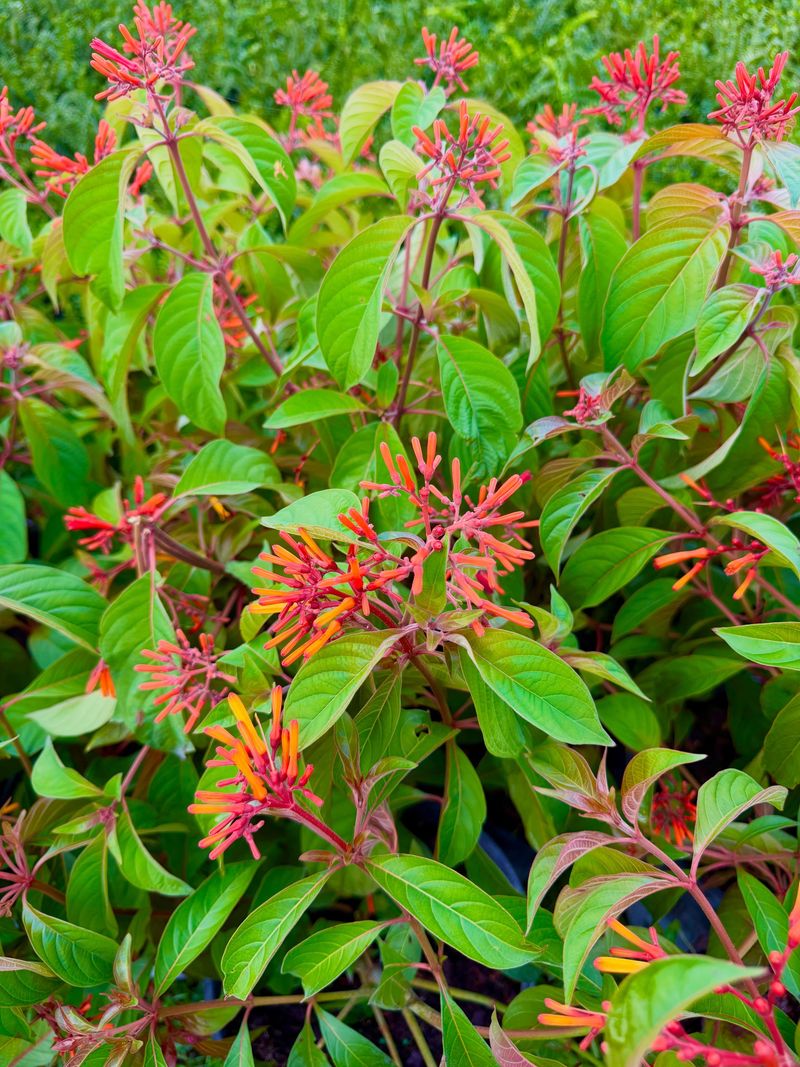
When the patio lights come on, a firebush can become the liveliest corner of the yard. Its loose branches give tree frogs places to perch near flying insects, while its red-orange flowers bring hummingbirds and butterflies by day.
That mix of shelter and activity makes it a strong choice beside an outdoor seating area.
Plant firebush in sun to part shade, leaving enough room for its naturally wide shape. It grows quickly in warm parts of Florida, so place it a few feet back from chairs and walking paths rather than squeezing it against the patio edge.
In colder parts of the state, frost may knock it back, but it often regrows when warm weather returns.
Water new plants while their roots settle in, then adjust care to your site. A layer of mulch helps sandy soil hold moisture, but keep mulch away from the stems.
Let some branches stay leafy instead of pruning the shrub into a tight ball. Frogs need cover as much as they need insects, and firebush offers both without asking you to add a water feature.
2. American Beautyberry
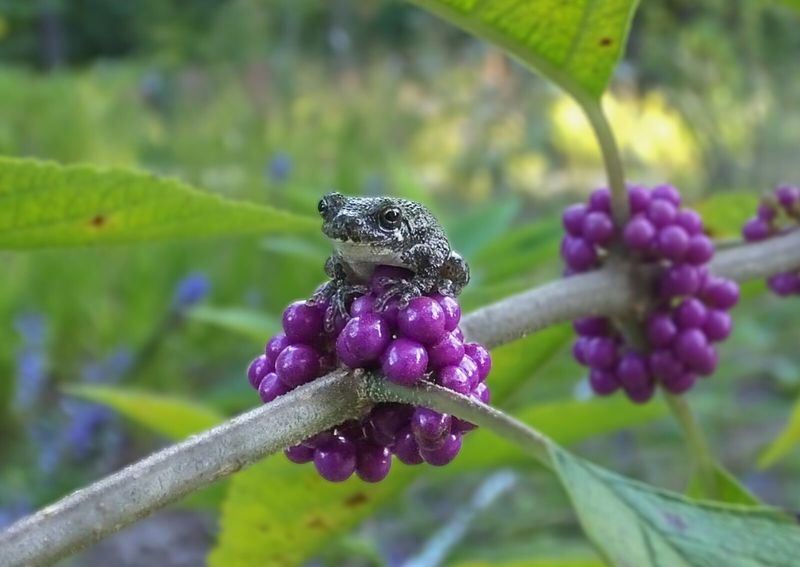
Those bright purple berries look almost too colorful to be real. American beautyberry earns its place near a patio for another reason, though: its long, arching stems make a roomy hiding place for small animals.
A tree frog can rest beneath the leaves during the day, then move out to hunt insects after dark.
Give beautyberry a spot with part shade or gentle sun and enough space for its branches to spread. It works well along the outer edge of a patio planting bed, where its soft shape can frame the space without crowding a doorway.
The berries also feed birds, adding another reason to leave the shrub in its natural form.
Beautyberry handles many Florida soils once established, including sandy ground, but a newly planted shrub still needs regular water at first. If it gets too large, prune it in late winter rather than clipping it constantly through the growing season.
Keep the ground below it covered with mulch or fallen leaves. That shaded layer helps hold moisture and gives insects and frogs a cooler place to retreat when the paving gets hot.
3. Coontie
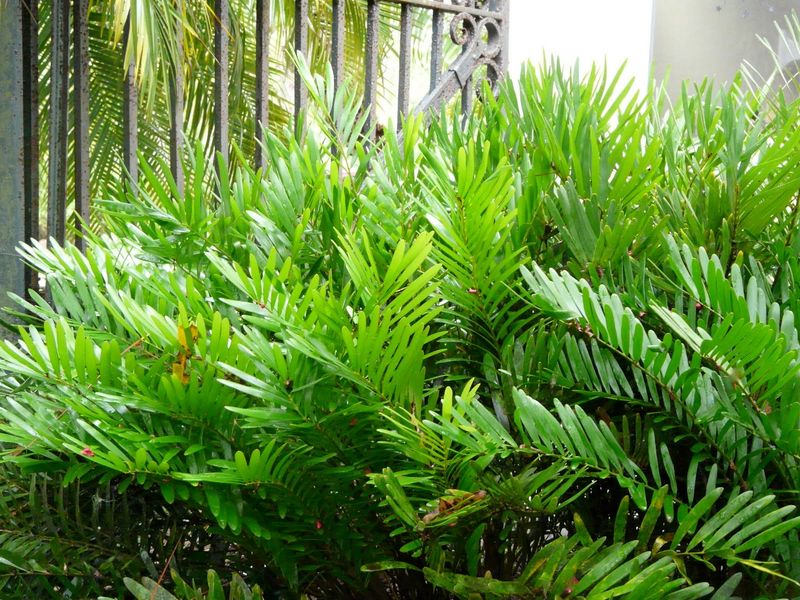
Need a neat-looking plant that does not demand constant trimming? Coontie stays low and gives a patio bed a dense, leafy base.
Its stiff, fernlike leaves create small pockets of shade close to the ground, just where a frog may hide from midday heat.
Use coontie along the edge of a patio or beneath taller shrubs, with room for each plant to reach its mature width. It grows slowly, which is a bonus if you want a border that will not swallow the walkway.
Coontie suits well-drained sites and can handle sun or shade, although plants in full sun may need extra attention while they establish in Florida’s fast-draining sand.
Do not expect coontie alone to pull frogs into a bare yard. Pair its low cover with a taller native plant and nearby leaf litter so frogs can move between hiding spots.
The plant is also a host for the atala butterfly in parts of Florida. That makes this tidy-looking border choice a way to support more backyard life, while still leaving your patio easy to use.
4. Coral Honeysuckle
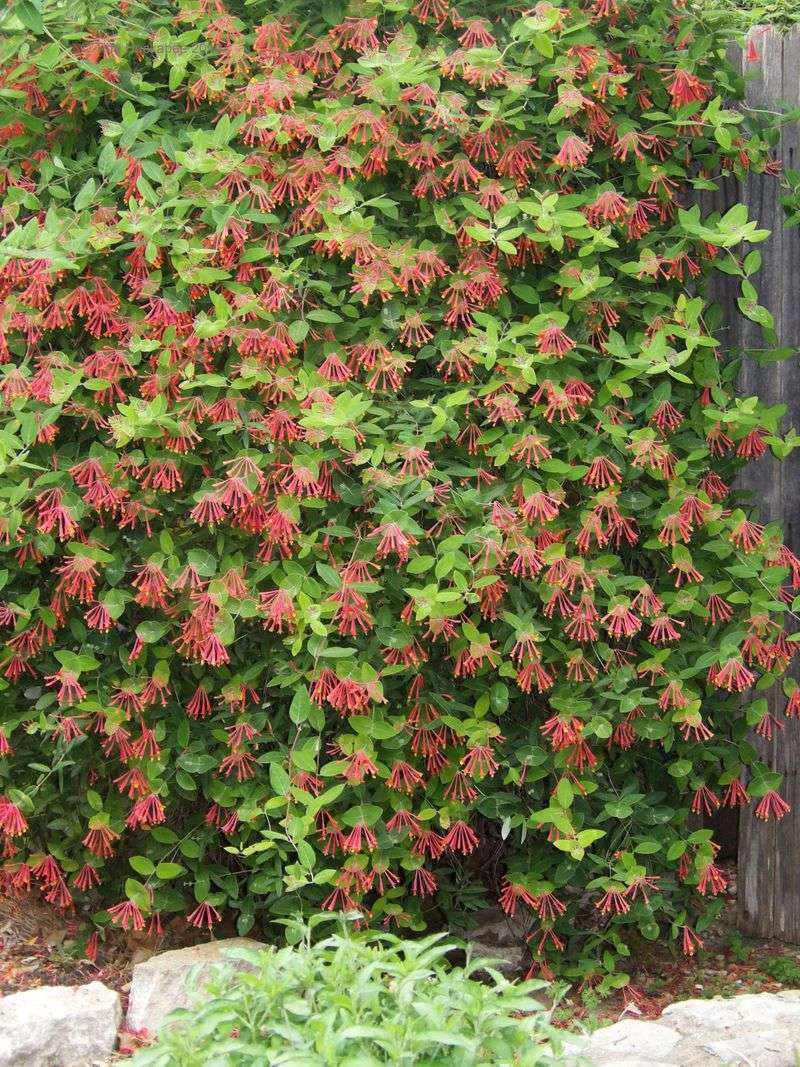
A bare trellis does not offer a frog much help. Cover it with coral honeysuckle, and it becomes a leafy route up the side of the patio.
Native tree frogs are skilled climbers, so a vine near shrubs can give them another place to rest and search for insects.
Coral honeysuckle has red tubular flowers that hummingbirds visit, followed by berries that birds may eat. Train it on a sturdy trellis or fence rather than letting it climb into gutters or across a screen door.
It grows best with sun for good flowering, though it can tolerate some shade. Choose a spot where its roots can drain well, and water it during establishment.
This is a useful pick when ground space is limited: the vine adds height without requiring a broad planting bed. Leave a little space between the trellis and the house so you can check the wall and trim stray stems.
Pair it with a low native planting at its base to give frogs cover before they climb. A leafy route is inviting, but it is not a guarantee of mosquito control; tree frogs eat many kinds of insects.
5. Simpson’s Stopper
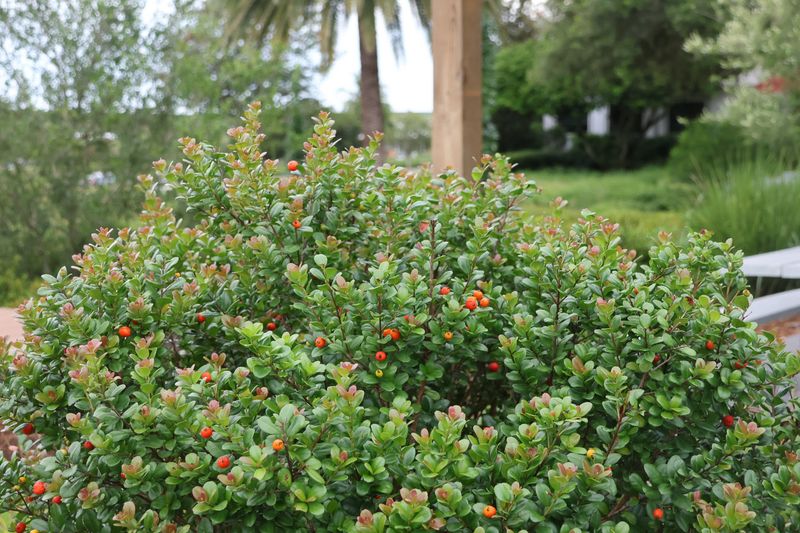
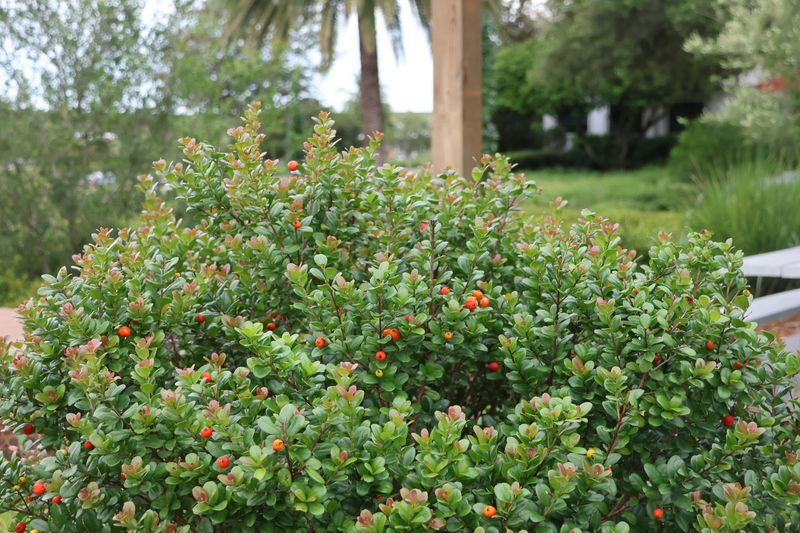
Privacy screens often end up looking like green walls. Simpson’s stopper offers a softer option in the warmer parts of Florida, where its small, glossy leaves can form a dense shrub or a small tree.
Its many fine branches give climbing frogs sheltered perches without blocking every view from the patio.
Plant it where you want a living screen between a sitting area and the rest of the yard. It takes sun or part shade and is especially well suited to South Florida landscapes.
Check its local suitability before using it in colder northern areas of the state. Give it enough room to grow, and prune selectively so air and light can still move through the branches.
Small white flowers attract pollinators, and the fruits appeal to birds. For a patio habitat, the practical payoff is lasting cover above ground level, particularly when lower plants fill the space beneath it.
Water regularly until established, then follow the needs of your soil and rainfall. Avoid broad insecticide sprays around the screen: they can remove the insects frogs hunt and may expose frogs to chemicals as they move through the leaves.
6. Muhly Grass
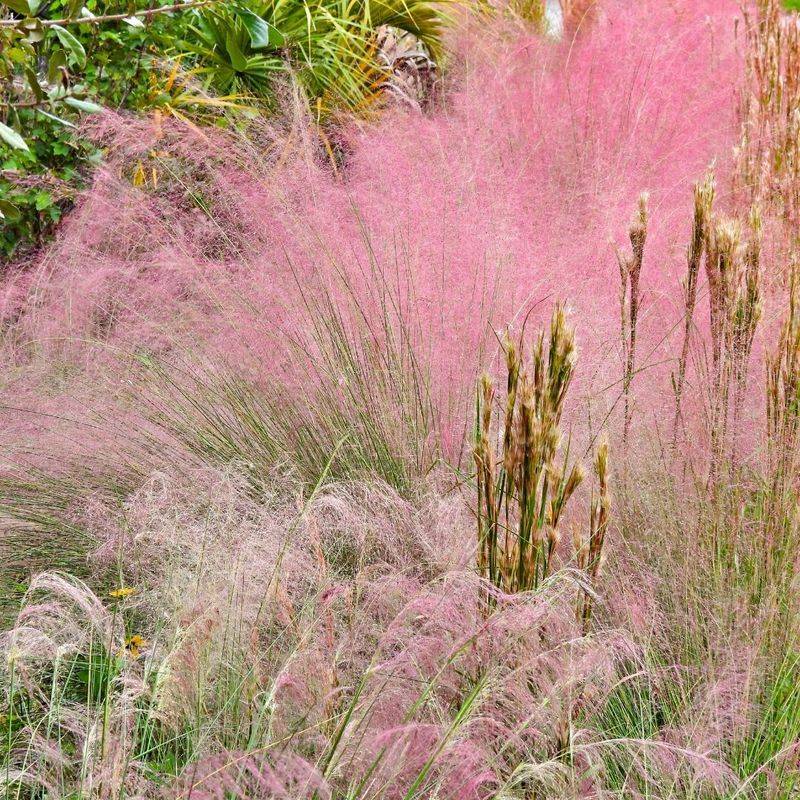
Fall brings a surprise from muhly grass: clouds of pink plumes above tidy green clumps. Long before that display, the dense blades at each plant’s base provide a sheltered patch of ground.
Frogs can tuck into that cover when exposed patio stone and bare sand offer nowhere cool to hide.
Set muhly grass in a sunny, well-drained bed near the patio, but leave space between clumps for air to move. It is a smart choice for a dry, sandy spot where a moisture-loving plant would struggle.
Once established, it generally needs little care beyond occasional cleanup of old growth. Group a few plants for a stronger fall display and a larger stretch of cover.
Grass is the ground-floor part of this planting plan, not a substitute for shrubs or vines. Place it near taller native plants so a frog can move between low shelter and elevated perches.
Skip routine pesticide treatments in that bed, and avoid piling wet mulch against the grass crowns. Muhly grass will not stop mosquitoes from breeding, but it can help turn an open patio border into a more usable habitat for the animals that hunt insects there.
7. Wild Coffee
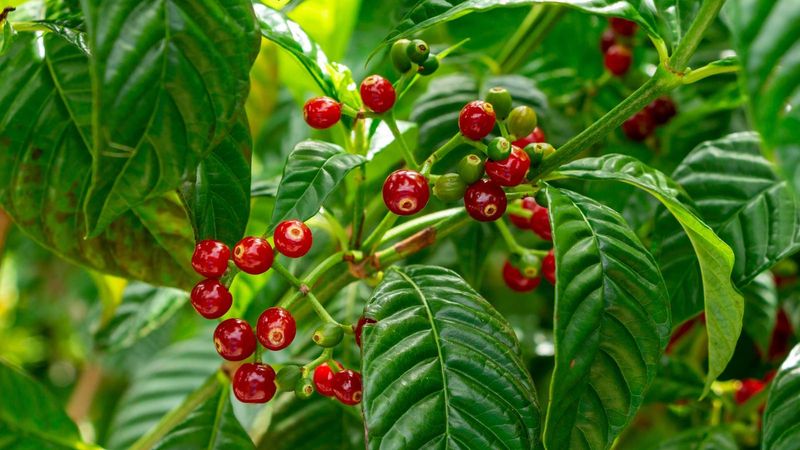
That shady corner beside the patio need not stay empty. Wild coffee fills it with broad, textured leaves that create a cool resting place for tree frogs.
It brings a lush look to spots where sun-loving flowers may thin out, especially in South Florida.
Use wild coffee as an understory shrub beneath a tree or beside a covered patio that gets filtered light. It prefers protection from cold and is best suited to warmer parts of the state, so North Florida gardeners should choose a locally suitable alternative.
Water it while establishing, and use mulch to slow moisture loss from sandy soil. Its leaves can scorch in harsh afternoon sun, making placement more important than extra fertilizer.
Wild coffee’s flowers and fruit add wildlife interest, but its main job on this list is dependable shade-level cover. Let it keep a natural shape rather than shearing away all its leafy outer branches.
For the best chance of seeing tree frogs, connect this planting to other cover and check the patio after a warm, damp evening. Empty saucers, buckets, and clogged gutters nearby: frogs may eat mosquitoes, but no planting can make up for water where mosquitoes breed.