
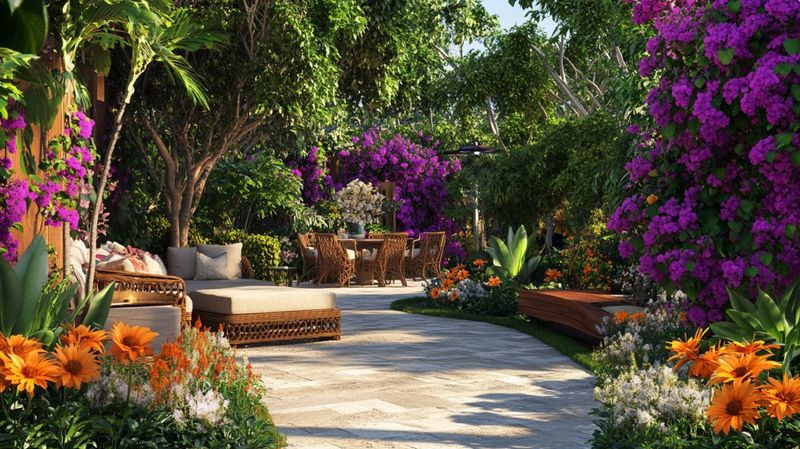
A hot Florida yard can feel like a skillet by lunchtime, especially along bare fences, driveways, and open property lines. Native shrubs help by adding shade, slowing hot wind, and making the edges of the yard feel softer and cooler.
Many also feed birds, butterflies, and pollinators without needing fussy care. Here are seven Florida natives that can turn a harsh property line into a living screen that works hard in the heat.
1. Walter’s Viburnum
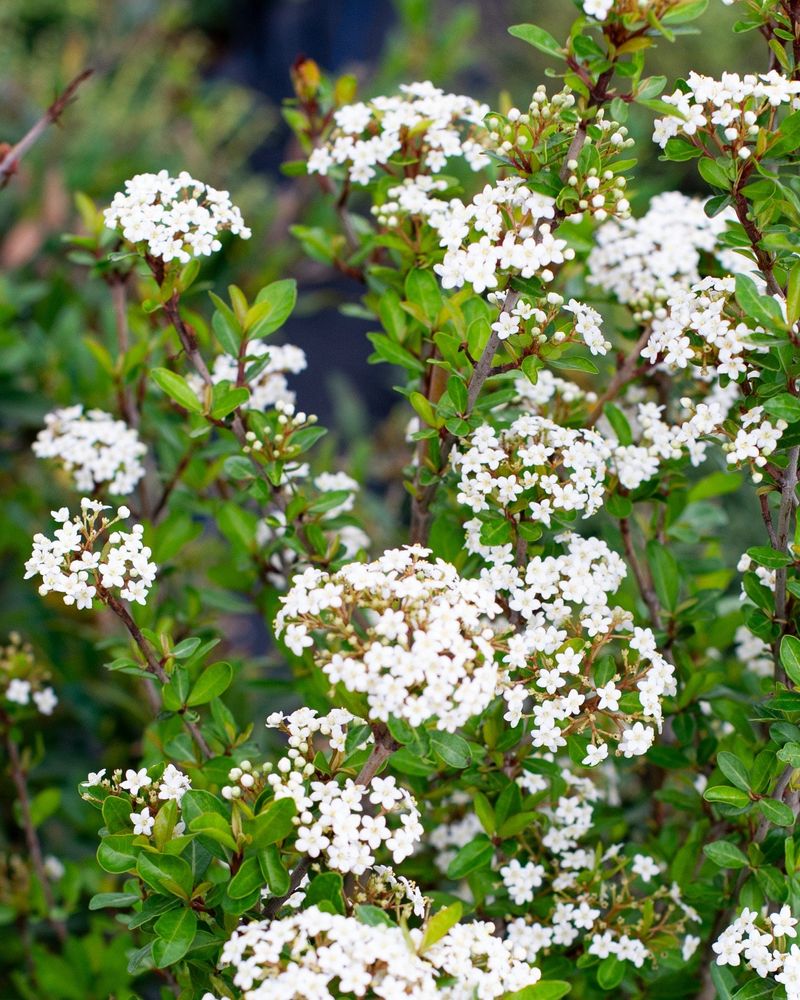
Neighbors who want the look of a classic hedge without planting a thirsty, high-maintenance wall often land on Walter’s viburnum. It has that neat, evergreen presence people like along property lines, but it still feels at home in a Florida yard instead of looking forced.
Its small leaves create a thick screen that can help block afternoon glare, soften reflected heat from fences, and slow down drying wind. In spring, clusters of white flowers bring in pollinators, and later berries can attract birds, so the hedge does more than mark a boundary.
Walter’s viburnum is especially useful where you need structure near patios, side yards, or a neighbor-facing fence. It can be clipped into a tidy hedge, but it also looks good with a looser, more natural shape if you prefer less trimming.
Plant it in sun to part shade, and give it room based on the variety you choose, since some selections stay compact while others grow much taller. Once established, it handles normal Florida dry spells better than many ornamental hedge plants, though new shrubs still need steady water while roots settle in.
2. Simpson’s Stopper
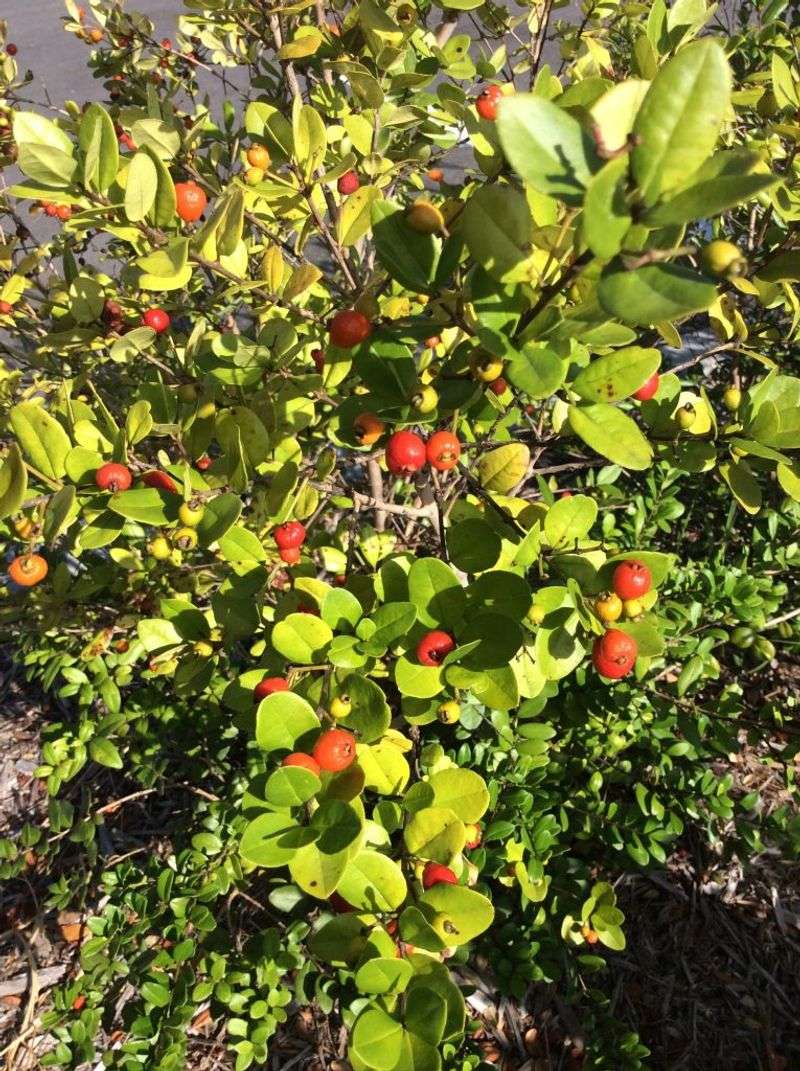
A quiet little wildlife café can hide inside a polished hedge, and Simpson’s stopper proves it. From the street, it reads as a handsome evergreen screen, but up close it offers fragrant flowers, colorful berries, and plenty of cover for small birds.
Along a property line, Simpson’s stopper is a smart pick for homeowners who want cooling shade without a giant plant taking over the yard. Its dense branching helps break up hot air movement and gives a fence line a leafy buffer, which can make nearby sitting areas feel less harsh.
Small white flowers appear with a pleasant fragrance, then berries ripen in shades of orange to red. Birds often notice them quickly, making this shrub a good choice for gardeners who want more life in the yard without hanging extra feeders.
It works well as a clipped hedge or a relaxed natural screen, especially in South and Central Florida. In North Florida, gardeners should check local cold tolerance and place it in a protected spot if winter dips are a concern.
Give Simpson’s stopper sun or part shade and well-drained soil. It is a strong fit for sandy Florida beds, but like most shrubs, it appreciates mulch and regular watering during its first growing season.
3. Florida Privet
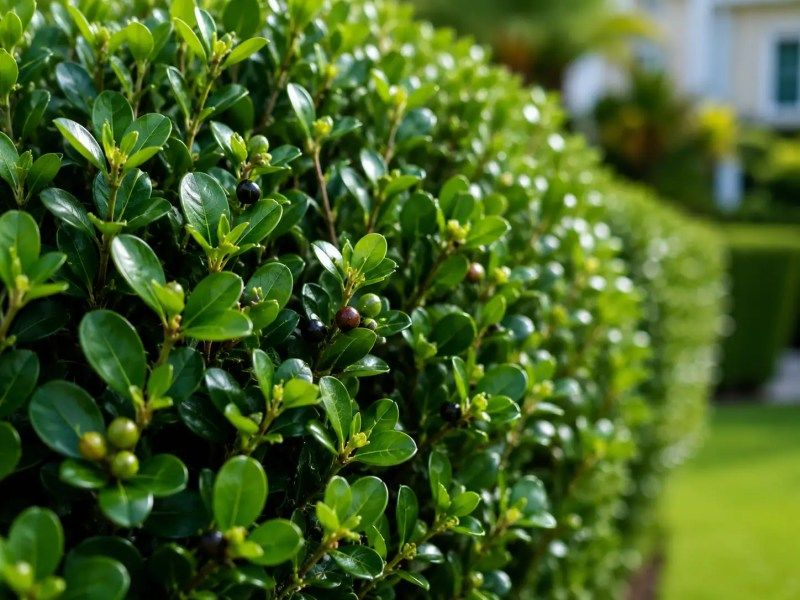
For narrow spaces where a big hedge would feel like too much, Florida privet brings a lighter touch. It has a graceful, old-Florida look that suits cottage gardens, side yards, and property lines where you want privacy without building a green fortress.
Florida privet can grow into a rounded shrub or small tree, which makes it flexible along a boundary. Left informal, it creates dappled shade and a breezy screen that cools the edge of the yard while still allowing some airflow, a useful balance in humid neighborhoods.
The small flowers are not flashy from across the street, but pollinators appreciate them. Birds may use the branching for shelter, and the plant blends easily with other natives like firebush, coontie, and beautyberry for a layered wildlife border.
One reason homeowners like it is its ability to look natural instead of stiff. That matters on long property lines, where a single formal hedge can feel heavy or monotonous.
Plant Florida privet in full sun to part shade and give it decent drainage. It can handle typical sandy Florida soil once established, but spacing is important, since crowding shrubs too tightly leads to more trimming and weaker airflow.
4. Firebush
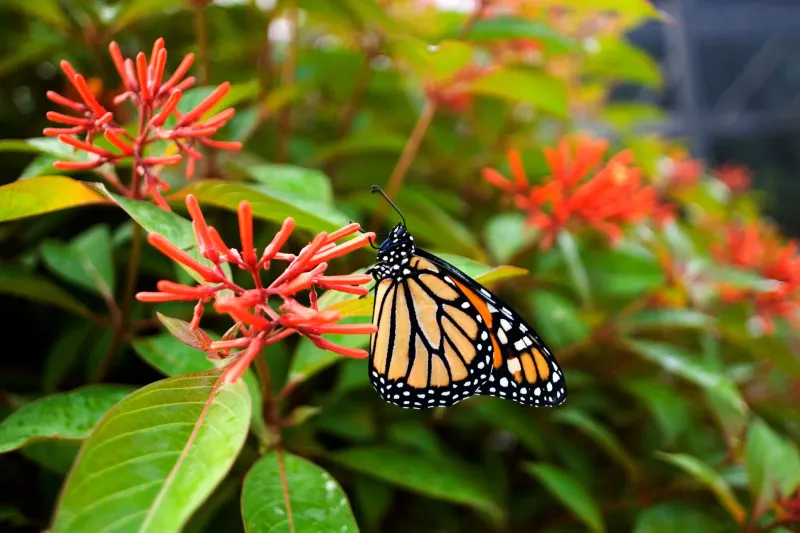
Hummingbirds seem to find firebush before people finish admiring it. The red-orange flowers glow in the heat, turning a plain property line into a moving, buzzing border that feels alive even in the steamiest months.
Firebush earns its spot because it brings fast visual payoff where many shrubs simply sit green. In full sun, it can grow into a leafy mass that shades bare ground, reduces the hard look of fences, and helps cool the feel of nearby paths or patios.
Butterflies, bees, and hummingbirds all use the flowers, so it is a strong choice for gardeners who want a wildlife-friendly screen. In warmer parts of Florida, it can be evergreen or nearly so, while colder areas may see it die back and return from the roots after freezes.
Along property lines, firebush looks best when allowed to keep some of its natural shape. Too much shearing removes flowers, so light pruning is usually better than constant clipping.
Give it sun, room to spread, and well-drained soil. It handles heat beautifully once established, but young plants should be watered deeply while they build roots, especially in sandy beds that dry quickly after rain.
5. Beautyberry
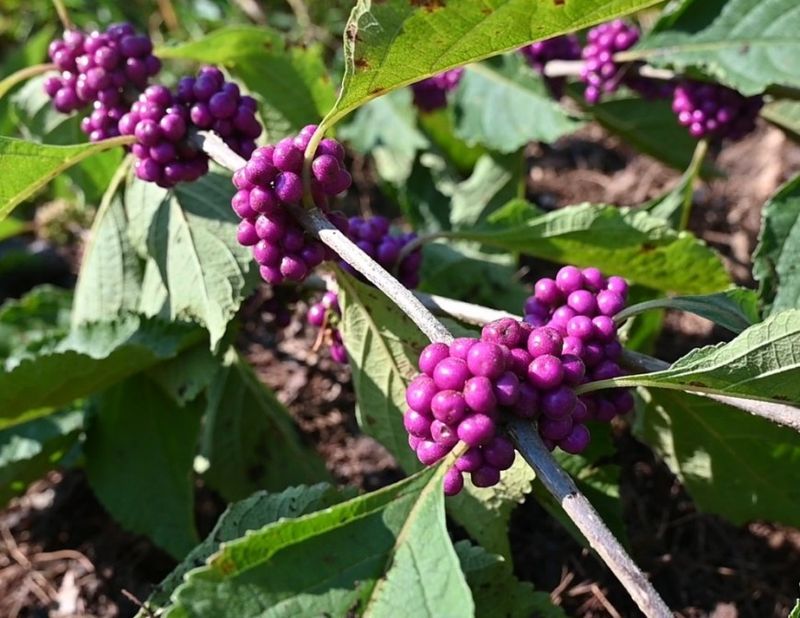
One day in late summer, beautyberry suddenly looks like someone tucked purple beads along every stem. That burst of color is its signature, and it gives a property line a memorable look without relying on thirsty flowers.
American beautyberry is different from the denser hedge shrubs on this list because it has an open, arching habit. Instead of making a solid wall, it creates a softer, layered edge that shades soil, fills awkward gaps, and blends beautifully under pines or oaks.
The berries are a major reason to plant it. Birds feed on them, and the fruit can add color through the warm, sticky part of the year when many yards look tired.
Beautyberry is especially useful in part shade, where some flowering shrubs struggle. It works well behind lower plants, at the back of a native border, or along a wooded property line where a clipped hedge would look out of place.
Pruning is simple. Many gardeners cut it back in late winter to encourage fresh growth, since berries form on new wood.
Plant it in sun to part shade, and do not panic if it looks loose rather than formal. That relaxed shape is exactly what makes it good for cooling a yard edge while keeping the planting natural and wildlife friendly.
6. Yaupon Holly
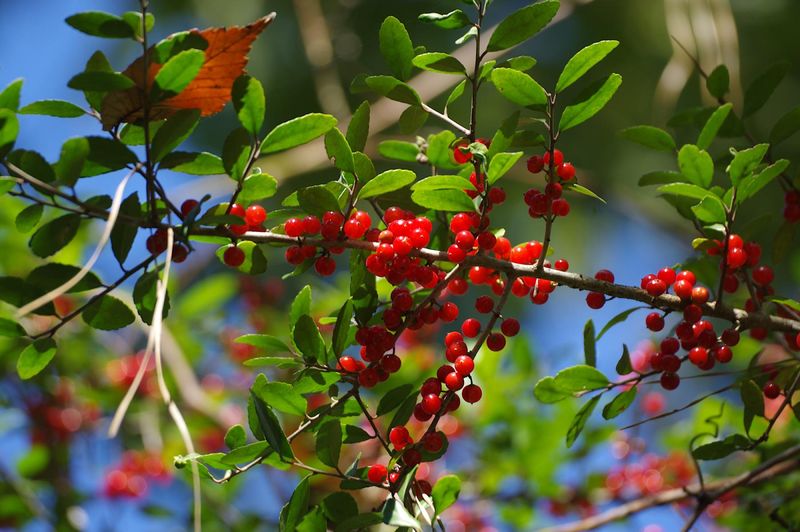
A tough boundary plant should not sulk every time the weather changes, and yaupon holly has a reputation for staying steady. Heat, sandy soil, pruning, and urban conditions are all part of daily life in many Florida yards, and this native handles them with impressive calm.
Yaupon holly is a strong pick for property lines that need year-round structure. Its small evergreen leaves create shade and visual screening, while female plants can produce red berries that brighten the yard and feed birds.
Homeowners can use it several ways. It can become a hedge, a small tree, or a mixed-border anchor, depending on pruning and variety.
That flexibility makes it useful near driveways and street-facing edges where you may want screening without blocking every sightline. Dwarf forms can stay lower, while standard forms can grow tall enough to create a real green backdrop.
For best berry production, include at least one male plant nearby for pollination, since male and female flowers are usually on separate plants. If berries matter to you, buy from a nursery that can identify the plant’s sex or recommend a fruiting selection.
Yaupon holly likes sun to part shade and well-drained soil. Once established, it is a practical, low-fuss choice for Florida gardeners who want a dependable evergreen edge with wildlife value.
7. Wax Myrtle
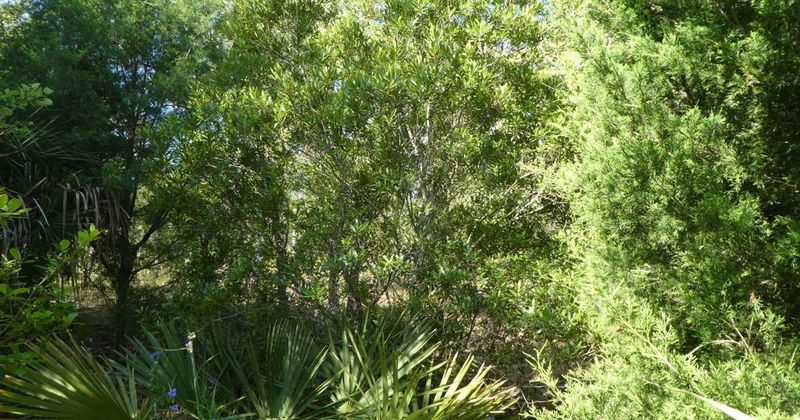
When a fence feels too hot, too bare, or too close, wax myrtle can change the whole mood of that edge. It grows quickly compared with many native shrubs, which makes it popular where homeowners want a living screen sooner rather than later.
Wax myrtle is valuable because it can become a tall, informal buffer that filters wind and casts useful shade. Along property lines, that height can help cool the space below, hide hard surfaces, and create a more private backyard without the boxed-in feeling of a solid wall.
The foliage has a clean, slightly spicy scent when crushed, and the small waxy berries are used by birds. Historically, the waxy coating on the berries was used to make bayberry candles, which is a fun bit of plant history for such a practical shrub.
It is a good match for wetter spots than many hedge plants tolerate, though it also adapts to average well-drained soil. That makes it handy in Florida yards where one side of the property dries fast and another holds water after heavy rain.
Give wax myrtle room, because it can get large. Regular light pruning keeps it full, while hard shearing can make it look woody over time.
Use it where you need a taller native screen, especially along back fences, drainage edges, or wide side yards that can support a more natural planting.