
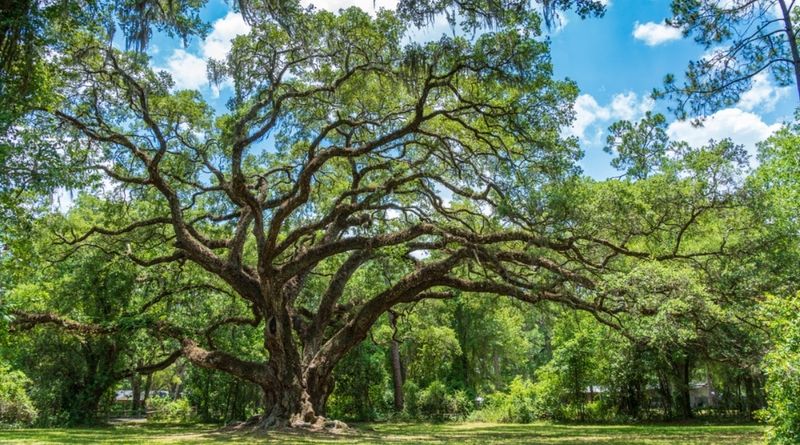
Ligustrum grows fast, but it often turns into a pruning chore and can spread where it is not wanted. Florida yards need better property-line trees that handle heat, sandy soil, storms, and wildlife without becoming a weekly project.
The native trees below give you screening, shade, flowers, berries, or structure with far less shearing. Pick the one that fits your space, and your fence line can look softer and more natural year after year.
1. Wax Myrtle
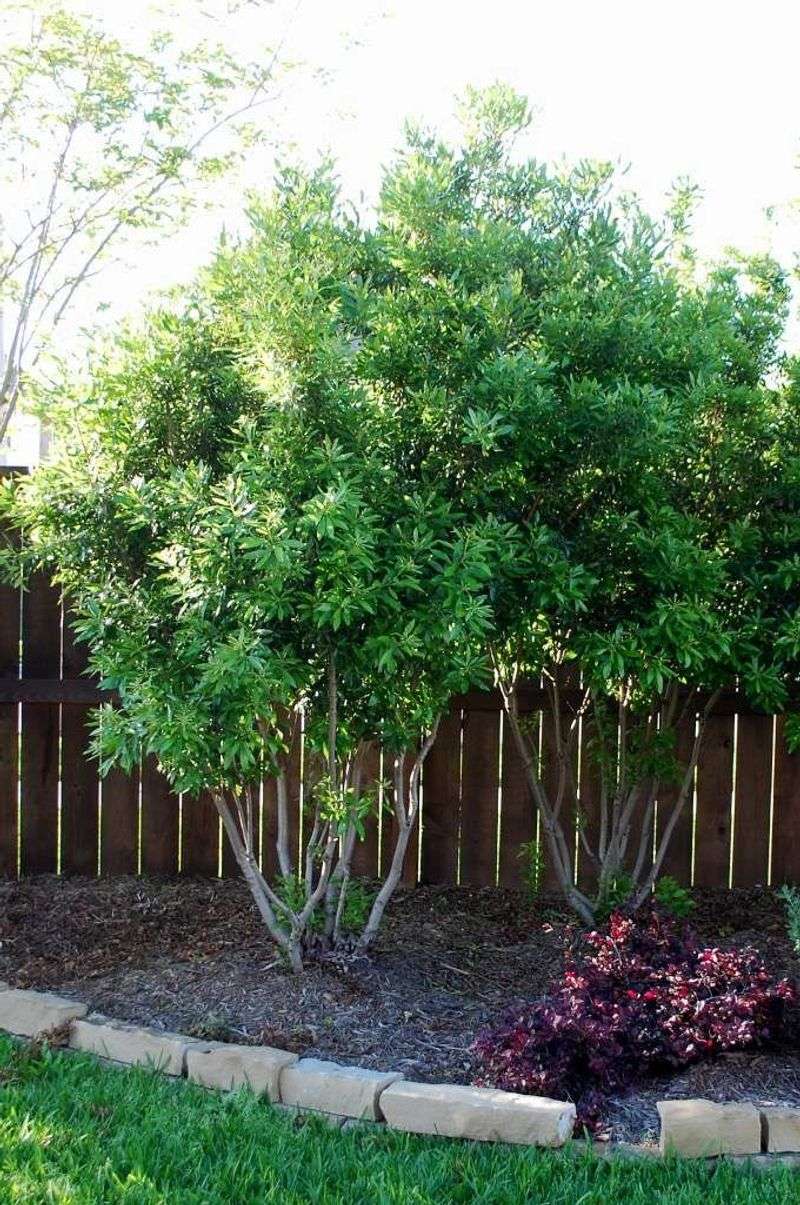
When a neighbor’s view feels a little too close, wax myrtle is the native that steps in without acting fussy. It grows quickly, stays evergreen in much of Florida, and can form a loose green screen that looks more natural than a squared-off ligustrum wall.
Wax myrtle, also called southern bayberry, is especially useful along property lines because it accepts pruning but does not demand constant clipping. Left alone, it becomes a small multi-trunk tree with soft, fine-textured foliage that moves nicely in the breeze.
That relaxed shape is a big part of its charm, especially in coastal and sandy yards where formal hedges can look stiff.
Birds are another reason to plant it. Female plants can produce waxy berries that feed wildlife, and the dense branching gives small birds cover from predators.
For Florida homeowners who want privacy fast, this is often one of the easiest swaps, especially in full sun to part shade with decent drainage.
2. Simpson’s Stopper
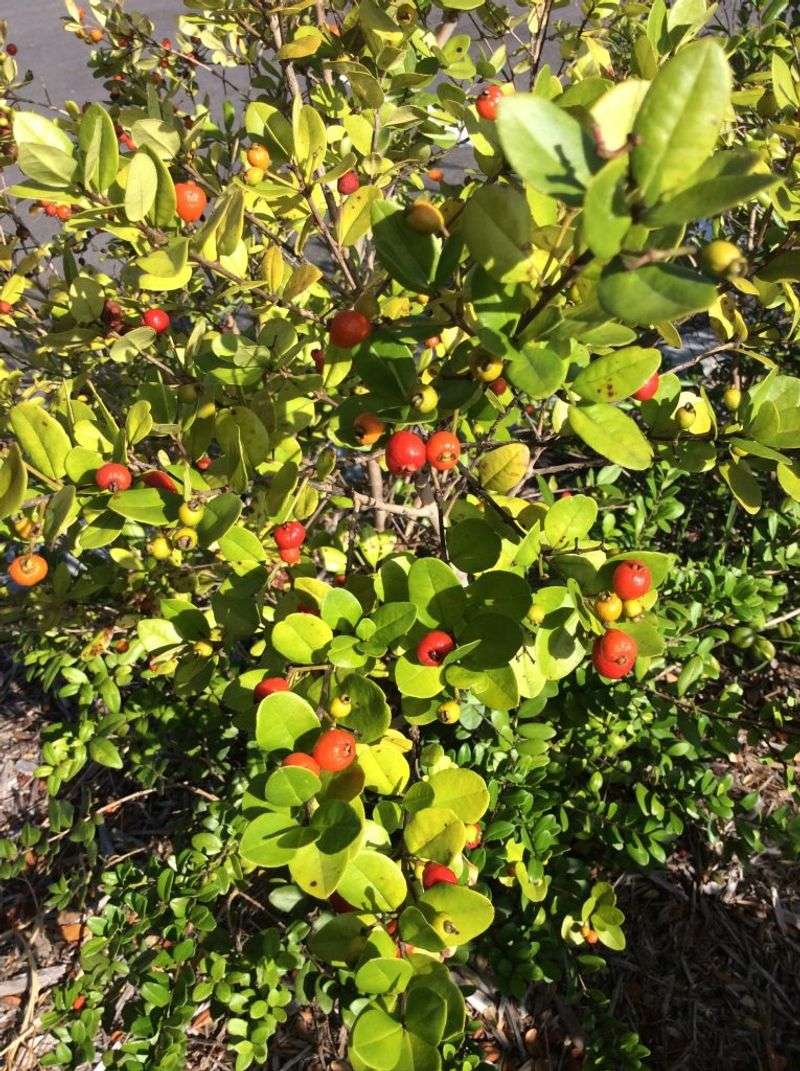
A tidy yard does not have to mean a hedge trimmed into a rectangle. Simpson’s stopper brings a polished look on its own, with glossy leaves, fragrant white flowers, and colorful berries that make a property line feel planted instead of blocked.
Compared with wax myrtle, Simpson’s stopper has a more refined, compact personality. It grows at a moderate pace and usually stays manageable near homes, patios, and side yards.
That makes it a smart choice where ligustrum would keep pushing into walkways or swallowing a narrow bed.
Small pollinators visit the flowers, and birds feed on the berries, so the screen works harder than a plain green wall. It also tolerates many Florida conditions once established, including heat and periods of dry weather.
Give it sun to part shade, avoid soggy spots, and let it develop into a naturally handsome small tree or tall screen with only light shaping now and then.
3. Yaupon Holly
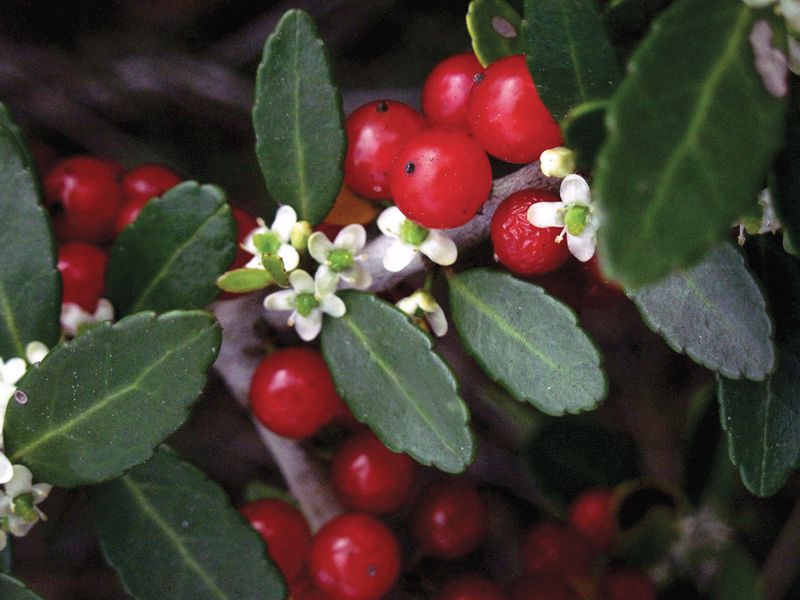
Red berries in winter can make a fence line look planned instead of forgotten. Yaupon holly gives Florida gardeners that seasonal spark while still doing the everyday job of screening, softening edges, and holding its shape better than many fast-growing shrubs.
This native holly is tougher than it looks. It handles sun, heat, sandy soil, and occasional wet spells better than many ornamental choices, which is helpful in Florida landscapes that swing from dry weeks to heavy rain.
Along a property line, it can be grown as a small tree, a loose hedge, or a mixed screen with other natives.
Unlike ligustrum, yaupon holly does not need to be shaved constantly to stay attractive. A few selective cuts can lift the canopy or guide the shape, but its naturally small leaves and branching structure already look neat.
Plant female selections if you want berries, and include a male nearby for best fruiting. Birds will notice the difference before your neighbors do.
4. Dahoon Holly
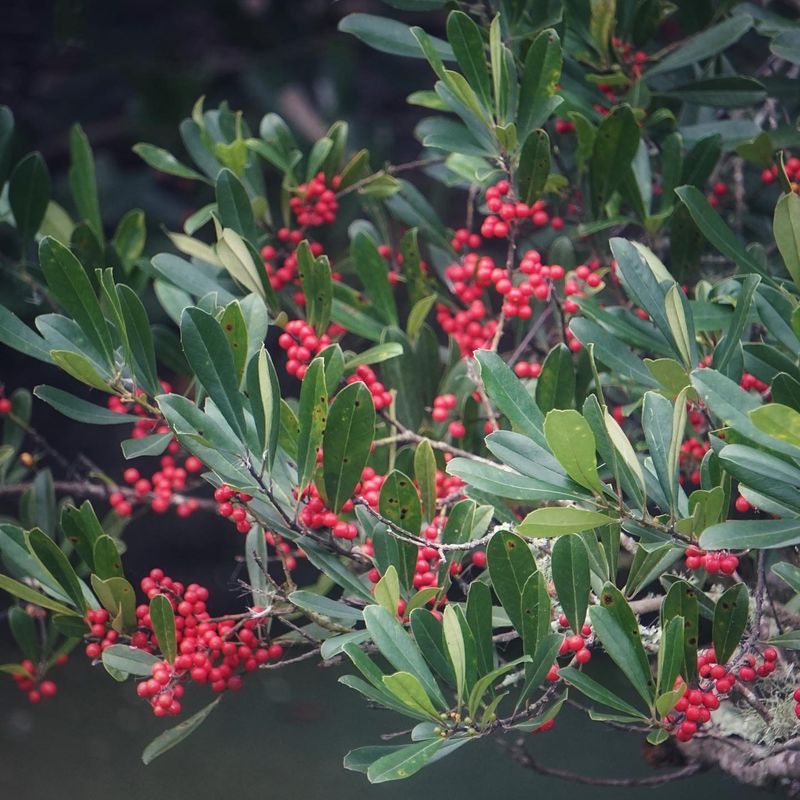
Got a low corner where the soil stays damp after a storm? Dahoon holly is one of the better native answers for Florida property lines that are not perfectly dry, especially where a regular hedge sulks after heavy rain.
Dahoon holly has an upright shape that works well as a living screen without becoming a bulky green box. Its glossy foliage feels clean and evergreen, while bright red berries add color during the cooler months.
Because it can grow into a small to medium tree, it is best for property lines with enough room for a taller, more graceful screen.
The real difference is its comfort with moist conditions. Many Florida yards have swales, drainage dips, or fence lines that catch runoff during summer storms.
Dahoon holly can fit those spots better than drought-only plants, though it still should not be planted where roots sit underwater all the time. Use it where you want privacy plus storm-season toughness, then prune lightly to remove crossing limbs rather than shearing the whole plant flat.
5. Red Cedar
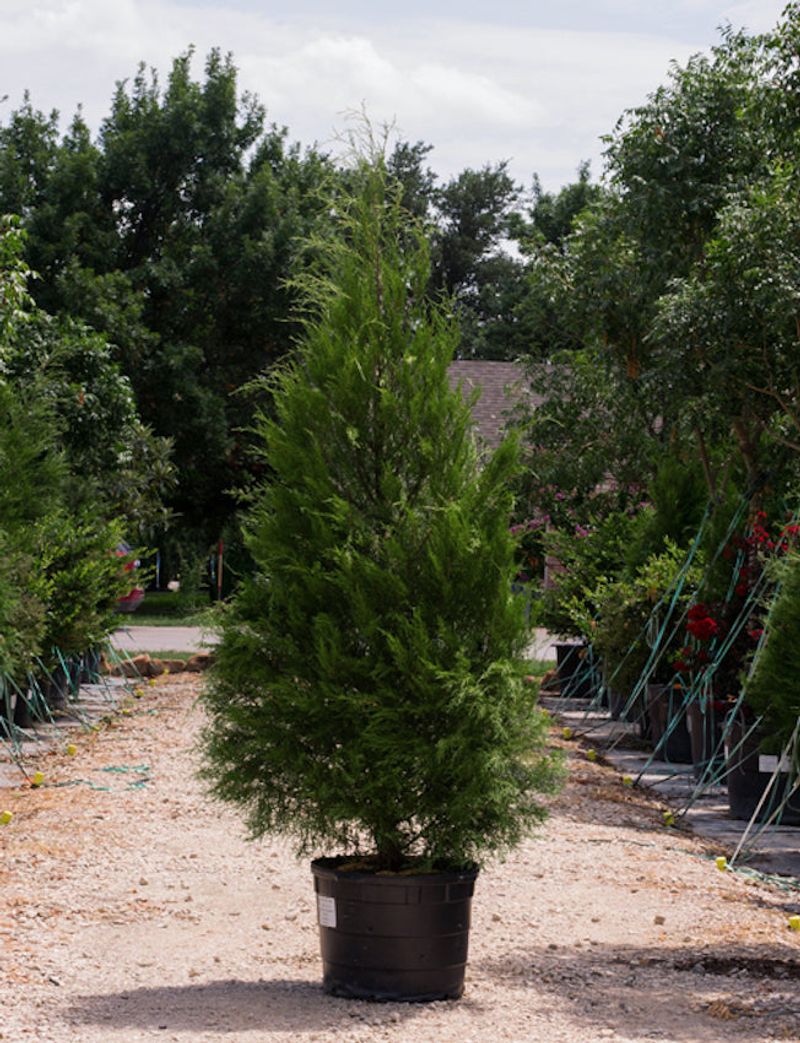
For a stronger visual stop than a leafy hedge, red cedar brings the look of a living green wall without the barbered maintenance. Its dense evergreen foliage can block views, slow wind, and give a property line a more settled, old-Florida feel.
Eastern red cedar is a native conifer that suits sunny, well-drained sites, especially in larger yards where it has room to widen with age. It is not the right plant for a tight walkway, but along a broad side lot or back fence, it can be a dependable screen.
The texture is completely different from ligustrum, which makes the landscape feel less like every other clipped hedge on the block.
Wildlife value is a bonus. Birds use the branches for shelter, and the bluish cones on female trees are eaten by several species.
Red cedar also handles drought once established, a helpful trait in sandy Florida soils. Keep young trees watered while roots settle in, then let them grow naturally.
Pruning is mostly about removing damaged limbs after storms, not constant shaping.
6. Walter’s Viburnum
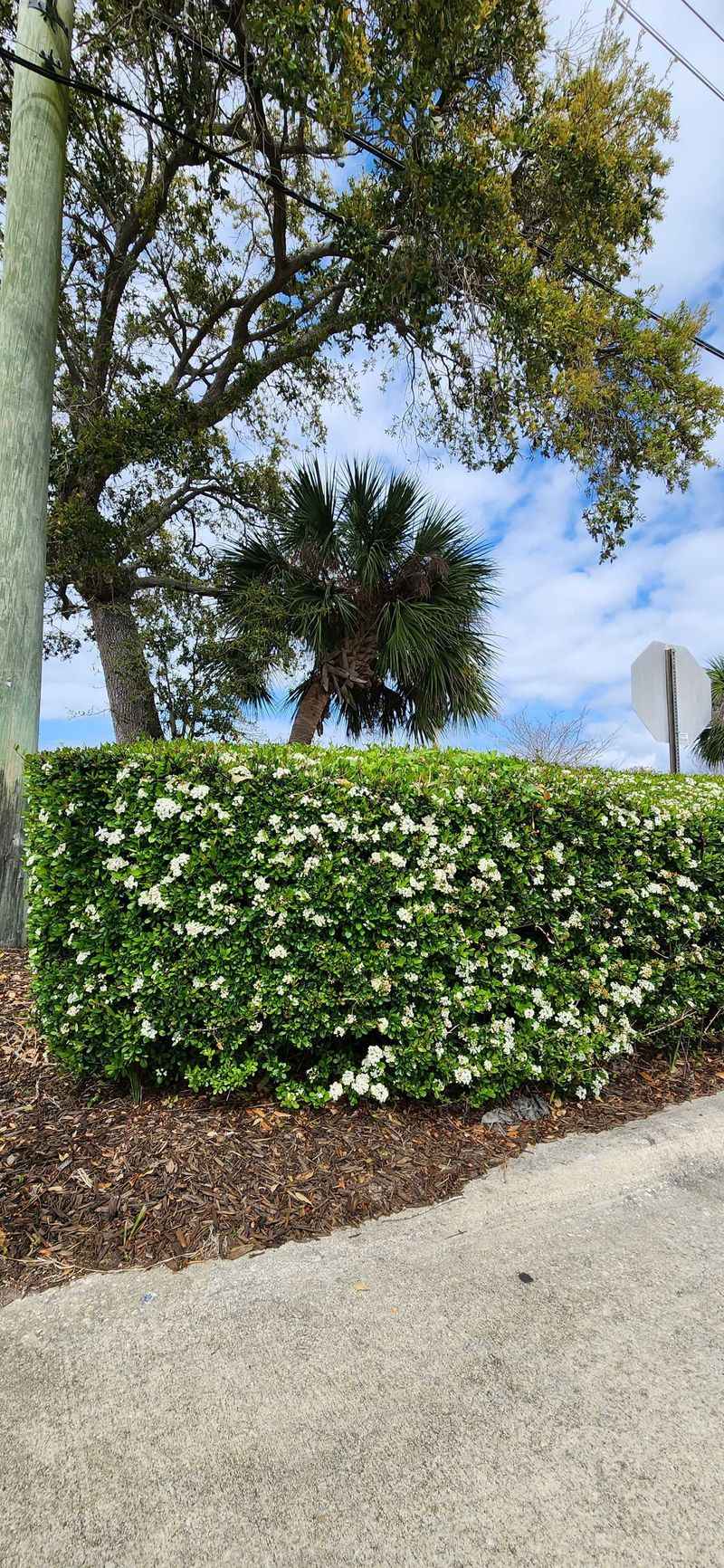
Spring flowers along a boundary line feel like a small reward for choosing the right plant. Walter’s viburnum can give you that pretty bloom show while still working as a practical screen for Florida homes.
This native can be grown as a large shrub or trained into a small tree, which makes it flexible along fences, driveways, and backyard edges. It has smaller leaves than many hedge plants, so even without tight clipping it often reads as neat and intentional.
Some selections are more compact, while others grow taller, so check the mature size before planting a long row.
Walter’s viburnum stands out because it blends privacy with pollinator value. Clusters of white flowers draw bees and butterflies, then berries can support birds later in the season.
It prefers sun to part shade and generally performs best in well-drained soil, which matches many Florida yards. Instead of shearing it into a hard line, prune after flowering only where needed.
The result is softer, more useful, and far less work than ligustrum.
7. Cabbage Palm
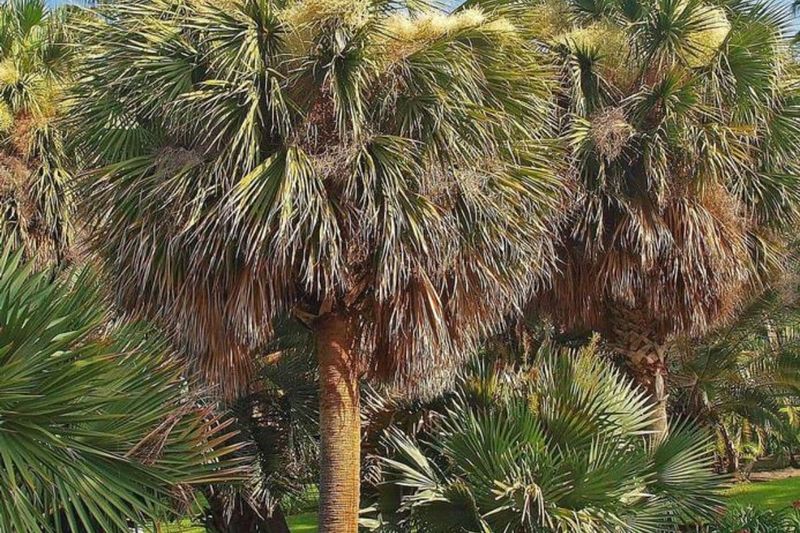
Not every property-line screen has to be a solid wall from ground to sky. Cabbage palm gives vertical structure, Florida character, and storm-wise toughness when paired with lower native shrubs beneath it.
As Florida’s state tree, cabbage palm fits the landscape in a way ligustrum never can. It is especially useful where you want to mark a boundary, frame a view, or add privacy above fence height without creating a dark tunnel.
The trunk stays narrow, so it can work where a broad-canopied tree would crowd the yard.
The trick is using it as part of a layered screen. Plant cabbage palms with wax myrtle, Simpson’s stopper, Walter’s viburnum, or coontie below, and you get height, habitat, and a more natural border.
Mature palms tolerate heat, salt spray in coastal areas, and sandy soils, though new plantings need careful watering while they establish. Maintenance is simple: avoid hurricane cuts, remove only dead fronds when needed, and let the palm keep its natural crown.