
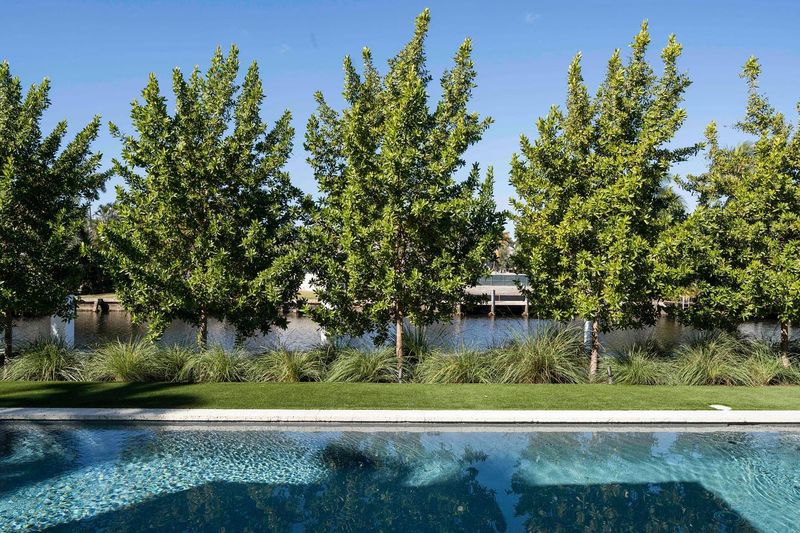
Podocarpus is everywhere in Florida, but it is not the only way to block a fence, road, or nosy view. Native trees can give you privacy while also feeding birds, handling local weather, and fitting into Florida soil.
Many need less fuss once they settle in, especially compared with clipped hedges that always seem to want trimming. Here are seven Florida native trees that can turn a bare yard edge into a living screen with real purpose.
1. Southern Wax Myrtle
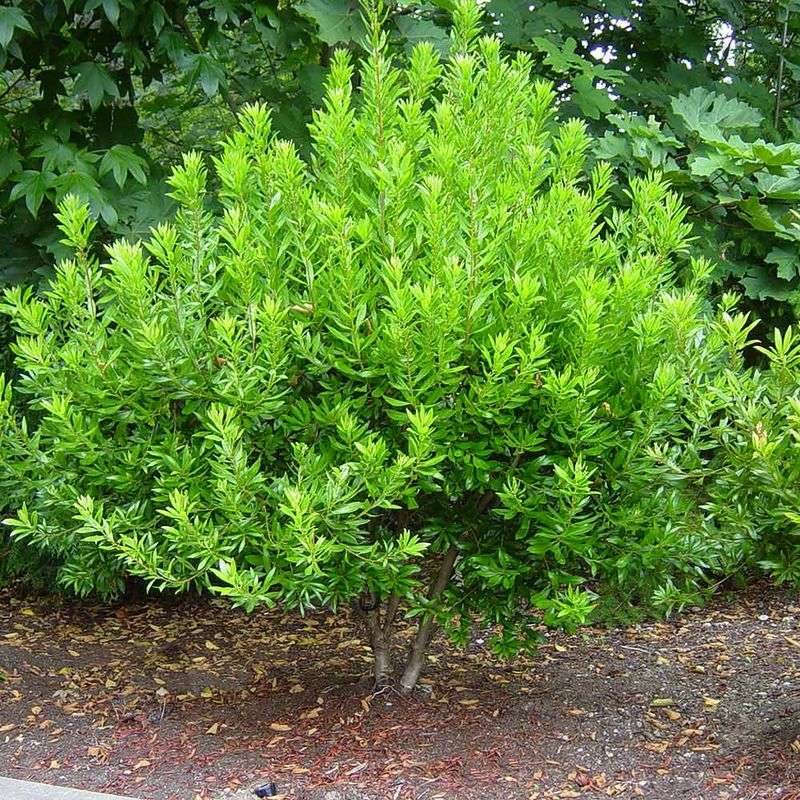
If you want privacy fast without building a green wall that looks stiff, Southern wax myrtle is the friendly workhorse of Florida screening. It grows quickly, takes pruning well, and can be shaped as a loose hedge, small tree, or layered windbreak along a fence line.
Florida gardeners often choose it because it handles sandy soil, heat, and occasional wet spells better than many formal hedge plants. Its narrow leaves create a soft, full look, and female plants can produce waxy gray berries that birds enjoy in fall and winter.
Use Southern wax myrtle where you need a screen sooner rather than later, such as beside a patio, pool cage, side yard, or driveway. Give it sun to part shade and enough room to mature, since it can reach roughly 15 to 25 feet tall depending on conditions and pruning.
The one catch is drainage and spacing. It can sucker and spread, which is useful for a thick screen but less welcome in a tiny bed, so plant it where its natural habit works for you instead of against you.
2. Simpson’s Stopper
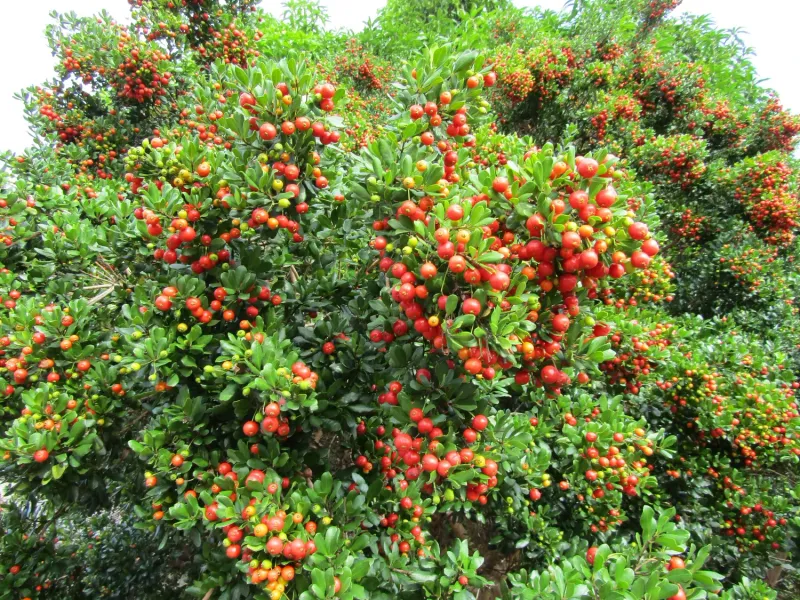
A polished front-yard screen does not have to look like a clipped rectangle. Simpson’s stopper brings a neater, more refined feel than many wild-looking natives, which makes it a strong choice for entry walks, small patios, and visible property lines.
Glossy evergreen leaves give it year-round coverage, while small white flowers add a light, sweet fragrance when in bloom. Birds are drawn to the red to orange berries, so the screen does more than block a view, it turns a quiet corner into a feeding stop.
In many Florida yards, Simpson’s stopper fits where podocarpus is used by default: narrow beds, foundation edges, and side screens. It is usually slower than wax myrtle, but that can be a benefit if you do not want a plant that constantly needs correction.
Plant it in sun or part shade and avoid burying it in soggy ground. Once established, it is fairly drought tolerant, which is helpful for homeowners working with sandy soil and watering limits.
For a clean look, use several plants spaced to allow their crowns to touch as they mature. The result feels intentional, native, and much more alive than a flat green hedge.
3. Yaupon Holly
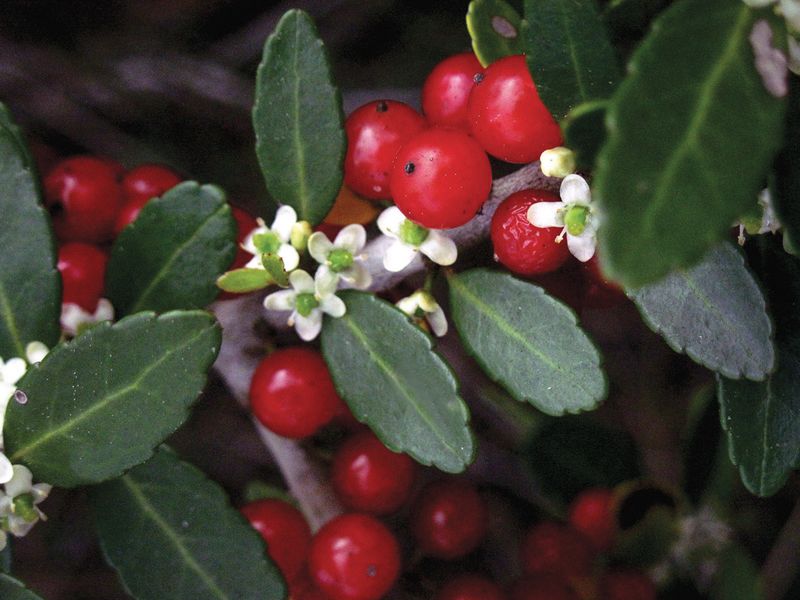
Here is the screen for people who like their yard a little tidy but not boring. Yaupon holly has small evergreen leaves, a naturally dense habit, and bright berries on female plants that can light up a winter landscape.
It is especially useful in places where a heavy, oversized hedge would feel cramped. Standard forms can become small trees, while selected compact or weeping forms can suit different design styles, from crisp and formal to relaxed and coastal.
Yaupon holly is native to Florida and much of the Southeast, and it tends to shrug off heat once established. It also has good wildlife value, since birds feed on the berries, especially when other food is limited.
For privacy, plant yaupon holly in a staggered row instead of a single straight line if space allows. That small design move fills gaps faster and makes the screen look more natural from the house and the street.
One fun history bit: yaupon is North America’s only native caffeinated plant. Indigenous people used it to make a traditional drink, though today’s homeowner usually grows it for screening, berries, and resilience rather than tea.
4. Dahoon Holly
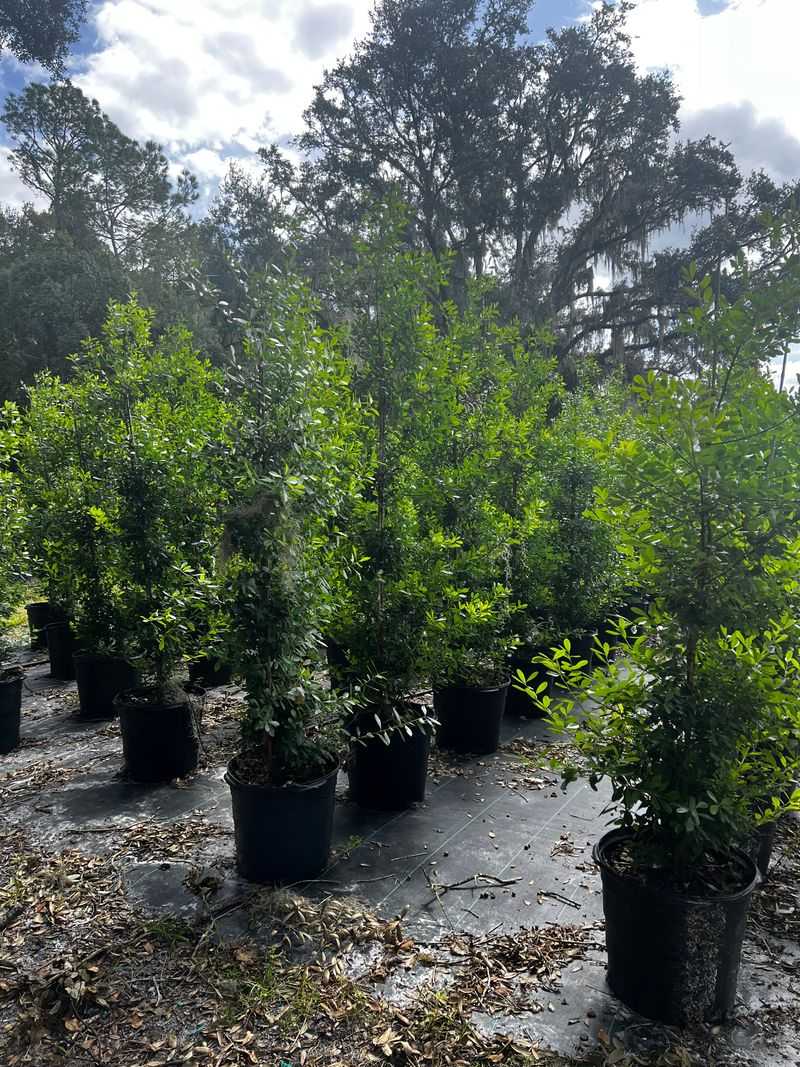
Low, damp corner of the yard always giving you trouble? Dahoon holly can turn that soggy problem area into a handsome evergreen screen, especially in parts of Florida where brief flooding or wet soil makes other plants sulk.
Unlike yaupon holly, which often fits drier, tighter spaces, dahoon holly is a natural pick for moist sites. It has a graceful shape, evergreen foliage, and red berries on female trees that birds can use as a seasonal food source.
It can grow into a small to medium tree, often around 20 to 30 feet in home landscapes, so it works well when you want height without a massive canopy. Along a rear property line, it can soften the view of neighboring roofs, sheds, or fences while still feeling light and airy.
Give dahoon holly sun to part shade and room for its mature spread. If you want berries, plant a female selection and make sure a compatible male holly is nearby for pollination.
This is not the fastest privacy plant on the list, but it earns its place by solving a different Florida problem. Where drainage is imperfect, dahoon holly offers screening without forcing you to fight the site every season.
5. Cabbage Palm
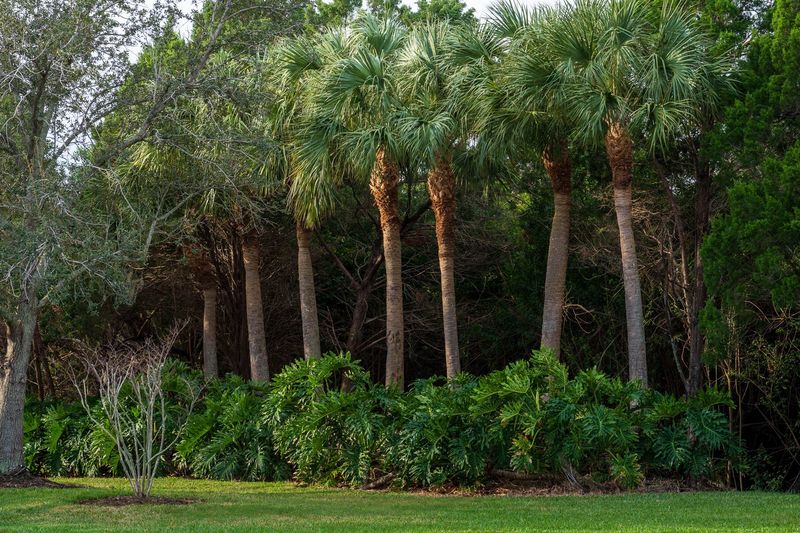
A cabbage palm screen feels like Florida the moment you see it. Instead of forming a solid wall from ground to sky, it creates height, shade, and a strong sense of place, especially when paired with native shrubs below.
On its own, cabbage palm will not block a low fence view the way wax myrtle can. Its real strength is vertical screening: hiding second-story windows, softening a tall blank wall, or adding privacy around a pool area without making the yard feel closed in.
Florida’s state tree is also famously tough. Established cabbage palms handle heat, wind, salt spray in coastal areas, and sandy soil, making them useful for yards that need storm-aware planting rather than delicate ornamentals.
For the best privacy effect, think in layers. Plant cabbage palms as the high canopy, then add Simpson’s stopper, yaupon holly, firebush, or other native shrubs beneath to fill the lower view.
A row of identical podocarpus can look like a green fence. A cabbage palm grouping, backed by native understory plants, looks like a small piece of Florida habitat that happens to give you privacy too.
6. Red Bay
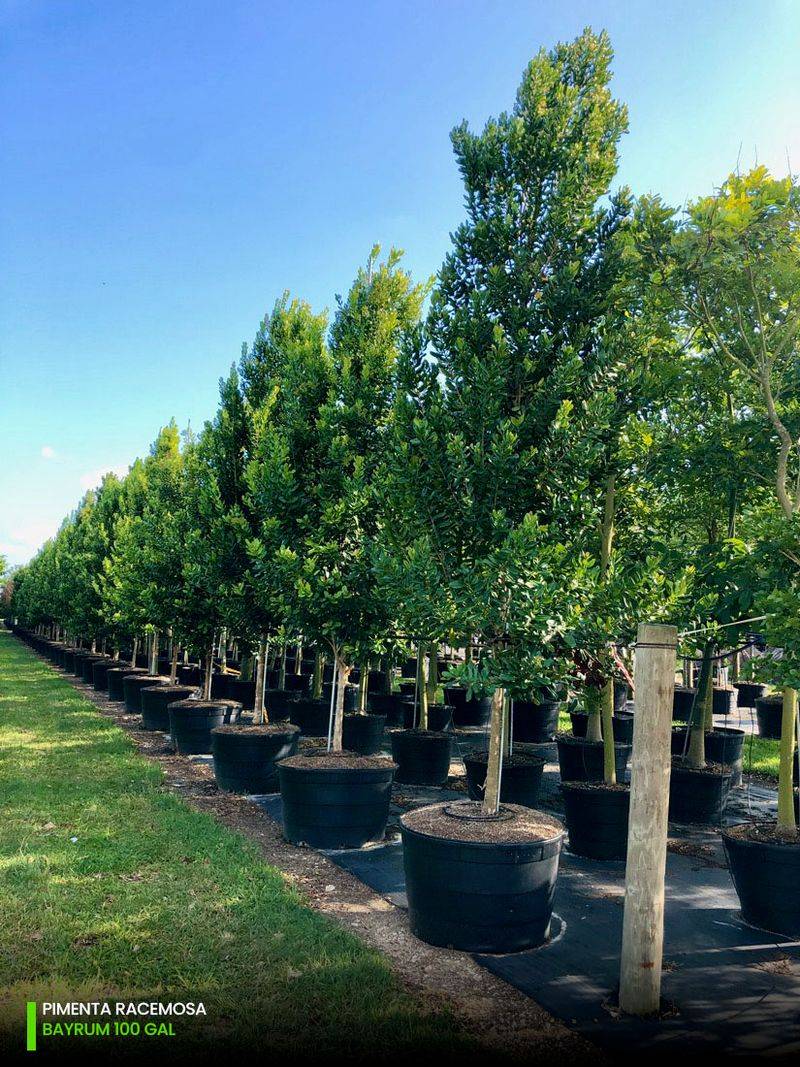
Crush a red bay leaf and you get a spicy, woodland scent that feels far removed from a plain hedge. For homeowners who want a more natural privacy border, red bay offers evergreen cover with a richer, wilder character.
It is a good fit for informal screens, especially along larger property lines, wooded edges, or backyard areas where a perfectly clipped look would feel out of place. The foliage is dense enough to soften views, and the tree can support wildlife as part of a native planting.
Red bay is also connected to native butterflies, including the palamedes swallowtail, whose caterpillars use bay family plants. That gives it a wildlife role that podocarpus simply cannot match.
There is one serious caution for Florida gardeners: laurel wilt disease has affected red bay in many areas. Before planting, check local UF-IFAS or county extension guidance so you understand the risk in your part of the state.
Where it is appropriate, use red bay as part of a mixed screen rather than a single-species row. Combining it with wax myrtle, hollies, or other natives creates a more resilient border if one plant struggles later.
7. East Palatka Holly
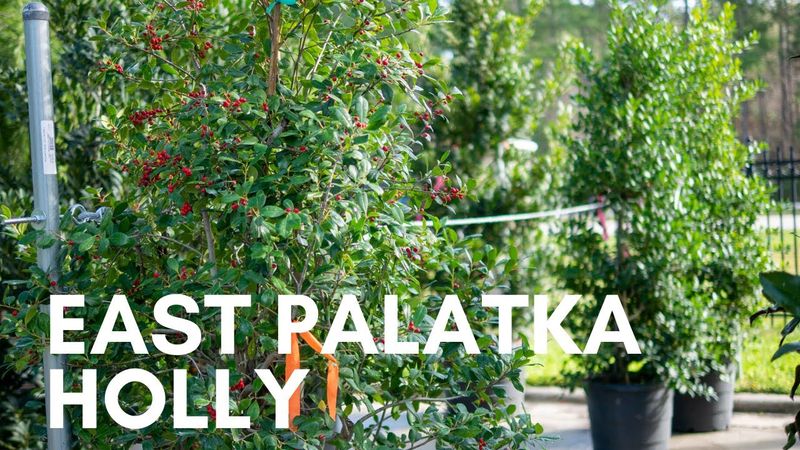
Some yards need privacy without a tree that spreads halfway across the lawn. East Palatka holly is useful for that narrow-but-tall job, with an upright shape that fits along driveways, side yards, and property lines where space is limited.
This Florida native holly selection is known for its strong vertical form, evergreen leaves, and showy red berries on female trees. It gives a more tree-like look than a hedge, which can make a front yard feel less boxed in while still screening views from the street.
Compared with podocarpus, East Palatka holly brings more seasonal interest and better wildlife value. Birds can feed on the berries, and the plant blends well with other Florida natives in a layered bed.
Use it where you want height, structure, and a cleaner outline. It can reach roughly 30 feet or more in favorable conditions, so do not tuck it under low power lines or tight eaves.
For a stronger screen, plant several in a staggered pattern and allow lower native shrubs to fill the base. The combination gives you privacy at eye level and above, without relying on one flat wall of foliage.