
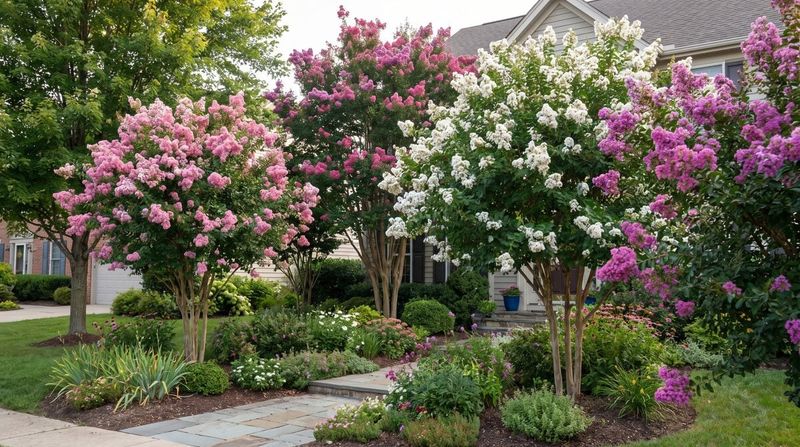
Crape myrtle looks neat above ground, but its roots can become a headache near driveways, walks, and patios. Florida gardeners have better native choices that bring shade, flowers, berries, and wildlife value without asking for constant attention.
The key is picking smaller, well-behaved trees and giving them the right space from pavement.
1. Simpson’s Stopper
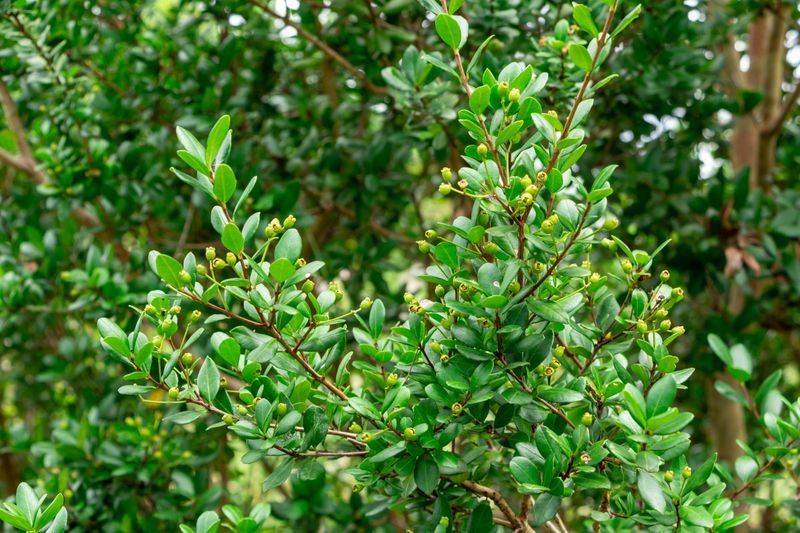
A tidy little evergreen that smells faintly spicy after rain, Simpson’s stopper feels made for Florida entry gardens. It brings a polished look without acting like a giant shade tree trying to take over the whole front yard.
For homeowners worried about pavement, its biggest advantage is size. Simpson’s stopper usually stays in the small-tree range, often around 15 to 25 feet, so the root system does not need to become as wide and forceful as larger canopy trees.
Planted with a sensible setback from concrete, it is a strong choice for lining a driveway, softening a garage wall, or framing a walkway.
Wildlife gets a bonus too. White spring flowers attract pollinators, and red-orange berries feed birds later in the year.
The evergreen leaves also keep beds from looking bare in winter, which matters in Florida landscapes where outdoor spaces stay visible year-round.
Give it sun to part shade and well-drained soil. Once established, Simpson’s stopper handles dry spells better than many ornamental imports, making it a practical swap for crape myrtle in sandy Florida yards.
2. Dahoon Holly
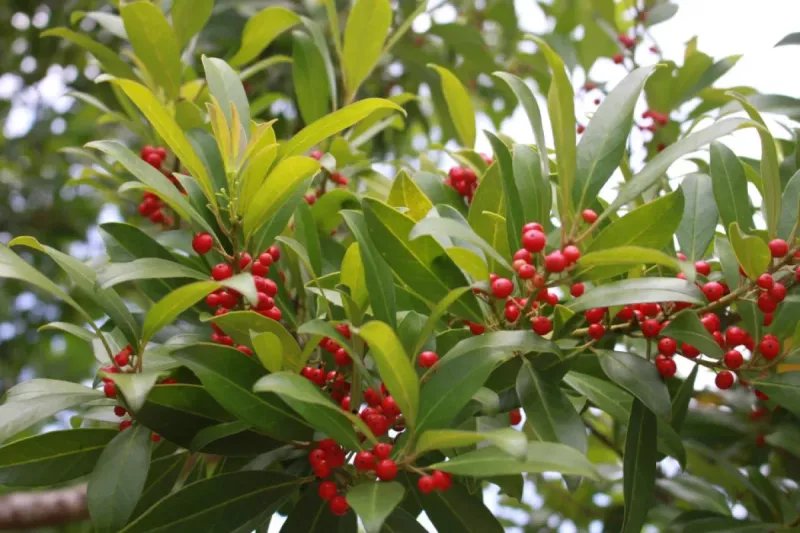
Red berries on a winter-green tree can make a Florida yard look dressed up without plastic decorations. Dahoon holly earns its place here because it brings that seasonal color while staying more restrained than many broad-canopy trees.
This native holly is especially useful in wetter parts of the yard, including low spots that stay damp after summer storms. In Florida, that can be a real problem-solver.
Instead of fighting soggy soil near a swale or drainage edge, you can plant a tree that naturally tolerates those conditions.
Dahoon holly can grow taller than some small ornamentals, often reaching 20 to 30 feet, so placement still matters. Keep it several feet from pavement and avoid squeezing it into a narrow strip.
With room to mature, its roots are generally less likely to create the kind of surface-pushing drama homeowners fear from poorly placed ornamentals.
Birds are the real fans. Female trees produce clusters of red berries if a male pollinator is nearby, and those berries help support backyard wildlife.
For a Florida driveway corner, rain garden edge, or property line with moist soil, Dahoon holly offers curb appeal with a native backbone.
3. Yaupon Holly
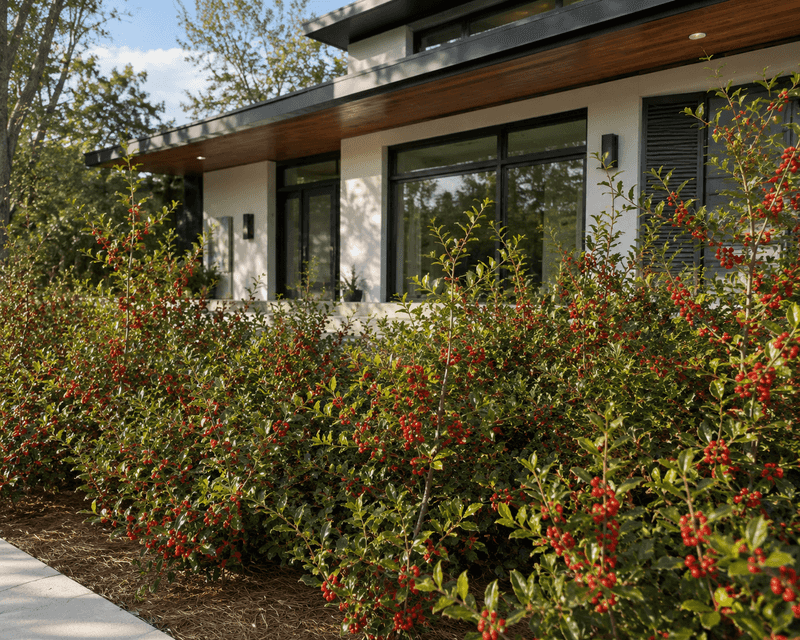
Some trees behave best when they are not trying to impress anyone. Yaupon holly is modest, tough, and almost unfairly useful in hot Florida yards.
Its small leaves give it a fine-textured look, which works nicely near porches, driveways, and foundation beds. Unlike large shade trees, Yaupon holly can be trained as a small multi-trunk tree or kept as a tall screen, so gardeners have control over its shape.
That smaller mature size helps reduce root pressure around nearby hard surfaces when the tree is not planted directly against concrete.
Yaupon holly also shrugs off many common Florida challenges. Sandy soil, sun, reflected heat, and dry spells are all easier for an established plant to handle.
It is native to the Southeast, including Florida and parts of Texas, which makes it a familiar fit for Southern gardeners looking for something durable rather than fussy.
Here is a fun twist: Yaupon holly is North America’s only native caffeinated plant, and Indigenous communities historically used it for tea. In the landscape, female plants can produce red berries that birds visit, adding movement and color near the front yard without inviting a root battle under the driveway.
4. Walter’s Viburnum
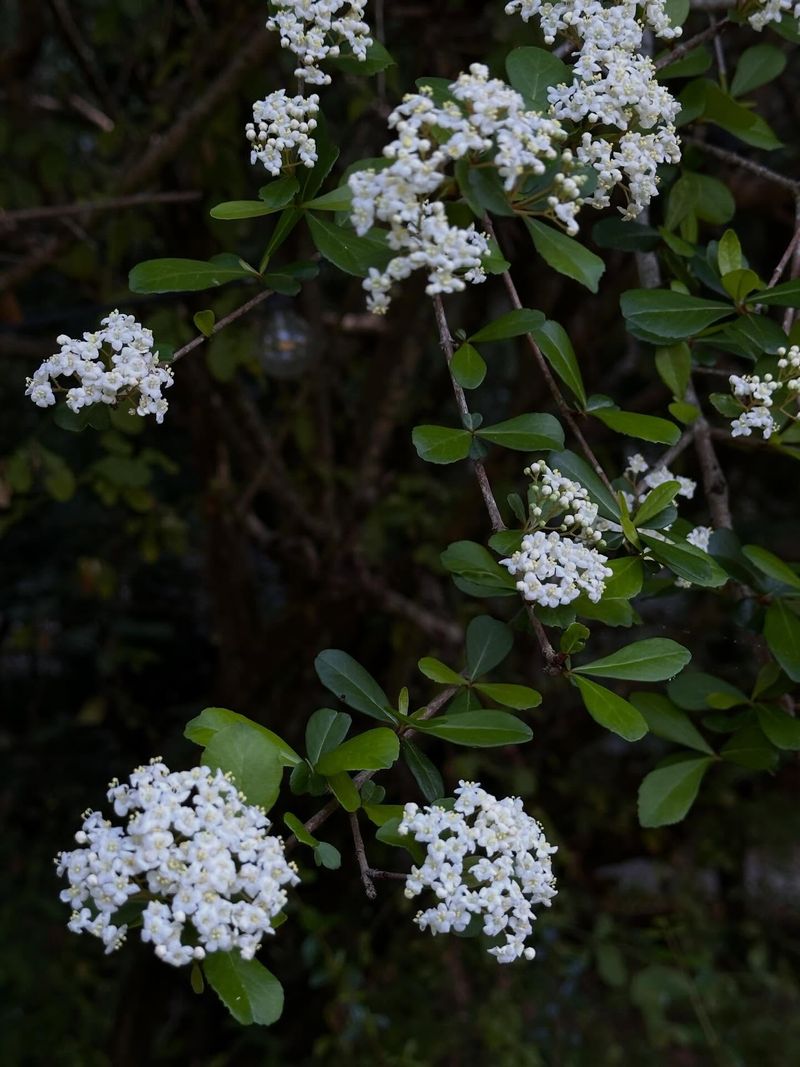
When spring flowers arrive in soft white clusters, Walter’s viburnum looks far more delicate than it really is. Florida gardeners like it because it can be clipped, shaped, or left a little natural, depending on the style of the yard.
As a small tree or large shrub, it fits spaces where crape myrtle is often planted too close to pavement. Walter’s viburnum commonly stays compact enough for beds near a driveway, especially when chosen from smaller forms or pruned lightly after flowering.
Its root system is not known for the same hardscape-lifting reputation as many larger or aggressively spreading trees, though it still deserves breathing room.
Pollinators show up for the blooms, and birds may use the cover and fruit. That makes it a better ecological choice than many purely decorative imports.
It can also help create a layered front yard, with lower perennials in front and taller native screening behind.
Use Walter’s viburnum in sun to part shade, and water it during establishment. After that, it becomes one of those quietly dependable Florida natives that looks intentional without needing weekly fussing.
For narrow beds, select compact cultivars and avoid planting right against a slab or curb.
5. Fringe Tree
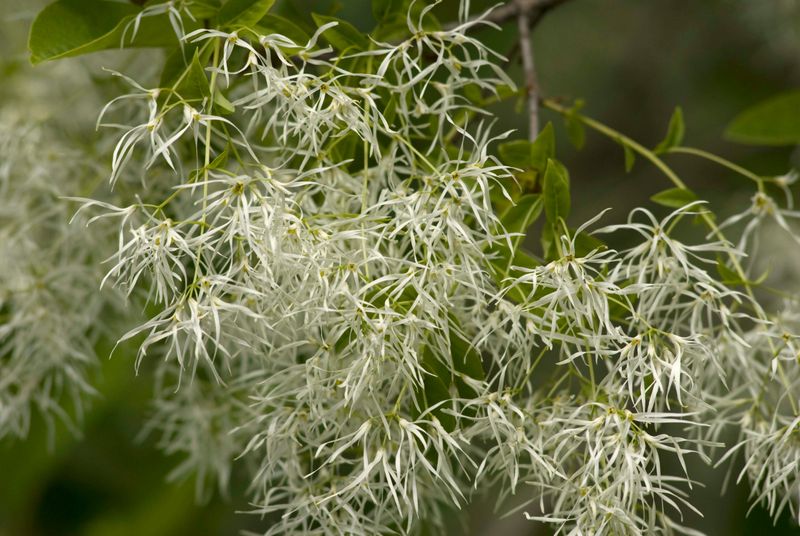
A fringe tree in bloom looks like someone hung soft white tassels from every branch. It is one of the prettiest native small trees for gardeners who want flowers without choosing the same crape myrtle every neighbor already has.
Fringe tree, also called Chionanthus virginicus, works best as a specimen near a front walk, patio edge, or open lawn bed. It grows slowly compared with many ornamental trees, which is helpful near hard surfaces because slow, moderate growth usually means fewer surprises.
Give it enough space from the driveway, and it can become a graceful focal point instead of a maintenance problem.
Its personality is different from the hollies and stoppers on this list. Fringe tree is often deciduous, so it drops leaves in cooler months, then returns with a showy spring bloom.
That seasonal rhythm can be beautiful in North Florida and suitable parts of Central Florida, especially in yards that get part sun and have soil that does not stay bone-dry all the time.
Female trees can produce small bluish fruits that birds may eat. If your goal is a native tree that feels special, refined, and less common, fringe tree is a strong candidate for a spot near the driveway, not in a cramped strip between concrete and the house.
6. Wild Olive
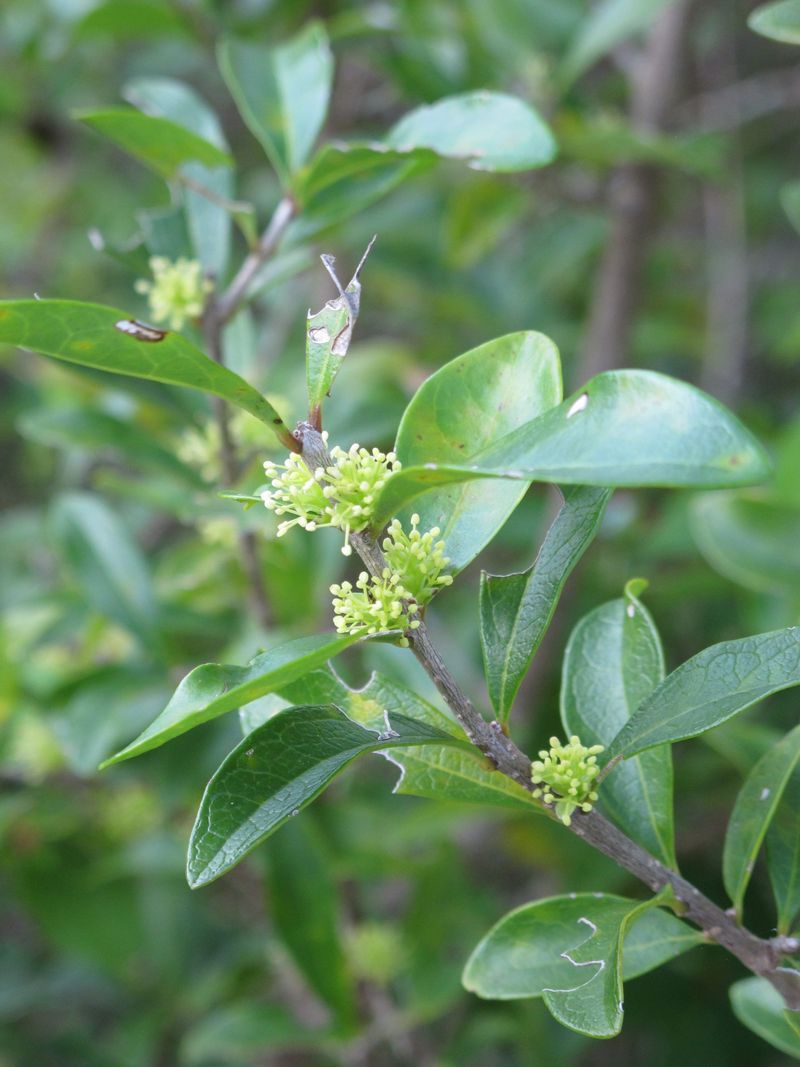
In South Florida and the Keys, wild olive has the quiet charm of a plant that belongs exactly where it is. It does not shout for attention, but its glossy leaves and small fragrant flowers make close-up spaces feel cared for.
Wild olive, also known as Forestiera segregata, is especially useful where gardeners need a small native tree or tall screen for a warm, coastal-influenced yard. Its size stays manageable compared with large shade trees, which makes it easier to place near paved areas with a proper setback.
That is the real lesson with driveway-safe planting: choose a tree whose mature size matches the space before roots become a conflict.
This native can handle sun, heat, and relatively dry conditions once established. It also tolerates pruning, so it can be shaped into a small tree form or used as a privacy screen along a property edge.
Birds appreciate the fruit, while the dense branching gives small wildlife a bit of cover.
Wild olive is not the best fit for every Florida county, so match it to your local conditions, especially in colder inland areas. In the right zone, it gives homeowners a neat, native alternative to crape myrtle for driveways, courtyards, and side-yard screens.
7. Flatwoods Plum
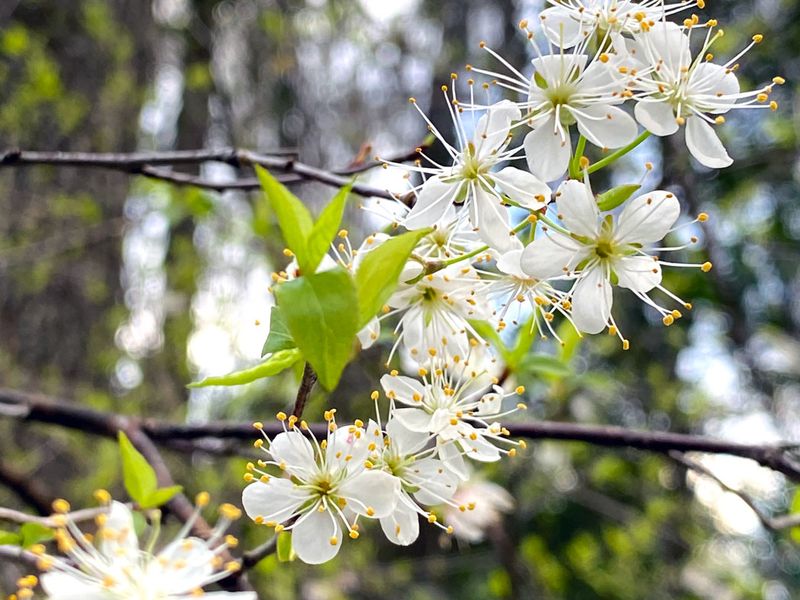
Before many yards look fully awake, Flatwoods plum can light up with pale spring blossoms. It has a wilder, more natural feel than crape myrtle, which makes it a good choice for homeowners who want a native tree with personality.
Flatwoods plum is a small Florida native tree that typically works best in open, sunny spots. Because it stays far smaller than oaks, magnolias, or other big canopy trees, it can be easier to site near a driveway edge without setting up future pavement trouble.
Still, it should not be jammed into a tiny planting pocket, since even small trees need room for roots and air movement.
The flowers support early pollinators, and the fruits can attract birds and other wildlife. The branches may have thorns, so think carefully before planting it beside a narrow walkway where people brush past every day.
Along a wider driveway border, naturalized front-yard bed, or sunny property line, that same character can become part of its charm.
Flatwoods plum prefers well-drained sandy soil, which is good news for many Florida homeowners. It is a smart pick when you want spring bloom, wildlife value, and a native look that feels less manicured than a row of crape myrtles.