
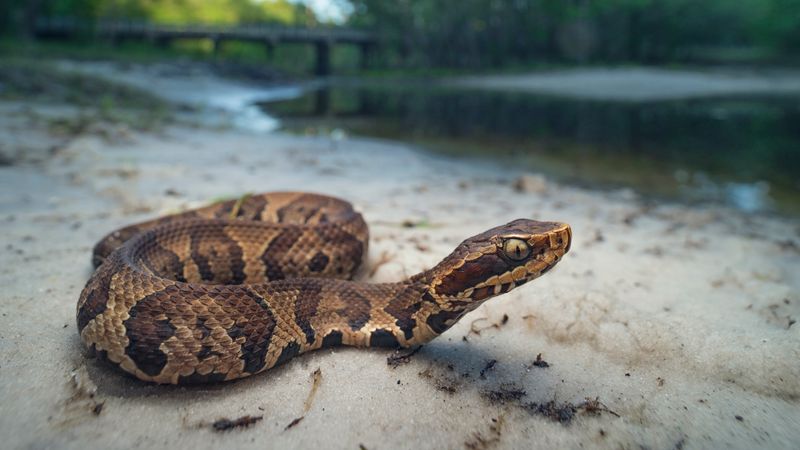
A backyard pond can make a Florida yard feel cooler, greener, and more alive. It can also create the kind of hunting spot a cottonmouth may use, especially when food, cover, and water all meet in one place.
The goal is not to panic or blame the pond. It is to learn what really attracts these snakes so you can make smart, safer changes around your yard.
1. Thick Grass and Weeds Right at the Waterline
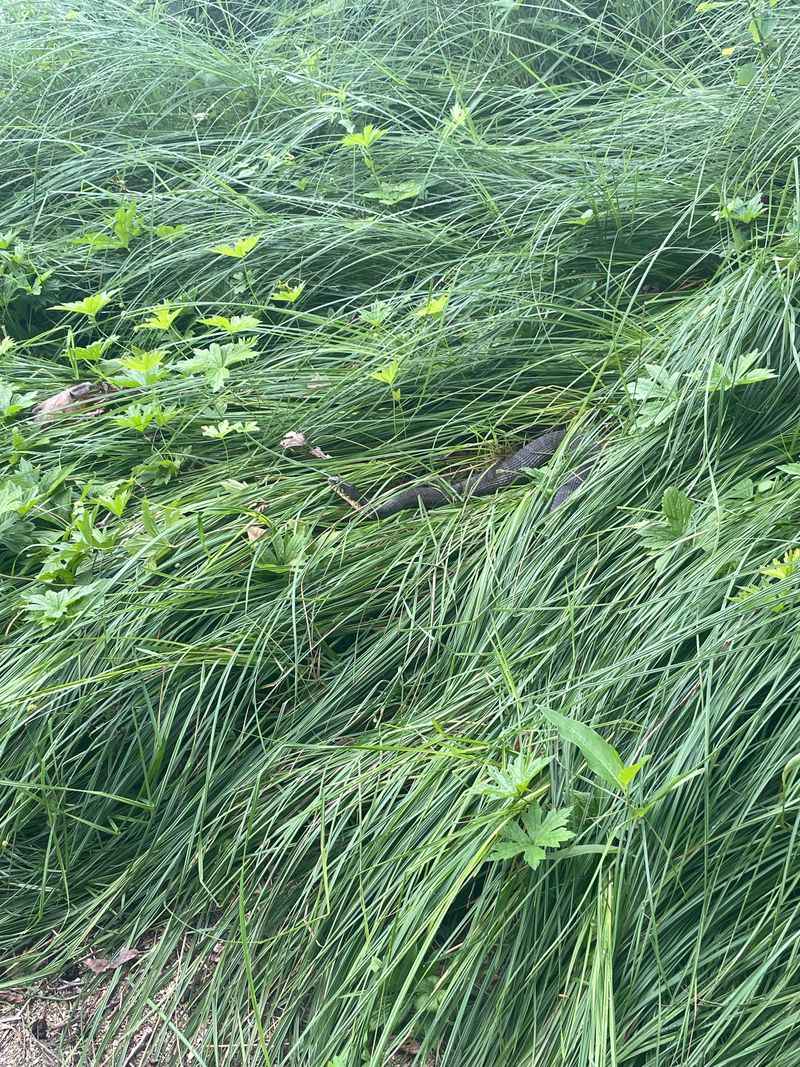
A shaggy pond edge can look natural and peaceful, but to a cottonmouth it can feel like a ready-made hallway. Tall grass, torpedo grass, sedges, and tangled weeds give snakes a covered route between water, shade, and hunting spots.
Cottonmouths are ambush predators, so they do not need a neat lawn or open bank. They benefit from places where frogs, small fish, lizards, and rodents pass close by while the snake stays hidden from herons, hawks, pets, and people.
Florida yards often grow fast after summer rain, and pond edges can get messy before a homeowner notices. Keeping a trimmed buffer of short grass or a maintained path around the pond reduces hiding cover and makes snakes easier to spot from a safe distance.
A cleaner edge does not mean stripping every native plant. Use clumps of Florida-friendly plants in planned beds, then leave open viewing gaps so the pond is not wrapped in one continuous screen.
2. Frogs, Tadpoles, and Small Fish Packed Into Shallow Water
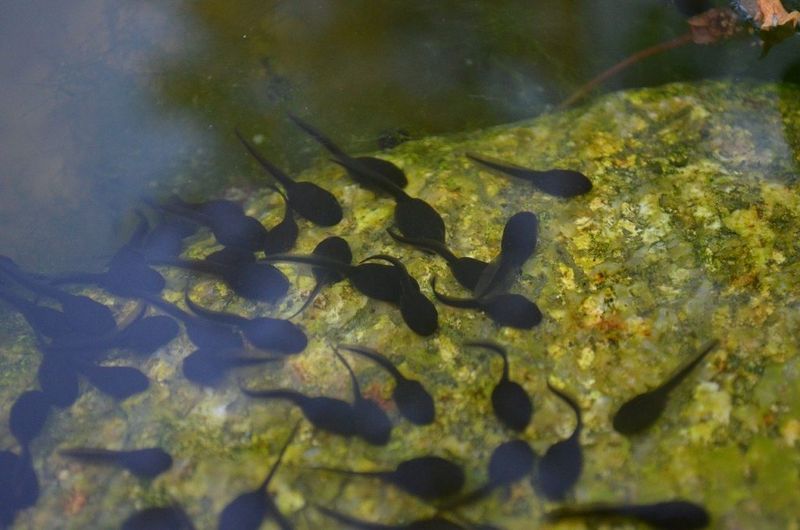
Listen near a Florida pond after a rainy evening and the real attraction often gives itself away. Frog calls, splashing minnows, tadpoles, and small fish can turn shallow water into a buffet for a hungry cottonmouth.
Water moccasins, another common name for cottonmouths, eat a wide mix of prey. Frogs, fish, salamanders, small turtles, rodents, and even carrion can all be part of the menu, which is why a pond with heavy animal activity may get extra attention.
Homeowners sometimes think the water alone brings the snake, but food usually matters more. A bare swimming pool is less useful than a pond edge full of frogs and fish that gather in warm, quiet shallows.
You do not need to remove all pond life. Instead, avoid overstocking fish, leaving piles of fish food, or creating stagnant pockets where prey crowds together.
A balanced pond with movement, healthy planting, and no easy feeding station is less likely to become an all-night snack bar.
3. Low Brush, Palmetto Clumps, and Leaf Litter Beside the Pond
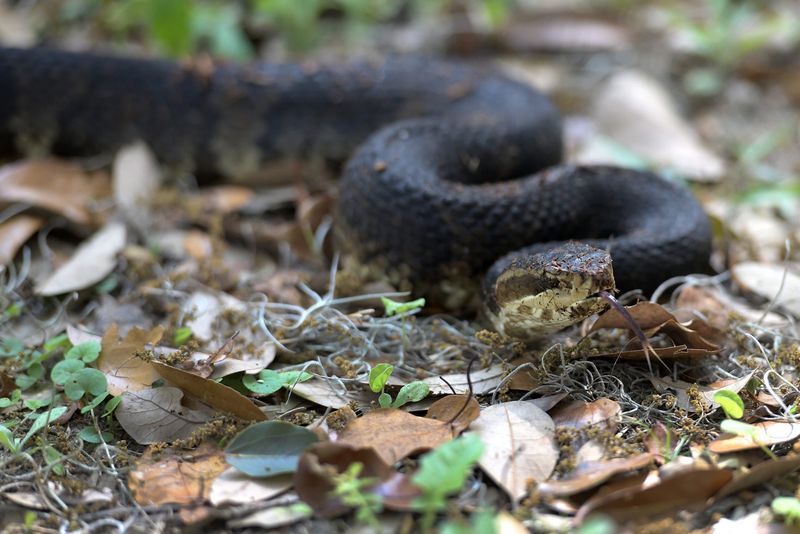
Under a skirt of palmetto fronds, a pond can hide more than damp soil and fallen leaves. Low brush creates cool, shaded pockets where a cottonmouth can rest during hot parts of the day and move out when hunting improves.
Florida heat changes how animals use a yard. In summer and early fall, shade beside water is valuable because it offers cooler ground, moisture, and nearby prey without forcing a snake into open sun.
Leaf litter adds another layer. It shelters insects, frogs, skinks, and small rodents, which can support the food chain that eventually draws larger predators.
A messy shaded bank may look like harmless natural mulch, but near water it can become prime cover.
For a safer pond edge, thin dense clumps, raise low branches, and pull leaf mats away from the immediate shoreline. Keep natural areas farther back if you want habitat value, but avoid letting brush form a dark tunnel that runs straight to the pond.
4. Rock Piles, Stacked Lumber, and Loose Hardscape Near Water
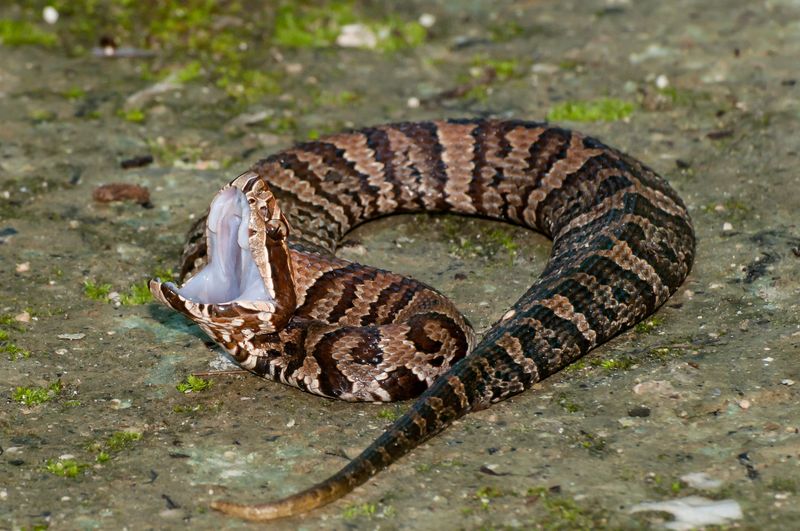
That leftover stack of pavers by the pond may seem like a weekend project waiting its turn. To wildlife, it can be a condo with shade, cracks, warmth, and quick access to water.
Cottonmouths may use rock piles, boards, stacked firewood, broken pots, or old landscape edging as cover. Small spaces under hard materials can stay cooler and damp, while sun-warmed stones nearby offer a basking spot when temperatures are right.
Loose hardscape also attracts prey. Lizards hunt insects around stones, rodents nose through lumber piles, and frogs may tuck into damp gaps.
When several layers of the food chain use the same clutter, snakes have a practical reason to investigate.
The fix is not fancy. Move stored materials well away from the pond, stack firewood on a raised rack, and clear broken pots or unused blocks before they settle into the landscape.
If you are building a rock border, mortar tight gaps or design it so you can see and maintain the edge.
5. Rodent Activity Around Feeders, Compost, and Pet Bowls
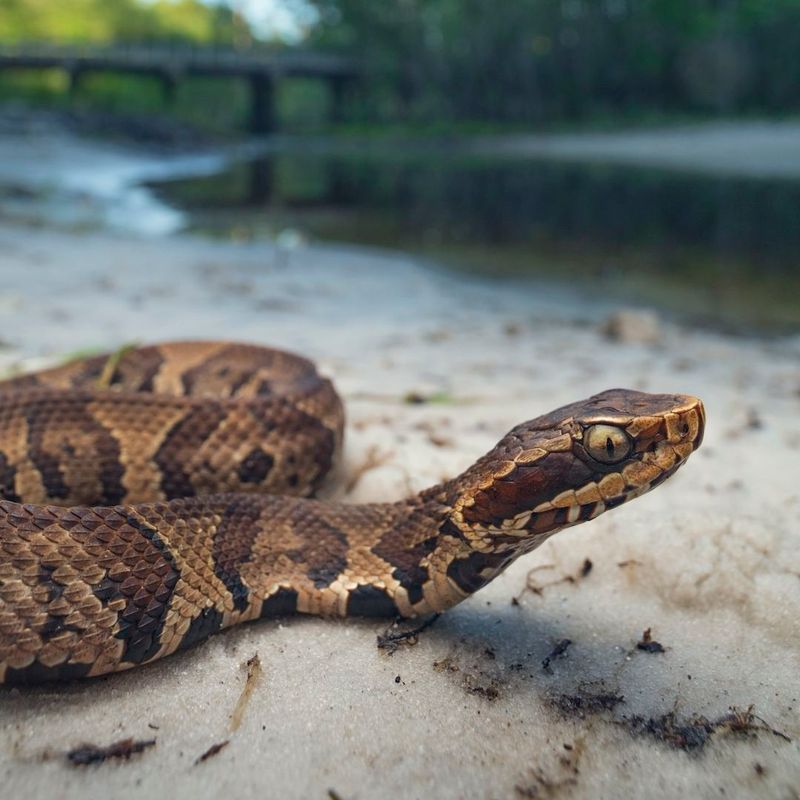
A pond problem can start far from the water, right under a bird feeder or beside a forgotten dog bowl. Rodents are a powerful draw because they bring scent trails, movement, and dependable meals into the yard.
Cottonmouths do not only eat aquatic prey. They can take small mammals when the chance is there, and rodents often travel along edges, fences, brush lines, and pond banks where snakes also feel protected.
Florida yards with fruiting plants, spilled birdseed, open compost, chicken feed, or pet food left outside can build a quiet rodent highway. Add nearby water and cover, and the pond becomes part of a larger feeding circuit instead of a simple landscape feature.
Tighten the food sources first. Use seed catchers under feeders, bring pet bowls in at night, secure trash lids, harvest fallen fruit, and keep compost covered.
Reducing rodents helps lower snake interest while also improving pest control, sanitation, and the comfort of your outdoor living space.
6. Quiet, Stagnant Corners With Mosquitoes and Heavy Algae
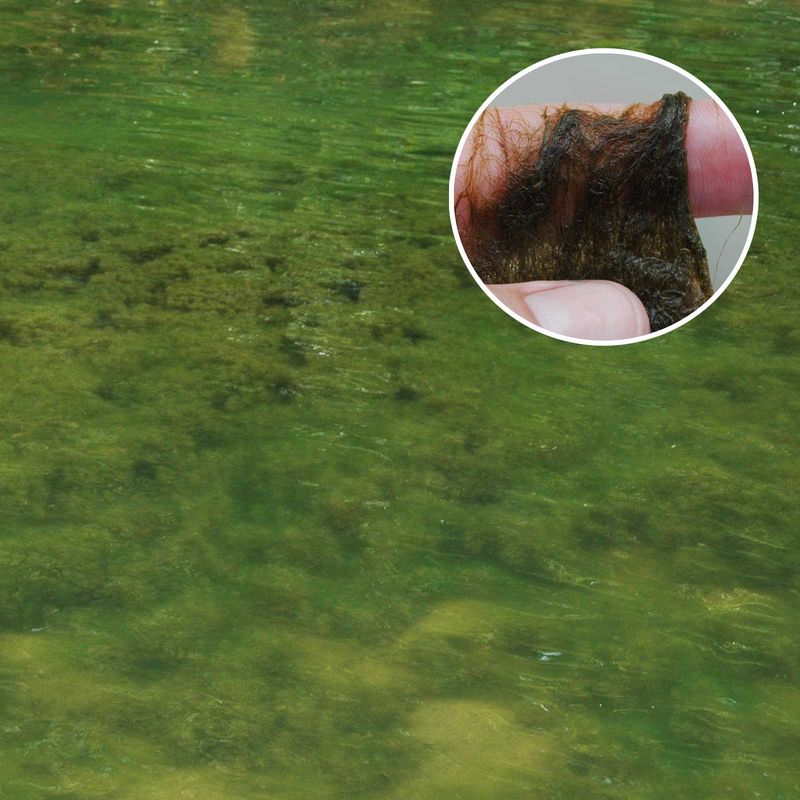
Green scum in a still corner is more than an eyesore. Stagnant water can support mosquito larvae, insects, small fish, frogs, and other prey that make a pond edge busier than it looks from the patio.
Cottonmouths are not drawn by mosquitoes themselves in the way bats or dragonflies might be. The bigger pull is the small wildlife activity that often builds around neglected, shallow, low-oxygen pond areas.
In Florida, warm weather stretches pond season for much of the year, so algae and stagnant pockets can build quickly. Heavy plant mats can trap debris, hide frogs, and create soft edges where a snake can approach without much exposure.
Improve water movement with a properly sized pump, fountain, or waterfall, and remove excess algae in a way that fits local guidance and protects pond life. Keep shallow shelves visible, avoid overfertilizing nearby turf, and prevent grass clippings from washing into the pond after mowing.
7. Easy Travel Routes From Ditches, Wetlands, and Drainage Swales
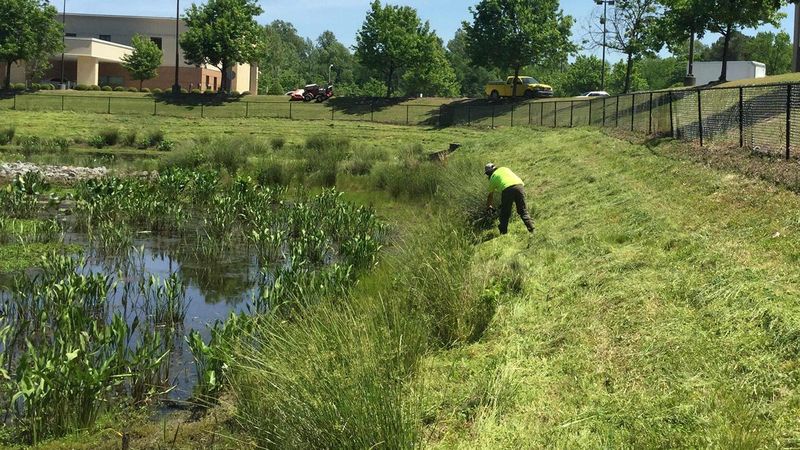
Sometimes the pond is not the starting point at all. In many Florida neighborhoods, a drainage swale, roadside ditch, canal, retention pond, or wetland strip gives cottonmouths a natural route through the area.
Yards that back up to water corridors are more likely to see wildlife moving through, especially after heavy rain, flooding, or storm cleanup. Cottonmouths are semi-aquatic, so connected wet places can function like travel lanes rather than isolated hazards.
A backyard pond near a fence gap, culvert, thick ditch line, or unmowed side yard may become a stop along the way. The snake may not be living at your pond full time, but it may pause there because the route offers cover, prey, and moisture.
Focus on visibility and separation. Keep swale edges trimmed, repair gaps under fences where practical, clear debris after storms, and create an open, maintained strip between wild wet areas and the pond.
If you see a cottonmouth, give it space and call a licensed wildlife professional if removal is needed.