
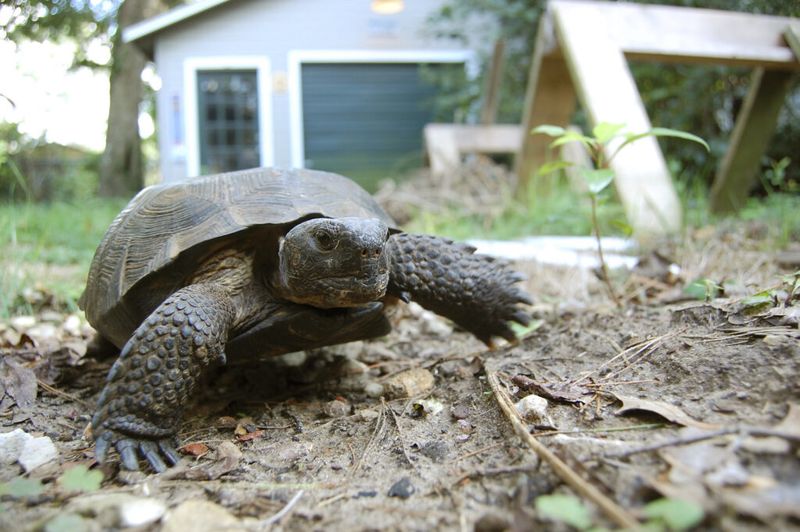
A gopher tortoise in the yard can look like a surprise visitor, but it is often a very good sign. These native Florida reptiles choose dry, sandy places, which means your yard may already have the kind of habitat many tough, low-care plants love.
Their burrows also support many other animals and can make a garden feel more alive. Here are the signs to look for, plus how they can help you plan better beds without disturbing a protected species.
1. A Clean Half-Moon Burrow Opening in Sandy Soil
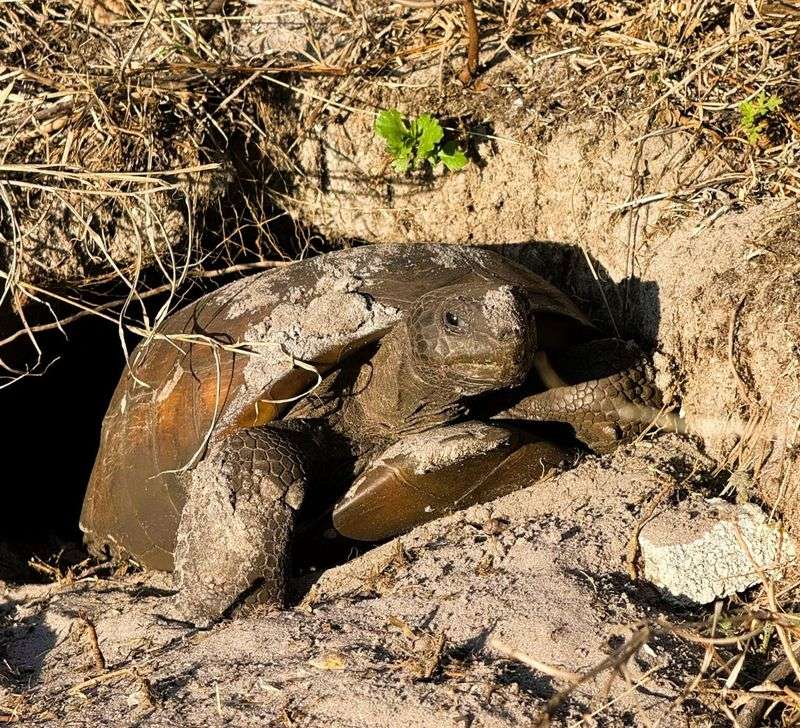
A neat, rounded doorway at ground level is often the first clue, and it can look almost too tidy to be made by wildlife. Gopher tortoise burrows usually have a flattened bottom and a curved top, giving the entrance a half-moon shape that stands out from random holes made by armadillos, dogs, or erosion.
In Florida yards, that opening is most likely to appear in dry, open, sandy spots, especially near the edge of a bed, along a sunny slope, or beside a patch of sparse turf. The tortoise is not trying to wreck your landscaping.
It is choosing a place where it can dig safely and keep its underground home from staying wet.
For gardeners, the burrow is a big hint about your soil. If a tortoise picked that spot, drought-tolerant Florida natives may do well nearby, as long as you leave the burrow alone.
Think coontie, blanket flower, sunshine mimosa, muhly grass, or other UF-IFAS-friendly choices that handle sandy ground and do not need constant watering.
Never fill, block, widen, decorate, or probe the burrow. Gopher tortoises are protected in Florida, and their homes can shelter many other species, so give the entrance room and treat it like a no-dig zone in your landscape plan.
2. A Fan of Fresh Sand Outside the Entrance
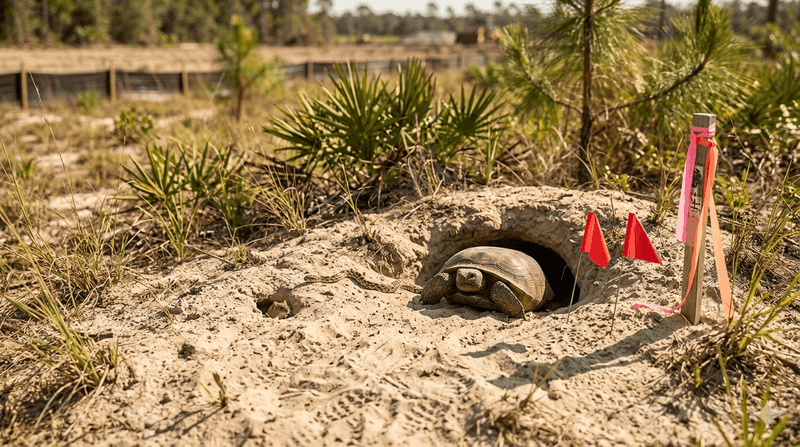
Fresh sand spilled like a little apron outside a hole is the yard version of a welcome mat. When a gopher tortoise digs, it pushes loose sand out behind it, forming a fan-shaped mound called an apron near the burrow mouth.
That sand fan can be pale, dry, and soft, especially after recent digging or maintenance inside the burrow. Unlike a fire ant mound, it will not be a raised cone packed with insects.
Unlike mole tunnels, it usually sits in front of one clear entrance instead of forming long ridges through the lawn.
Gardeners can read that sand as a soil report. It tells you the area drains fast, warms quickly, and probably dries out faster than richer garden soil.
That is frustrating for thirsty annuals, but it is great information if you want beds that need less fuss through Florida’s long warm season.
Use the clue to shift your planting style nearby. Keep irrigation heads from blasting the entrance, avoid heavy mulch piles on the apron, and choose plants that can thrive without turning the area into a wet pocket.
A light pine straw layer away from the opening can look tidy while still respecting the tortoise’s space.
3. Grazed Spots on Low Weeds, Grasses, and Wildflowers
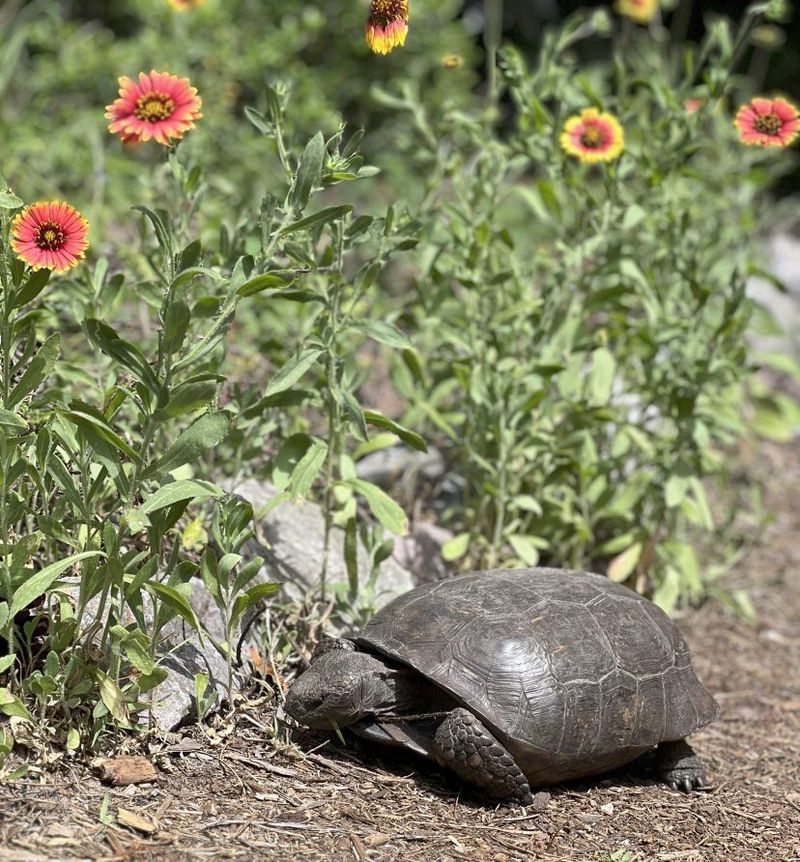
Small bite marks on low plants can feel like a mystery until you notice the pattern. Gopher tortoises feed close to the ground, nibbling grasses, broadleaf weeds, fallen flowers, and tender native plants in sunny open areas.
The damage usually looks different from insect chewing or rabbit browsing. You may see trimmed tips, missing petals, or short grazed patches near the burrow rather than shredded leaves all over the garden.
A tortoise is not out to eat your whole bed, but it may sample low, reachable plants as it moves through its home range.
Oddly enough, that browsing can help you design smarter. If the tortoise is grazing in one area, it shows where open, low vegetation is working.
Many Florida gardeners fight sandy soil by overplanting with thirsty, delicate plants, but a tortoise-friendly patch often does better with tough, sun-loving groundcovers and native blooms.
Leave some safe forage if you can. Avoid pesticides and herbicides around the burrow and feeding area, since tortoises may eat treated plants.
If you need to protect young vegetables or prized ornamentals, use a low barrier around that bed, not around the tortoise or its burrow.
4. A Slow, Repeated Path Through the Same Sunny Route
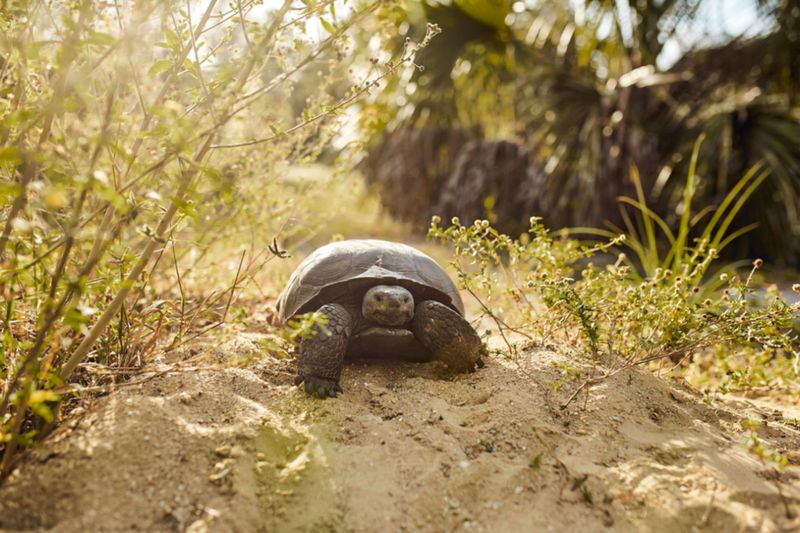
Some backyard trails are so subtle you only notice them after mowing or watering. A gopher tortoise may use the same route again and again between its burrow, sunny basking spots, and feeding areas, creating a faint path through grass, pine straw, or sandy mulch.
That path is not usually a dramatic tunnel or trench. It may look like a lightly pressed lane, a gap between low plants, or a narrow line where vegetation stays shorter.
In a Florida yard, the route often connects open sunshine with cover, because tortoises need warmth but also quick access to shelter.
From a bed-planning point of view, the path is useful. It tells you where not to place new edging, stepping stones, raised beds, netting, or low fencing.
Blocking the route can push the tortoise into driveways, roads, or wetter areas that are not as safe.
Instead, design around it like a tiny wildlife corridor. Keep the route open, use soft plantings along the sides, and skip tangled groundcovers that could trap a slow-moving animal.
Your reward is a more natural-looking Florida bed that still feels intentional, especially when paired with native grasses, open sand patches, and a clean mulch edge.
5. Sunny Basking Near the Burrow Mouth
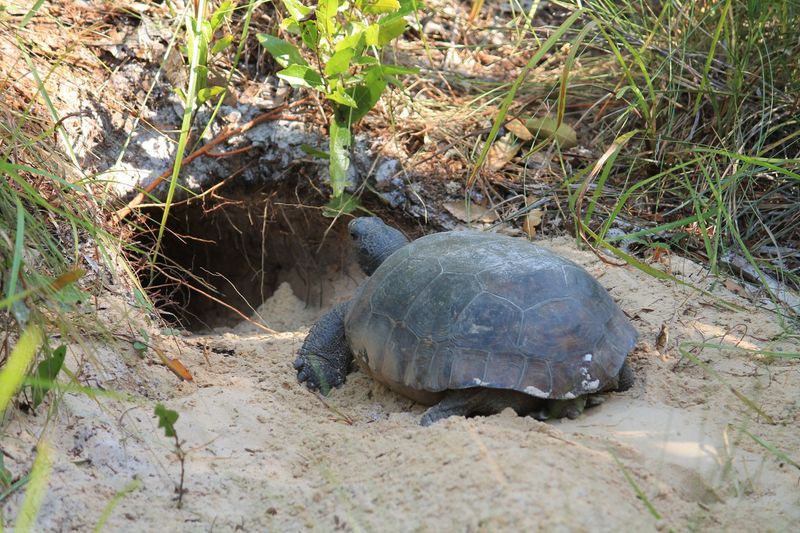
Morning sunshine can turn a quiet burrow entrance into the best seat in the yard. Gopher tortoises often bask near their burrows, warming their bodies before they feed or move around.
If you spot one sitting still in the sun, do not assume it is sick or stuck. Reptiles rely on outside heat, so basking is normal behavior.
The tortoise may stretch its legs, hold its head up, or rest partly inside the entrance where it can retreat quickly.
For gardeners, basking tells you the site has something many Florida beds need: strong light. Rather than fighting that hot, bright exposure with thirsty plants that wilt by afternoon, lean into sun-ready choices.
Beach sunflower, blanket flower, dune sunflower, native grasses, and other drought-tolerant selections can turn a harsh patch into a strong garden feature.
Give the animal space, especially if children or pets are nearby. Watch from a distance, keep dogs leashed, and do not pick up or move the tortoise unless it is in immediate danger in a road.
In the yard, its presence can become a living reminder to choose plants that match the place instead of forcing the place to match the plants.
6. Native Bees, Lizards, or Other Small Guests Around the Burrow Area
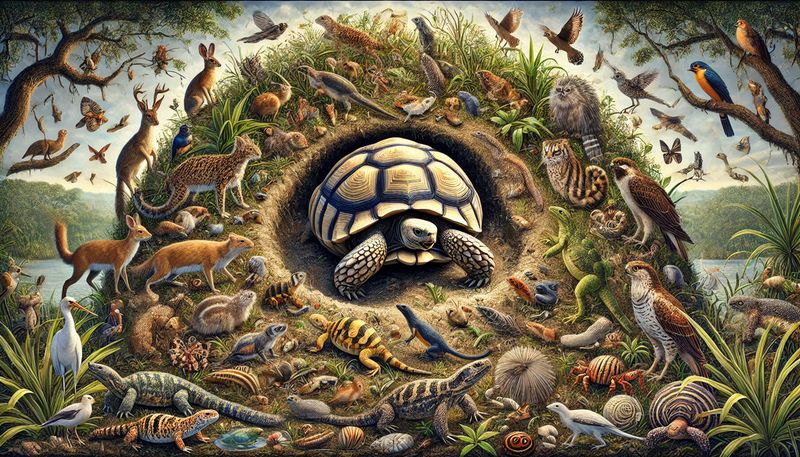
A burrow can be more than one animal’s front door. Gopher tortoise burrows are famous for helping other wildlife, with hundreds of species known to use them across their range for shelter, shade, or safety at different times.
In a home garden, you might notice small lizards, insects, frogs, snakes, or pollinators using the warmer, drier area around the burrow. Not every visitor lives inside, and you should not try to check.
The important sign is that the space has become a little habitat pocket instead of just another patch of lawn.
That is excellent news for beds because healthy garden wildlife often supports balance. Native bees and butterflies help flowers set seed, lizards eat small insects, and a diverse yard is usually less dependent on constant chemical fixes.
A tortoise-friendly area pairs well with Florida natives that provide nectar, seeds, and structure without demanding rich soil.
Keep this zone simple and low-toxicity. Avoid broad pesticide sprays, glue traps, and deep digging near the burrow.
If snakes worry you, reduce clutter close to patios and walkways, but do not collapse or disturb the burrow, since it is protected habitat and part of what makes your yard more resilient.
7. A Dry Open Patch That Stays Bare No Matter What You Plant
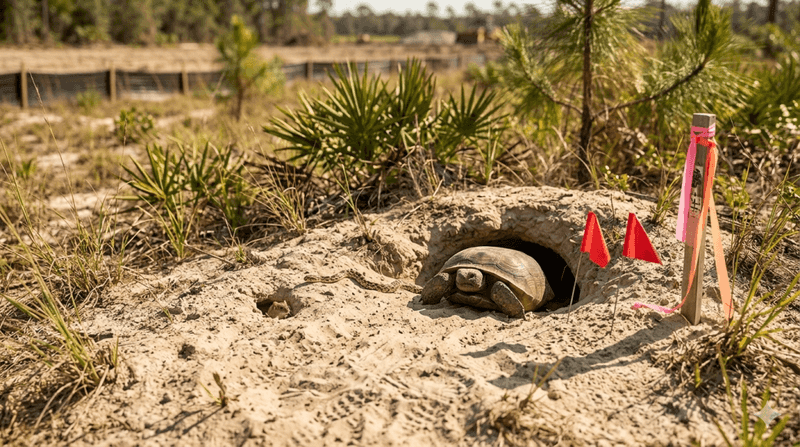
That stubborn bare spot you keep trying to fill may be sending a clearer message than any soil test. Gopher tortoises often favor open, sandy, well-drained areas with enough sun for basking and enough loose soil for digging.
Many Florida homeowners see bare sand as a problem to hide. In a tortoise yard, it can be part of the habitat.
The trick is to make it look deliberate without covering the space the animal needs.
Frame the open patch instead of planting directly over it. Use drought-tough natives around the edges, such as muhly grass for soft movement, coontie for structure, or low wildflowers for color.
Keep taller shrubs and dense plantings away from the entrance so the tortoise has clear access and good visibility.
A dry patch can also save you money and effort. Rather than pouring water, fertilizer, and new annuals into a spot that never performs, let the area become a sunny sand garden feature.
Add a defined border well outside the burrow zone, refresh mulch away from the opening, and treat the bare ground as a sign that your yard is suited for a more natural, low-maintenance Florida look.