
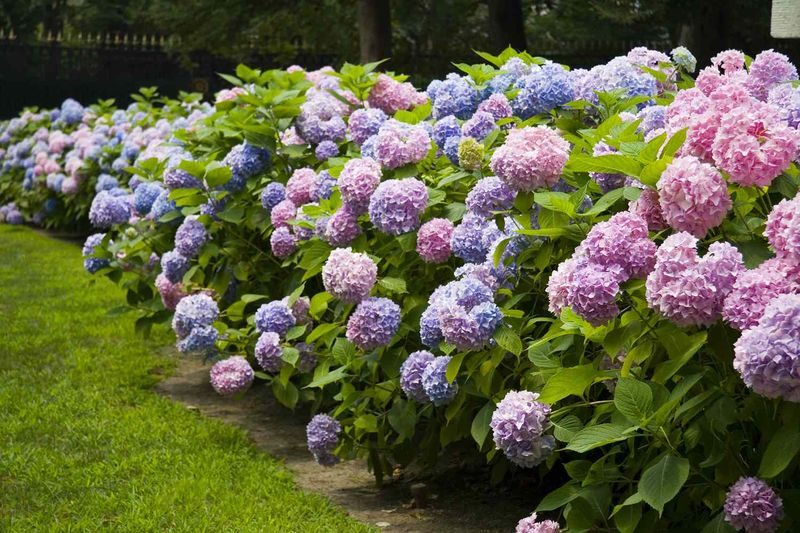
Florida can make hydrangeas look tired fast, especially when sandy soil dries out and afternoon sun hits hard. The trick is choosing types that handle heat, humidity, and sudden summer rain better than the fussy classics.
These seven hydrangeas are stronger picks for Florida yards, especially when planted with morning sun, afternoon shade, mulch, and steady moisture.
1. Alice Oakleaf Hydrangea
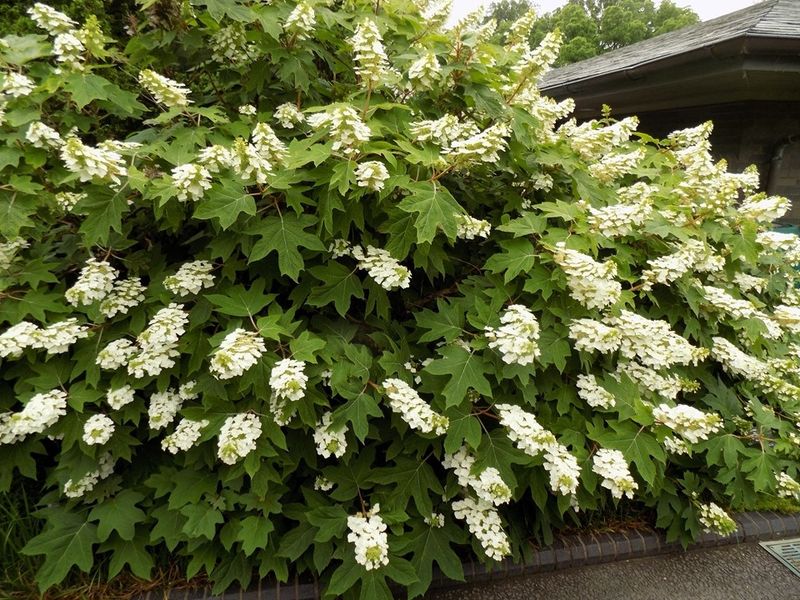
Alice is the hydrangea you plant when you want big Southern charm without begging a plant to survive July. As an oakleaf hydrangea, it is better suited to Florida than many blue mophead types because it tolerates heat, humidity, and part shade with fewer tantrums.
Its huge white flower cones can age to soft pink, giving the shrub a long show instead of one quick bloom. The large, lobed leaves also bring texture to a shady border, and in North Florida they may pick up burgundy fall color when nights cool down.
Give Alice room, because it can become a broad, handsome shrub rather than a tiny foundation plant. It does best in well-drained soil with compost mixed into sandy ground, a thick mulch layer, and protection from harsh afternoon sun.
Florida gardeners who want a more natural, woodland look should start here. Oakleaf hydrangeas are native to the Southeast, which makes Alice feel right at home under high pine shade, live oaks, and other lightly shaded spaces.
2. Snowflake Oakleaf Hydrangea
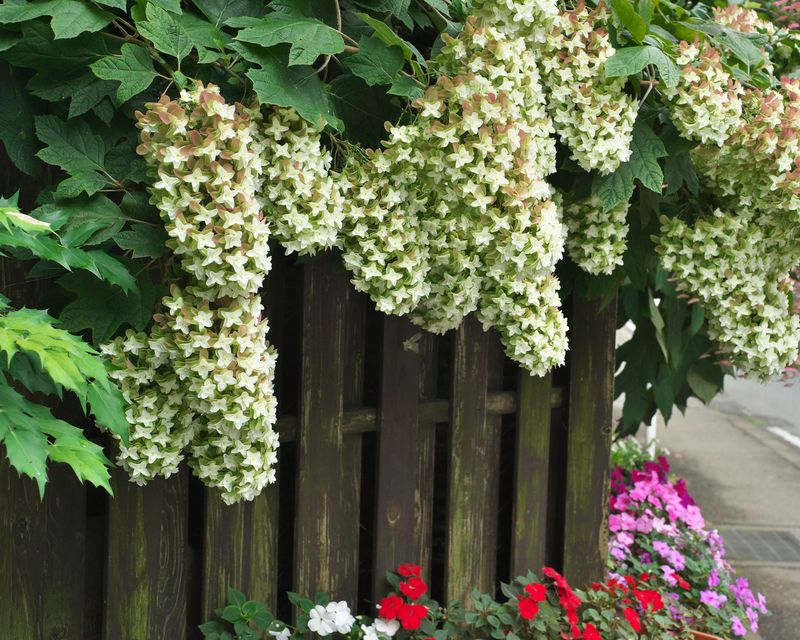
Picture a hydrangea bloom that looks almost like stacked paper lanterns, and you are close to Snowflake. Its double flowers make it stand out from regular oakleaf hydrangeas, with full, layered panicles that look fancy even in a relaxed Florida yard.
Snowflake earns its place because it brings drama while still having the toughness of an oakleaf type. In Florida, that matters more than chasing a perfect blue bloom that collapses after a few hot weeks.
Plant it where it gets morning light and shade after lunch, especially in Central Florida or warm parts of North Florida. The double blooms are heavier than single flowers, so a spot protected from strong storm winds is smart during summer downpours.
Like most hydrangeas, Snowflake is not a cactus in disguise. It still wants even moisture, organic matter, and mulch, but it generally handles sticky air better than many florist-style hydrangeas sold on impulse in spring.
Use Snowflake near a patio, side yard path, or shaded entry where people can admire the unusual flowers up close. It has a cottage-garden look, but with enough Southern backbone to make sense in a Florida landscape.
3. Ruby Slippers Oakleaf Hydrangea
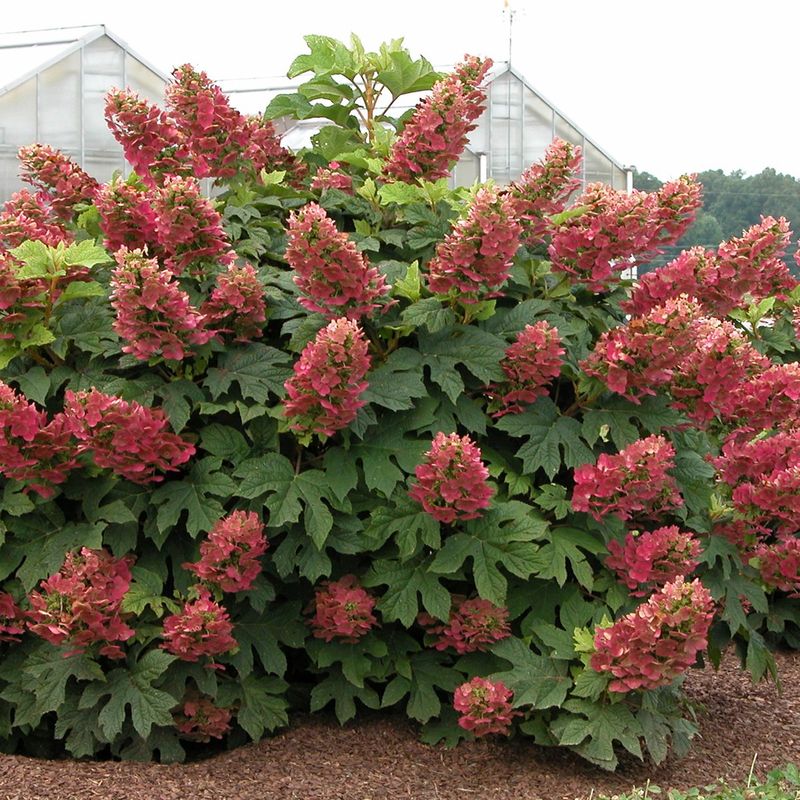
Small yards need hydrangeas that know how to behave, and Ruby Slippers is one of the best choices for tight Florida spaces. It stays more compact than many oakleaf hydrangeas, which makes it useful near porches, walkways, and foundation beds.
The fun part is the color change. Flowers open white, then shift into pink and deeper rosy tones as they mature, so the plant looks different from week to week without needing soil tricks or aluminum sulfate.
Ruby Slippers is especially handy for gardeners who love hydrangeas but do not have room for a sprawling shrub like Alice. It usually fits better into suburban beds, courtyard gardens, and shaded corners where a large plant would block windows or crowd a path.
For Florida success, think cool roots and gentle light. Work compost into sandy soil, mulch well, water deeply during dry spells, and avoid hot afternoon exposure that can scorch leaves and shorten the flower show.
Because it is an oakleaf type, Ruby Slippers also gives you bold foliage after the blooms fade. That makes it more than a one-season plant, which is exactly what a low-maintenance Florida garden needs.
4. Munchkin Oakleaf Hydrangea
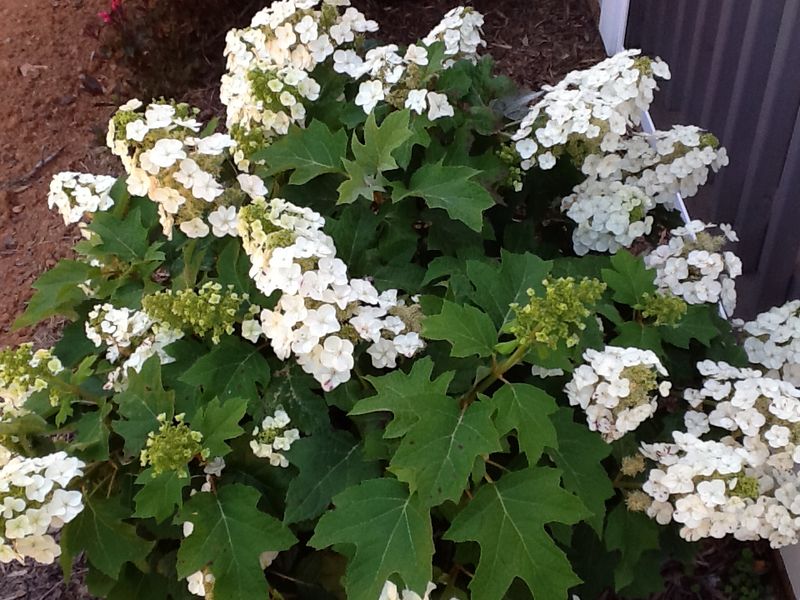
Not every hydrangea needs to be a show-off the size of a sofa. Munchkin is a compact oakleaf hydrangea with a tidy shape, making it a strong pick for gardeners who want flowers without constant pruning battles.
Its smaller size is the main reason it belongs on this list. In many Florida neighborhoods, planting beds are narrow, irrigation is uneven, and shrubs that outgrow their space quickly become chores.
Munchkin brings white summer flowers, handsome oak-shaped leaves, and a fuller look than many small shrubs used in shade. It can soften the edge of a porch, fill a woodland-style border, or add texture under taller trees.
Give it filtered sun or morning sun rather than a baking open lawn. Florida humidity is not the enemy for this plant, but dry sand and reflected heat from walls, driveways, and sidewalks can stress it fast.
A simple care routine works best: mulch two to three inches deep, water at the base, and skip heavy fertilizer that pushes weak growth. For gardeners who want a hydrangea that feels manageable, Munchkin is a practical, pretty answer.
5. Nikko Blue Bigleaf Hydrangea
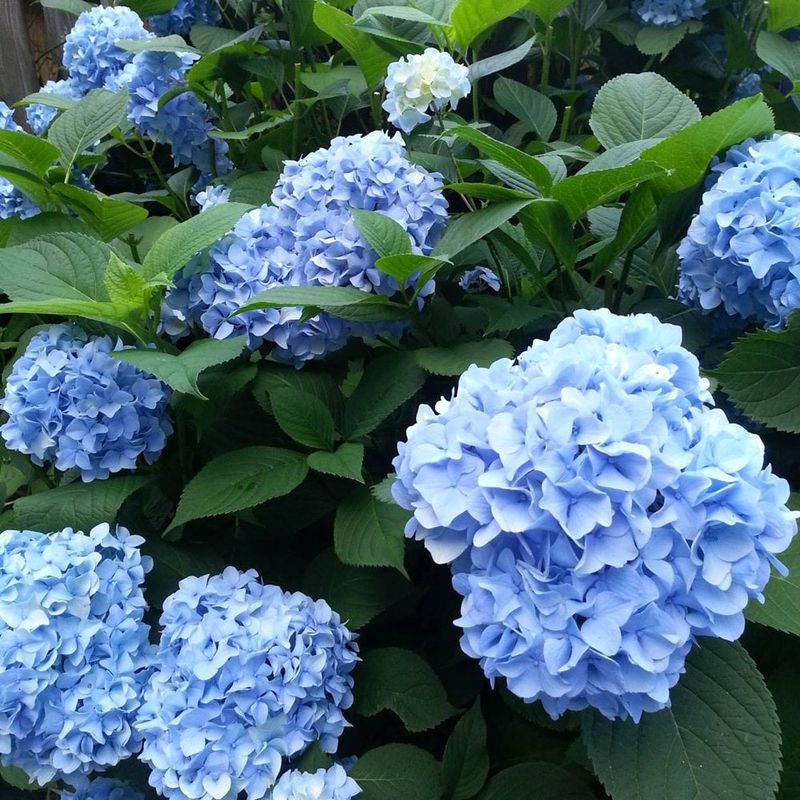
Blue hydrangeas are the ones many Florida gardeners dream about, and Nikko Blue is the old favorite people often picture first. It is not the easiest hydrangea for the whole state, but in North Florida and cooler Central Florida pockets, it can still be worth growing.
Nikko Blue makes the list because it gives that classic mophead look better than many random gift hydrangeas that are forced into bloom and then decline outside. In naturally acidic Florida soils, the flowers may lean blue, though exact color depends on soil chemistry and plant health.
Shade is the deal breaker. Morning sun is fine, but hot afternoon light can leave the leaves drooping and crispy by midsummer, especially near pavement or white walls that reflect heat.
Moisture also matters, since sandy soil drains quickly even after a hard rain. Add compost, mulch deeply, and use drip irrigation or careful hand watering to keep the root zone evenly damp, not soggy.
Nikko Blue is best for gardeners who do not mind giving a plant a little extra attention. If you live in South Florida, treat it as a risky choice or patio experiment rather than a dependable landscape shrub.
6. Endless Summer Original Hydrangea
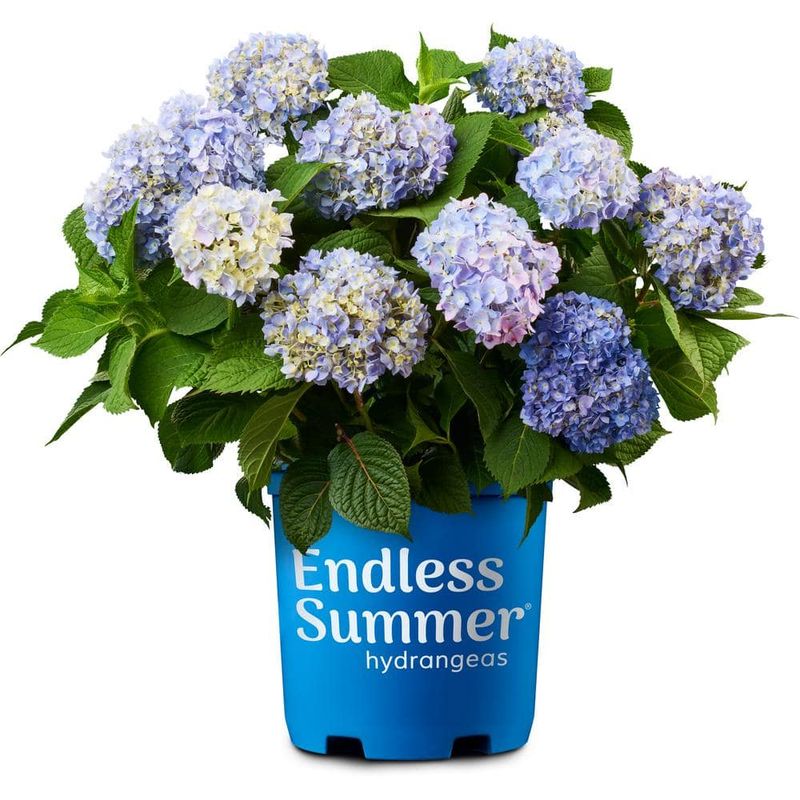
A hydrangea that can bloom on old and new wood is a welcome safety net after a weird Florida winter or a pruning mistake. Endless Summer Original is popular for that reason, and it can perform well in the right part of Florida with the right placement.
Its special advantage is rebloom potential. Instead of depending only on buds formed the year before, it can produce flowers on fresh growth, which gives gardeners more chances for color through the warm season.
That does not mean it wants full Florida sun. The best spot is bright but protected, such as the east side of a house, a bed under high tree canopy, or a porch-side planting that gets light early and shade later.
In sandy soil, prepare the bed before planting rather than trying to fix stress later. Mix in organic matter, mulch generously, and keep watering steady during dry spells, because reblooming takes energy.
Endless Summer Original suits gardeners who want the classic round hydrangea flower but need more forgiveness than older bigleaf types offer. In hot inland areas, it may still pause during peak heat, then look better again as conditions ease.
7. Limelight Panicle Hydrangea
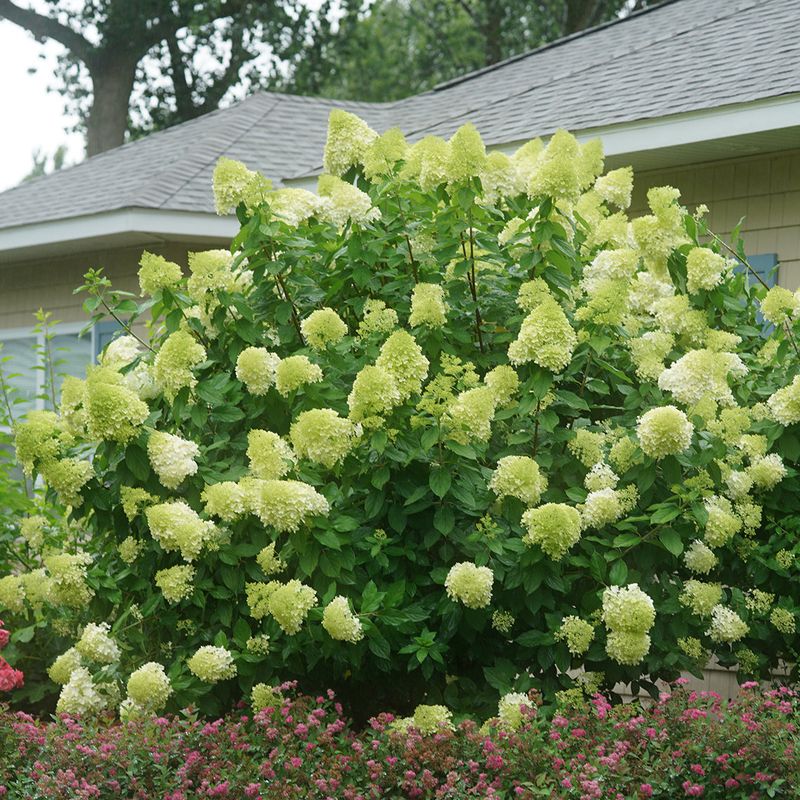
Limelight has a bold, fresh look that feels different from the lacey oakleafs and round mopheads. Its cone-shaped blooms open greenish white, then age into cream, blush, or soft tan as the season moves along.
The catch is location. Panicle hydrangeas generally handle more sun than bigleaf hydrangeas in cooler regions, but Florida is not gentle, so Limelight is most sensible for North Florida gardeners or cooler, well-watered sites.
Why include it at all? Because in the right Florida yard, it offers a strong upright shape and a flower color that brightens borders when many plants look tired from heat.
Do not plant it in a dry strip beside a driveway and expect miracles. Give it rich, well-drained soil, mulch, regular water, and some relief from the harshest afternoon sun, especially during long dry periods.
Limelight works nicely as a background shrub behind lower perennials, near a fence, or in a generous mixed border. For Central and South Florida, oakleaf hydrangeas are usually safer, but North Florida gardeners who want a panicle type can put Limelight on the short list.