
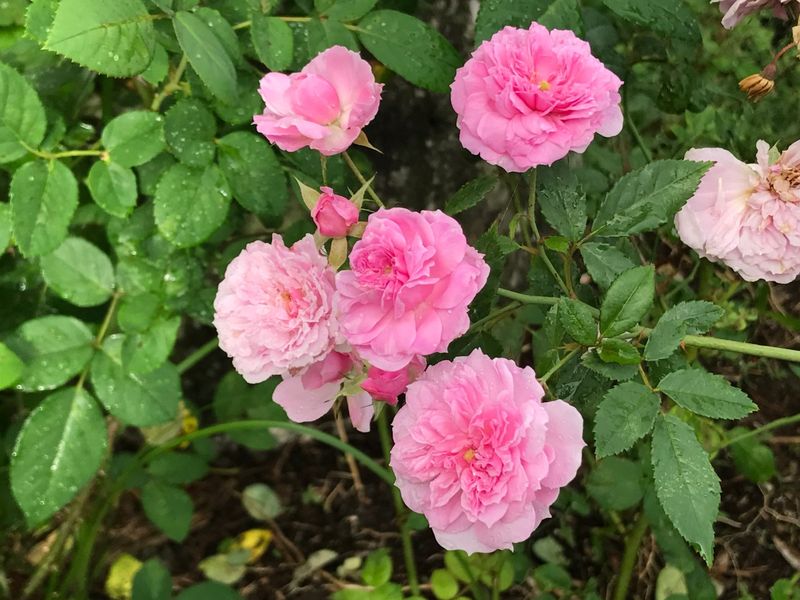
Florida summers can be rough on roses, but the right varieties do not quit when the heat settles in. Some roses handle humidity, sandy soil, strong sun, and long warm seasons much better than others.
Choose well, and your yard can stay bright from late spring through fall with less fuss. Here are seven roses that bring real color without acting fragile.
1. Knock Out Rose
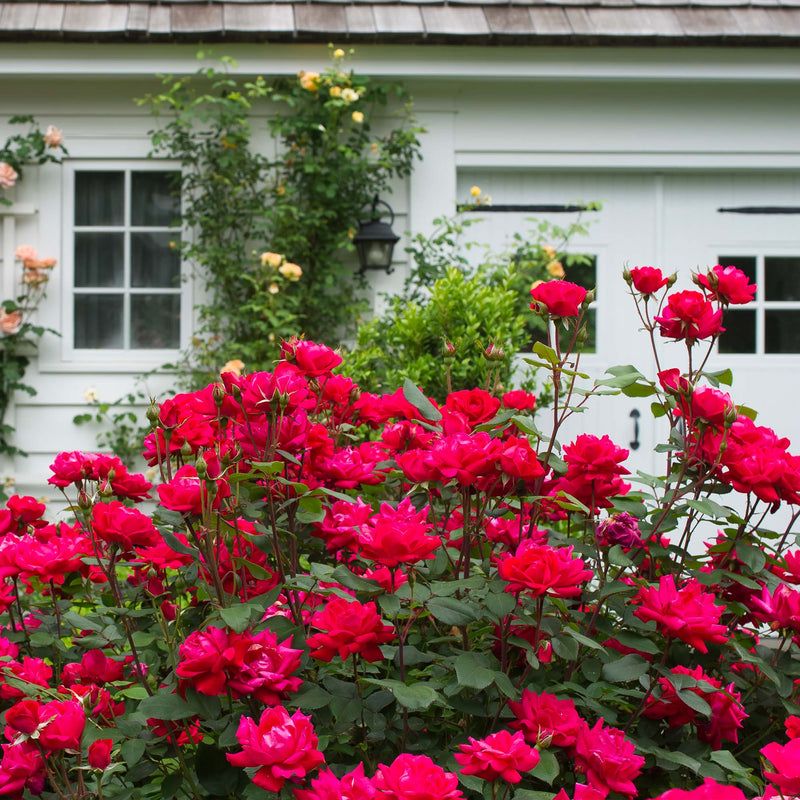
A neighbor who never seems to prune still has a hedge full of flowers? There is a good chance Knock Out roses are involved.
They earned their popularity because they bloom in repeated waves, shrug off many common rose problems, and fit the low-maintenance style many Florida gardeners need.
In Florida heat, Knock Out roses are useful because they do not demand the pampering that hybrid tea roses often need. Give them at least six hours of sun, regular water while they establish, and a wide mulch ring to keep sandy soil from drying out too fast.
Once settled, they can handle long stretches of warm weather and still push out color.
The classic red is bold, but pink, coral, and double forms also work well in home landscapes. Use them as a flowering hedge, a driveway border, or a bright anchor near the mailbox.
Good airflow matters in humid areas, so avoid packing them tightly against walls or fences.
A light trim after bloom cycles keeps the plant full and neat. In South and Central Florida, you may see color for much of the year, while North Florida gardeners usually get a strong warm-season show with a winter slowdown.
2. Drift Rose
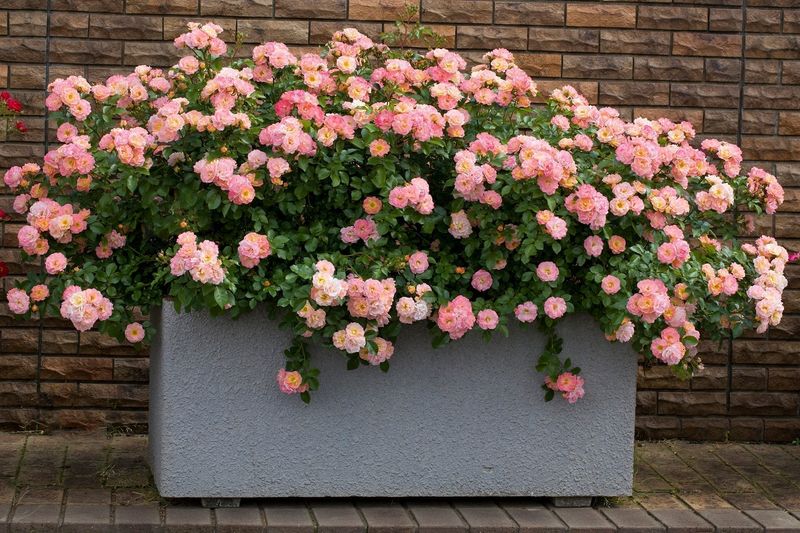
Small yards deserve roses too, and Drift roses make that easy. Instead of towering over a bed, they stay low and spreading, almost like a flowering groundcover with a polished look.
Florida gardeners often use Drift roses where a full-size shrub rose would feel too bulky. They work along sidewalks, around patios, at the front of mixed borders, and even in large containers with good drainage.
Their compact size also makes cleanup easier after summer storms, since there is less tall, whippy growth to snap around.
Heat is not their only strength. Drift roses bloom repeatedly and come in colors like coral, peach, red, pink, and white.
The coral and peach types can look especially good with palms, coontie, blue porterweed, muhly grass, and other Florida-friendly plantings.
Because Florida soil can be sandy and hungry, mix compost into the planting area and feed lightly during the active growing season. Avoid heavy, constant fertilizer, which can push weak growth and invite trouble.
A simple routine of sun, mulch, steady watering during dry spells, and occasional trimming is usually enough to keep them tidy.
3. Belinda’s Dream Rose
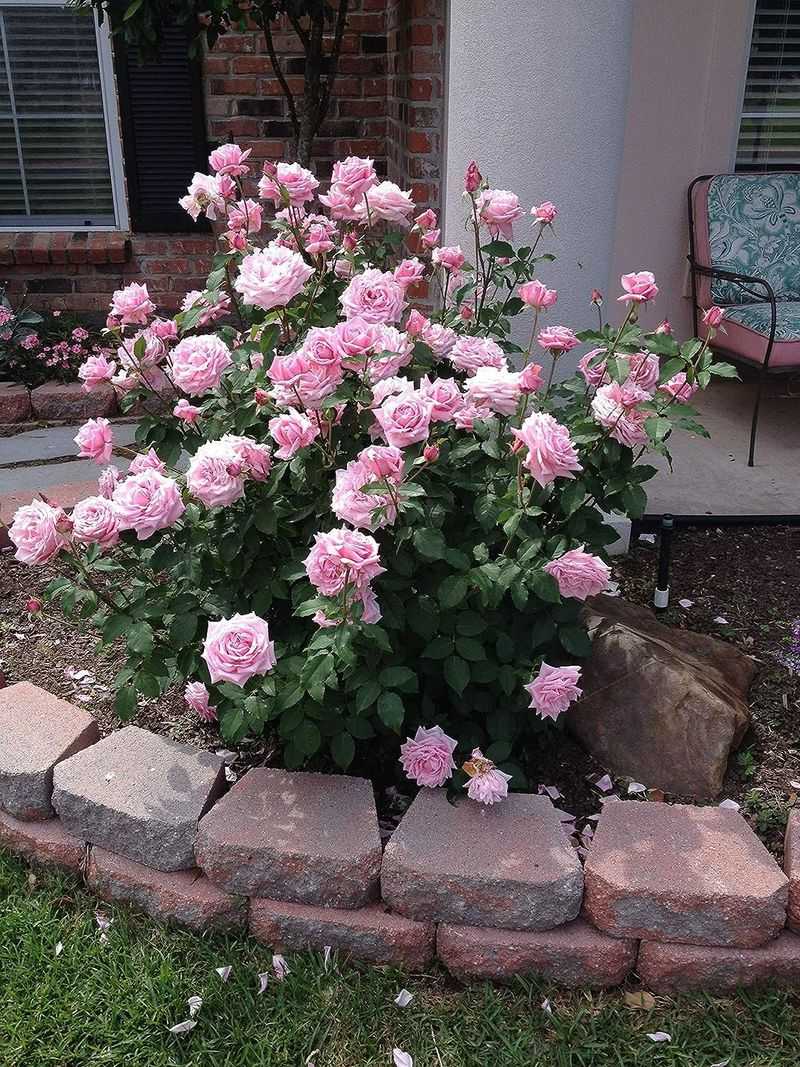
For gardeners who want a rose that looks romantic without behaving like a diva, Belinda’s Dream is a standout. The blooms are full, soft pink, and old-fashioned in shape, yet the plant has the toughness of a practical landscape shrub.
This rose was developed in Texas, so it understands heat better than many delicate-looking roses. That Southern background makes it a smart choice for many Florida yards, especially where gardeners want bigger flowers than a landscape rose usually offers.
It has also been recognized as a strong Earth-Kind type in regions where low-input roses are tested for disease resistance and garden performance.
Belinda’s Dream can grow into a rounded shrub, so give it room instead of squeezing it into a tiny foundation bed. It looks lovely near a sunny porch, at the back of a pollinator border, or as a soft pink focal point against dark green foliage.
The flowers can be cut for indoor vases, which is a nice bonus during long blooming periods.
In humid Florida gardens, morning sun is especially helpful because it dries leaves faster after dew or rain. Water at the base, not over the foliage, and remove crowded inner stems when pruning.
That simple airflow habit can make a noticeable difference.
4. Louis Philippe Rose
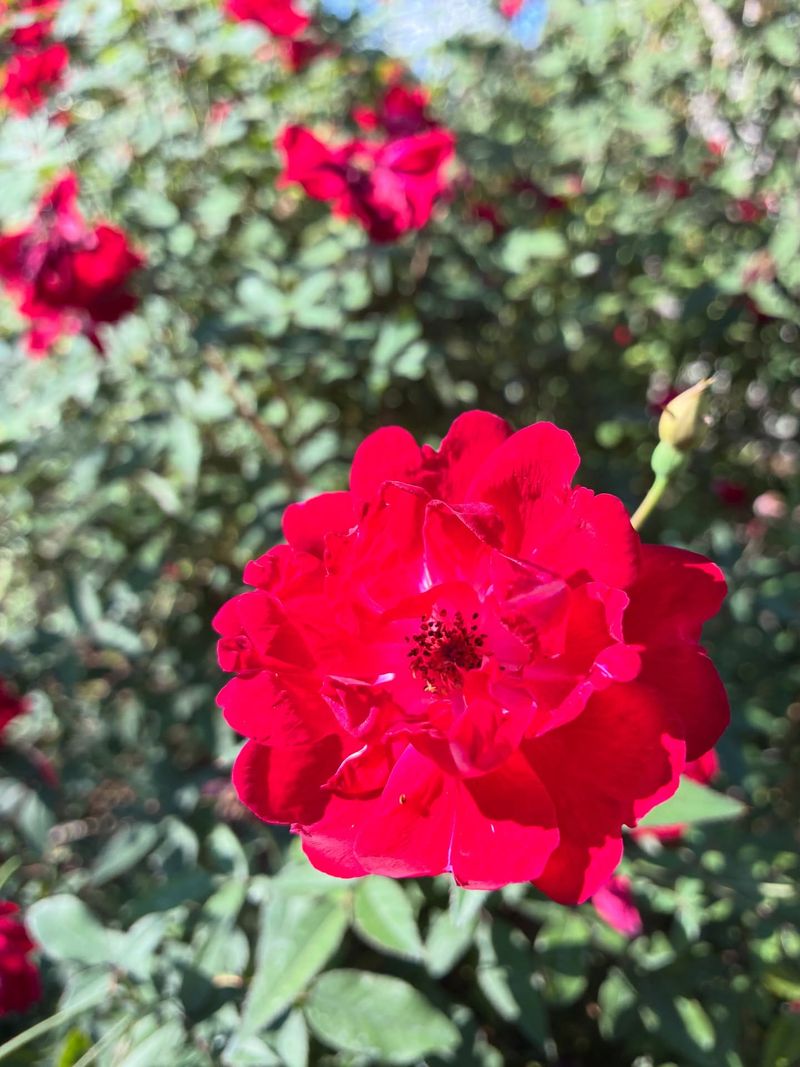
Old Florida gardens have a few plants that seem to survive on memory, rainfall, and stubborn charm. Louis Philippe, often called the Florida Cracker rose, belongs in that group.
This antique China rose has been grown in the South for generations, and its long history in Florida yards is part of its appeal. The blooms are usually rich red to crimson with a loose, informal shape.
They are not stiff florist roses, but they bring a cheerful, cottage-garden feeling that suits older homes, casual borders, and wildlife-friendly yards.
Louis Philippe is valued because it can flower through warm weather and recover well from regular pruning. In many Florida settings, it performs best in full sun with good air movement.
Like most roses, it still appreciates mulch and improved soil, but it is less fussy than many modern exhibition types.
Place it where its relaxed habit looks intentional. A sunny fence line, a cottage bed with salvias and pentas, or the corner of a vegetable garden can all work.
Bees may visit the open blooms, adding a small pollinator benefit without turning the rose into a high-maintenance project.
If you enjoy plants with a story, this one gives you color plus a link to Florida gardening history.
5. Mutabilis Rose
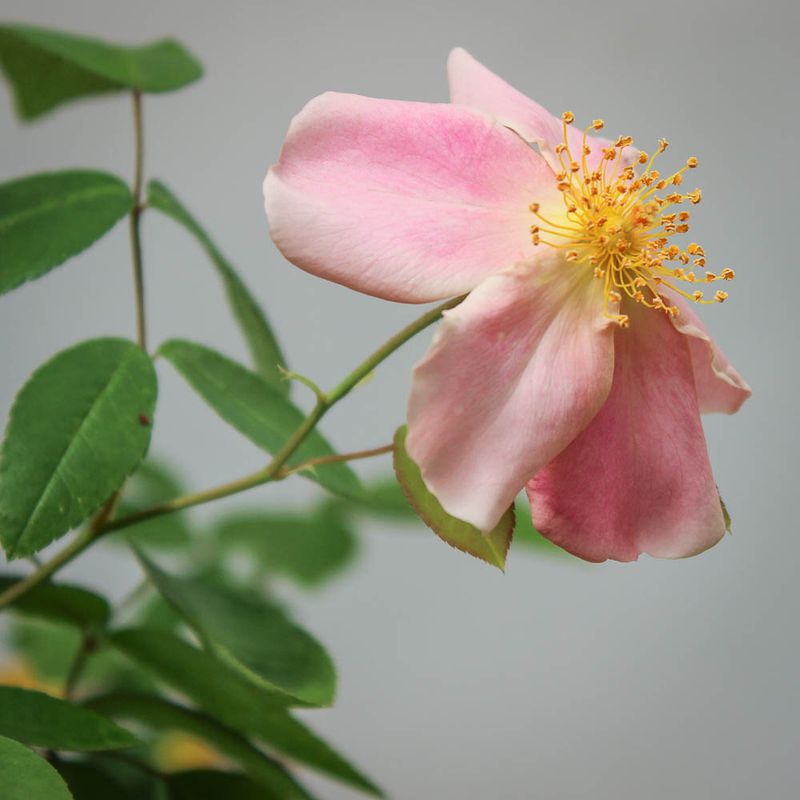
One plant, several flower colors, and a little bit of garden magic. Mutabilis is the rose people stop to ask about because its blooms change color as they age.
Fresh flowers often open in warm yellow or apricot tones, then shift through pink and rose before deepening toward crimson. Since flowers at different stages appear at the same time, the shrub can look like a mixed bouquet even though it is just one rose.
That color-shifting habit makes Mutabilis different from every other rose on this list.
Florida gardeners should think of Mutabilis as a roomy shrub, not a tiny bedding rose. It can get large in long warm seasons, especially in Central and South Florida, so give it space to arch and breathe.
It looks best in informal borders, cottage gardens, wildlife-friendly yards, or as a sunny backdrop behind lower perennials.
The single blooms are accessible to pollinators, which gives it extra value beyond color. Good drainage still matters, so avoid soggy low spots that flood after heavy rain.
In sandy soil, add organic matter at planting and maintain mulch to protect roots from heat and moisture swings.
Prune lightly to shape it rather than forcing it into a stiff box. Its charm comes from movement, color, and that lively, changing display.
6. Mrs. B.R. Cant Rose
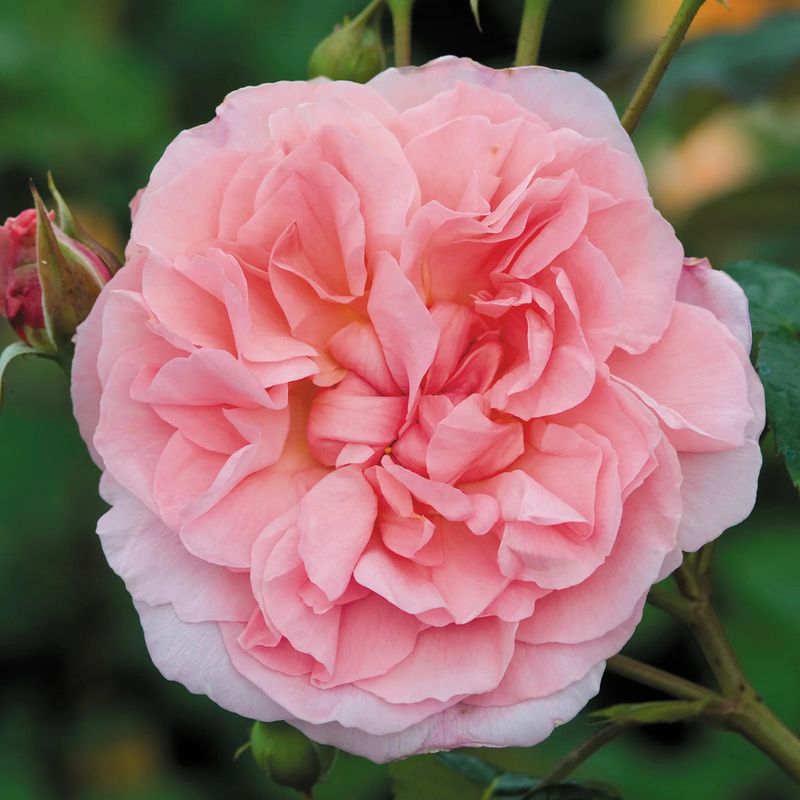
Big, old-fashioned blooms do not have to melt out of the picture by June. Mrs. B.R.
Cant is a tea rose with the kind of heat-loving personality that fits Southern gardens beautifully.
Unlike roses bred mainly for cooler climates, many tea roses were treasured in warm regions because they could keep growing and flowering through long seasons. Mrs. B.R.
Cant produces large, full, warm pink blooms on a vigorous shrub. In Florida, that vigor is a strength as long as you give the plant enough room.
This rose is not the best pick for a narrow strip by the driveway. It wants space, sun, and air.
Use it as a specimen shrub, a loose flowering screen, or a back-of-border rose where its size feels graceful instead of crowded.
Because summer storms can be intense, pruning should aim for a strong, open framework. Remove dead or crossing canes, and avoid letting the center become a tangled thicket.
Mulch is especially helpful in sandy Florida soil because it moderates soil temperature and slows moisture loss.
Gardeners who love fragrant, vintage-looking flowers will appreciate its generous style. Pair it with sturdy companions like firebush, gaillardia, or African blue basil for a border that feels lush but still practical in the heat.
7. Climbing Pinkie Rose
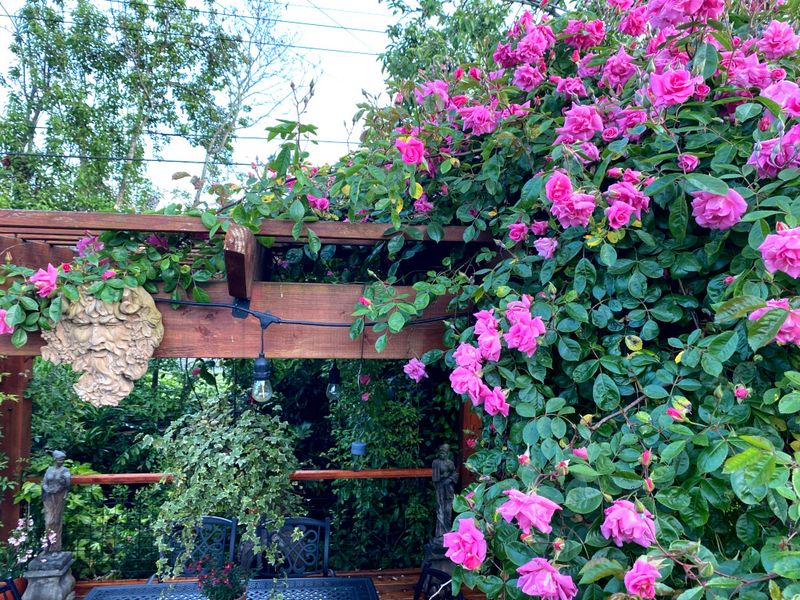
A bare arbor in Florida can look tired fast, especially when summer sun bakes every hard surface. Climbing Pinkie softens that problem with clusters of pink blooms and a flexible habit that suits fences, arches, and trellises.
This rose brings vertical color, which is what makes it earn a place here. Most heat-tolerant landscape roses stay shrubby or low, but Climbing Pinkie lets you pull flowers upward near a gate, porch rail, or sunny garden entrance.
It can repeat bloom well in warm climates and has a softer look than many stiff climbing roses.
Training matters more than heavy pruning. Tie the canes as horizontally as possible along a support, since angled canes often produce more flowering side shoots.
Use soft ties and check them after storms so they do not cut into the stems.
In Florida, avoid planting it where roof runoff pounds the roots or where water stands after a downpour. A raised bed or well-drained planting pocket can help in flood-prone yards.
Like other roses, it benefits from morning sun, mulch, and base watering.
Climbing Pinkie is especially pretty near outdoor living spaces because the flower clusters read well from a distance. If your patio needs height, color, and a little old-South charm, this rose can turn a plain structure into a summer feature.