
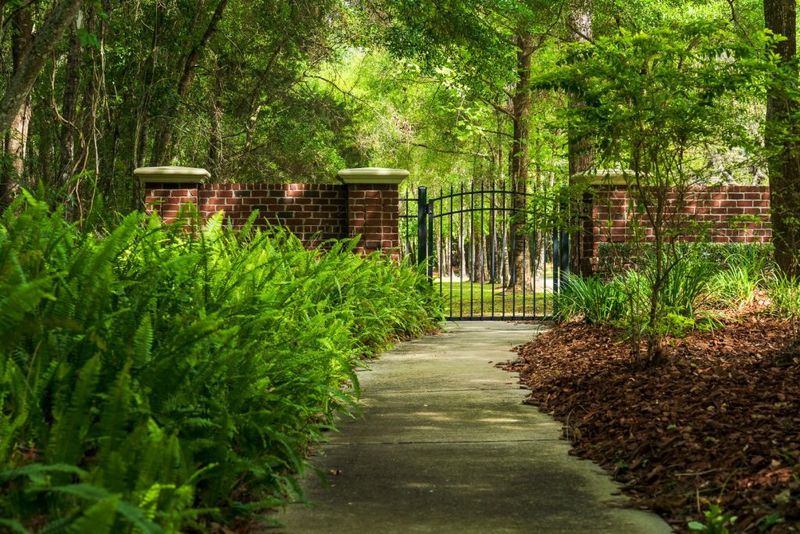
A walkway should look welcoming without turning into another weekend chore. In Florida, the right native plants can handle heat, sandy soil, heavy rain, and long growing seasons while still keeping a neat edge.
These picks stay fairly compact, offer real curb appeal, and support local wildlife. Use them where you want a cleaner path, softer hardscape, and fewer trimming sessions through summer.
1. Coontie
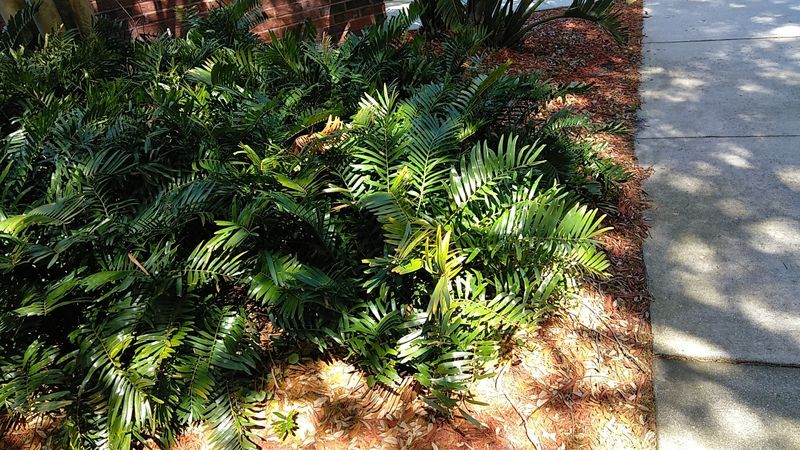
Coontie has the calm, polished look of a plant that knows exactly where it belongs. Its stiff, fernlike fronds form rounded clumps that soften a walkway without flopping across the path, which is a big win during Florida’s long hot season.
For homeowners dealing with sandy soil, coontie is one of the most dependable native choices once established. It tolerates drought, handles part shade to sun, and usually needs only the occasional removal of browned leaves rather than constant shaping.
The wildlife payoff is excellent too. Coontie is the host plant for the atala butterfly, a small black butterfly with bright blue markings and a red-orange body, so a tidy walkway planting can also become a quiet conservation project.
Use coontie where you want structure near an entry, driveway, or stepping-stone path. Give each plant enough space to reach its mature width, and it will create a clean, repeating rhythm without demanding weekly attention.
2. Dwarf Fakahatchee Grass
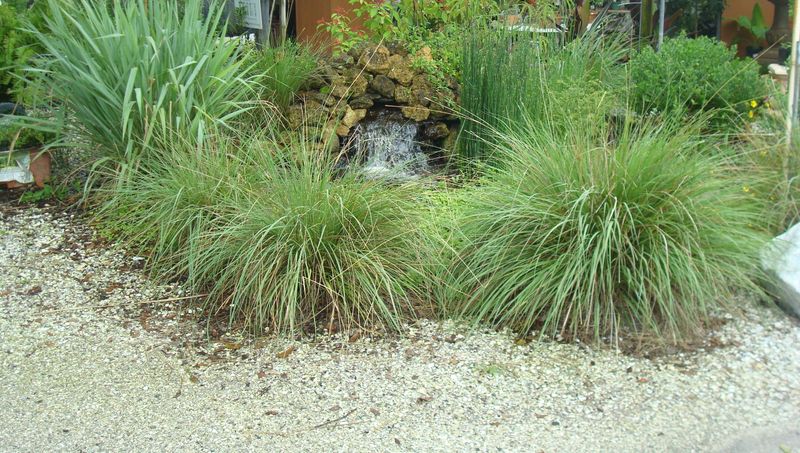
A little movement beside a path can make the whole yard feel cooler. Dwarf Fakahatchee grass brings that breezy look without the wild, oversized habit of many ornamental grasses.
Its narrow blades grow in tidy clumps that work well along walkways, patios, and poolside paths. Compared with regular Fakahatchee grass, the dwarf form stays more restrained, which makes it easier to use in smaller front yards and tight beds.
Florida gardeners like it because it handles sun, part shade, seasonal rain, and periods of dryness once established. It is also more forgiving than many fussy border plants in sandy soil, especially when watered well during the first growing season.
Cutting it back once in late winter or early spring can refresh the clump, but summer trimming is usually minimal if plants are spaced properly. Pair it with coontie, muhly grass, or low wildflowers for a walkway that looks intentional but still natural.
3. Sunshine Mimosa
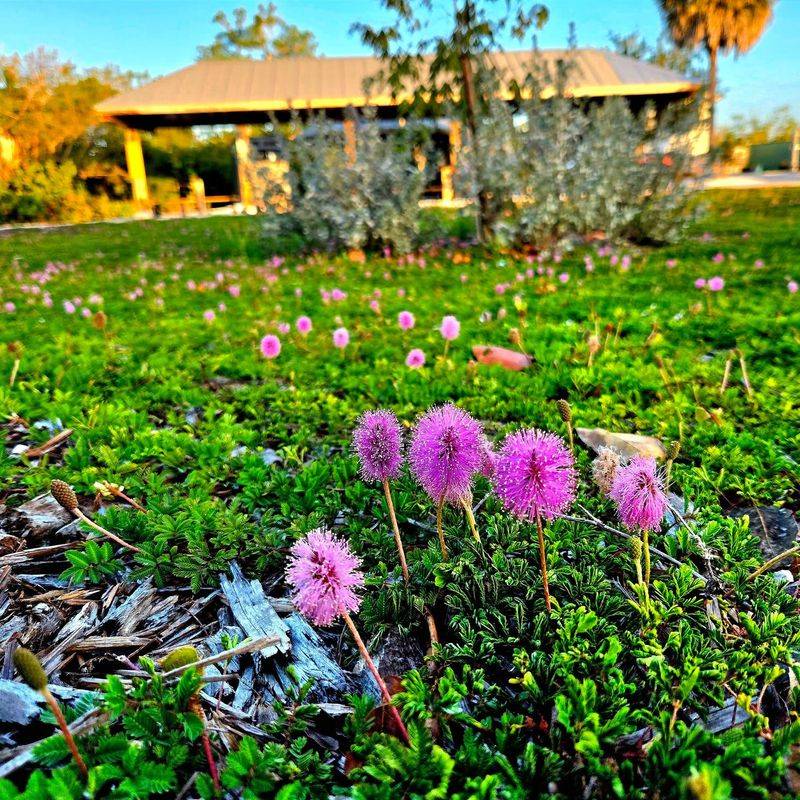
Kids often notice sunshine mimosa before adults do, especially when its pink puffball blooms pop up like tiny party decorations. For a walkway, its real talent is staying low while filling open ground that might otherwise sprout weeds.
Sunshine mimosa is a Florida native groundcover with a creeping habit, soft-looking leaves, and cheerful flowers that attract pollinators. It can be used near stepping stones, along informal paths, or in sunny strips where turfgrass struggles in heat and sandy soil.
Because it spreads, placement matters. Keep it where a living carpet is welcome, and edge it as needed along hard surfaces rather than treating it like a clipped hedge.
Once established, it generally takes Florida summer weather better than many traditional bedding plants. It is especially useful for gardeners who want a softer, wildlife-friendly path edge instead of a bare mulch strip that washes during heavy rain.
4. Beach Sunflower
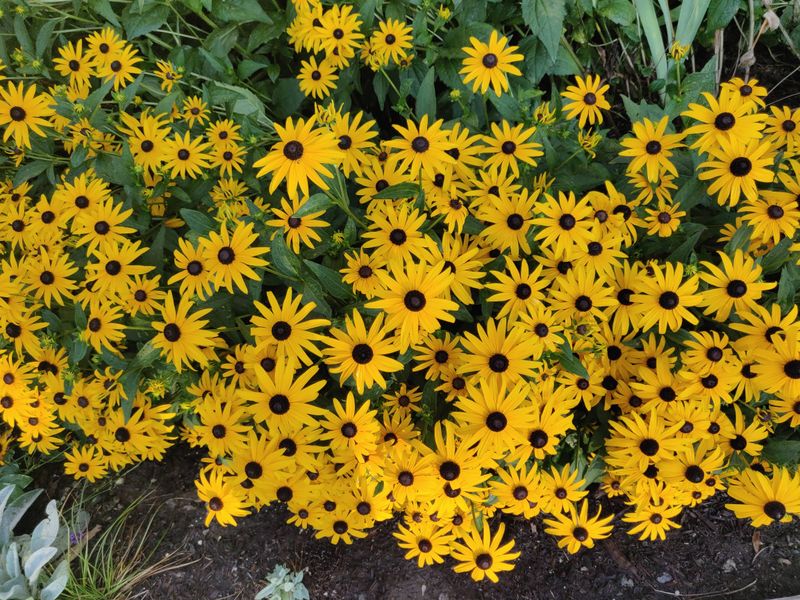
Sunny paths can feel harsh in August, but beach sunflower turns that glare into something cheerful. Its bright yellow flowers bring a coastal Florida feel, even if your yard is miles from the beach.
Beach sunflower is a low, spreading native that thrives in full sun and fast-draining sandy soil. Along a walkway, it works best where it has room to spill slightly into a bed rather than crowd a narrow passage.
The plant stays much lower than most shrubs, so it will not block sightlines near a front door or driveway. Occasional trimming may be needed to keep edges crisp, but it does not require the constant shearing that many nonnative border plants demand.
Pollinators visit the blooms, and the flowers can appear through much of the warm season in suitable conditions. For a relaxed Florida cottage look, plant it in masses beside shell paths, pavers, or sunny front-yard walks where reflected heat would stress fussier plants.
5. Walter’s Viburnum
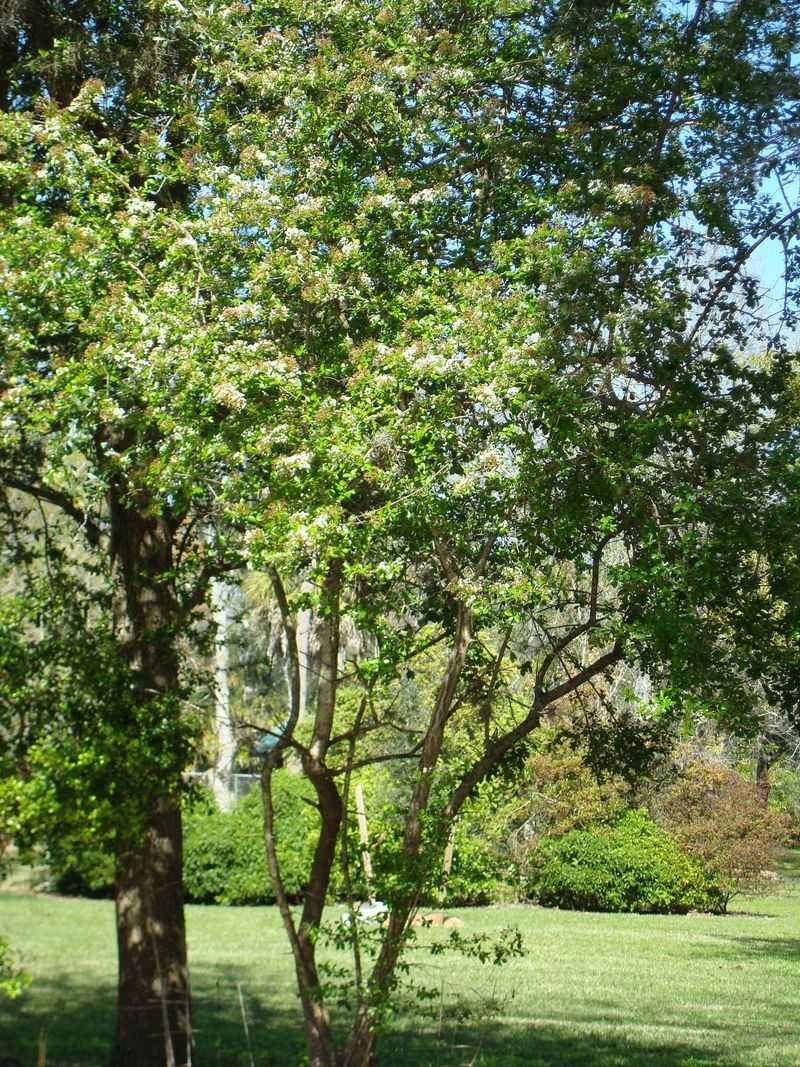
Some walkways need more than a soft edge, they need a little backbone. Walter’s viburnum is the native shrub to consider when you want evergreen structure without planting a high-maintenance formal hedge.
Compact selections are especially useful near paths because they keep a denser, neater shape than the larger wild form. They can frame an entry, define a bed, or screen a low utility area while still fitting into a Florida-friendly landscape.
Small white flowers appear in spring and can support pollinators, followed by berries that birds may use. Through summer, the glossy foliage keeps the walkway looking finished even when annuals have faded or heat has slowed other plants down.
Choose a compact cultivar and check mature size before planting, because spacing is what keeps this shrub from becoming extra work. With the right selection, light touch-up pruning once or twice a year is usually more realistic than constant trimming.
6. Blue-eyed Grass
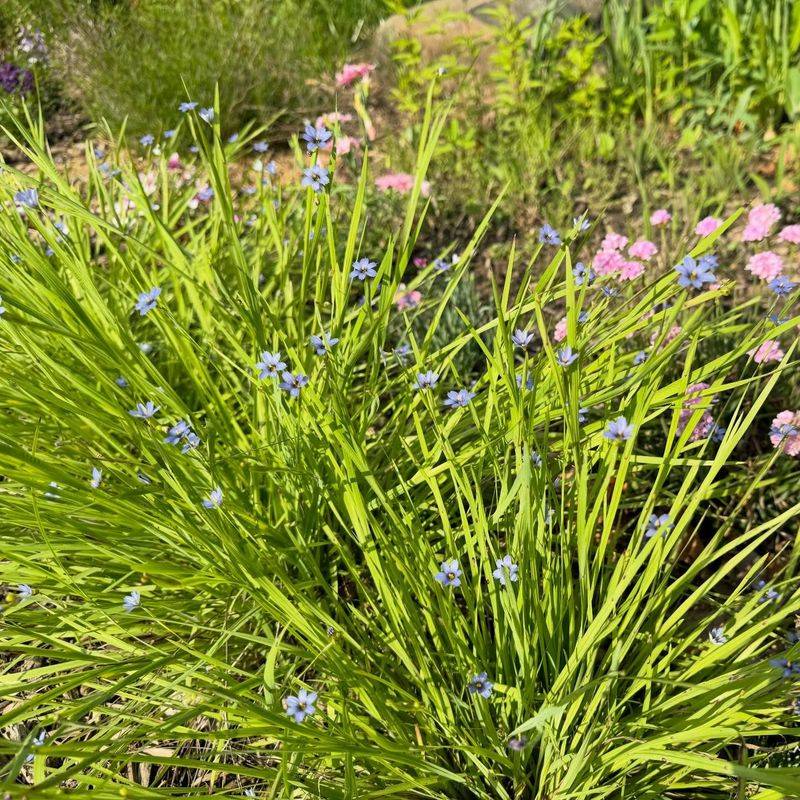
At first glance, blue-eyed grass looks like a small clump of fine grass. Then the little blue-purple flowers open, and the walkway suddenly has a sweet detail that feels discovered rather than staged.
This Florida native is not a true grass, but its slim leaves give it a tidy, grassy texture that fits beautifully near path edges. It works well in small groups, mixed borders, rain garden edges, and sunny areas with soil that does not stay bone dry all the time.
Blue-eyed grass is a good choice when you want something lower and lighter than a shrub. It will not create a heavy border, but it can stitch together stones, mulch, and neighboring perennials in a clean, natural way.
Summer care is usually simple if the plant is sited well. Remove tired flower stems if you want a cleaner look, but avoid overworking it, because the charm comes from its small-scale, meadow-like habit.
7. Lyreleaf Sage
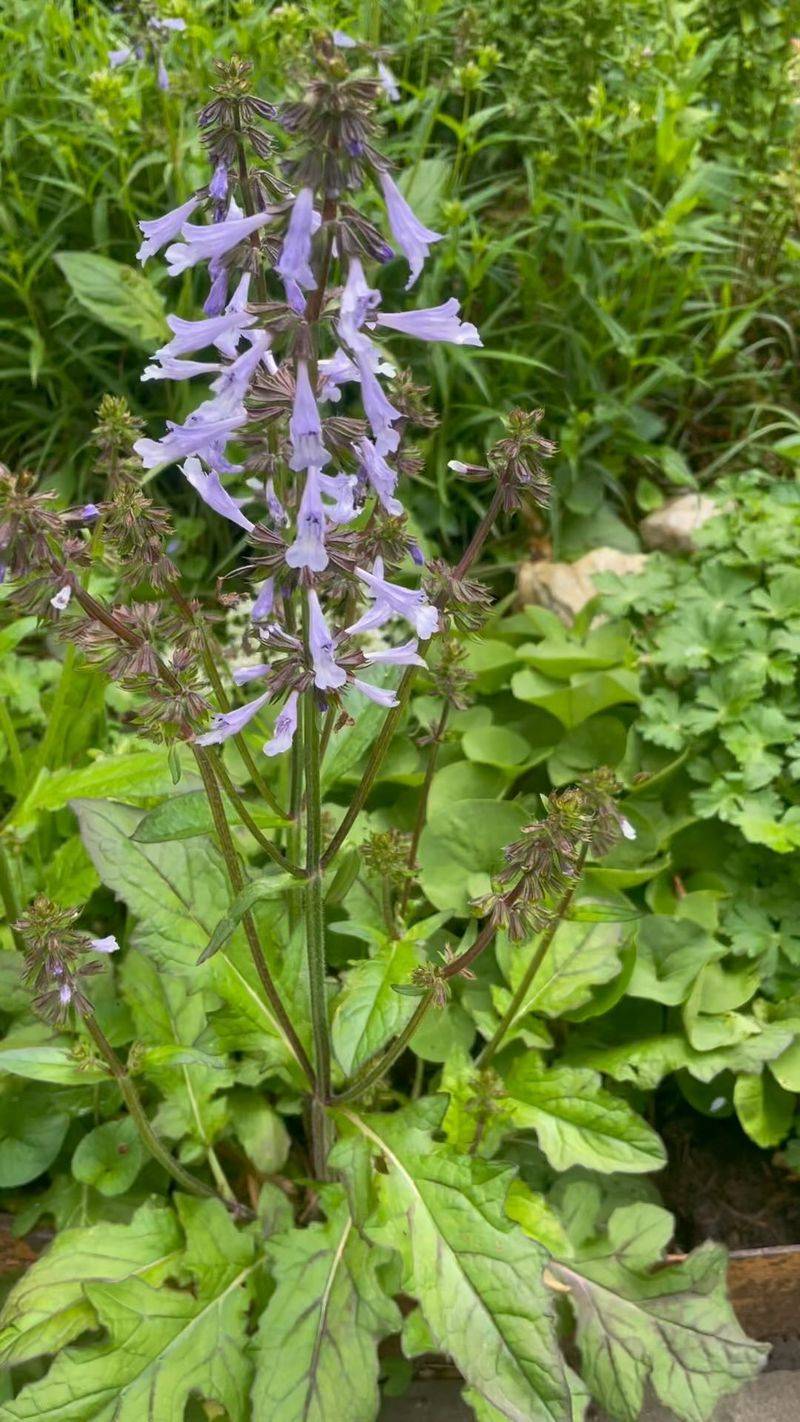
Shady walkway strips can be frustrating, especially under oaks or along the north side of a house. Lyreleaf sage earns its place there by staying low, filling space, and adding spring flower spikes without turning into a bulky border.
The plant forms basal rosettes of leaves that hug the ground, making it useful between taller natives or along informal paths. In bloom, slender spikes rise above the foliage with pale lavender-blue flowers that pollinators can visit.
Unlike many showier bedding plants, lyreleaf sage can handle part shade and the uneven moisture that often comes with tree-root competition. It may reseed in friendly spots, which is helpful if you want a naturalized path edge, but seedlings are usually easy to edit.
For the neatest look, use it in drifts rather than as a single lonely plant. It suits woodland-style walkways, shaded front entries, and low-maintenance beds where a clipped hedge would feel too stiff.
8. Muhly Grass
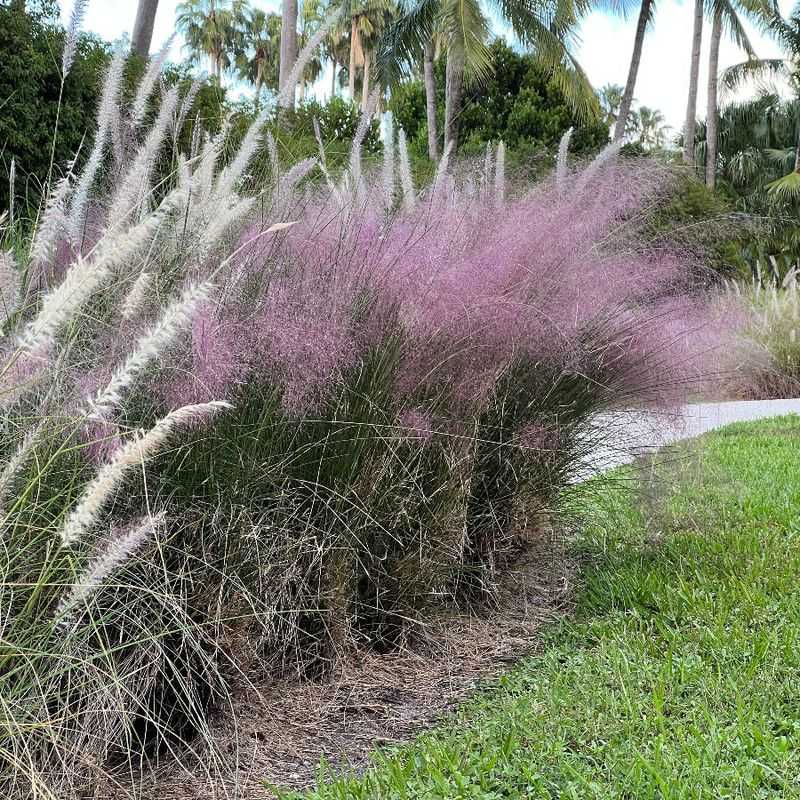
Few native grasses can make a walkway feel special as quickly as muhly grass. In summer, its fine green clumps stay clean and airy, and later in the year many plants produce the pink cloudlike plumes Florida gardeners love.
Muhly grass is best used as a spaced accent rather than a tight edging plant. The rounded clumps give rhythm to a path, mark corners, and soften hard paving without forming a solid wall.
Full sun and good drainage are key. In Florida’s sandy soils, that often works in your favor, though new plants still need regular water until roots settle in.
Maintenance is refreshingly straightforward compared with many ornamental grasses. A single cutback in late winter, before new growth pushes, is often enough to keep plants looking fresh, while summer care is mostly about letting the clumps hold their shape.
Give muhly room so the foliage does not lean into the walkway after rain. Used with low groundcovers or coontie, it creates a polished native planting that feels both practical and memorable.