
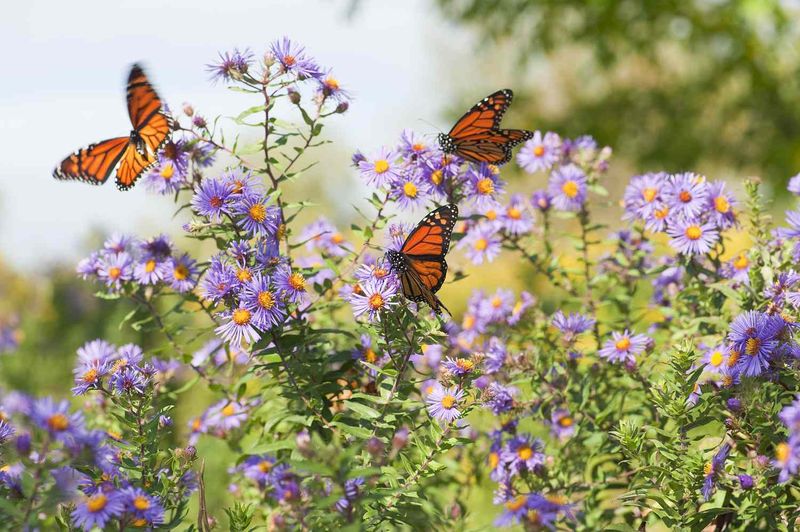
You planted the flowers, watered faithfully, and now your garden is bursting with color, yet butterflies are nowhere to be found. For Florida gardeners, this is one of the most common and frustrating surprises.
The truth is that flowers feed adult butterflies but do not automatically give them everything else they need to stick around, breed, or bring their caterpillars with them. Understanding what is actually missing is the first step toward turning a pretty garden into one that butterflies genuinely use.
Your flowers feed adult butterflies but do not create a nursery
Most gardeners think of butterflies as flower visitors, and that part is true. Adult butterflies do sip nectar from blooms, and a garden full of color will attract occasional feeding stops.
But nectar plants are only one piece of a much larger puzzle, and a garden that solves only the feeding side of the equation will rarely see butterflies stay for long.
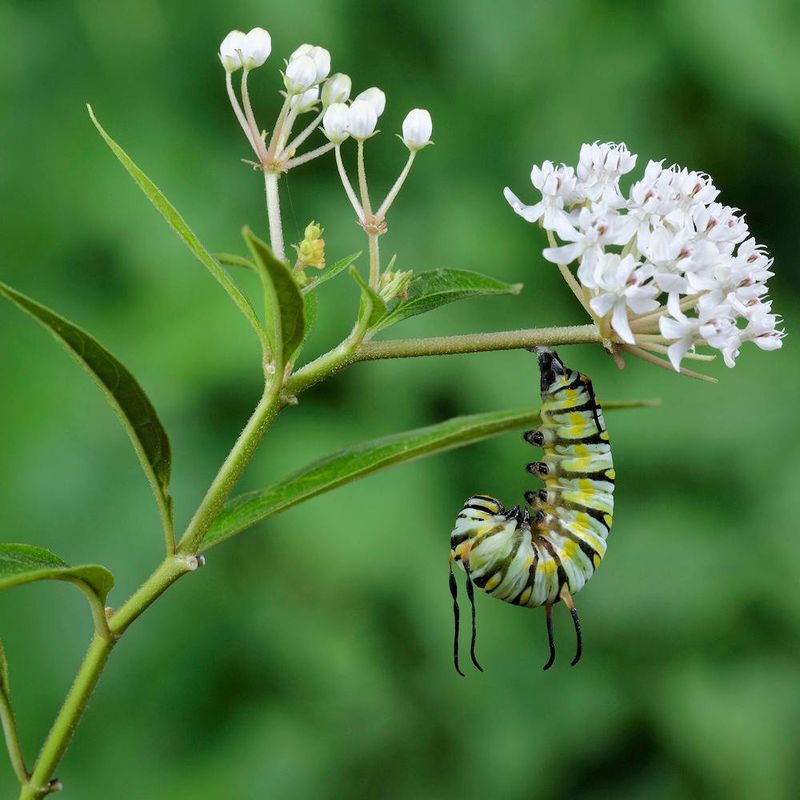
Caterpillars cannot eat flower petals. They require specific host plants, which are the plants where female butterflies lay their eggs and where larvae feed and grow through every stage of development.
Without host plants, a female has no reason to linger, no safe place to deposit her eggs, and no way to complete her life cycle in your yard. UF/IFAS guidance on butterfly gardening in Florida makes this distinction clearly: nectar plants attract adult butterflies, while host plants give them a reason to remain and reproduce.
A yard packed with pentas, lantana, or firebush can look like a butterfly haven and still function more like a rest stop than a home. Adults may pass through to refuel but move on quickly because there is nowhere suitable to raise the next generation.
The fix is straightforward: add host plants selected for butterfly species that actually live in your part of Florida. A North Florida garden may need different choices than a South Florida one, so check regional UF/IFAS plant lists rather than buying whatever is labeled “butterfly plant” at a garden center.
When you pair host plants with your existing nectar flowers, you shift the garden from a feeding station to a functional habitat where butterflies can complete their full life cycle.
The host plants must match the butterflies you want
Adding any host plant to your garden sounds like progress, but the relationship between a butterfly and its host plant is highly specific. A plant that supports one species may be completely ignored by another.
Getting the pairing wrong means the plant sits unused while the butterfly you hoped to attract keeps flying past.
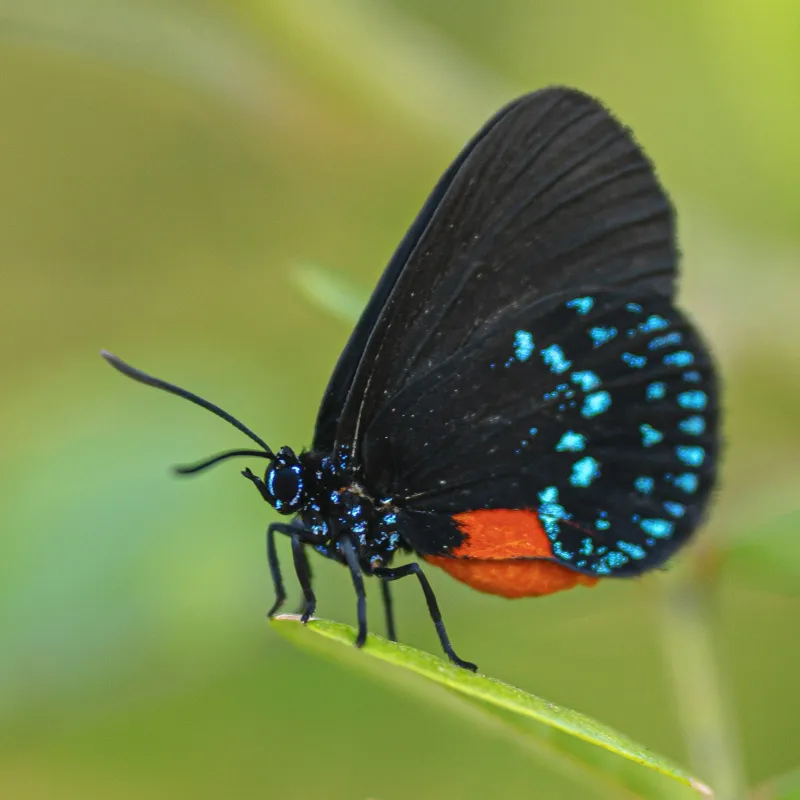
Florida has vivid, well-documented examples of these exact matchups. UF/IFAS Extension Osceola County identifies passionvine as the host plant for both Gulf fritillaries and zebra longwings, coontie as the host plant for the Atala butterfly, and wild lime as the host plant for giant swallowtails.
Plant the wrong vine or shrub for the species in your neighborhood and you have created habitat for a butterfly that may not even be present locally.
Milkweed is another common example of this mismatch. It is genuinely important habitat for monarch caterpillars, and USDA NRCS monarch butterfly guidance supports its use for that specific purpose.
But milkweed does nothing for swallowtails, zebra longwings, hairstreaks, or most other Florida species. A garden built almost entirely around milkweed may welcome monarchs during migration while leaving the rest of the local butterfly community without resources.
Before buying host plants, spend a few weeks noticing which butterflies already visit your yard or the natural areas nearby. A patch of coontie is a powerful addition in South Florida, where Atala populations exist, but far less useful in North Florida where the species is rarely seen.
Matching your host plants to the butterflies that actually live and move through your region gives every plant you add a real chance of being used.
Seasonal gaps can leave a flower-filled garden quiet
Florida’s gardening calendar does not follow a simple spring-to-fall arc. The state’s intense summer heat, frequent afternoon thunderstorms, and regional variation between North, Central, and South Florida all influence when butterflies are most active and which flowers are available when they need them.
A garden that blooms heavily in one season may go quiet during a stretch when local butterfly populations are at a low point, or vice versa.
UF/IFAS Gardening Solutions notes that hot daytime conditions and frequent afternoon rain can reduce visible butterfly activity during Florida summers. Adult butterflies may feed less, shelter more, or simply be harder to spot during peak heat hours.
This does not mean your garden has failed; it means the conditions that day are suppressing activity.
Seasonal bloom gaps are a separate but related issue. If all your nectar plants flower in spring and then fade by June, there may be little to offer during fall migration or late-season activity.
UF/IFAS butterfly gardening guidance recommends choosing plants with different flowering seasons to extend the garden’s usefulness across a longer window.
The goal is not continuous bloom from January through December, which is neither realistic nor required. A temporary lull does not prove the planting failed.
Check regional plant lists for North, Central, or South Florida to find species that fill the gaps specific to your area. Florida Fish and Wildlife guidance on butterfly viewing timing also suggests that late morning and early afternoon on calm, sunny days generally offer the best conditions for spotting adults, so checking at other times may lead to undercounting what is actually present.
Site conditions can reduce butterfly activity around the flowers
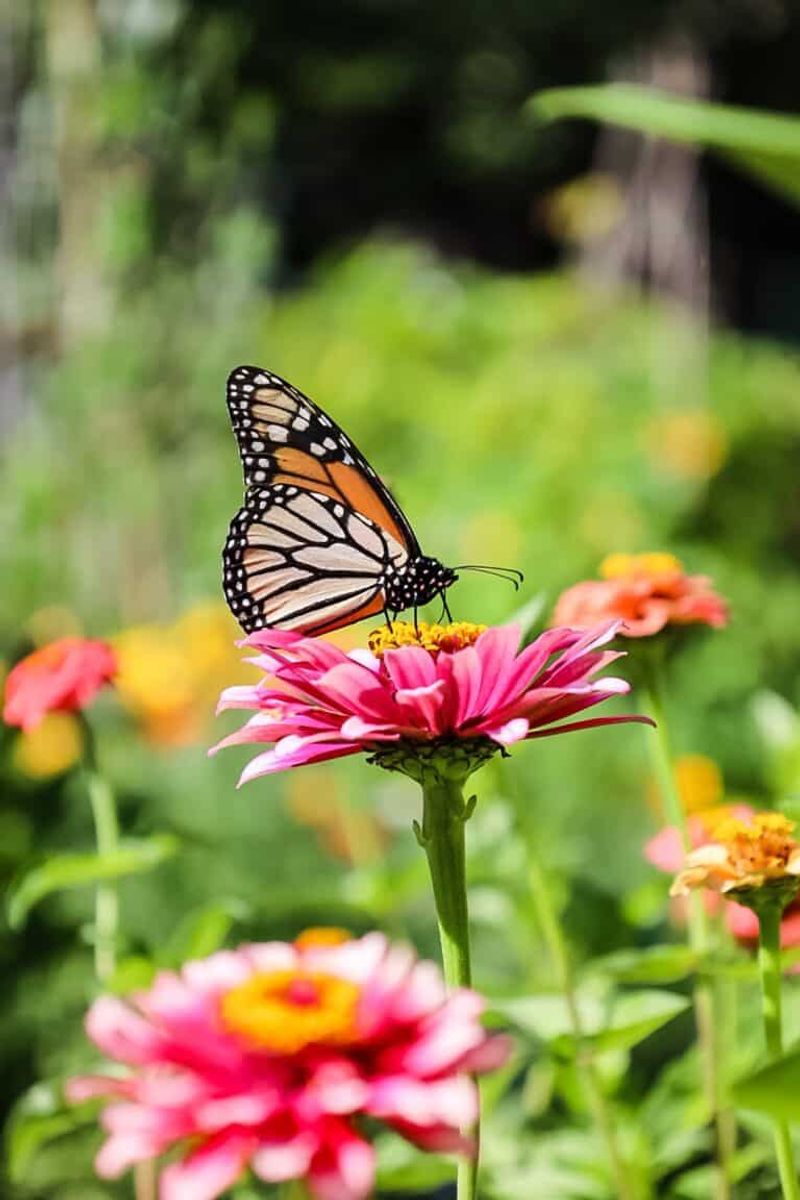
Butterflies are cold-blooded, which means they depend on the sun to warm their bodies before they can fly and feed efficiently. A garden planted in heavy shade may have beautiful flowers that go largely unvisited because the conditions make sustained activity difficult.
Shade does not create an invisible wall, but it does reduce the time butterflies spend basking, feeding, and moving through the space.
UF/IFAS Extension Osceola County recommends siting a butterfly garden where it receives good sun exposure, and Penn State Extension’s butterfly gardening guidance similarly points to sunny, sheltered spots as the most productive placements. Morning and midday sun are particularly valuable because they allow butterflies to warm up and begin feeding earlier in the day before afternoon heat or storms push them to shelter.
Wind is a separate concern. Strong, consistent wind can make landing on flowers difficult and reduce the amount of time an adult spends in any one spot.
Placing dense shrubs, tall grasses, or other vegetation on the windward side of a planting can help buffer the garden without blocking sunlight from the main flower area.
Florida’s butterfly community is not uniform on this point, though. Zebra longwings, one of Florida’s most recognizable residents and the state butterfly, are known to use moist, shrubby, and partly shaded habitats.
Full sun is not a universal requirement for every species. Observe which butterflies are already moving through your yard and what microhabitats they seem to prefer before making major changes to tree cover or shade structure.
The goal is a site that balances useful sun with protection from the conditions that drive butterflies away.
Routine pest control can erase the butterflies you planted for
Pesticides are one of the most direct and underappreciated reasons a butterfly garden stays empty. Insecticides do not distinguish between pest insects and the butterflies you are trying to attract.
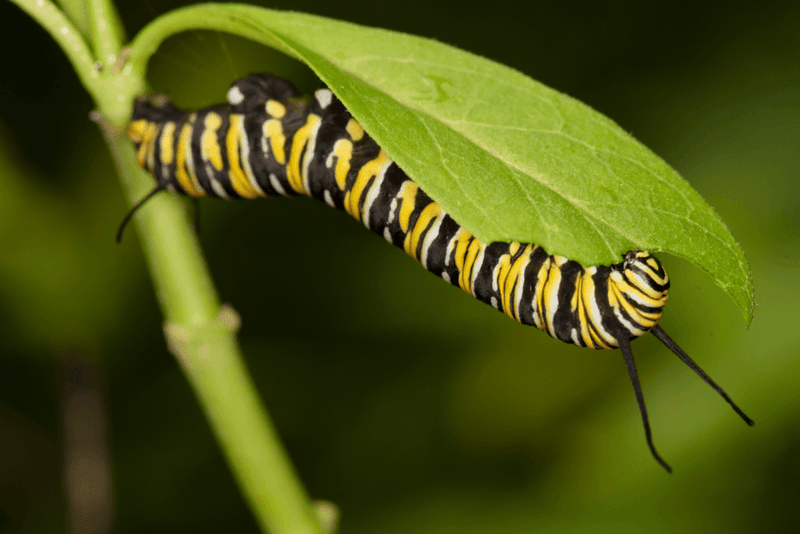
A single application during the wrong moment can kill adult butterflies on contact and eliminate entire cohorts of caterpillars that were feeding on your host plants.
Systemic insecticides present a less visible but equally serious problem. These products are absorbed into plant tissue and can persist in leaves, pollen, and nectar long after the application date.
An adult butterfly feeding on a treated flower, or a caterpillar chewing treated host-plant leaves, may be exposed to toxic residues without any visible spray event having taken place. EPA guidance on protecting monarchs from pesticides recommends avoiding applications to blooming plants, reducing drift, and checking wind conditions before any spray.
These steps reduce exposure but do not eliminate risk entirely.
Timing applications for evening or night is sometimes suggested as a way to protect actively foraging pollinators, but this is not a guarantee of safety. Residues remain on plant surfaces and in tissues regardless of when the product was applied.
Xerces Society’s overview of common pesticide questions cautions that labeling a product as organic or natural does not automatically make it harmless to butterflies and caterpillars. Spinosad, for example, is derived from a naturally occurring bacterium but can be toxic to caterpillars.
The safest path for a butterfly garden is to stop routine preventive spraying entirely. If a pest problem requires treatment, target only the affected plants, use the most selective product available, avoid open flowers, and keep applications well away from host plants where caterpillars may be feeding.
Before purchasing plants from a nursery, ask whether they received systemic insecticide treatments, since those residues can persist for months after purchase and affect the first generation of caterpillars that tries to use the plant.
A spotless yard removes shelter and immature-life-stage habitat
Keeping a yard meticulously clean feels like good garden stewardship, but for butterflies it can quietly remove much of what makes a space livable. Adults need places to roost overnight, shelter from sudden storms, and patches of vegetation dense enough to hide in when a predator approaches.
Without these features, even a garden full of nectar flowers becomes a place butterflies visit briefly rather than one they use consistently.
The immature life stages are even more dependent on habitat structure. Eggs are tiny and easy to miss on leaf undersides.
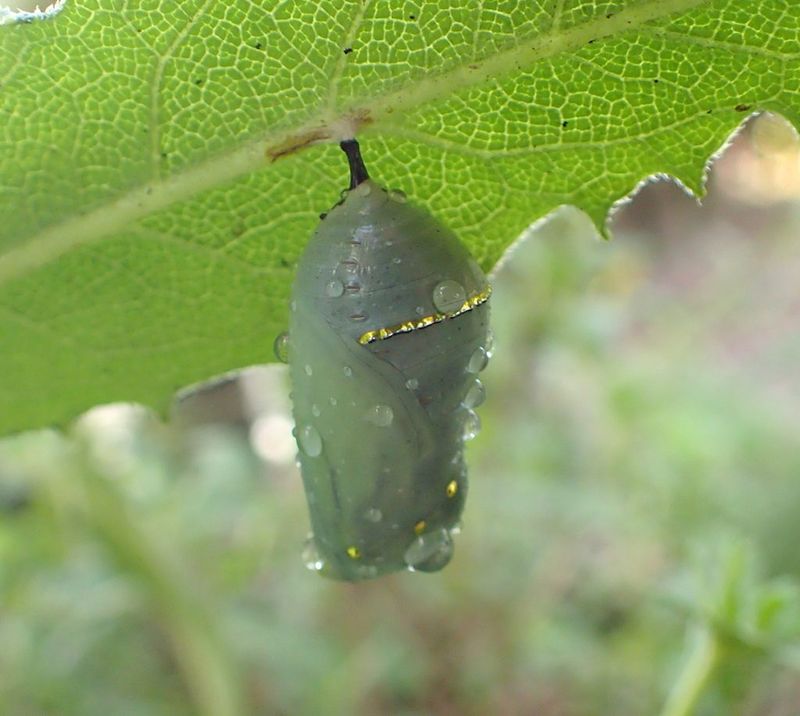
Caterpillars often feed in sheltered spots within or beneath host plants. Chrysalises attach to stems, twigs, leaf litter, or debris near the base of plants.
A yard that is raked clean, trimmed close, and stripped of anything “messy” may be removing these life stages before they have a chance to complete development.
UF/IFAS Gardening Solutions recommends habitat features including dense shrubs, tall grasses, and areas of leaf litter as part of a complete butterfly space. UF/IFAS guidance on landscaping backyards for wildlife similarly points to logs, brush piles, and less-managed vegetation as useful habitat components.
Retaining some of this structure near host plants, while still removing invasive or hazardous growth, supports butterflies without requiring a yard that looks neglected.
One important shift in how you read the garden: chewed or tattered host-plant leaves are not a sign of failure. They are often the clearest signal that caterpillars are actively using the plant.
Resist the urge to treat or remove a host plant that looks eaten. That damage is evidence the habitat is working exactly as intended.
Florida soil and moisture determine whether the habitat keeps working
A plant can bloom on schedule and still fail as durable butterfly habitat if the soil and moisture conditions are wrong for it. Stressed plants often produce fewer leaves, weaker stems, and lower-quality foliage, which makes them less attractive to egg-laying females and less nutritious for caterpillars that do hatch.
In Florida, where soil type, drainage, salinity, and rainfall vary dramatically from the Panhandle to the Keys, matching plants to their actual site conditions is one of the most important decisions a gardener can make.
Sandy soils, which cover much of peninsular Florida, drain quickly and hold little moisture or organic matter. Plants that need consistent moisture will struggle in these conditions unless they receive supplemental irrigation, and even with watering, they may never perform as well as species adapted to sandy, dry conditions.
UF/IFAS Community ButterflyScaping guidance emphasizes the principle of right plant, right place as a foundation for creating butterfly habitat that lasts beyond the first season.
Soil pH also matters. Some host plants have specific pH requirements, and Florida’s soils can range from acidic to alkaline depending on location and proximity to limestone or coastal areas.
A soil test, available inexpensively through UF/IFAS Extension county offices, can tell you what you are working with before you invest in plants that may never thrive. UF/IFAS Florida-Friendly Landscaping guidance recommends testing soil and adjusting plant selection accordingly rather than amending soil to fit plants that are fundamentally unsuited to the site.
When establishing new host or nectar plants, water regularly until roots are settled and growth is steady, then reduce supplemental irrigation for plants that are genuinely adapted to your site. A plant that is thriving in conditions it was selected for will support butterfly life cycles far more reliably than one that is simply surviving with constant intervention.
One showy flower cannot supply a whole butterfly community
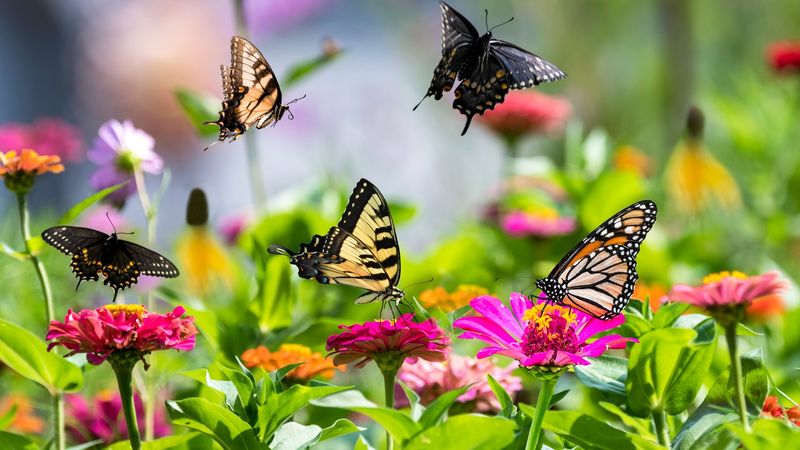
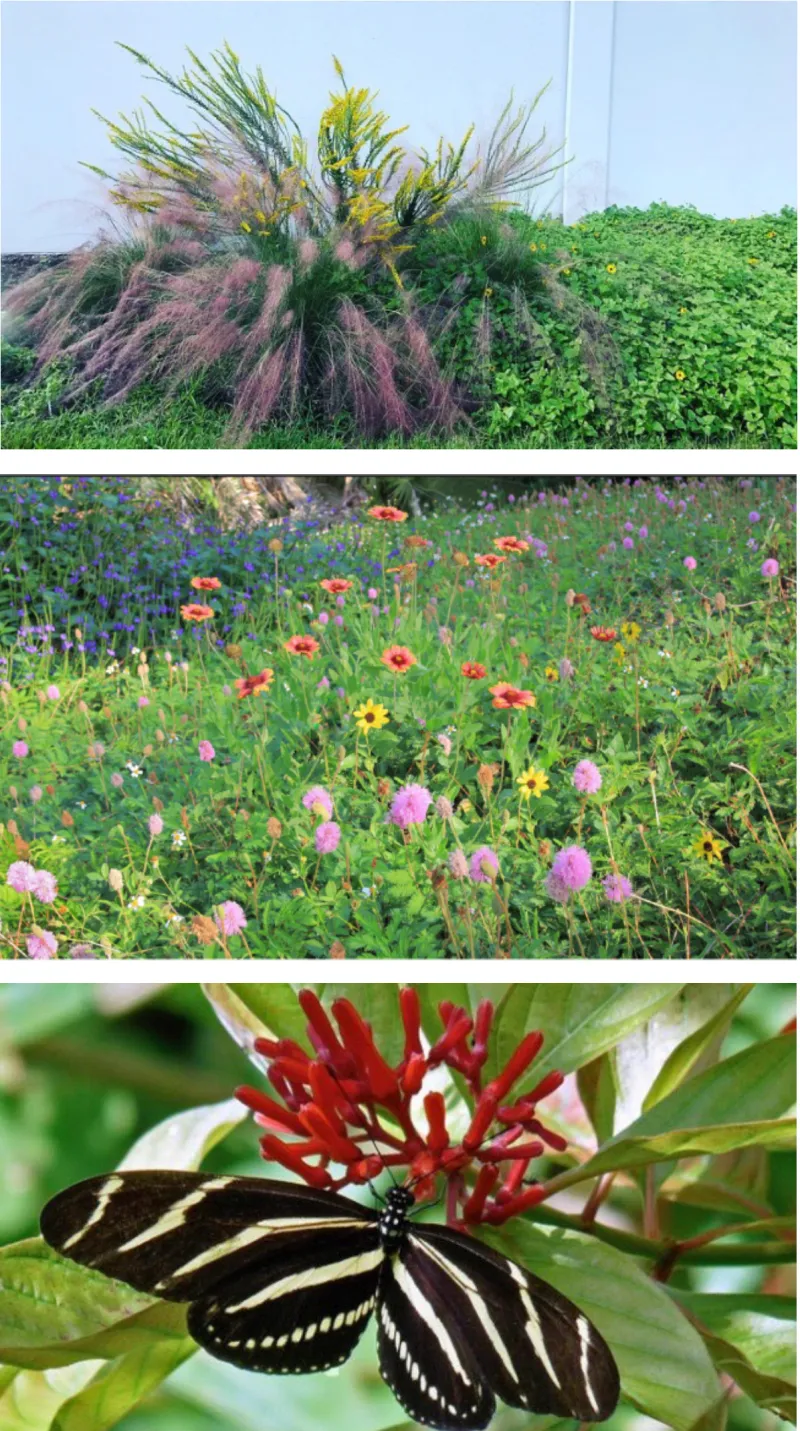
Relying on a single standout flower, no matter how popular it is at the garden center, narrows the range of butterflies that will find your garden useful. Research published in the Journal of Insect Conservation on garden plant attractiveness to butterflies found that individual plant species attracted different subsets of butterfly species, with no single plant drawing the full community.
A garden built around one “butterfly magnet” may reliably attract one or two species while offering little to the rest.
Flower shape plays a bigger role than many gardeners expect. Some butterflies have short proboscises suited to open, shallow flowers, while others can reach tubular blooms that shorter-tongued species cannot access.
Varying flower shapes across your planting broadens the range of species that can actually feed there. Bloom timing matters for the same reason: a garden where every plant flowers in spring and goes dormant by summer leaves late-season visitors without resources.
Native plants are especially valuable because they are more likely to match the host-plant and nectar relationships that local butterfly species evolved with. A UF/IFAS evaluation of native and nonnative ornamentals as pollinator plants in Florida found that suitable nonnative plants can also contribute to pollinator support when they are noninvasive and matched to the site.
The key is avoiding invasive species and filling gaps with plants that genuinely fit your Florida region’s conditions.
Before wrapping up your garden plan, run through a short action check. Observe the garden during sunny late-morning or early-afternoon hours, when UF/IFAS butterfly observation guidance notes adults are most active.
Look closely at host-plant leaves for eggs, caterpillars, or chrysalises, since the garden may be more productive than a quick glance suggests. If you want to add one more feature, UF/IFAS backyard wildlife guidance recommends a small, maintained damp-sand or soil area as an optional supplement for puddling behavior, but only after host plants, nectar variety, shelter, and pesticide protection are already in place.
A functioning, species-matched habitat is the goal, and building one is a process that rewards patience more reliably than any single plant ever could.