
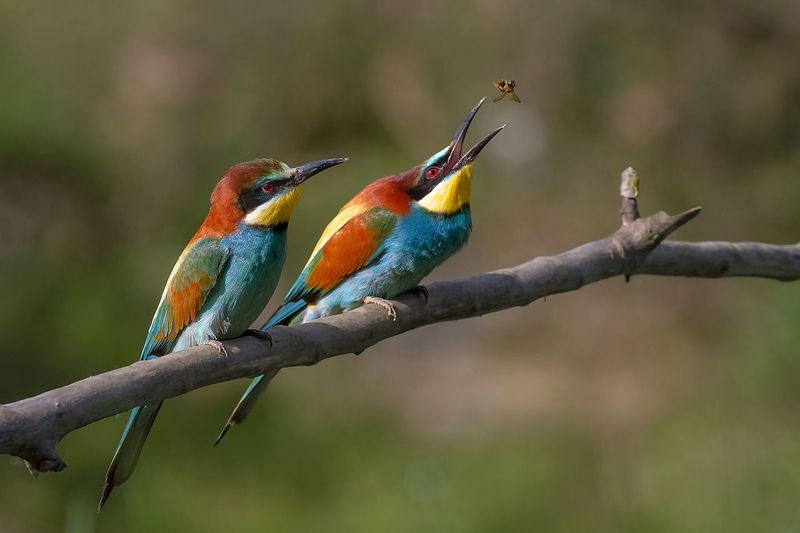
Nothing ruins a warm summer evening faster than a cloud of hungry mosquitoes. The good news is that you do not need to reach for chemical sprays to fight back, because some of nature’s best mosquito hunters have feathers and wings. By making your yard welcoming to certain birds, you can build a living defense system that snacks on biting bugs all season long. Here are 16 feathered friends worth inviting over, plus simple ways to make them feel at home.
1. Purple Martin
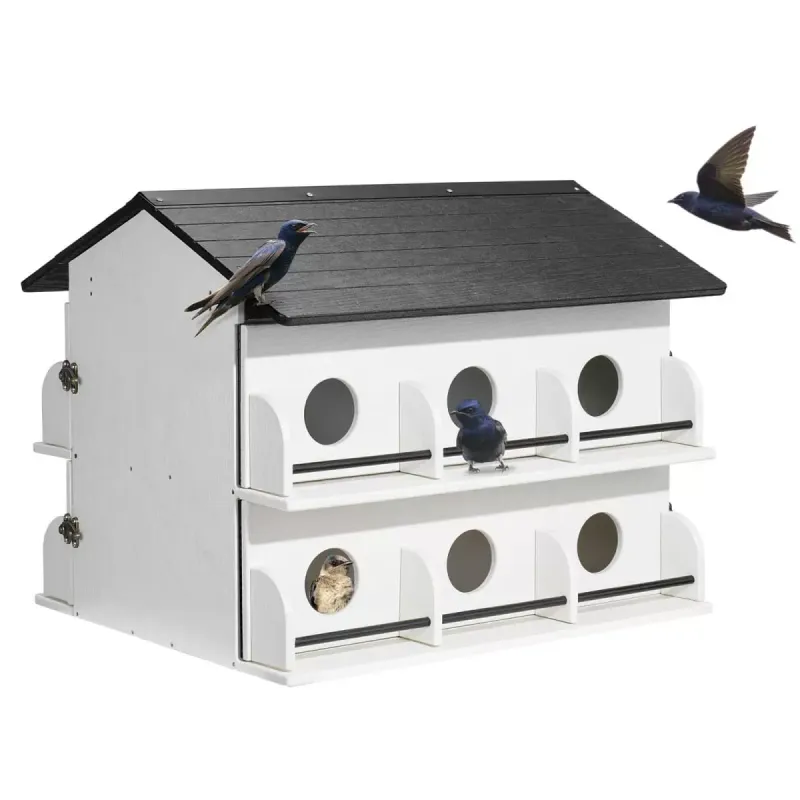
Picture a sleek, dark bird swooping over your backyard at dusk like a tiny fighter jet. The purple martin is the largest swallow in North America, and it spends nearly every daylight hour hunting flying insects on the wing.
Martins are famous for nesting in big colonial birdhouses that people put up on tall poles. A single colony can pack a lot of hungry mouths, and while the old claim that one bird eats 2,000 mosquitoes a day is exaggerated, they genuinely help reduce many flying pests around open lawns and water.
To draw them in, set up a white multi-room martin house or a cluster of hollow gourds at least 12 feet high in an open, sunny spot away from trees. Keep sparrows and starlings from taking over the units.
Fun fact: east of the Rockies, purple martins depend almost entirely on human-supplied housing, a tradition that stretches back to Native American communities. Hosting a colony may help keep your evening air a little clearer while giving you a lively show to watch.
2. Barn Swallow
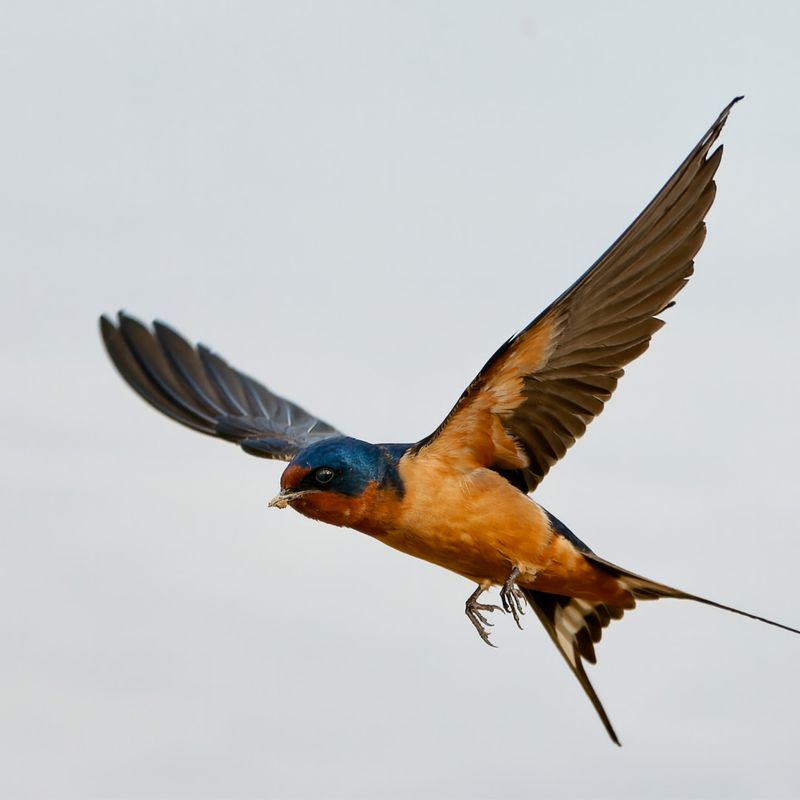
With a deeply forked tail and a rusty-orange throat, the barn swallow looks like it dressed up for the occasion of eating bugs. You have probably seen these acrobats skimming low over fields and ponds, scooping insects straight out of the air.
Barn swallows are relentless daytime foragers, and their menu leans heavily on flies, gnats, and mosquitoes that hover near water and livestock. Because they hunt close to the ground, they clean up the very layer of air where biting insects like to gather.
Unlike birds that want a tidy box, these swallows prefer to build mud-cup nests under eaves, on porch beams, or inside open sheds. Leaving a garage door cracked or mounting a small nesting shelf under a covered ledge can invite a pair to move in.
They return to the same sites year after year, so once you host them, you may enjoy repeat guests every spring. A resident pair can put a noticeable dent in the mosquito population buzzing around your patio, all while dazzling you with their tumbling flight.
3. Tree Swallow
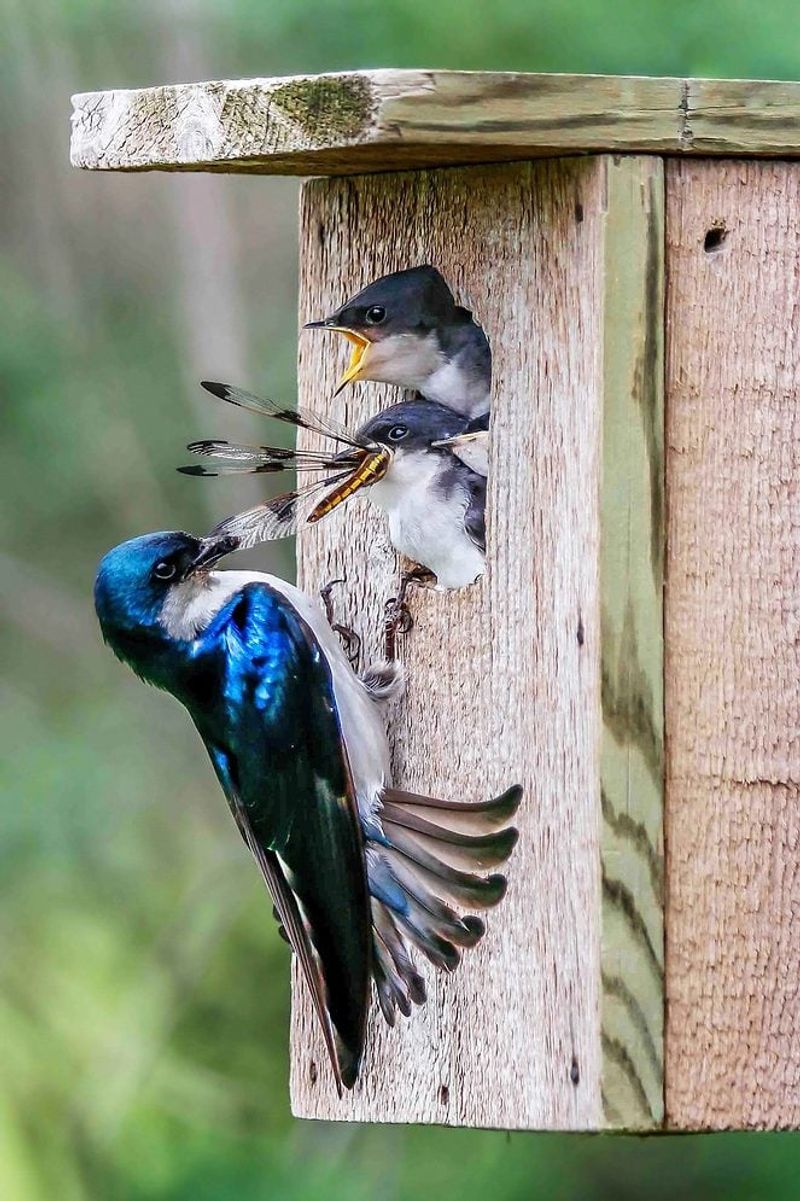
Shimmering blue-green above and clean white below, the tree swallow flashes like a jewel as it banks over open water. These cheerful birds are natural cavity nesters, which makes them one of the easiest swallows to welcome with a simple nest box.
Tree swallows spend hours patrolling the air just above ponds, marshes, and damp meadows, exactly the places where mosquitoes breed. They gulp down midges, gnats, flies, and mosquitoes by the beakful during breeding season.
If your property sits near water or has a wet corner, mount a bluebird-style box on a pole about five feet up, facing an open field. Adding a couple of boxes spaced apart can attract more than one pair since they tolerate close neighbors better than many birds.
Here is a quirky detail: tree swallows love white feathers so much they will chase them in midair and tuck them into their nests. Toss a few clean feathers into the breeze and you might spark an aerial game. Their steady appetite may help thin the mosquito swarms drifting up from nearby wetlands.
4. Chimney Swift
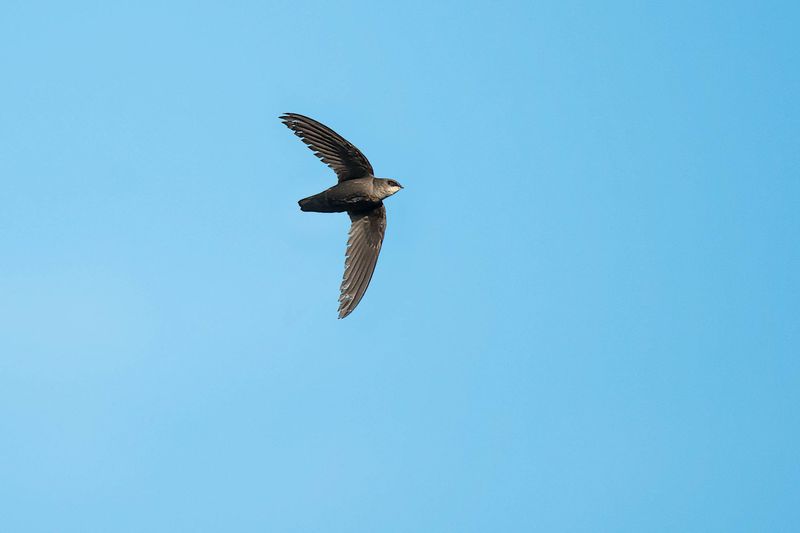
Some call it a flying cigar, and once you see the chimney swift’s stubby body and stiff, curved wings, the nickname sticks. This little bird almost never lands during the day, spending its waking hours zipping through the sky and vacuuming up insects.
Chimney swifts are pure aerial insectivores, meaning nearly everything they eat is caught mid-flight. Mosquitoes, flying ants, gnats, and beetles all end up on the menu, and a busy swift can consume thousands of tiny bugs daily.
They earned their name because they roost and nest inside open masonry chimneys, hollow trees, and similar vertical shafts. If you have an uncapped, unused chimney, leaving the damper closed and the top open gives them a place to raise young.
For folks without a suitable chimney, dedicated swift towers can be built to mimic that habitat. Their numbers have dropped as old chimneys get capped, so hosting them helps a species in decline. Having a colony overhead means an evening cloud of insect-eaters working the airspace above your yard, which can noticeably reduce the bugs bothering you below.
5. Eastern Bluebird
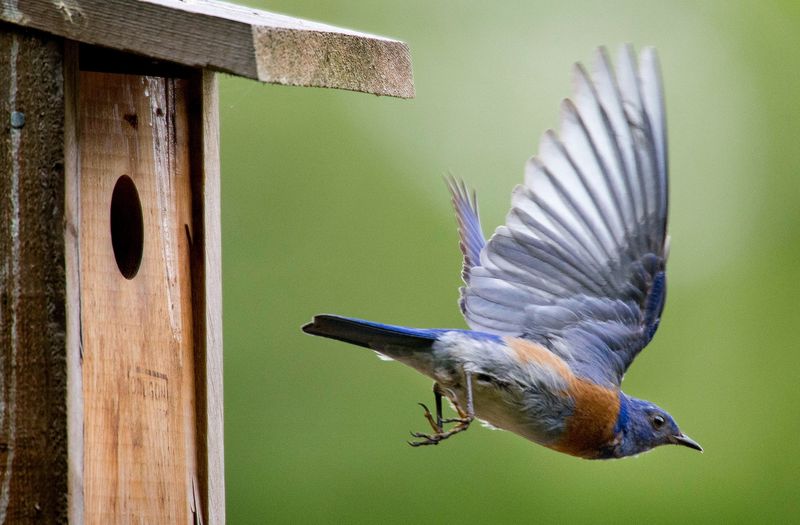
A flash of sky-blue on the fence post usually means an eastern bluebird has claimed your yard as its hunting ground. Beloved for their gentle color and soft warble, these birds are also quietly effective bug controllers.
Bluebirds hunt by perching, watching the grass, then dropping to snatch insects. While beetles, grasshoppers, and caterpillars make up much of their diet, they also grab mosquitoes and other soft-bodied flies, especially when feeding hungry chicks.
Because they nest in cavities, a well-placed nest box is your best invitation. Mount it on a pole about five feet high at the edge of an open lawn, facing away from prevailing wind, and add a predator guard to keep the eggs safe.
Skip the pesticides on your grass, since bluebirds need a healthy insect supply to thrive. A mealworm feeder can seal the deal and keep them close.
Did you know bluebird populations crashed decades ago, then bounced back largely thanks to backyard nest-box trails built by volunteers? Inviting them supports that comeback while putting a charming pest patrol to work near your patio.
6. House Wren
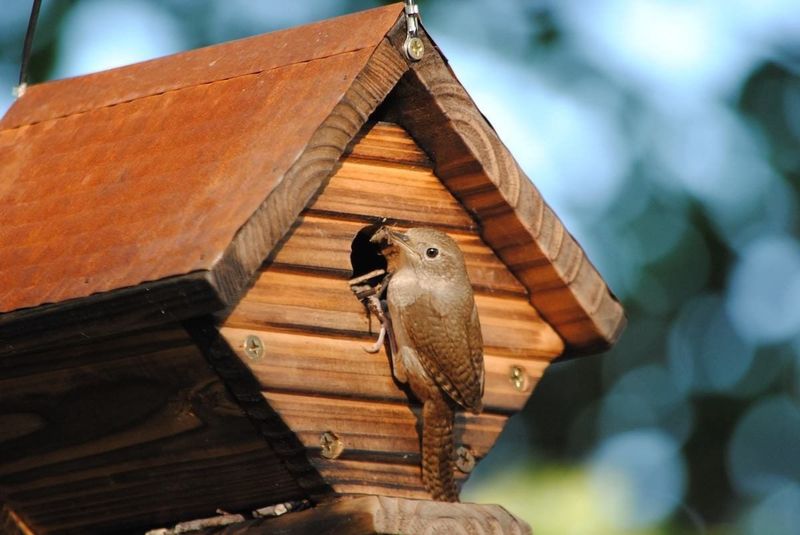
Tiny, brown, and bursting with attitude, the house wren fills a summer morning with a bubbling song far bigger than its body. Do not let the plain feathers fool you, because this bird is a tireless insect hunter around gardens and shrubs.
Wrens work the low zones you actually spend time in, poking through flower beds, brush piles, and dense plantings. Their diet is almost entirely insects and spiders, including beetles, flies, and mosquitoes that hide in leafy cover.
They readily accept small nest boxes with a modest entrance hole, and they are not picky about placement. Hang one from a tree branch or a porch hook near your garden, and a pair may set up shop within days of arriving.
Leaving a small brush pile in a corner gives them foraging territory and shelter for the insects they hunt. Fair warning: males build several messy stick nests to show off, so you may find twigs stuffed into more than one cavity. Having a wren family working your borders can help keep the buggy shadows near your seating areas a little less crowded.
7. Black-capped Chickadee
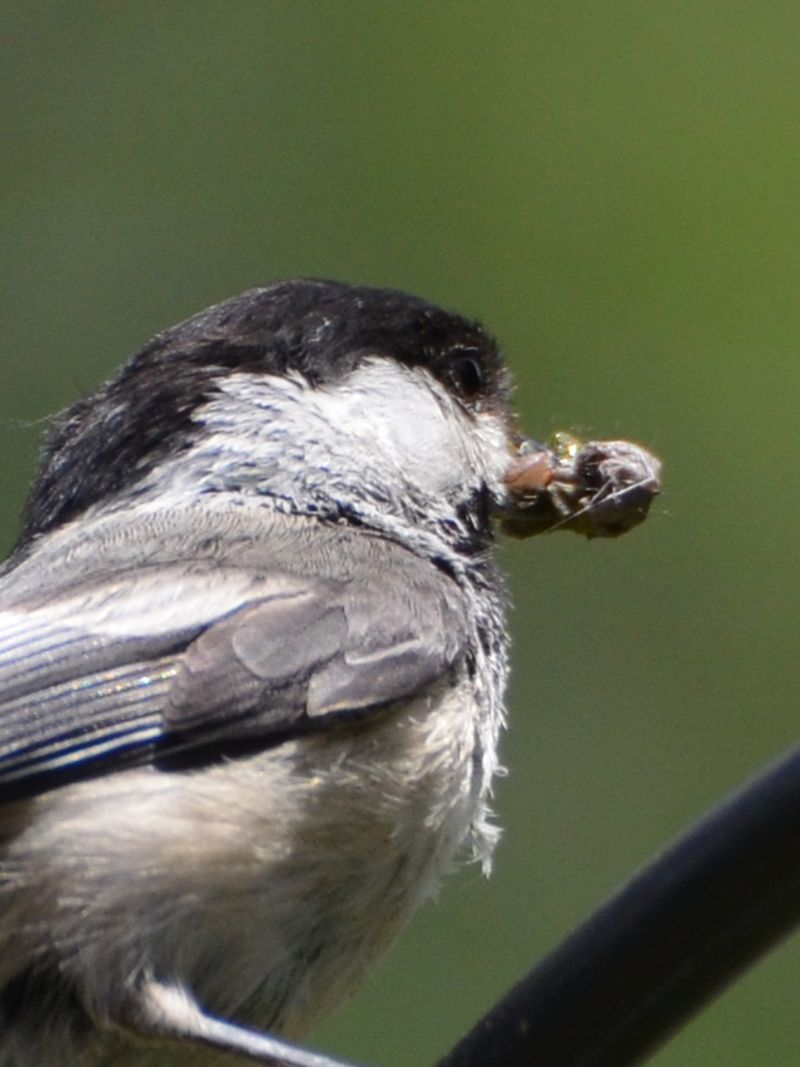
Friendly enough to visit a feeder while you stand nearby, the black-capped chickadee is a backyard favorite with a black cap, white cheeks, and an endless supply of energy. Behind that cute face hides a serious appetite for insects.
During warmer months, roughly half of a chickadee’s diet is made up of bugs and their eggs, and that share climbs when they are raising chicks. They comb leaves and bark for caterpillars, aphids, spiders, and small flying pests including mosquitoes and their larvae.
A single nesting pair can gather hundreds of insects a day to stuff hungry nestlings, quietly thinning the pest population around your trees. Offer them a small nest box packed with wood shavings, plus native shrubs and trees that host the caterpillars they crave.
Year-round feeders with sunflower seeds keep them nearby even in the off-season, so they are ready to patrol when bug season returns. Here is a bit of trivia: chickadees add extra brain cells each fall to remember where they hid food. Keeping them around gives you a lively, curious ally that may help trim the insect crowd near your home.
8. Eastern Phoebe
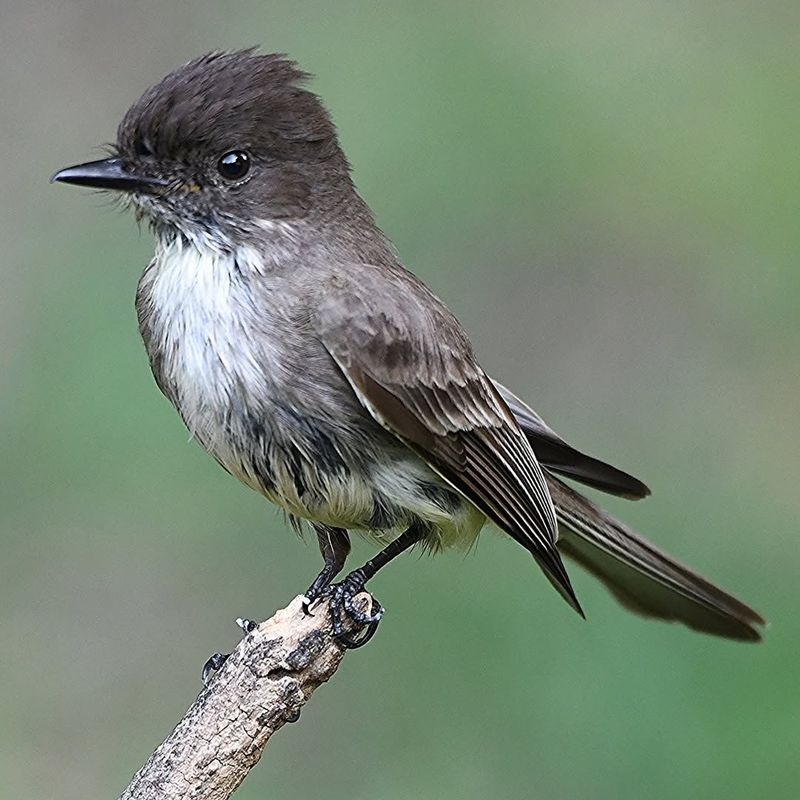
Listen for a raspy fee-bee call from a low perch and you have likely met the eastern phoebe, one of the friendliest flycatchers around homes. This tail-wagging little bird often nests right on porch ledges and under eaves, making it an easy neighbor.
Phoebes hunt by sitting on a fence, wire, or branch, then darting out to grab flying insects before returning to the same spot. Flies, gnats, wasps, beetles, and yes, mosquitoes all get plucked from the air in these quick sallies.
Because they nest early and often raise two broods, they hunt heavily from spring straight through summer. Offering a small nesting shelf beneath a covered porch or shed overhang encourages a pair to settle close to your living space.
They favor spots near water, so a pond, birdbath, or damp swale on your property makes your yard especially appealing. A fun note: the eastern phoebe was the first banded bird in North America, marked by John James Audubon himself. Hosting one puts a dependable flying-insect catcher right where mosquitoes tend to gather near your doorway.
9. Common Nighthawk
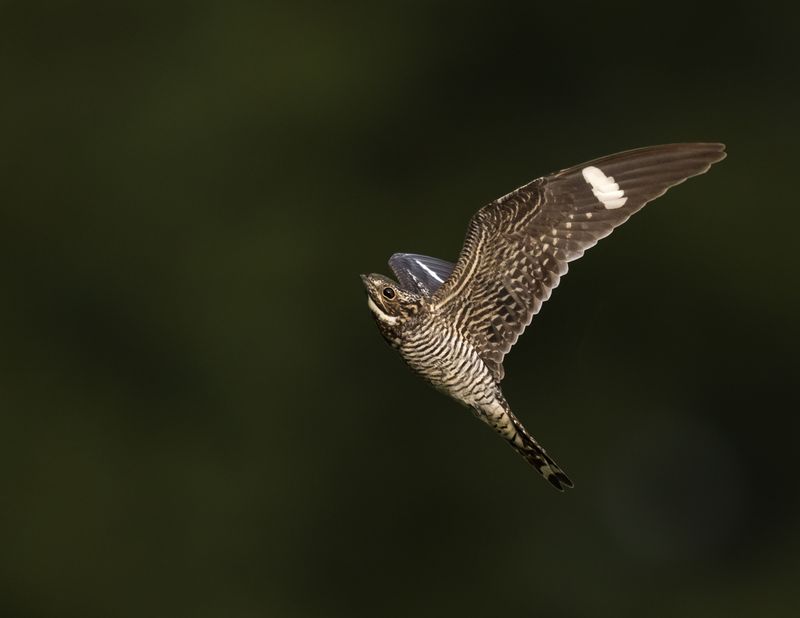
As the sky turns purple at dusk, a nighthawk cuts overhead with a nasal peent and a burst of erratic, batlike flight. Despite the name, it is not a hawk at all but a member of the nightjar family built for catching insects in low light.
Common nighthawks feed almost entirely on flying bugs, sweeping them up with a huge, gaping mouth as they roam the twilight sky. Mosquitoes, flying ants, beetles, and moths all vanish into that wide gape during their evening feeding runs.
They hunt exactly when mosquitoes get most active, giving them a special role among daytime bug-eaters that clock out at sunset. You cannot really put up a nest box for them, since they lay eggs on open gravel, flat rooftops, and bare ground.
Providing open, undisturbed patches and turning off harsh outdoor lights that scatter insects can make your area friendlier to them. Their booming display dive, made by air rushing through the wings, is a summer sound worth staying outside for. A few nighthawks working the dusk shift may help ease the worst of the evening bite.
10. Baltimore Oriole
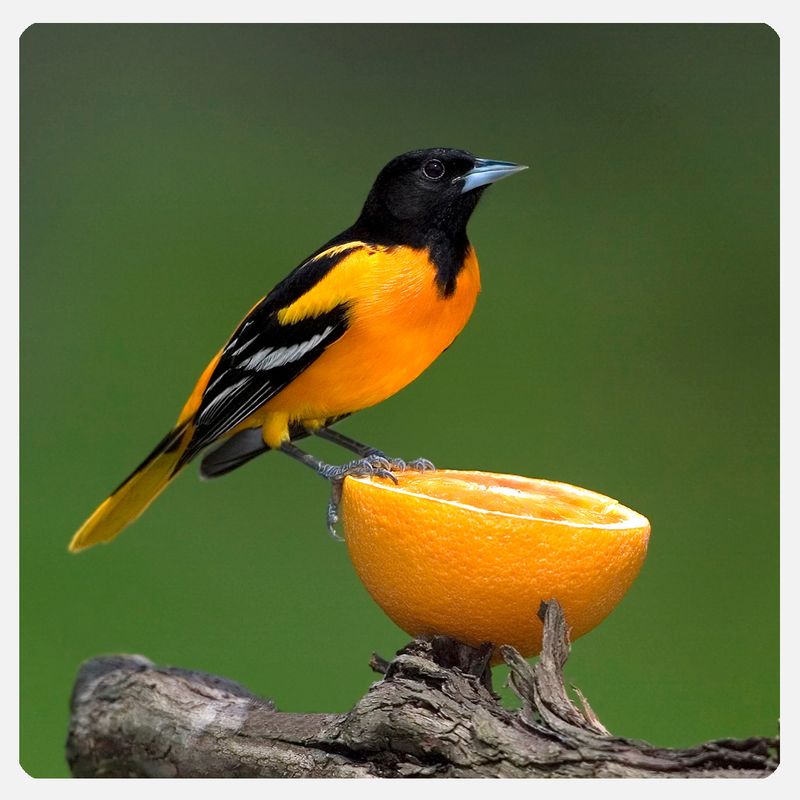
Few birds turn heads like the Baltimore oriole, a burst of flaming orange and black that looks almost tropical against green leaves. Gardeners love them for their beauty and their whistling song, but they also pitch in on pest patrol.
Orioles feast on nectar and fruit, yet a big part of their warm-season diet is insects gathered from the treetops. They pick caterpillars, beetles, flies, and other soft insects, including mosquitoes resting in the leafy canopy, especially while feeding young.
Draw them in with orange halves, grape jelly, and a nectar feeder placed where you can watch the show from a window. Tall shade trees give them the high foraging perches they prefer.
They weave remarkable hanging pouch nests near the tips of branches, sometimes using string or plant fibers you leave out. Offer short lengths of natural twine and you may become part of their construction crew. While orioles will not clear a yard of bugs on their own, their canopy hunting may help reduce insects overhead, and their dazzling color earns them a spot on any welcome list.
11. Yellow Warbler
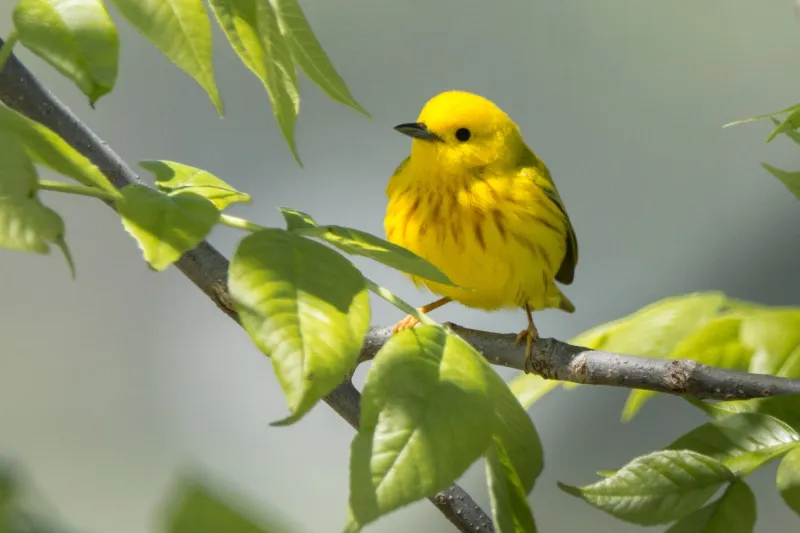
A splash of pure sunshine in the willows, the yellow warbler glows so brightly it seems to light up the shrub it lands on. Its sweet, rolling song is a classic soundtrack of streamside summers, and it comes with a hearty bug appetite.
Warblers are among the most insect-focused birds you can host, and the yellow warbler is no exception. It gleans caterpillars, beetles, aphids, midges, and mosquitoes from leaves and twigs, working the damp thickets where biting insects breed.
Because they favor wet edges, brushy stream banks, and willow tangles, planting native shrubs near a moist spot makes your yard irresistible. Dense, layered plantings give them cover and a rich supply of the bugs they chase.
They will not visit seed feeders, so habitat is the real invitation here rather than any handout. A clean water source and pesticide-free landscaping keep their food chain intact.
Interesting twist: yellow warblers recognize cowbird eggs sneaked into their nests and will build a new floor right over them. Attracting these tiny hunters to your wet corners may help knock back the mosquitoes rising from that moist ground.
12. Cedar Waxwing
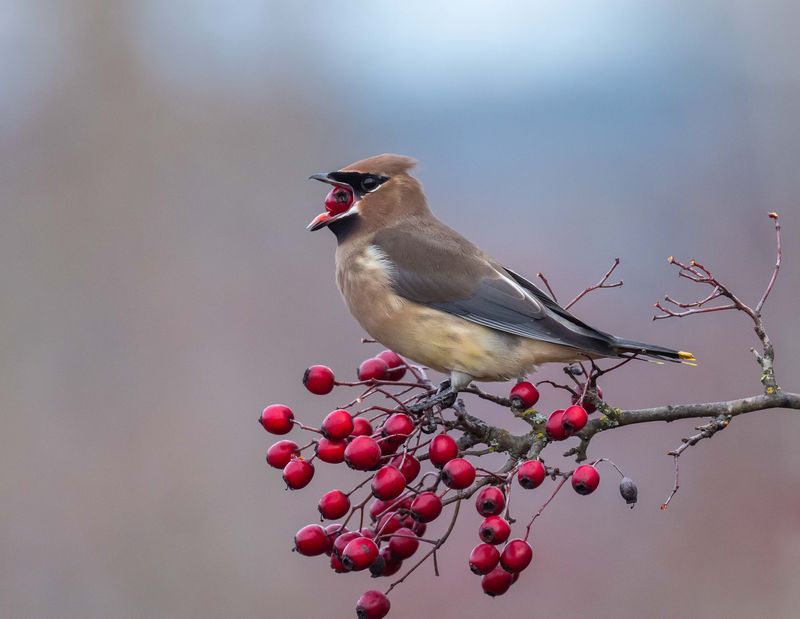
Smooth as silk with a jaunty crest and a Zorro-style black mask, the cedar waxwing looks like it was painted with an airbrush. These sociable birds travel in tight flocks and bring a touch of elegance wherever they land.
Berries dominate their diet for much of the year, but summer flips the menu toward flying insects. Waxwings will perch near water and launch into flycatcher-style sallies, snatching mosquitoes, mayflies, and other bugs from the air over ponds and rivers.
To attract a flock, plant native berry producers like serviceberry, dogwood, and cedar, and keep a birdbath filled for drinking and bathing. They rarely visit seed feeders, so fruit and habitat do the work.
Because they move in groups, a visiting flock can put on a memorable, coordinated feeding display over your yard. Here is a charming oddity: waxwings sometimes pass a single berry down a line of birds sitting on a branch, sharing before someone finally eats it. Their seasonal switch to aerial bug hunting means a passing flock may help thin the insects hovering above your water features.
13. Northern Cardinal
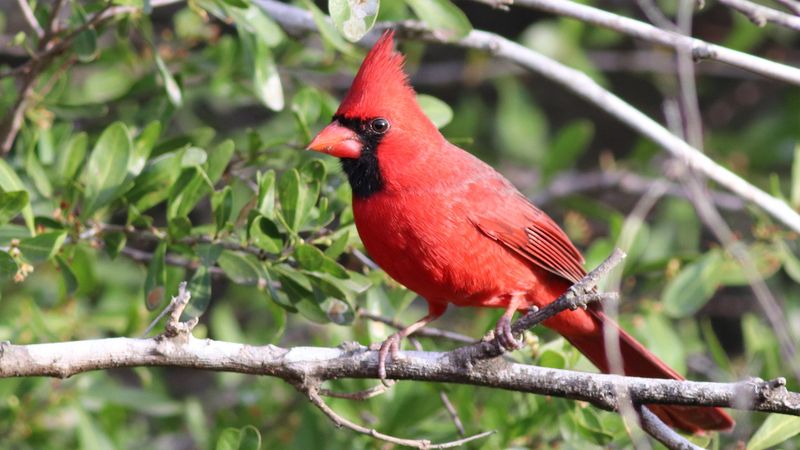
That bold flash of red at the feeder needs no introduction, since the northern cardinal is one of the most recognized backyard birds in America. Beyond its striking looks and clear whistling song, it moonlights as a helpful bug eater.
Cardinals are best known for cracking seeds, yet during nesting season insects become a major food source, especially for their chicks. They forage low in shrubs and along the ground for beetles, caterpillars, grasshoppers, and small flies, including mosquitoes tucked into dense foliage.
Keeping them around is refreshingly easy. Offer sunflower and safflower seeds in a sturdy feeder, plant thick shrubs for nesting cover, and provide fresh water, and cardinals will stay year-round since they do not migrate.
Their loyalty means you get a resident pest patrol that never leaves for the winter. Because they nest in dense bushes near the ground, natural landscaping with layered plants suits them well.
A fun tidbit: cardinals were named after Catholic cardinals, whose red robes match the male’s brilliant plumage. While they favor seeds, their summer insect hunting may help trim the bugs lurking in your shrubs.
14. Downy Woodpecker
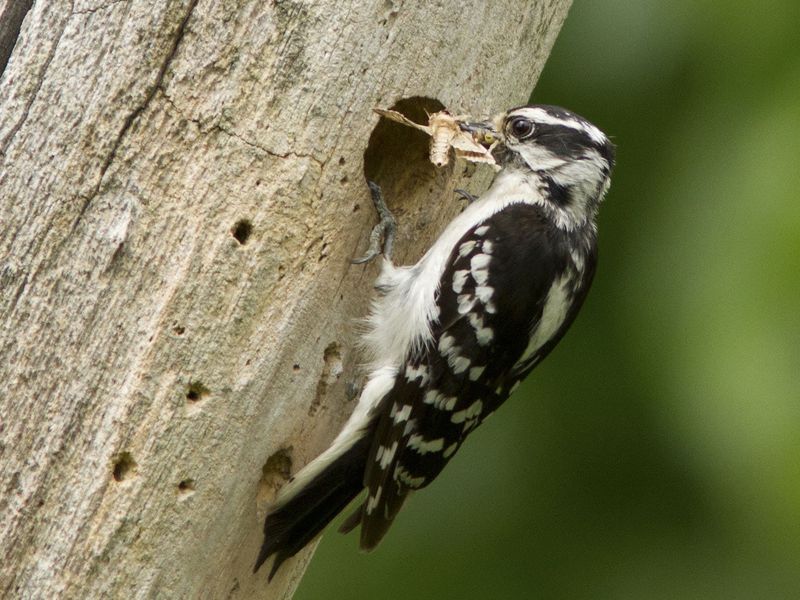
Tap-tap-tap on a tree trunk often announces the downy woodpecker, the smallest woodpecker in North America and a common sight at suburban feeders. Compact and checkered black-and-white, it works over bark with surprising efficiency.
Insects make up the bulk of its diet, and it specializes in prying out the bugs other birds miss. Beetle larvae, ants, caterpillars, and insect eggs get chiseled from crevices, and it will also grab mosquitoes and other soft insects resting on trunks and stems.
Because it hunts the bark zone, the downy cleans up an entire layer of habitat that flying insect-eaters ignore. Attract it with suet feeders, dead or dying trees left standing where safe, and native trees that host plenty of insects.
It readily accepts nest boxes and will drum on resonant surfaces to claim territory in spring. Leaving a snag or a dead limb in place, if it poses no hazard, gives it both food and a place to nest.
Little-known fact: its stiff tail feathers act like a kickstand, bracing it against the trunk while it works. Having a downy patrolling your trees may help reduce the insects sheltering in bark.
15. Ruby-throated Hummingbird
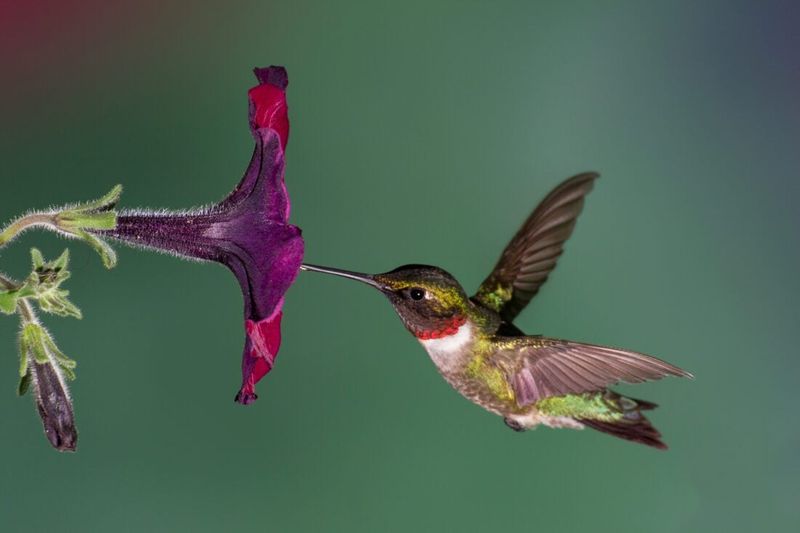
Zipping from flower to flower with wings humming like a tiny motor, the ruby-throated hummingbird seems built purely for nectar. Surprisingly, this glittering jewel is also a determined insect hunter that helps keep small pests in check.
Nectar fuels their nonstop flight, but protein from insects builds their muscles and feeds their chicks. Hummingbirds snatch gnats, fruit flies, spiders, and mosquitoes right out of the air or pluck them from leaves and webs.
To welcome them, hang a red nectar feeder filled with a simple sugar-water mix and plant tube-shaped native blooms like bee balm and trumpet vine. Skip the pesticides, since chemicals wipe out the tiny bugs they need for protein.
A gentle mister or a shallow water feature gives them a place to bathe and draws the insects they eat. Their fierce energy means they patrol your flower beds constantly through the warm months.
Amazing fact: their hearts can beat over 1,200 times a minute, and they may visit thousands of flowers a day. While one hummingbird will not clear a swarm, a busy population may help nibble down the smallest biting bugs around your garden.
16. American Robin
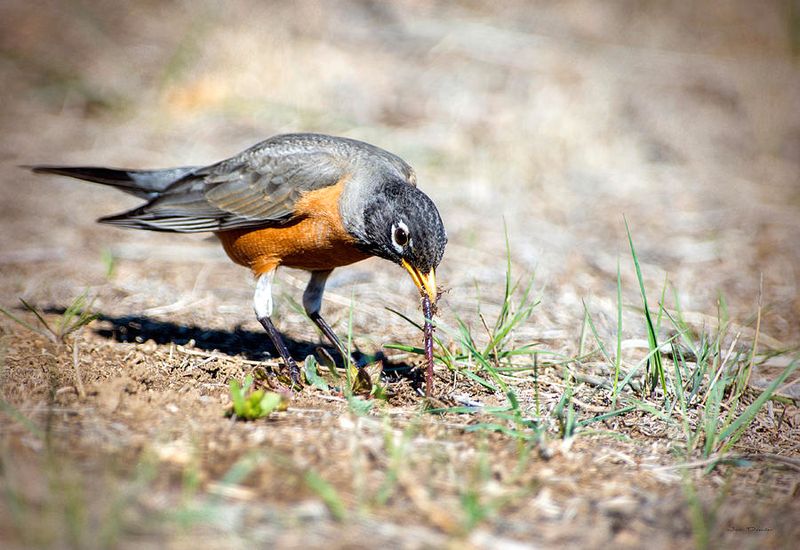
Hopping across the lawn with a cocked head and a bright orange breast, the American robin is the bird almost everyone knows. It shows up early, sings at dawn, and quietly works your yard as a broad-appetite forager.
Robins are famous worm hunters, but their diet is far more varied and heavily insect-based during the growing season. They gobble beetles, grubs, caterpillars, and other bugs from the soil and low vegetation, including mosquito larvae and adults near damp ground.
Making your yard robin-friendly is mostly about a healthy, chemical-free lawn and garden. Leave some open grassy areas for hunting, keep a birdbath topped up, and plant berry shrubs for late-season food.
They build sturdy mud-and-grass nests on ledges, gutters, and tree forks, often raising two or three broods a season, which means constant bug gathering. Damp soil after rain brings them out in force.
Neat bit of history: robins were once hunted for food, and their strong comeback made them a symbol of spring. With their steady, ground-level appetite, a family of robins may help lower the insect load creeping around your yard’s edges.