
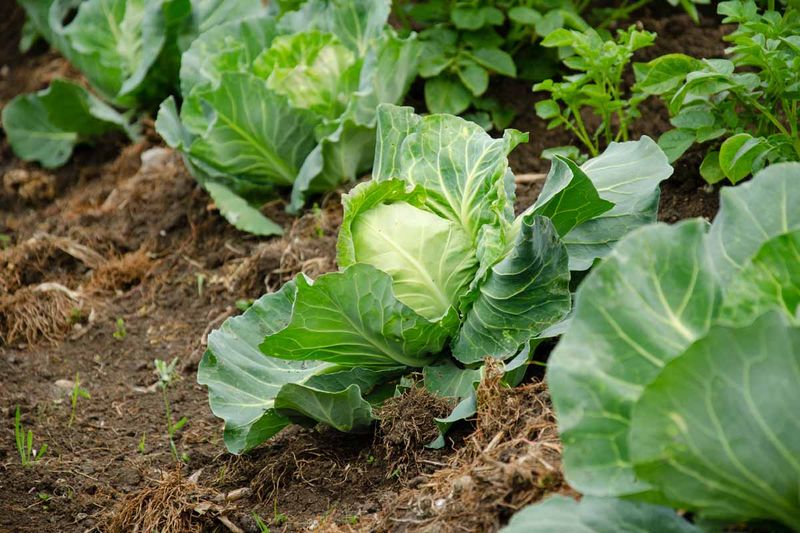
You transplanted your fall cabbage in late August, watered it faithfully, and watched it push out leaf after leafy leaf without ever forming the firm, round head you expected. Before you pull those plants out of the ground, slow down, because the story is more complicated than simple heat damage.
Understanding why cabbage behaves the way it does in late summer can save a crop that may still be perfectly on track.
Heat can keep cabbage leafy while heading stalls
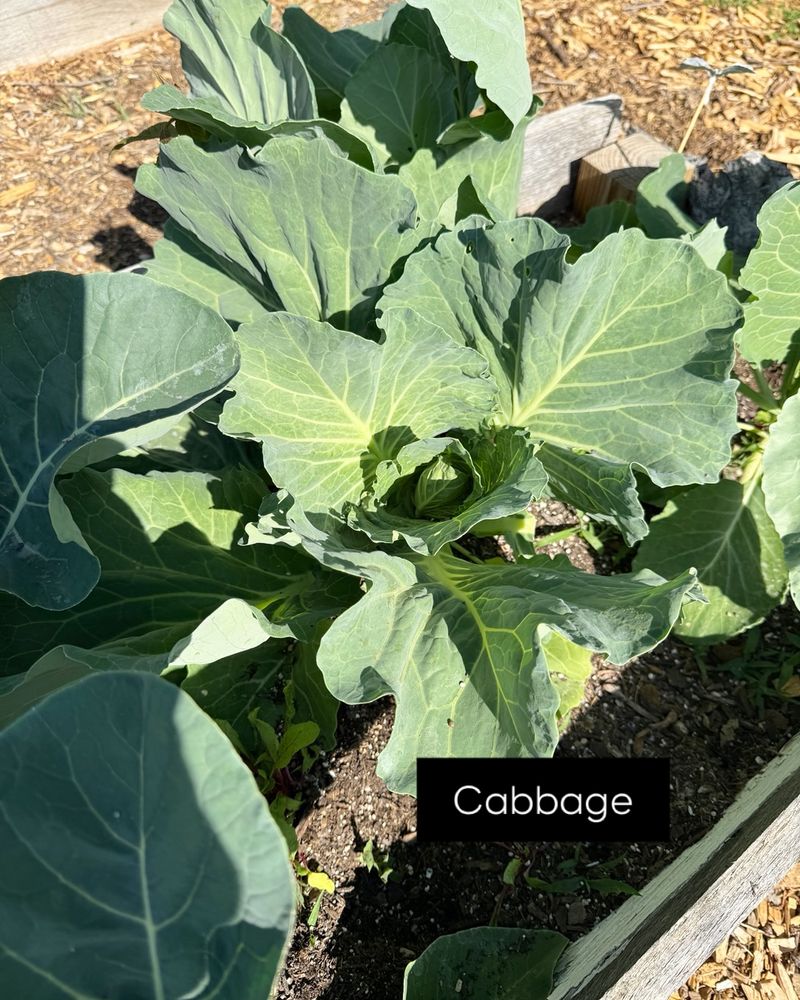
Cabbage is a cool-season crop at heart, and warm weather changes what it prioritizes. When soil and air temperatures stay high after a late-summer transplant, the plant channels energy into producing outer leaves rather than curling those leaves inward to build a dense core.
This is not necessarily a sign that something has gone wrong; it can be the plant simply responding to the conditions around it.
Texas A&M Extension guidance on cabbage production notes that cabbage forms its best heads when daytime temperatures stay below roughly 80 degrees Fahrenheit, and that heat, poor water management, and excess fertilizer can all contribute to loose or puffy heads. A peer-reviewed study published in plant physiology research adds more detail: high temperatures impaired head formation in both cabbage and Chinese cabbage, with Chinese cabbage failing to head normally at a constant 77 degrees Fahrenheit treatment.
That 80-degree figure is a useful reference point, not a hard switch that triggers heading on a specific date. Nighttime temperatures, humidity, plant age, variety, and your local microclimate all play a role in when a plant finally begins to tighten up.
For a healthy, undamaged transplant sitting in hot late-summer soil, heat-related delay is a credible explanation, but the symptom of leafy growth alone cannot confirm that heat is the only cause. Other possibilities, including moisture problems, poor timing, or pest damage, deserve a look before you draw any conclusions.
Fall timing gives the plant room to head later
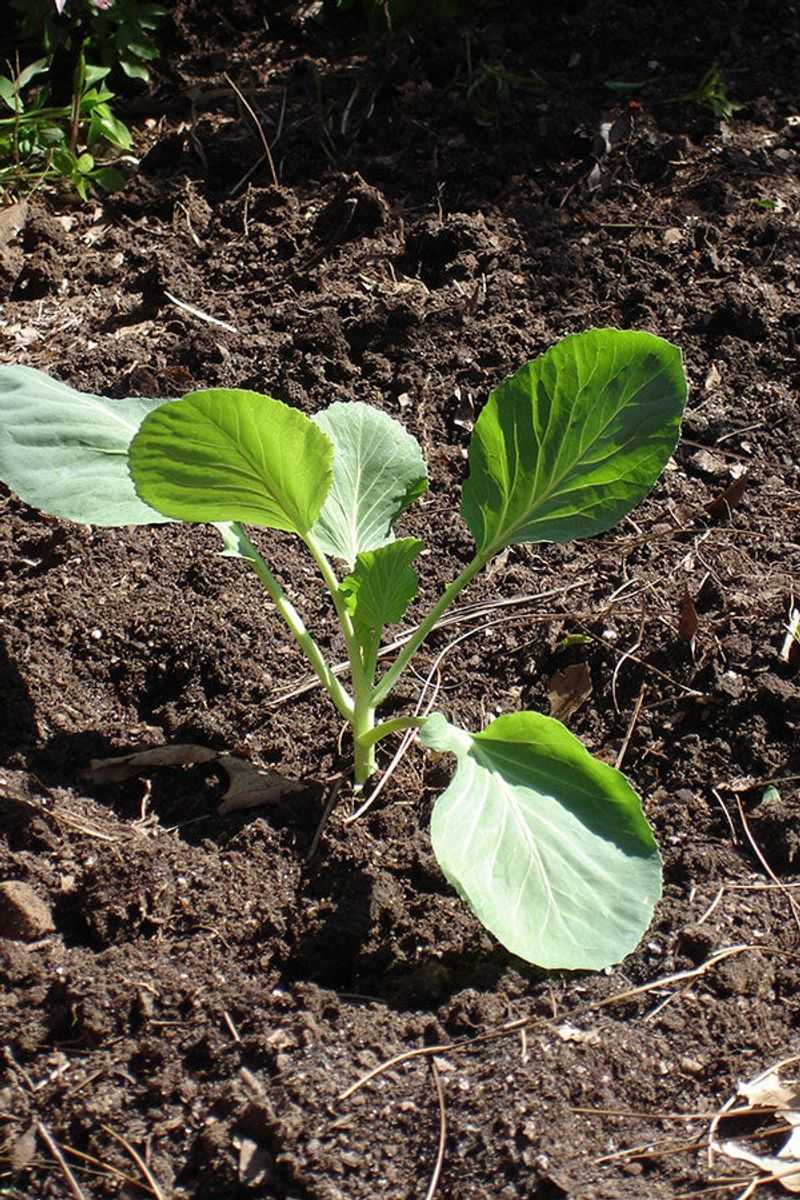
One of the most reassuring things to understand about fall cabbage is that it is not supposed to head immediately after transplanting in summer. Illinois Extension describes this pattern clearly: late cabbage is started in midsummer but develops its principal head during the cooling weather of fall.
The plant you are watching push out leaves in August heat may be doing exactly what it should, building the vegetative foundation it needs before conditions allow heading to begin.
Regional timing matters enormously here. Florida’s recommended cabbage planting windows vary by location: UF/IFAS planting calendars suggest approximately August through February in north Florida, September through February in central Florida, and September through January in south Florida.
Texas spreads out even further. Texas A&M’s fall vegetable gardening guide covers a range of transplant windows depending on region, and a separate Texas A&M cole crops summary describes fall timing as mid-July to August in North and West Texas, late August to September in Central Texas, and October to November in South Texas.
A late-August transplant may be right on schedule in one part of Texas and a touch early or late in another. Nighttime temperatures dropping into the 60s, shortening days, and a shift away from peak summer heat are the signals that nudge a well-established cabbage plant toward forming its head.
Clemson Extension also notes that cabbage prefers a temperature range of 60 to 65 degrees Fahrenheit for best quality, which reinforces why patience through the warmest weeks pays off.
Confirm the cabbage type before diagnosing a missing head
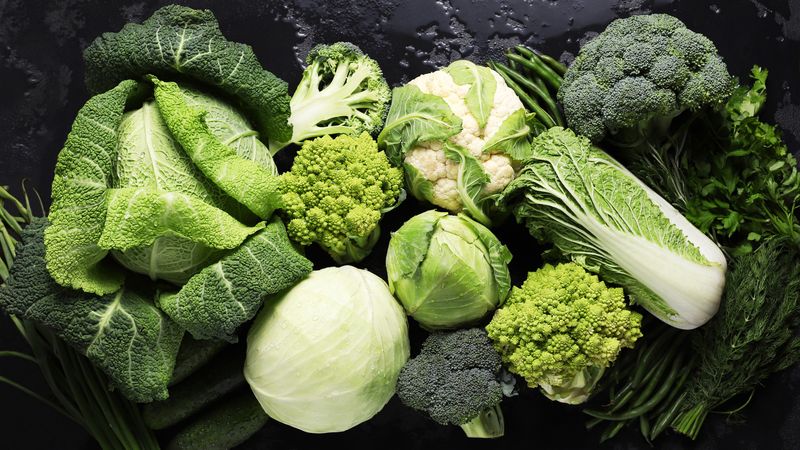
Before changing your watering schedule, adjusting fertilizer, or deciding the crop has failed, take a moment to confirm exactly what variety you planted and what its normal head looks like. Not every plant in the cabbage family forms a tight, round, rock-hard core.
Bok choy, for example, is a non-heading Chinese cabbage type that grows as an open rosette of thick stems and flat leaves. Expecting it to ball up like a green round cabbage means you will always be disappointed, because that is simply not how it grows.
UF/IFAS describes the range of cabbage-family types available to Florida gardeners, including traditional head cabbage, Napa, Michihili, Savoy, and open-leaf Chinese cabbage varieties. Each has a different characteristic shape, density, and maturity timeline.
A Savoy cabbage forms a looser, crinkled head even under good conditions, while a compact green variety like Stonehead will feel noticeably denser at harvest. Texas A&M’s cabbage production guidance similarly notes that varieties differ substantially in head shape, maturity time, and size.
Pull out the seed packet or look up the cultivar description online and compare it with what you see in the bed. A loose head may reflect normal characteristics for that variety, or it may simply mean the head has not finished developing yet.
UC Davis postharvest guidance states that a loose head is considered immature for varieties that normally form a firm head, so the comparison to the cultivar’s expected form is the starting point for any fair assessment. After checking variety, inspect the central growing point for feeding damage or physical injury, since UF/IFAS reports that insect feeding in the bud area can prevent head formation entirely.
Steady moisture and cool roots support delayed heading
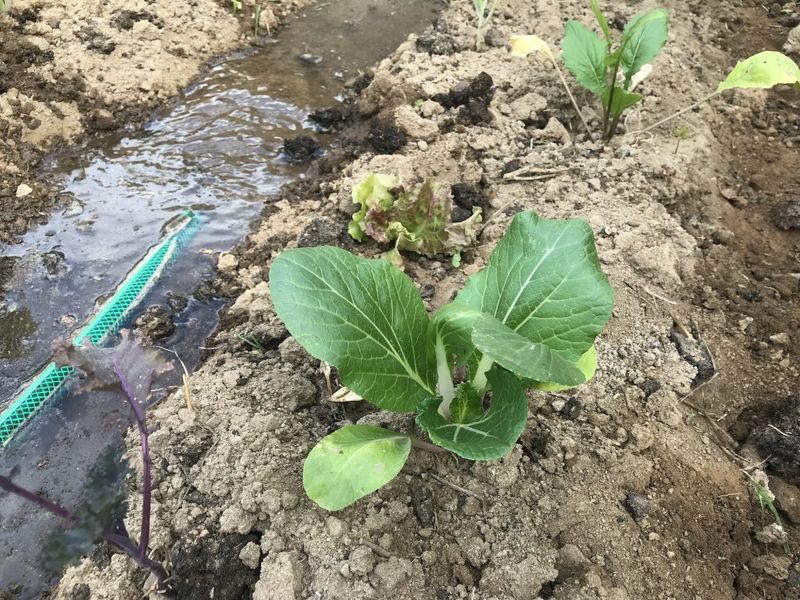
When a cabbage plant is waiting for cooler weather to begin heading, the best thing you can do is keep it comfortable and stable. Consistent soil moisture is one of the most practical tools available.
UF/IFAS cabbage production guidance emphasizes the importance of steady water management, and Iowa State Extension recommends roughly 1 inch of water per week for cabbage, adjusted for rainfall, soil type, and heat. Utah State Extension gives a somewhat broader home-garden range of 1 to 2 inches weekly depending on conditions.
The goal is even moisture, not flooding after a dry spell. Alternating drought and heavy watering stresses the plant and, once a head has already formed and tightened, can cause it to split.
Utah State Extension associates head splitting with rapid water uptake following dry periods, so the habit of letting the soil dry out and then soaking it is worth breaking now, before heading even begins. UConn Extension notes that water stress is especially critical during transplanting and head development in vegetable crops.
A 2 to 3 inch layer of organic mulch around the plants helps on both fronts. Iowa State Extension recommends this mulch depth to conserve moisture and moderate soil temperature during warm weather.
Keep the mulch pulled back slightly from the stem itself to reduce the chance of rot developing at the base. Mulch will not force a head to form, but it creates more stable root conditions while the plant waits for the weather to shift.
Temporary shade helps new transplants handle extreme heat
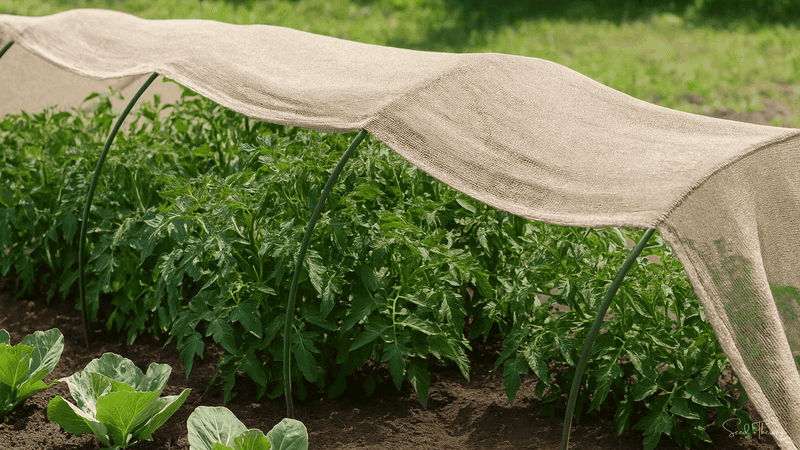
Moving a seedling from a shaded greenhouse or indoor space into full Southern sun during a hot August afternoon is a shock the plant may take weeks to recover from. That recovery time eats into the window when the plant should be establishing roots and building toward head formation.
Reducing that shock at the moment of transplant pays dividends later.
UF/IFAS recommends gradual outdoor acclimation before transplanting, along with watering at the start of the outdoor period and daily attention during the first week after planting. If you can time the transplant for a cloudy day or late afternoon rather than midday sun, do it.
The plant will have overnight hours to begin settling in before facing full heat and light the next morning.
Afternoon shade can reduce heat and light stress during establishment, and UF/IFAS Northwest District recommends afternoon shade for fall vegetable seedlings when temperatures exceed 85 degrees Fahrenheit. A simple shade cloth frame or even a few boards propped on the west side of the row can make a meaningful difference during the first two weeks.
University of Delaware Extension notes that cabbage generally prefers full sun, so treat shade as a temporary establishment aid rather than a permanent fixture. Too much shade over too long a period slows maturity, and it cannot fix a timing mismatch, root damage, disease, or an injured growing point.
More nitrogen will not make a loose head firm
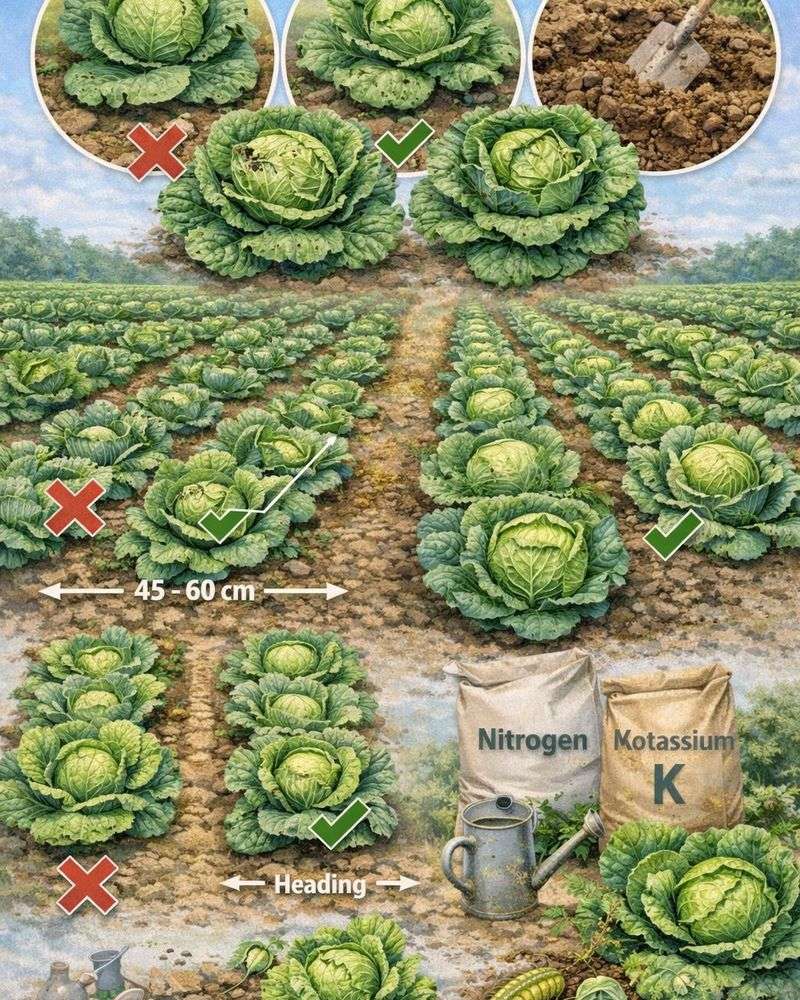
A cabbage plant that looks lush and leafy but has no head can tempt a gardener into thinking the plant needs more fertilizer to push it toward heading. That logic works against you.
Cabbage needs adequate fertility to grow well, but too much nitrogen, particularly applied after heading begins, shifts the plant’s energy toward producing more foliage rather than tightening into a firm core.
Utah State Extension recommends stopping additional nitrogen once heads begin forming, and UC Agriculture and Natural Resources similarly warns that nitrogen applied after heading starts can reduce head solidity. If you are genuinely concerned that a nutrient deficiency is slowing development, the right move is a soil test rather than a reflexive application of fertilizer.
Guessing at corrections can make the problem worse.
Spacing is another cultural factor worth checking at the same time. Crowded plants compete for light, water, and nutrients, and the result is often smaller or less developed heads across the row.
UF/IFAS gives approximately 9 to 16 inches between cabbage plants in Florida production settings, and Illinois Extension places home-garden spacing recommendations in the range of 12 to 24 inches depending on the cultivar and desired head size. If your plants are touching each other, thinning or transplanting to proper spacing now can improve conditions for the heads that eventually form.
Persistent failure after cooling points to another cause
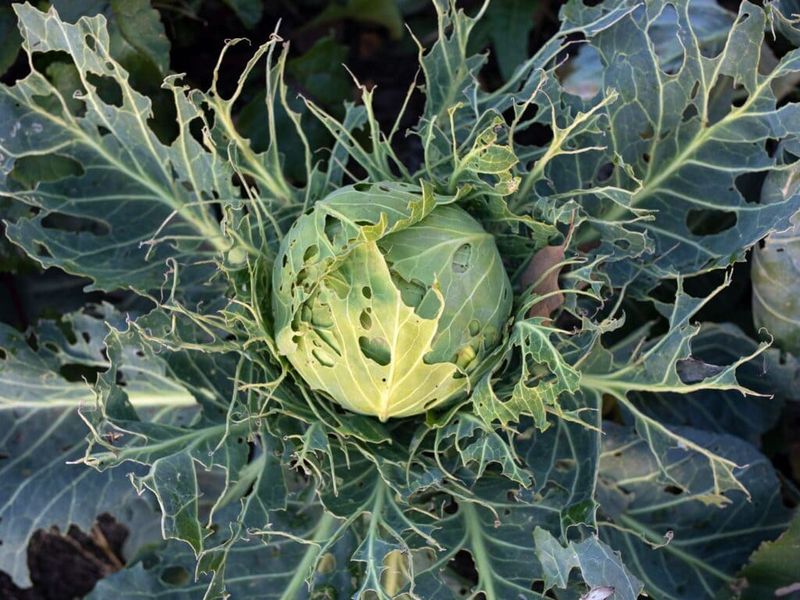
Once daytime temperatures have dropped into a more cabbage-friendly range and your plants are still sitting open and leafy, heat delay is no longer the most useful explanation to lean on. At that point, a closer look at the plant itself will tell you more than the weather forecast will.
Start at the center of the plant. UF/IFAS specifically reports that cabbage webworm feeding in the bud area can prevent head formation and leave plants lopsided, and the damage may not be obvious from a distance.
Pull back the inner leaves gently and look for frass, chewed tissue, or small caterpillars. While you are there, check the undersides of outer leaves for cabbage worms, loopers, and aphid colonies.
Flea beetles leave a distinctive shothole pattern across the leaf surface. Any of these pests can slow development even when they do not destroy the growing point outright.
Beyond insects, check for signs of disease. UF/IFAS notes that black rot and other diseases can cause stunting, yellowing, and poor development in cabbage.
Look for yellowing or browning at leaf margins, dark veins, or wilted sections that do not recover after watering. Root problems and clubroot can also limit development without showing obvious aboveground symptoms until the plant is pulled.
Utah State Extension distinguishes head splitting, which happens after a firm head has already formed, from failure to head at all. These are separate problems with different causes.
Bolting, which sends the plant into premature seed-stalk production, is a different issue again: Clemson Extension associates bolting with prolonged exposure to roughly 35 to 50 degrees Fahrenheit, while Illinois Extension cites extended exposure to 35 to 45 degrees as a trigger. Internal browning or tipburn involves stress related to heat, water, and nutrient movement and should not be assumed to be a simple nutrient deficiency without a soil test.
If severe growing-point damage has occurred from pests or physical injury, University of Minnesota Extension notes that a permanently damaged growing point may not recover into a normal head even after conditions improve.
Use the cultivar’s harvest signs to decide whether to wait
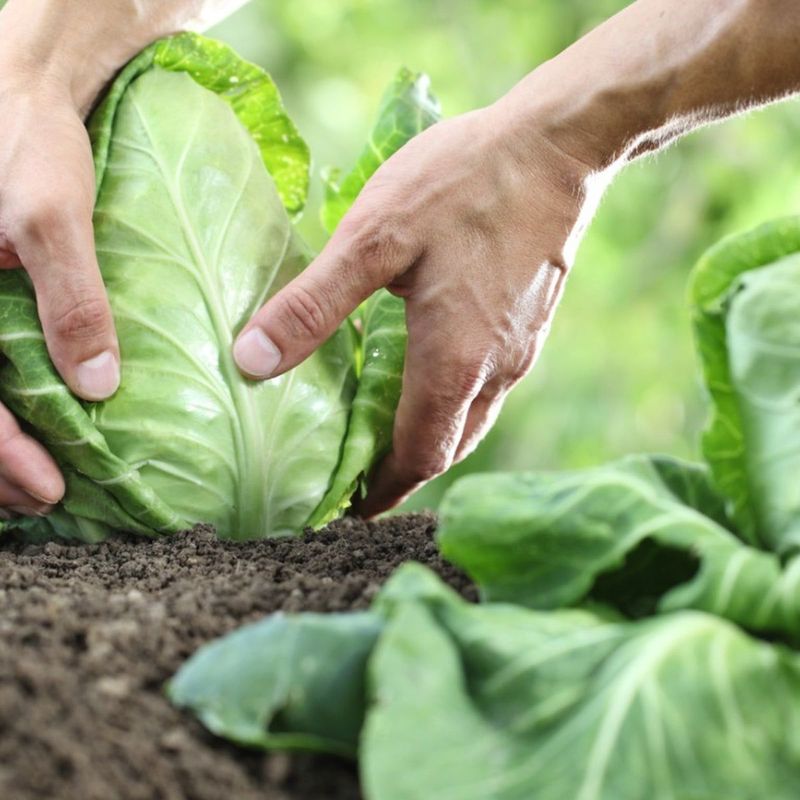
Rather than counting days from transplant and declaring success or failure on a fixed schedule, use the plant itself as your guide. UC Davis postharvest guidance describes harvest readiness as the head reaching firmness appropriate for its variety, not a calendar date.
For a heading cultivar, that means the head should feel solid and resist gentle pressure at the top. UF/IFAS gives approximately 70 to 90 days from transplant as a general estimate for traditional heading cabbage, but cultivar, heat, transplant stress, spacing, and growing conditions all shift that window.
Keep a healthy, undamaged plant evenly watered, mulched, and protected from severe establishment heat while temperatures continue to cool. If the head feels loose, compare it honestly with the cultivar description: some types are naturally less dense, and what looks like failure may simply be the plant’s normal form.
University of Minnesota Extension advises harvesting before heads over-mature and split, so once a heading cultivar reaches the expected firmness and size, do not leave it in the ground waiting for it to get harder.
Stop expecting a normal head when there is clear evidence of severe growing-point damage, ongoing pest injury, or disease that has compromised development. At that point, waiting for cooler weather will not change the outcome.
A cabbage plant that builds a firm, dense head after a rough late-summer start is one of the more satisfying things a Southern fall garden can produce, and that outcome is more common than most first-time fall growers expect.