
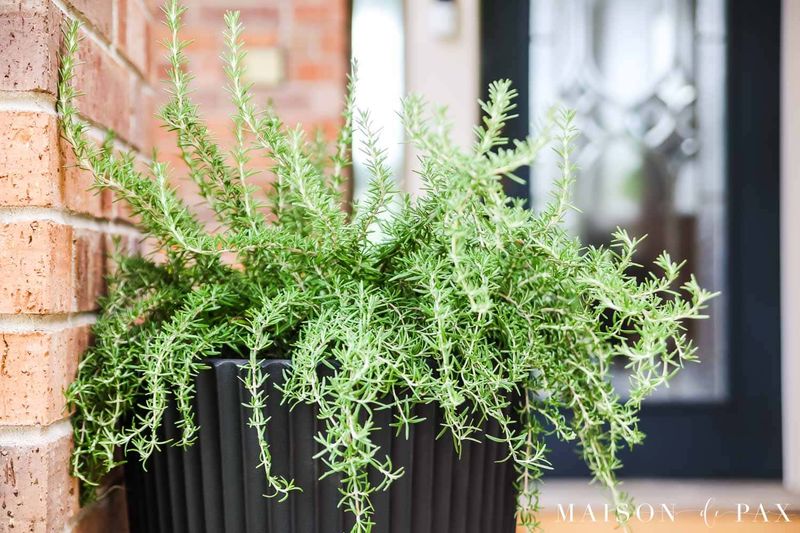
Rosemary is one of the most popular porch herbs in Texas, and lately it has been showing up in conversations about keeping scorpions out of the house. A small laboratory study did find that striped bark scorpions spent less time on sand treated with rosemary oil, which is enough to make the plant worth knowing about.
Growing rosemary on your porch for its fragrance, heat tolerance, and good looks makes plenty of sense for Texas gardeners, but the science does not back up the idea that a potted plant will stop scorpions at the door.
Rosemary Is a Reasonable Candidate, Not a Scorpion-Proof Barrier
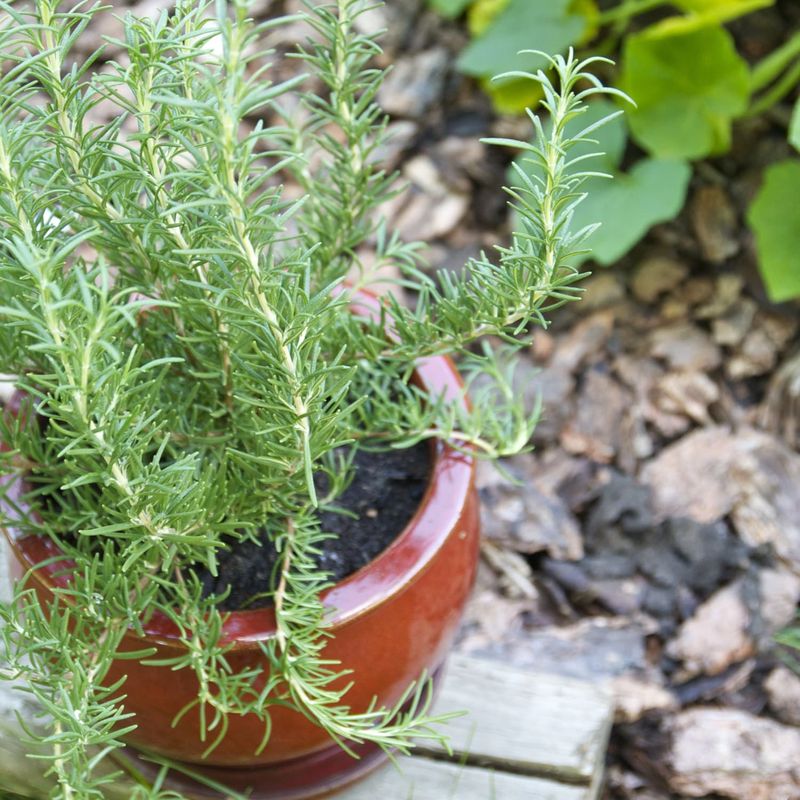
Rosemary earns its place on a Texas porch through genuine horticultural merit. Texas A&M’s rosemary guide describes it as a hardy, drought-resistant Mediterranean herb that handles full sun and well-drained soil with minimal fuss, which matches what most Texas porches actually offer.
Its fragrance is strong and pleasant, it looks attractive as a container accent, and fresh sprigs are ready whenever you need them in the kitchen.
Some readers have seen the claim that rosemary makes scorpions refuse to crawl past it. That claim goes further than the evidence allows.
No field research shows that a living rosemary plant prevents Texas scorpions from crossing a porch or entering a home.
What does exist is a small laboratory study in which striped bark scorpions, a species common across Texas, showed a preference for mineral-oil-treated sand over sand treated with rosemary oil. The researchers described this as behavioral evidence requiring further study, not a landscaping recommendation.
A potted rosemary plant on your step is not the same thing as concentrated oil applied to a controlled arena.
The practical standard for reducing scorpion access to your home comes from Texas A&M AgriLife Extension’s scorpion guidance, which focuses on exclusion and habitat modification rather than any plant. Grow rosemary because it suits your porch and your cooking.
Then handle scorpion access separately, through the physical measures that actually address how they get inside.
What the Rosemary Research Actually Tested

The 2019 study at the center of this conversation was narrow and carefully controlled. Researchers placed striped bark scorpions in an enclosed arena where half the sand had been treated with rosemary essential oil and the other half with mineral oil.
The scorpions spent more time on the mineral-oil side, suggesting they found the rosemary-oil side less appealing.
The study involved 16 striped bark scorpions collected in Oklahoma and tested them in a controlled indoor arena. It did not test a living rosemary plant, a porch, a Texas home, or any measure of long-term indoor-entry rates.
The scorpions used were from Oklahoma, and while the striped bark scorpion does occur throughout Texas, a single small-arena result does not establish how Texas populations across different climates, soils, and seasons would respond to a potted herb sitting near a door.
The distinction between concentrated essential oil and a living plant matters here. The study applied rosemary oil directly to sand.
A growing rosemary plant releases volatile compounds into the surrounding air, but the study did not measure whether a container plant produces a comparable effect on scorpion behavior outdoors. Those are simply different things, and treating one as proof of the other skips a step the research has not yet taken.
A 2024 study adds another layer of caution. That research found rosemary oil repelled one European scorpion species but had no repellent effect on another, with the authors concluding that scent responses vary by species and ecological context.
Taken together, the two studies suggest a possible and species-specific signal rather than a universal rule. Anyone hoping rosemary will reliably deter all scorpions is reading more into the data than it can support.
Grow Rosemary in a Sunny, Fast-Draining Container
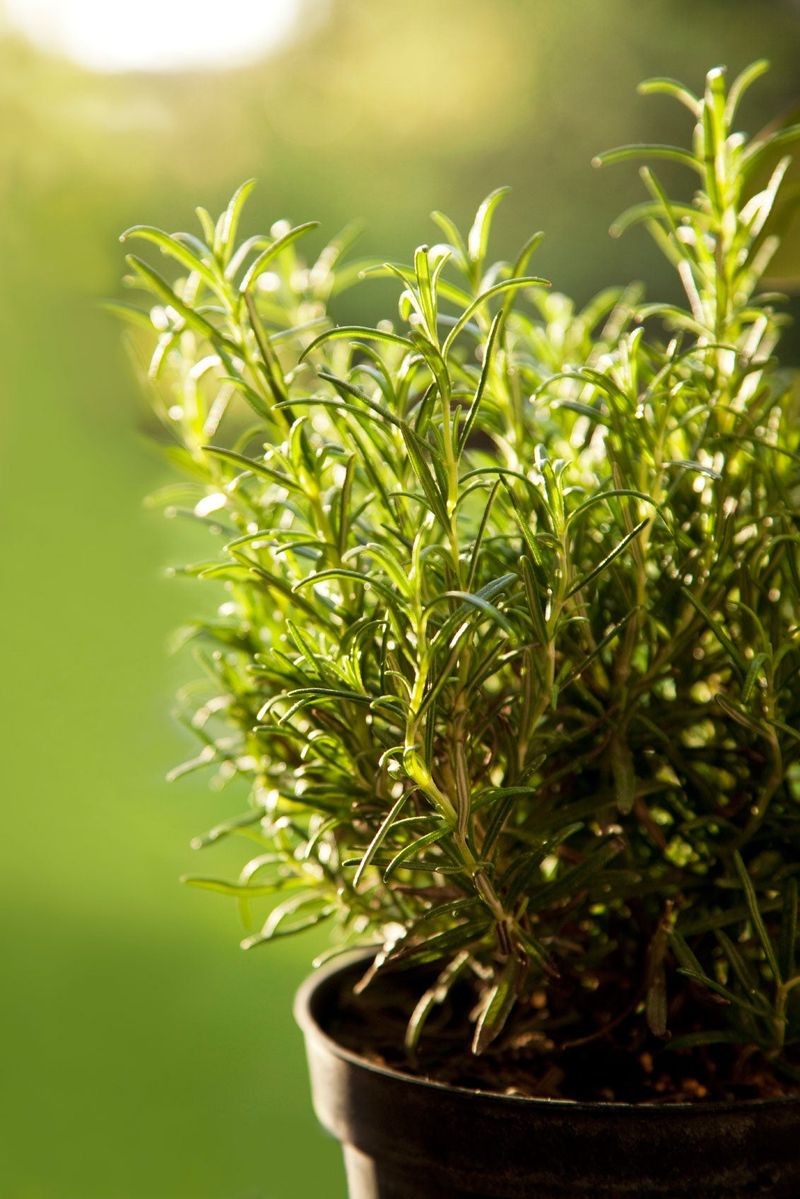
Container growing suits rosemary well when the setup matches what the plant actually needs. Texas A&M’s rosemary growing guide recommends a pot with drainage holes and a fast-draining mix, placing the plant where it receives roughly six or more hours of direct sun, and allowing the soil to dry out thoroughly between waterings.
Overwatering and poor drainage are the most common reasons rosemary fails, not heat or drought.
Rosemary planted in a pot that stays wet, sits in a saucer of standing water, or gets tucked into a shaded corner will decline regardless of how well it performs in an open bed. On a covered porch, check that the chosen spot still catches adequate sun through the day.
A terracotta or unglazed clay pot helps excess moisture escape faster than a glazed or plastic container.
Variety selection affects both appearance and cold survival. Texas A&M lists upright forms such as Arp, Spice Islands, and Upright as useful where a visible porch accent is the goal, since they grow tall enough to read as a genuine garden feature rather than a ground-level filler.
Prostrate and creeping forms can work in wider, lower containers if you prefer a trailing silhouette.
Cold tolerance is not uniform across Texas. Rosemary is generally hardy across most of the state but can die when temperatures drop below about 10 degrees Fahrenheit.
Gardeners in the Panhandle or northern Texas should choose cold-hardier selections such as Arp and be ready to move containers inside during hard freezes. Along the Gulf Coast, the bigger threat is humidity-driven root rot, so drainage becomes even more critical in those locations.
Place the Pot Without Adding Shelter
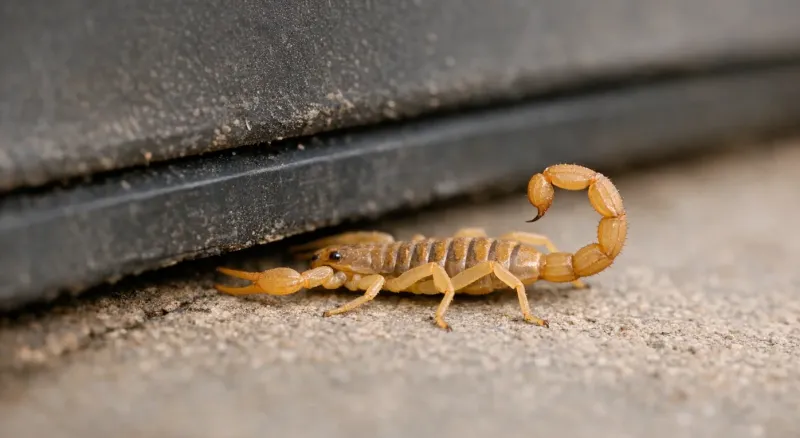
Where you set the container matters as much as what grows in it. Striped bark scorpions are active mostly at night and commonly shelter beneath rocks, boards, loose bark, and any other debris that creates a dark, protected gap.
Texas Parks and Wildlife notes that scorpions seek out exactly these kinds of sheltered hiding spots near structures, which means a cluttered porch or a pot pressed against the foundation can create the very conditions that attract them.
A single upright rosemary container placed cleanly beside a door, with open space around the base and no accumulated clutter underneath or behind it, does not create useful scorpion cover. The problem arises when multiple pots are crowded together, when pots sit directly on soil against the house, or when leaves and debris collect in the gaps between containers and the wall.
Keep the threshold area open and easy to inspect.
Texas A&M’s scorpion guidance and UC IPM’s scorpion resource both emphasize reducing cover and access near the foundation rather than building a plant-based perimeter. A tidy placement strategy limits the potential for your porch plant to become an unintentional shelter.
That is a practical benefit worth having, but it works through habitat reduction, not through any scent the plant releases.
Think of placement as a maintenance decision. Lift the pot occasionally to check for debris, insects, or anything else that might attract a hunting scorpion.
A rosemary plant that stays clean, well-lit, and off the ground on a pot foot or riser is a better neighbor to a scorpion-resistant entry than one surrounded by accumulated leaf litter and forgotten garden tools.
Use Exclusion to Reduce Opportunities for Entry

The measures with the clearest support for reducing scorpion intrusions are physical ones that address how scorpions actually reach the inside of a home. Texas A&M AgriLife Extension recommends starting with the area around the structure, because scorpions are difficult to control with insecticides alone and area modification removes the conditions that bring them close to the house in the first place.
Around the perimeter, remove boards, stones, logs, trash piles, and any other objects that create shelter near the foundation. Keep grass short close to the house.
Prune bushes and overhanging branches so they do not provide a bridge or a hiding place against the structure. Store firewood away from the house and bring it inside only when placing it directly on the fire, since wood piles are a well-known scorpion refuge.
Keep garbage containers elevated and tightly lidded.
At the entry points themselves, install or replace door sweeps on exterior doors so there is no gap at the bottom when the door closes. Apply weather-stripping around any loose-fitting door or window frame.
Keep window screens tight-fitting and repair any tears or gaps promptly. UC IPM’s scorpion guidance highlights screens and sealing as direct ways to block actual entry routes rather than hoping an aromatic plant discourages approach.
Seal cracks around roof eaves, pipes, utility penetrations, and any other opening in the exterior. Scorpions can compress their bodies and fit through surprisingly small gaps, so even minor cracks around conduit or plumbing are worth caulking.
These steps reduce opportunities for entry. No combination of measures can guarantee that every scorpion stays outside, but exclusion addresses the routes that matter most.
Skip Unproven Essential-Oil Shortcuts
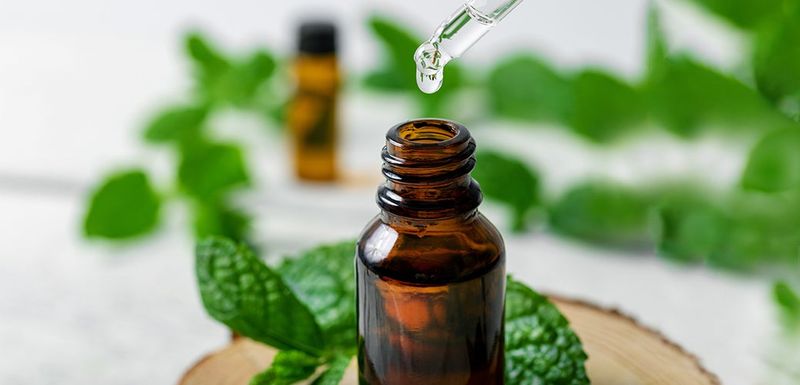
Knowing that a laboratory study used rosemary oil can make it tempting to reach for a bottle and start spraying thresholds or foundation lines. That step skips over what the research actually demonstrated.
The 2019 study tested rosemary oil applied to sand in a controlled indoor arena, not sprayed outdoors on a porch or foundation. Weather, surface type, evaporation, and the open environment of a real porch are entirely different from a closed laboratory setting, and no published research establishes that spraying rosemary oil around a doorway changes scorpion behavior outdoors.
Pet safety is a separate and serious concern with concentrated essential oils. The ASPCA lists rosemary the plant as non-toxic to dogs, cats, and horses, which is reassuring for households where animals brush past a container.
Concentrated rosemary essential oil is a different matter. The ASPCA warns that concentrated essential oils can harm pets through ingestion, skin contact, coat absorption, and other exposure routes, so treating a porch or entry area with undiluted oil where animals walk or rest is not a safe shortcut.
Pesticides labeled for scorpion control are available, but Texas A&M states that scorpions are difficult to control with insecticides alone and recommends area modification as the priority. If you choose to use a pesticide product, follow the label directions exactly, keep children and pets away from treated areas as the label instructs, and treat any product as a supplement to exclusion rather than a replacement for it.
The National Pesticide Information Center’s pets and pesticide fact sheet covers safe handling practices worth reviewing before applying any product in areas where animals spend time.
Enjoy the Rosemary, Then Check the Doorway
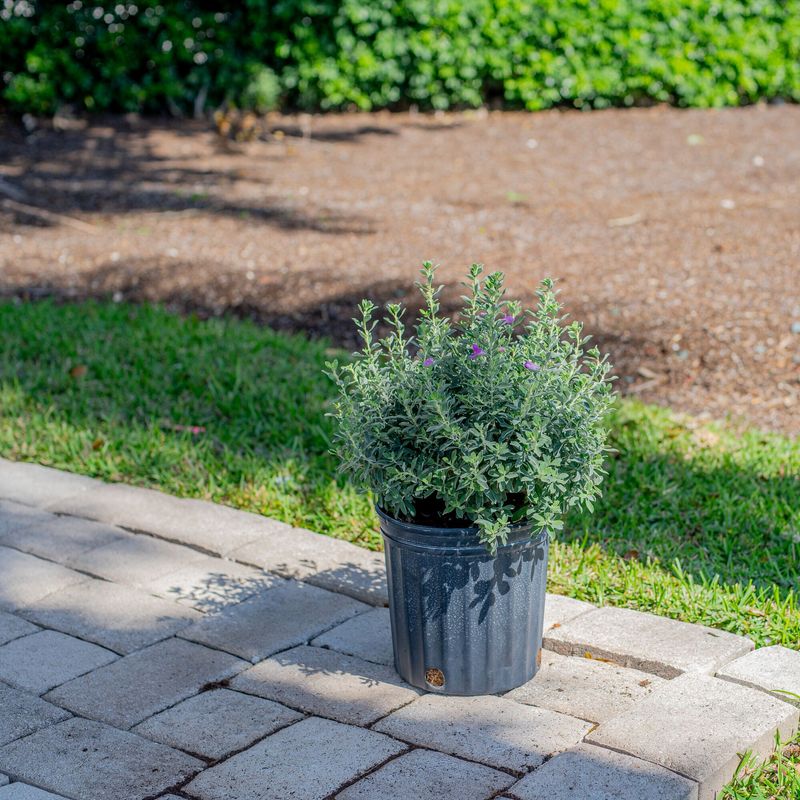
Rosemary is worth growing on a Texas porch. Texas A&M confirms it as a heat-tolerant, drought-resistant herb that suits the climate, rewards minimal care with steady fragrance, and looks good as a container accent through most of the year.
Those are real benefits that stand on their own, regardless of what happens with scorpions.
On the scorpion side, keep expectations grounded in what the evidence actually shows. The 2019 laboratory study offered limited, species-specific behavioral evidence involving concentrated rosemary oil, not a living plant, and no research has shown that a potted rosemary plant stops Texas scorpions from reaching a door.
Grow the herb for its genuine garden value, then do the physical work that Texas A&M recommends: clear debris from the foundation, seal cracks around pipes and eaves, maintain door sweeps and tight-fitting screens, and keep firewood stored away from the house.
A rosemary plant positioned cleanly beside a well-sealed door, surrounded by a tidy, debris-free entry, is a genuinely good combination for a Texas porch. The rosemary earns its spot through fragrance and appearance; the sealed door and clear foundation do the actual work of reducing opportunities for scorpions to get inside.
Both things can be true at once, and neither one makes the other unnecessary.