
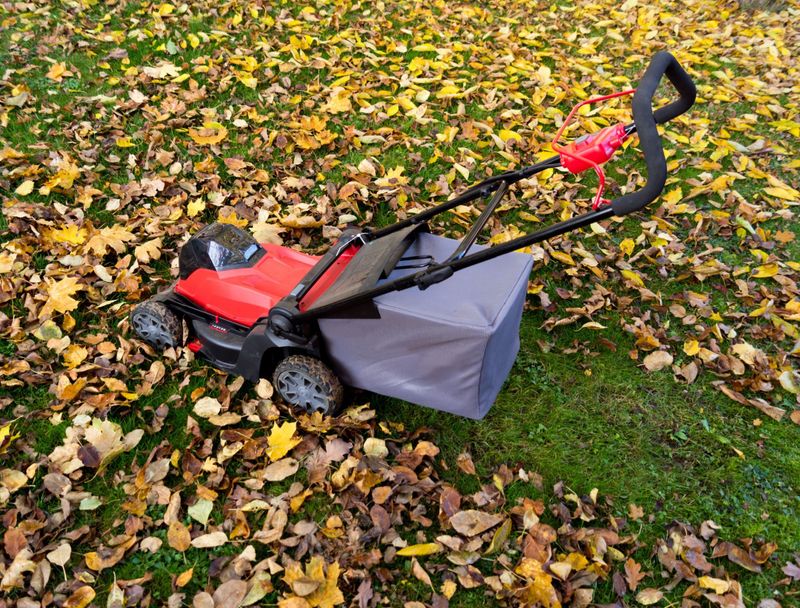
Raking leaves every fall is one of those chores that never seems to end, especially when your yard is full of trees. The good news is that a simple change to your mowing routine can handle a lot of that leaf load while quietly feeding your lawn at the same time.
Running your mower over a light layer of dry, fallen leaves chops them into small pieces that settle into the grass and break down over time. This approach works well for many Southern lawns, but the conditions have to be right, and some situations still call for raking or removal.
Mowing leaves can replace some of the fall cleanup
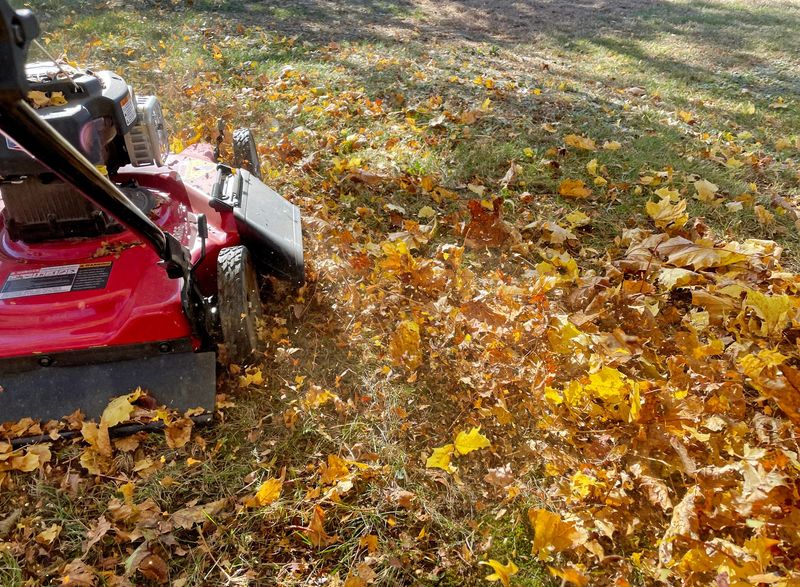
Fall leaf cleanup does not have to mean hours of raking and bagging every week. For homeowners with an established lawn and a manageable leaf load, mowing over a light-to-moderate layer of mostly dry, deciduous leaves can handle much of the work while doing something useful for the soil underneath.
When a mower chops leaves into fine pieces, those fragments settle between grass blades instead of sitting on top of them. Smaller particles break down faster than whole leaves, and as they decompose, they return organic matter and nutrients, including nitrogen, phosphorus, and potassium, back into the soil.
University of Connecticut Extension guidance on leaf mulch mowing notes that incorporating a seasonal leaf layer can contribute meaningful amounts of these nutrients over time, though the release is gradual rather than immediate.
Possible benefits include improved soil organic matter, better moisture retention between rain events, and modest gains in turf quality. Michigan State University turfgrass research found that repeated leaf mulching increased soil organic matter in tested plots without measurable harm to turf quality.
These results came from Kentucky bluegrass trials in the North, so outcomes will vary by Southern grass species, soil type, and climate, but the general principle of returning organic matter through fine leaf particles applies broadly to established turf.
Think of this method as a useful alternative to removing every leaf, not a reason to abandon raking altogether. Heavy accumulations, wet leaves, or poor turf coverage still require a different approach.
Why fine leaf pieces help while whole leaves hurt
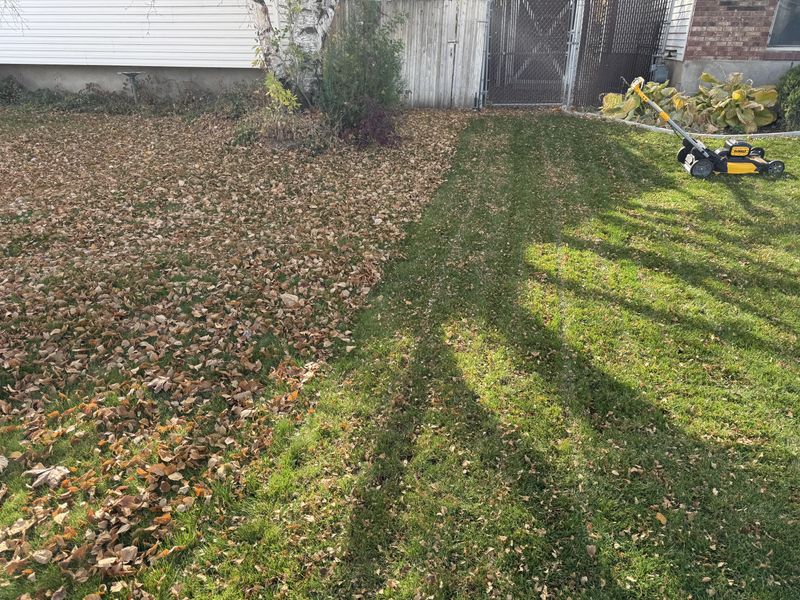
The size of the leaf after mowing matters more than most homeowners realize. Finely shredded leaf particles can slip down between grass blades, make contact with the soil surface, and begin decomposing relatively quickly.
A thick, unshredded blanket of whole leaves does the opposite: it blocks sunlight from reaching the grass, holds moisture against the turf canopy, and can smother or thin the lawn over time.
UConn Extension’s leaf mulch mowing guidance consistently identifies the thick surface mat, not finely chopped leaf material, as the real risk to turf health. A heavy blanket can delay spring green-up, increase the chances of disease-favorable moisture conditions, and physically prevent grass from recovering after dormancy.
Extension research also notes that leaf mulching does not appear to directly create conventional thatch, since thatch forms primarily from slowly decomposing grass stems, roots, rhizomes, and stolons rather than from leaf organic matter.
A simple visual test works well as a practical guide: after mowing, the lawn should still read primarily as grass. If you are looking at a leaf-covered floor rather than a lawn with some leaf particles mixed in, the coverage is too heavy for one mowing pass to handle safely.
Plan on several lighter sessions instead of one attempt to process a large accumulation all at once.
Clumps and thick mats are the specific problem to watch for. Finely chopped leaf material spread evenly across visible grass is a very different situation from a layer of wet, matted leaves that blocks light and traps moisture against the soil.
A dry, frequent mowing routine does the real work
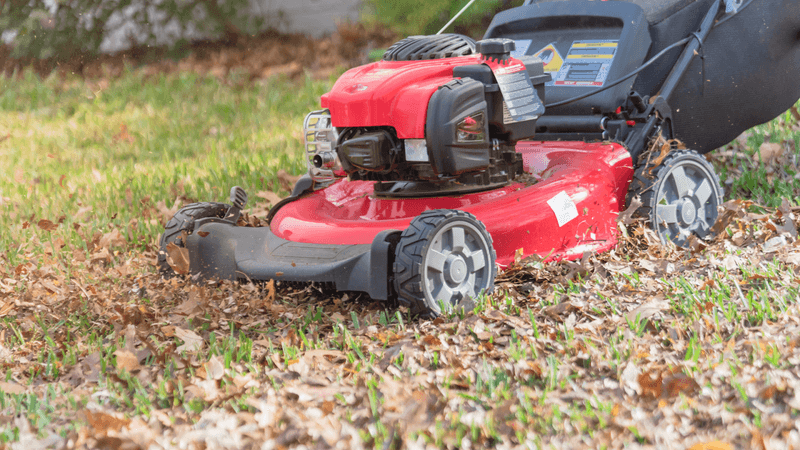
Getting the process right starts before you even pull the mower out of the garage. Walk the yard first and clear away sticks, stones, limbs, and any toys or debris that could become a projectile.
Dry conditions are non-negotiable: mowing wet leaves leads to clumping, mower strain, and larger leaf pieces that do not settle well into the turf. Wait until both the grass and the fallen leaves are dry enough to shred cleanly.
A mulching mower is the most efficient tool for this job because its blade and deck design are built to chop material into finer pieces and recirculate it. A standard rotary mower can also work, but keep the deck at the grass’s normal recommended height and plan on making multiple passes, including crisscross passes over heavier spots.
UConn Extension recommends mowing dry leaves into fine particles and notes that a conventional mower with multiple passes can produce acceptable results when a mulching mower is not available.
Mowing frequency matters as much as technique. Getting out during active leaf fall, rather than waiting until the entire yard is buried, keeps each session manageable and produces smaller particles that decompose more readily.
A light pass every week or so during peak drop is far easier on both the lawn and the mower than one marathon session at the end of the season.
UF/IFAS mowing guidance recommends wearing eye protection and sturdy closed-toe footwear whenever you mow. When shredding very dry leaves, a dust mask adds a reasonable layer of protection.
After mowing, check for any remaining clumps and redistribute them with another pass, a rake, or a leaf blower so no thick patches are left sitting on the grass.
The grass still sets the mower height
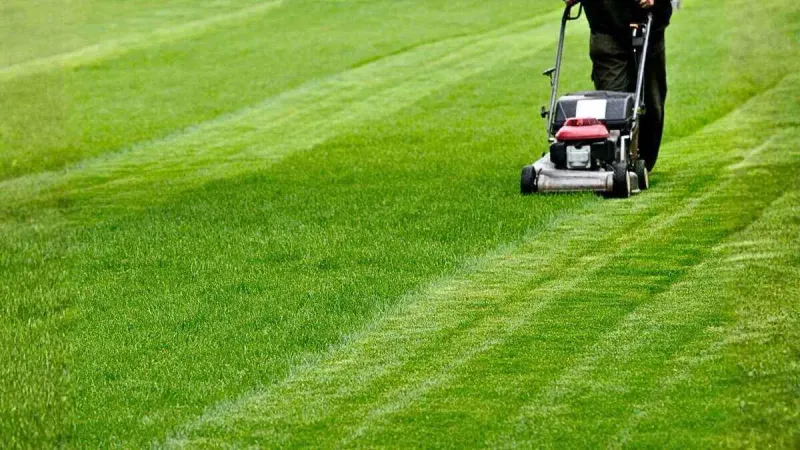
One of the most common mistakes homeowners make when mowing leaves is dropping the mower deck lower than usual, thinking a closer cut will shred the leaves more effectively. Lowering the deck below the grass’s recommended height stresses the turf, weakens root systems, and can increase susceptibility to disease and other problems.
The leaves do not justify scalping the lawn.
The one-third rule still applies: never remove more than one-third of the grass blade in a single mowing. If your St. Augustinegrass is maintained at 3.5 inches, the blade should be no lower than roughly 2.3 inches.
The correct mowing height depends entirely on the grass species, not on how many leaves are on the ground.
UF/IFAS mowing guidance for Florida lawns lists approximate mowing height ranges by species: bermudagrass at 0.5 to 1.5 inches, centipedegrass at 1.5 to 2 inches, St. Augustinegrass at 2.5 to 4 inches, and bahiagrass at 3 to 4 inches. These are species-level reference ranges, and the right height within that range depends on your specific cultivar and lawn condition.
Texas homeowners with bermudagrass or other warm-season turf should follow the same species-based logic.
Identify your grass type before adjusting anything. Maintain its normal mowing range throughout leaf season, and let the shredding happen through multiple passes rather than by forcing the mower lower than the turf can comfortably handle.
Leaf management should never come at the expense of the grass itself.
When should leaves leave the lawn?
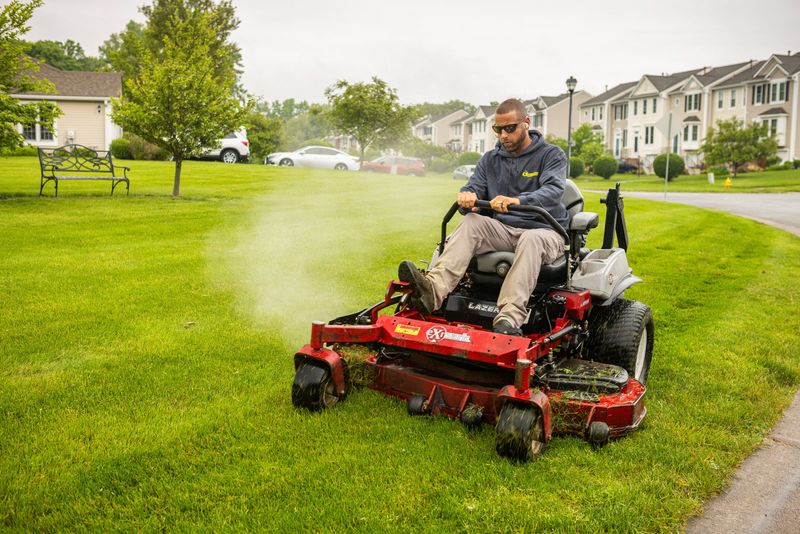
Knowing when to stop mulching and start removing is just as useful as knowing how to mulch in the first place. The clearest signal is visibility: after mowing, you should still see substantially more grass than leaf material.
UConn Extension suggests keeping leaf coverage to roughly 20 percent or less after each mulching event, while University of Minnesota Extension advises switching to bagging or removal once less than half of the lawn surface is visible. These are practical reference points rather than hard biological thresholds, and your specific lawn’s condition matters too.
If clumps remain after mowing, make another light pass over the area, rake the clumps apart, or use a blower to spread them more thinly across the surface. Redistributing material so it settles evenly is often enough to fix the problem without hauling anything away.
Several situations call for removal rather than redistribution. Wet leaves that clump and mat down instead of shredding cleanly are better collected and composted or bagged for pickup.
A thick accumulation that would require multiple heavy mowing sessions to process safely is another reason to rake first and reduce the load before the mower touches the ground. Sparse or thin turf that already struggles to compete for light cannot afford additional coverage, so leaf removal protects what grass remains.
Persistent mats that block light for more than a few days, continued moisture retention against the soil surface, and any sign that the grass is yellowing or thinning beneath the leaves are all clear signals to remove rather than mulch. The method works when conditions support it, and stepping back to rake is simply the right call when they do not.
Some leaves and locations need a different plan
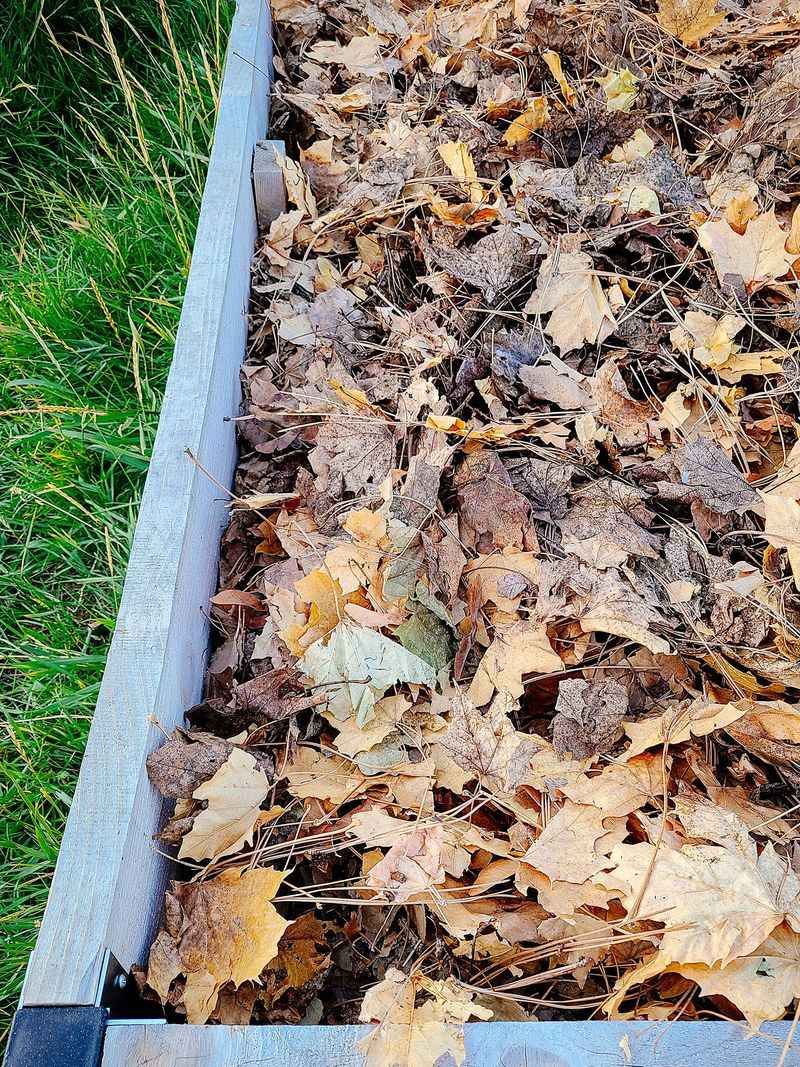
Not every leaf that falls in your yard is a good candidate for mowing into the turf. Pine needles are a separate case from deciduous leaves.
Their shape, waxy coating, and composition make them resistant to rapid breakdown, even when chopped by a mower. Virginia Cooperative Extension notes that pine needles are better handled as pine-straw mulch in beds or collected separately rather than mowed into established turf where they will decompose very slowly and may accumulate.
Visibly diseased plant material requires careful handling. Mulching infected leaves back into the lawn can spread pathogens rather than eliminate them.
University of Minnesota Extension guidance on preventing plant diseases recommends removing infected leaves and plant tissues to reduce pathogen spread. UF/IFAS turfgrass disease management guidance adds that if you do mow an area with active leaf disease, mow it last and wash the mower afterward to avoid carrying pathogens to healthy turf.
Hard surfaces need attention before and after mowing. UF/IFAS mowing guidance advises removing leaves from sidewalks, driveways, streets, and storm drains.
Nutrient-rich leaf debris that washes into stormwater systems can contribute to water-quality problems, so clearing those surfaces is both a safety and an environmental responsibility.
Leaves do not have to go entirely to waste when they leave the lawn. Georgia Extension recommends leaving some leaf litter undisturbed in garden beds, mulch rings, or low-maintenance areas to support overwintering insects and other wildlife.
When using collected leaves as mulch around trees or shrubs, Texas A&M AgriLife Extension advises keeping mulch away from trunks and stems to avoid moisture buildup and potential rot at the base of plants.
Southern lawns need a species-specific timing check
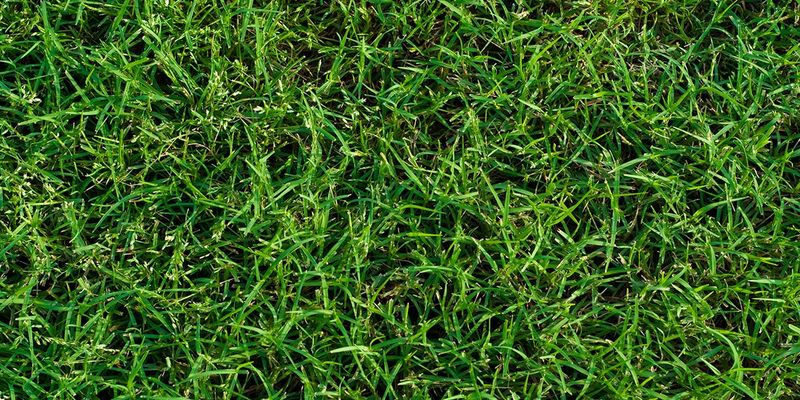
Timing a leaf-mulching routine in Florida or Texas is not as simple as following a national fall calendar. Warm-season grasses, including bermudagrass, St. Augustinegrass, centipedegrass, and bahiagrass, slow their growth and begin moving toward dormancy as temperatures drop in autumn.
Mulching leaves into turf that is already going dormant and struggling to recover light is less useful and potentially more risky than mulching into actively growing grass.
The practical rule for Southern homeowners is to mulch while the turf can still receive light and respond. In parts of North and Central Florida and across much of Texas, that window may be shorter than homeowners expect.
UF/IFAS guidance on establishing Florida lawns notes that warm-season grasses have distinct growth cycles tied to temperature, and UF/IFAS mowing guidance reinforces that mowing practices should account for species-specific growth patterns. South Florida lawns can maintain more active growth into what the rest of the country considers late fall, giving those homeowners a longer mulching window.
Texas A&M AgriLife Extension’s leaf management guidance supports mowing a light leaf covering in place, particularly with a mulching mower, as a practical alternative to bagging and hauling. Outcomes will still vary by turf species, local rainfall, mowing height, and the overall condition of the lawn.
The replicated turfgrass trial most often cited in leaf-mulching research involved Kentucky bluegrass in Michigan, as documented in Michigan State University turfgrass research reports. That evidence does not transfer directly to St. Augustinegrass or centipedegrass in a Texas summer-to-fall transition.
The Southern support for leaf mulching comes primarily from extension guidance, which is useful and region-specific but reflects a different evidence base than replicated controlled trials. Know your grass, watch the growth rate as temperatures fall, and adjust the timing accordingly.
A lighter fall chore can still be good lawn stewardship
Mowing dry, mostly deciduous leaves into fine pieces while the turf can still handle them is a practical way to cut fall cleanup time without neglecting the lawn. The key habits are simple: mow often enough to prevent a surface blanket from forming, keep the mower at the grass’s normal recommended height, and remove excess, wet, diseased, or otherwise unsuitable material rather than forcing it through the mower.
UConn Extension’s leaf mulch mowing guidance frames this method as a complement to good lawn care rather than a replacement for it. Leaf mulching returns organic matter and some nutrients over time, but as Virginia Cooperative Extension notes, it did not substitute for appropriate nitrogen-fertilization practices in research settings.
Keep fertilizer decisions based on your turf species, soil test results, and local recommendations.
When leaves pile up faster than the mower can handle them, or when a section of the yard is better left alone, redirecting some of that material to garden beds or a designated low-maintenance corner serves a second purpose. Georgia Extension’s fall gardening guidance points out that undisturbed leaf litter supports overwintering insects and other wildlife.
A lighter raking season and a healthier yard for local wildlife are not competing goals.