
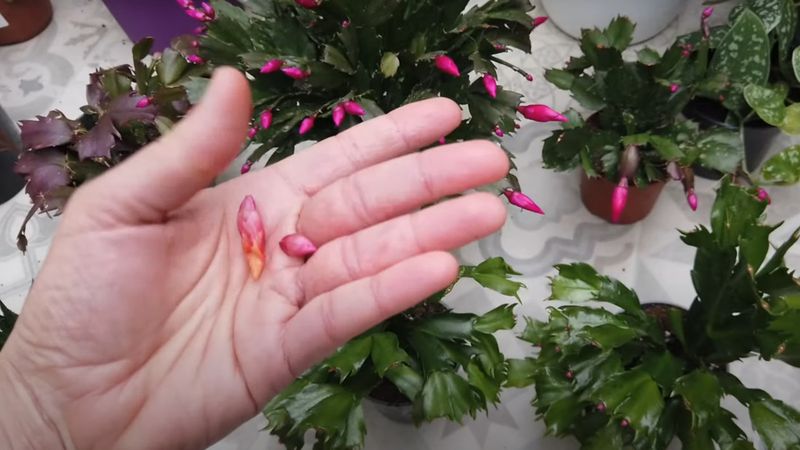
Watching a holiday cactus fill up with buds, then seeing those buds fall off before a single flower opens, is genuinely discouraging. The good news is that bud drop usually has a fixable cause, and narrowing it down does not require guesswork.
Several stresses can trigger the same symptom, so this guide walks through the most common ones, starting with the environmental changes that tend to catch people off guard.
No single mistake explains every fallen bud
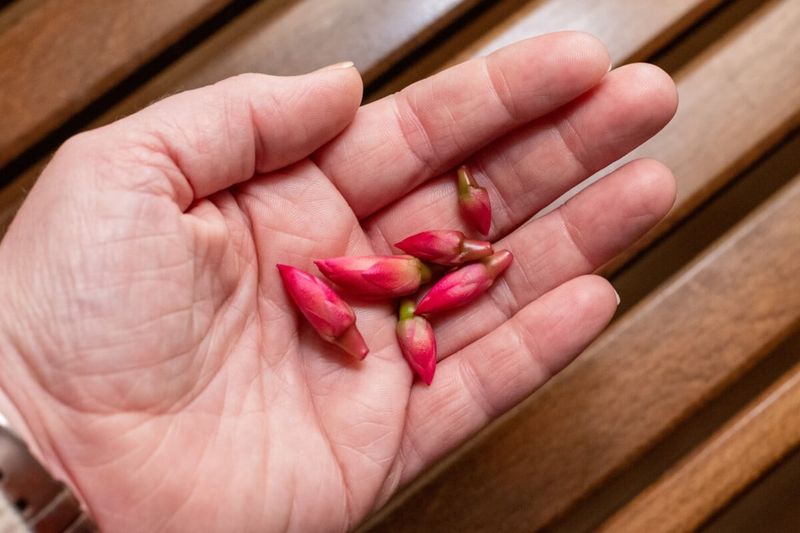
Before blaming the last thing you changed, consider that holiday-cactus bud drop rarely has just one cause. Penn State Extension’s holiday cacti care guide lists drought stress, waterlogged soil, root damage, excessive heat, cold exposure, low light, drafts, and abrupt environmental changes as separate triggers that can all produce the same frustrating result: buds on the floor before they ever open.
The most practical first step is to think back over the past week or two and match the timing of the bud loss to any recent changes. Did you move the plant to a new room?
Did the heat kick on for the first time this season? Did the plant sit near a window that was suddenly left open on a cold night?
Each of those events is a lead worth following.
Avoid the temptation to make several corrections at once. Changing the location, adjusting the watering, repotting, and adding fertilizer in the same week gives you no way to know what actually helped, and piling on changes can add new stresses on top of the original one.
Iowa State University Extension recommends keeping conditions as stable as possible once buds appear, which means resisting the urge to troubleshoot by doing everything at once.
Why a move can trigger environmental shock
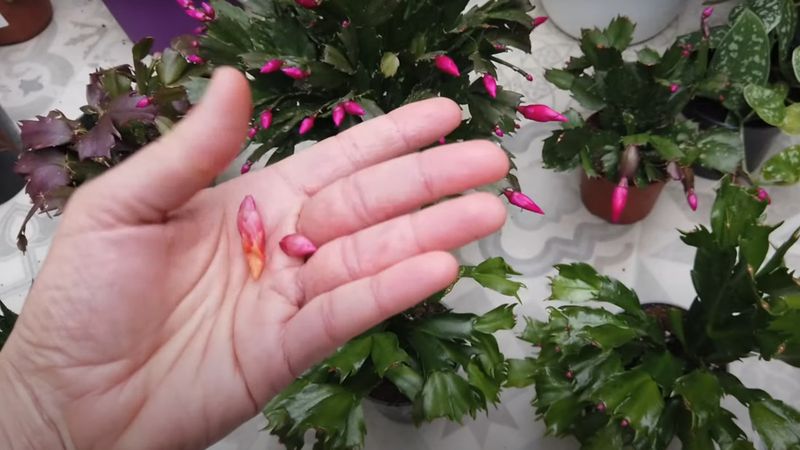
Relocating a budded holiday cactus does not just change where it sits. Depending on the destination, it may suddenly face a different light level, a shift in temperature, a nearby heating or air-conditioning vent, reduced humidity, or an entirely new watering pattern.
Any one of those changes can stress the plant enough to trigger bud drop, and a move often delivers several of them at the same time.
University of Minnesota Extension notes that holiday cacti do not like to be disturbed during bud development, and UF/IFAS Gardening Solutions specifically identifies drafts, heat sources, high temperatures, and environmental change as bud-drop risks. That is a meaningful cluster of hazards that a single relocation can introduce all at once.
That said, avoiding unnecessary disturbance is different from treating every minor adjustment as a guaranteed catastrophe. A small rotation to dust the pot or a brief move to water and drain it are not the same as carrying the plant from a cool, bright screened porch into a warm, dim hallway.
The key distinction is whether the new environment differs substantially from the old one. When a real environmental transition happens, the plant may respond by dropping buds within days, even if the new spot looks perfectly reasonable to you.
UF/IFAS Nassau County Extension confirms that environmental change during bud development is a recognized and common trigger.
Build one stable setup for the buds you still have
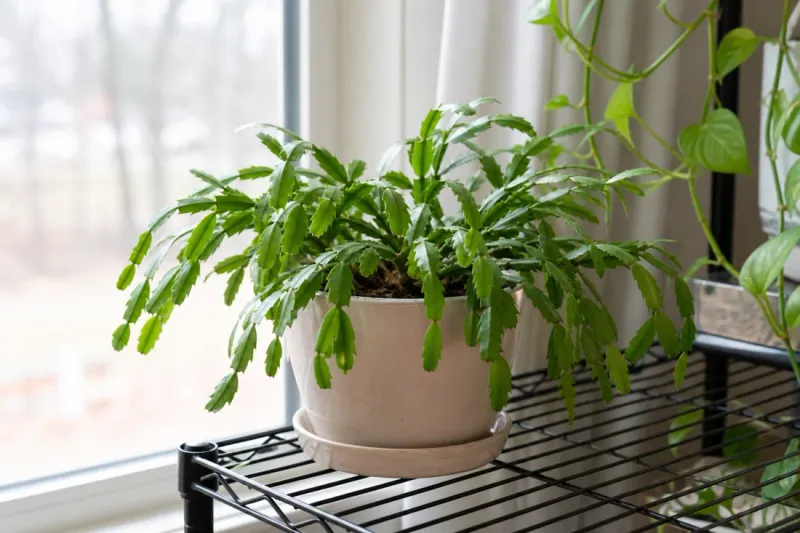
The fastest thing you can do for a budded holiday cactus right now is stop moving it. Pick a spot with bright, indirect daytime light, such as a few feet back from a south- or east-facing window with a sheer curtain, and leave the plant there.
Iowa State University Extension recommends delaying any relocation until the first flowers actually begin to open.
Scan the area around that spot carefully. Fireplaces, radiators, baseboard heaters, heating vents, and air-conditioning vents all create air movement and temperature swings that can stress the plant.
Drafty windows and exterior doors are equally problematic. UF/IFAS specifically calls out heat sources and drafts as bud-drop risks, so moving the plant even a few feet away from a vent can make a real difference.
For temperature, cooler nights and moderate days generally support the flowering cycle. Many extension sources describe nights around 55 to 65 degrees Fahrenheit and days around 65 to 70 degrees as a reasonable range, though the exact sweet spot varies by species and cultivar.
University of Minnesota Extension and Penn State Extension both note that sustained warmth, especially above roughly 70 degrees during the flowering period, can interfere with bloom. Cooler does not mean cold, though.
Temperatures near or below 50 degrees can injure the plant and contribute to the very bud loss you are trying to prevent.
Check moisture before blaming the move
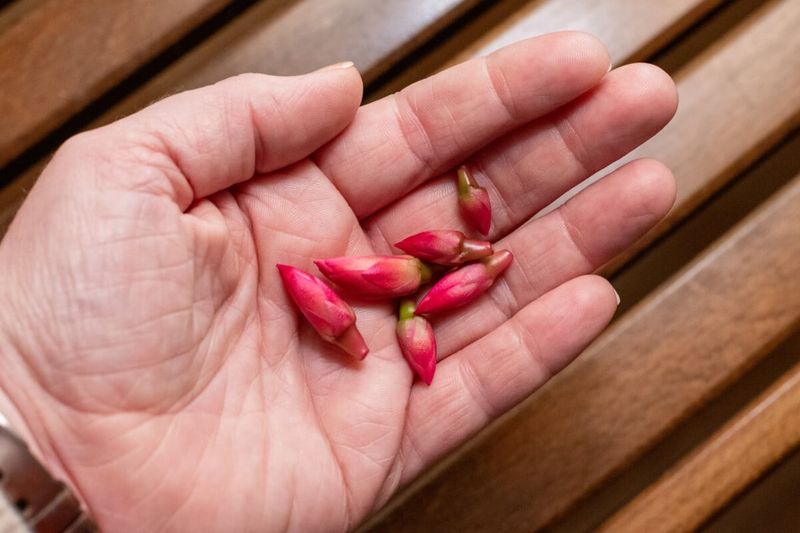
After placement, the next thing worth checking is the potting mix. Both extremes, bone-dry soil and waterlogged soil, can cause bud drop, and the symptoms look nearly identical from the outside.
Lift the pot and feel the weight, then press a finger about an inch into the mix to get a direct reading on moisture.
UF/IFAS Gardening Solutions and Penn State Extension both recommend watering thoroughly once that upper inch or so has dried, then emptying any standing water from the saucer. Letting water sit in the saucer keeps the root zone saturated and sets the stage for root damage even in an otherwise well-draining mix.
The container itself matters too. A pot with drainage holes and a light, well-draining mix gives excess water somewhere to go.
Heavy or compacted soil holds moisture far longer than the plant wants during budding and flowering, and roots that sit in saturated media can begin to break down, leaving the plant unable to move water and nutrients up to support those buds. University of Illinois Extension recommends a well-drained mix as a basic care requirement for holiday cacti.
Skip the fixed weekly watering schedule entirely. How often the mix dries out depends on pot size, room temperature, light level, and humidity, none of which stay constant.
Check the soil rather than the calendar. And skip the bloom-booster fertilizer too.
UGA Extension notes that overfertilizing during bud development is associated with poor blooming outcomes, and heavy fertilizer salts can damage the roots you are trying to protect.
Move it when warm-climate weather makes protection necessary
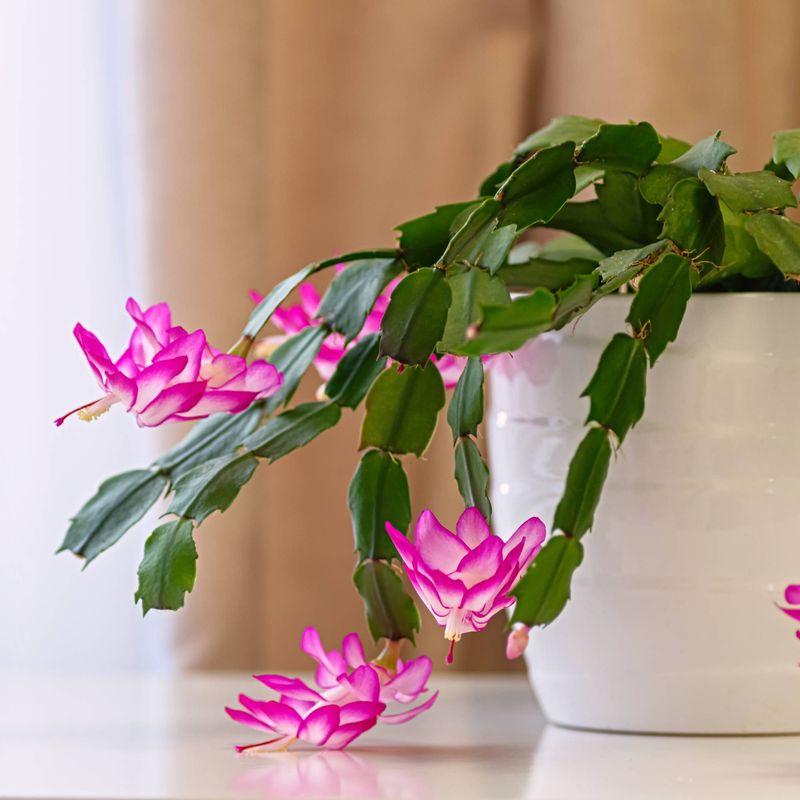
Gardeners in Florida and similar warm Southern climates often grow holiday cacti on screened porches or in sheltered outdoor spots, where the natural light and humidity can actually suit the plant well. Bright shade or filtered light works better than open direct sun, which can bleach the foliage and heat the pot to damaging temperatures.
UF/IFAS Bay County Extension identifies protection from hot direct sun, strong wind, and heavy rain as priorities for outdoor holiday cacti in warm climates.
The complication arrives when temperatures drop. Holiday cacti are not frost-tolerant, and temperatures near or below approximately 50 degrees Fahrenheit can stress or injure the plant, contributing to bud loss rather than preventing it.
When a cold front is forecast, moving the plant indoors for protection is the right call, even if the move itself carries some risk of environmental disruption. UF/IFAS Nassau County Extension and UF/IFAS Osceola County Extension both support bringing plants in for cold protection rather than leaving them exposed.
When a necessary move is unavoidable, aim for the most similar stable environment available. A bright indoor spot near a window that gets filtered light, away from heating vents, is a better destination than a warm, dark interior hallway.
The goal is to minimize how many conditions change at once, even if you cannot avoid changing the location itself. Readers in other warm-climate areas should account for their own local weather patterns, exposure, and frost risk rather than applying Florida-specific timing as a universal rule.
Separate future flower initiation from current bud retention
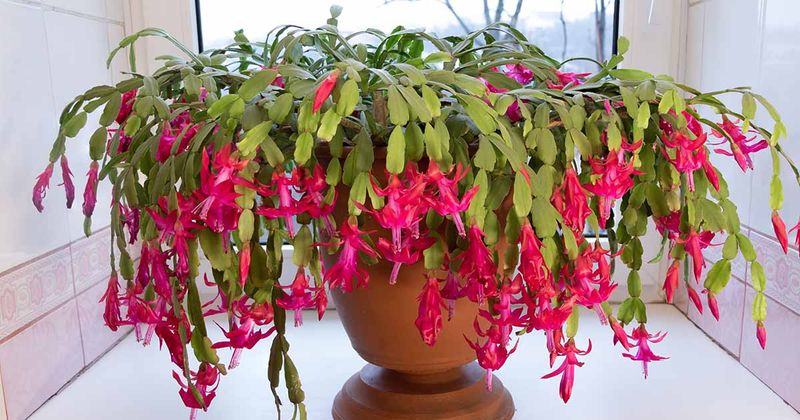
A common mistake when buds start dropping is reaching for the wrong solution. Long, uninterrupted nights and cool temperatures help a holiday cactus form buds in the first place, but once those buds are already visible on the plant, the darkness requirement has largely done its job.
UGA Extension’s Shades of Green newsletter makes clear that the darkness treatment is mainly for initiating buds, not for carrying already formed buds through to opening.
Putting a budded plant in a dark closet as a rescue strategy is not supported by reliable extension guidance and may actually create new problems. A closet typically offers poor daytime light and limited airflow, two conditions that work against bud retention rather than supporting it.
Already formed buds benefit most from stable bright, indirect daytime light, consistent temperatures, and steady watering, not from an abrupt shift into darkness. University of Minnesota Extension and University of Illinois Extension both support approximately 12 to 14 hours of darkness for bud initiation, a treatment that belongs in the weeks before buds form, not after.
One more identification note worth mentioning early: many plants sold as Christmas cactus are actually Thanksgiving cactus or hybrids between the two. UGA Paulding County Extension and NC State Extension note that Thanksgiving cactus has pointed, claw-like teeth along the stem margins, while true Christmas cactus has smoother, more rounded or scalloped edges.
The common name does not guarantee a species or a bloom date, so bloom timing and responses to light and temperature can vary more than the label implies.
Use a boring routine and reassess if buds keep falling
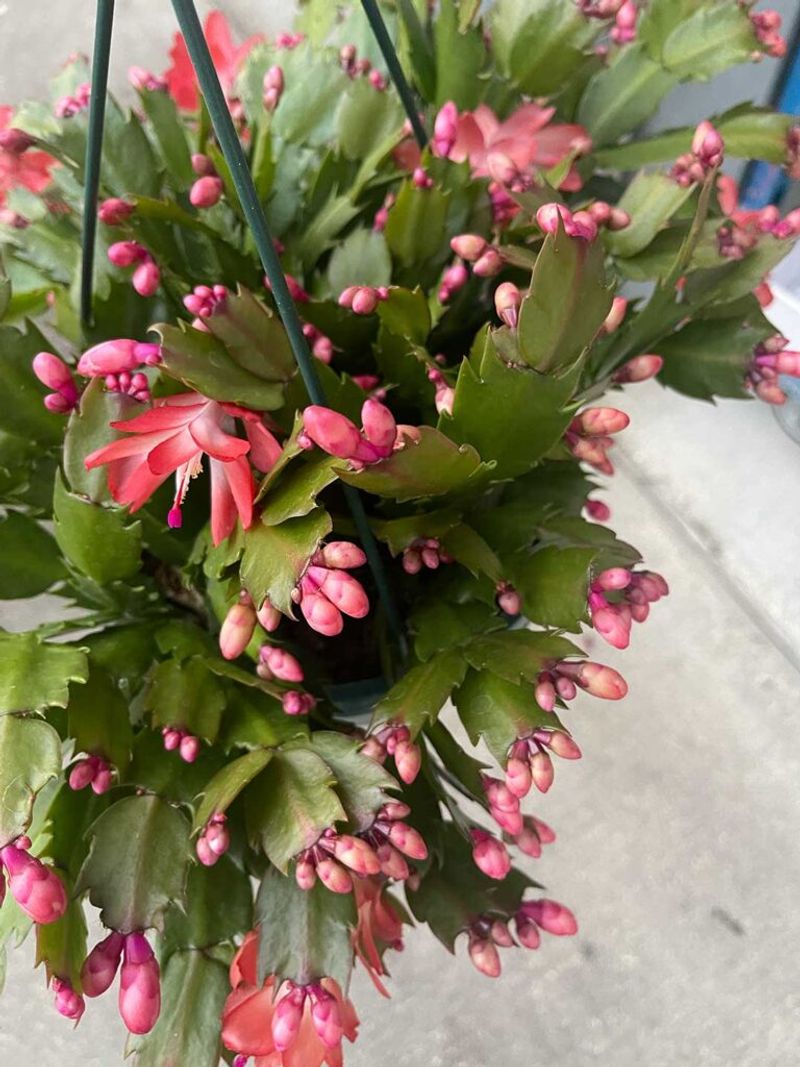
The most effective care plan for a budded holiday cactus is almost deliberately uneventful. Keep the plant in its chosen spot with bright, indirect light.
Maintain temperatures that avoid both the high-heat zone above roughly 70 degrees and the cold-stress zone near or below 50 degrees. Water when the top inch of mix has dried, drain the saucer, and then leave the plant alone.
Resist the urge to rotate, repot, fertilize heavily, or experiment with new products while buds are present.
UGA Cobb County Extension’s holiday plant care guide points out that retail plants often arrive with buds that were timed artificially in a greenhouse, and the trip from grower to store to your home is itself a significant environmental transition. Some bud loss after purchase can happen even when your subsequent care is solid, so a few fallen buds in the first week at home are not necessarily a sign that something is wrong with your setup.
If losses continue past that adjustment window, work through the checklist again rather than assuming one move caused everything. Check the roots for signs of rot or extreme dryness.
Reassess the light level and look for hidden heat sources or drafts. Confirm that the potting mix is draining properly.
Iowa State University Extension and Penn State Extension both treat bud drop as a multi-cause problem, which means a multi-point check is the right response. Stabilizing the plant is the goal, not identifying a single villain to blame.
A holiday cactus that holds its buds through to bloom is simply one that was never asked to handle too many changes at once.