
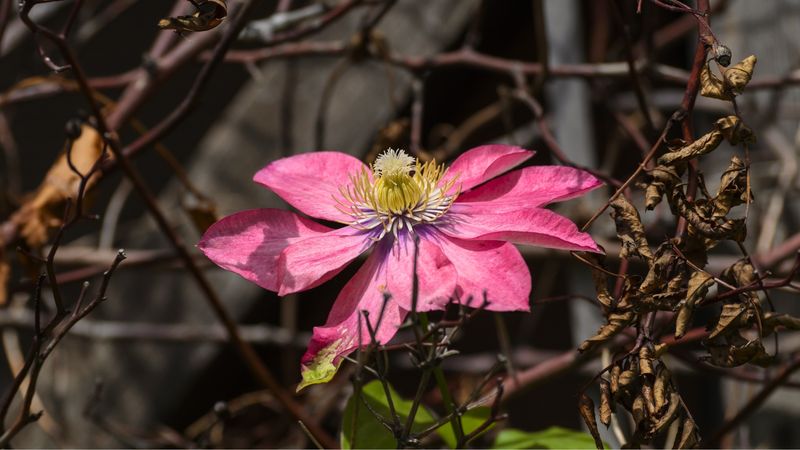
You water it, the sun hits it just right, and the thing keeps putting out leaves like it has somewhere to be. But instead of climbing, it just hangs there, flopped over the edge of the trellis or piled at the base.
For Southern gardeners in Texas and Florida who have been waiting on a wall of blooms, that gap between lush growth and zero climbing can be genuinely baffling. The fix is often simpler than you think, though it helps to know exactly what you are looking at before reaching for the pruning shears.
Start with the symptom, not the fertilizer
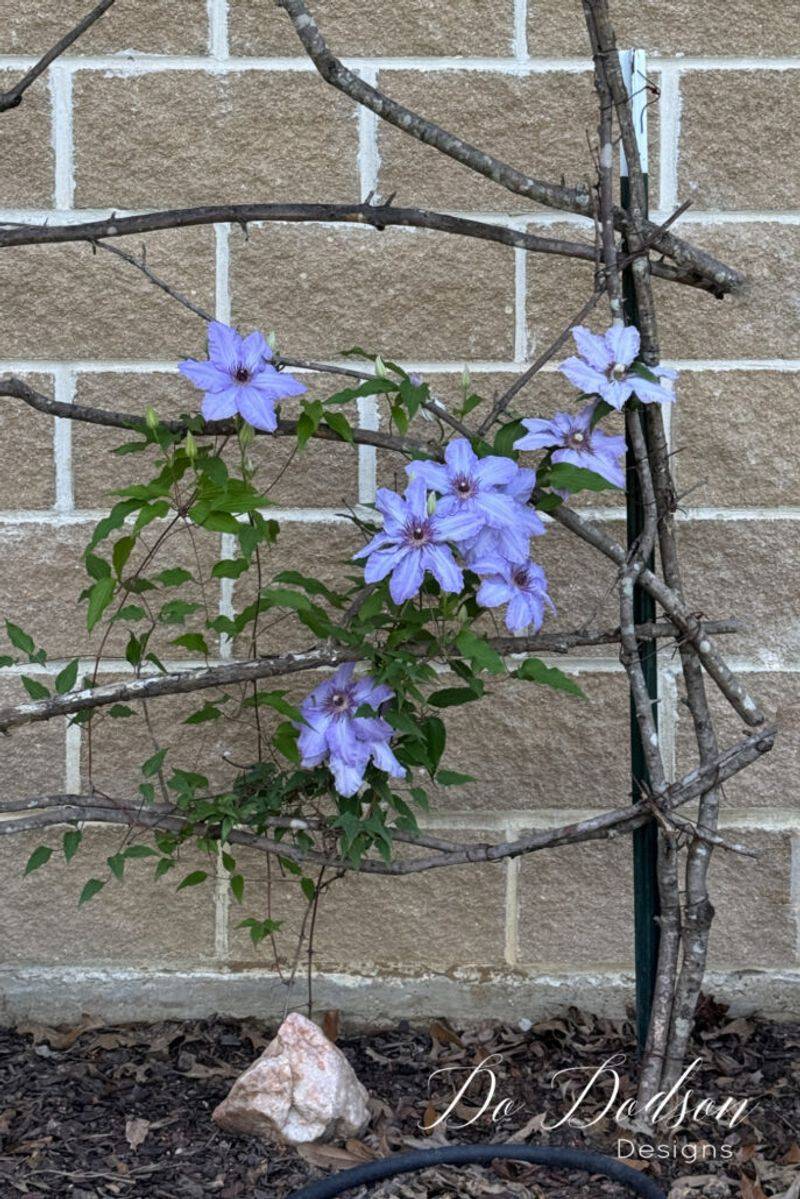
Before blaming the soil or reaching for a bag of fertilizer, take a closer look at what the plant is actually doing. A clematis that looks full and green but hangs outward or piles up at the base without gripping anything is showing a specific symptom, and that pattern points toward the support before it points toward nutrition, pruning, or watering.
Clemson Cooperative Extension notes that clematis cannot grasp thick branches or heavy trellising, which makes the support itself the first thing worth inspecting.
Leafy growth does not confirm that the plant is healthy or that everything else is fine. Foliage can keep coming in while the vine struggles with an unsuitable support, an emerging root problem, or a disease that has not yet shown its worst symptoms.
UMass Extension describes clematis wilt as sudden collapse and blackening of individual stems and leaves, which is a very different picture from steady leafy growth with no attachment.
The trellis explanation is the strongest candidate when you have a visibly vigorous, vining clematis whose shoots hang loose with no obvious disease symptoms. If the plant is wilting suddenly, turning black at the stems, or collapsing in sections, that calls for a disease inspection rather than a support repair.
Frame the support problem as the leading explanation under these specific conditions, not as the answer behind every clematis that refuses to climb.
Clematis grip with leaf petioles
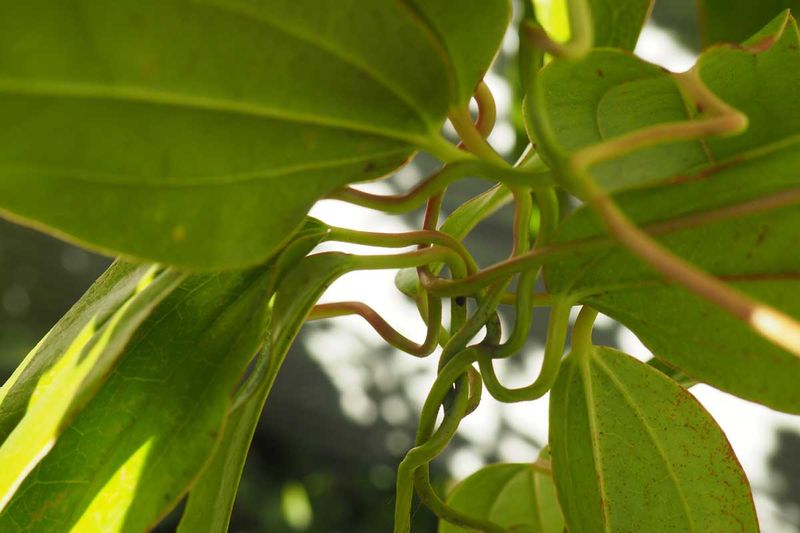
Vining clematis do not climb the way grapes or passionflower do. There are no adhesive pads sticking to surfaces and no conventional tendrils reaching out to curl around a support.
Instead, the plant uses its leaf petioles, the short stalks that connect each leaf blade to the stem, to coil around whatever narrow object they can find. Iowa State University Extension and the Royal Horticultural Society both describe this petiole-twining mechanism as the plant’s primary means of attachment.
That detail changes how you read the symptom. A clematis can keep producing leaves at a healthy pace while every single petiole fails to grab anything, simply because the surface it contacts is too broad to encircle.
The petiole touches the thick rail, wraps partway, and then releases because it cannot complete the grip. The vine ends up draping outward or collapsing downward, looking full of life but going nowhere vertical.
Understanding this mechanism is what makes the repair logical rather than arbitrary. You are not trying to trick the plant or force a behavior it cannot do.
You are giving its existing climbing structures something narrow enough to actually catch. Once a petiole finds a thin wire or bamboo stake it can wrap around completely, the attachment happens on its own without any additional intervention from you.
A strong trellis may offer nothing to hold
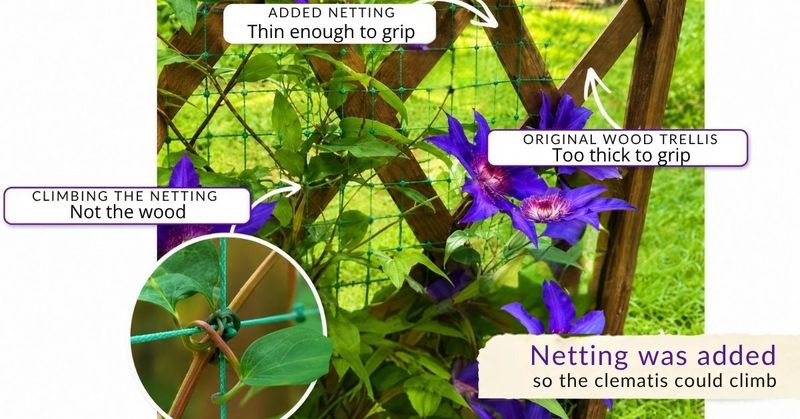
Walk up to the trellis and actually measure what the plant is supposed to grip. Broad wooden slats, thick decorative rails, large-diameter poles, and smooth stucco or wood walls with no narrow framework all share the same problem: there is nothing small enough for a leaf petiole to encircle.
Washington State University Extension offers a practical benchmark, suggesting that supports around three-quarters of an inch in diameter or larger may exceed what a petiole can grip.
That three-quarter-inch figure is a useful starting point, not a hard cutoff that applies equally to every cultivar, every petiole size, or every mature vine. Some vigorous types may manage slightly thicker supports as stems mature and stiffen, while young shoots on a newly planted vine may need something considerably thinner.
The point is that a support that looks perfectly sturdy from ten feet away can be completely useless to the plant trying to climb it.
The encouraging news is that you do not have to tear out a solid, well-anchored trellis just because its slats are too wide. That existing structure can stay in place and do exactly what it does well: hold weight and resist wind load.
What it cannot do on its own is provide the narrow attachment points the plant needs. Clemson Extension specifically advises that clematis cannot grasp heavy trellising, reinforcing that the fix is adding smaller-diameter lines to the existing frame rather than starting over from scratch.
Add narrow lines instead of replacing the trellis
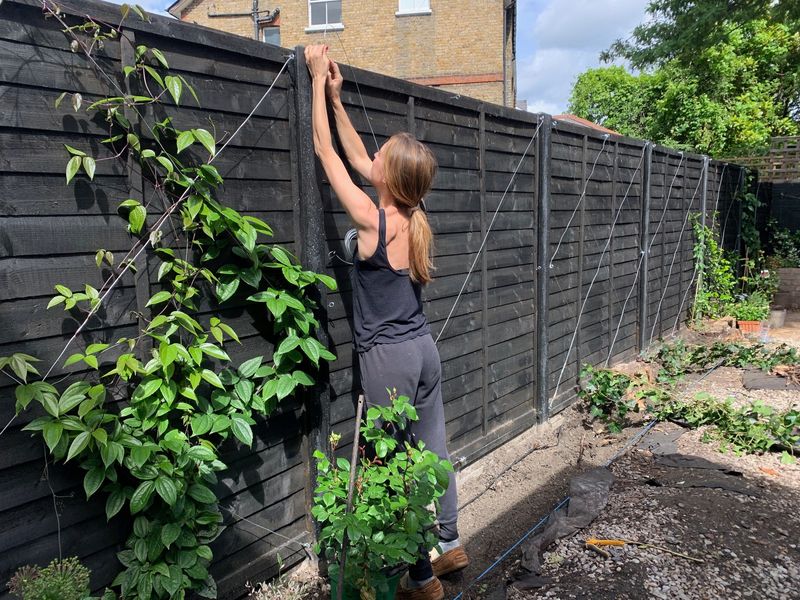
The practical repair is straightforward: run narrow climbing lines across the face of the existing structure so the plant has something its petioles can actually encircle. Good options documented by extension sources include thin metal trellis material, wire mesh, netting, monofilament fishing line, bamboo stakes, and narrow rebar.
WSU Extension specifically names several of these materials as appropriate for clematis support.
Anchoring matters as much as diameter. A vigorous clematis in full growth can carry real weight, especially after a Texas or Florida rainstorm adds moisture to every leaf.
Whatever narrow lines you add must be tied, stapled, or clipped to the existing structure firmly enough that the whole assembly does not sag or detach when the vine fills in. Thin material alone does not provide adequate structural support; it relies on the sturdy frame behind it to stay in place.
Placement spacing makes a difference too. The University of Vermont Extension recommends keeping a wall-mounted support about four inches away from the wall surface to allow air to circulate behind the vine, which reduces humidity buildup and disease risk.
That ventilation gap is separate from where you position the plant itself. Iowa State University Extension recommends placing a newly planted clematis roughly one to two feet away from the support structure so emerging shoots have room to reach and wind toward it naturally rather than being pressed flat against a surface from day one.
Guide young stems without forcing them
Once you have added narrow climbing lines to the support, the next step is helping the plant find them. Spread several healthy young shoots outward toward the new framework and lay them against it gently, letting the petioles make contact with the thin material.
Do not twist or force a stem into position; clematis stems are notably brittle, particularly on young plants and fresh growth, and a stem that snaps during training looks exactly like a disease symptom when it wilts and darkens a day later.
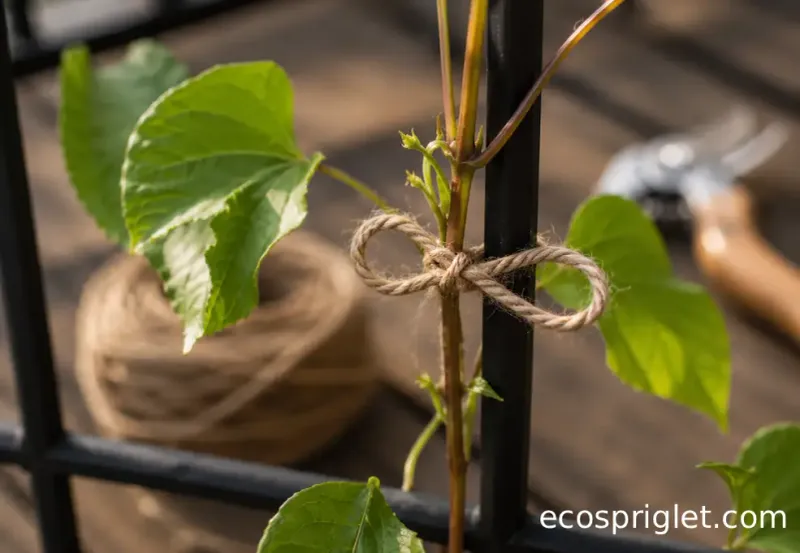
Where a shoot needs a little extra help staying in contact with the support, use a loose figure-eight tie made from soft garden twine. The figure-eight shape keeps the tie from cinching directly against the stem by placing the cross of the knot between the stem and the support material.
The Royal Horticultural Society specifically recommends this approach and warns against plastic twist ties, which can cut into stems as the vine expands.
Guiding shoots onto the support is a starting assist, not a permanent solution. Iowa State Extension notes that young vines often need help getting started before they begin self-attaching reliably.
Once a few petioles find the narrow lines and wrap successfully, the vine tends to continue on its own. If shoots keep sliding off or hanging loose after several weeks, revisit the support diameter rather than adding more ties, because no amount of initial guidance compensates for a surface the petioles still cannot grip.
Stabilize moisture, light, and root temperature
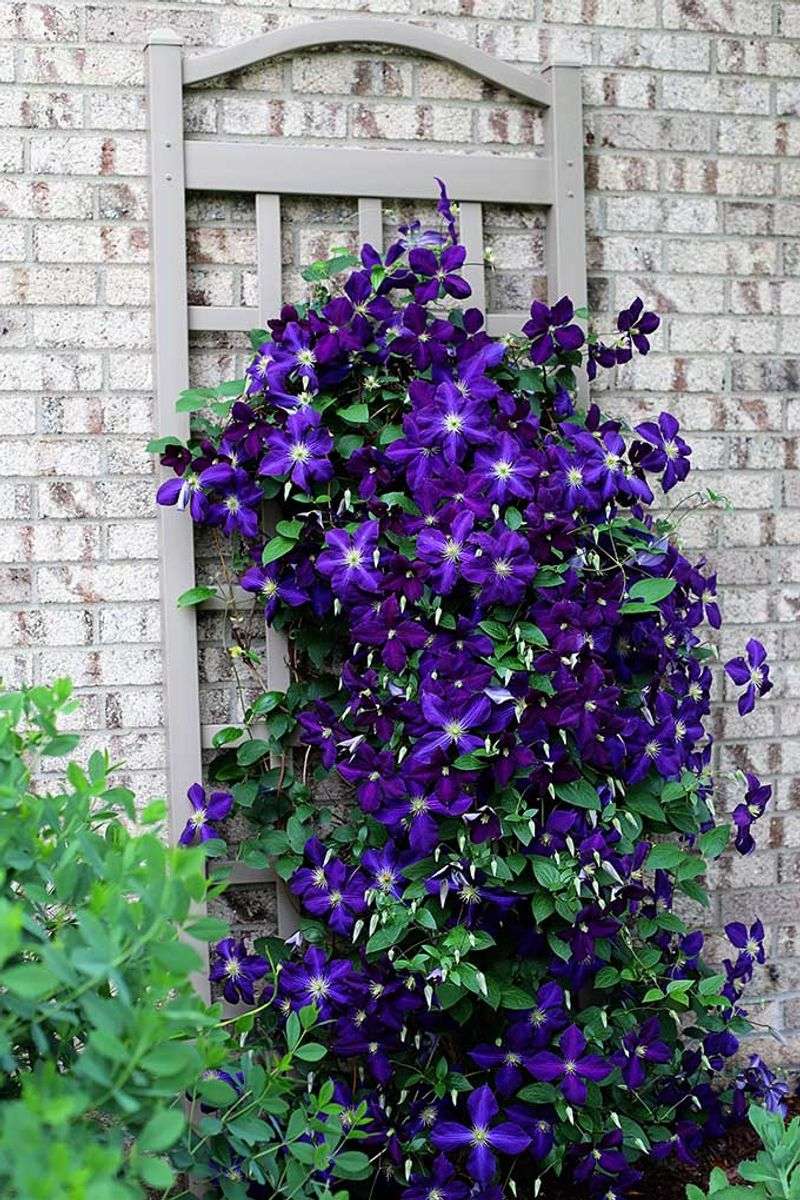
After the support repair, give the plant steady conditions and realistic expectations. Iowa State University Extension reports that a newly planted clematis may spend its first full year or even two years putting most of its energy into developing an extensive root system rather than producing a tall vertical display.
A plant that looked small or sparse last season may be doing exactly what it should underground.
Soil moisture is the other piece of the baseline. Evenly moist, well-drained soil gives clematis the best footing, with deeper watering during dry stretches rather than a rigid daily schedule.
Approximately one inch of water per week is a general starting point, but that figure shifts with your rainfall, soil type, species, and the intensity of a Texas or Florida summer. Clemson Extension emphasizes consistent moisture combined with good drainage, noting that South Carolina gardeners may also benefit from giving the plant some afternoon shade relief in hot sites.
In hot Southern gardens, the root zone can overheat in full afternoon sun, which stresses the plant even when the foliage looks fine. A two-to-three-inch layer of organic mulch pulled a few inches back from the base of the stem helps keep soil temperatures more stable without smothering the crown.
Iowa State Extension notes that companion plants can compete for nutrients, so if you use low-growing neighbors to shade the root zone, choose shallow-rooted, nonaggressive varieties and keep them from crowding the clematis base. Most clematis flower best with adequate light reaching the foliage, so root-zone cooling should not come at the cost of shading the whole plant.
Check the plant before blaming the support
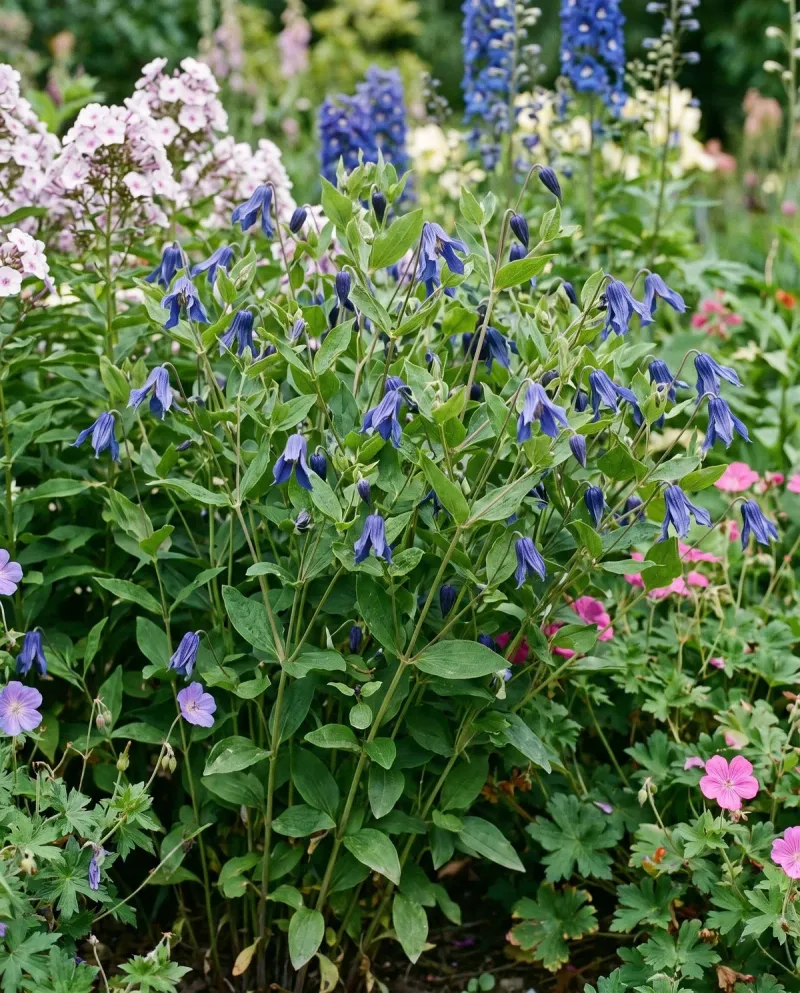
Not every clematis is built to climb. The genus includes shrubby, herbaceous, spreading, and groundcover forms that have no interest in a trellis regardless of how narrow the wires are.
NC State Extension’s plant toolbox documents non-vining clematis types that grow as low mounds or sprawling groundcovers, and if your plant matches that description, the support repair will not change its behavior because it was never designed to climb.
Recent planting is another common explanation. A clematis installed in the last growing season may simply be establishing roots rather than reaching upward, and that is normal rather than problematic.
Heat stress and drought can produce the same apparent stagnation in an otherwise healthy vine, particularly in Florida and Texas summers where soil temperatures spike and moisture evaporates quickly. Species-specific moisture needs also vary considerably: swamp leatherflower, Clematis crispa, prefers consistently moist conditions suited to wet Southern sites, while Texas clematis, Clematis texensis, is described as drought tolerant and better suited to drier Texas landscapes.
Sudden wilt, blackened leaves, or stems that collapse one by one are warning signs that go beyond a support problem. UMass Extension describes clematis wilt as rapid blackening and collapse of individual stems, which requires disease inspection rather than a trellis adjustment.
Pruning is a separate concern tied to flowering group, not climbing performance: University of Illinois Extension explains that Group 1 flowers on old wood, Group 2 on old and new wood, and Group 3 on current-season growth, and cutting at the wrong time removes flower-producing wood without doing anything to help the vine attach. Florida gardeners choosing a clematis species should also check the invasive status of their selection: UF/IFAS identifies sweet autumn clematis, Clematis terniflora, as invasive or a high invasion risk in Florida and recommends against planting it.
For Texas gardeners, Texas clematis, Clematis texensis, offers a native, drought-tolerant alternative that trains well on fences, arbors, and trellises. Finally, wear gloves when training or pruning any clematis: NC State Extension notes that clematis foliage and sap can irritate skin, and ingestion is considered hazardous to humans and some pets.
Clemson Extension rounds out this picture by noting that correct identification and matching care to the specific cultivar are both essential steps before assuming the support is the only variable that needs changing.
Use the support test as your first rescue
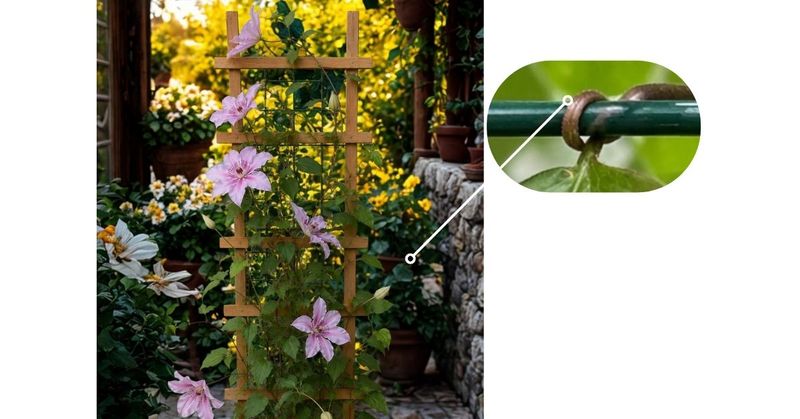
Run through the steps in order before trying anything more complicated. Check the support diameter first: if the slats, rails, or poles are too broad for a petiole to wrap around, add narrow wire, netting, or fishing line anchored firmly to the existing frame.
Then guide several young shoots onto the new lines with loose soft-twine ties, and give the plant steady moisture and adequate light while it settles in. Clemson Extension and WSU Extension both point to support diameter as a primary barrier for vines that cannot attach.
This retrofit works best when the plant is a confirmed vining clematis with no sudden wilt, blackened stems, or collapsing sections. If the support repair does not change anything after a full growing season, revisit the plant’s identity, its establishment timeline, and whether disease or species-specific needs are driving the behavior.
A clematis that finally finds something to hold will tell you quickly – the petioles catch, the shoots reach upward, and the trellis starts looking like it was always the plan.