
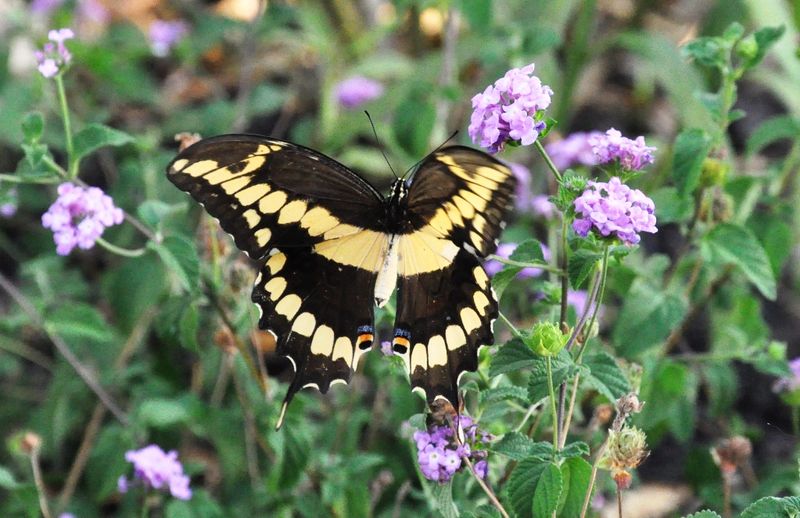
Swallowtail butterflies are some of the most striking visitors a Central Texas yard can host, with wingspans that catch the eye and flight patterns that make you stop whatever you are doing. Getting them to show up repeatedly takes more than planting a few flowers – it means understanding what these butterflies actually need at every stage of their lives.
This guide walks through the specific habits that can turn your yard into a place swallowtails return to, generation after generation.
Create habitat for recurring sightings, not a scheduled migration
Swallowtail butterflies do not migrate through Central Texas yards on a predictable annual schedule the way monarchs funnel through the state each spring and fall. Texas Parks and Wildlife documentation on monarch movement makes clear that the famous Texas butterfly migration story belongs to monarchs, not to swallowtails.
Swallowtail sightings in your yard are more likely explained by resident or nearby butterflies stopping in for nectar, mating, or egg-laying, or by successive generations developing in or near your landscape.
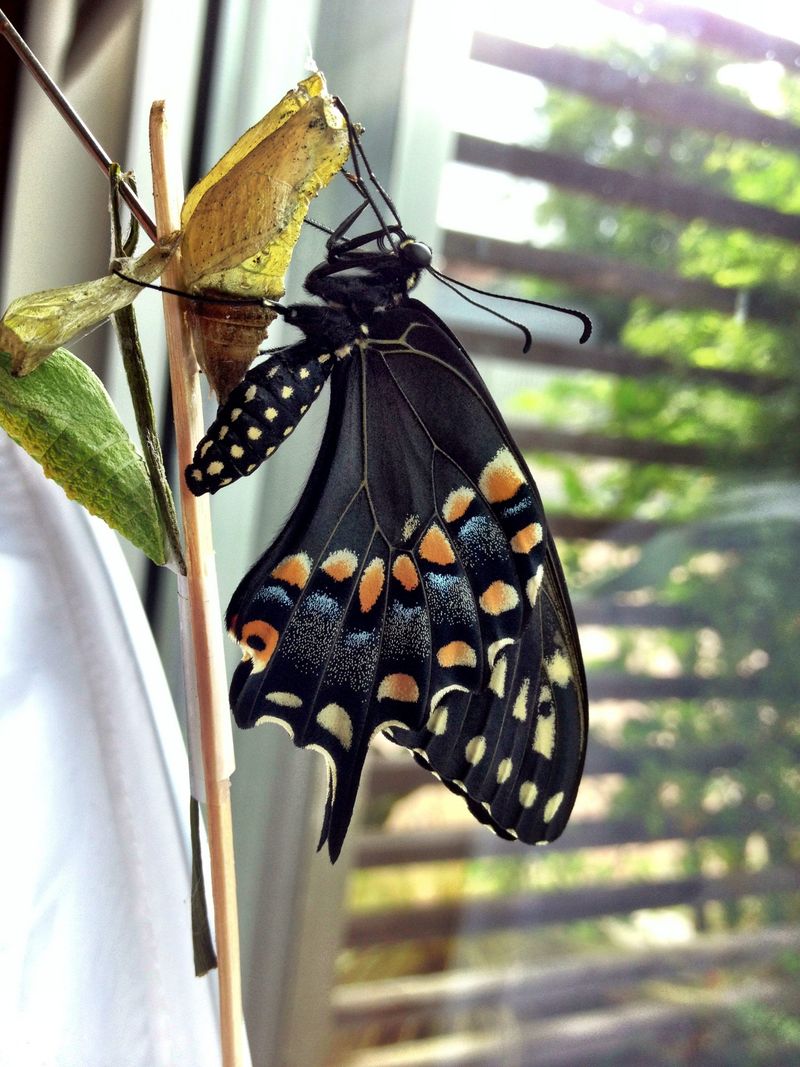
Several swallowtail species recorded in and around Central Texas, including black, pipevine, and giant swallowtails, have multi-generation life cycles and some overwinter as chrysalises rather than departing on a single annual trip. That means a yard can see repeated swallowtail activity across a season without any individual butterfly returning to the same spot.
Recurring sightings may reflect new adults emerging from nearby pupae, offspring of a female that laid eggs on your host plants weeks earlier, or fresh adults passing through in search of food or mates.
The governing principle here is straightforward: habitat improvements increase your opportunity for swallowtail activity, but they do not control the outcome. Xerces Society butterfly conservation guidance consistently distinguishes between adult feeding visits and actual breeding, and that distinction matters for setting realistic expectations.
A yard stocked with only nectar flowers may attract adults briefly, while a yard that also provides species-matched larval host plants gives females a reason to stay long enough to lay eggs.
Think of the goal as building a yard capable of supporting repeated visits and possibly successive generations, not luring back the same individual butterflies on a fixed calendar. That framing is both more accurate and, practically speaking, more actionable.
Choose a swallowtail target before choosing plants
Swallowtails are a group, not a single species, and their caterpillars have very different food requirements. Choosing plants before choosing a target species is one of the most common mistakes Texas gardeners make.
The three swallowtails for which reliable Central Texas host-plant guidance exists are the black swallowtail, the giant swallowtail, and the pipevine swallowtail – and none of their host plants substitute for one another.
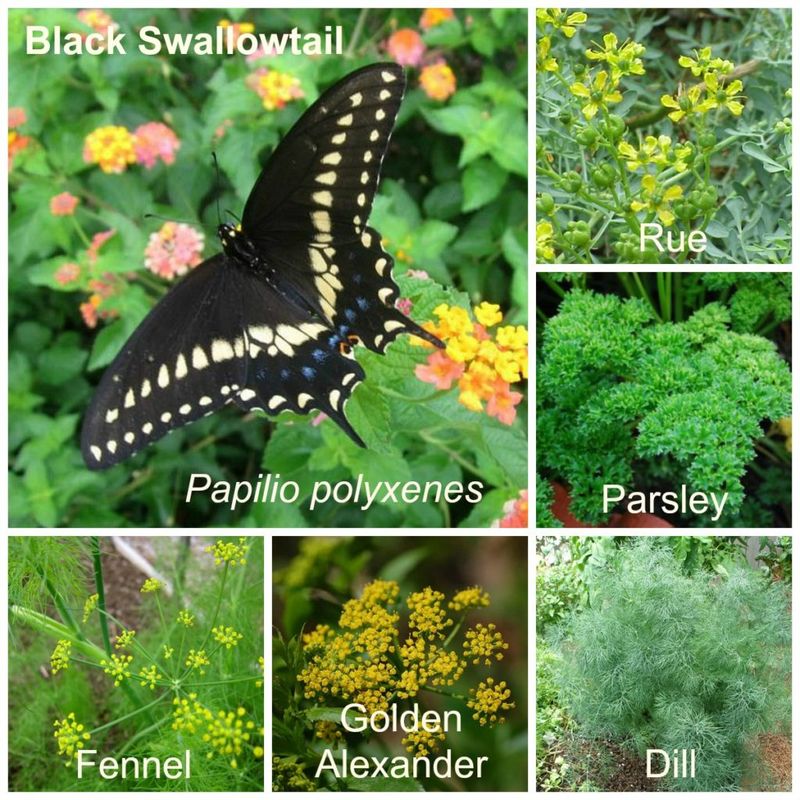
Black swallowtails lay their eggs on plants in the parsley family. BAMONA species accounts for the black swallowtail confirm that dill, parsley, carrot, celery, and fennel are all suitable larval hosts, and Texas A&M recommends planting enough dill to share with caterpillars rather than treating every munched stem as a problem.
Black swallowtails produce multiple broods in the southern part of their range, which means a well-stocked herb patch can support more than one round of eggs and caterpillars in a single growing season.
Giant swallowtails use plants in the citrus family and related species. Texas A&M identifies wafer ash and citrus as regional host plants, and a verified Bexar County observation recorded an adult giant swallowtail laying eggs on a prickly-ash-type host, which speaks to the species’ presence in the greater Central Texas area.
That single sighting is evidence of regional relevance, not a universal planting prescription – confirm what grows well in your specific subregion before purchasing.
Pipevine swallowtails require a properly identified Aristolochia species. UF/IFAS extension material on the pipevine swallowtail notes that some commonly repeated reports of alternative host plants are likely misidentifications, and that Aristolochia is the confirmed larval host.
Because “pipevine” can refer to several Aristolochia species with different regional suitability, verify the exact species and its fit for your site through a Texas extension office or a reputable native-plant nursery before buying. Texas A&M’s native and adapted plant guidance is a useful starting point for checking regional appropriateness.
Plant host plants that caterpillars can actually use
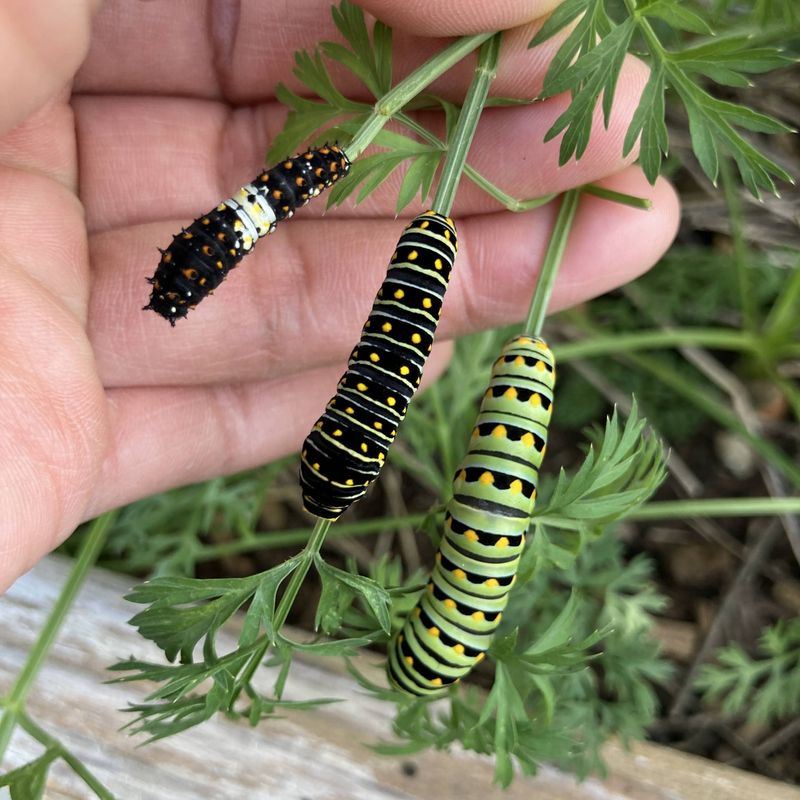
Adult nectar plants alone cannot create breeding habitat. A female swallowtail may visit your yard for a sip of nectar and move on without laying a single egg if she cannot find the right plant for her caterpillars.
The relationship between host plants and egg-laying is species-specific and non-negotiable: Xerces Society’s State of the Butterflies report notes that most butterfly caterpillars have narrow host-plant requirements, which is why host plants are the more important lever for encouraging actual breeding rather than brief adult visits.
For black swallowtails, the practical planting list is straightforward: dill, parsley, carrot, celery, and fennel. BAMONA’s black swallowtail species account confirms all of these as usable larval hosts.
Plant several specimens rather than a single pot – caterpillars can strip a lone dill plant quickly, and having multiple plants ensures some foliage remains while larvae develop. Place host plants where some visible chewing is acceptable; a row of dill at the back of the herb bed or along a fence line works better than a showcase pot by the front door.
Texas A&M fall vegetable gardening guidance recommends planting enough herbs to share with wildlife, which is exactly the right mindset for a swallowtail yard. A few chewed stems mean the system is working, not failing.
That said, heavy defoliation from caterpillars is normal for a host plant in active use, and it looks different from yellowing or wilting caused by disease or unrelated pest damage – learn to tell those apart before pulling a plant.
Host plants create an opportunity for egg-laying and caterpillar development, but they do not guarantee that a female will find them or choose to lay. Weather, the presence of suitable adults nearby, and surrounding habitat all play a role.
Plant the hosts, keep them healthy, and let the butterflies decide.
A succession of nectar flowers can support adult visits
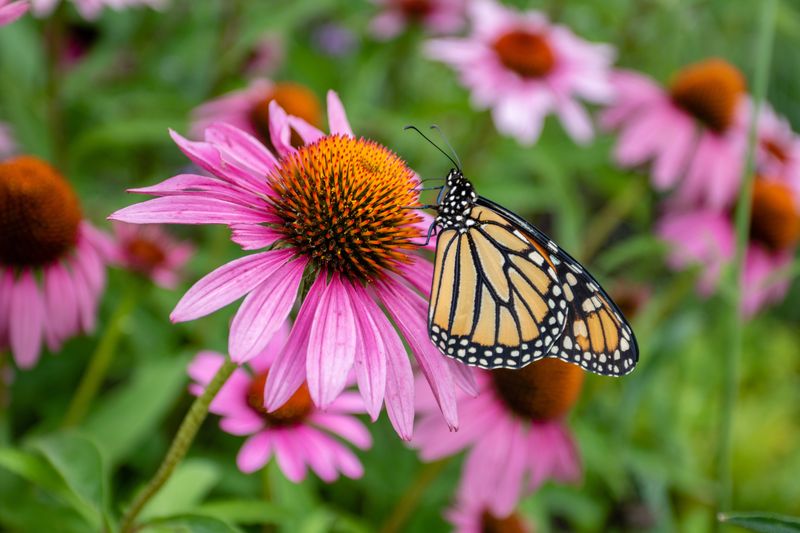
Once host plants are in the ground, a sequence of nectar flowers gives adult swallowtails something to feed on across the growing season. The goal is staggered bloom periods rather than a single flush of flowers that peaks and fades by midsummer.
Texas A&M’s native and adapted plant material identifies Texas lantana, salvias, white mistflower or shrubby boneset, purple coneflower, and fall aster as plants with documented pollinator value in Central Texas conditions.
These are general nectar resources, not guaranteed swallowtail magnets. An adult butterfly that stops at your Texas lantana may be a swallowtail, a monarch, a skipper, or a dozen other species – and that is fine.
The point is to keep food available so that any swallowtail passing through has a reason to slow down, which increases the chance of egg-laying on nearby host plants. University of Georgia Cooperative Extension butterfly gardening guidance reinforces that a continuous supply of nectar across seasons does more for butterfly activity than a single large planting that blooms all at once and then goes dormant.
An adult feeding visit and a successful breeding cycle are two different outcomes. A butterfly that drinks from your coneflower and flies away has not necessarily bred in your yard.
Nectar flowers support the adult stage of the life cycle; host plants support the egg, caterpillar, and chrysalis stages. Both matter, but they do different jobs.
Weather, the composition of surrounding habitat, and which species happen to be active in your area all influence how many swallowtails you see on any given day. A yard with great nectar and no host plants may attract adults without ever producing a caterpillar.
Aim for both, and treat the nectar sequence as the welcome mat rather than the whole house.
Add sun, shelter, and shallow moisture
Physical layout matters as much as plant selection. Butterflies are cold-blooded and need warmth to fly, feed, and mate, so a planting tucked into a shady corner or swept by constant wind will see far less activity than the same plants in a protected, sunny spot.
University of Georgia Cooperative Extension butterfly gardening guidance recommends roughly five to six hours of direct sun and protection from strong prevailing winds as the baseline layout conditions for a productive butterfly garden.
Flat rocks or patches of bare ground give butterflies a place to bask and raise their body temperature after cool mornings or cloudy spells. Position at least one large flat stone where it receives direct morning sun.
Bare soil nearby serves a similar purpose and also gives males a spot for the territorial perching behavior common in several swallowtail species.
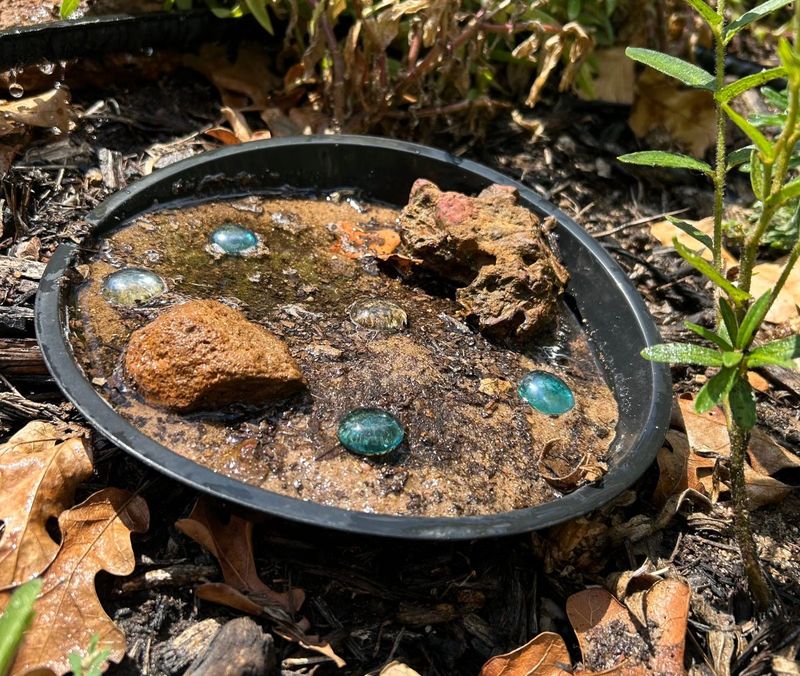
Water is necessary but easy to get wrong. Butterflies do not drink from open water the way birds do; they prefer to extract moisture from wet sand, mud, or damp soil in a behavior called puddling.
A shallow saucer filled with coarse sand and kept consistently damp works well. A managed muddy patch near a drip irrigation line or downspout is another practical option.
Keep whichever feature you use clean and refreshed regularly – standing water that sits undisturbed for more than a few days can become a mosquito-breeding container, which creates a different problem entirely.
These microhabitat conditions are about making your plantings more usable once butterflies arrive. Sun, shelter, basking surfaces, and accessible moisture do not attract a particular swallowtail species on their own, but they remove friction for any butterfly that does visit.
A yard that is warm, calm, and has a reliable damp patch will hold adult butterflies longer than one that lacks those features.
Protect caterpillars and adults from pesticide exposure
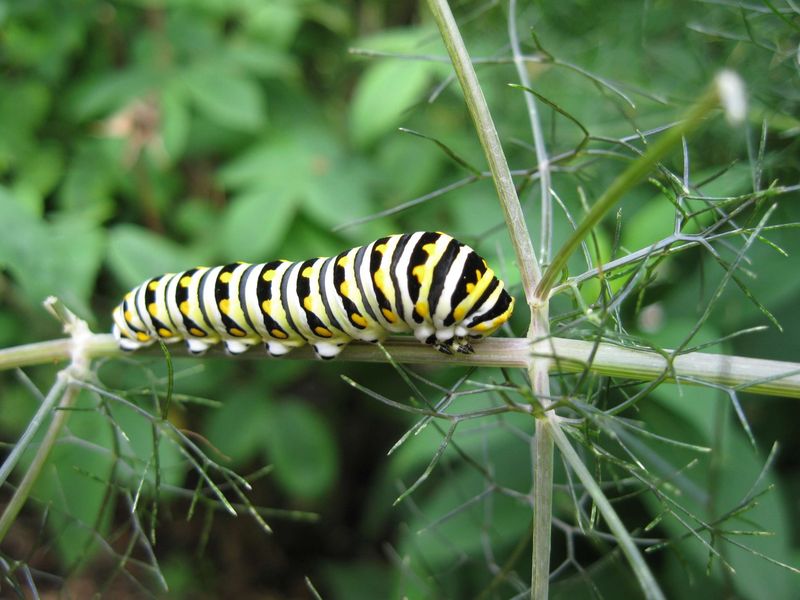
Pesticide exposure is one of the most direct ways a yard can undermine its own swallowtail habitat, and the risks come from more directions than most gardeners expect. Insecticides applied to host plants can kill caterpillars that eat the treated foliage.
Insecticides applied to flowering plants can harm adult butterflies that visit for nectar. And herbicide drift from a neighboring lawn treatment can damage or kill the host and nectar plants you have worked to establish.
One specific risk deserves attention: Bacillus thuringiensis, commonly called Bt, is often marketed as a “natural” or low-impact pest control, but Xerces Society’s pesticide guidance makes clear that Bt products are toxic to non-target butterfly and moth larvae and should be used with caution wherever caterpillars are wanted. Applying Bt to control one unwanted caterpillar in a swallowtail garden risks harming the larvae you are trying to support.
Avoid it in and around host plants.
Systemic insecticides introduce a less visible problem. These products are absorbed into plant tissues and can remain there long after application, meaning a plant that looks healthy at the nursery may still be hazardous to insects that eat its leaves or sip its nectar.
Xerces Society’s systemic insecticide overview explains how these chemicals move through plant tissue and persist in ways that contact insecticides do not. Before buying any plant for your swallowtail garden, ask the nursery directly whether it received a systemic insecticide treatment.
If the treatment history is unknown, do not assume the plant is safe for butterflies.
Xerces habitat installation guidance also notes that encouraging native plants for pollinator habitat tends to support beneficial insects that help control pest populations naturally, which can reduce the pressure to reach for insecticides in the first place. Where pest management is unavoidable, choose the least-toxic option, apply it away from host and nectar plants, and time applications to avoid periods of active butterfly use.
Match the planting plan to your Central Texas site
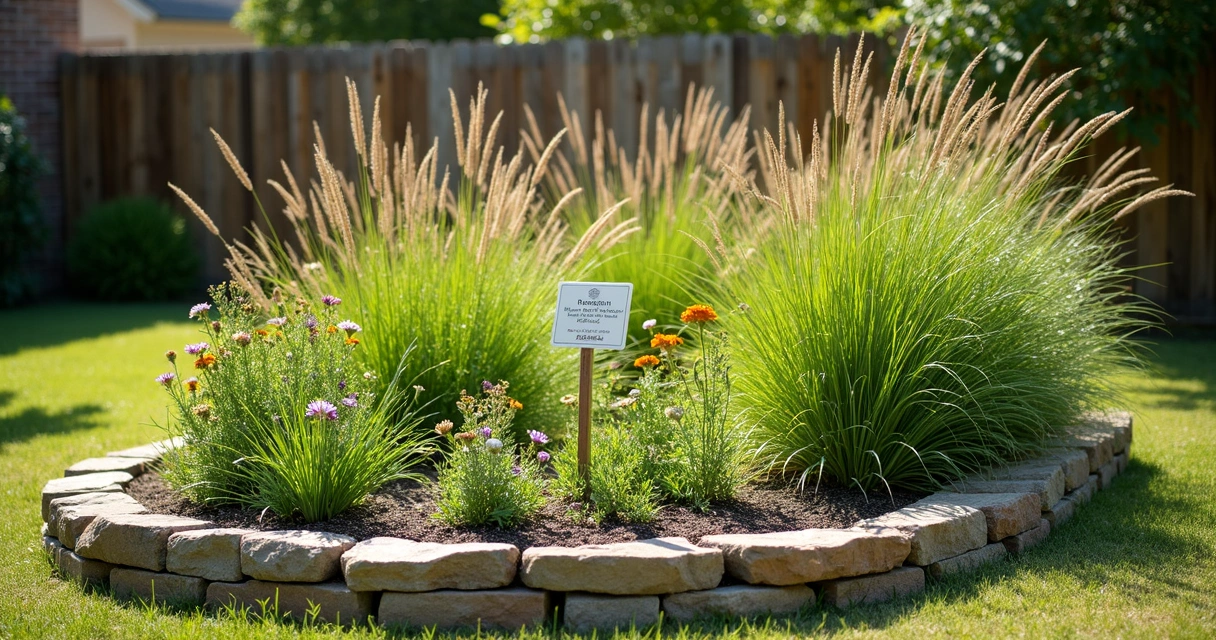
Central Texas is not one uniform growing environment. Austin-area gardens on Blackland Prairie clay behave very differently from Hill Country gardens on thin limestone soil, and a San Antonio yard near the Balcones Escarpment sits in yet another set of conditions.
Rainfall, winter temperatures, soil depth, drainage, and municipal water restrictions all vary enough across the region that a single plant list cannot serve every situation equally well.
The Texas A&M Earth-Kind Plant Selector separates recommendations by Texas region and growing conditions, which makes it a useful first check before purchasing any plant for your swallowtail garden. The Earth-Kind plants overview also notes that a well-adapted nonnative plant can sometimes provide real value, while a native plant placed in unsuitable soil or light conditions can still struggle or fail.
Regional adaptation matters more than native versus nonnative status in isolation.
For pipevine swallowtails specifically, verify the exact Aristolochia species before purchasing. Different species have different regional suitability, and the wrong one may not thrive in your microclimate or may not be available through reputable local sources.
A Texas extension office or a native-plant nursery familiar with your county is the right place to confirm species identity and suitability. The Texas A&M native plants for home and garden list is a solid starting reference for checking which species are documented as appropriate for Central Texas conditions.
Apply the same site-matching logic to citrus and wafer ash for giant swallowtails, to parsley-family herbs for black swallowtails, and to every nectar plant on your list. A plant that performs beautifully in one Central Texas backyard may need supplemental irrigation, soil amendment, or a specific microclimate exposure to survive in the next neighborhood over.
Match first, then plant.
Measure success by habitat use, not a promised return
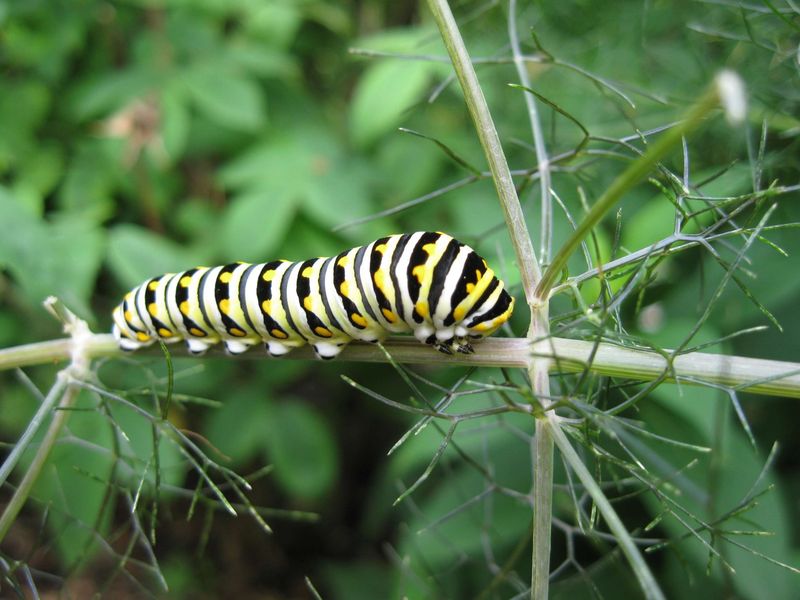
The most useful way to evaluate a swallowtail garden is to watch for specific signs of habitat use rather than waiting for a promised annual return. Look separately for adult feeding visits, females hovering low over host plants while searching for egg-laying sites, tiny eggs on host-plant leaves, caterpillars at various stages of development, and the normal leaf chewing that means larvae are actively feeding.
Each of those observations tells you something different about how the habitat is functioning.
The actionable sequence is straightforward: identify one target species, install its confirmed larval host plant in a location with enough sun and room to grow, add a staggered sequence of nectar flowers to support adults, provide a flat basking surface and a shallow damp water source, and keep insecticides out of the planting area. Xerces Society butterfly conservation resources consistently frame habitat quality, not individual butterfly tracking, as the meaningful measure of a successful garden.
The State of the Butterflies report reinforces that host plants are the critical lever for supporting breeding, while nectar plants support the adult stage – both are necessary, and neither alone is sufficient.
Recurring sightings in a well-planted yard may reflect successive generations, visits by adults from nearby populations, or brief stops for nectar or mating. None of those outcomes requires the same butterfly to return on a fixed schedule, and all of them are worth working toward.
A yard that reliably offers the right host plants, clean nectar, sun, shelter, and safe conditions is doing its job – and that is a more honest and more durable goal than chasing a migration that was never really a swallowtail story to begin with.