
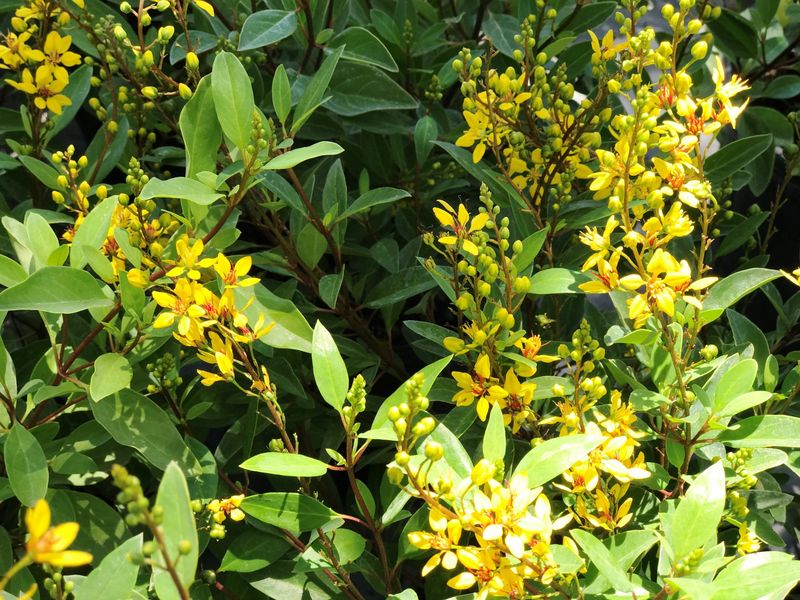
By late summer, many crape myrtles look tired, especially after weeks of Florida heat, rain, and sandy soil stress. Native shrubs can keep the yard colorful while also feeding butterflies, bees, and birds.
The right picks bring blooms into late summer and fall without needing constant fuss. Here are seven Florida natives that earn their space when the usual summer show starts fading.
1. Firebush
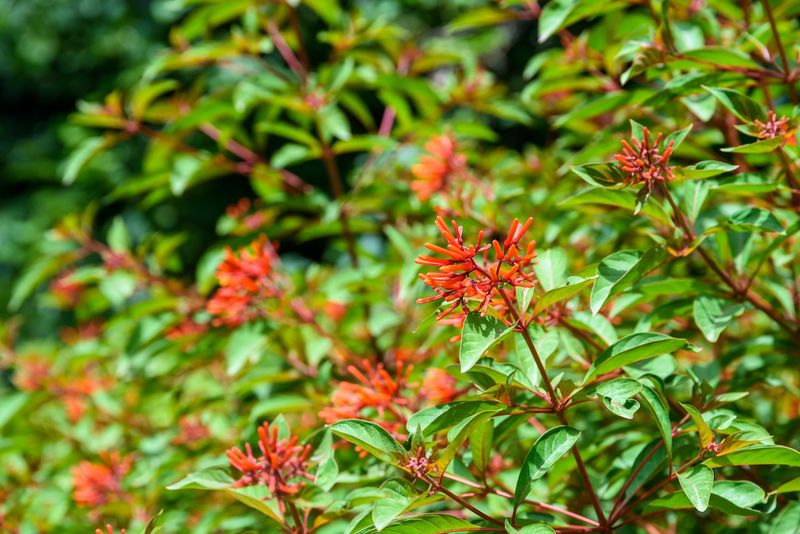
Hot afternoons do not scare firebush. When many flowering shrubs are looking worn out, this Florida native often looks like it has been waiting for the toughest part of the season to put on its best show.
Firebush produces clusters of orange-red tubular flowers that are easy to spot from the sidewalk. Hummingbirds, butterflies, and native bees visit the blooms, so it works well near patios, back fences, and sunny side yards where you want movement as well as color.
In South and Central Florida, firebush can grow into a large, loose shrub, while in colder parts of North Florida it may die back after a freeze and return from the roots. Give it full sun to light shade and soil that drains well.
Once established, it handles dry spells better than many showier landscape plants.
For a tidier look, prune lightly instead of shearing it into a hard box. Its natural shape is part of the charm, and the open branching makes it easier for pollinators to reach the flowers.
2. Simpson’s Stopper
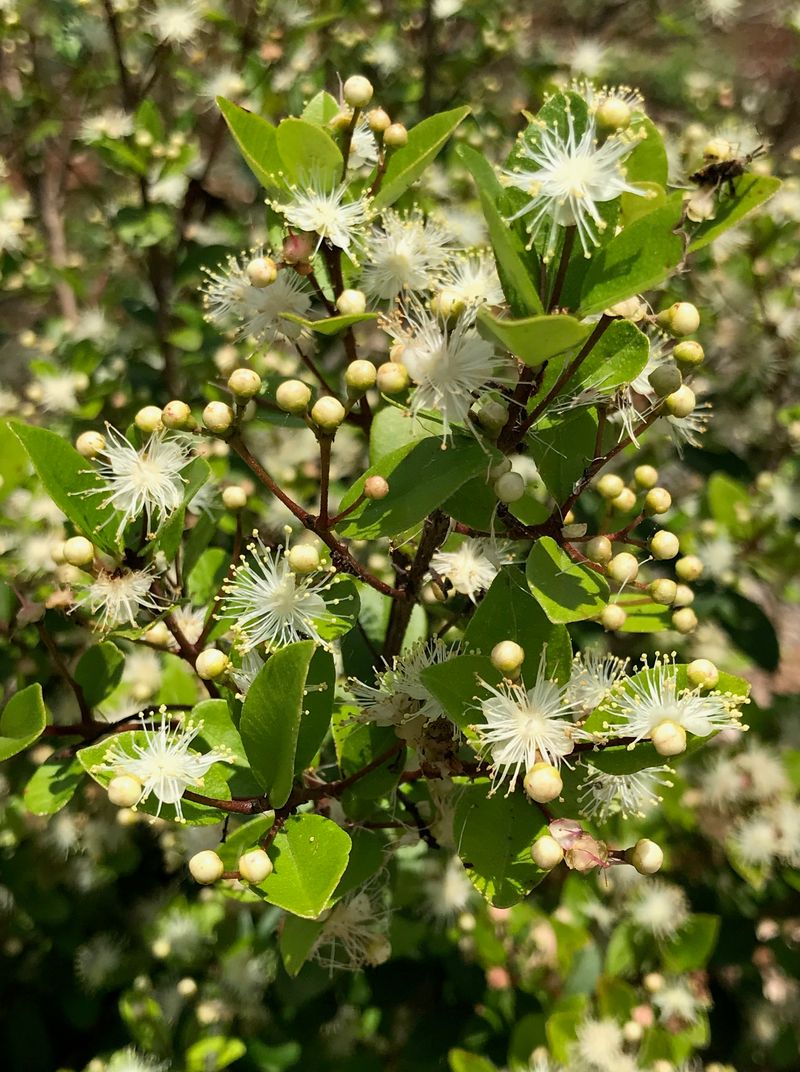
A front yard hedge can be useful without looking stiff. Simpson’s stopper brings a polished, evergreen look, then surprises gardeners with small white flowers and bright berries that birds notice quickly.
The blooms are not loud like crape myrtle flowers, but they are steady and charming. They appear in warm weather and can continue off and on, especially when the plant is happy.
After flowering, red to orange-red fruits add another round of interest, making this shrub valuable even when it is not covered in blossoms.
Florida gardeners often use Simpson’s stopper for privacy screens, foundation plantings, or a soft hedge along a driveway. It tolerates pruning, but it looks best when allowed to keep some natural fullness.
Full sun encourages denser growth, while part shade is also fine, especially in hotter inland spots.
Wildlife is a big part of its appeal. Pollinators visit the flowers, and birds feed on the fruit.
For homeowners who want curb appeal with less replanting, this is one of the most dependable native shrubs to consider.
3. Wild Coffee
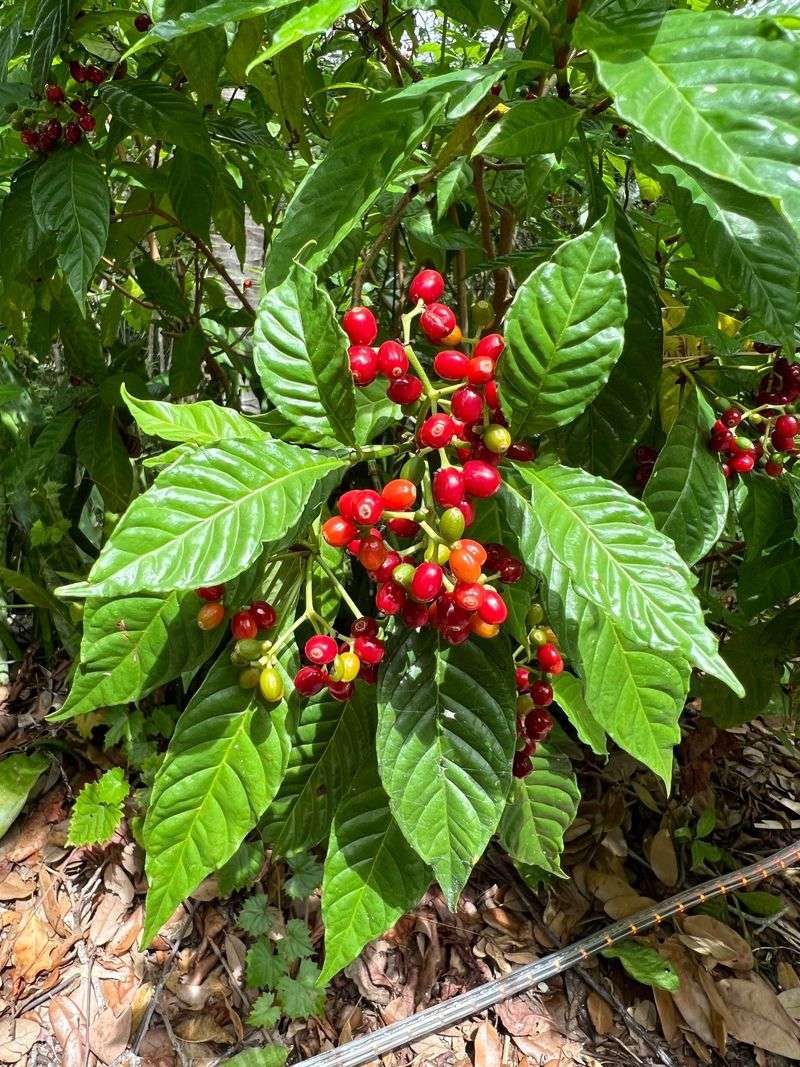
Shady corners often get treated like problem spots, but wild coffee can make them feel intentional. Its glossy leaves give garden beds a rich, tropical look even before the flowers arrive.
Small white blooms appear in warm months and may continue in waves, especially in South and Central Florida. They are followed by red berries that stand out against the deep green foliage.
The berries attract birds, while the flowers support small pollinators that are easy to miss but important in a healthy yard.
Wild coffee is a strong choice under oaks, near shaded porches, or along the north or east side of a house. It prefers part shade to shade and does not want to bake all day in harsh reflected heat.
In sandy soil, a layer of leaf mulch helps hold moisture and gives the roots a cooler, more natural setting.
Despite the name, this is not the coffee used for your morning cup. Its real value is as a native understory shrub that makes low-light Florida spaces look fuller, greener, and more alive through the long warm season.
4. Beautyberry
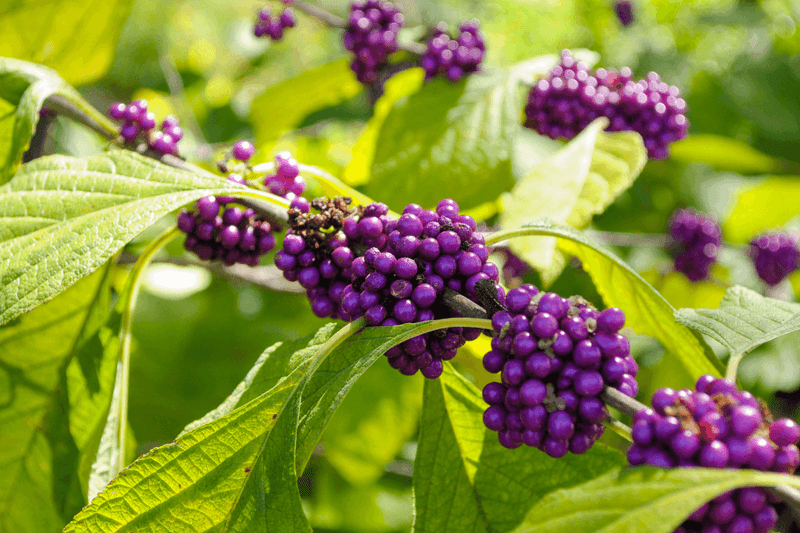
Few shrubs can make people stop and point the way beautyberry does. By late summer, its bright purple berry clusters look almost unreal, like beads wrapped around the stems.
Before the berries steal the spotlight, small pinkish-lavender flowers appear along the branches. They are modest up close, but they matter to pollinators and set the stage for the fall fruit display.
Birds, including mockingbirds and cardinals, often feed on the berries as the season moves along.
Beautyberry fits informal borders, woodland edges, and wildlife gardens better than formal foundation beds. Its arching habit can look relaxed, even a little wild, so place it where that loose shape feels welcome.
Full sun gives the heaviest berry display, but part shade is acceptable in many Florida yards.
Pruning is simple. Many gardeners cut it back in late winter before new growth begins, which helps keep the plant compact and encourages fresh stems.
If crape myrtle gave your yard summer flowers, beautyberry can carry the late-season conversation with color that feels completely different.
5. Walter’s Viburnum
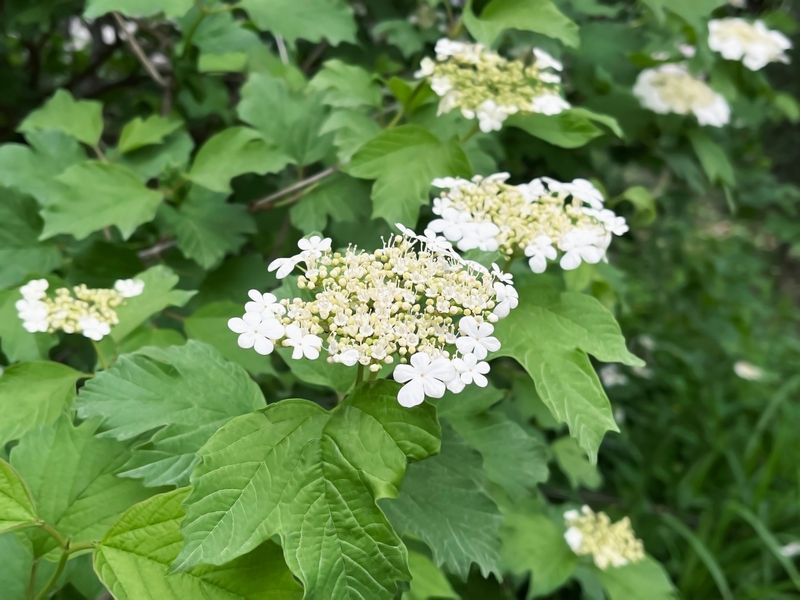
Need a native shrub that can act like a backbone plant instead of a seasonal accent? Walter’s viburnum brings structure, flowers, and wildlife value in a way that suits both tidy neighborhoods and more natural yards.
Its main bloom season is often spring, but in warm Florida conditions it can produce scattered flowers beyond that window, especially after rain or fresh growth. The small white flower clusters attract pollinators, and the dark berries that follow are useful for birds.
Walter’s viburnum works well as a hedge, screen, or large foundation shrub. Compact selections are available for smaller yards, while the straight species can become much larger over time.
It handles sun to part shade and is often a better long-term Florida choice than many thirsty, non-native hedge plants.
For best results, avoid planting it where soil stays soggy after storms. Like many native shrubs, it appreciates good drainage once established.
Use it when you want a plant that holds the garden together after flashier bloomers have taken their bow.
6. Coral Honeysuckle
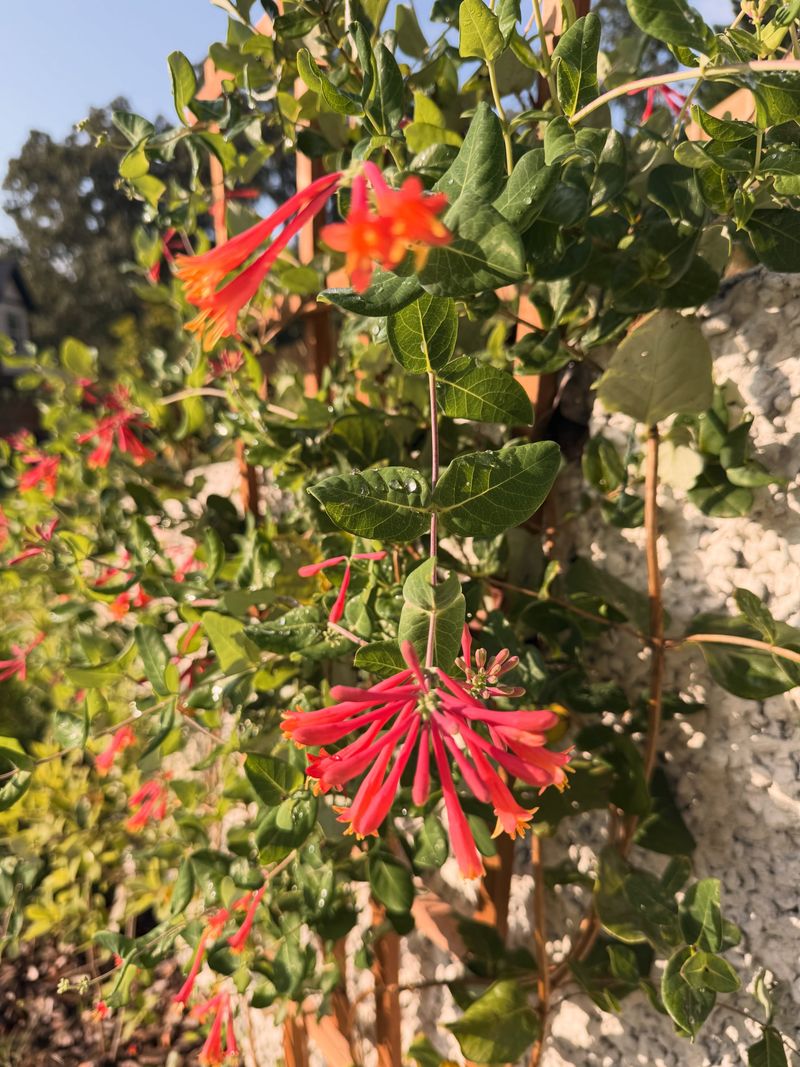
Coral honeysuckle likes to blur the line between shrub and vine. Give it a small trellis, fence, or support, and it becomes a colorful flowering feature that stays much more polite than many aggressive vines.
The coral-red tubular flowers are a major reason to plant it. Hummingbirds are strongly drawn to them, and the plant can bloom through warm months with repeat flushes.
Compared with crape myrtle, the flower shape is totally different, which adds variety to the garden instead of repeating the same look.
Florida gardeners can use coral honeysuckle on mailbox posts, courtyard fences, porch railings, or wildlife garden edges. It prefers sun to part shade, with more sun usually bringing more flowers.
Once established, it is not fussy, though young plants benefit from regular watering while roots settle in.
The key is choosing the native coral honeysuckle, not invasive honeysuckle types that can cause problems. With the right plant, you get late-season color, hummingbird traffic, and a softer vertical accent without handing your yard over to a bully.
7. Saltbush
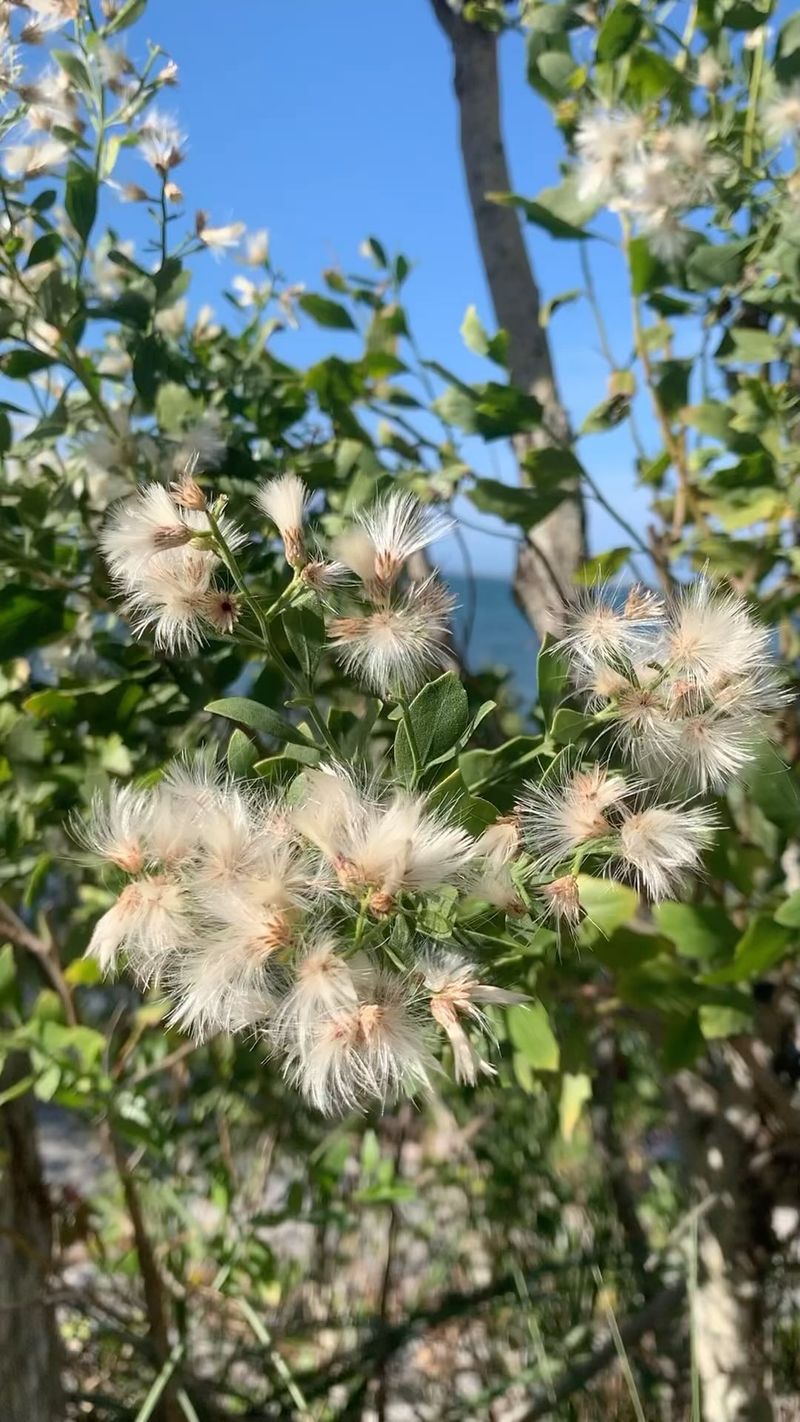
Coastal yards need plants with grit, and saltbush has plenty. While it may not look fancy in spring, it earns attention later when fluffy white flower clusters brighten the plant and draw pollinators.
Saltbush is especially useful near beaches, bays, and breezy open areas where salt spray and sandy soil can make gardening difficult. The late-season bloom is a bonus for bees and butterflies at a time when many landscapes are running low on fresh nectar.
Female plants can also produce cottony seed heads that catch the light in a soft, silvery way.
This shrub fits natural screens, back-of-border plantings, retention pond edges, and wildlife-friendly yards. It can grow large, so give it room instead of squeezing it beside a narrow walkway.
Full sun is best, and established plants are tough in dry, exposed sites.
Saltbush is not the shrub for someone who wants a clipped, formal look every week of the year. It is better for gardeners who want a resilient native that handles rough Florida conditions and still offers a fresh late-summer and fall display.