
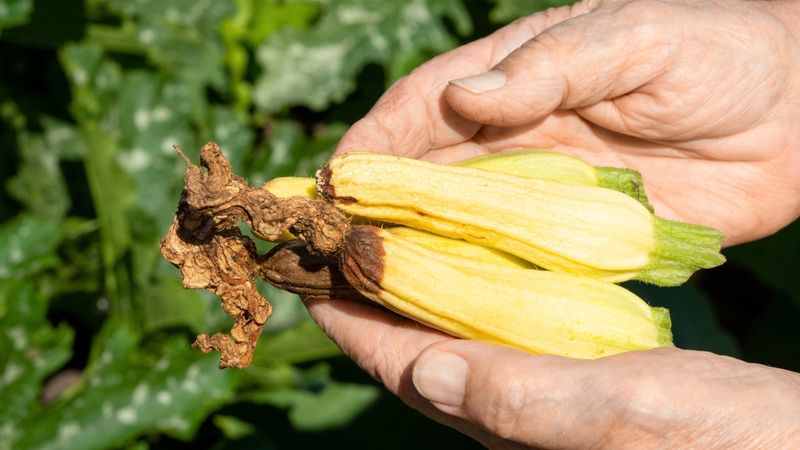
Watching a baby zucchini swell with promise, then shrivel and rot before it reaches your kitchen, is one of the more frustrating surprises in a summer garden. The good news is that this kind of early fruit failure is common, and it usually has a fixable explanation.
Incomplete pollination is often the culprit, but wet-weather fungal rot, moisture stress, and a few other conditions can look nearly identical. Knowing what to look for on the flower and the fruit is the fastest way to point yourself toward the right response.
Inspect the Flower Before You Diagnose the Fruit
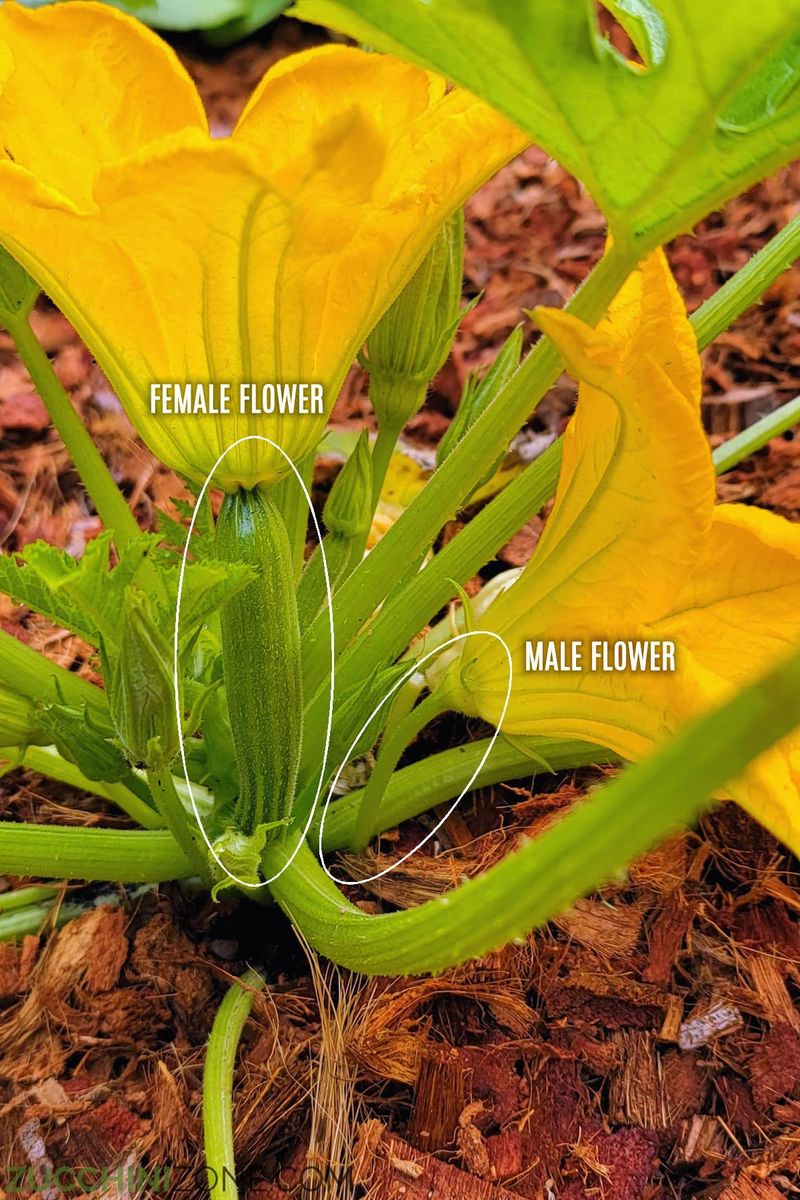
Zucchini plants grow two completely different kinds of flowers on the same vine, and telling them apart is the first step toward understanding why fruit fails. A female flower has a small, swollen base directly behind the petals that looks like a miniature zucchini.
That swelling is the ovary, and it is the structure that grows into the fruit you harvest. A male flower, by contrast, has a thin, straight stem with no swelling at its base at all.
Only female flowers can develop into fruit. UF/IFAS research on cucurbit pollination confirms that without successful pollen transfer to a female flower, the ovary will not develop into a mature zucchini.
This distinction matters because many gardeners notice that the first flush of flowers produces nothing and assume the plant is sick, when in reality those early flowers are often all male.
Before drawing any conclusions about disease or nutrition, check whether female flowers are actually present. If you see only slender-stemmed flowers, the plant may simply be in its early male-dominant phase.
University of Minnesota Extension guidance on cucurbit flower and fruit set notes that female flowers typically follow the first male flush, so patience and a close look at the base of each flower will give you far more useful information than the presence or absence of fruit alone.
Incomplete Pollination Can Stop a Baby Zucchini Before It Sizes Up
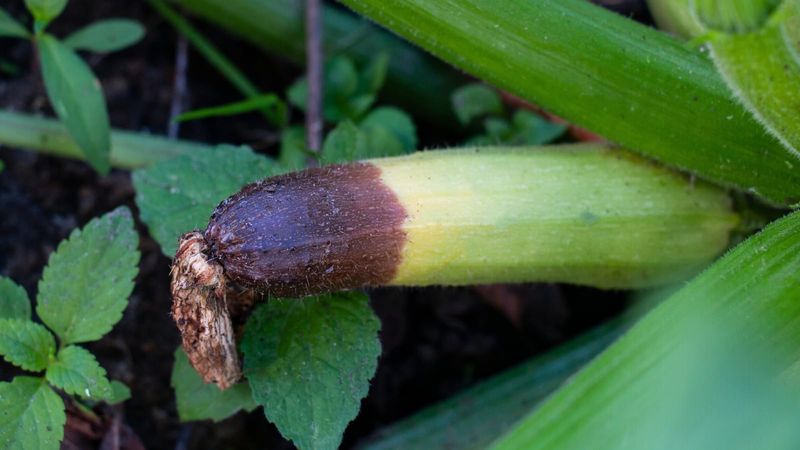
When a female zucchini flower opens, pollen from a male flower must reach the sticky stigma at the center of the female flower for the ovary to develop normally. If that transfer is incomplete or does not happen at all, the tiny fruit may swell for a day or two as if it intends to grow, then stop expanding, turn misshapen, brown at the blossom end, shrivel, and eventually drop from the plant.
UF/IFAS pollination research identifies inadequate pollen delivery as a common reason cucurbit fruit fails before sizing up. However, those same visible symptoms, a browning tip, a shriveling body, or a soft collapsed end, do not by themselves confirm that pollination was the problem.
Other conditions including fungal disease, root stress, and moisture fluctuations can produce fruit that looks nearly identical at first glance.
One detail worth knowing: a fruit that stopped developing because of poor pollination can later be colonized by secondary fungi, so visible rot on the outside does not always point to a fungal disease as the original cause. University of Minnesota Extension notes on Choanephora rot describe exactly this sequence, where a fruit that failed for one reason becomes visibly moldy afterward.
Treat the symptoms as a starting point for investigation rather than a finished diagnosis.
Morning Conditions Can Influence Whether Flowers Set Fruit
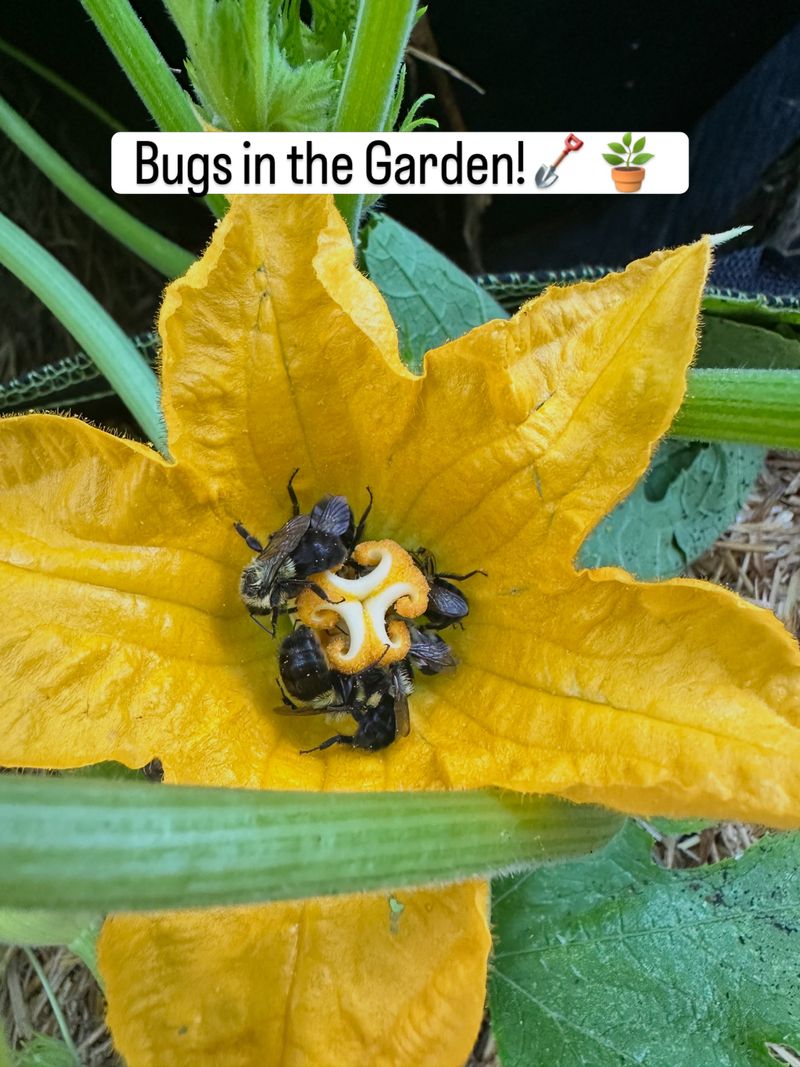
Cucurbit flowers open shortly after sunrise and stay receptive for only a few hours. That narrow window is when pollination either happens or does not, and several overlapping factors can shrink the odds during that time.
Squash bees and bumblebees are especially valuable pollinators for zucchini because they tend to forage early in the morning when the flowers are at their most receptive. Honeybees contribute too, but they are far from the only species that matters.
Weather during that morning window plays a real role. Heavy rain can prevent bees from flying and can wash pollen off the stigma before it has a chance to work.
High humidity, fog, and heat can all reduce pollinator foraging activity or affect pollen viability. UF/IFAS research on cucurbit pollination in Florida identifies limited pollinator activity, extreme weather, flower sex ratio, and pollen physiology as interacting causes rather than a single deciding factor.
Heat can also shift the balance of flower types a plant produces. University of Minnesota Extension guidance on heat stress in vegetable gardens notes that when daytime temperatures climb above roughly 90 degrees F and nighttime temperatures stay above about 70 degrees F, zucchini plants tend to produce a higher proportion of male flowers.
That is a tendency rather than a fixed rule, and it does not mean heat alone explains every fruit failure. Rain, humidity, competing blooms, and reduced bee activity can all contribute at the same time, making it worth observing the garden across several mornings before settling on a single explanation.
Brown or Mushy Tips Have More Than One Possible Cause
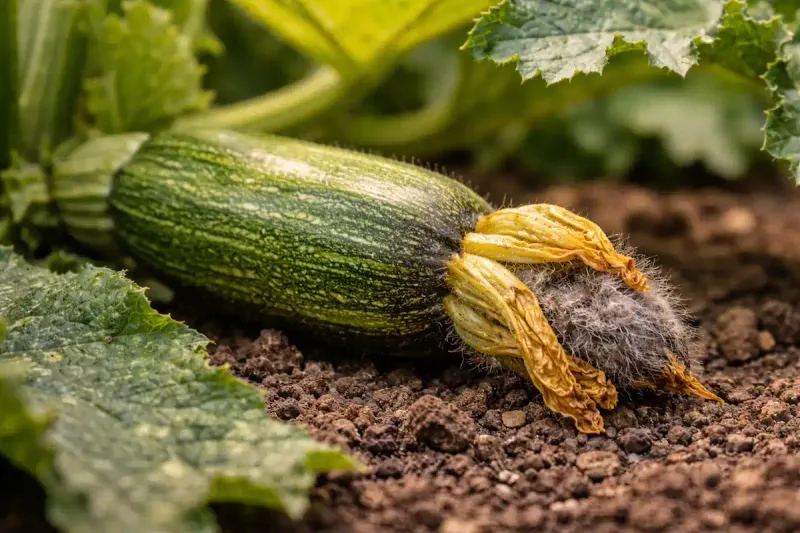
A browning or mushy tip on a baby zucchini is a symptom, not a diagnosis. Three different problems can produce fruit that looks damaged at the blossom end, and each one calls for a different response.
Getting them mixed up leads to treatments that do nothing or, in some cases, make things worse.
Poor pollination produces fruit that stops expanding, often becomes slightly misshapen, and browns or shrivels at the blossom end. The tissue is dry rather than slimy, and there is no fuzzy growth.
Choanephora rot is a separate fungal disease favored by wet, humid conditions. University of Minnesota Extension’s overview of Choanephora rot describes it as producing mushy, water-soaked fruit along with conspicuous white-to-purplish-black fuzzy growth on the blossom or fruit surface.
That fuzzy coating is the clearest visual sign that a fungal pathogen is involved rather than a reproductive failure.
Blossom-end rot is a physiological disorder, not a contagious disease. It typically creates a sunken, leathery, dark lesion at the blossom end and is connected to disrupted calcium movement within the plant.
UGA Extension’s explanation of blossom-end rot and Utah State University Extension’s blossom-end rot resource both connect it to inconsistent moisture, heat, root damage, or impaired uptake rather than a simple calcium shortage in the soil. These conditions can also overlap: a fruit that failed because of poor pollination may later show fungal growth, and blossom-end rot can appear on a plant that is also struggling with pollination.
Penn State Extension’s guidance on blossom-end rot reinforces that the disorder is rooted in calcium transport disruption, not simply a soil nutrient gap. Use the texture, color pattern, and presence or absence of fuzzy growth to narrow down which problem you are actually looking at.
Hand-Pollinate the Next Open Female Flower
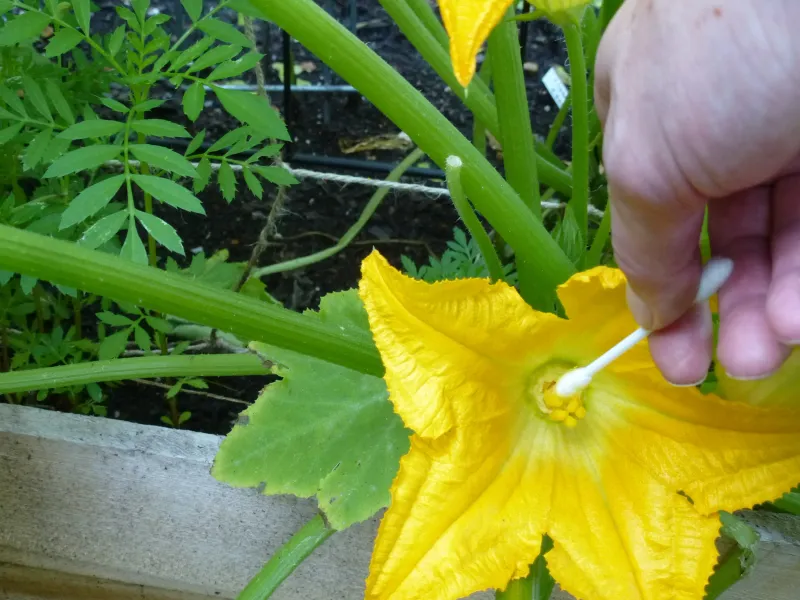
Hand pollination is a straightforward backup technique for mornings when bee activity is low or weather has been working against natural fruit set. The process takes about two minutes and requires nothing more than a cotton swab or a small soft-bristled brush.
The key is timing: flowers need to be freshly open, which generally means working within the first few hours after sunrise.
Start by locating a male flower that opened that morning. Its pollen should be visible as a yellow powder on the central stamen.
Gently collect that pollen onto your swab or brush, then find a female flower that also opened that morning and transfer the pollen directly to the sticky stigma at the center of the flower. UGA Cooperative Extension’s guide to growing squash specifically recommends this technique when insect activity is low, and notes that it works best with freshly opened flowers on both ends of the transfer.
Hand pollination helps newly receptive female flowers. It cannot do anything for a fruit that has already stopped developing, begun to shrivel, or started to collapse.
If a baby zucchini is already browning and soft, removing it is more useful than trying to rescue it through additional pollination. University of Minnesota Extension frames hand pollination as a tool for supporting fruit set, not for reversing a failure that has already occurred.
Use it on the next flower that opens, and let it serve as a supplement to natural pollination rather than a replacement for it.
Remove Failed Fruit and Protect the Pollinators You Have
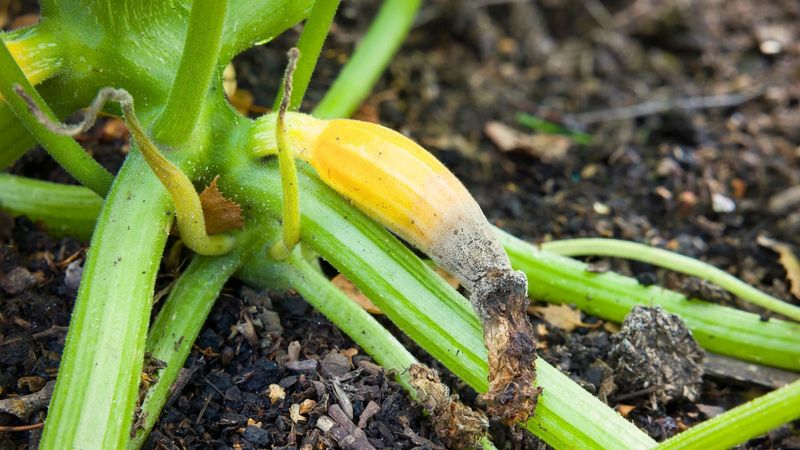
Leaving collapsed or visibly rotting fruit on the vine does the plant no favors. Decaying material can harbor fungal spores that persist in the garden through wet weather, and it signals nothing useful to the plant about what to do next.
Pulling off shriveled, mushy, or clearly infected fruit and disposing of it away from the planting area is one of the simplest sanitation steps available.
University of Minnesota Extension’s Choanephora rot guidance emphasizes removal of infected fruit, improved airflow, and irrigation management over automatic fungicide applications, noting that new susceptible flowers open continuously and fungicide coverage rarely keeps pace. Unless you have a confirmed fungal disease diagnosis and a labeled product appropriate for that specific pathogen, hold off on spraying.
Protecting the pollinators already visiting the garden is equally practical. Insecticide applications during bloom can reduce the bee activity your plants depend on for natural fruit set.
EPA guidance on pollinator protection recommends applying pesticides when pollinators are not actively foraging and reading all label warnings about bee exposure carefully. Avoiding unnecessary sprays during the flowering period, particularly in the early morning when squash bees and bumblebees are most active, is one of the most direct ways to support the fruit set you are trying to improve.
Maintain Even Moisture Without Treating Calcium as a Universal Cure
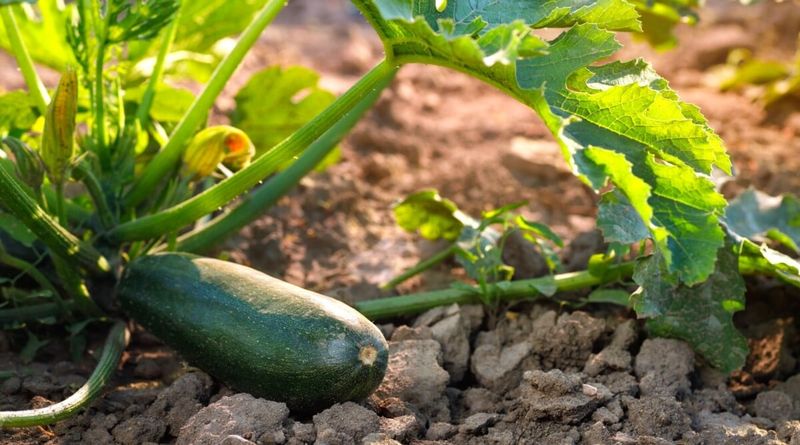
Consistent soil moisture supports healthy zucchini fruit development in a few interconnected ways. Water stress can disrupt the plant’s ability to move calcium from roots to developing fruit, which is one of the conditions associated with blossom-end rot.
Mulching around the base of the plant helps moderate soil temperature, slow evaporation, and reduce the sharp dry-and-wet cycles that stress roots and interfere with nutrient uptake.
That said, the goal is even moisture with good drainage, not constant watering or saturated soil. Keeping the soil consistently wet can damage roots and create conditions that favor fungal problems.
UGA Extension’s blossom-end rot guidance and Utah State University Extension’s resource on the same disorder both connect the problem to impaired calcium uptake caused by moisture stress, heat, or root damage rather than a simple deficit of calcium in the soil.
Adding calcium fertilizer without testing the soil first is not a reliable fix. Penn State Extension’s overview of blossom-end rot makes clear that the disorder is usually a transport problem, not a soil fertility problem, and that correcting moisture management is often more effective than amending with calcium.
The same logic applies to general fertilizer: excess nitrogen can push the plant toward leafy growth at the expense of fruiting. Base any amendments on a soil test and local extension guidance, and recognize that no fertilizer application will recover a fruit that has already collapsed.
Several Failed Fruits Do Not Prove the Plant Is Unhealthy
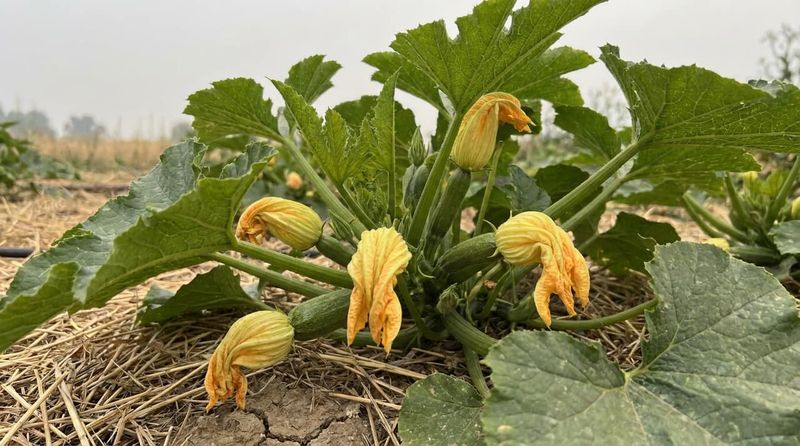
Early fruit failure can feel alarming, but a plant that drops its first few female fruits is not necessarily a plant in serious trouble. When female flowers first appear, pollinator activity may be low, the flower sex ratio may still be tilted toward males, or weather may have worked against the morning pollination window.
Later flowers often set more successfully as conditions shift and pollinators become more familiar with the planting.
University of Minnesota Extension notes that if the plant is otherwise healthy, later fruit set can improve on its own. UF/IFAS pollination research also supports the view that pollinator abundance, flower sex balance, weather, and pollen quality all interact, meaning that a bad stretch for fruit set does not predict every subsequent flower will fail.
The practical sequence from here: check the next open flower and confirm it is female by looking for the small swollen ovary behind the petals. Hand-pollinate it in the morning if bee activity seems low.
Remove any collapsed or visibly rotting fruit nearby. Keep soil moisture reasonably steady and avoid unnecessary insecticide applications during bloom.
If you notice fuzzy growth on rotting tissue or a recurring sunken lesion at the blossom end, treat those as separate questions worth investigating rather than symptoms of the same underlying problem. Most zucchini plants that stumble early find their footing once the garden settles into summer.