
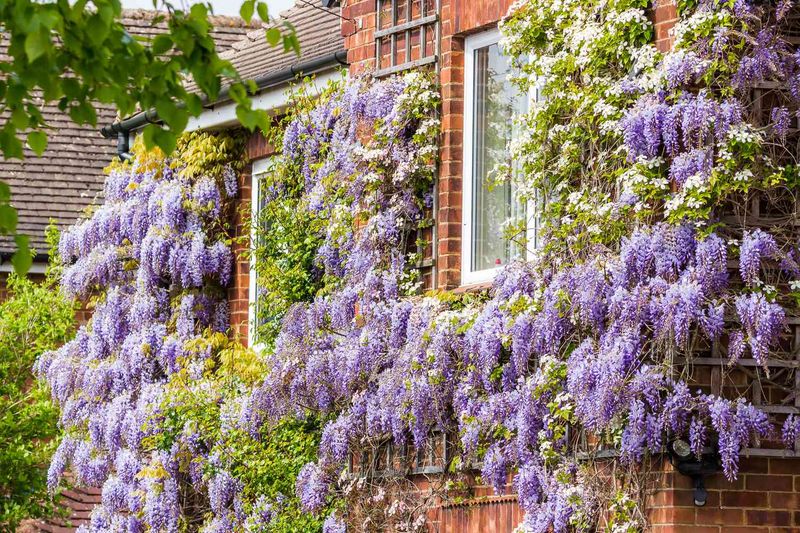
When your yard is small but you still want privacy, the answer is to grow up instead of out. Climbing plants can turn a bare fence, wall, or trellis into a living green screen without stealing precious ground space.
In California’s Mediterranean climate, the right vines handle long dry summers, wet winters, and water restrictions while still giving you shade, blooms, and homes for pollinators. Here are nine climbers that do the heavy lifting on a narrow footprint, plus how to use each one in your own yard.
1. Star Jasmine (Trachelospermum jasminoides)

Walk past a fence draped in star jasmine on a warm evening and the sweet scent stops you in your tracks. That perfume is the calling card of one of California’s most reliable privacy climbers.
Star jasmine forms a tight, glossy green curtain that clings to trellises, wires, and fences without spreading far from its base. It stays evergreen, so your screen holds up in winter when many other vines drop their leaves.
Once established, it shrugs off dry spells and only needs occasional deep watering, which fits neatly into water-wise gardening. Give it part shade in the hot inland valleys and full sun near the coast.
The tiny white pinwheel blooms in late spring also feed native bees and other pollinators, so your privacy screen pulls double duty as a food source. Plant it about three feet apart along a support and you will have a solid green wall within a couple of seasons.
2. California Wild Grape (Vitis californica)
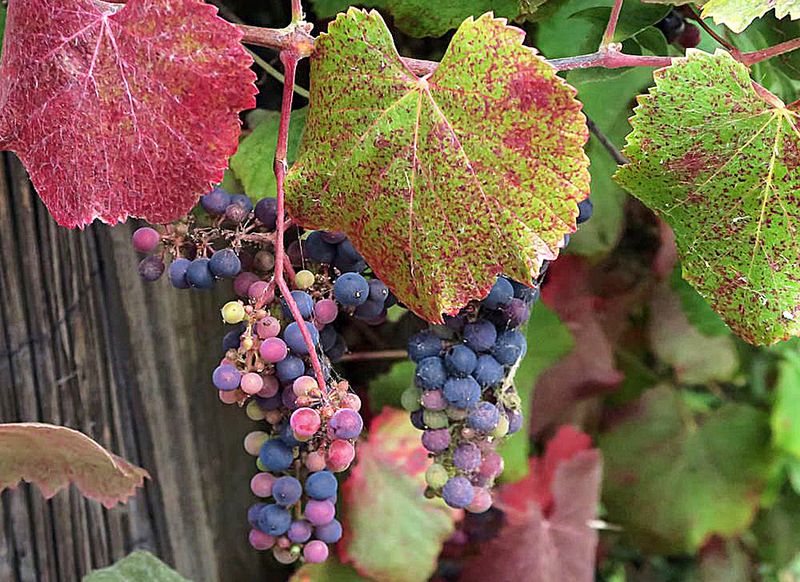
Native to the state’s creek banks and canyons, California wild grape belongs here in a way that imported vines never quite manage. It grows fast, climbs high, and asks for very little once its roots settle in.
Broad leaves stack up quickly to block sightlines from a neighbor’s second-story window or a busy sidewalk. In fall, those leaves blaze red and gold before dropping, giving you a seasonal show most evergreen screens can’t match.
Because it is a true California native, it supports local wildlife better than almost any other pick on this list. Birds eat the small fruits, and native insects use the foliage, so you are building habitat while you build privacy.
Train it on a sturdy arbor or heavy wire, since a mature vine gets vigorous. It handles drought beautifully after the first year, making it a smart choice for inland and hillside homeowners watching their water use.
3. Bougainvillea
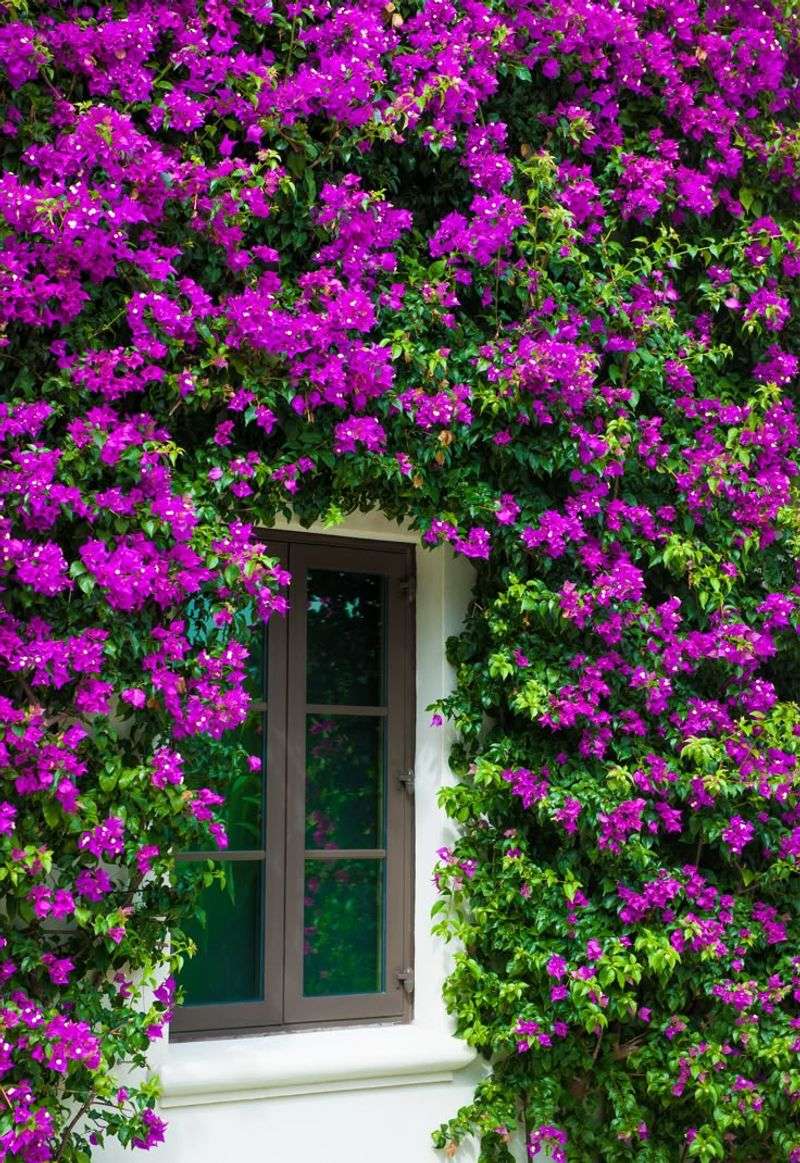
Few plants say Southern California quite like a wall exploding in hot magenta bougainvillea. It is loud, joyful, and almost impossible to ignore.
Behind the drama sits a genuinely tough climber that loves heat and laughs at drought. Once rooted, bougainvillea needs very little water, which is exactly what you want during a long dry summer.
The papery bracts, which people mistake for flowers, come in magenta, orange, red, and white, and they keep coming for months. Grown against a fence or wall, the thorny stems weave into a thick screen that also keeps foot traffic out.
Give it full sun and a warm spot, and go easy on fertilizer, since too much feeding gives you leaves instead of color. Wear gloves when you prune, because those thorns mean business.
4. Pink Jasmine (Jasminum polyanthum)
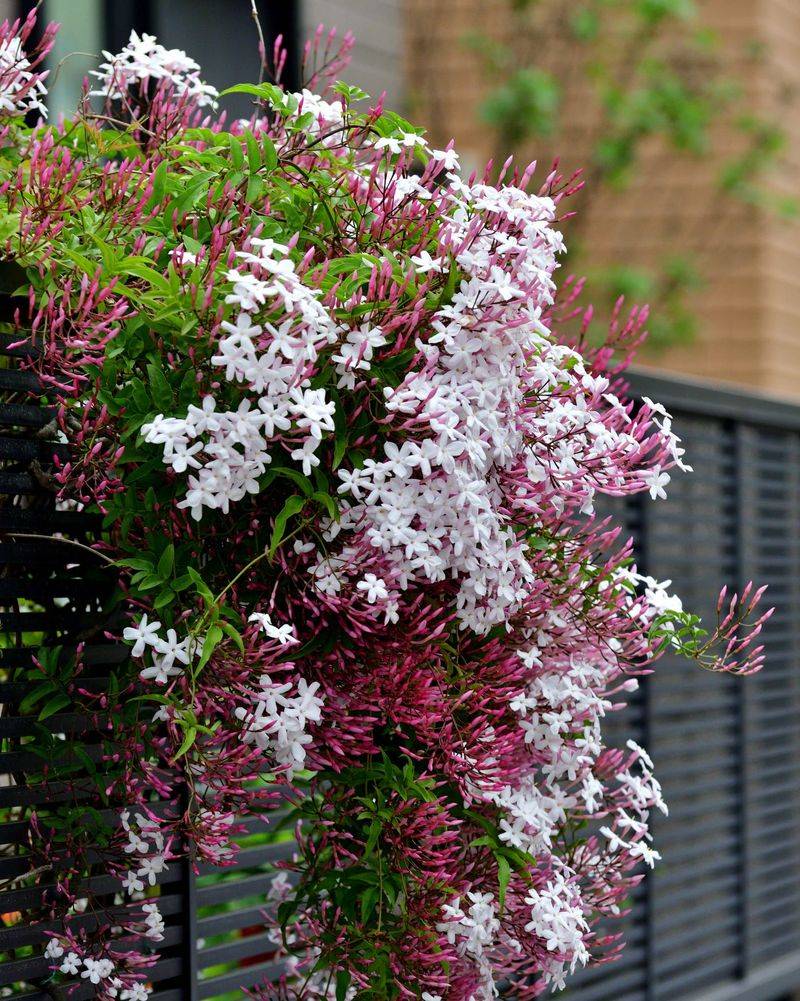
Late winter can feel bare in the garden, and that is exactly when pink jasmine steps up with clouds of fragrant blooms. It flowers when little else does, giving your yard scent and color during the quiet season.
The vine twines eagerly up trellises and lattice, filling in gaps fast to create a fine-textured screen. Buds open pink and fade to white, and the perfume carries clear across a patio.
Coastal gardeners love it because it handles milder, foggier conditions with ease. Inland, give it some afternoon shade so the leaves don’t scorch in peak heat.
It does like a bit more water than a true desert vine, so pair it with a drip line and mulch to keep moisture in. Keep an eye on its growth, and trim after blooming to keep it tidy against a narrow support.
5. Passionflower (Passiflora)
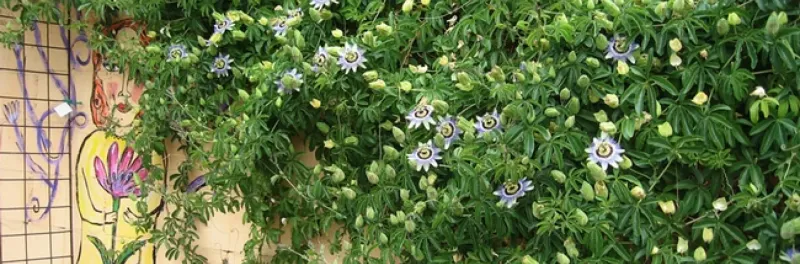
Some plants earn a second look, and the passionflower earns a full-on stare. Its blooms look almost too elaborate to be real, with fringed crowns and radiating petals in purple, white, and blue.
Beyond the show, this vine grows quickly along fences and wires, knitting together a leafy screen in a single warm season. California’s long growing window lets it stretch and fill space fast.
Passionflower is a magnet for butterflies, and certain varieties serve as host plants for their caterpillars. Planting one turns a plain fence into a working butterfly station.
Give it full sun to part shade and moderate water, and add a trellis or netting for it to grab onto. Choose your variety carefully, since a few passionflowers can spread more than you want, and stick with well-behaved types for tight yards.
6. Boston Ivy (Parthenocissus tricuspidata)
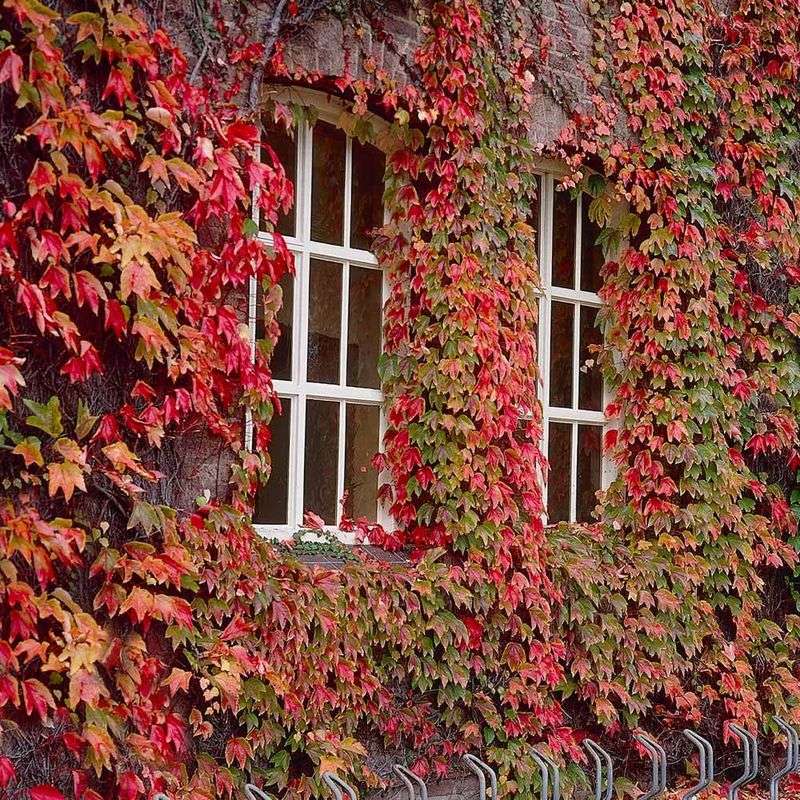
If you have a bare block wall begging for cover, Boston ivy is the plant that clings without any trellis at all. It uses tiny adhesive pads to attach directly to masonry, so it works where twining vines have nothing to grab.
Through spring and summer it lays down a smooth blanket of green leaves that cool the wall behind them. Come autumn, the whole thing turns fiery crimson before the leaves drop.
Because it stays flat against the surface, it screens without eating into your yard’s footprint at all. That makes it a favorite for narrow side yards and property-line walls.
It handles sun and part shade and gets by with modest water once established. Keep it trimmed away from painted wood and gutters, since those grippy pads can leave marks if you let it roam onto surfaces you’d rather keep clean.
7. Climbing Roses
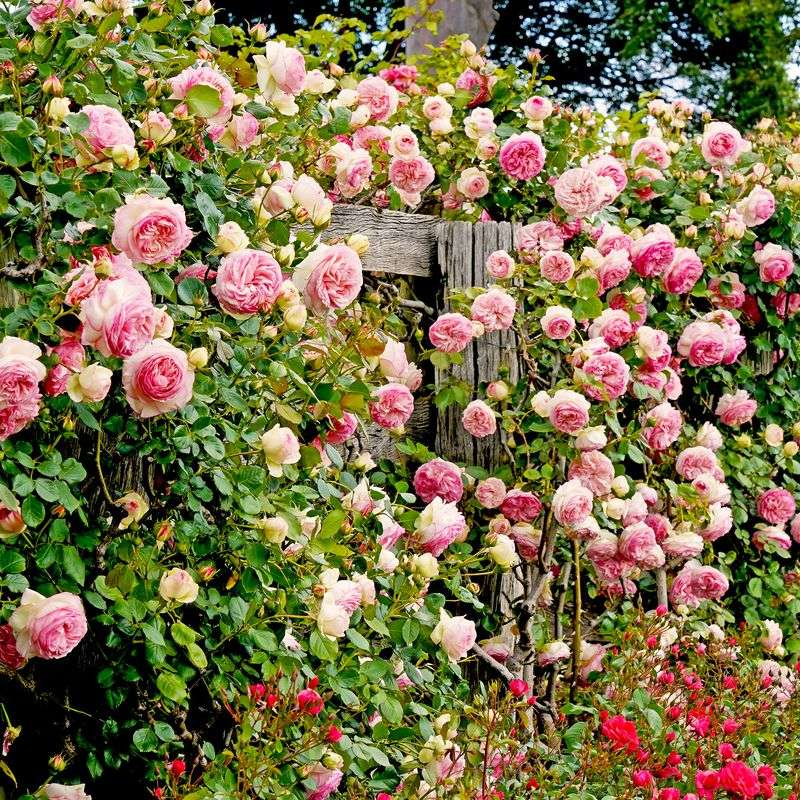
Nothing softens a fence like a climbing rose spilling over the top in full bloom. It brings old-fashioned charm to modern yards while quietly doing the job of a privacy screen.
Trained along horizontal wires or a fence, the canes lay out sideways and push out flowers all along their length. That habit gives you a wide band of blooms rather than a single leggy stem.
Many varieties rebloom through California’s long warm season, so you get color from spring into fall. The open flowers also draw bees looking for pollen and nectar.
Roses want full sun, regular deep watering, and yearly pruning to stay productive and thick. Pick a disease-resistant variety suited to your climate zone, and you will spend more time enjoying the show than fussing over it.
8. Honeysuckle (Lonicera)
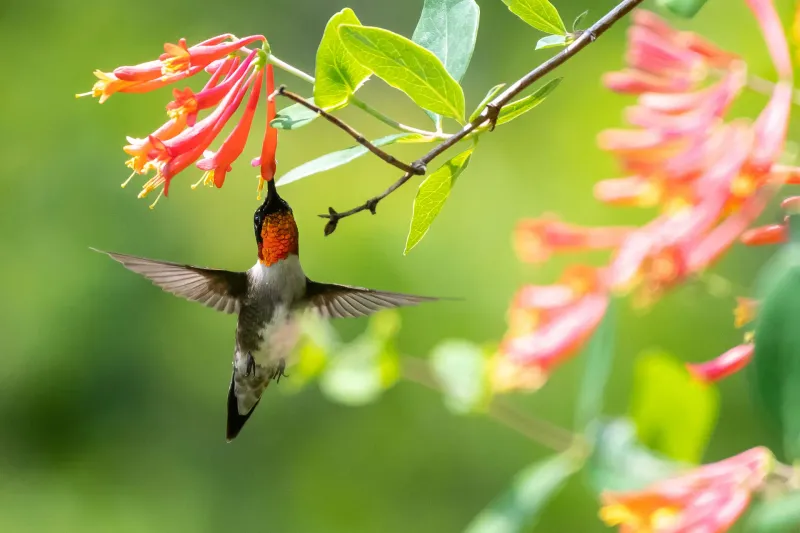
The moment a hummingbird zips up to a honeysuckle flower, you understand why this vine belongs in a wildlife-friendly yard. Its tubular blooms are built for hummingbird beaks, and the birds show up reliably.
Honeysuckle twines up trellises and fences to form a soft, flowering screen with a sweet evening fragrance. Native and well-behaved varieties give you the beauty without the invasive baggage some imported types carry.
Reach for California-friendly options such as our native pink honeysuckle rather than aggressive non-native forms that can escape into wild areas. Doing so keeps your privacy project from becoming a problem for local ecosystems.
It appreciates sun to part shade and moderate water, and a light prune after flowering keeps it dense. Plant it where you can watch the hummingbirds, because you will not want to miss the show.
9. Cape Honeysuckle (Tecoma capensis)
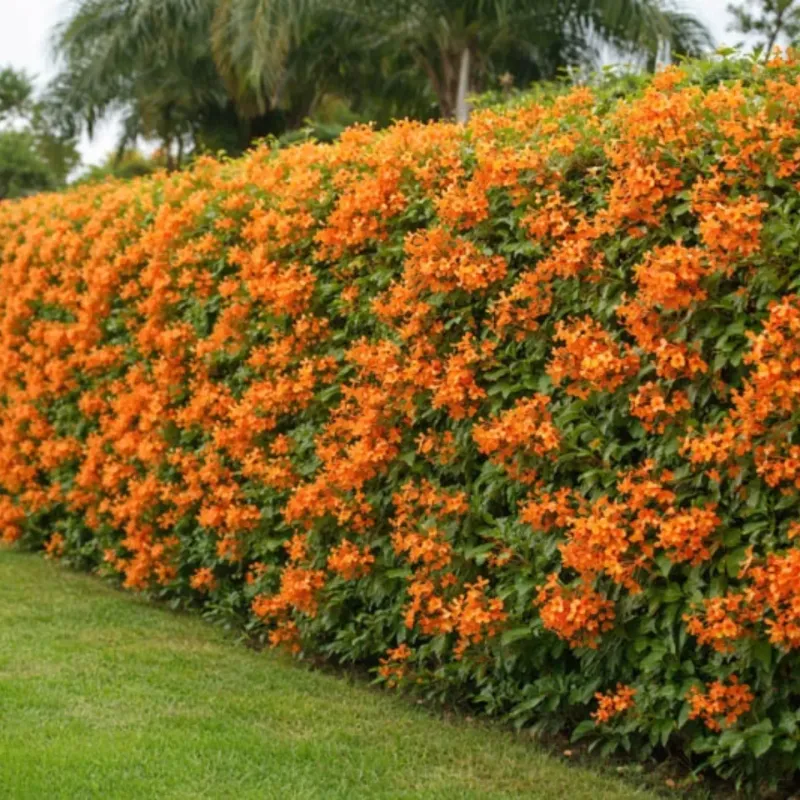
For a screen that shrugs off heat and still burns bright orange, cape honeysuckle is hard to beat. Despite the name, it isn’t a true honeysuckle, but it climbs and sprawls just as willingly.
Left to lean on a fence, it builds a thick, evergreen wall of foliage topped with clusters of fiery tubular flowers. It can be trained up as a vine or clipped into a dense informal hedge, so it adapts to whatever support you give it.
Those blooms keep going through much of the year in mild coastal and inland zones, feeding hummingbirds long after other plants have finished. That extended bloom makes it a standout for pollinator-minded gardeners.
It is genuinely drought-tough once established and thrives in full sun with little fuss. Give it room to bush out, prune to shape, and enjoy one of the most heat-proof living screens you can grow in California.
Between all nine of these climbers, there’s a vertical solution for nearly every fence, wall, and narrow strip in a California yard. Match the plant to your sun, water, and space, and you can trade a bare boundary for a living screen that feeds pollinators and looks good doing it.