
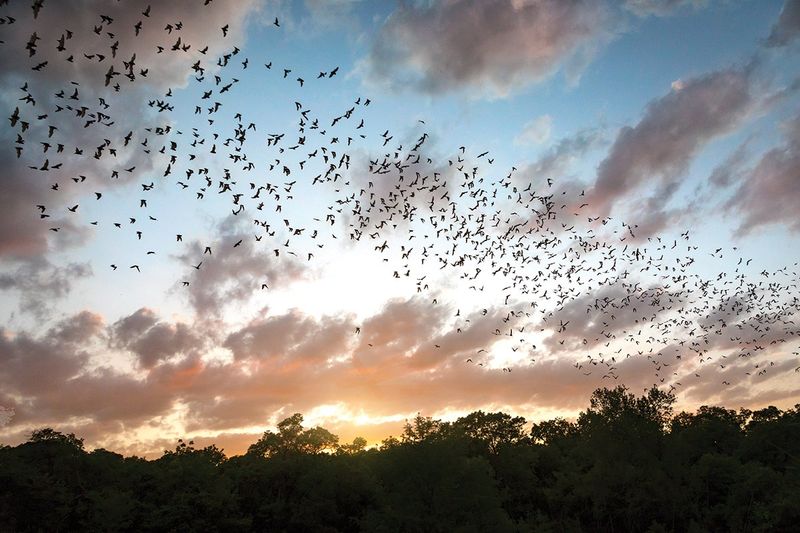
Hanging a bat house in your Central Texas yard is a genuinely worthwhile project for local wildlife, but it comes with some important fine print. A well-built, properly placed bat house may give local insect-eating bats an extra place to roost, and that is a real benefit worth pursuing.
What it will not do is guarantee that bats show up, patrol your patio, or wipe out your mosquito problem overnight. Here is what the evidence actually says, and how to set up a bat house that gives local bats the best possible chance.
A bat house may support bats, but it will not guarantee mosquito control
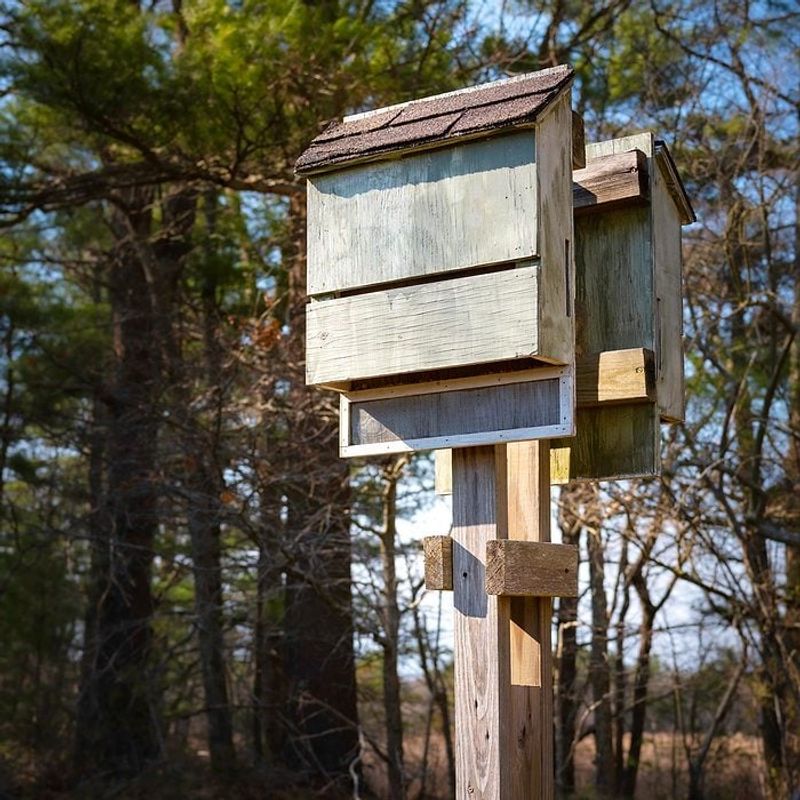
Plenty of bat house marketing leans on a simple promise: hang the box, bats move in, mosquitoes disappear. The reality is more complicated, and understanding that upfront will save you frustration and help you set up a house that actually serves local wildlife.
Bats do eat insects at night, and researchers have confirmed that mosquitoes appear in the diets of several North American species. A study of bats in the southeastern United States documented 17 mosquito species in the diets of three bat species, which sounds encouraging.
The same study was careful to note that the effect of bat consumption on overall mosquito numbers and public health remains unknown, so detecting mosquito DNA in guano is not the same as proving that bats reduce backyard biting pressure.
Mosquito consumption also varies considerably by bat species, body size, season, habitat, and what other prey happens to be available. Research on Australian insectivorous bats found that mosquitoes generally made up only a small portion of total bat diet, with meaningful mosquito consumption concentrated in just two of the five species studied.
That pattern likely holds across regions: bats eat what is abundant and easy to catch, and on most nights that means moths, beetles, and flying ants before mosquitoes.
In Texas, Texas Parks and Wildlife describes the Brazilian free-tailed bat’s typical prey as moths, beetles, flying ants, and June bugs, not mosquitoes specifically. A bat house provides a roosting structure where bats can rest and raise young.
It does not direct where bats forage, keep them circling one yard, or function as a mosquito trap. Think of it as habitat first, and any incidental insect control as a possible bonus rather than a reliable outcome.
Choose a purpose-built, multi-chamber house
Not every box sold as a bat house will actually work. The small decorative boxes that look like miniature birdhouses are often the worst offenders.
They heat and cool too quickly, lack enough interior space for a colony, and give bats nowhere to move when temperatures shift. Spending money on one of those is mostly a donation to yard decor rather than wildlife habitat.
U.S. Fish and Wildlife Service guidance is direct on this point: single-chamber boxes and typical birdhouse-sized designs can swing through temperature extremes that discourage or harm bats.
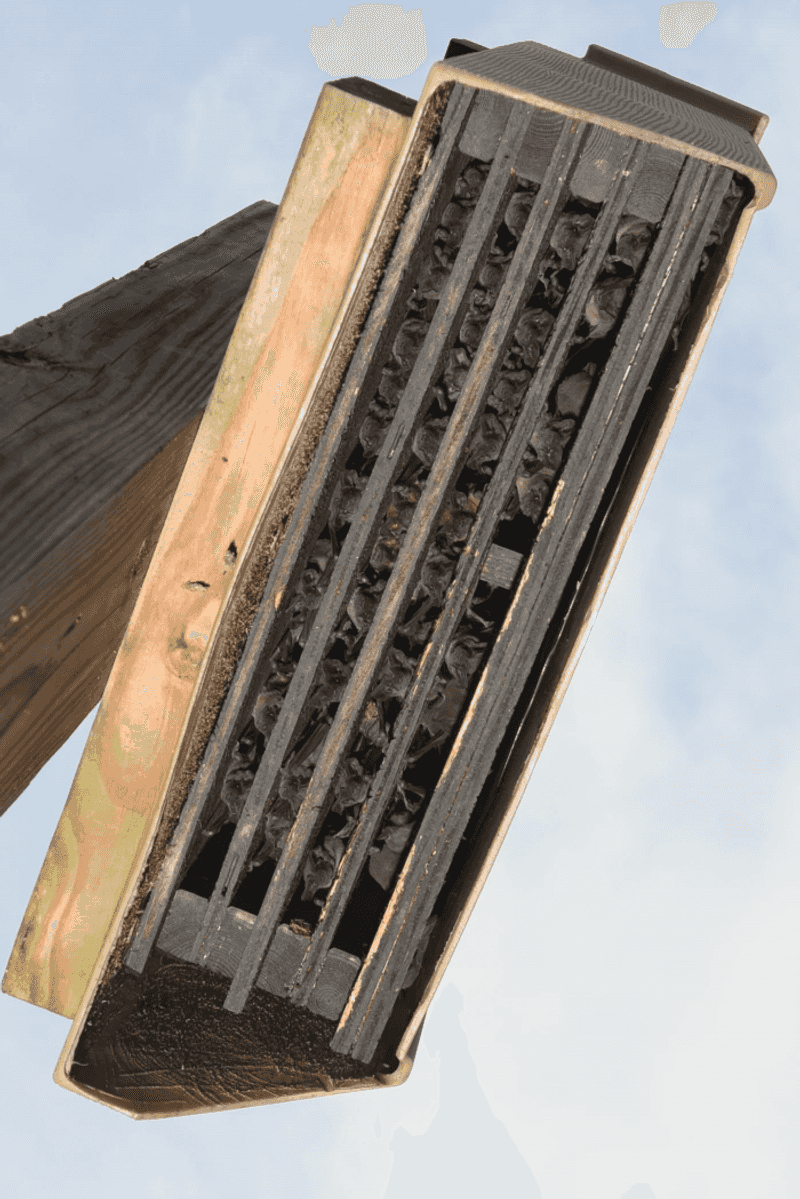
A taller, purpose-built, multi-chamber maternity box gives bats more internal temperature options so they can move between chambers to find a comfortable microclimate as the day heats up.
When shopping or building, look for a house that is at least 24 inches tall with multiple interior chambers separated by landing panels that bats can grip. The interior surfaces should be rough enough for bats to cling to without slipping.
Dark exterior paint or stain helps absorb solar heat, which matters in Central Texas winters and shoulder seasons, but the design needs to balance that heat absorption with adequate ventilation for summer.
Bat Conservation International’s bat house guidelines offer detailed construction plans and certified product lists for buyers who want a vetted option rather than guessing from a product photo. No amount of decorative carving, bat-shaped cutouts, scent lures, or marketing language substitutes for correct chamber depth, landing texture, and ventilation.
Buy or build for function, and the aesthetics can follow from there.
Mount the house high with a clear flight path
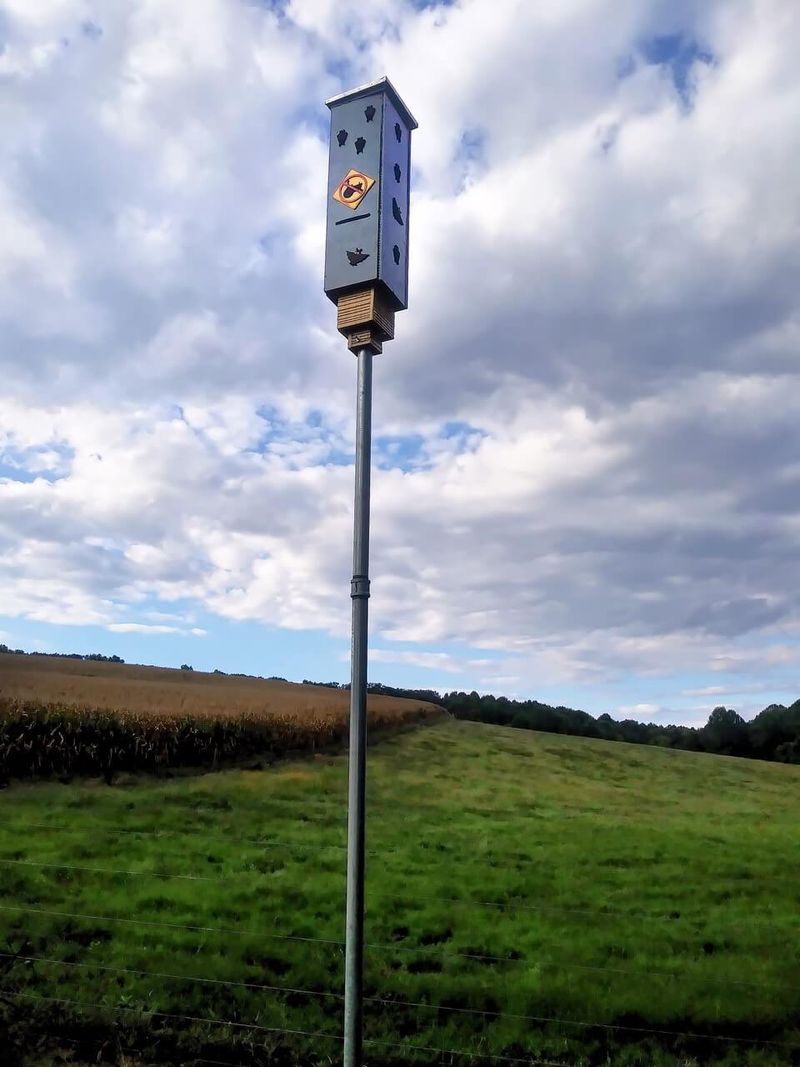
Where you put the house matters as much as what kind of house you buy. Central Texas placement guidance from Texas Parks and Wildlife is specific: mount the house approximately 12 to 15 feet above the ground, positioned to receive roughly 6 to 8 hours of direct sunlight each day.
That placement guidance from TPWD is grounded in bat-house research rather than general wildlife advice, so it is worth following closely.
The area directly below and in front of the exit slot needs to be clear of vegetation and obstructions. Bats do not launch from a perch the way birds do.
They drop from the exit and gain flight speed as they fall, so branches, shrubs, or fencing in that zone can prevent them from getting airborne cleanly. U.S.
Fish and Wildlife Service recommends keeping the exit between 10 and 16 feet above the ground and maintaining an open zone free of vegetation immediately below and in front of the box.
A building or pole mount is generally better than a tree. Tree branches obstruct entry and exit angles, create shaded microclimates that may be too cool or too variable, and give snakes, raccoons, and other predators a convenient climbing route directly to the box.
Bat Conservation International states that building mounts are generally preferred, with pole mounts also a solid option; tree mounting is generally discouraged for all of those reasons.
Proximity to water is sometimes listed as a requirement, and older Texas Parks and Wildlife guidance suggested siting within about a quarter mile of a water source. Treat that as a useful consideration rather than a hard rule.
Newer guidance from BCI focuses more on access, temperature, sunlight, predator protection, and microclimate than on a fixed distance to water. If your yard backs up to a creek or pond, that is a real advantage, but a house placed well on a building or pole in a yard without nearby water still has a reasonable chance of attracting bats.
Manage Central Texas heat instead of chasing maximum sun
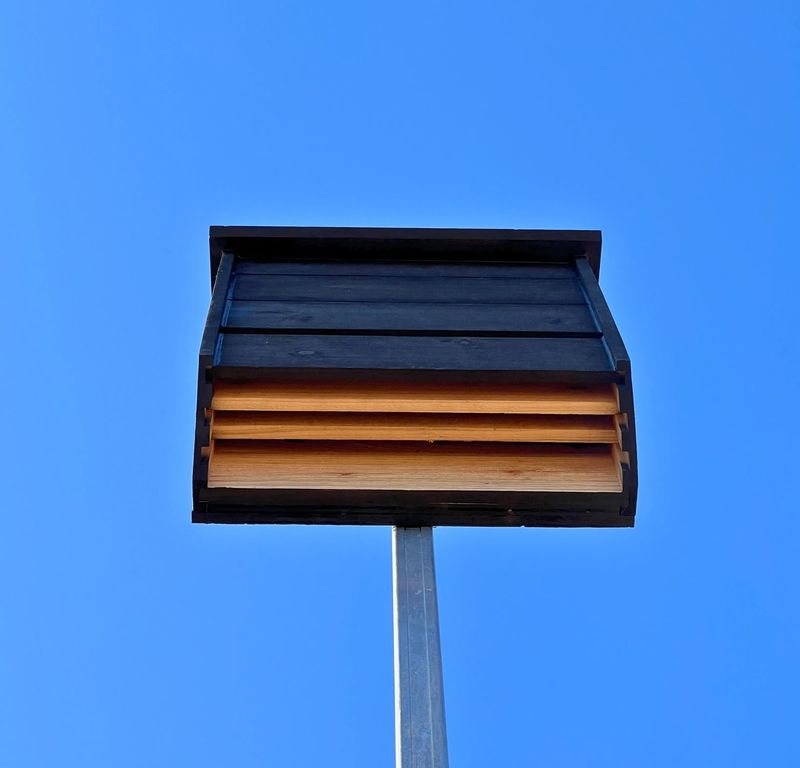
Central Texas summers routinely push into triple digits, and a bat house that absorbs heat all day on an unshaded west-facing wall can become lethally hot inside. The goal is warmth, not maximum solar exposure.
Getting that balance right is one of the more nuanced parts of a successful installation.
Bat Conservation International’s guidelines for warm southern climates specifically recommend attention to ventilation, thermal stability, and shade structures, and they identify east-facing walls and roof-eave shade as practical options when afternoon heat is severe. An east-facing wall gets morning sun that warms the box during cooler hours, then falls into shade before the worst afternoon heat arrives.
That pattern tends to produce the thermal stability bats prefer over the wild temperature swings of a fully exposed south or west wall.
Ventilation slots built into the lower portion of a multi-chamber house help hot air escape rather than building up inside the chambers. U.S.
Fish and Wildlife Service guidance reinforces that design matters here, since a single-chamber box with no ventilation has almost no thermal buffer on a 105-degree afternoon.
If your yard has a south-facing brick wall that stays in full sun all day, that location may work well in cooler months but become a problem in July and August. A slight adjustment to a spot that catches morning light and some roof-eave shade in the afternoon can make the difference between a house bats tolerate and one they abandon or avoid.
Check the box temperature on a hot afternoon before committing to a permanent mount. If the interior feels dangerously hot to the touch, the location needs adjustment before any bats arrive.
Protect bats and people around the house
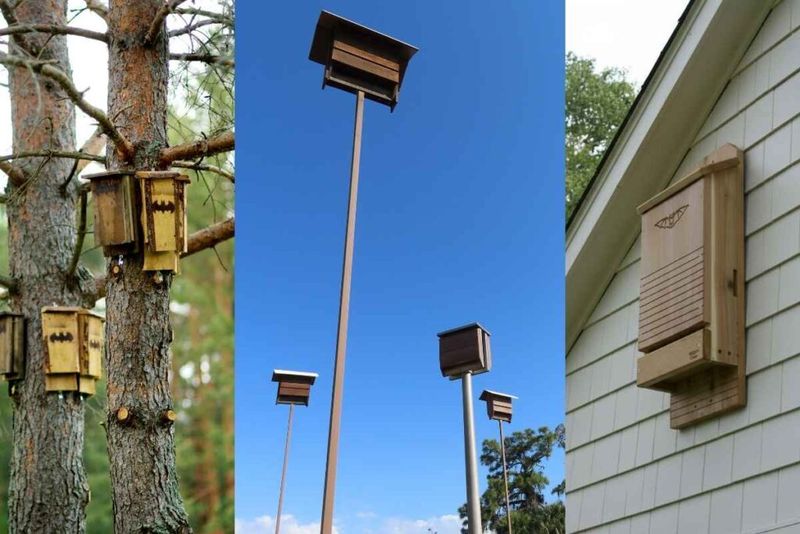
Even a perfectly designed and placed bat house can become a hazard if the surrounding environment is not thought through. Outdoor cats are one of the most direct risks.
Bats drop from the exit slot and gain flight speed as they fall, which means they pass close to the ground during that first second of flight. Bat Conservation International specifically warns that outdoor cats can strike bats during that vulnerable drop, making cat access to the area below the house a serious concern.
A pole-mounted baffle can help, and keeping cats indoors around dusk is the most reliable protection.
Snakes, raccoons, and owls also pose predation risks, particularly for boxes mounted in ways that give climbers easy access. U.S.
Fish and Wildlife Service advises choosing sites that do not give predators easy access to the exit area. A smooth metal pole with a predator guard is harder for a snake or raccoon to climb than a wooden post or a tree trunk.
Location relative to human activity matters too. Guano will fall beneath an occupied house, and that makes a heavily used patio, a grill station, a doorway, or a seating area a poor choice for placement.
A bat-friendly garden bed or a less-trafficked corner of the yard keeps the mess out of spaces where it creates problems and may reduce family resistance to keeping the house up long-term.
Never attempt to catch, handle, relocate, or manually place bats in the house. CDC notes that bat bites can be small enough to go unnoticed, and bats are the most frequently reported rabid animal in the United States.
If you find a bat on the ground, acting disoriented, active during daylight, or unusually easy to approach, do not touch it. Contact your local animal control office or public health department for guidance on next steps.
Give local bats habitat and time
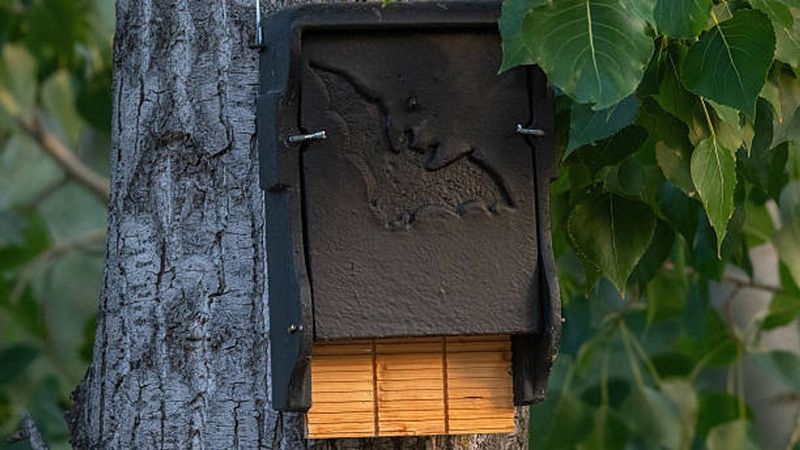
Patience is the part of bat house ownership that most guides underplay. Bat Conservation International reports that some successfully occupied houses have taken as many as five years to attract bats, and others that were built and placed correctly have remained vacant indefinitely.
Occupancy depends on whether suitable bats already live or travel nearby, whether the house temperature and microclimate match what local bats need, whether predator pressure is low enough, and whether other roosting options in the area are already saturated.
A small backyard box is also a different kind of structure than what many Central Texas bats prefer. Texas Parks and Wildlife describes the Brazilian free-tailed bat as a cave- and structure-roosting species that commonly uses large roost sites, including the famous Congress Avenue Bridge colony in Austin and various other bridges, buildings, and limestone caves across the region.
A single backyard box is unlikely to attract that species in large numbers, though smaller bat species may find it suitable. Texas Parks and Wildlife lists multiple bat species across the state, and some of those smaller species are more likely candidates for a backyard house than the free-tailed bat.
The house works best as one part of a broader habitat effort rather than a standalone solution. U.S.
Fish and Wildlife Service recommends retaining mature and dead trees wherever it is safe to do so, treating that as the first choice for bat habitat rather than a supplement to a box. Dead snags provide natural roost cavities that bats have used for thousands of years, and no manufactured box fully replaces them.
If your yard has a mature live oak, cedar elm, or pecan with a dead limb or hollow section that poses no safety risk to structures or people, leaving it in place is one of the best things you can do for local bats. Pair that with the bat house as an additional option, and you give local species more choices rather than asking them to rely on a single new structure they have no reason to trust yet.
Control mosquito breeding separately
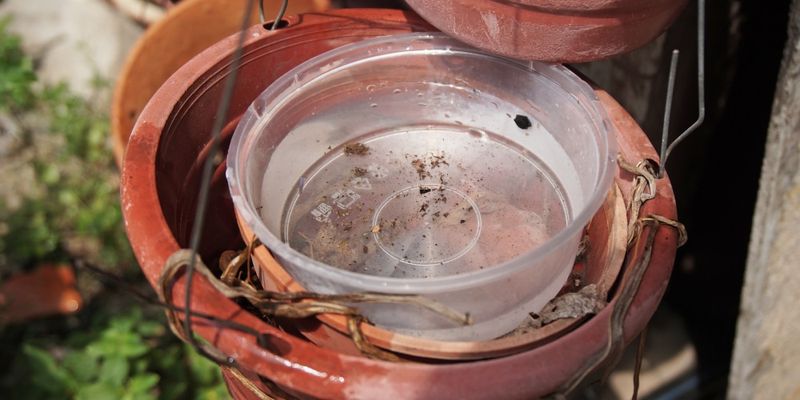
A bat house is not a mosquito control system, and treating it as one means the mosquitoes win by default. The most dependable way to reduce biting pressure in a Central Texas yard is to eliminate the water where mosquitoes breed.
Females lay eggs in standing water, and larvae develop there before becoming the adults that bite. Remove the water and the population never gets started.
CDC recommends emptying, scrubbing, covering, turning over, or discarding water-holding containers at least once a week. That schedule matters because many mosquito species complete their larval development in about a week in warm Texas weather.
Common culprits include plant saucers, birdbaths, clogged gutters, low spots in tarps, buckets, old tires, and any container left outside after rain. A weekly walk around the yard to tip and toss takes about ten minutes and does more to reduce mosquitoes than almost any other single action.
Some water cannot be emptied or covered, including rain barrels with open tops, ornamental ponds, and drainage areas that hold water for days after a storm. For those situations, CDC identifies Bti (Bacillus thuringiensis israelensis) as a mosquito larva control option for suitable standing water.
EPA confirms that Bti is approved for mosquito control in standing water and is considered low-risk for non-target organisms when used according to label directions. Use it only in water types listed on the product label and follow the directions for dose and frequency.
Broad-spectrum insecticide spraying around a bat house is a different matter. Bat Conservation International advises against herbicides and pesticides near bat houses because they can reduce the insect prey bats depend on and expose bats through contaminated insects.
That does not mean ignoring mosquito-borne disease risks entirely. Targeted, label-compliant mosquito control used away from the bat house can still be appropriate when source control alone is not enough, but broadcast spraying near the roost site should be avoided.
Maintain the house only when it is vacant
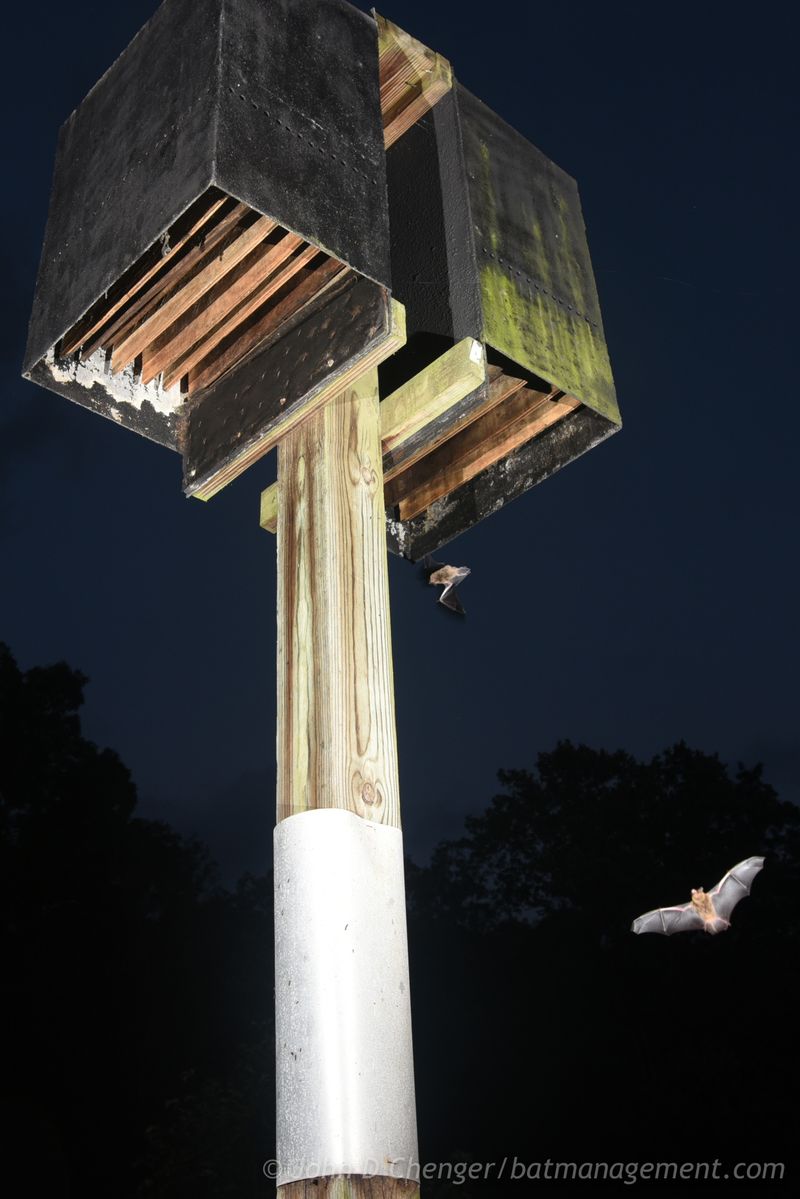
Bat houses need periodic attention to stay functional, but the timing of that maintenance is as important as the work itself. Disturbing an occupied house stresses bats, can cause mothers to abandon pups, and puts the person doing the work in unnecessary contact with wild animals.
All inspection and cleaning should happen during a period when the house is reliably empty.
Winter is the most practical window for Central Texas. Most bat species either migrate or enter torpor during cooler months, so December through February is generally a safe time to take the house down or inspect it in place.
Bat Conservation International recommends checking for structural damage and wasp nests during the winter or another confirmed unoccupied period. Wasps frequently move into unoccupied bat houses during warmer months and can make the space inhospitable when bats return.
U.S. Fish and Wildlife Service recommends cleaning with a small brush when the house is vacant and specifically advises against using water or pressure washers, which can soak wood, damage interior roughening, and promote mold.
Brush out debris, check that landing panels are still rough enough for bats to grip, and re-apply exterior paint or stain if the finish is peeling or fading. A well-maintained exterior holds heat better and extends the life of the wood.
One situation where a bat house is not the right solution: bats already living inside your home. If bats are roosting in an attic, wall cavity, or other part of the structure, a backyard box does not substitute for a proper exclusion.
CDC recommends consulting animal control or the health department if bats are present inside a living space, and cautions against trapping young bats during seasonal exclusion periods when they cannot yet fly.
Measure success by habitat, not overnight results
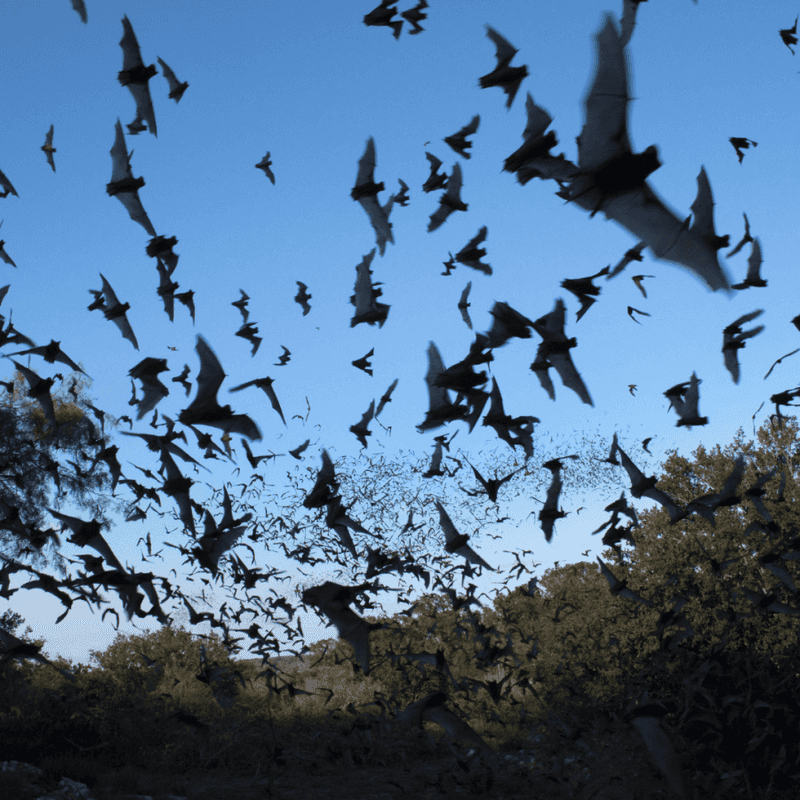
Pulling all of this together into a realistic Central Texas plan means letting go of the overnight promise and replacing it with something more honest and more durable. A multi-chamber house, mounted 12 to 15 feet up on a building or pole, oriented for morning sun with some protection from severe afternoon heat, positioned away from predators and high-traffic areas, and backed up by weekly standing-water removal gives local bats a genuinely useful resource.
What it does not give you is a guarantee.
Bat Conservation International frames bat house success around habitat quality rather than occupancy speed, and that framing holds up in Central Texas. Occupancy may come in the first season, the third year, or not at all, depending on factors outside your control.
Preserving safe mature and dead trees alongside the box, as U.S. Fish and Wildlife Service recommends, adds to the habitat value whether or not the box itself ever hosts a colony.
Weekly source control, proper bat house design, and careful placement are the three actions most within your control. Judge the project by whether you have created a functional, well-placed roost that local wildlife could actually use, not by whether bats appear on the first warm night after installation.
A yard that supports native insectivores, eliminates breeding water, and leaves natural habitat intact is doing real ecological work, even when the bat house stays quiet for a season or two. That kind of patient, layered effort is what habitat stewardship actually looks like.