
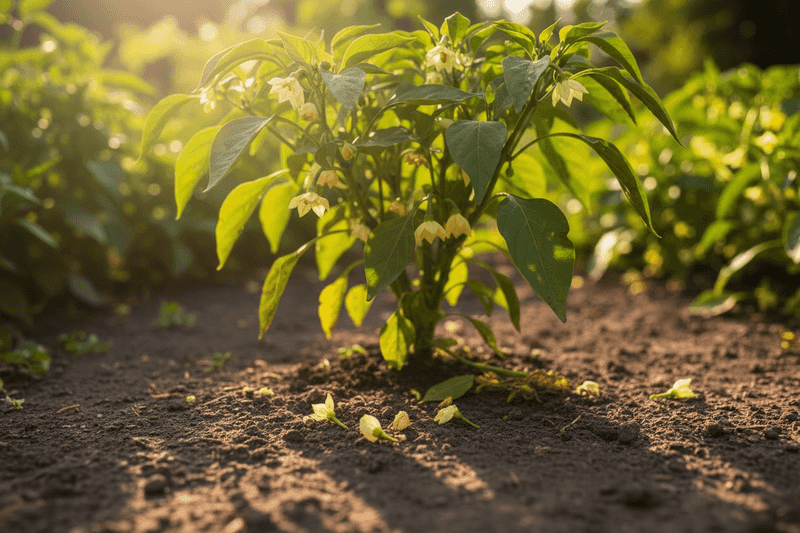
Pepper plants across Central Texas can look perfectly healthy while quietly dropping every flower they produce during a summer heat spell. The plant is not dying, and the bees are probably not to blame.
What is happening inside those flowers is a temperature problem, and understanding it is the first step toward giving your peppers a real chance at setting new fruit once conditions improve.
Heat, not bees, usually explains the dropped flowers
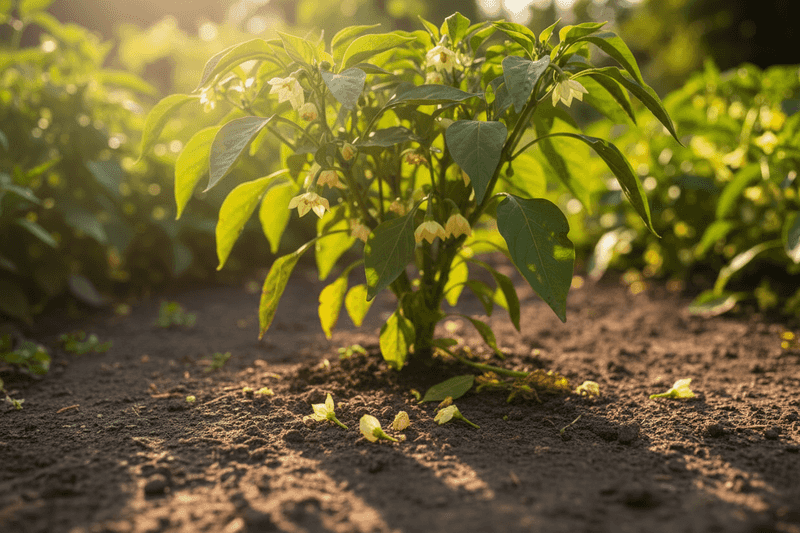
Pepper plants are largely self-pollinating. Texas A&M AgriLife Extension notes that peppers are about 85% self-pollinated and that covered plants can still set fruit without any insect entry at all.
So when flowers start falling during a July heat wave in Austin or San Marcos, a shortage of honeybees is almost never the real explanation.
The more likely culprit is a combination of scorching daytime highs and warm nights that never give the plant a chance to recover. Texas A&M’s pepper production guidance identifies days much above 90 to 92 degrees Fahrenheit paired with nights at or above 72 to 75 degrees as a practical warning range for fruit-set failure.
Oklahoma State University’s pepper research similarly reports little fruit set when daytime temperatures climb past 90 degrees. These are field-tested warning points, not hard biological cutoffs, because cultivar, humidity, how long the heat lasts, and the plant’s water status all shift the outcome.
Bell peppers tend to feel the pressure sooner than many small-fruited hot peppers. Jalapeños, serranos, and other pungent types often tolerate Central Texas summer conditions better than bells, though no variety is guaranteed to set fruit during an extended stretch of triple-digit days.
The symptom pattern to watch for is flowers or tiny fruitlets dropping while stems and leaves stay green and otherwise healthy. That pattern, combined with a recent run of very hot days and warm nights, points toward heat stress rather than a pest or disease problem.
The practical response is a stress-reduction plan focused on shade, moisture, and patience, not a bee-attracting strategy.
What happens inside a heat-stressed flower?
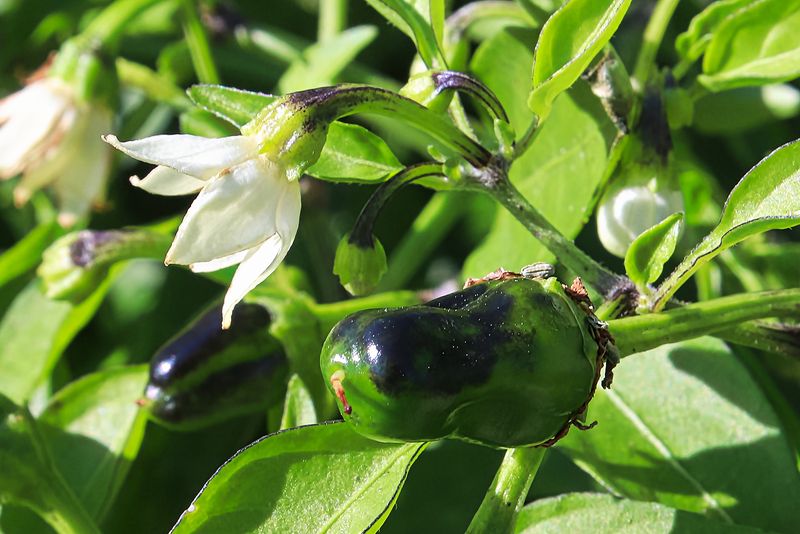
A pepper flower may look completely normal on the morning it falls, yet the damage can happen days before the blossom ever opens. Research by Erickson and Markhart published in Plant, Cell and Environment found that exposing bell pepper plants to temperatures around 33 degrees Celsius (about 91 degrees Fahrenheit) during sensitive stages of flower development reduced pollen viability and fruit set.
The flower bud was already compromised before the gardener ever saw it.
Even if a flower opens with viable pollen, heat can interfere later. High temperatures after pollination can inhibit fertilization or disrupt early fruit development, so the tiny fruitlet stops growing and drops even though the flower appeared to open normally.
The window of vulnerability is wider than most gardeners expect, spanning from early bud development through the first days after the flower opens.
Drought stress and heat stress can overlap, but they are not identical problems. A plant that cannot replace water lost through its leaves may wilt and drop flowers for moisture-related reasons, and fixing irrigation can reduce that particular burden.
However, University of Minnesota Extension guidance on heat stress makes clear that even well-watered plants can abort flowers when air temperatures remain too high. Better irrigation lowers one stressor without correcting what high temperatures do to pollen development and fertilization directly.
Flowers already affected by heat will not recover when the weather cools. New buds that form after temperatures moderate may set normally, but the blooms that dropped during the heat spell are gone.
Recognizing that distinction keeps expectations realistic and helps gardeners focus energy on protecting new growth rather than waiting for dropped flowers to return.
Give the plant afternoon relief without trapping heat
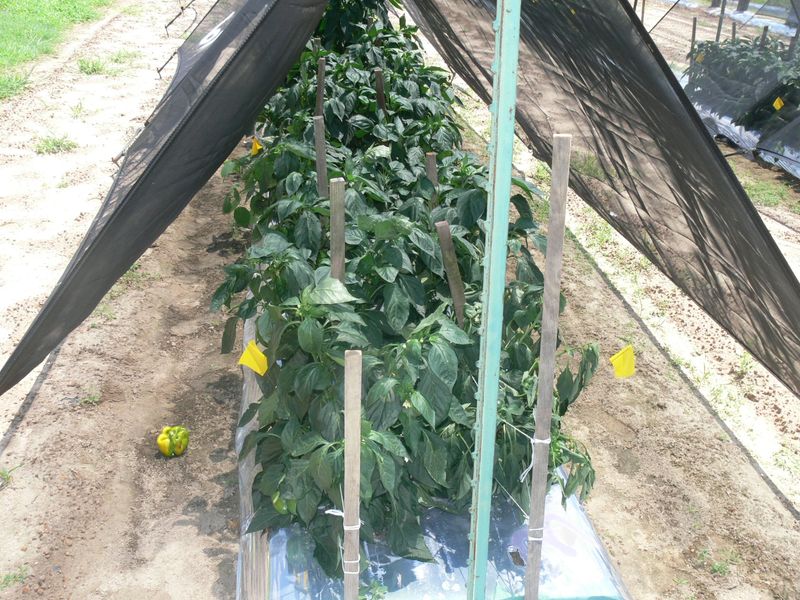
Suspending shade cloth above pepper plants during the hottest part of the day is one of the most direct steps a gardener can take to reduce heat stress while waiting for temperatures to moderate. University of Arizona Cooperative Extension recommends 30 to 40 percent shade cloth for peppers and other sun-sensitive vegetables during extreme heat periods.
The key word is “suspended”: the cloth needs to sit above the plants on stakes or a simple frame, leaving enough space between the fabric and the foliage for air to move freely.
Cloth resting directly on leaves traps heat and moisture against the plant, which can make conditions worse rather than better. Plastic sheeting and sealed row covers are even more problematic.
Utah State University Extension research on row covers found that covered environments can run 5 to 15 degrees Fahrenheit warmer than the surrounding air, meaning a sealed cover on a 100-degree Texas afternoon could push the plant’s microclimate well past the point where fruit set becomes possible. Humidity can also build under sealed covers, creating conditions favorable for fungal disease.
Afternoon shade is a temporary tool, not a permanent change to the plant’s light environment. University of Arizona guidance on drought and extreme heat emphasizes that shade is a short-term management strategy during stress periods, not a replacement for adequate sunlight.
Peppers need substantial light for vigorous growth and fruit production, so once the worst heat has passed, reduce or remove the shade cloth and let the plants return to full sun. Shade can improve the odds that new flowers set after temperatures drop, but it cannot repair flowers already damaged during the heat.
Keep the root zone steady through flowering
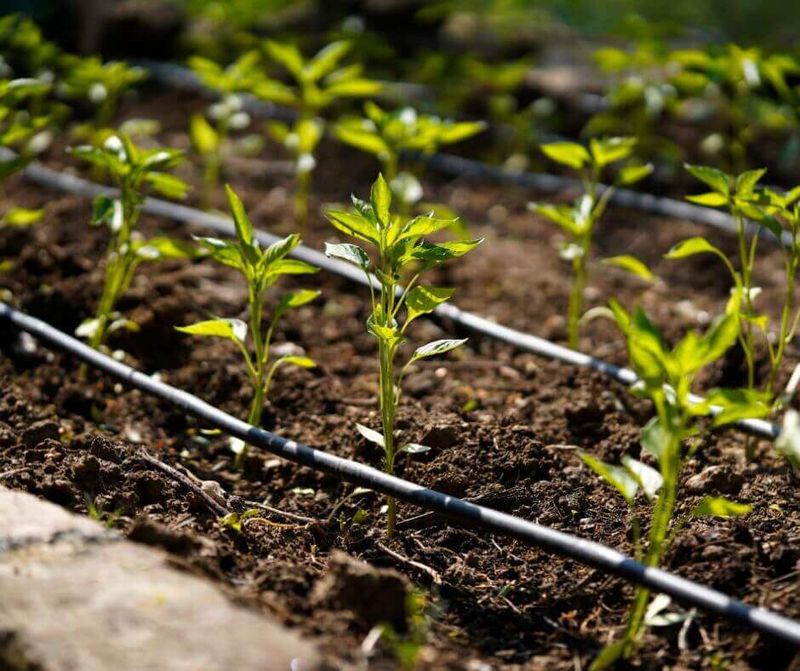
Soil moisture during flowering and fruit set matters more than at almost any other point in the pepper’s season. Texas A&M’s vegetable production tables identify bloom and fruit set as critical moisture periods for bell peppers, when water stress can compound heat stress and accelerate blossom drop.
The goal is even soil moisture at the root zone, not wet-dry-wet cycles driven by irregular watering schedules.
Watering slowly and deeply at the base of the plant is more effective than brief surface sprinkling. A light splash on top of the soil may barely penetrate the root zone, especially under a thick Texas sun with fast evaporation.
Drip irrigation or a slow-running hose laid at the base of the plant delivers water where roots can actually use it. University of Minnesota Extension guidance on vegetable irrigation recommends consistent, even moisture supply rather than irregular deep soaks followed by dry spells, particularly during reproductive stages.
Mulch is a practical partner to good watering. Texas A&M’s Easy Gardening pepper guide recommends mulching as part of standard pepper production, and a 2 to 3 inch layer of organic mulch can meaningfully slow evaporation and buffer soil temperature swings during a Central Texas heat spell.
Keep mulch a few inches away from the stem to avoid trapping moisture against the crown, and do not pile it so deep in poorly draining soil that roots stay saturated.
Even a perfectly watered, mulched plant can still drop flowers when air temperatures remain above the crop’s effective fruit-set range. Consistent moisture lowers one major stressor and keeps the plant viable for the next flowering cycle, but it works alongside shade and cooler weather, not as a standalone cure.
Why tapping flowers and adding fertilizer miss the main problem
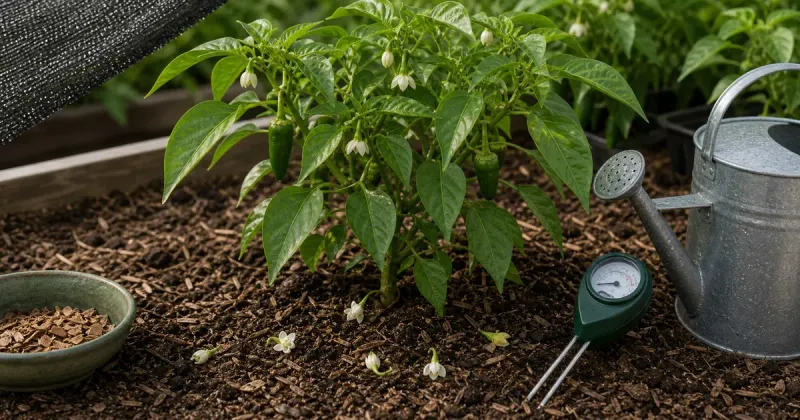
Lightly tapping or shaking pepper flowers to move pollen is low-risk and occasionally helpful under good conditions, but it cannot fix the core problem during a heat wave. Peppers self-pollinate readily, and pollen movement is not the central limitation when high temperatures have already reduced pollen viability or interfered with fertilization.
Texas A&M AgriLife’s fall vegetable gardening guidance confirms that pepper plants can set fruit without insect assistance, which means hand-pollination is addressing a problem that does not exist while the actual heat damage goes unresolved.
Reaching for fertilizer when flowers drop is an equally understandable but often counterproductive response. Excess nitrogen encourages the plant to push leafy, vegetative growth rather than reproductive effort, and Texas A&M lists excessive nitrogen as one possible reason for failure to set fruit.
Unless a soil test shows a clear deficiency, adding a heavy nitrogen dose during a heat-related blossom drop is likely to produce lusher foliage without improving fruit set. Fertilize according to your soil test results or a standard pepper schedule, not as an emergency response to dropped flowers.
Calcium is worth mentioning separately because blossom-end rot is often confused with blossom drop. University of Florida IFAS research on blossom-end rot explains that the dark, sunken area at the tip of a developing pepper is a calcium and water-uptake disorder affecting fruit that has already set.
Blossom drop, by contrast, means flowers or tiny fruitlets fall off before any fruit develops. Applying calcium will not stop heat-related flower abortion, because the two problems have different causes and different points in the plant’s cycle.
University of Minnesota Extension’s pepper growing guide reinforces keeping fertility in balance rather than over-applying nutrients during stress. The clearest decision rule: prioritize reducing heat load and maintaining even moisture.
Hand-pollination, emergency feeding, and unneeded calcium are distractions from the two interventions that actually address why the flowers are falling.
Check for pests and other problems when symptoms do not fit
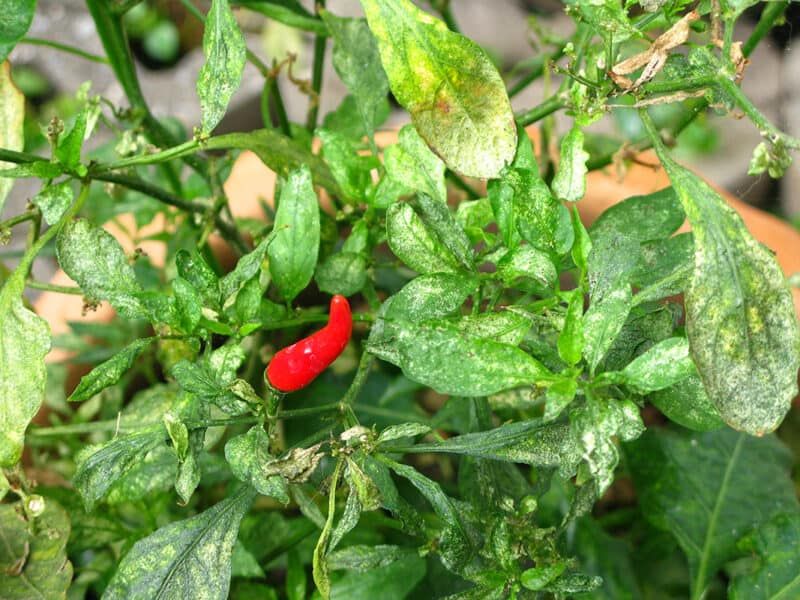
Heat stress is the most common explanation for blossom drop during a Central Texas summer, but it is not the only one. Before settling on heat as the cause, spend a few minutes looking at the whole plant carefully.
Symptoms that do not match ordinary heat-related flower drop are a signal to investigate further rather than apply more shade cloth and wait.
Silver scarring on leaves or fruit surfaces, curled or distorted new growth, and misshapen peppers are clues that a pest may be involved. Texas A&M AgriLife’s short-spined thrips pest alert identifies this recently documented Texas pest as a cause of flower drop, leaf curling, scarring, stunted growth, and deformed fruit.
Pepper weevil larvae can damage buds from the inside, causing them to drop before opening. Either pest can mimic heat-related blossom drop closely enough to be mistaken for it, especially when temperatures are also high.
Persistent wilt is a separate warning that deserves its own investigation. A plant that wilts and does not recover after being watered, or that wilts even when soil moisture seems adequate, may have root damage, poor drainage, a soil-borne disease, or a combination of problems.
Texas A&M’s Texas Vegetable Growers Handbook cultural practices section notes that several diseases and environmental conditions can cause wilt in pepper plants. Do not assume thrips or any single pest is causing persistent wilt without ruling out irrigation failure, compacted or waterlogged roots, and disease symptoms on stems or roots.
Pesticide decisions require a confirmed identification first. Utah State University Extension guidance on garden pollination cautions that sprays applied during bloom can harm pollinators visiting other crops nearby.
Identify the pest, verify the current Texas product label, and time any application to protect beneficial insects before reaching for a spray.
New fruit set may return when the weather breaks
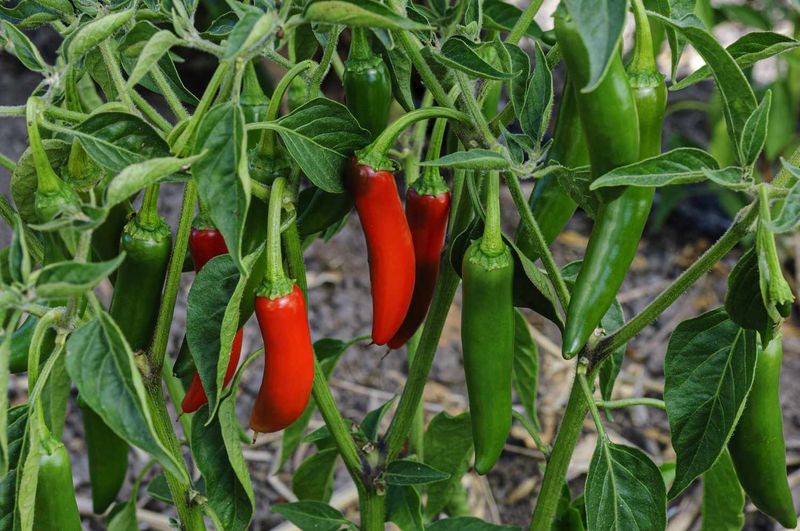
Damaged flowers from the hottest part of summer will not revive, but new buds that form after temperatures drop have a genuine chance to develop into fruit. University of Minnesota Extension’s heat-stress guidance confirms that fruit set can resume when conditions improve, provided the plant’s roots and stems have stayed healthy through the hot spell.
Keeping plants supported with even moisture and temporary afternoon shade during extreme conditions is the most useful thing a gardener can do while waiting for that window.
For Central Texas gardeners whose spring plants have dropped flowers through most of July and August, a fall planting can offer a second opportunity for production. Texas A&M AgriLife’s Fall Vegetable Gardening Guide for Texas lists June through July as the transplant window for peppers across much of central and east-central Texas, with exact timing depending on the local frost date and specific region.
A fall crop planted within that window can mature during the cooler temperatures of September and October, when fruit set tends to be more reliable than during peak summer heat.
Fall planting is not guaranteed to be more productive than a spring crop in every situation, and the outcome still depends on variety selection, timing, and whether an early freeze arrives ahead of schedule. Texas A&M’s pepper production FAQ provides regional guidance on varieties and timing worth consulting before committing to transplants.
The practical sequence is straightforward: reduce heat stress now, skip the mismatched quick fixes, inspect plants carefully for any symptoms that do not fit, and give new flowers a cooler opportunity to do what summer heat would not allow.
Peppers that survive a Texas summer with healthy roots are often more ready to produce than gardeners expect once the nights finally cool down.