
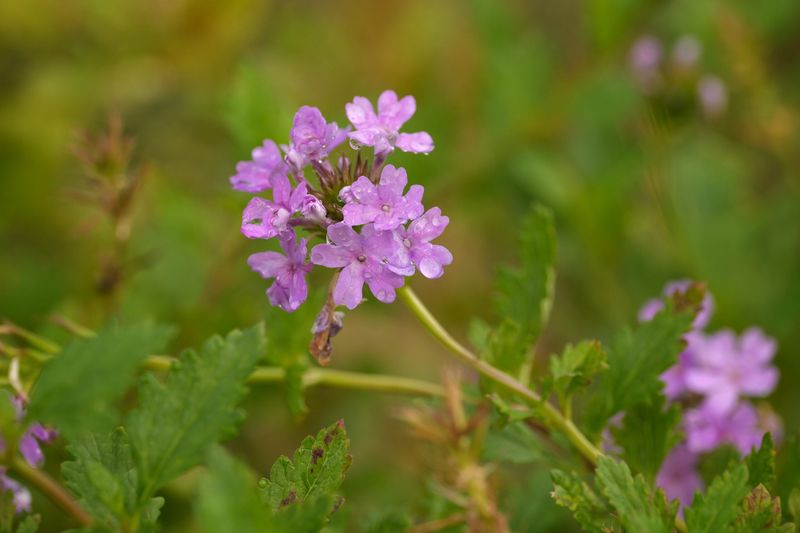
A sandy flower bed does not have to sit bare while the garden hose stays coiled. Several Florida native wildflowers can keep producing flowers during mild winters, especially in Central and South Florida.
The no-extra-water promise applies to established plants in suitable sites, not new transplants or every drought. Choose from these seven based on your yard’s sunlight, drainage, and winter temperatures.
1. Dune Sunflower
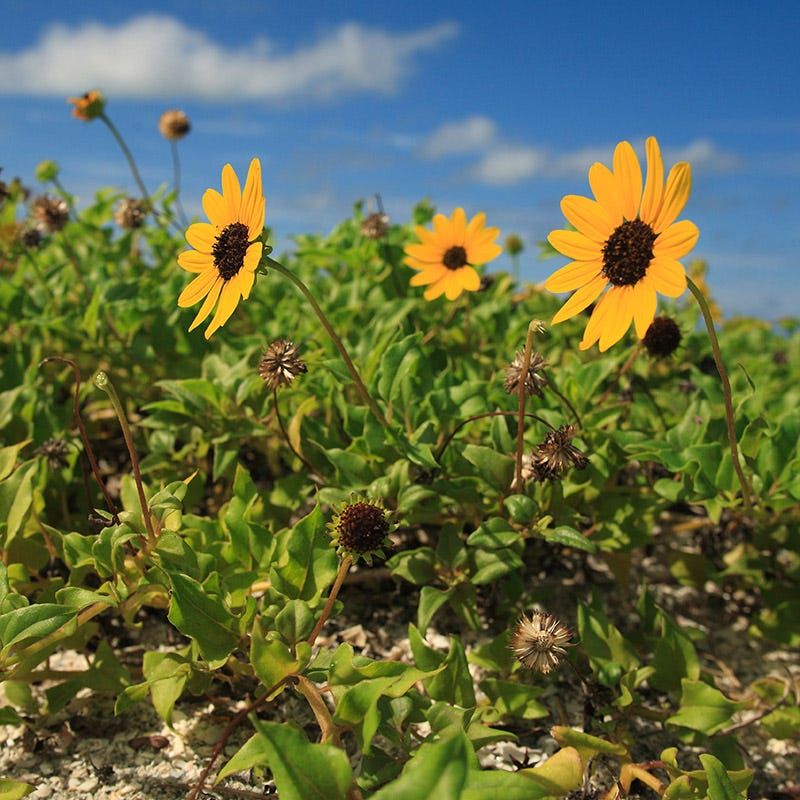
A sunny patch beside the driveway can become a cheerful carpet instead of another spot that needs watering. Dune sunflower, Helianthus debilis, earns its place with sprawling stems and yellow flowers that keep coming in frost-free parts of Florida.
Most plants stay roughly 1 to 2 feet tall but spread several feet wide. Give them room along a broad border, sandy slope, or coastal garden rather than squeezing them between small, slow-growing plants.
Full sun and quick drainage are the winning combination. Established plants handle dry, lean sand well, while frequent irrigation and rich soil can encourage loose growth and shorten their useful life.
Winter flowers are most dependable in South Florida and protected Central Florida locations. A freeze can damage the foliage or interrupt blooming farther north, so treat winter color as a regional benefit rather than a statewide guarantee.
Trim wandering stems when they cross a path, and leave some seed heads for wildlife. Ask a native nursery for the locally appropriate subspecies, since Florida has distinct regional forms and mixing them can affect nearby wild populations.
2. Beach Verbena
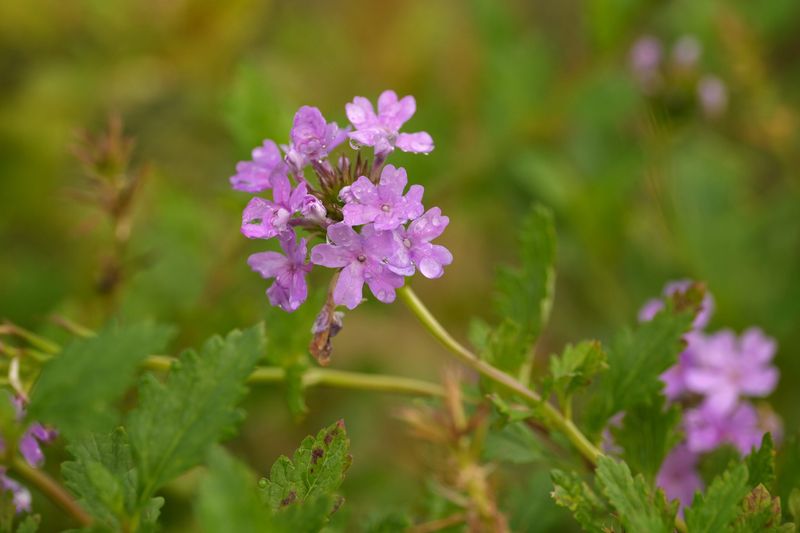
Purple flower clusters bring a welcome change when a bed already has plenty of yellow daisies. Beach verbena, Glandularia maritima, offers that contrast on a low plant suited to sunny, well-drained coastal sand.
Its spreading habit makes it useful near a walkway or at the front of a mixed native planting. Place it where nearby shrubs will not shade it and fallen leaves will not bury the stems.
In warm parts of its Florida range, flowering can continue through winter. Cold snaps may slow the display, and gardeners in frost-prone inland locations should not expect the same performance as those near the southeastern coast.
Once roots are established, beach verbena is a good candidate for a rainfall-only bed. Avoid low areas that collect stormwater, and resist adding heavy compost simply because the existing soil looks poor.
A light trim after a flowering flush can help keep the patch tidy without turning maintenance into a weekly chore. Buy nursery-propagated plants from a reputable native grower, since beach verbena is listed as endangered in Florida and should never be collected from the wild.
3. Pineland Heliotrope
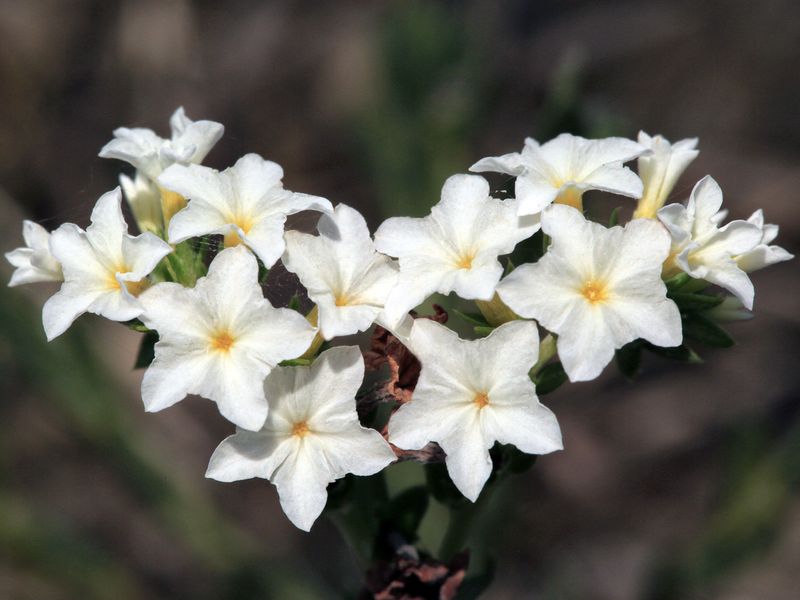
Look closely at a dry native bed and the smallest flowers may be doing some of the steadiest work. Pineland heliotrope, Euploca polyphylla, also sold as Heliotropium polyphyllum, produces tiny white flowers with yellow centers above slender stems.
Its charm is quiet rather than showy. Use several plants together near the front of a bed, where their fine texture softens larger leaves and visitors can see the flowers without stepping into the planting.
Sunny, sandy ground fits this Florida native well. Established plants tolerate drought, making it a useful choice for areas beyond the reach of lawn sprinklers, provided the soil drains freely.
Flowering can occur throughout the year in southern Florida, including mild winter stretches. Northern cold and prolonged dry weather can reduce blooms, even when the plants themselves survive.
Keep vigorous groundcovers from swallowing the patch, and leave small openings where seedlings can appear. A native nursery can help confirm the species and its suitability for your county, which matters because several different plants are sold under the broad name heliotrope.
4. Scorpiontail
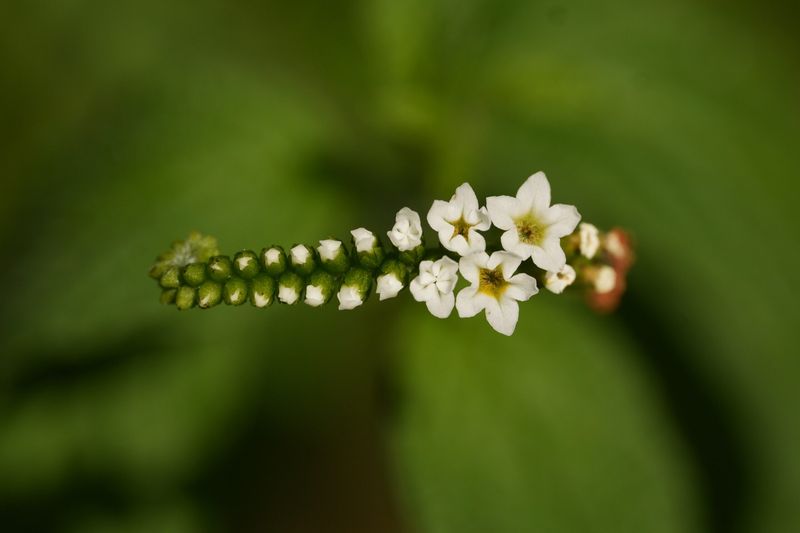
The curled flower stalks look a little like tiny tails held above the leaves. That unusual shape gives scorpiontail, Heliotropium angiospermum, a personality quite different from the daisy-like flowers common in sunny borders.
Small white blooms open along the curved spikes, attracting visiting insects without demanding a large, formal flower display. The plant adds a loose, airy layer to a wildlife bed and can reach several feet tall under favorable conditions.
Give it sun to partial shade and sandy soil that does not stay soggy. Established plants have useful drought tolerance, though an extremely exposed, parched site may produce fewer flowers than a spot with some afternoon shelter.
South Florida offers the best chance of flowers through winter. Freezing weather can damage growth, so gardeners farther north should view it as a warm-season plant with possible winter blooms during mild spells.
Allow enough space for its branching shape, then prune selectively if stems lean into a walkway. It can reseed, which is handy in an informal habitat garden but calls for occasional seedling removal near neatly edged beds.
5. Blue Porterweed
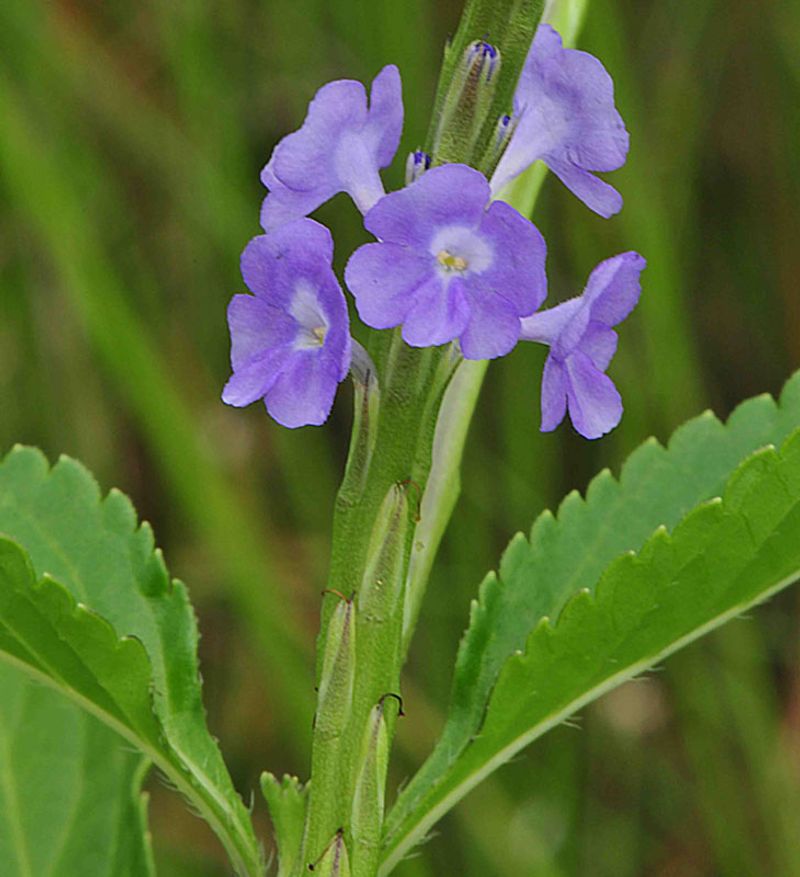
A few blue flowers at a time can still make a busy butterfly stop. Native blue porterweed, Stachytarpheta jamaicensis, opens scattered blooms along slender spikes rather than covering itself in one solid burst of color.
That steady, small-scale display is its strength. In frost-free South Florida, flowers can appear throughout the year, offering nectar on warm winter days when butterflies remain active.
Plant it in a sunny, freely draining bed, with room for its low, spreading shape. Established plants tolerate dry conditions, although extended drought can slow both growth and flowering.
Shopping carefully matters more here than with many garden flowers. The native species is generally low and sprawling, while the commonly sold nonnative Stachytarpheta cayennensis tends to grow more upright and is invasive in Florida.
Ask for the botanical name and buy from a grower who can confirm the identification. Do not rely on a blue flower or a porterweed label alone, since nursery selections and hybrids can make identification confusing.
A light trim keeps stems away from paving. In colder parts of Florida, expect winter damage or a flowering pause rather than an uninterrupted nectar supply.
6. Tropical Sage
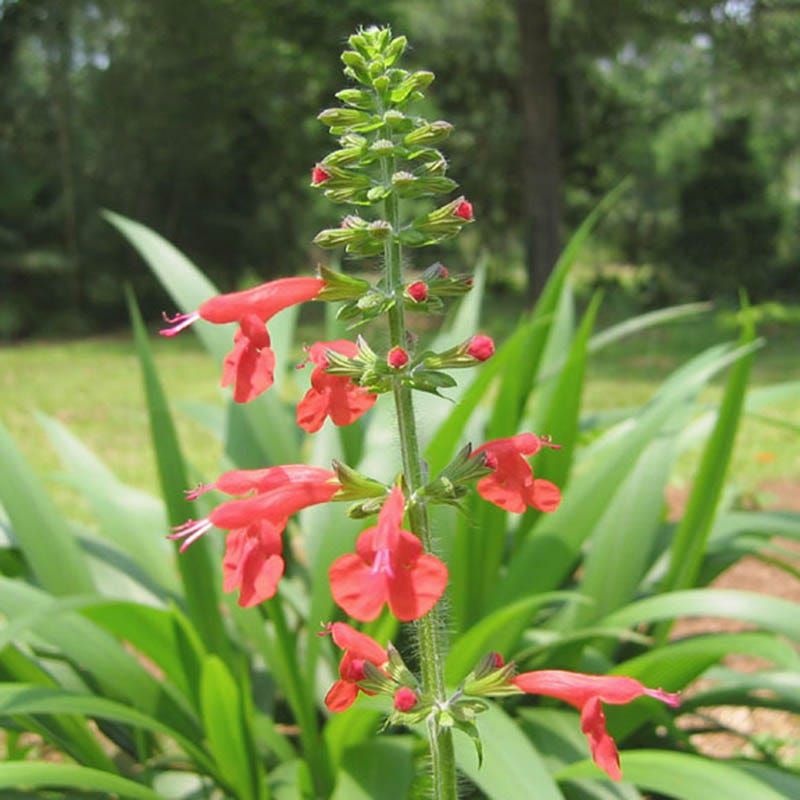
Red flowers lift a winter border out of the usual green-and-brown routine. Tropical sage, Salvia coccinea, brings upright stems and tubular blooms that attract hummingbirds and other nectar visitors.
Use it behind lower groundcovers or in small groups near a porch where the flower spikes are easy to enjoy. Plants commonly reach about 2 to 3 feet tall, though size changes with light, soil, and growing conditions.
Sandy, well-drained soil suits it, and established plants can manage dry spells without routine irrigation. For a rainfall-only planting, a site with morning sun and light afternoon shade can be more forgiving than a blazing strip beside reflective paving.
Warm southern Florida gardens may see flowers through winter. Frost can stop the show elsewhere, and severe drought may also reduce flowering, so this is not the toughest choice for the driest exposed dune-like bed.
Let a few flower spikes set seed if you want replacements to appear naturally. Remove unwanted seedlings while small, and trim tired stems to encourage fresh growth when conditions improve.
Choose locally grown native stock where available. Scarlet flowers provide the clearest contrast against silver foliage and pale sand.
7. Spanish Needles
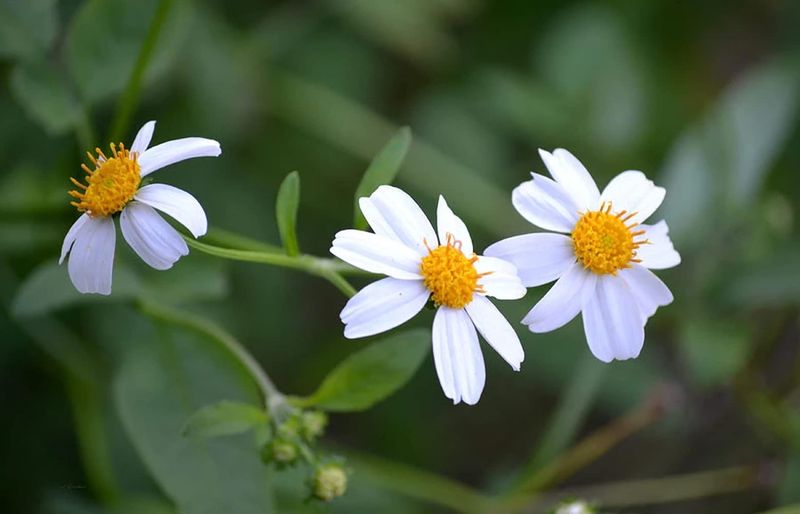
Before pulling every volunteer with white petals, check whether it is feeding half the neighborhood’s butterflies. Spanish needles, Bidens alba, is a familiar Florida native with white-and-yellow flowers and a strong place in informal wildlife gardens.
Its main advantage is persistence. Plants establish readily on disturbed sandy ground, flower over a long season, and can keep blooming through winter in frost-free areas without being treated like pampered bedding plants.
Set aside a sunny patch away from narrow walkways and outdoor seating. The barbed seeds cling to clothing and pet fur, which makes placement just as important as its drought tolerance.
Once established, it often grows on rainfall alone, but flowering still responds to available moisture and temperature. A freeze or a long dry spell can interrupt the display, especially outside southern Florida.
Expect a taller, looser look than beach verbena or dune sunflower. Cut back stems before most seeds mature if you want flowers without a large crop of volunteers.
For a crisp front entry, choose one of the tidier plants on this list. For a sunny back fence or pollinator corner, Spanish needles offers a generous wildlife payoff with little purchased input.