
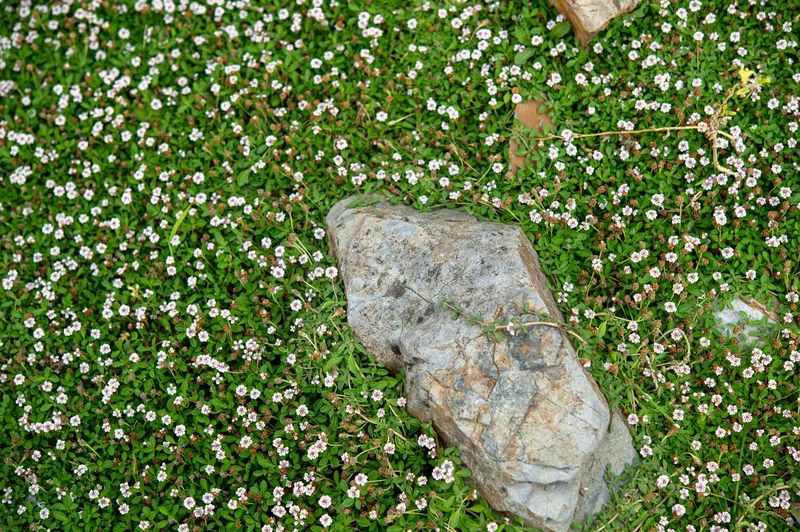
Bare mud and stubborn weeds love to move into the gaps between stepping stones. A low native plant called frogfruit may be a smarter way to fill that space.
It grows close to the ground, spreads on its own, and feeds butterflies along the way. Here is how it works, where it fits, and what upkeep still comes with it.
Why frogfruit fits between stones
Frogfruit, known botanically as Phyla nodiflora, is a low creeper that suits narrow gaps. NC State Extension’s plant profile describes it as roughly 3 to 6 inches tall, with a spread of about 1 to 2 feet.
That short stature matters on a path. Tall plants flop over the stones and trip people, while frogfruit stays close to the soil and leaves the stone surfaces mostly clear.
The way it spreads is the other big draw. Its creeping stems root at the nodes, which are the joints along the stem.
As the stems crawl outward, they anchor themselves into bare soil and can knit together a green mat where mud used to show.
Frogfruit is also fairly flexible about growing conditions. NC State Extension lists it for full sun to partial shade, and it handles a range of soils and moisture levels.
A sunny path with average soil is a reasonable place to try it.
Flexible does not mean foolproof. A deeply shaded path under big oaks, a spot that stays soggy for weeks, or soil packed hard as concrete may give you a thin, sulky planting.
Think of frogfruit as a promising candidate for the gaps, not a guaranteed fix. Test it in a short stretch of path first and see how it behaves in your yard before you plant the whole walkway.
A North Carolina native with regional limits
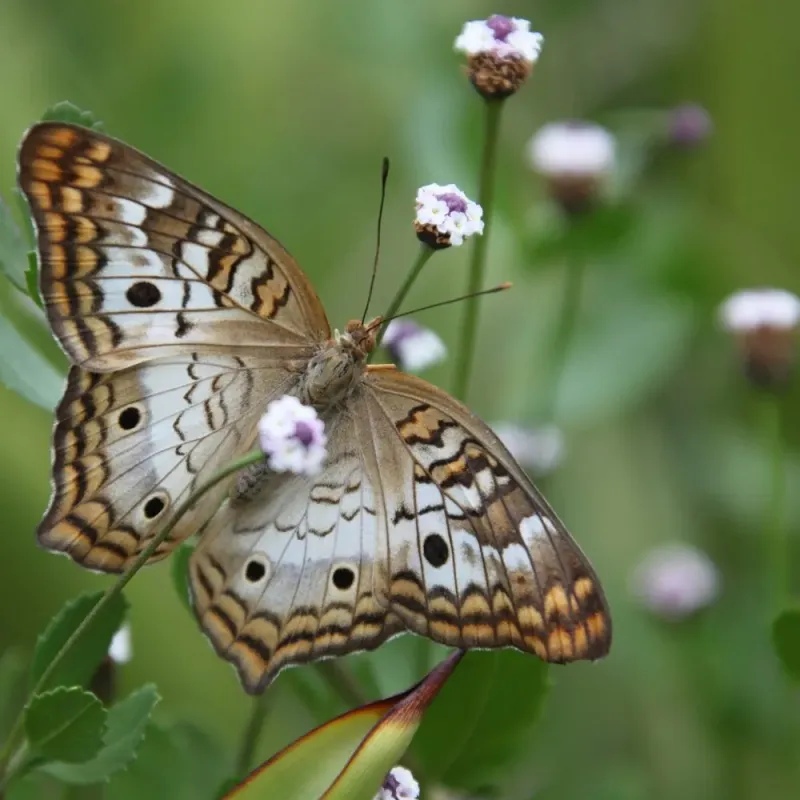
Homeowners who want to support local wildlife will like this part. North Carolina’s vascular plant account identifies frogfruit as a native species in the state, so it belongs here rather than being an imported swap.
In summer, the plant produces small purple-and-white flowers. According to NC State Extension, those blooms attract pollinators, and the plant serves as a larval host for several butterflies, including the phaon crescent, buckeye, and white peacock.
That is a real perk, but keep it in proportion. A strip of frogfruit between stones will not turn your yard into a butterfly sanctuary.
It adds one more small food and nursery plant to the mix, and it works best alongside other native plantings.
Be careful with the word native, too. The state flora account speaks to North Carolina.
NC State Extension describes a broader range across the southern United States and the tropics. Neither source promises that frogfruit will look the same in the mountains, the Piedmont, and the coastal plain, or that it will behave the same way in Florida or Texas.
If you garden at higher elevation or in a cold pocket, treat frogfruit as an experiment. Plant a small patch, watch how it handles your winter, and expand only if it earns its spot.
Let the stones carry the traffic

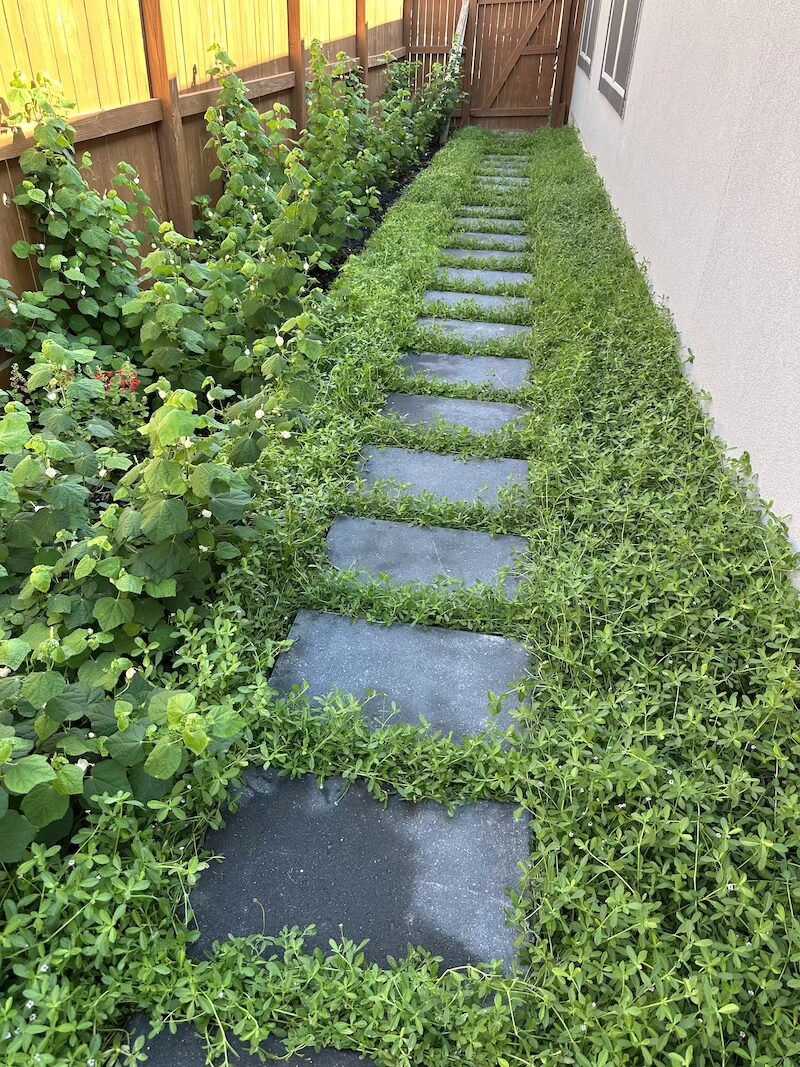
Picture the job split in two. The stones take the footsteps, and the frogfruit fills the soil between them.
That setup keeps your feet off the plants and gives them room to grow.
NC State’s native plants guidance makes a similar point, noting that paths or stepping stones let people move through groundcover plantings without damaging them.
You may read claims online that frogfruit shrugs off foot traffic. The Florida sources do not agree on this.
One UF/IFAS page says the plant persists under frequent traffic, while a Florida-Friendly Landscaping plant guide labels it for low foot traffic.
Since the experts differ, the safest plan is not to count on it. Space your stones so a normal stride lands on stone, not soil.
If people keep cutting corners onto the plants, widen the stones or add one more rather than expecting frogfruit to take a beating.
A quick diagnostic helps here. If you see bare, flattened patches right beside the stones, your stride is landing on the plants.
Move or add a stone there.
Start with clear gaps and careful planting
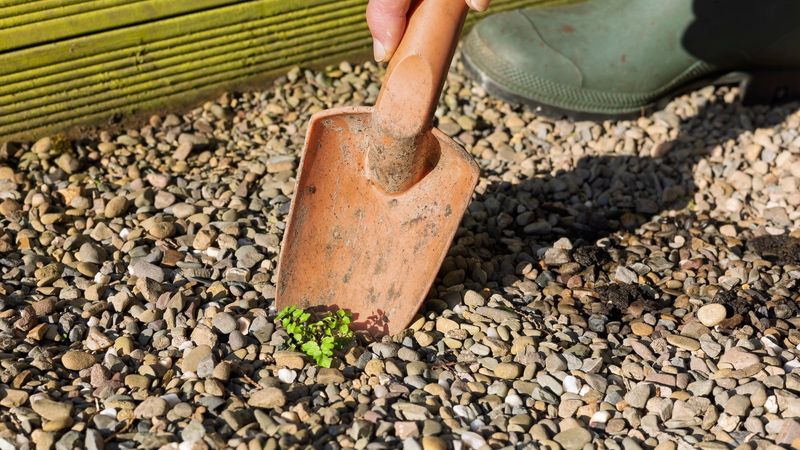
Before a single plant goes in, clean out the gaps. Pull the existing weeds, roots and all, from the soil between the stones.
Weeds left behind will compete with young frogfruit for light, water, and space, and they can slow the groundcover’s progress. NC State’s Extension Gardener Handbook stresses starting with weed-free ground.
A narrow hand tool, an old kitchen knife, or a weeding fork reaches tight spots better than your fingers. Loosen packed soil a little while you are in there so new roots have somewhere to go.
Extension guidance also mentions temporary light mulch between groundcover plantings to discourage weeds until the plants fill in. University of Maryland Extension’s groundcover advice offers similar thinking about weed control while plants establish.
Stone gaps are not wide garden beds, though, so adapt the advice. Use only a thin layer, keep it off the stems, and never bury or smother the frogfruit.
Because the plant roots along its stems, covering them can work against the very spreading you want.
If a gap is so narrow that mulch would swamp the plant, skip the mulch and rely on hand weeding instead.
Weeding continues while the cover establishes
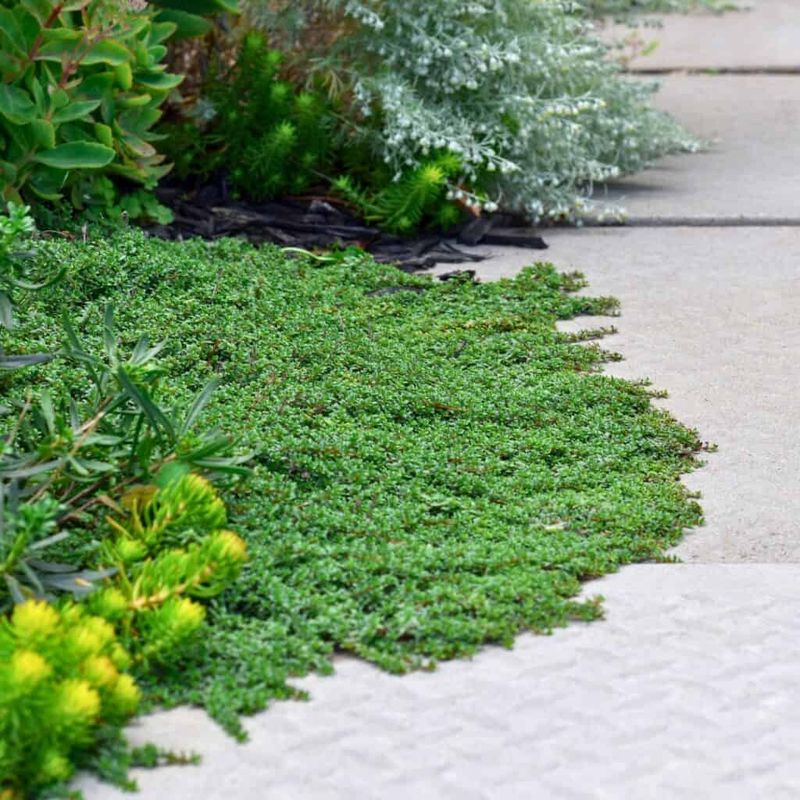
Here is the candid part: the early weeks and months take attention. Until frogfruit knits together, bare soil is an open invitation for weeds.
The extension sources note that weed competition can hinder a groundcover while it gets going, so plan to walk the path regularly and pull what shows up.
Pull weeds when they are small and the soil is damp. Hold the base of the weed, tug gently, and avoid yanking up frogfruit stems that have started to root nearby.
Telling the two apart is easier if you learn frogfruit’s small, toothed leaves and low creeping habit first.
Once the gaps are well filled, the picture improves. A dense planting may suppress some weeds by shading the soil and taking up the space.
University of Maryland Extension’s groundcover guidance frames groundcovers as a way to reduce weed pressure, not erase it.
Even then, expect surprises. Seeds blow in, birds drop them, and thin spots open after a dry spell or a cold snap.
A well-filled path can mean fewer weeding sessions, but it will not mean zero.
A good habit is a quick pass every couple of weeks during the growing season. Five minutes now beats an hour of rescue later.
Expect spread and seasonal changes
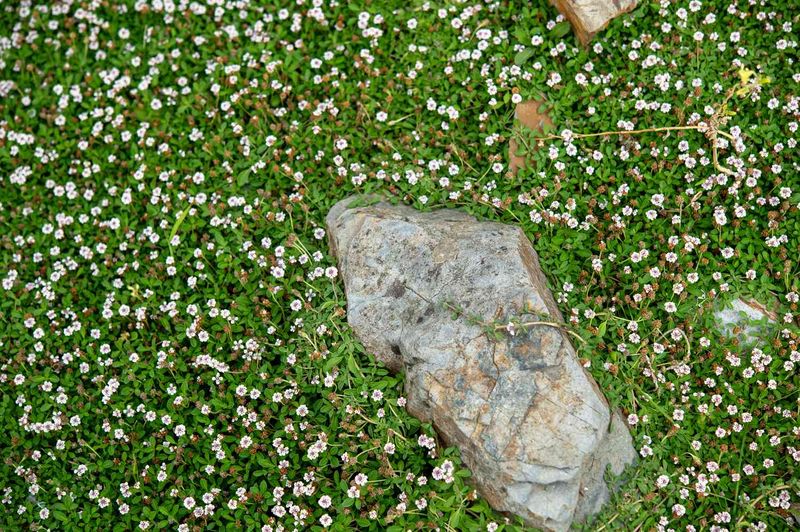
The same creeping habit that fills your gaps can carry frogfruit past the path. The state flora account even calls the plant “rather weedy,” and UF/IFAS notes its spreading growth and suggests occasional mowing in some settings.
Along a stone path, that translates to trimming or edging where stems wander into the lawn or beds.
Seasons matter too. The sources reviewed do not back up a year-round green promise.
UF/IFAS says frogfruit may go dormant in winter or drought, and freezes can damage it. In a North Carolina winter, plan on a tan, patchy look and some regrowth in spring.
So who should try it? Frogfruit may suit path gaps in a sunny to partly shaded spot, when the stones take the steps and you are fine with some ongoing care: pulling early weeds, trimming runaway stems, and tolerating a rough winter.
Plant it like a helpful guest, not a hands-off tenant. It fills the space, feeds a few butterflies, and asks for a little tidying in return.