
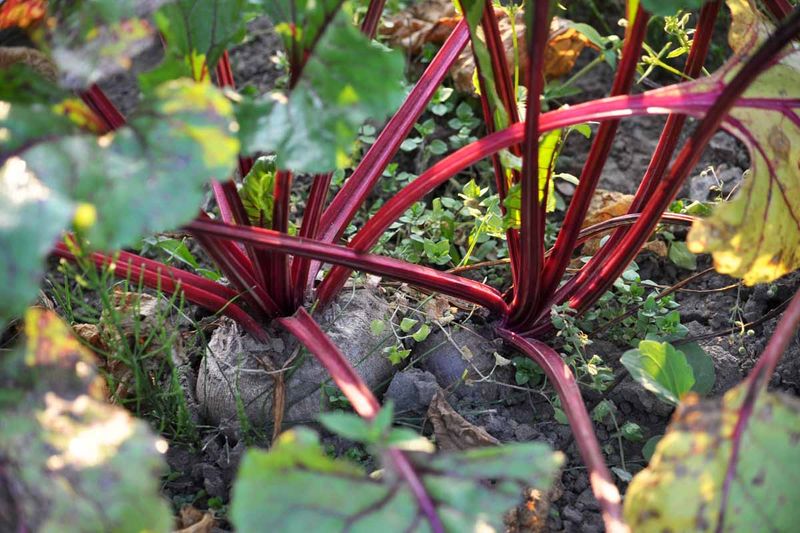
You sow a row of beets, watch the green tops fill in, and then pull up roots no bigger than marbles. Beets often come up in tight little clumps, and those clumps can keep roots from swelling.
A few snips early on may help, and so can a few other habits. Here is how to figure out what your beets are telling you.
Crowding can limit beet root growth
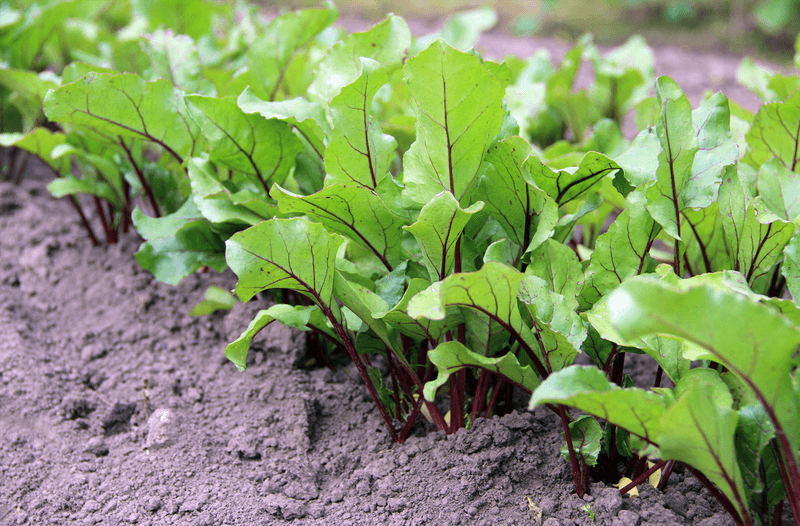
Picture a bed where beet tops are shoulder to shoulder, yet the roots underneath stay tiny. Plants packed that close compete for room, light, water, and nutrients.
Illinois Extension guidance points to overcrowding as something that can limit root development, which makes it a plausible suspect when roots stay small.
Crowding is one cause, not the only one, and no source ranks it as the most common across all gardens. Small roots and woody roots can come from different problems, so look closely before you act.
Ask yourself a few questions. Are the seedlings touching in clumps?
Are the roots small but still tender? Or are they tough, stringy, or hard to cut?
Utah State Extension links woody roots to heat and water stress, which is a separate issue from crowding. Matching what you see to the likely cause keeps you from fixing the wrong thing.
One beet seed may produce several seedlings
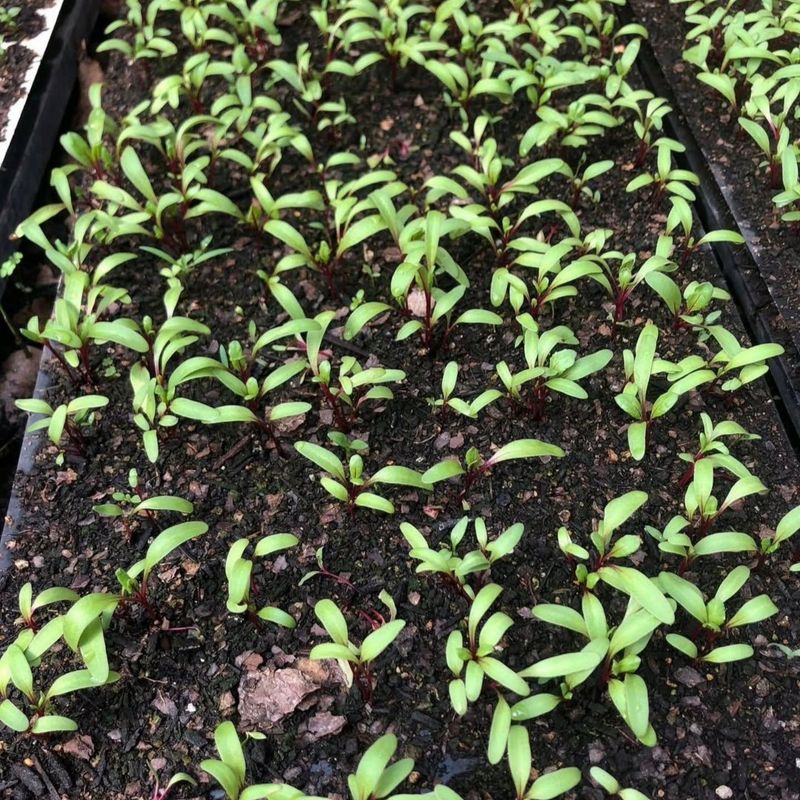
That rough, corky little bead you push into the soil is usually not a single seed. A typical beet “seed” is a dried fruit that can hold several seeds inside.
Plant one, and you may get a whole cluster of sprouts from that spot.
Many beet seed balls work this way, according to Illinois Extension. Some varieties are different.
Single-germ or singulated types have been bred to send up just one seedling per seed, so they may not form clumps at all.
The easy way to know is to look. Crouch down a week or two after sprouting and check your row.
If you see two, three, or more stems rising from one spot, you have a cluster. If each spot holds a single seedling, your variety may be singulated, and you can skip the heavy thinning.
The seed packet often hints at which kind you bought.
Thin young clusters to give roots room
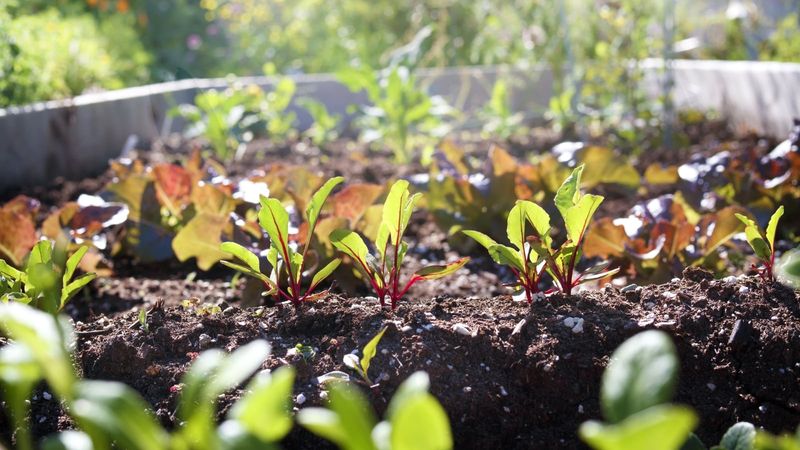
Once seedlings are up and the crowding is easy to see, it is time to thin. Early is better, because young plants have not yet tangled their roots together.
Pulling extras can tug on the neighbors, so grab a pair of small scissors instead. UC IPM advises snipping surplus seedlings at soil level so the remaining roots stay undisturbed.
Keep the strongest seedling in each cluster and cut the rest. For typical table beets, about 2 to 3 inches between plants is a practical target.
Texas A&M AgriLife suggests 2 to 3 inches, while Utah State says 3 inches.
Recommendations differ by source and variety, so let your seed packet have the final word if it gives a different number. Tender thinnings can go in a salad, which makes the chore feel less wasteful.
Keep soil moisture reasonably consistent
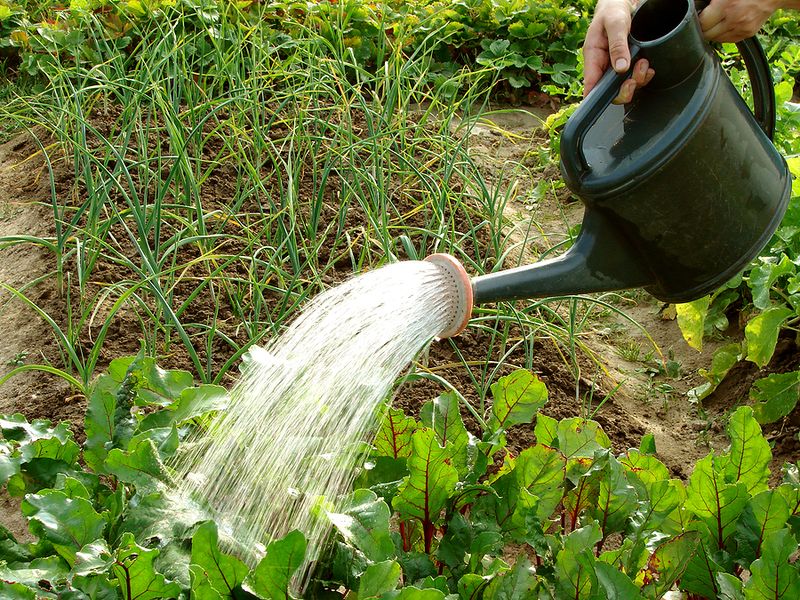
Even with perfect spacing, beets want steady moisture while they sprout and while the roots swell. Swings between bone dry and soggy can stress them.
The goal is reasonably consistent, not a rigid calendar.
Extension sources offer helpful context. Texas A&M AgriLife advises watering well each week if it does not rain.
University of Georgia guidance gives roughly 1 to 2 inches per week for established fall plants.
Treat those numbers as starting points. Sandy soil in much of Florida drains fast and may need water more often, while heavier clay in parts of Texas holds moisture longer.
A rain gauge and a finger pushed an inch or two into the soil tell you more than a fixed schedule. Mulch can help slow evaporation between waterings.
Check heat, water stress, and harvest timing for woody roots
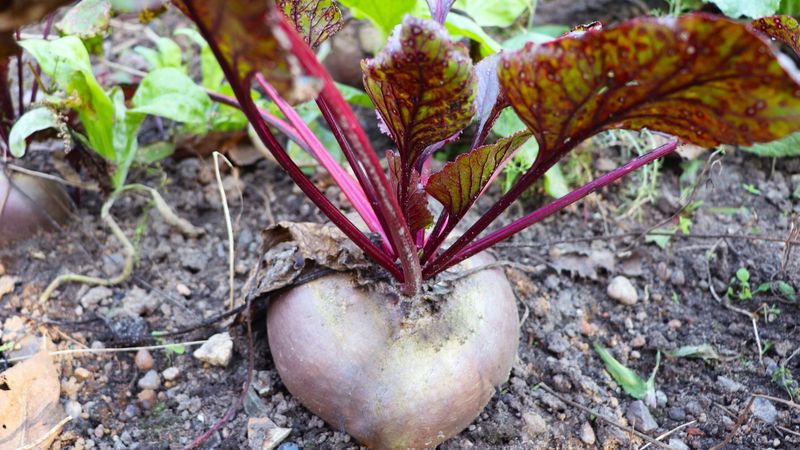
If your beets are tough rather than just small, look beyond crowding. Utah State Extension names heat and water stress as causes of woody roots.
Its advice to keep beets well watered in temperatures above 85 degrees F is a regional recommendation, not a magic cutoff for Southern gardens, but the lesson carries over: hot, dry spells can toughen roots.
Size matters too. Illinois Extension says roots larger than about 3 inches may turn tough and fibrous.
Not every big beet will be tough, but leaving them in the ground indefinitely raises the odds.
Here is a quick diagnostic. Small and tender with tight spacing points toward crowding.
Tough after a hot, dry stretch points toward stress. Large and stringy points toward waiting too long.
Thinning helps only the first case, so harvest when roots reach the size you want and pick them young next time.
Use fall planting dates for your own region
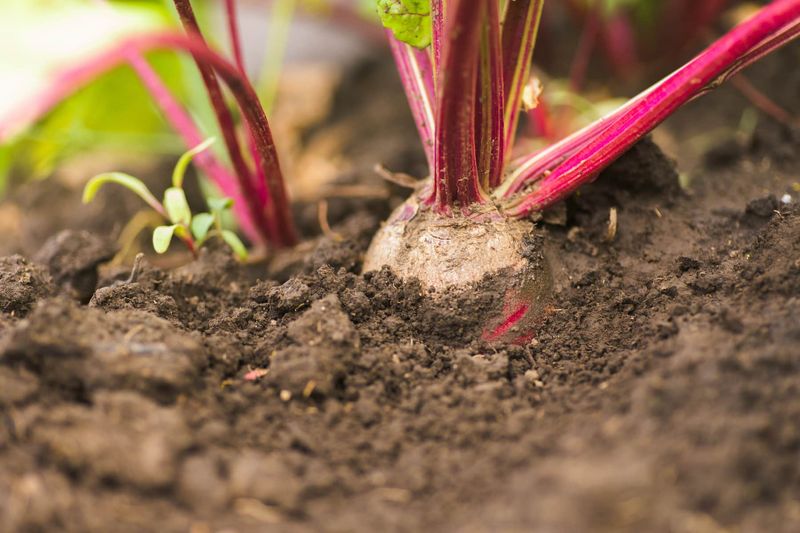
Fall timing changes a lot across the South, so borrow dates only from your own region. University of Georgia Extension lists August 15 to October 1 for fall beets in Georgia.
Florida varies by region. UF/IFAS lists September through March in North Florida, September through February in Central Florida, and October through January in South Florida.
Those are not Texas dates. Texas is huge, and the Panhandle, Hill Country, and Gulf Coast do not share one calendar.
Check Texas A&M AgriLife guidance and your county Extension office for a window that fits your spot.
Good timing, steady water, and a few snips in time give your beets a fair chance.