
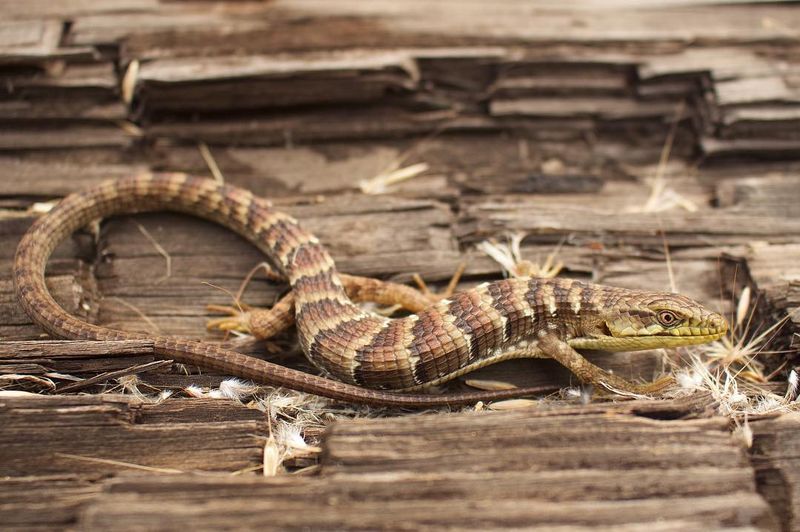
That long, scaly lizard slipping under your patio pots may look a little scary, but it has a useful habit. The Southern Alligator Lizard eats a wide range of small animals, including snails and black widow spiders.
That makes it a possible ally for California gardeners, though not a guaranteed fix for any pest. Here is what we know, and what to do when one crosses your path.
The Southern Alligator Lizard is a familiar California yard visitor
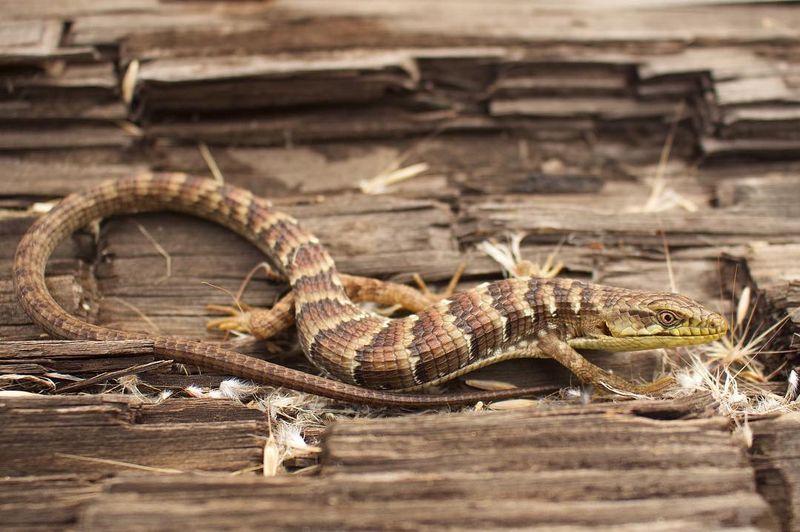
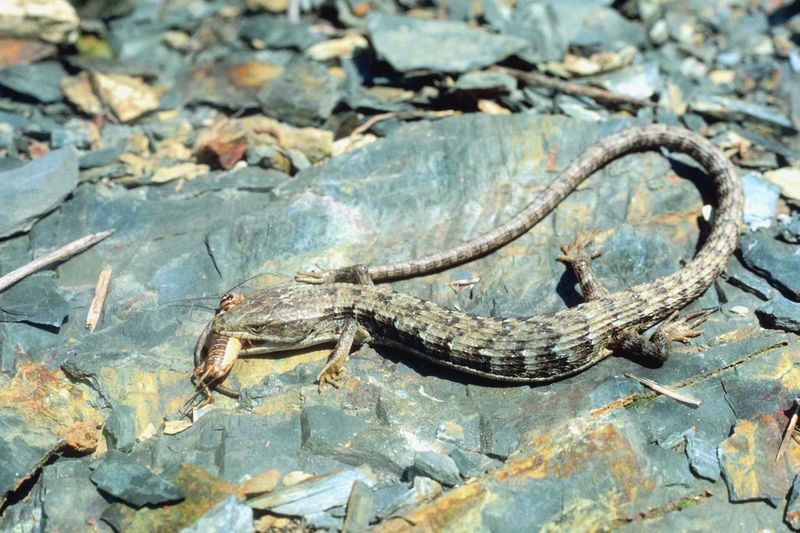
Many lizards get called alligator lizards, but the animal behind the diet claims in this article is the Southern Alligator Lizard, Elgaria multicarinata. It is a long-bodied lizard with a long tail, short legs, and keeled, armor-like scales.
Those scales are where the name comes from.
According to the National Park Service, this species lives in natural habitats and also near human settlements. California’s wildlife habitat account describes it as widespread in suitable parts of the state.
So a sighting in a suburban yard is not unusual.
A few clues help. Look for a slender, snake-like shape, a tail that is longer than the body, and a rough, ridged look to the scales.
It moves with a sinuous, almost swimming motion through grass and leaf litter.
A caution is in order, though. Not every lizard in your yard is this species, and not every alligator lizard in California is the same.
If you want a firm identification, a clear photo shared with a local nature center or a wildlife group can settle it.
This article is not a field guide. The goal is simpler: know what you are probably looking at, so you can decide calmly how to respond when it shows up near your planters, woodpile, or garden path.
Snails and spiders are part of its varied diet
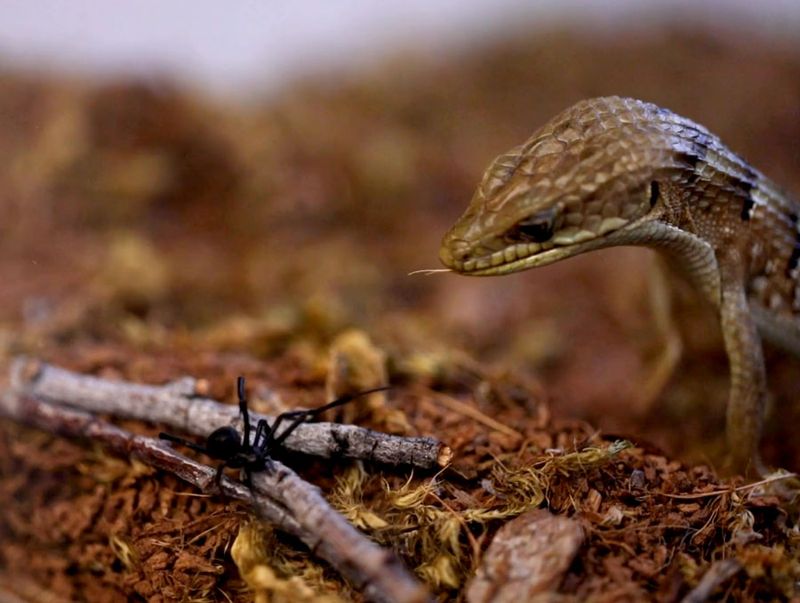
If you picture this lizard as a tiny hunter, you are close. Insects and their larvae are prominent in the Southern Alligator Lizard’s diet, and the menu is wide.
The National Park Service also lists spiders, snails, sow bugs, centipedes, and scorpions among its prey.
That list is why gardeners get excited. Snails chew leaves, and sow bugs and centipedes turn up in damp corners of many yards.
A lizard that eats them sounds like a handy neighbor.
Still, a menu is not a map. The listing tells us what this lizard can eat.
It does not tell us that one will patrol your garden beds, or that it will go after snails every day, or that it will hunt in the spots where you notice damage.
Think of it like a person who eats salad. You know salad is on the menu, but you cannot say how much lettuce that person finishes in a week.
The same goes for a lizard and a snail.
So enjoy the idea that your yard visitor is a generalist. Insects are the bulk of what it eats, and snails and spiders are part of the mix.
Treat any pest help as a pleasant bonus, not a plan.
Black widows are documented prey, but the relationship has limits
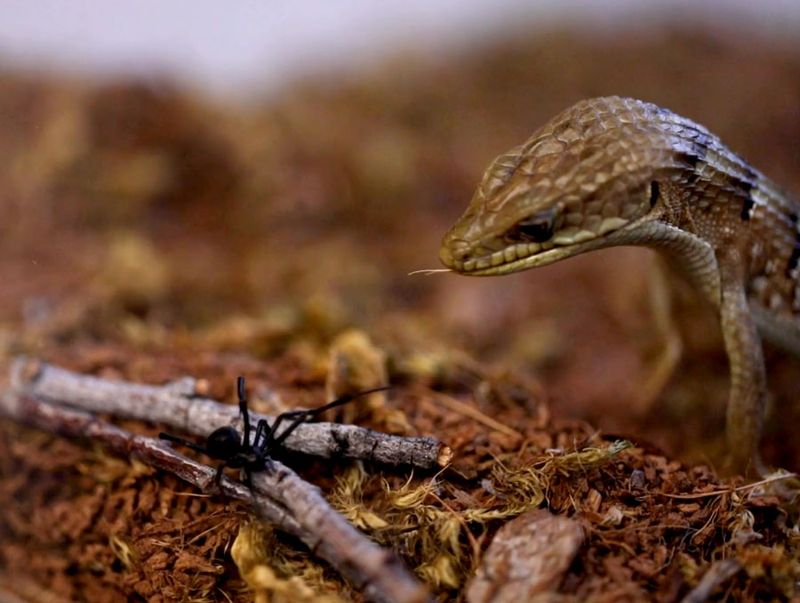
The black widow claim is more than a garden rumor. The National Park Service includes black widows in the lizard’s prey list.
A research report from the University of Nevada, Reno also cites a scientific paper describing Southern Alligator Lizards eating western black widows and seeking out their egg sacs.
That report also mentions strong venom resistance in these lizards. Keep that in context.
It was found under tested conditions, so it does not mean a lizard is immune to every bite or safe from every encounter.
The story runs both ways, too. The Natural History Museum of Los Angeles County documented a brown widow attacking a hatchling Southern Alligator Lizard.
Spiders are not only prey.
What this means for you is modest. Black widows are a documented food for this lizard.
That does not mean a lizard will clear widows from your property, and it does not make a widow’s web or hiding spot any safer to reach into.
A helpful presence is not a pest-control service
Eating a pest and reducing its numbers are two different things. A lizard can eat a snail on Tuesday, and your hostas can still look chewed on Friday.
Diet records show what a species eats. They do not measure how many pests drop in a real yard.
That is the gap with snails and black widows. The sources behind this article, including a National Park Service diet study record and the species page from the park service, list prey.
Neither shows garden-scale control.
There is good news, though. UC IPM says garden lizards generally cause no measurable plant damage and may help with pest control.
That is a fair way to see the lizard: a possible benefit with no real downside for your plants.
If snails are the trouble, keep doing the usual work. Water in the morning, clear hiding spots near tender plants, and hand-pick at dusk.
Let the lizard be one small piece of a wildlife-friendly yard, not the whole strategy.
Cover and local conditions help explain when one appears
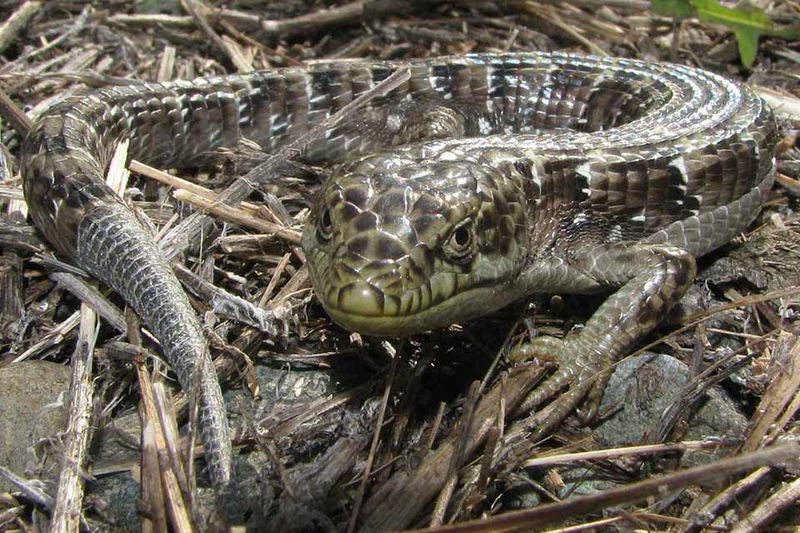
Southern Alligator Lizards like cover. The National Park Service notes they use rocks, logs, dense vegetation, and crevices, and California’s habitat account places them in suitable parts of the state, including areas near homes.
Walk your yard and you may spot the kind of places they use. A stacked-stone wall, a brush edge, a woodpile, thick groundcover, or a pile of leaf litter all offer shelter.
A yard with some of those features may simply be a comfortable spot for one.
Timing also varies. The Natural History Museum of Los Angeles County reports different breeding windows for southern and northern alligator lizards.
That tells us activity depends on species and place, so there is no single statewide calendar to rely on.
The takeaway is simple. If you see one, it is likely using the shelter and food your yard already offers.
It is not a sign that something is wrong.
Leave the outdoor lizard alone
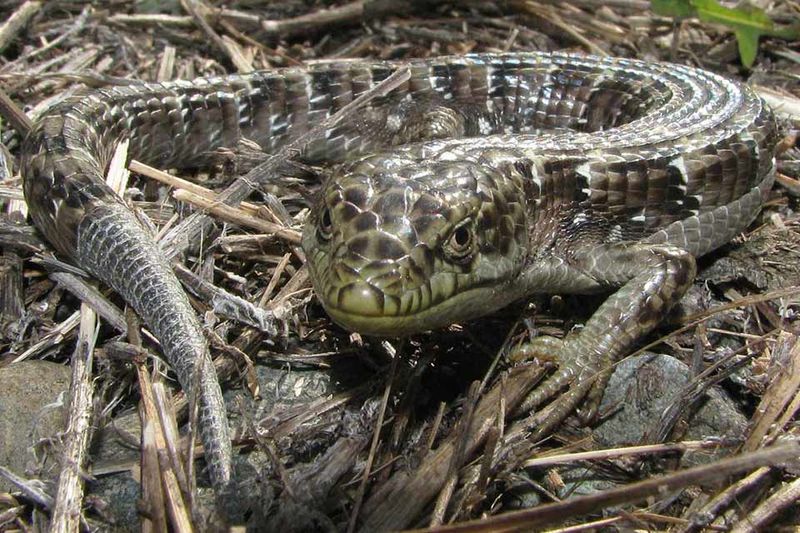
When you meet one in the yard, the best move is to step back and let it go on its way. Do not pick it up, trap it, or chase it off.
A lizard that is left alone usually just heads for the nearest cover.
There is a practical reason beyond kindness. The National Park Service warns that an alligator lizard can inflict a painful bite.
Handling one is the likeliest way to get hurt.
Your plants are not at risk either. UC IPM says garden lizards generally cause no measurable plant damage.
So there is no gardening reason to remove one.
A few easy habits help. Keep pets back if you can, mow or trim with a look ahead, and shift a stack of rocks or boards slowly, since a lizard may be tucked inside.
If one is stuck indoors, gently guide it toward an open door rather than grabbing it.
Keep taking care around black widow hiding places
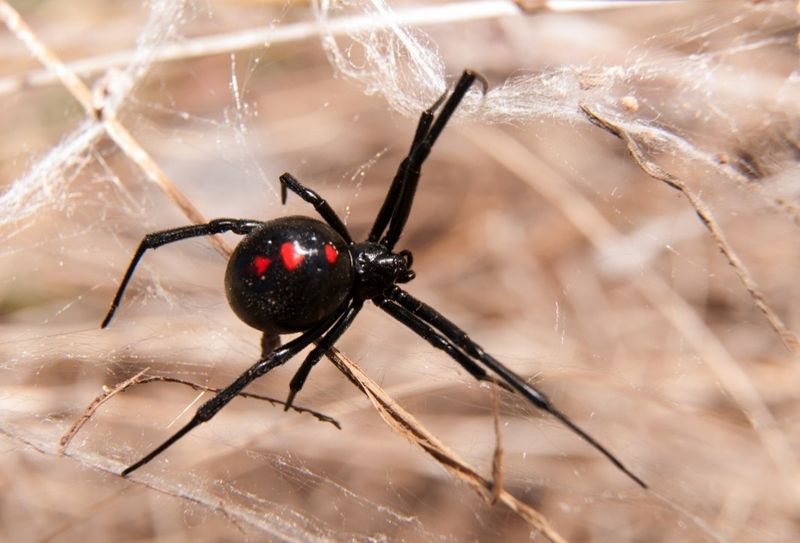
A lizard nearby does not make a dark, dry corner safe. UC IPM notes that black widows commonly shelter in dark, dry, undisturbed places, and it recommends caution when disturbing likely hiding spots.
Wear gloves when you move stacked pots, firewood, or boards, and look before you reach. Black widow bites can be serious, so anyone who is bitten should seek medical advice.
Welcome the lizard, leave it undisturbed, and keep your own guard up around those quiet corners. The lizard may take a spider now and then, but your gloves are the better safeguard.