
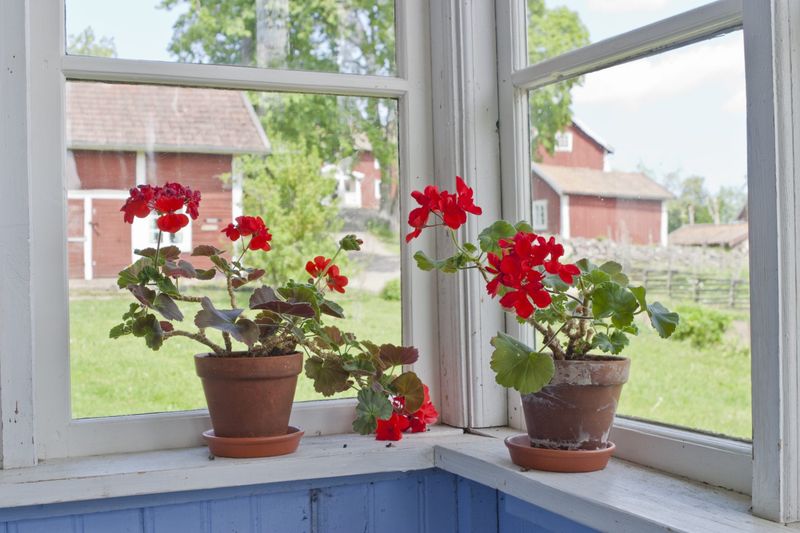
Rub a leaf of a scented geranium and you get a burst of lemon, rose, mint, or fruit. Many Southern gardeners want to keep a favorite plant going after one cold snap too many.
Frost can harm this tender plant, so a little planning in fall makes a real difference. Here is a simple routine that helps you keep the plant for another season.
Frost threatens the plant, not a proven scent promise
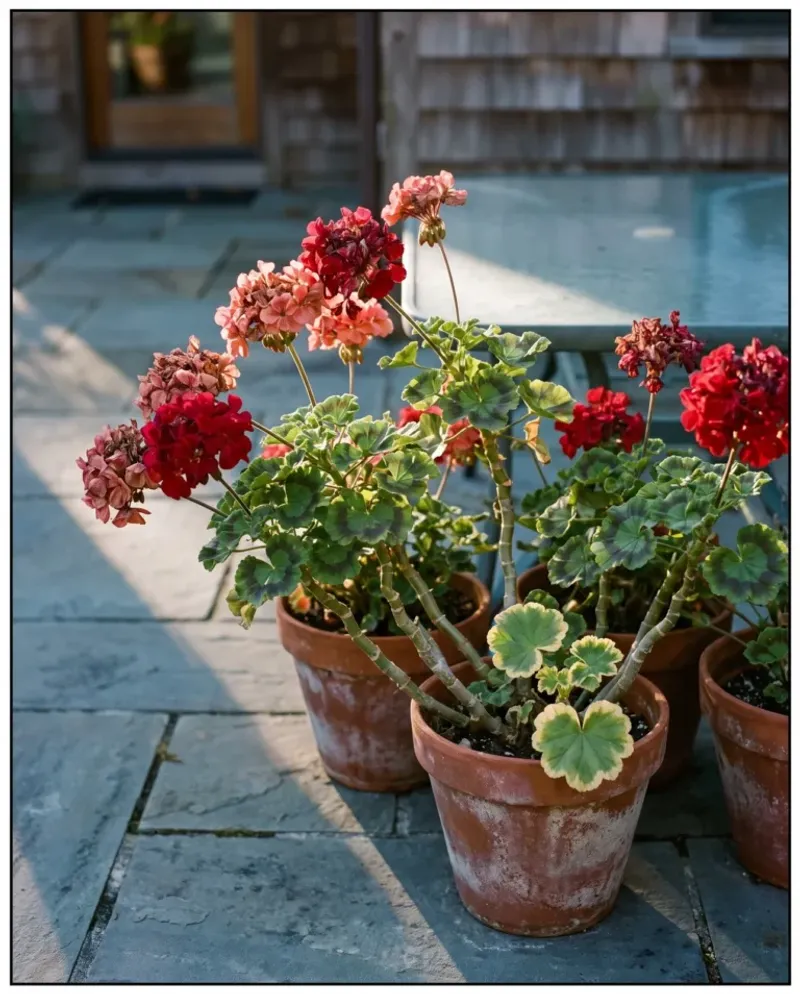
Scented Pelargonium is grown for its leaves. Brush or crush one and the oils release a scent that can smell like lemon, rose, mint, or fruit.
It makes sense to worry about losing a favorite aroma.
Here is the part that deserves a correction. UF/IFAS describes scented geraniums as frost-sensitive, so the real danger is frost harming or killing the plant.
Nothing in the university guidance shows that cold predictably or permanently strips the fragrance from a leaf.
A study of rose-scented geranium grown for essential oil found that oil yield and chemistry shift with the seasons. That research looked at crop plants grown for oil, so it does not tell us a backyard plant loses its scent after a cold night.
So the promise of this guide is modest and honest. Protecting the plant improves your chance of keeping it.
It cannot guarantee a particular aroma next spring, and Nebraska Extension offers the care basics we will follow.
Move the plant inside before frost
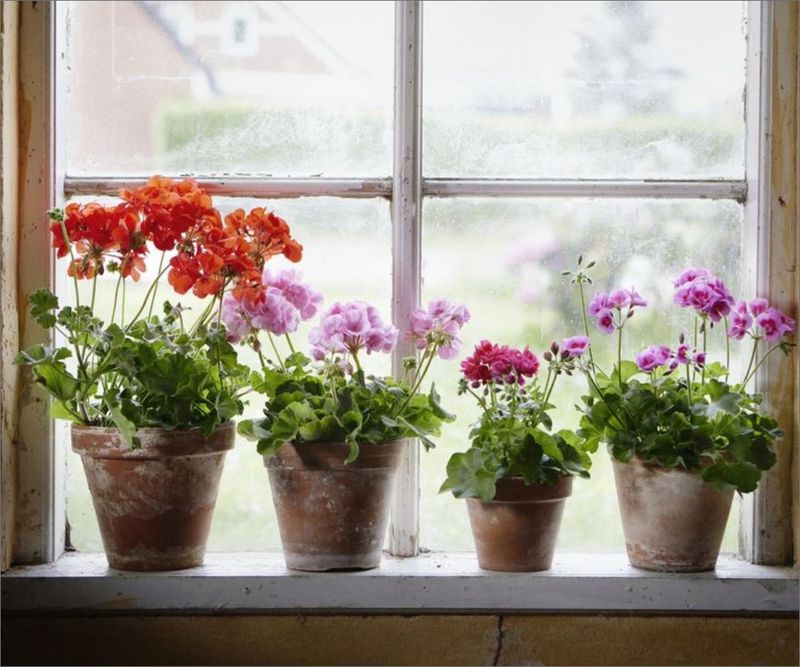
Fall gardens in Florida and Texas can stay warm for weeks, then drop fast when a cold front arrives. That is why your forecast matters more than any calendar date.
A plant on an open patio faces more exposure than one tucked against a south-facing wall.
For a timing cue, Nebraska Extension suggests moving plants in when nighttime temperatures approach 45°F, before the first frost. Think of that number as an early reminder, not the exact temperature where damage begins.
Watch the overnight lows for your own zip code. Pay attention to wind, open sky, and low spots where cold air settles, since those can make your yard colder than the forecast suggests.
Because UF/IFAS lists the plant as needing frost protection, a gardener in Gainesville and one in the Texas Hill Country may move theirs on very different weeks. When a cold night shows up in the forecast, bring the pots in that day.
Prepare the plant for its move indoors
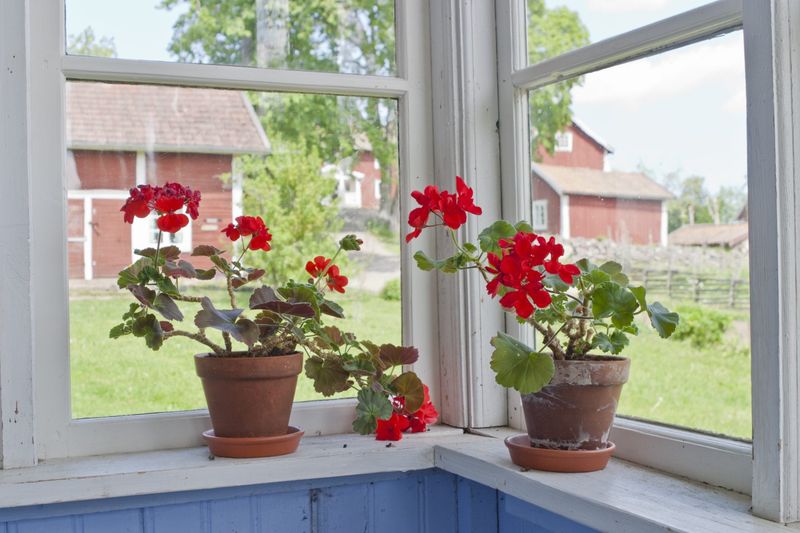
Insects love to ride indoors on leaves. Before a potted plant crosses the threshold, check the stems and the undersides of the leaves, and look at the soil surface too.
Catching pests early keeps them off your other houseplants.
A plant growing in a bed needs a bit more work. Colorado State University Extension advises carefully digging it up and potting it in a container with drainage holes and fresh potting mix.
Dig wide enough to keep as many roots as you can, and water the pot lightly once it is settled.
Pets deserve a thought before the plant takes its place in the living room. The ASPCA lists Pelargonium as toxic to dogs, cats, and horses, with possible vomiting, appetite loss, depression, and skin irritation.
Set the pot on a high shelf or in a room where curious animals cannot reach it.
Give it bright light and prune only if needed
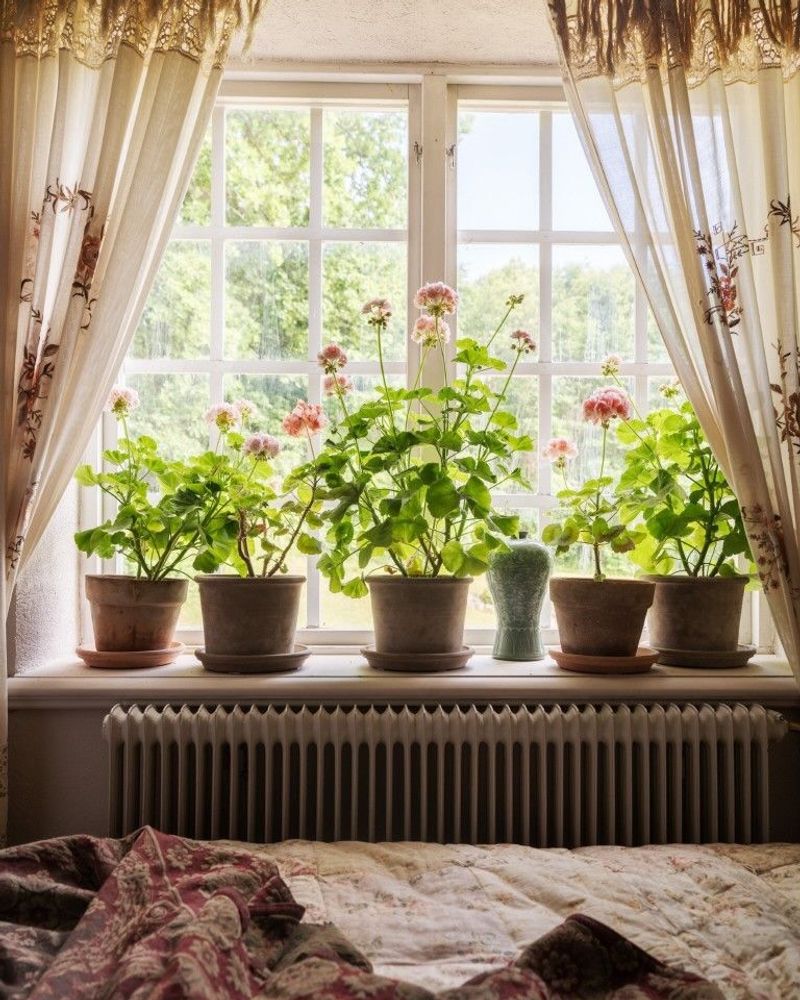
A sunny window is the best seat in the house. Nebraska Extension recommends keeping the plant in bright light indoors, and a south-facing window often works well.
If the plant gets too little, expect thin, stretched stems with sparse leaves.
Leggy growth is a handy clue. When the gaps between leaves grow wider and the stems lean toward the glass, the plant is asking for more light.
Move it closer to the window or add a grow light.
Pruning is optional. A big plant can be hard to fit indoors, and University of Minnesota Extension notes that trimming back by about one-third to one-half can make it easier to manage.
If your plant already fits, you can skip the shears. Trimming is a space-saving choice, not a proven way to keep the fragrance.
Let the potting mix dry somewhat between waterings
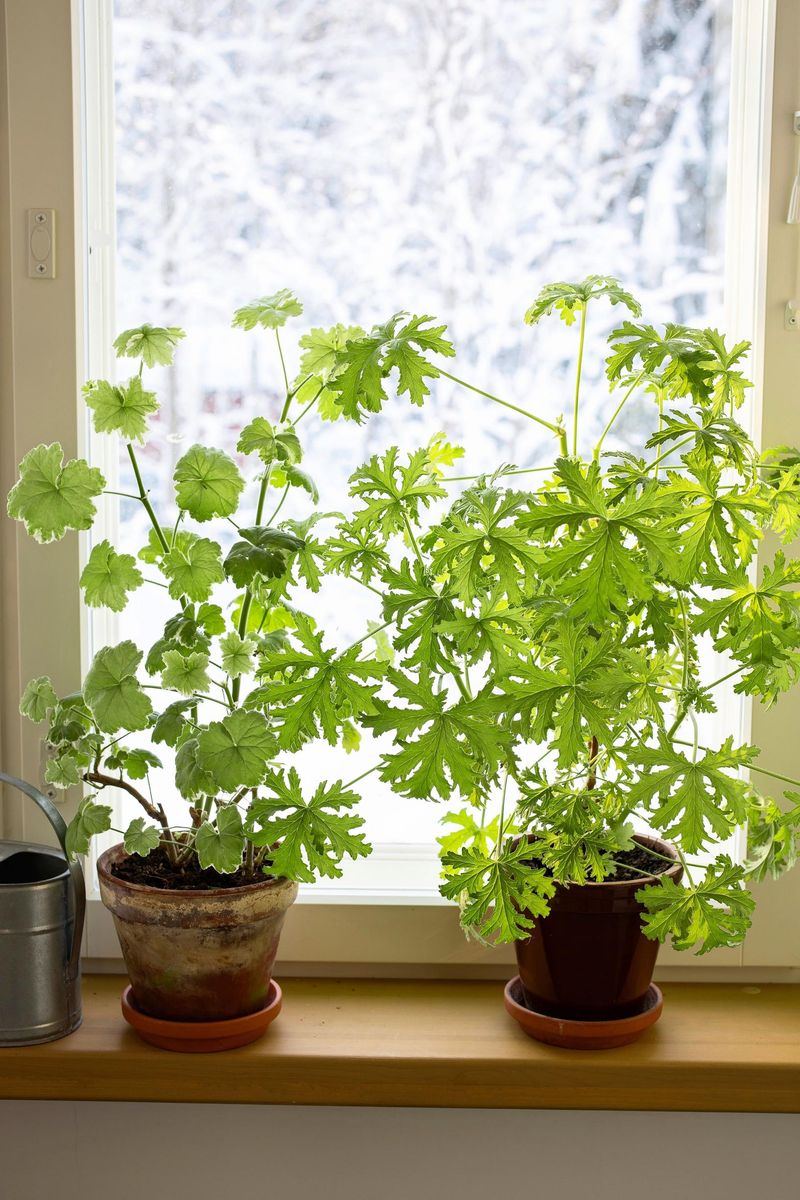
Indoors in winter, the plant is growing slowly and drinks far less than it did on the patio. Overwatering is an easy mistake to make.
A pot that stays soggy can leave the roots struggling.
Skip the fixed schedule and let the pot tell you. Push a finger into the mix, and if it still feels damp, wait.
University of Maryland Extension and the Royal Horticultural Society growing guide both point toward watering less and letting the mix dry somewhat between drinks.
Pot weight is another clue. A light pot usually needs water, while a heavy one can wait.
Also make sure the pot drains freely and empty any saucer after watering.
Think of this as keeping the plant steady through the cold months. Watering carefully helps the plant stay healthy, but it is not a trick for stronger fragrance.
Short on room or light? Take a cutting
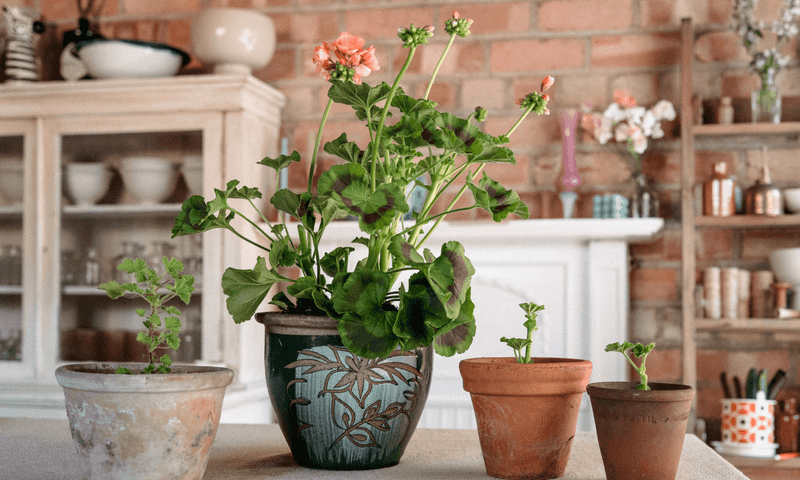
Not every home has a bright window for a big plant. If space or light is tight, a small cutting can carry your favorite variety through winter instead.
A few little pots take up much less room than one large one.
Illinois Extension notes that scented geraniums are commonly propagated from tip cuttings, and University of Minnesota Extension also lists cuttings as an option.
Snip a healthy shoot tip, remove the lower leaves, and press the stem into a pot of moist, well-draining mix. Place it where it gets bright light, and keep the mix from turning soggy.
Treat this as another way to try to keep the plant going, not a sure thing. Some cuttings fail to root, and a new plant may smell a little different from its parent, so take a few to improve your odds.
Protect the plant, then check its scent
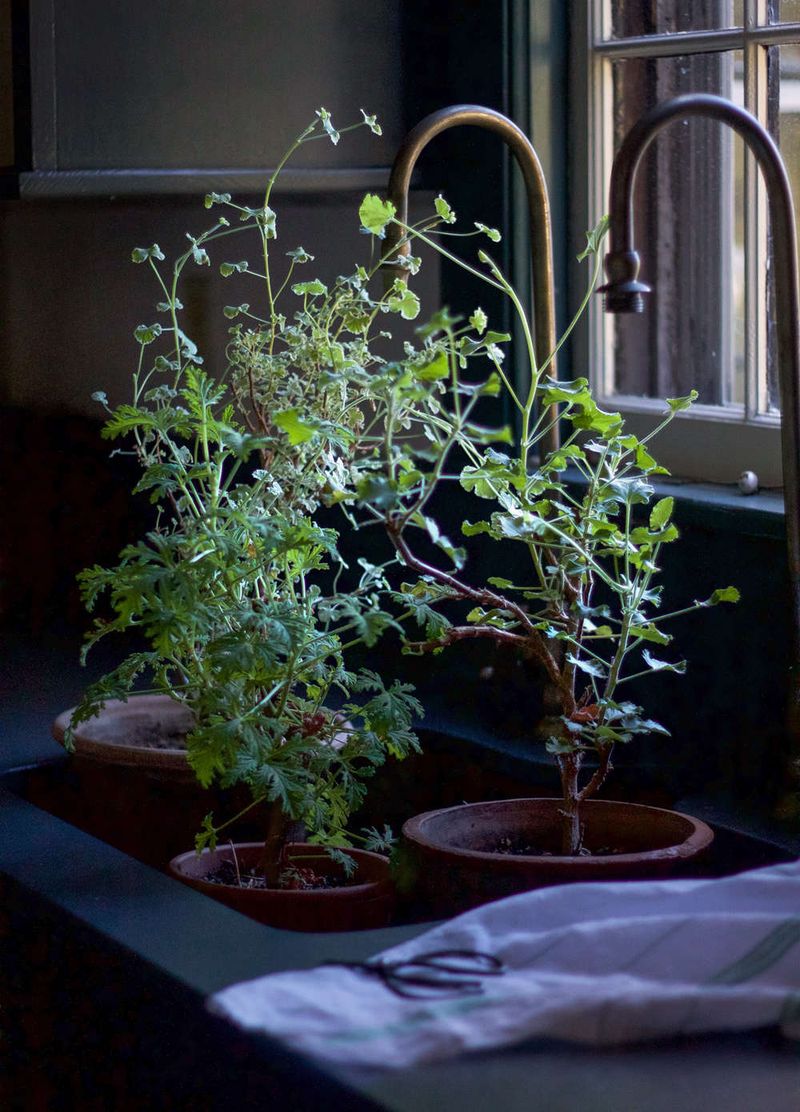
Bringing your plant in and caring for it through winter gives it a better chance of seeing another season. It does not guarantee survival, vigorous growth, or a certain strength of scent.
Both Nebraska Extension and UF/IFAS frame the work as protecting a tender plant.
Once new growth appears in spring, gently rub a leaf and see what you get. Scent varies from plant to plant, so judge it by nose rather than by what you did last winter.
A favorite plant is worth a little effort, and the leaf will tell you the rest.