
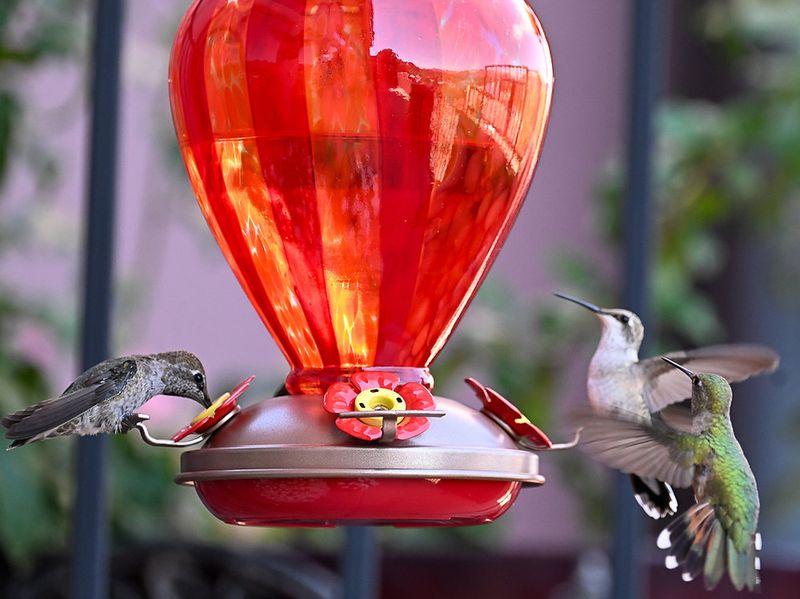
A few hummingbirds are still moving through Southern yards when the leaves start to turn. A clean feeder can give those late travelers a place to grab a quick meal.
The trouble is that ants and wasps often find the sugar water first. A few simple habits can make the nectar harder for them to reach.
Late October can still be feeder season in parts of the South
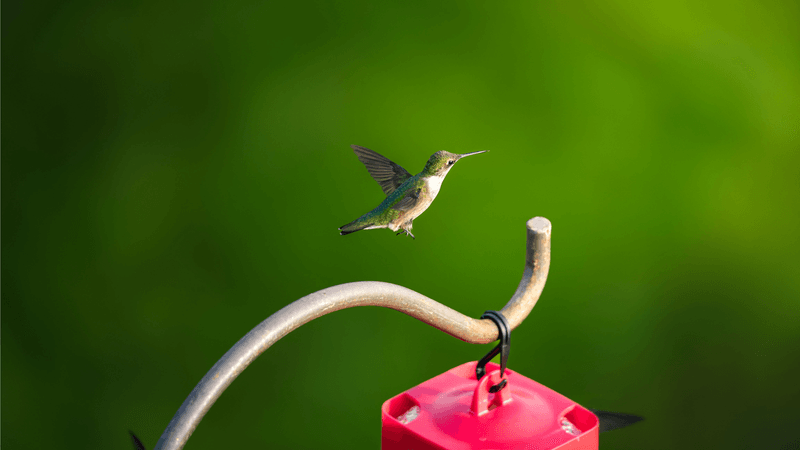
Late October can still be a reasonable time to have nectar out in parts of the South. Smithsonian guidance gives Gulf Coast and other southern U.S. areas a feeder season that runs through early November.
Texas is a useful example. Texas Parks and Wildlife reports that Ruby-throated Hummingbird migration winds down in early November along the coast.
That pattern belongs to coastal Texas, though. It does not set the calendar for every part of Florida or the rest of the South, and timing shifts with location and species.
A clean feeder can be a potential food source for late migrants or stragglers. It is not a promise that any bird will stop at your yard.
Some years you may see a few visitors, and some years you may see none.
Worried that a feeder will keep birds from leaving? Cornell Lab of Ornithology explains that feeders do not hold hummingbirds back.
Changing day length and other natural cues tell them when to go.
Use a water-filled moat to make nectar harder for ants to reach
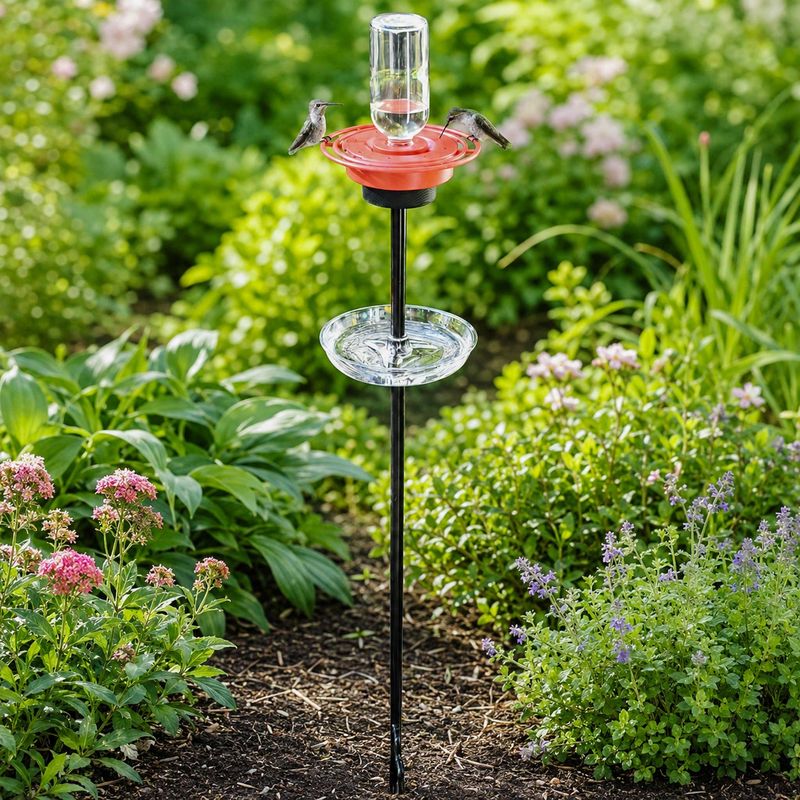
Ants are the most common feeder pests in warm Southern yards, and a moat is one of the simplest ways to slow them down. Pick a feeder with a built-in ant moat, or hang a separate moat cup above the feeder.
Fill the cup with plain water.
Texas Parks and Wildlife describes moats as an effective barrier. Its page also mentions oil, but water does the job without putting anything greasy near a bird feeder.
Warm, dry days empty a moat quickly, so look at it each time you pass. Top it off whenever the water runs low or fills with debris.
A dry moat is just an open invitation.
A moat can reduce ant visits, though it will not stop every ant. Keep the hanging wire or hook clear of branches and walls, since ants can use those as bridges around the water.
Choose feeder features that limit insect access
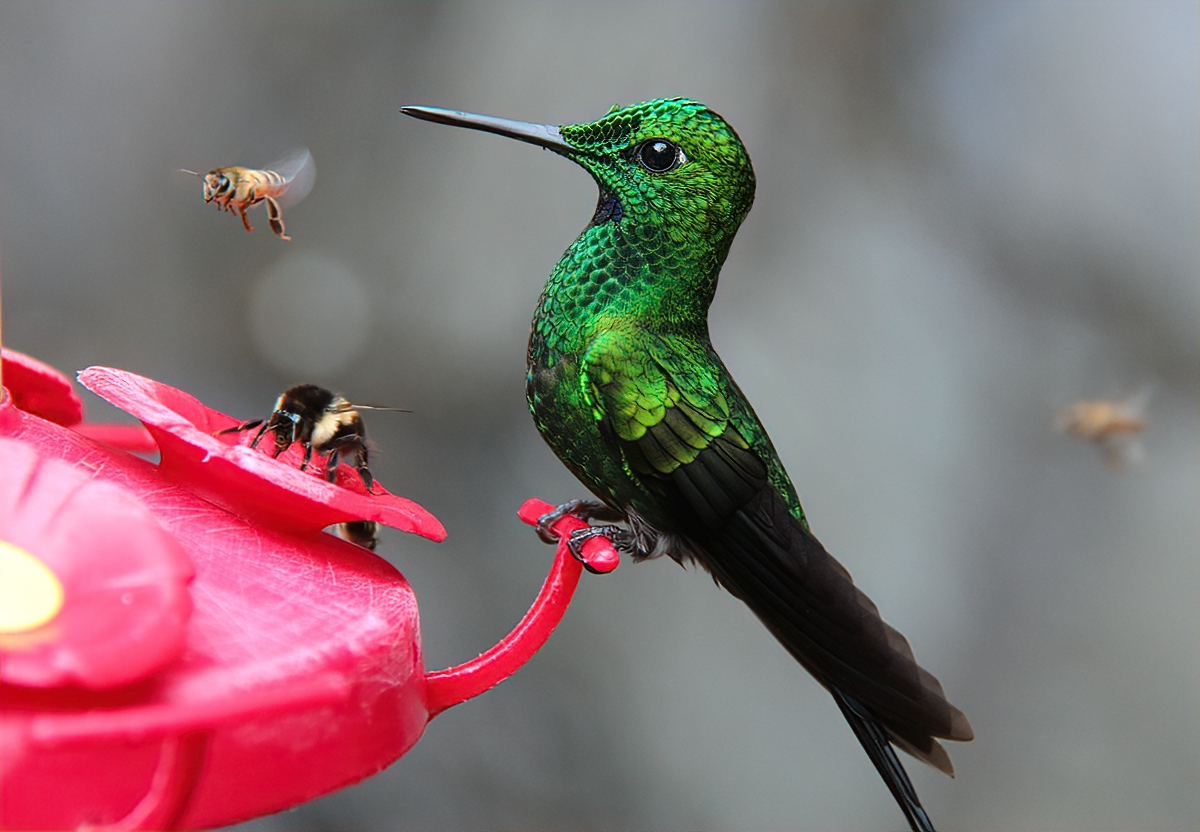
Wasps and bees go after nectar when they can reach it, so the feeder’s design matters. Bee guards, the little caps over the ports, can make nectar harder for insects to reach.
Cornell Lab also points to saucer-style feeders, where the raised ports keep the sugar water out of range of many insects.
Maintenance counts just as much as hardware. Rinse spilled nectar off the outside of the feeder and around the ports, and tighten every part so it seals well.
Audubon notes that leaks and drips attract insects.
If wasps keep showing up, try moving the feeder to a new spot a few yards away. Cornell Lab suggests this as a fix when insects persist.
None of these steps guarantees a wasp-free feeder. Together they can cut down how many insects get a drink.
Mix plain nectar and place the feeder out of direct sun
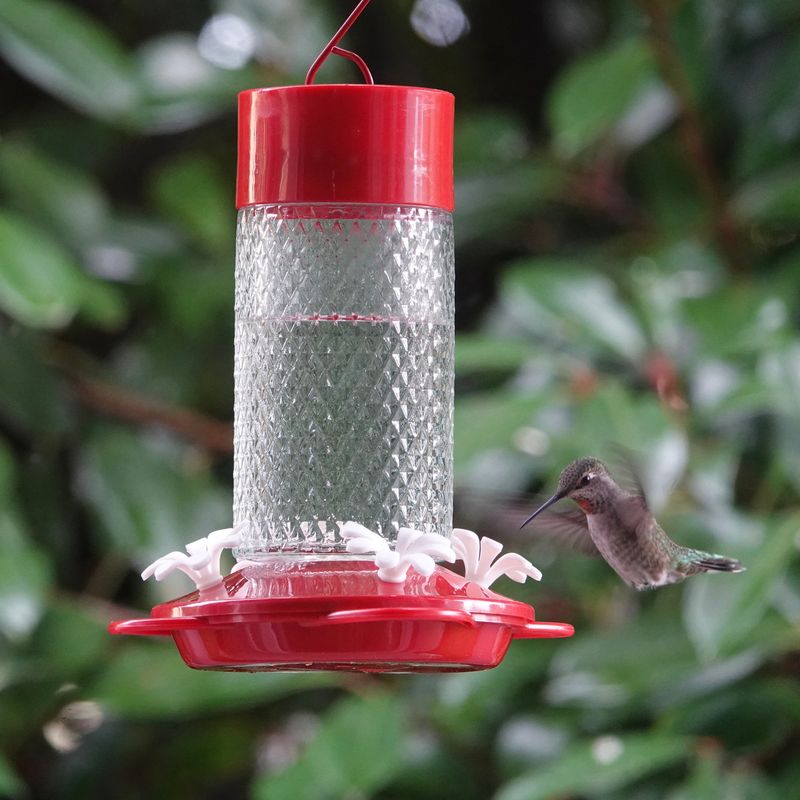
The recipe is short: 1 part refined white sugar to 4 parts water. Smithsonian says you do not need to boil the water.
Stir until the sugar dissolves and the liquid looks clear.
Skip honey and other sweeteners, which are not the right food for hummingbirds. Leave out red dye too.
A U.S. Fish and Wildlife Service FAQ says proof of harm is lacking but the dye is probably unnecessary, so clear nectar is the simple choice.
Where you hang the feeder matters in a hot climate. Cornell Lab recommends keeping it out of direct sun, which can speed spoilage.
A spot under an eave or the edge of a shade tree works well.
Clean the feeder whenever you change the nectar
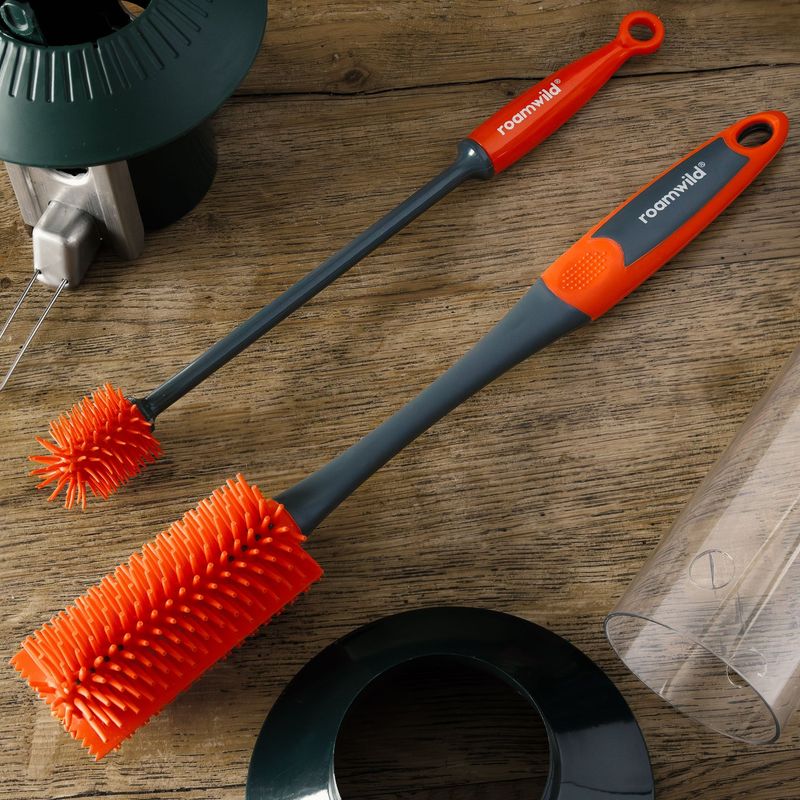
Make cleaning part of every refill. Take the feeder apart, rinse it, and scrub the ports and seams with a feeder brush.
Smithsonian suggests cleaning every other day, at least twice a week in hot weather, and weekly in cooler spring and fall weather.
Authorities do not all agree on one schedule, and that makes sense. A feeder in a hot Florida yard spoils faster than one in a cool, shaded spot.
A busy feeder also empties and gets refilled sooner.
So check the nectar often and let what you see guide you. Cloudy liquid, floating specks, or any visible mold means dump it and wash the feeder right away.
U.S. Fish and Wildlife Service guidance also stresses regular cleaning.
Shade helps, as Cornell Lab notes. If October turns hot, shorten your interval and give the feeder an extra wash.
Avoid oils, sticky products, and pesticides near the feeder
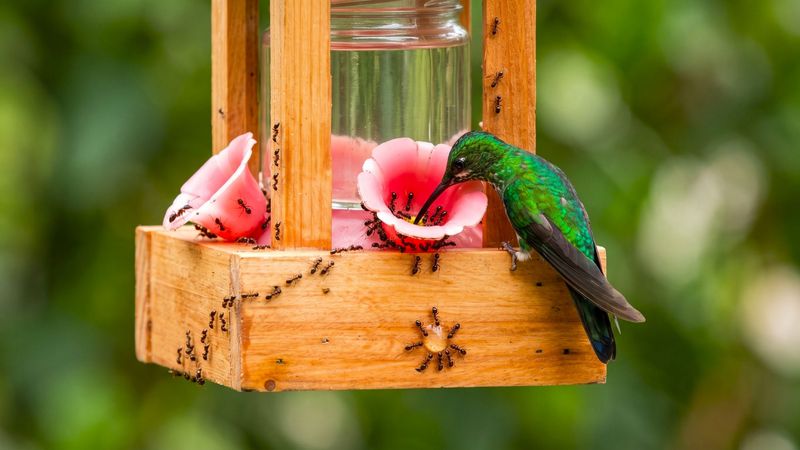
Some pest tips online suggest petroleum jelly, grease, or sticky coatings on the hanger. Skip them all.
Cornell Lab warns that oils and sticky materials can contaminate nectar or soil a bird’s feathers.
Pesticide sprays are a bad idea too. University of Maine Cooperative Extension specifically says not to use them around the feeder, because they can harm birds as well as insects.
Insects are also part of what hummingbirds eat, so a few bugs in the yard are not a problem. Audubon cautions against insecticides near feeders as well.
If a pest problem gets stubborn, go back to the safe tools. Refill the moat, wipe up drips, and change the feeder’s spot.
Use local sightings to decide when to take the feeder down
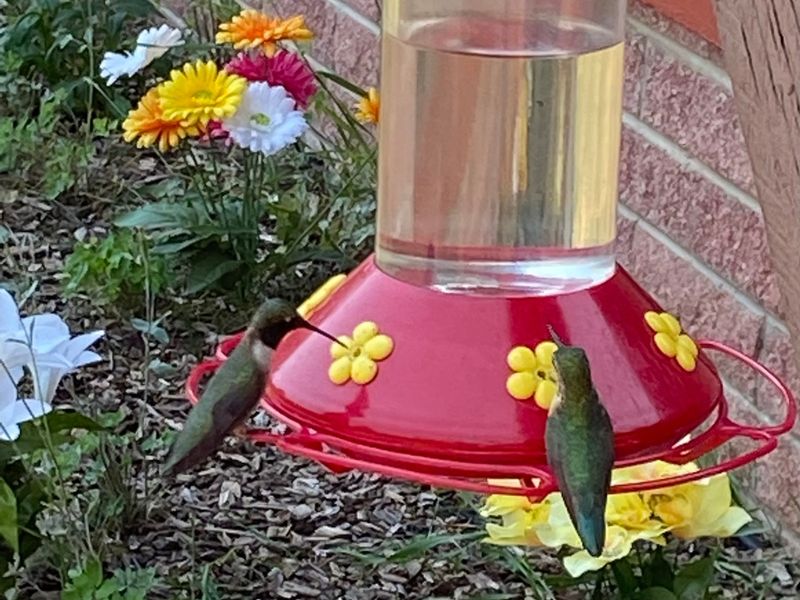
Your own yard is the best calendar. Note the date you see your last hummingbird, then keep a clean feeder up afterward in case a straggler shows up.
Advice on how long varies. Cornell Lab suggests leaving feeders up for several weeks after the last local sighting.
Texas Parks and Wildlife offers two weeks as a rule of thumb. Neither number fits every place, and some hummingbirds winter in parts of Texas, so a feeder may stay busy longer there.
The routine for the season is simple: a water-filled moat, a feeder that limits insect access, quick leak fixes, fresh nectar, and cleaning at each refill. Together they can reduce ant and wasp visits without promising a pest-free feeder.
One quiet feeder in November is not a failure. It is a light left on for any traveler still on the way.