
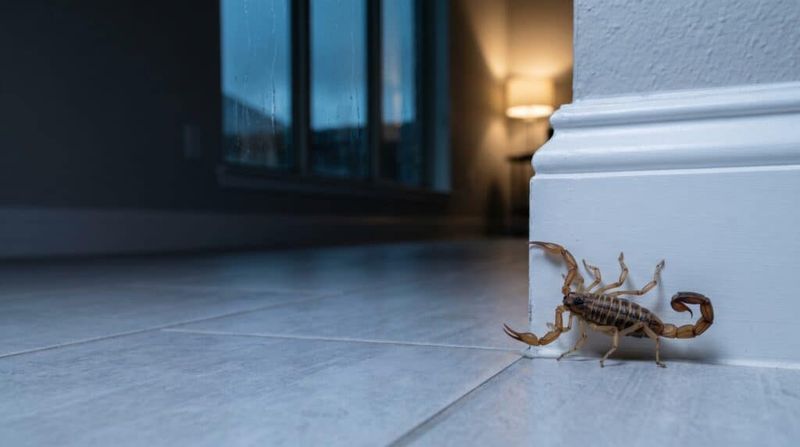
You flip on the bathroom light and spot a scorpion in the tub, and suddenly the bedroom down the hall feels a lot less safe. Central Texas homes share space with a night-active, wall-climbing scorpion, so the worry is fair.
Nothing can promise a scorpion-free bedroom, but a few steady habits can lower the odds of a surprise. Here is how they get around, what to check, and what to do when you find one.
How a scorpion can reach a Central Texas bedroom
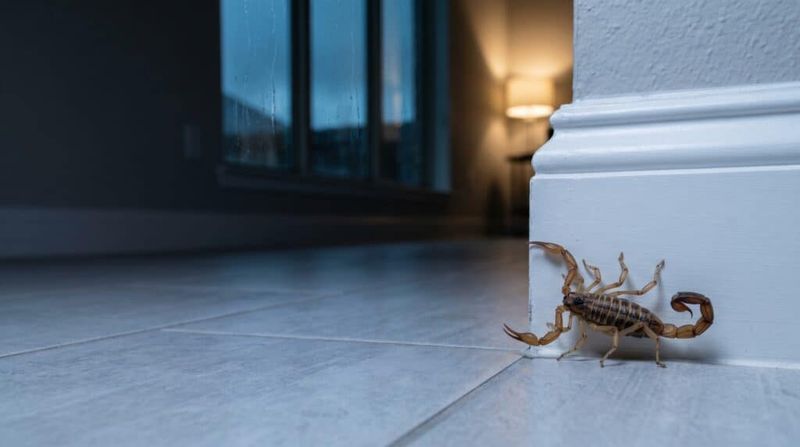
The scorpion most Central Texas homeowners will meet is the striped bark scorpion, Centruroides vittatus. Texas A&M reporting describes it as the most common scorpion in the region, found statewide, active at night, and able to climb walls and trees.
A single sighting cannot confirm the species, so treat that label as a likely guess rather than a diagnosis.
Night activity and climbing skill explain how a bedroom encounter can happen. A scorpion that wanders after dark and can scale brick, stucco, or tree trunks has plenty of ways to end up near a house.
Texas A&M AgriLife Extension also notes that these scorpions can turn up in attics, which adds another path into upper floors and bedrooms.
Here is what the facts do not say. Nothing shows that scorpions look for beds, are drawn to sleeping people, or follow one predictable route through a house.
A scorpion found near a bed is better understood as an animal wandering through a space it can physically reach.
That distinction shapes the rest of this guide. Since no single path explains every sighting, the goal is layered risk reduction: fewer ways in, fewer hiding spots outside, a more cautious bed setup, and safe habits when you do find one.
Each step can help, and none of them is a guarantee.
A tub sighting does not reveal the entry route
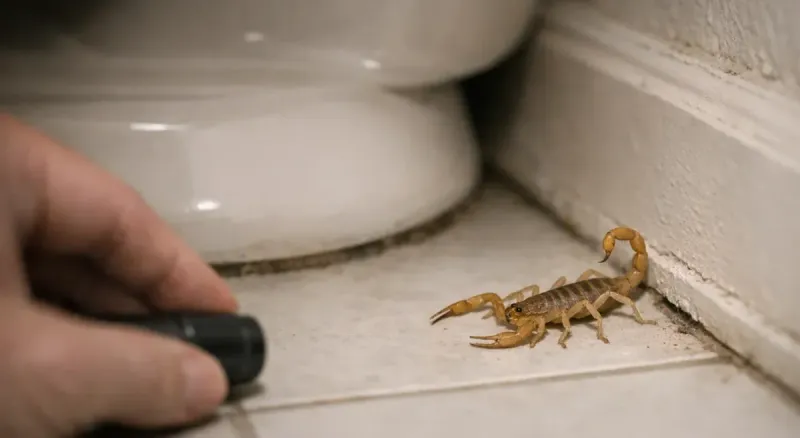
Plenty of people assume a scorpion in the tub came up the drain. That is a guess, not a fact.
A scorpion in a bathtub or sink tells you where it ended up, not how it got inside.
Smooth porcelain is easy to wander onto and hard to climb back out of, so a tub may simply be where a scorpion got stuck and was noticed. Nothing in the Texas guidance shows that tubs reliably trap scorpions either.
The bathroom is just a place where people look closely and often with the lights on.
What the Texas A&M School IPM action plan points to are ordinary building openings: gaps under doors, cracks in walls or foundations, weep holes in brick, and openings around pipes and other penetrations. Any of these could let a scorpion in, and plumbing gaps are among the possibilities.
But the spot where you found the animal does not show which opening it used.
That uncertainty is useful to accept. Instead of fixating on the drain, think of the whole house as a set of possible entry points.
A scorpion could have come in near the front door, through the garage, or down from the attic, then wandered to the tub later.
The next sections move from the question to the work: first the bed itself, then the openings and yard conditions that make entry more likely.
Make the bed less accessible without expecting a guarantee

Two simple bedroom habits are worth trying: pull the bed away from the walls, and keep sheets, blankets, and bedspreads from touching the floor. The idea is to remove easy bridges between the floor or wall and the mattress.
Tuck in dangling bedding and avoid piling clothes where they touch both the floor and the bed.
These suggestions come from an observational study of reported scorpion stings in Arizona. In bedroom cases, the beds often touched a wall, and bedding or clothing sometimes connected the bed to the floor.
That pattern makes the steps sensible.
Now the limits, stated plainly. The study looked at Arizona bark scorpions and reported sting cases in Arizona.
It did not test whether changing a bed setup prevents stings, and it does not measure bed risk for striped bark scorpions in Central Texas.
So treat these as reasonable precautions, not proven bed-proofing. A bed set away from the wall with its bedding lifted off the floor may give a climbing scorpion fewer easy routes, but it will not make a bed off-limits.
Furniture tricks alone should not be your only plan.
A quick weekly habit helps. Glance at the wall behind the headboard, check where the blanket hangs, and move stray laundry off the floor.
If you have a child’s bed, give it the same attention, since the stakes feel higher there.
Reduce access and hiding places around the home
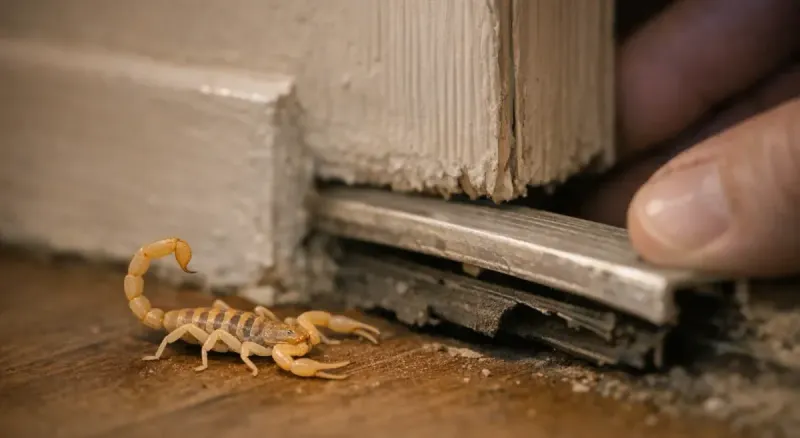
Grab a flashlight and walk the house in daylight. Texas A&M’s bark scorpion IPM plan backs a mix of sealing up and cleaning up, and both fit in a weekend.
Start with the openings. Check door sweeps and weather stripping for light showing underneath, and repair torn window and door screens.
Fill cracks and gaps around pipes, eaves, and utility lines where they enter the house.
Weep holes need care. Those small openings in brick veneer let moisture drain and air move, so do not caulk them shut.
Use appropriate breathable screening that keeps crawling pests out while leaving drainage and ventilation working.
Then turn to the yard. Move firewood, stacked rocks, boards, and debris away from the foundation.
Thin out heavy mulch near the walls, keep grass short, and trim branches or shrubs that touch the house, since a limb can work like a ramp to the roof or siding.
Walk it again after storms and in the heat of summer, when yard work and shifting weather can open new gaps. All of this reduces access and nearby hiding places.
It cannot promise that scorpions stay outdoors, so keep the bedroom habits going too.
Respond safely when you find a scorpion
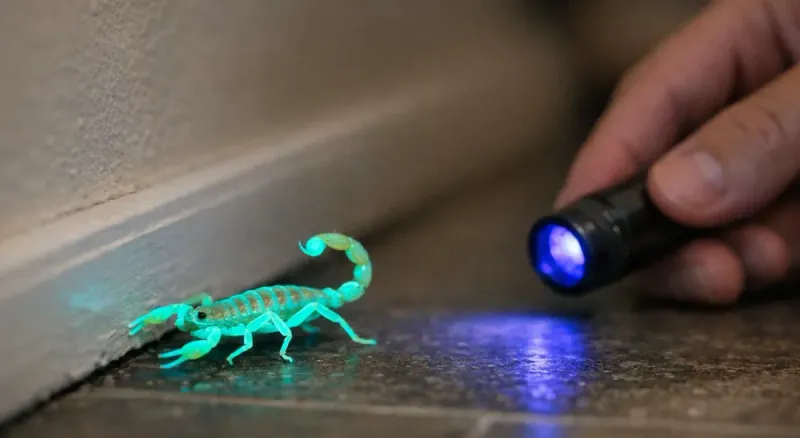
Once you know scorpions are around, build a few checks into your routine. Shake out bedding, clothes, shoes, and towels before using them, especially anything that has sat on the floor.
It takes seconds and removes a hiding place you may not have considered.
A UV flashlight can help after dark, because scorpions glow under ultraviolet light. Sweep walls, baseboards, and door frames, and you may find where they travel.
The Texas A&M IPM plan mentions this as a way to locate them.
When you find one, keep your hands out of it. Cover it with a jar or container, or use a long-handled tool, and move it outside or dispose of it.
Never pick one up bare-handed, and wear closed shoes when you walk around at night.
If someone is stung, remember that reactions vary from person to person. The American Academy of Pediatrics advises prompt medical attention for a child’s sting.
Trouble breathing or other severe symptoms call for urgent care right away.
Keep the poison control number handy and share it with anyone who watches your kids. Planning ahead beats searching for answers at midnight.
Treat pesticides as one tool, not a complete solution
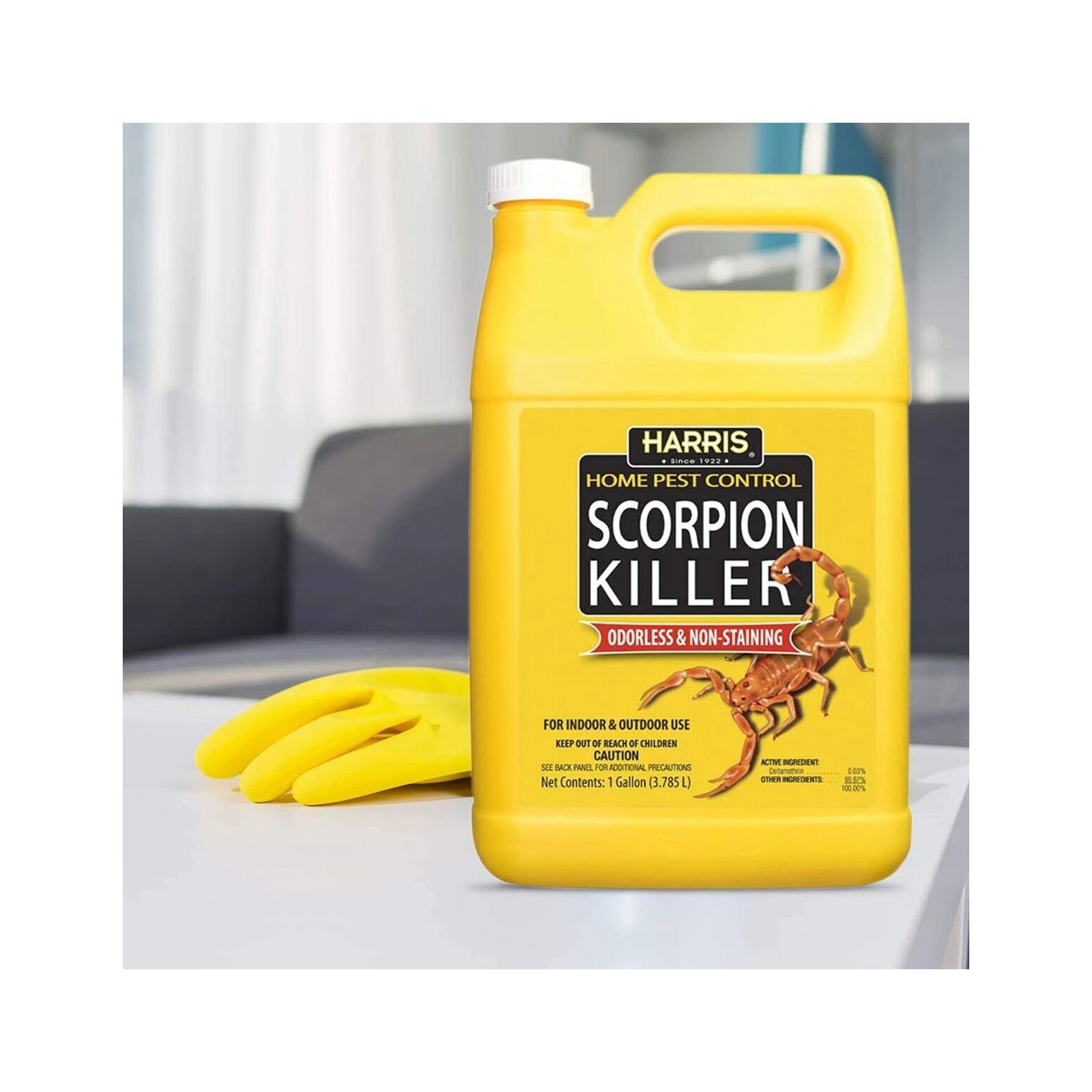
Pesticides can knock back scorpion numbers, but they work best as one piece of the plan, not the whole thing. The Texas A&M IPM plan pairs any chemical use with exclusion, yard cleanup, and monitoring.
Spraying while gaps stay open and woodpiles stay stacked leaves the underlying problem in place.
If you choose a product, read the label and follow it exactly, including where it can be applied and how often. Skip unlabeled products, homemade mixes, and broad indoor spraying, which add risk for kids and pets without a clear payoff.
Do not count on killing insects to clear out scorpions either. Texas A&M control guidance explains that scorpions need little food, so cutting down their prey may not get rid of them.
If sightings keep coming back despite your repairs and yard work, think about hiring a licensed pest professional. A technician can inspect the house, spot openings you missed, and apply products legally and safely.
Even then, no treatment can promise to remove every scorpion.
Think of the whole plan as layers: seal, tidy, adjust the bed, check before you touch, and treat with care. A scorpion-wise house is not scorpion-proof, but it is a calmer place to fall asleep.