
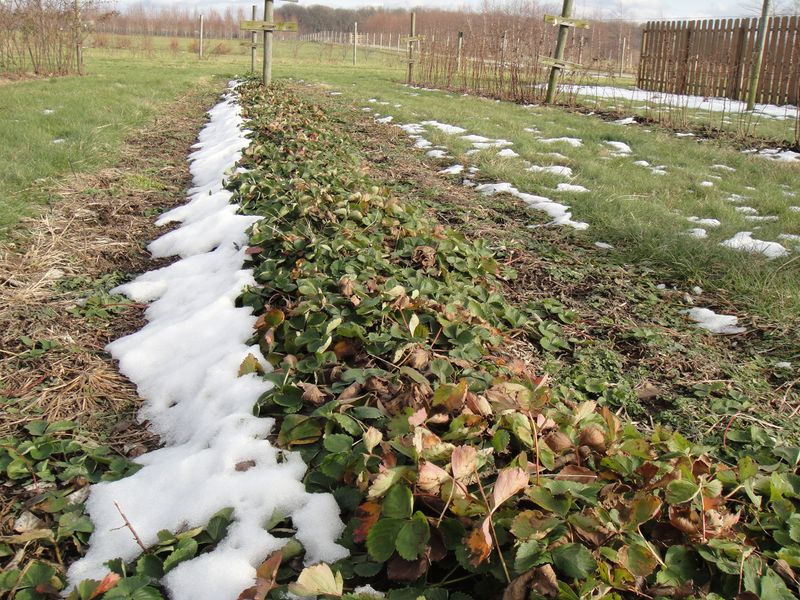
A strawberry bed can look fine in December and then show broken roots and crowns sitting high on the soil by February. The culprit is often a run of freezing nights and warm days that shifts the ground.
Straw can help in some beds, but not every Southern strawberry planting needs it. Here is how to tell whether yours does, and how to use it well.
Freeze–thaw cycles can damage roots and expose crowns
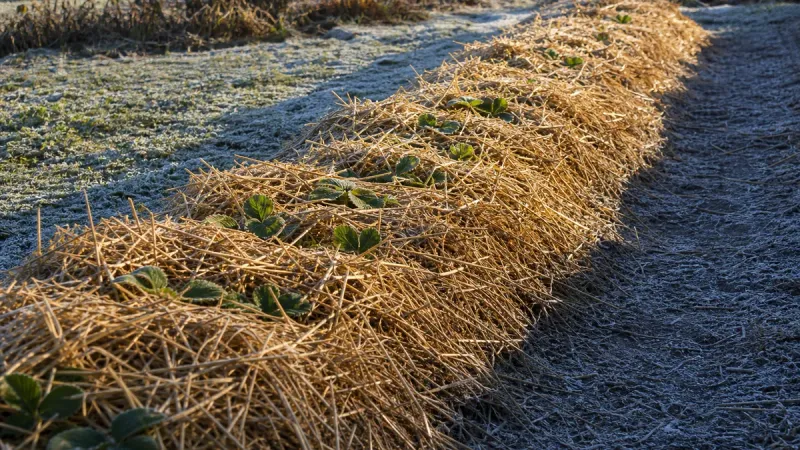
Picture a bed where the weather swings from warm afternoons to hard freezes at night. According to Ontario’s winter injury guidance, those alternating conditions raise the risk of winter injury in strawberries.
The soil itself can heave as it freezes and thaws. That movement can break roots and leave crowns sitting higher than they should, exposed to cold air.
This does not mean bare plants generally pop completely out of the ground. The usual damage is subtler, and you may only notice weak or slow growth in spring.
Cold can also injure crown tissue directly, even without any soil movement. Exposed crowns are simply more vulnerable, so there is no guarantee of drying out or dying.
Raised beds deserve a closer look. Cold can penetrate their soil more deeply than in-ground soil, which may raise winter-injury risk.
That is a reason to watch a raised perennial bed, not a claim about containers. For susceptible perennial beds, this is why protection may be worth considering.
Decide whether winter straw fits your growing system
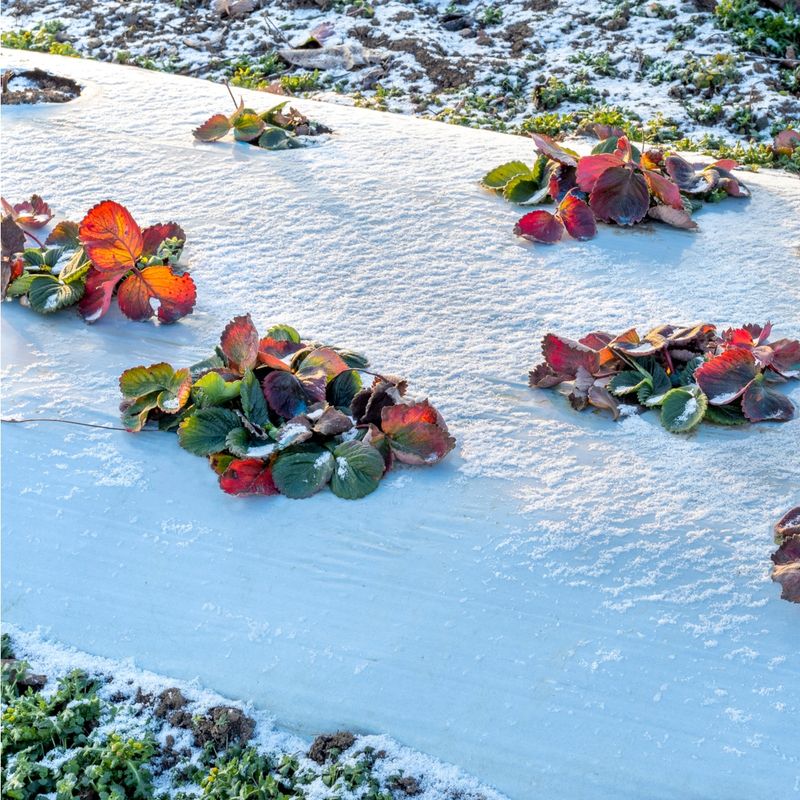
Before reaching for a bale, think about how you grow. Winter straw is advice for perennial beds that face hard freezes or repeated freeze–thaw cycles.
The South covers many winters, so one plan will not fit everyone.
Florida is the clearest exception. UF/IFAS home garden guidance describes strawberries grown as annuals, planted in fall and typically removed after fruiting.
Its freeze advice centers on covering plants with sheets, blankets or frost cloth to protect flowers and fruit, which is a different job than tucking dormant crowns under straw.
Texas varies too. Texas A&M AgriLife notes that mulch can protect strawberries and other marginally hardy plants from cold weather.
Gardeners on the High Plains face harsher conditions than those near the Gulf, and A&M has a separate low-tunnel guide for that region.
If you keep a perennial bed and your winters bring real freezes, straw is worth considering. If you replant each fall, check local advice first.
Wait for dormancy or sustained cold before mulching
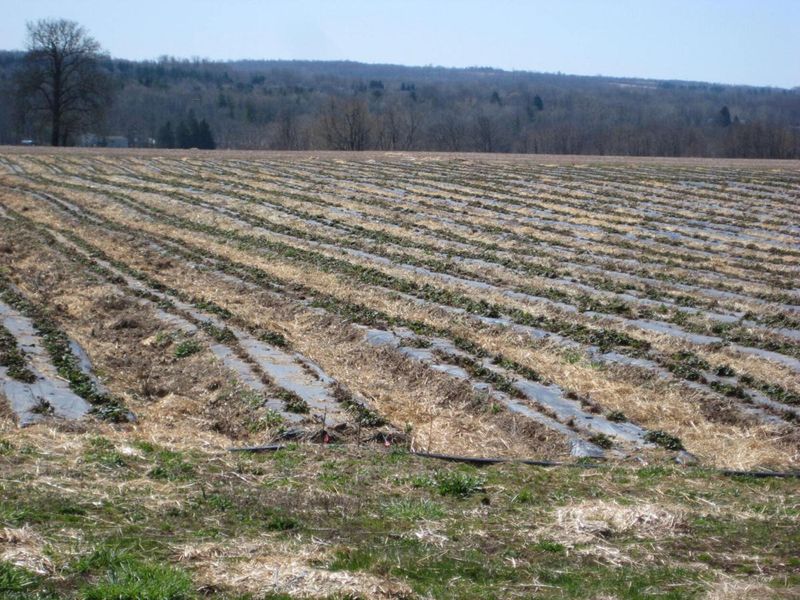
Timing matters more than the calendar. Mulch applied too early can interfere with hardening off, the process that prepares plants for cold.
That is why the phrase “once the soil cools” is too vague to use as a trigger.
A better cue is dormancy or soil that stays consistently cold. Purdue describes waiting until plants are dormant.
As one regional example, a University of Minnesota guide uses soil at or below 40°F for three consecutive days. That figure is for Minnesota, not a rule for Texas or the rest of the South.
Connecticut guidance also cautions against covering plants too early. A mild stretch in a Southern fall can fool you, since soil that cooled for a week may warm again.
Your county Extension office knows when dormancy usually arrives where you live. Ask for their date range, then watch your own plants and a soil thermometer to confirm.
Apply loose straw according to local guidance
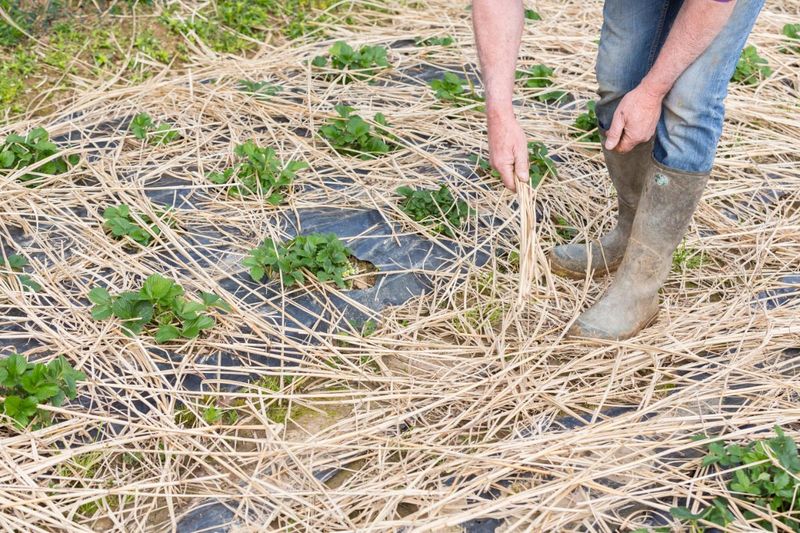
For a perennial bed where winter mulch fits, choose clean, loose straw. A dense, matting layer holds water and can smother crowns, while fluffy straw lets air move through.
Recommended depths differ by region, so treat them as examples. Iowa State suggests 3 to 5 inches.
Purdue’s overwintering guidance advises at least 2 inches, ideally 4 to 6 inches loose before it settles. Those are Midwestern numbers, and your local Extension office may suggest less.
Straw settles, so apply a little more than you want to end up with. Spread it evenly over the crowns and between plants.
Keep the purposes separate. A dormant-season blanket is not the same as a light mulch around growing plants.
One Florida Extension source suggests just 1 to 2 inches of organic mulch and not covering plants completely. That advice fits Florida’s annual crop, so do not borrow it for a cold-winter bed, or the reverse.
Rake mulch back as spring growth resumes
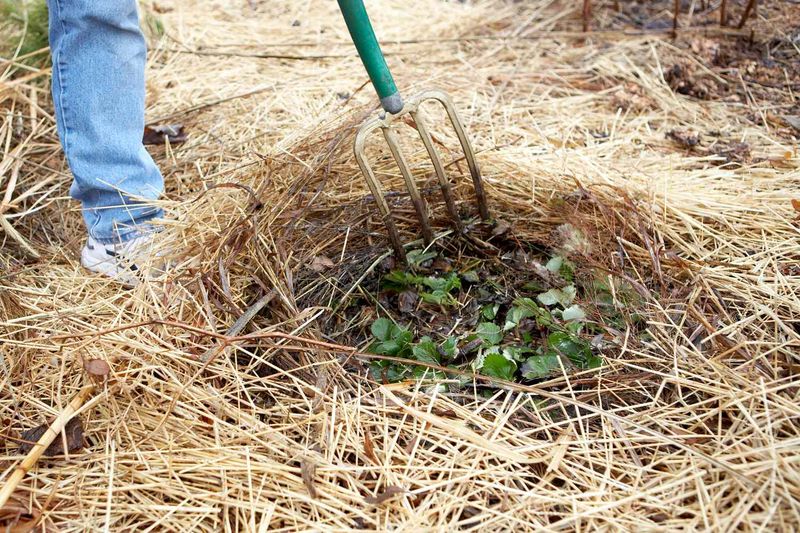
Late winter is the time to peek under the straw. Lift a handful and look at the leaves.
If they look pale or yellowish and are starting to grow, begin raking the mulch back.
There is a tradeoff here. As the Minnesota guide explains, leaving mulch on too long can delay growth and harvest, while removing it too early can expose plants to cold.
Let your local last-frost risk guide you, and keep the straw close by so you can pull it back over plants if a hard freeze is forecast.
Pulled-back straw does not have to go far. Purdue describes leaving some between rows or lightly around plants to keep fruit clean.
Remember that flowers and fruit are more tender than acclimated crowns and leaves. UF/IFAS reports that they can be damaged below 32°F.
Winter straw alone will not prevent spring-frost crop loss, so be ready with covers once blossoms appear.
Use mulch to reduce risk, not guarantee a crop
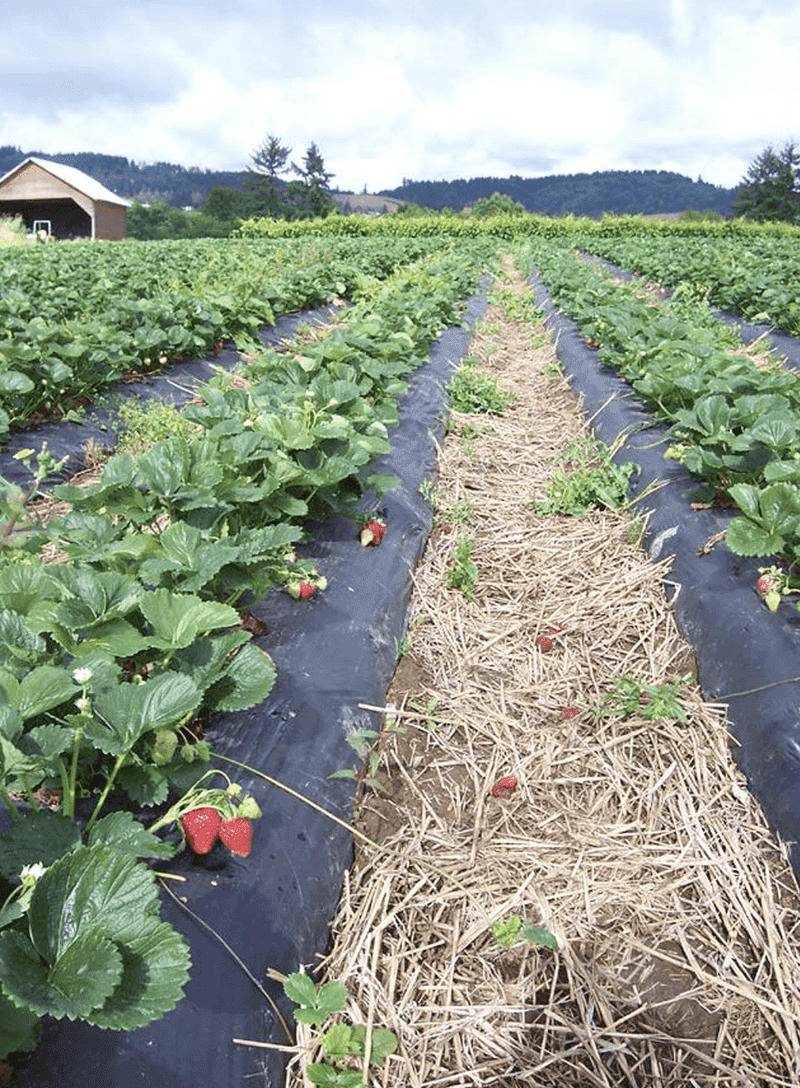
Straw is a tool for one situation: a perennial bed in a place where cold and freeze–thaw cycles create real winter-injury risk. Used at the right time and in a loose layer, it can reduce that risk.
It cannot promise an intact crop, and it cannot stop every winter or spring loss. Ontario’s guidance frames it as managing winter injury, not eliminating it.
Harvest timing also varies. In Florida, where strawberries are commonly grown as annuals, picking can run through fall, winter and spring, and blossoms need their own frost cover.
For choices this article cannot settle, call your county Extension office. They know your freeze dates, soil, and bed type.
A strawberry bed rewards patience: watch the weather, then act on your own conditions.