
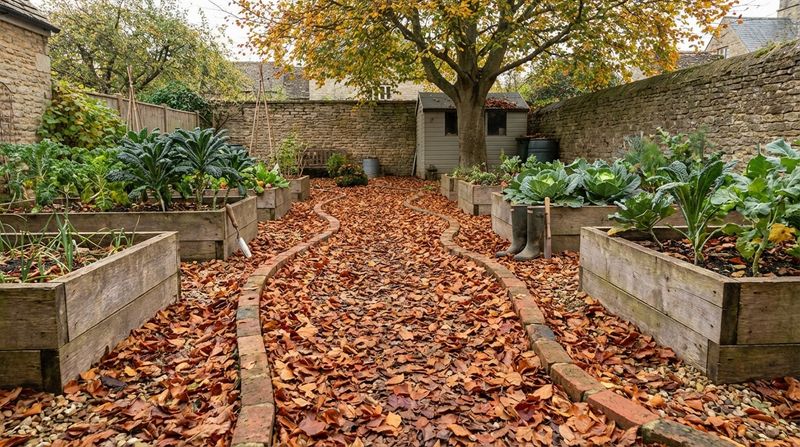
Those leaves piling up in your yard could be put to work before your fall greens even sprout. Bare paths between vegetable beds are where weeds love to move in over the cooler months.
Shredded leaves are free, easy to find, and may help keep that ground covered. Here is how to prepare them, spread them, and set realistic expectations for what they will do.
Use leaves on paths for a modest weed-control benefit
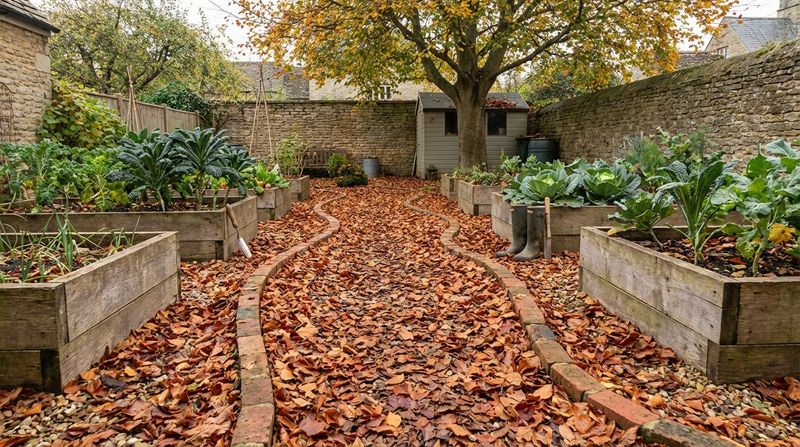
Bare soil between beds is an open invitation for weed seeds. A layer of mulch blocks light at the soil surface, and that can cut down on how many new weeds sprout.
UGA Extension’s vegetable mulching guide describes this weed-limiting job as one of the main reasons to mulch.
Expect suppression, not a shutout. Mulch works as a barrier against new weed emergence, and University of Minnesota Extension notes that mulch will not reliably eliminate weeds that are already established.
Some persistent weeds may still push through, so plan on a quick check and a little hand-pulling now and then.
Covering paths with shredded leaves is a practical use of general mulch advice. The sources do not show that leaf-mulched paths beat other path treatments, such as wood chips or straw, and a leaf layer does not replace good bed preparation.
Think of it as a low-cost option worth trying, especially since the material is already falling in your yard. University of Illinois Extension also lists leaves among common vegetable garden mulches.
Shred the leaves and clear the path first
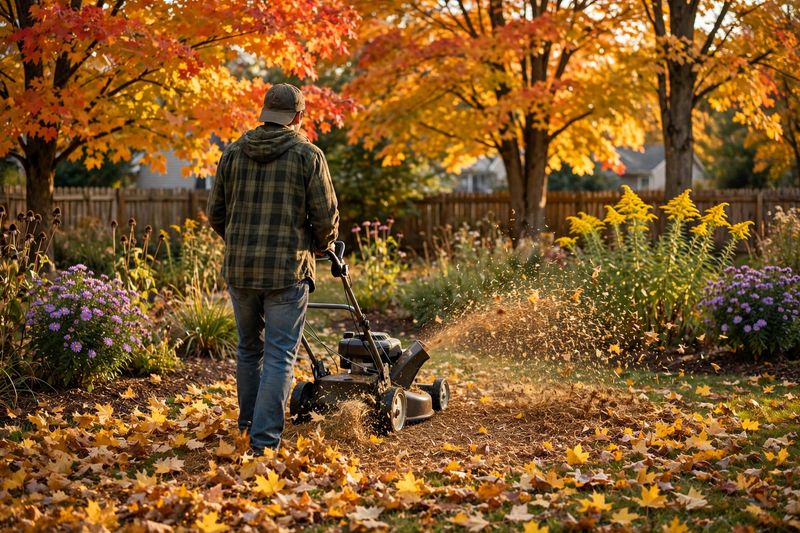
Two prep steps make the biggest difference. First, run collected leaves through a mower or leaf shredder.
UGA’s fall gardening resources point to shredded leaves as the better choice, and Oregon State Extension explains that they are less likely to blow away or mat down, and they break down faster than whole leaves.
Second, pull the weeds already growing on the path. Mulch is a barrier for new seedlings, so anything with roots already in place can keep growing underneath.
University of Illinois Extension recommends clearing weeds before covering the ground. A hoe or hand-pulling after a rain makes the job easier.
Keep this separate from lawn care. Mowing leaves into the grass is one practice, but a heavy layer left on turf can smother it, as University of Minnesota Extension describes.
Here you are collecting the leaves and moving them to the path. If your trees had a serious leaf disease this year, check local Extension guidance first, since disease can sometimes persist in fallen leaves.
Ordinary leaves are fine.
Spread a moderate, loose layer
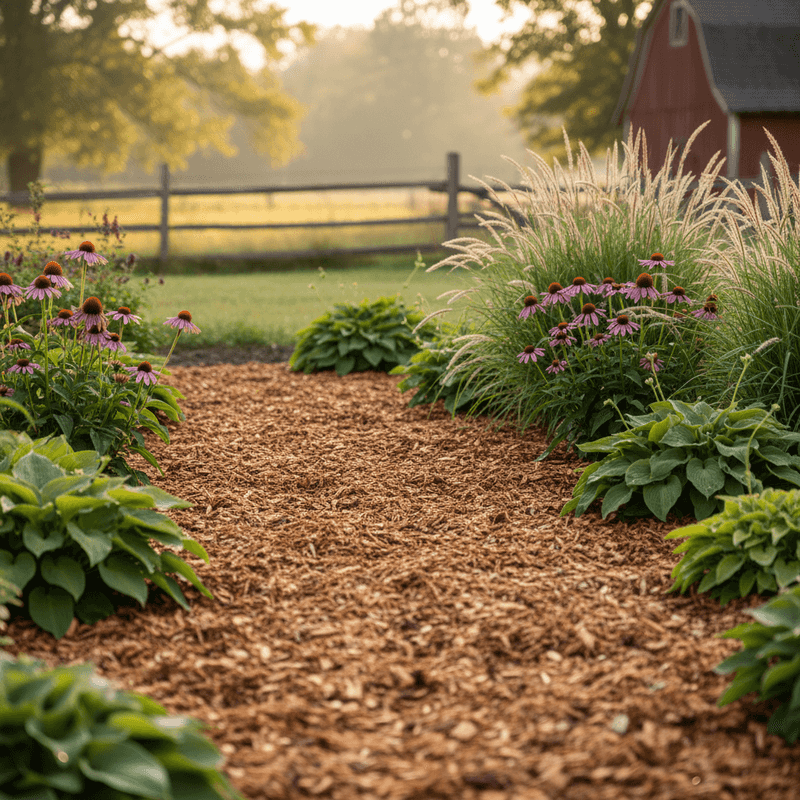
Depth matters, but no one has tested an exact number for leaf-covered paths. A common garden-mulch range is about 2 to 4 inches, according to University of Minnesota Extension.
UGA recommends 3 to 4 inches for vegetable-garden mulch.
Treat both as starting points. Shredded leaves settle quickly, so you may need to check the path after a week or two and add a little where the soil shows through.
Too thin a layer may let light reach the soil and limit weed control. A very thick layer can restrict air reaching roots, which matters most near plants.
Aim for an even, fluffy cover rather than a packed mat. Stick a ruler into the pile once or twice as you work so you can judge the depth.
Wet leaves tend to clump, so spreading on a dry day helps keep the layer loose.
Keep the mulch on the path, not over the greens
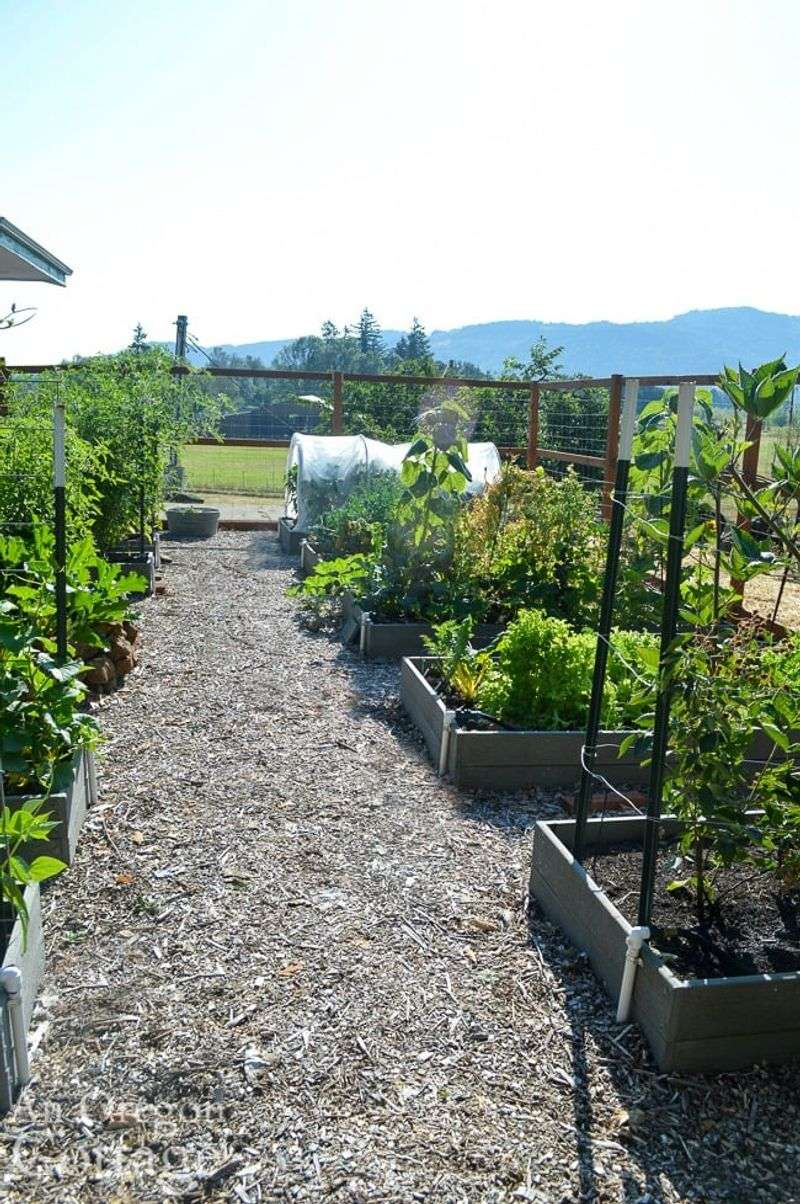
Picture a clear line between the two zones. The bed is for growing, and the path is for mulch.
Pull leaves back a few inches from the edge of the planted rows, and keep them off seedlings, where they can hide tiny plants and hold moisture against young stems.
Shredded leaves are easier for plants to grow through than whole leaves, as Oregon State Extension notes. That is a handy fact if a few pieces drift onto the bed, but it is not a reason to blanket your crops.
UGA’s fall gardening collection also supports keeping mulch around, not smothering, young plants.
A simple habit helps: after a windy day, walk the rows and sweep strays back to the path with a gloved hand or a small rake. Do this especially after fresh seeding, when sprouts are still just a hint of green.
Expect gradual improvement to the path soil, not instant crop feeding
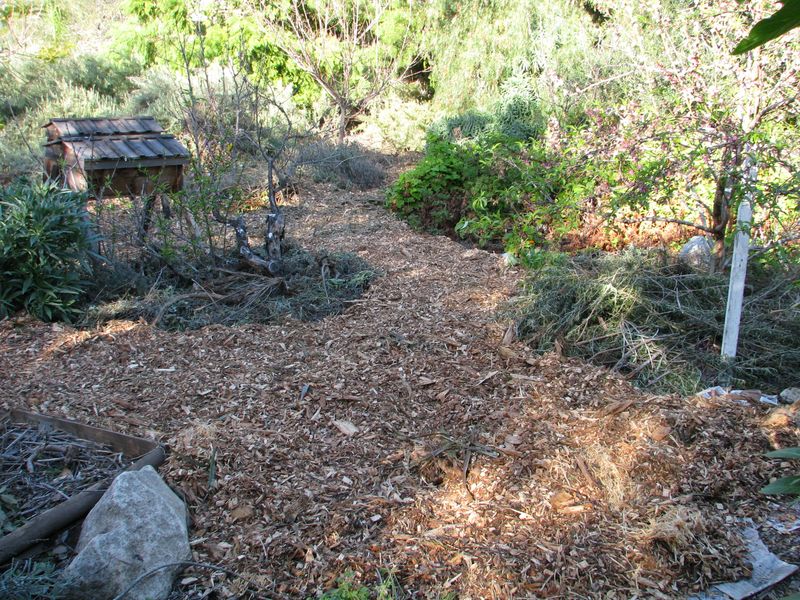
Leaves do not work like fertilizer. As they break down, they add organic matter and release some nutrients, a process described in UGA’s mulching guide and in UF/IFAS guidance on edible landscapes.
That happens slowly, and it happens on the path where the leaves sit.
So the soil under your walkway may get richer over time, but the greens next door are not being fed directly. Keep fertilizing the beds based on a soil test and crop needs, since a path mulch will not supply all of a crop’s nutrients.
Leave fresh leaves on the surface, too. Mixing fresh organic material into soil can temporarily tie up nitrogen while it decomposes, as Utah State University’s organic crop guide explains.
USU’s soil guidance covers soil improvement in more detail. For this method, do not till leaves into the crop beds.
Check a local calendar before planting fall greens
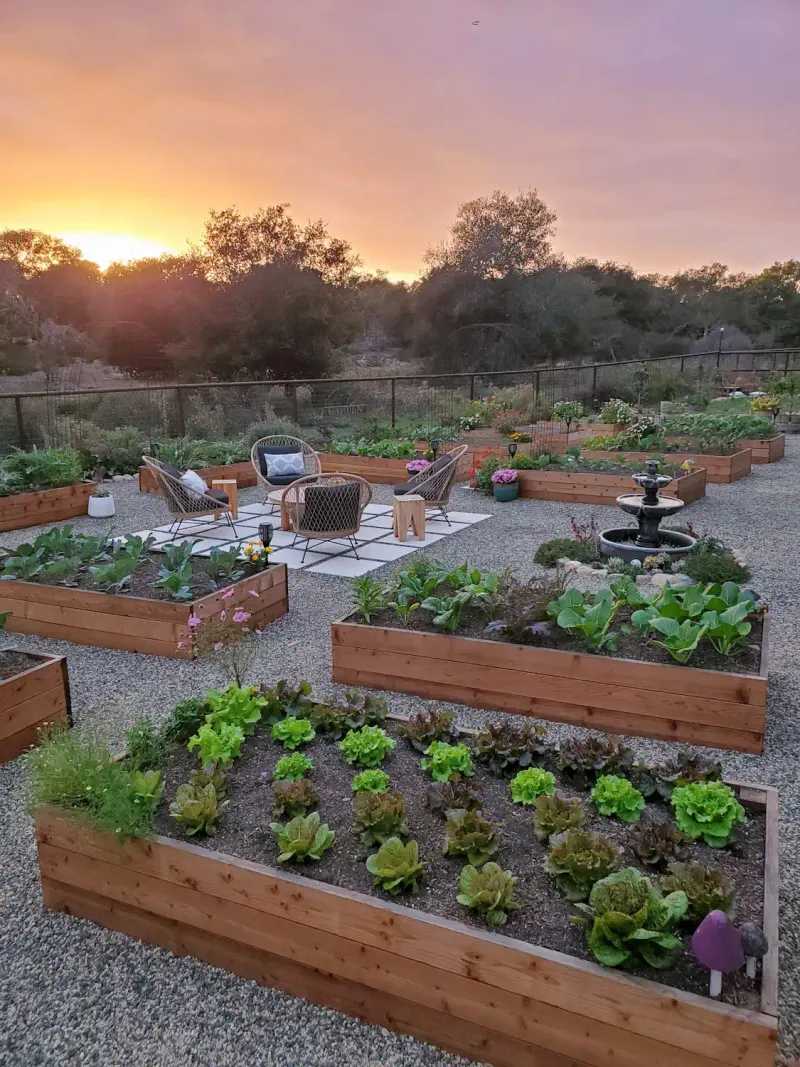
Path mulching is easy to do while you wait for planting time, but the right date depends on your crop and location. A fall start in coastal Texas looks very different from one in north Georgia, so skip any one-size date.
Georgia gardeners can find crop-specific dates in UGA’s fall vegetable gardening guide. North Florida growers can use the UF/IFAS growing season calendar.
Texas readers can see how dates vary by region in the Texas A&M fall vegetable guide, but it is an older publication, so use it to see the pattern and not for current dates.
Check your state or county Extension office for a current calendar, then work backward. Clear and mulch the paths a week or two before planting if you can.
A tidy, covered path is a small head start that pays off all season.