
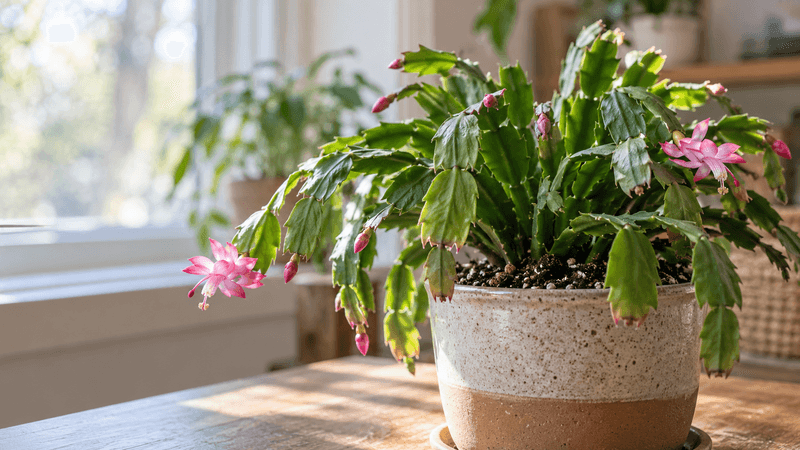
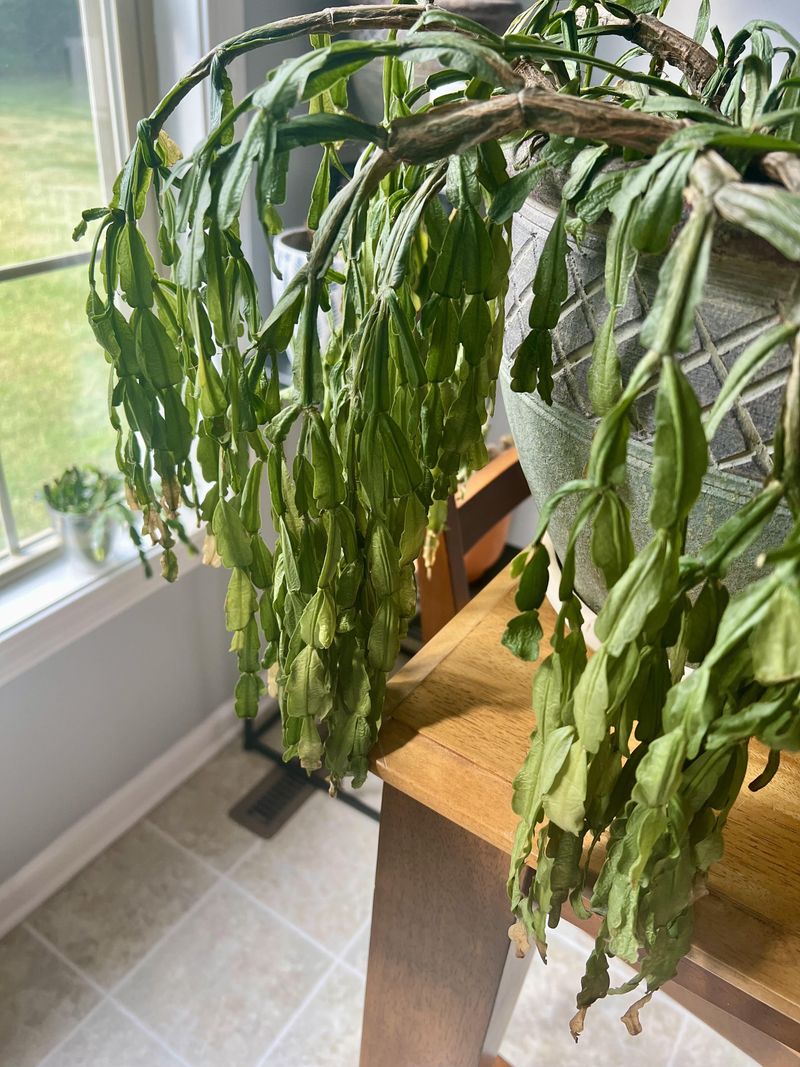
A Christmas cactus with floppy, wrinkled segments can make any gardener nervous, especially when the holiday season is getting close. The good news is that a few simple checks can tell you a lot about what the plant needs.
Soil, drainage, and roots all give clues. Here is what to look at first, and what to do next.
Limp segments are a symptom, not a root diagnosis
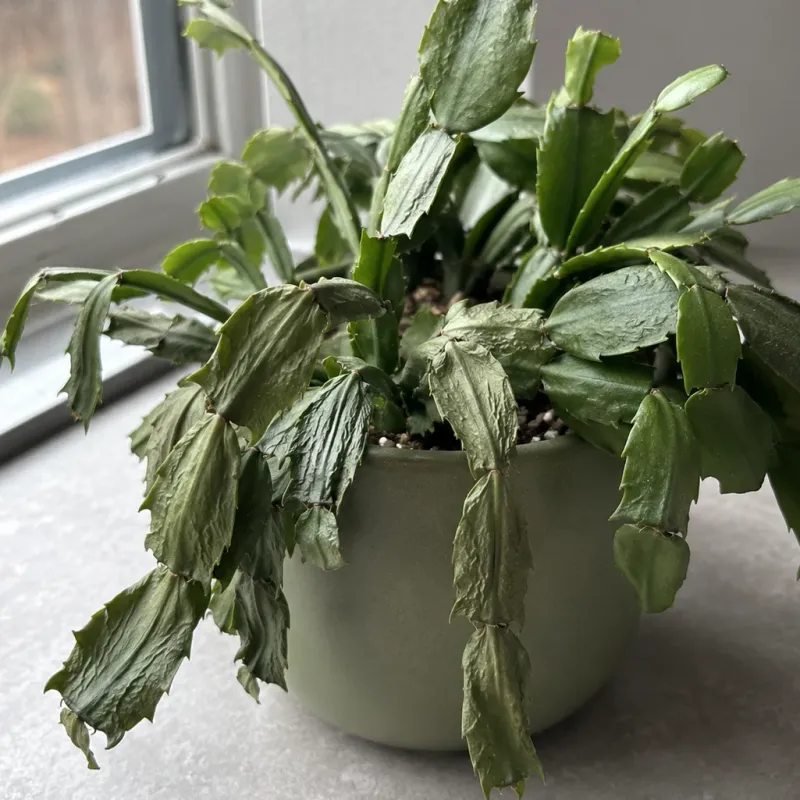
Drooping or shriveled segments tell you the plant is stressed, but they do not tell you why. Those flat green pieces are stem segments, and they can go soft when the plant is too wet or when it has been too dry for too long.
Both problems can end up looking alike. Overwatering can lead to root rot, and University of Minnesota Extension notes that excess water can cause wilting.
On the other side, UConn Extension explains that underwatering can also leave a plant limp.
If a plant wilts while its soil stays wet, that is a good reason to look at the roots. It is not proof of rot by itself.
Look at the pot and the mix first, rather than guessing at the cause.
Check the soil and pot before you water
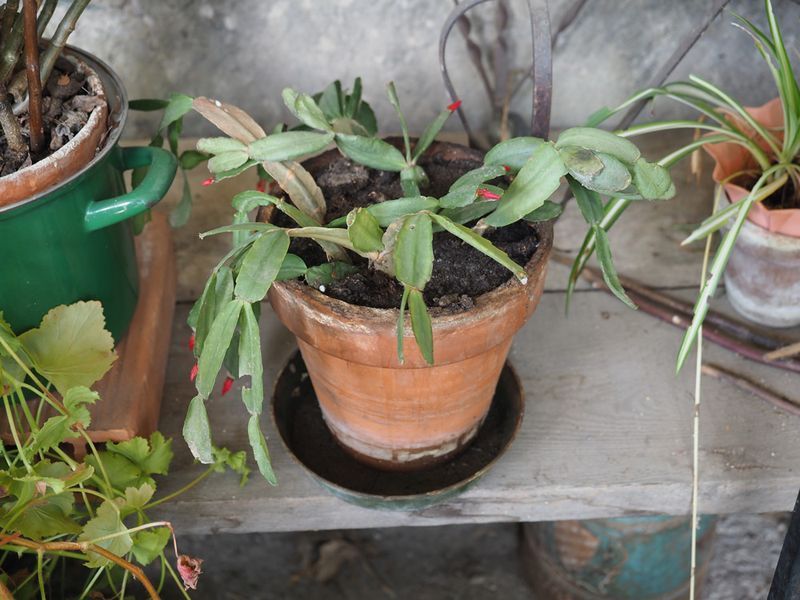
Before you pick up the watering can, do a one-minute check. Push a finger into the mix and feel whether it is dry or still damp.
Then tip the pot and make sure the drainage holes are open.
Look under the plant too. If water is sitting in a saucer or a decorative outer pot, pour it out.
UF/IFAS suggests watering when the top inch of the mix feels dry, and good drainage matters for these plants.
Mix that stays soggy points toward a drainage problem and a possible root check. Mix that is dry all the way through calls for a different response, covered below.
Let the soil guide you instead of a fixed watering calendar, since light, pot size, and indoor warmth all change how fast it dries.
Wet soil makes a root check worthwhile
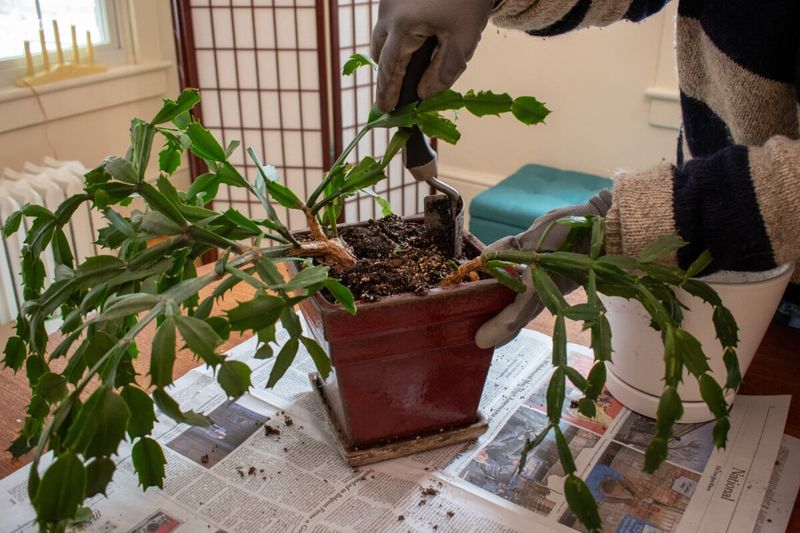
When a plant is wilted and the mix stays wet for an unusually long time, the roots deserve a look. Slide the plant out of its pot and see what is there.
Healthy roots are typically firm and light-colored, while dead or diseased ones may look dark and soft.
Seeing the roots does not prove disease, so treat the check as information gathering. If the plant is obviously stressed and you find dead or diseased roots, Wisconsin Extension advises removing them, letting the pruned roots air-dry for a few days, and then repotting in fresh, well-drained mix.
Not every limp plant needs this. If the roots look fine, skip the pruning and fix the drainage instead.
If the root system is badly damaged, take cuttings as insurance so you do not lose the plant.
A very dry plant needs a gradual reset
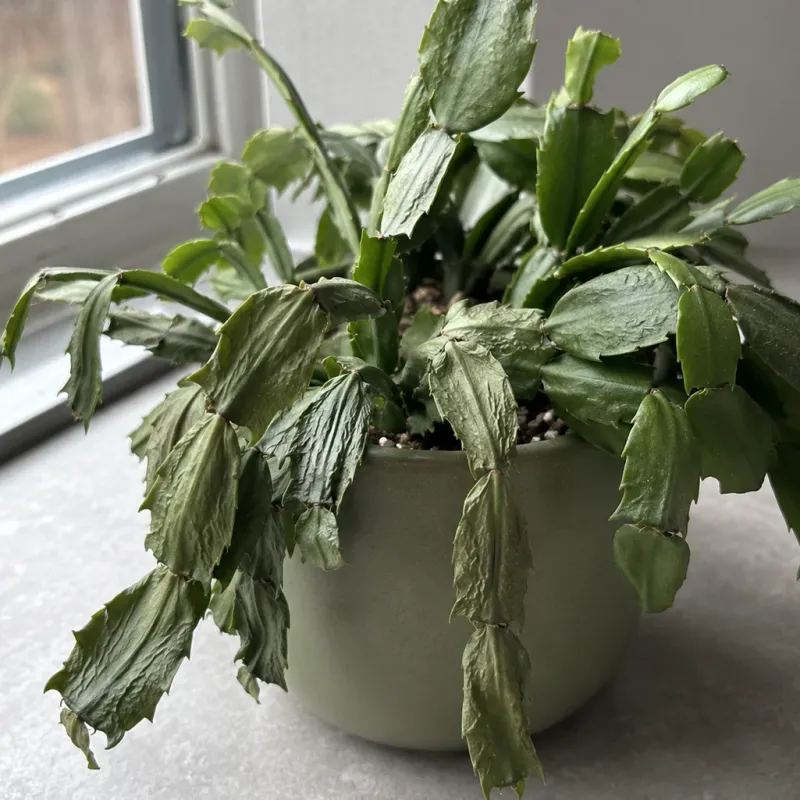
Sometimes the mix is bone dry and the segments look wrinkled and thin. That plant is thirsty, but pouring in a big flood is not the answer.
According to UConn Extension, roots dried out by long dryness may not be able to take up a sudden excess of water. Smaller, more frequent waterings are a gentler way to bring the plant back.
Give a modest drink, empty the saucer, and check again in a day or two. As the mix stays lightly moist, plumpness may slowly return.
Keep this path separate from the wet-soil steps above, since a dry plant usually does not need its roots cut or the pot changed.
Steady care helps protect developing buds
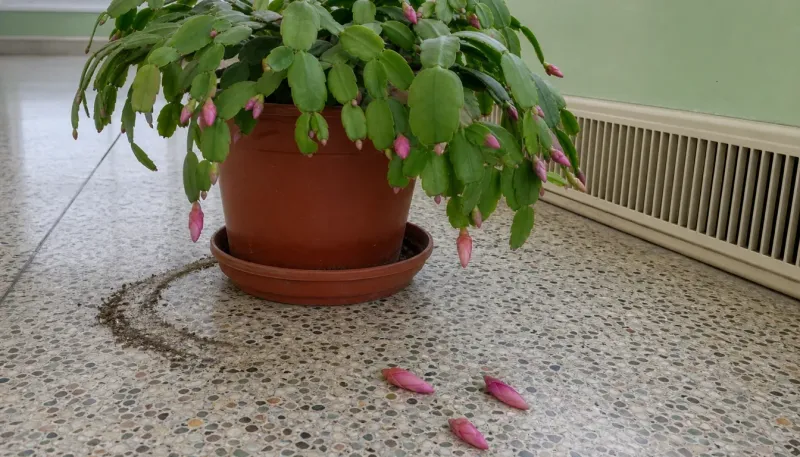
Once the plant is stable, the goal is to keep it that way. Use a well-drained mix and check it by touch instead of following a rigid schedule.
Iowa Extension advises avoiding both excessive dryness and overwatering while buds develop. Holiday cacti are not desert cacti, so they should not be left dry for long stretches.
Sudden changes can also cause trouble. A move to a new spot, a swing in temperature, a burst of new light, or a sharp change in watering can contribute to bud drop, as UF/IFAS notes.
Pick a good spot and leave the plant there. Steady care gives buds a better chance, though it cannot guarantee blooms.
Can a rescue still deliver Christmas flowers?
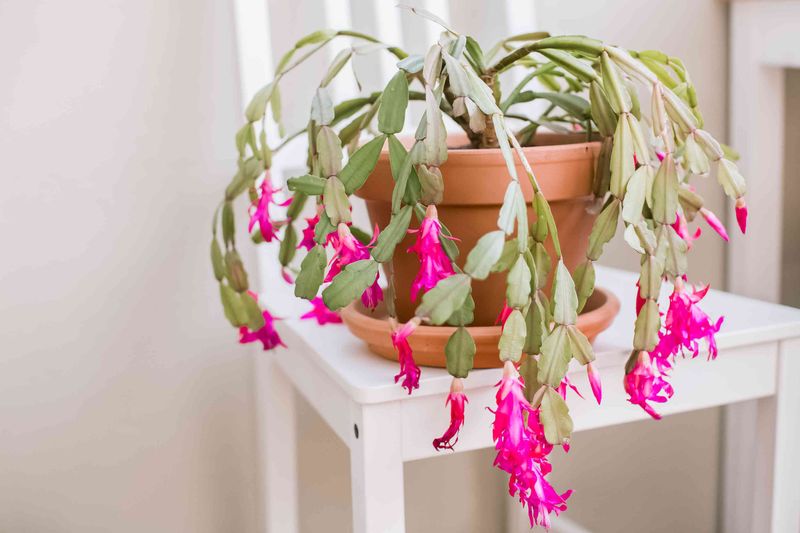
Fixing a watering or root problem may help the plant recover, but flowers follow their own cues. Bloom depends on long, uninterrupted nights, cooler conditions, the plant’s type, and when buds started forming.
Timing is the tricky part. In a UF/IFAS preparation example, the dark treatment lasts six weeks and blooms appear about ten weeks after it starts.
Extension advice on how many dark hours are needed also differs, so no single schedule is a sure thing.
Also check which plant you have. Clemson Extension says a Thanksgiving cactus typically flowers about a month before a Christmas cactus, and the two are often sold under the same name.
Your plant may bloom earlier or later than the holiday.
Take cuttings if the roots are badly compromised
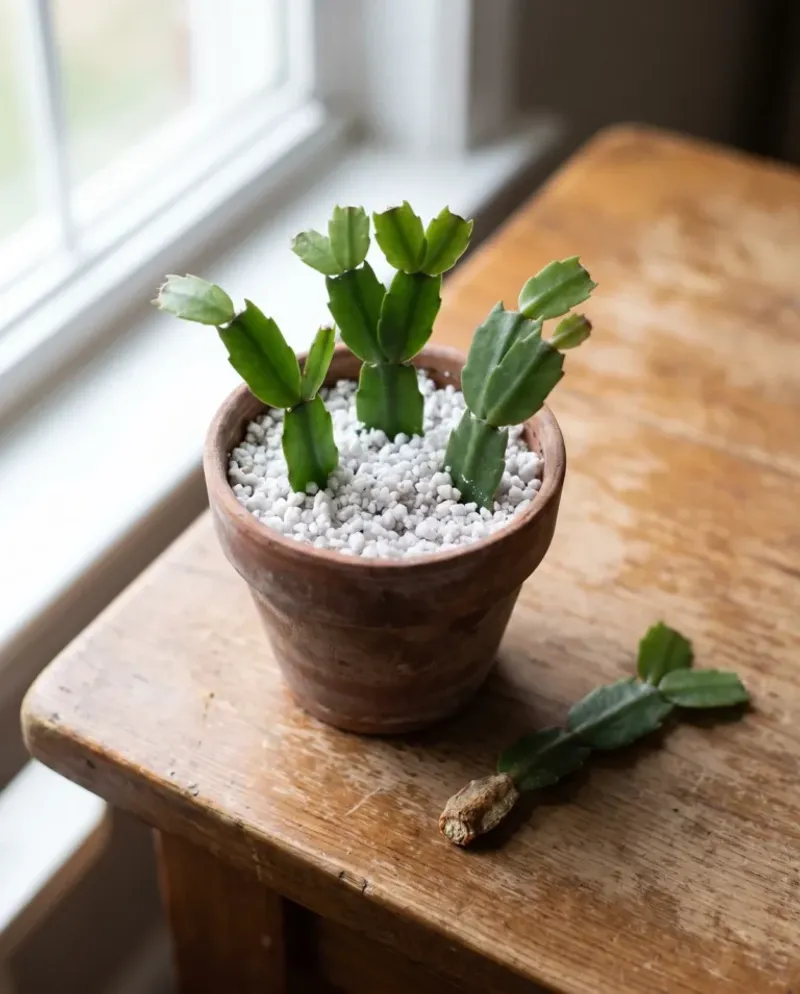
If the roots are mostly gone, cuttings can keep the plant going. Think of them as a backup copy, not a shortcut to flowers.
Iowa Extension recommends taking cuttings of two to five stem segments. Let the cut ends callus overnight, then set them in moist perlite or coarse sand.
Rooting typically takes six to eight weeks. That means new plants will not be ready to bloom for Christmas.
Still, a small rooted cutting is far better than losing the whole plant, and it gives you a fresh start once the weather and the season settle down.
Start with the plant’s conditions, not the calendar
Feel the mix first. If it is wet, check drainage and roots.
If it is dry, rebuild moisture gradually.
Fixing the immediate care problem comes before anything else, and flowers may not show up on your preferred date. A steadier plant is a good result on its own.