
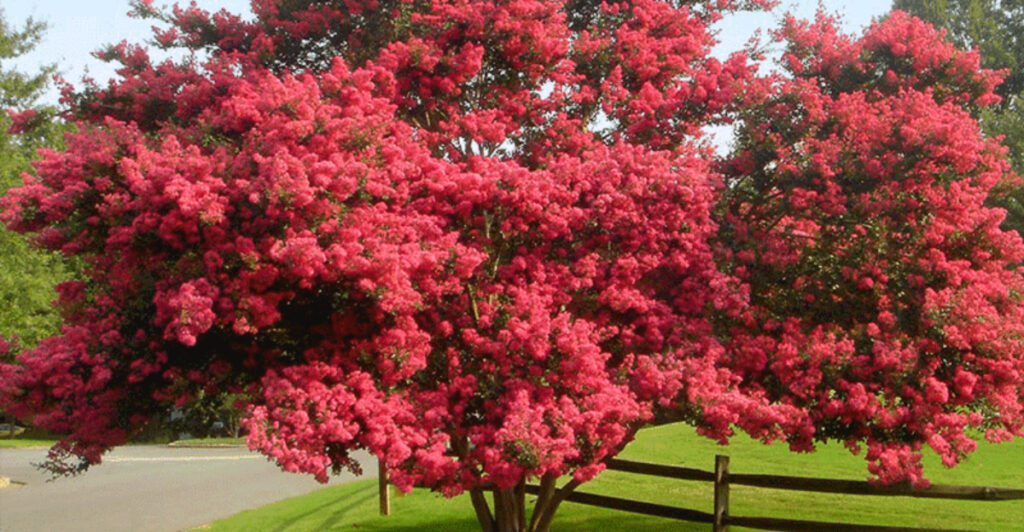
Explore the captivating beauty of trees that transform with every season, ensuring your landscape remains vibrant all year long.
These trees offer stunning displays of color, texture, and form, providing interest from spring blossoms to winter bark.
In this blog post, we delve into 16 wonderful trees, each with its own unique charm, that will make your garden a visual delight no matter the time of year.
1. Japanese Maple (Acer palmatum)
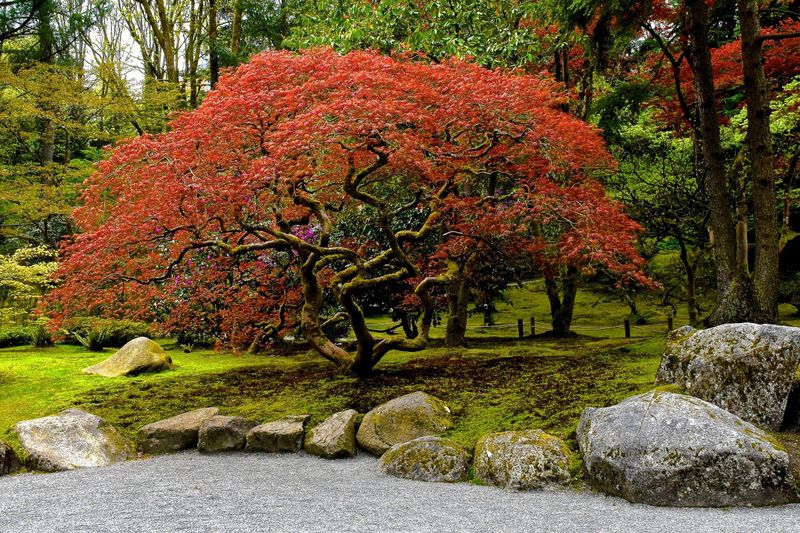
Japanese Maple enchants with its seasonal transformations. In spring, it unfurls delicate, vibrant leaves in shades of red, green, or purple, bringing a splash of color after winter’s dormancy. By summer, the tree’s graceful shape and finely cut foliage offer a sense of elegance, making it a favorite for garden structure. Come autumn, it dazzles with fiery red, orange, or gold hues, a spectacular show before winter arrives. In the colder months, the tree’s sculptural branching pattern stands out, especially when dusted with snow. Bonus: A range of cultivars to suit varied garden styles enriches its appeal.
2. River Birch (Betula nigra)
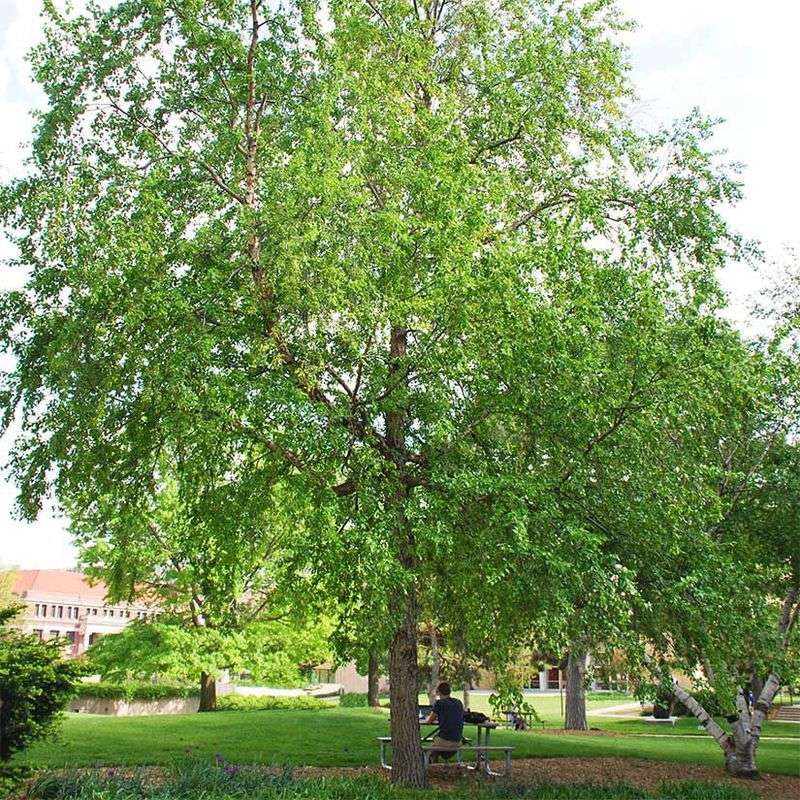
River Birch thrives in all seasons, offering diverse visual treats. Spring sees light green, airy foliage emerge, signaling nature’s renewal. Summer’s lush leaves provide dappled shade, perfect for relaxation. As autumn approaches, leaves transition to a soft yellow, casting a warm glow. Winter, however, is when the peeling, cinnamon-colored bark takes center stage, adding dramatic texture against the barren backdrop. Perfect for wetter soils and riverbanks, this tree is as versatile as it is beautiful. Tip: Incorporate it into landscapes needing natural water management solutions for added ecological benefit.
3. Serviceberry (Amelanchier spp.)
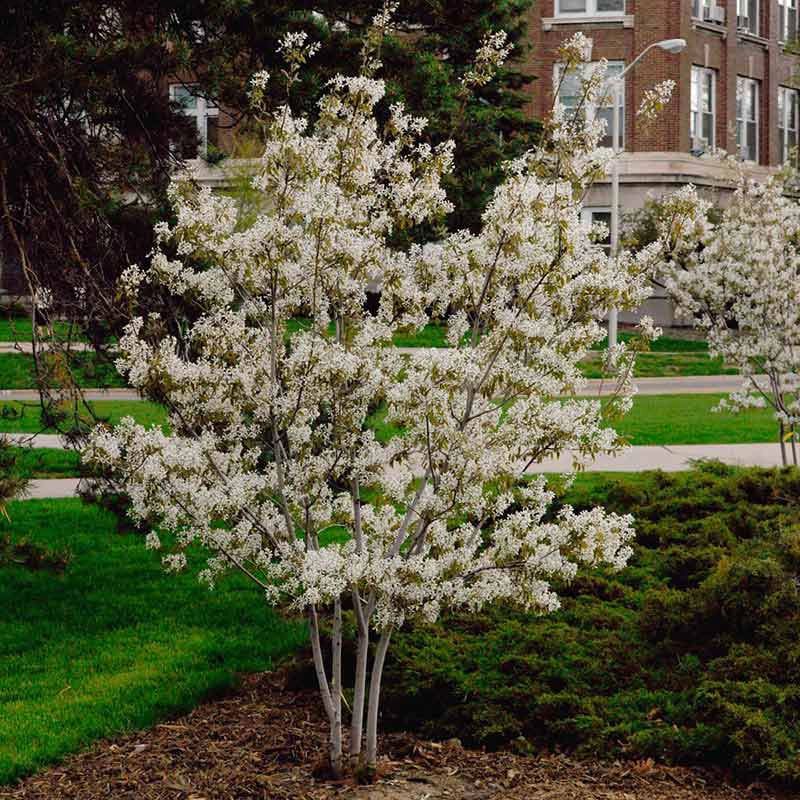
Serviceberry, a seasonal delight, begins its show in spring with an abundance of white blossoms, attracting early pollinators. By summer, it offers edible berries that entice birds and wildlife, creating a vibrant ecosystem. Autumn transforms its leaves into a vivid palette of orange, red, and yellow, a striking visual before branches become bare. Winter reveals the tree’s silvery bark and elegant branching, providing sculptural interest. Did you know? The berries not only appeal to wildlife but also make delicious jams and pies! This tree is a true year-round performer in any landscape.
4. Red-Twig Dogwood (Cornus sericea)
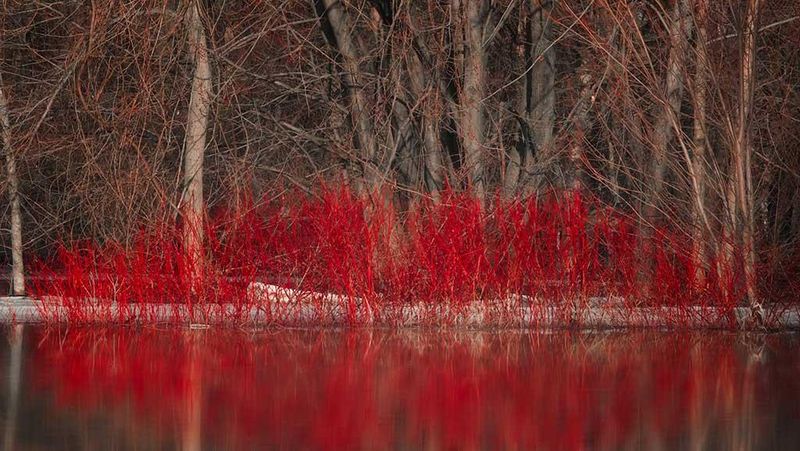
Red-Twig Dogwood captivates with its seasonal spectrum. Spring introduces small white flowers that beckon bees, initiating the cycle of life. In summer, lush green foliage fills out, offering a robust presence. As temperatures drop, leaves turn a dramatic reddish-purple, preparing for the winter spectacle. This is when the bright red stems take center stage, providing a stark contrast against snow and gray skies. Ideal for border planting or wet areas, this tree delights with its year-round visual impact. It’s a must-have for those seeking vibrant garden dynamics throughout the seasons.
5. Crabapple (Malus spp.)
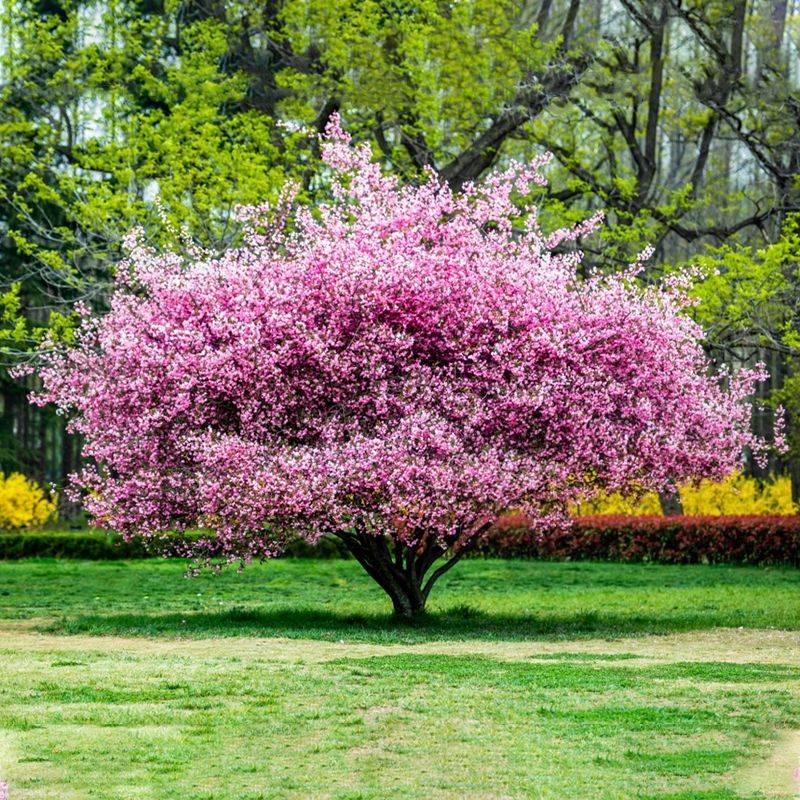
Crabapple trees offer a seasonal feast for the senses. Spring bursts forth with fragrant pink or white blooms, a spectacle of renewal. By summer, glossy green leaves and developing fruits add depth, setting the stage for autumn. Here, vibrant fruit colors—red, orange, yellow—persist, a feast for the eyes and birds alike. Winter reveals the tree’s gnarled form, with fruit clinging to bare branches, providing structure and sustenance. Choose disease-resistant varieties for optimal performance, ensuring this tree remains a cherished garden feature through the seasons, inviting wildlife and admiration alike.
6. Paperbark Maple (Acer griseum)
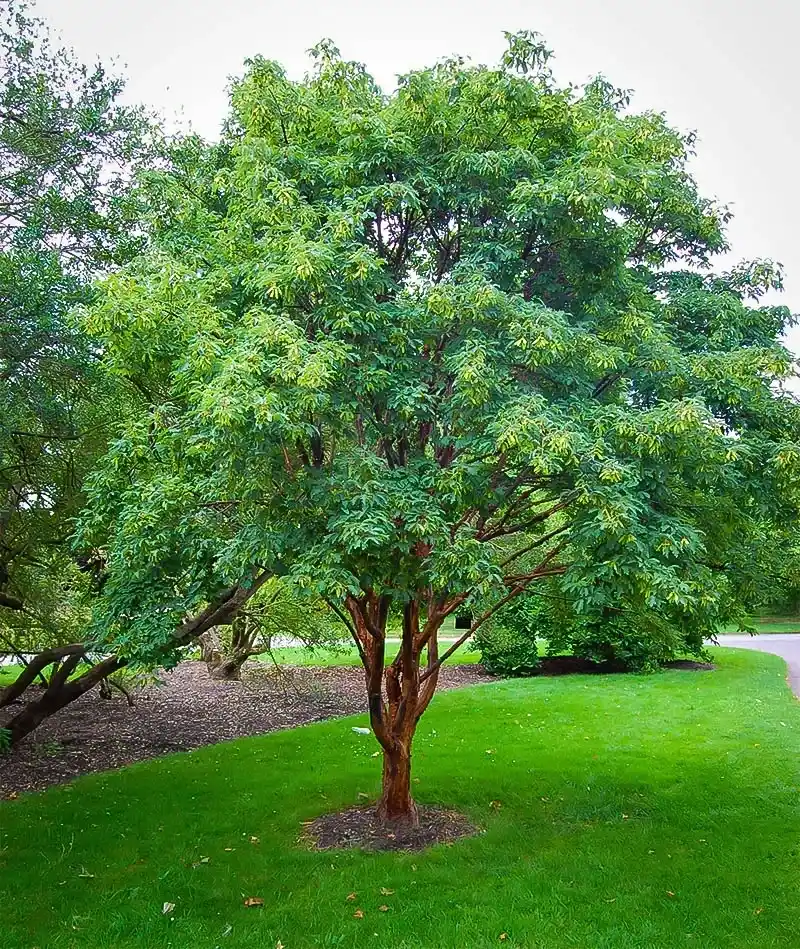
Paperbark Maple, a small garden gem, unveils its beauty year-round. Spring’s arrival sees new leaves emerge, a soft bronze heralding warmer days. In summer, deep green foliage offers a classic, cooling presence. Autumn’s fiery scarlet-red leaves set the landscape ablaze, a highlight of the seasonal transition. Winter showcases the tree’s standout feature: exfoliating cinnamon-colored bark, drawing eyes to its sculptural grace. Perfect for small spaces needing winter interest, this maple is a testament to nature’s artistry. Its understated elegance makes it a favorite among discerning gardeners seeking year-round appeal.
7. Witch Hazel (Hamamelis spp.)
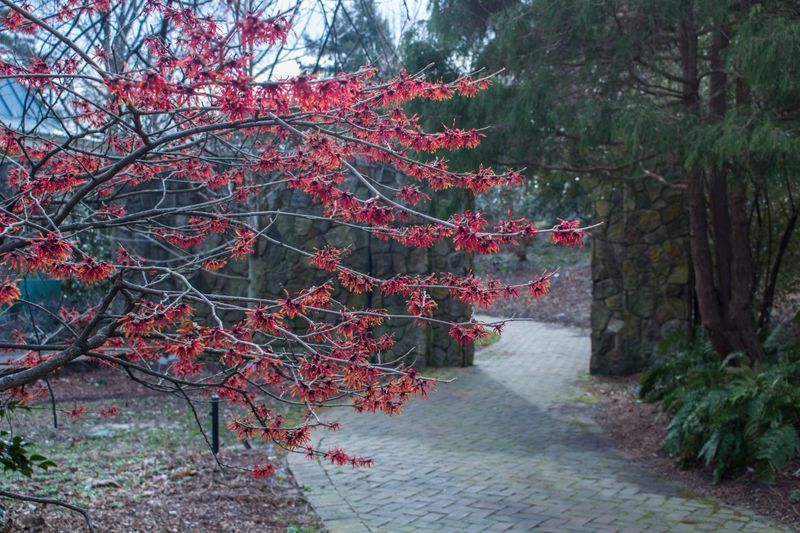
Witch Hazel weaves its magic across seasons with flair. Some varieties bloom in early spring, their spidery yellow to red flowers defying the chill. Summer sees clean, green foliage, offering low-maintenance charm and a lush backdrop. As autumn approaches, leaves ignite in bright yellows and oranges, a vibrant farewell to warmth. Winter’s arrival brings unexpected joy as certain species bloom, adding off-season color and interest. Many varieties are fragrant and deer-resistant, appealing to both gardeners and wildlife. This tree’s blend of beauty and resilience is truly enchanting all year round.
8. Eastern Redbud (Cercis canadensis)
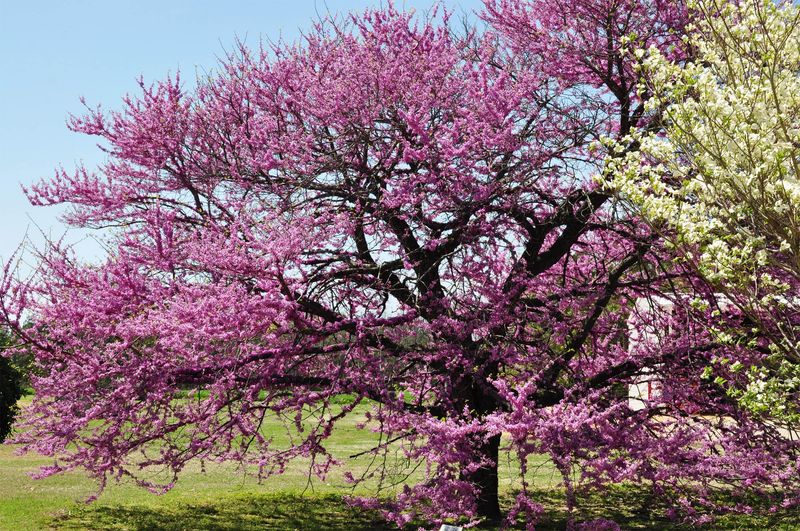
Eastern Redbud stands as a beacon of beauty through the seasons. Spring coats its bare branches with rosy-pink blossoms, an early spectacle of nature’s renewal. Summer sees the emergence of heart-shaped leaves, adding ornamental charm and lushness. Autumn transforms these leaves into a golden tapestry, a warm visual treat. Winter exposes the tree’s unique zigzag branches, providing intriguing texture against the bare landscape. Cultivar ‘Forest Pansy’ offers purple summer foliage, further elevating its allure. This tree’s seasonal versatility and striking appearance make it a beloved choice for gardens big and small.
9. Stewartia (Stewartia pseudocamellia)
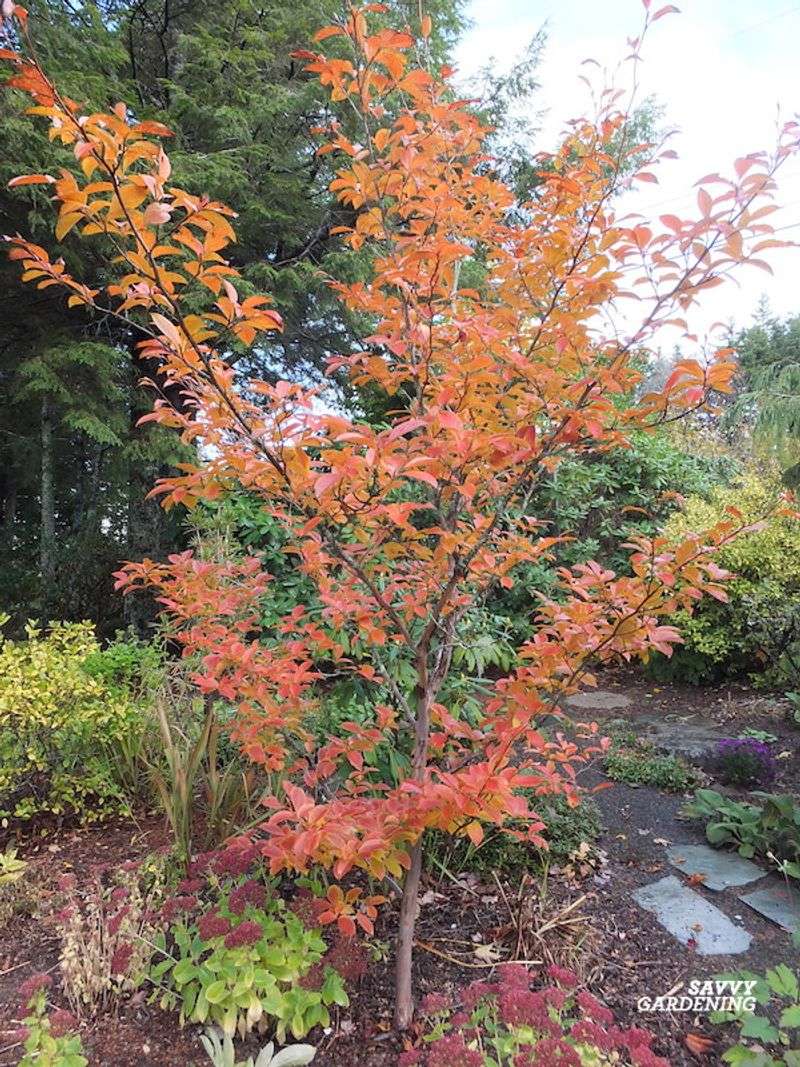
Stewartia, a connoisseur’s choice, offers subtle beauty year-round. Spring begins with leaves unfurling in bronze hues, a soft intro to its charm. By midsummer, the tree showcases camellia-like white flowers, delicate yet striking. As autumn advances, its leaves turn fiery red-orange, a dramatic seasonal highlight. Winter reveals the tree’s mottled, exfoliating bark, offering quiet, sculptural beauty. This hidden gem in ornamental landscaping captivates with elegance and poise, defying seasonal dormancy. Its understated grace and year-round interest make Stewartia a prized addition to refined gardens seeking exceptional beauty.
10. Hawthorn (Crataegus spp.)
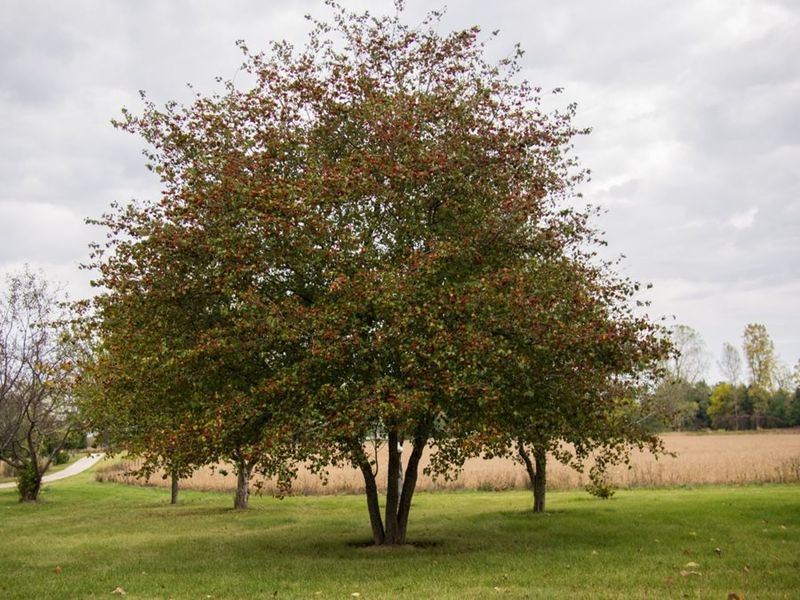
Hawthorn enchants with its seasonal elegance and resilience. Spring sees branches adorned with clusters of white or pink flowers, a floral showcase. Summer brings glossy green leaves and developing fruits, a testament to growth and vitality. Autumn illuminates with orange-red berries, attracting birds and contrasting golden leaves. Winter exposes the tree’s gnarled branches, persistent fruit adding visual drama. Be mindful of thorns when planting near pathways, yet embrace its charm and fortitude. This tree’s year-round allure and adaptability make it a treasured part of any garden or natural setting.
11. Sweetgum (Liquidambar styraciflua)
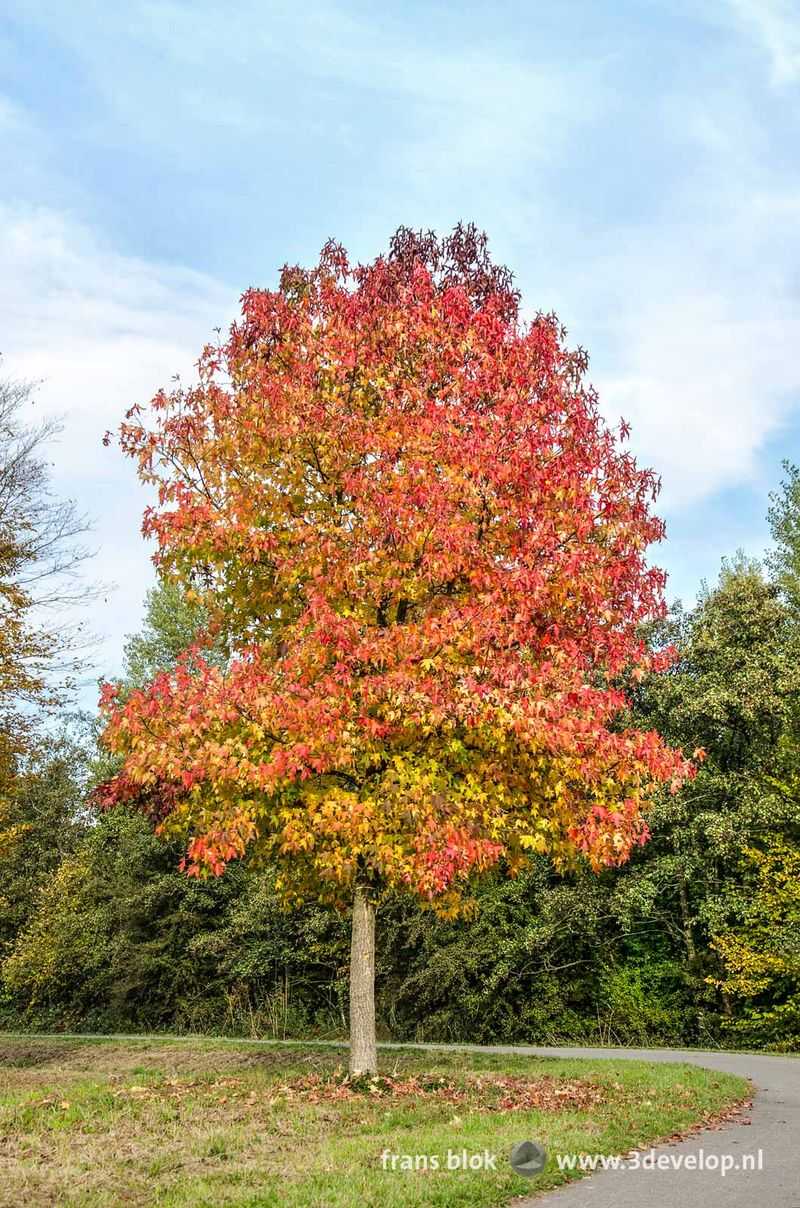
Sweetgum captivates with its seasonal spectacle. Spring’s star-shaped leaves emerge bright green, hinting at nature’s promise. By summer, dense, glossy foliage provides excellent shade and a refreshing retreat. Autumn unveils a stunning blend of red, orange, yellow, and purple leaves, a visual feast as temperatures cool. Winter introduces unique spiky seed balls on branches, adding texture to the bare landscape. This tree’s striking seasonal transitions and robust presence make it a standout in parks and gardens. Its beauty and resilience ensure it remains a favorite among those who appreciate dynamic landscapes.
12. Ginkgo (Ginkgo biloba)
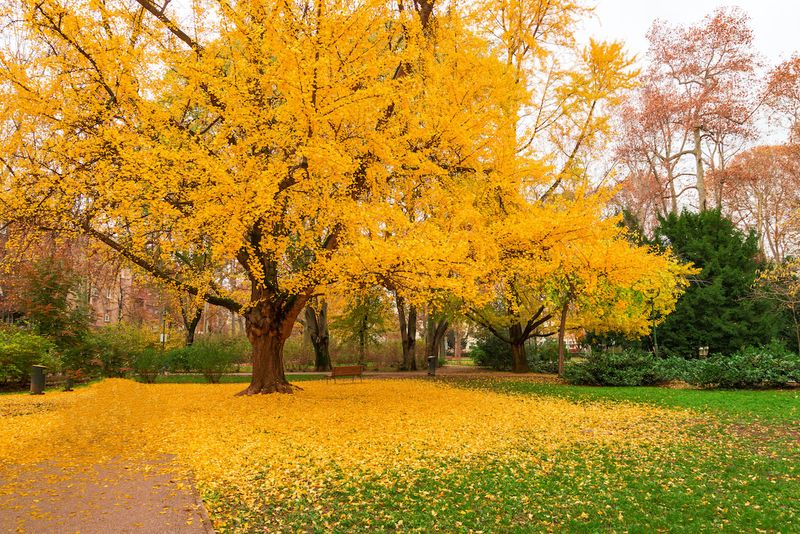
Ginkgo, a living fossil, dazzles across seasons with unique charm. Spring sees fresh, fan-shaped leaves appear, a bright green herald of warmer days. In summer, its dense canopy offers deep green shade, a haven from the sun. Autumn transforms its foliage into a brilliant golden-yellow, a breathtaking spectacle that often falls quickly in unison. Winter reveals bare branches with unique, angular shapes, adding intrigue to the landscape. Its ancient lineage and resilience make Ginkgo a beloved choice for urban parks and gardens, where its distinct beauty and history continue to captivate all year round.
13. Paper Birch (Betula papyrifera)
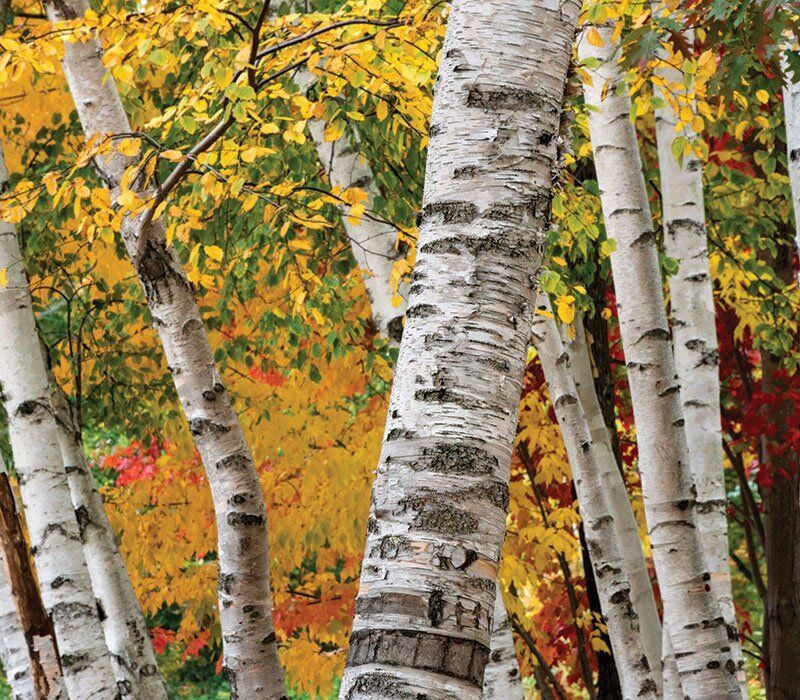
Paper Birch, known for its elegant presence, shines year-round. Spring brings fresh green leaves, a soft, hopeful signal of renewal. In summer, its light, airy canopy offers a serene retreat, leaves fluttering in the breeze. Autumn’s golden-yellow foliage brightens any landscape, a warm farewell to sunnier days. Winter highlights the tree’s striking white, peeling bark, a stark contrast against the barren landscape. This tree’s seasonal appeal and graceful form make it a cherished feature in forests and gardens alike. Its timeless beauty and ecological value enhance any natural setting.
14. Crape Myrtle (Lagerstroemia indica)
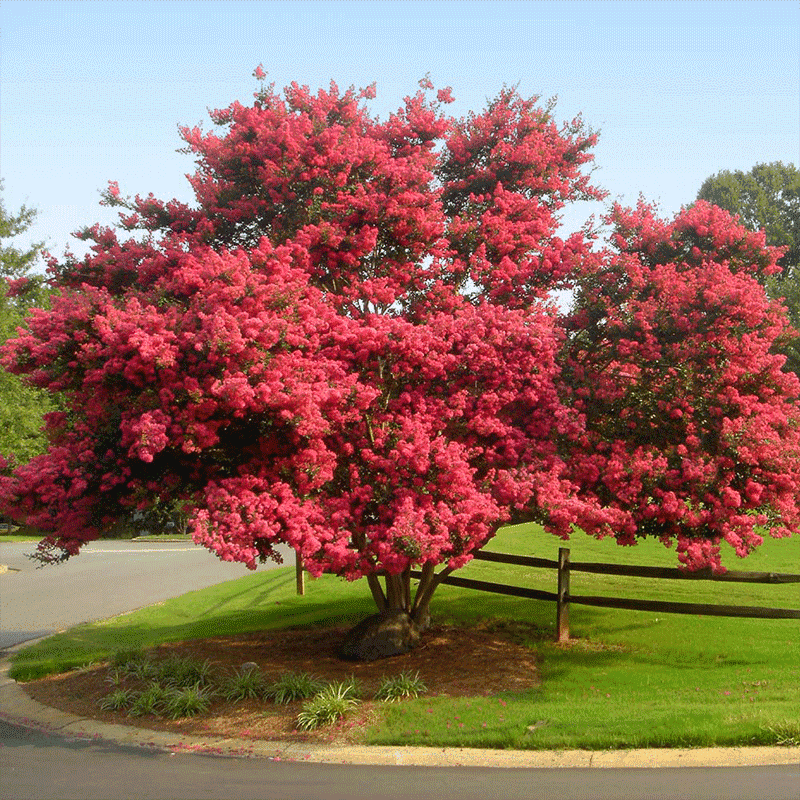
Crape Myrtle, beloved for its vibrant presence, dazzles throughout the year. Spring buds hint at early flowering, promising a colorful display. Summer delivers long-lasting clusters of flowers in pink, red, white, or purple, a vivid celebration of warmth. Autumn sees leaves turning rich shades of orange, red, or yellow, a striking contrast before dormancy. Winter reveals attractive, smooth, peeling bark and sculptural branches, adding visual interest. This tree’s dynamic display and adaptability make it a staple in suburban gardens, where its lively colors and textures provide endless enjoyment.
15. Magnolia (Magnolia spp.)
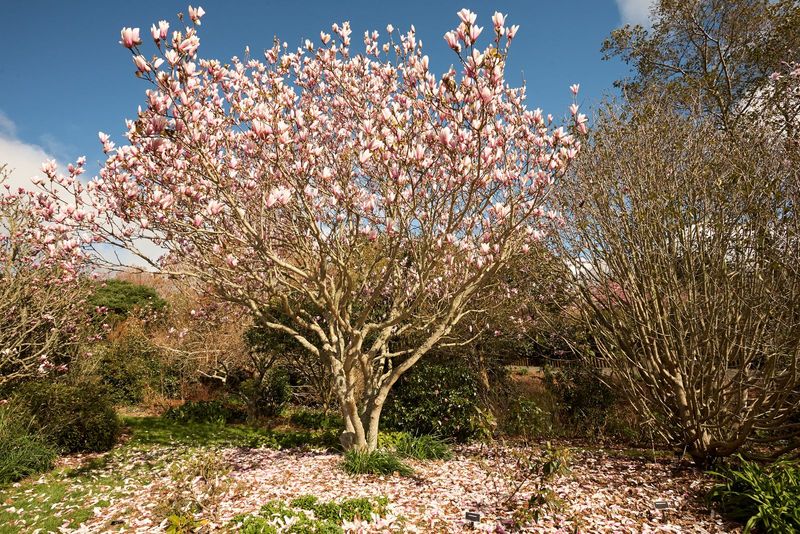
Magnolia, a true garden icon, offers seasonal elegance and fragrance. Spring’s large, fragrant blooms in white, pink, or purple are showstoppers, captivating all who pass. Summer follows with glossy, evergreen or semi-evergreen leaves, adding a lush backdrop. Some varieties exhibit subtle leaf changes in autumn, a gentle nod to the season’s shift. Winter showcases its beautiful branching structure and seed pods, providing texture and form. This tree’s iconic status and year-round beauty ensure it remains a treasured feature in southern gardens, where its charm continues to enchant season after season.
16. Eastern Red Cedar (Juniperus virginiana)
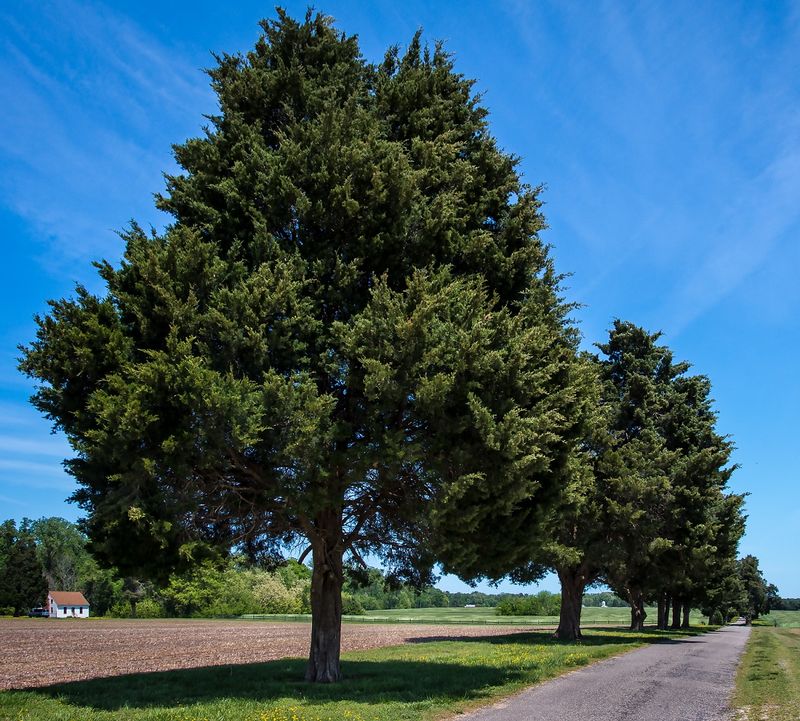
Eastern Red Cedar stands resilient through the seasons, a guardian of greenery. Spring brings new bright green foliage, a fresh, lively start. Summer’s dense, dark green canopy offers shelter and shade, a refuge for wildlife. Autumn introduces bluish, berry-like cones, adding depth and interest. Winter sees its evergreen foliage brighten cold months, providing visual continuity and habitat. This tree’s unwavering presence and ecological benefits make it invaluable in rural landscapes. Its year-round vibrancy and adaptability ensure it remains a beloved feature, supporting a diverse array of life throughout the seasons.