
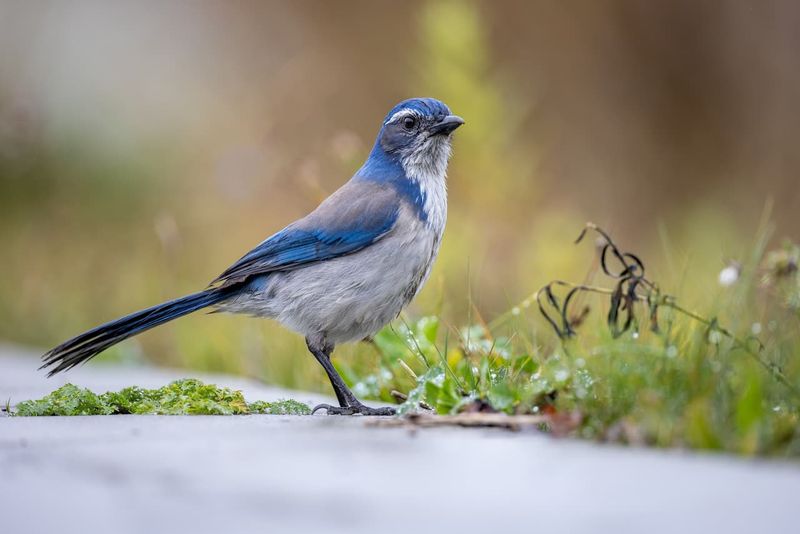
A blue-gray jay hopping across your lawn might be doing more than looking for crumbs. California Scrub-Jays sometimes eat snails as part of a wide, seasonal diet, so there is usually no reason to shoo one away from your yard.
That said, a single bird foraging near your seedlings is not a snail-control program, and your plants still need hands-on protection. Understanding what this bird actually does, and what it cannot do, helps you make smarter decisions for your garden.
A jay on the lawn does not prove it is eating your snails
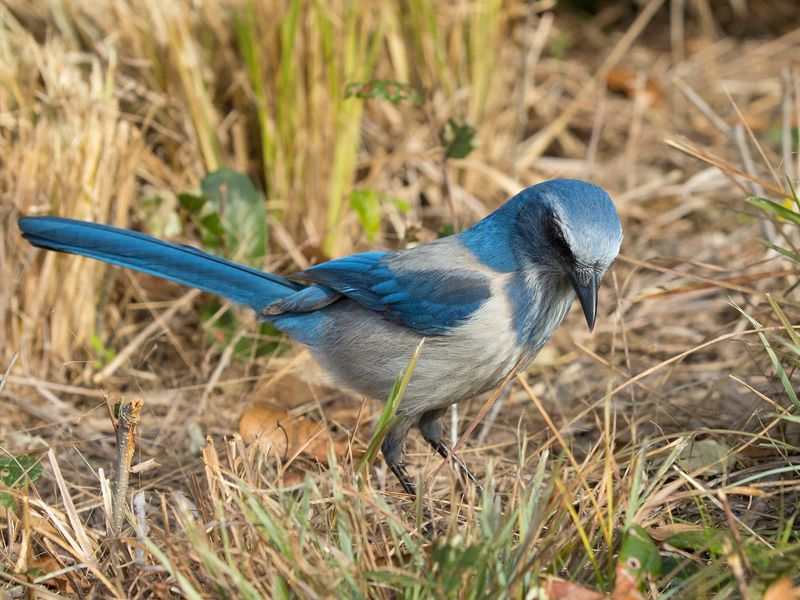
Spotting a bold blue-and-gray bird working its way across your lawn can feel like a clue, but the connection between the bird and your damaged seedlings is not as direct as it looks. Before drawing conclusions, take a moment to identify the bird correctly.
Cornell Lab of Ornithology describes the California Scrub-Jay as common in California scrub, oak woodland, coastal sage, and suburban yards, where it forages on the ground by hopping and probing through soil, mulch, and leaf litter.
Identification still matters, though. In 2016, what was once called the Western Scrub-Jay was split into two separate species: the California Scrub-Jay (Aphelocoma californica) and Woodhouse’s Scrub-Jay.
California Scrub-Jays are the expected species in most California coastal and inland suburban yards, but Audubon’s field guide notes that range and field marks together should guide the call. Not every blue-gray jay in California automatically belongs to this species.
Ground-foraging behavior is one reason jays show up near planting beds. They probe bare soil and mulch looking for insects, seeds, and other food items, which means they naturally spend time in the same areas where seedlings grow.
Seeing one near damaged plants does not prove it caused the damage, and it does not prove it solved anything either.
The honest starting point is this: a jay visiting your yard is a bird doing what jays do. Whether it has eaten any of the snails troubling your seedlings is genuinely unknown until you look more closely at the pest situation itself.
That investigation, not the bird’s presence, should guide your next steps.
What California Scrub-Jays actually eat
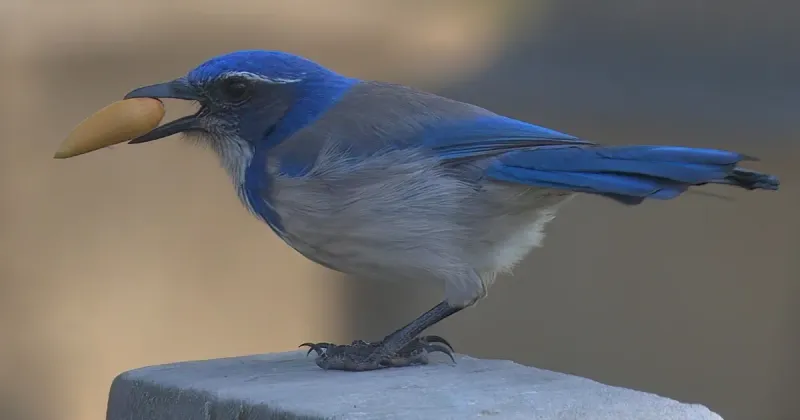
California Scrub-Jays eat a surprisingly wide range of foods, and their diet shifts with the seasons. According to Cornell Lab’s life history account, insects and fruit are especially important during spring and summer, while acorns, nuts, and seeds take over as the primary food source in fall and winter.
That seasonal flexibility is part of what makes the species so adaptable to suburban California yards.
Snails do appear in the diet. Audubon’s field guide entry lists animal foods that include insects, frogs, lizards, eggs, young of other birds, and specifically notes “a few spiders and snails.” That qualifier, “a few,” matters.
Snails are a minor, occasional item in a broad menu, not a dietary focus.
The species also consumes fruit, seeds, small reptiles, eggs, and the nestlings of other birds. That full picture means scrub-jays are not universally beneficial in every garden situation.
A jay may pick off a snail one morning and raid a nest or eat ripening figs the next. Treating the bird as a single-purpose pest controller misrepresents what it actually does.
Most critically, no available data quantifies how many garden snails a single jay eats in a season or how much plant damage that prevents in a residential yard. The honest conclusion is that snails appear in the California Scrub-Jay’s diet, which means the bird may occasionally eat one while foraging in your yard.
That is a possible, minor benefit. It is not evidence that the jay is specifically targeting the snails chewing your seedlings, and no published residential study links a jay’s presence to a measurable reduction in mollusk damage.
Confirm the pest before treating the seedlings
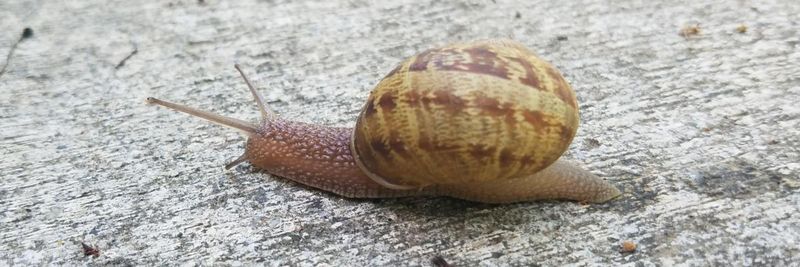
Ragged seedlings do not automatically mean snails or slugs are responsible. Several common California garden pests leave damage that looks nearly identical at first glance, so a quick inspection before reaching for any control is time well spent.
Snail and slug feeding tends to leave irregular, ragged holes in leaves, clipped succulent stems near soil level, and a shiny dried slime trail on the leaf surface or nearby soil. According to UC IPM’s snail and slug management guide, earwigs, caterpillars, and other chewing insects can cause wounds that look nearly identical.
The slime trail is the most reliable distinguishing clue: if you see it, mollusks are almost certainly involved.
Timing helps confirm the suspect. Snails and slugs are nocturnal, so checking plants with a flashlight an hour or two after dark on a mild, moist evening is the most direct way to catch them in the act.
A daytime look under boards, pots, dense low-growing foliage, or debris near the seedlings can also reveal resting adults or egg clusters.
California’s most common garden snail is the brown garden snail (Cornu aspersum), an introduced European species now widespread across the state. Several slug species also cause damage in California yards, including the gray garden slug and the banded slug.
Getting the identification right matters because different pests sometimes call for different controls, and treating for the wrong pest wastes time and money while the real culprit keeps feeding.
Resist the urge to skip the inspection step. Knowing what you are actually dealing with makes every other decision, from choosing a barrier to selecting a bait, more targeted and more effective.
Reduce the damp hiding places around seedlings
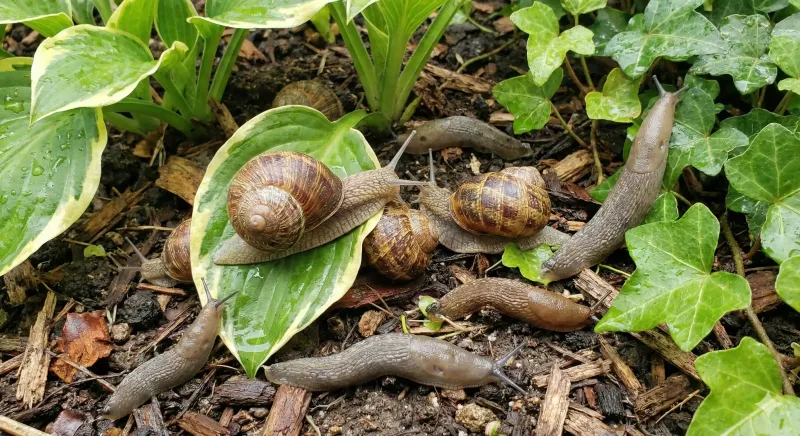
Once you have confirmed that snails or slugs are the problem, the most durable first move is to make the garden less welcoming to them. Snails and slugs need cool, moist shelter during the day, and yards that offer plenty of it will always carry a higher population than yards that do not.
Walk the area around your seedlings and remove or relocate anything that provides daytime cover: boards, stones, dense low-growing weeds, piles of debris, and drooping foliage that touches the soil. UC IPM recommends clearing these shelters as a foundational habitat-modification step, because fewer hiding places means fewer mollusks surviving into the night feeding hours.
Moisture management works alongside shelter reduction. Snails and slugs are far more active on wet surfaces, so the timing and method of irrigation affects how many are moving through your beds each night.
Switching from overhead sprinklers to drip irrigation keeps the soil surface drier and removes the film of surface moisture that makes travel easy for mollusks. Watering near sunrise rather than in the evening or at night gives the soil surface time to dry before peak activity begins after dark.
Both changes fit naturally into water-wise California gardening. Drip irrigation already saves water compared to sprinklers, and morning watering reduces evaporation loss during the heat of the day.
Reducing snail habitat and surface moisture is not an extra burden; it aligns with practices that also support drought management and plant health in California’s Mediterranean climate.
None of these steps depend on a scrub-jay being present, and none of them are undermined by one visiting. Habitat modification simply makes the yard harder for mollusks to use, regardless of what predators are around.
Protect vulnerable plants with removal and barriers
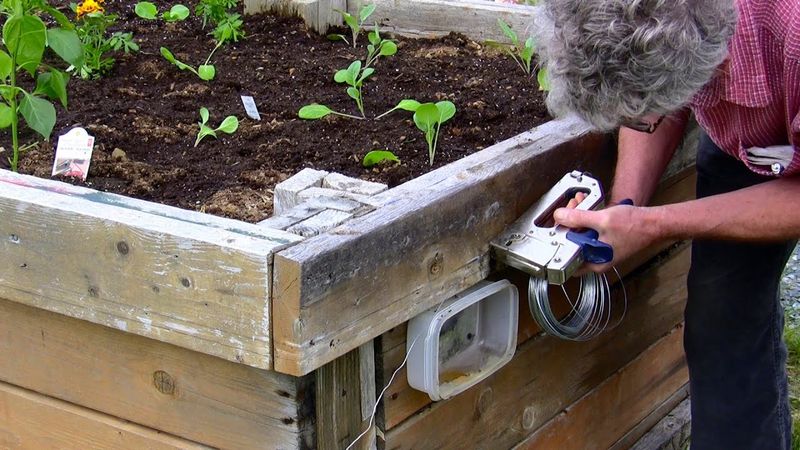
Physical controls give seedlings direct protection while leaving the yard accessible to a foraging jay. Handpicking is straightforward and costs nothing beyond a few minutes of time.
Go out after dark with a flashlight, collect snails and slugs from plants and soil, and drop them into a container of soapy water. Early morning, before the sun dries the soil surface, is a secondary window when stragglers are still moving.
Consistent nighttime removal over several evenings can noticeably reduce the population in a small area.
Board traps make collection easier. A flat piece of wood or an inverted melon rind placed near the seedlings gives mollusks a daytime shelter they will use reliably.
Lift the board each morning to collect what has gathered underneath. UC IPM describes this trapping approach as a practical way to concentrate mollusks for removal without any chemical input.
Copper barriers offer longer-term protection for raised beds or individual planting areas. A band of copper sheeting or copper tape around the perimeter of a bed delivers a mild deterrent that most snails and slugs will not cross.
For the barrier to work, the bed must be cleared of mollusks before the copper goes up, and the band needs to stay free of soil, debris, or plant material that would create a bridge over it.
Beer traps attract and drown mollusks but have real limits. They pull snails and slugs only from a small surrounding radius, they require emptying and refilling every day or two, and they can attract beneficial ground beetles as well.
Use them as a supplemental tool in a small, targeted area rather than as a primary strategy across a whole bed.
Two popular folk remedies, crushed eggshells and coffee grounds, should not be counted on. UC IPM states plainly that neither has been shown to work reliably as a deterrent.
Skipping them saves time and keeps the focus on methods that have actual evidence behind them.
Use bait cautiously around birds and pets
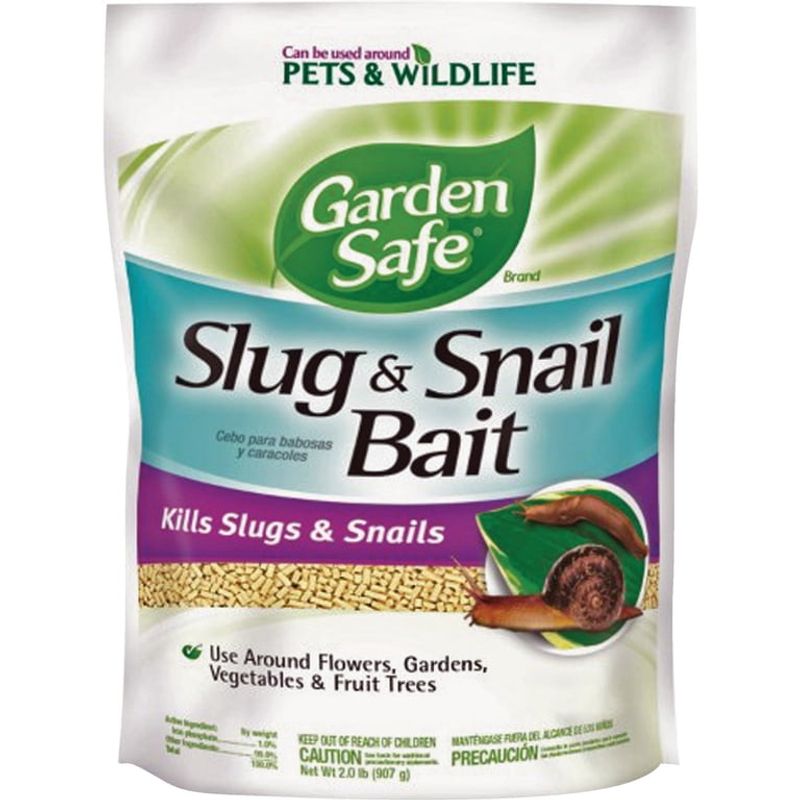
Bait is a reasonable option when habitat modification and physical removal are not enough on their own, but the product choice matters a great deal in a yard where birds, pets, or children are present. Not all molluscicide baits carry the same risk profile.
Iron-phosphate baits are the lower-risk option for a wildlife-friendly yard. UC IPM identifies iron-phosphate products as considerably safer around children, domestic animals, birds, fish, and other wildlife than metaldehyde products.
The active ingredient breaks down into iron and phosphate, compounds already present in soil. That does not mean the label can be ignored: even iron-phosphate baits must be applied as directed, placed where they target mollusks rather than scatter broadly, and kept out of waterways.
Metaldehyde is the other common active ingredient and carries a much higher risk. UC IPM’s pesticide database entry for metaldehyde confirms it is poisonous to dogs and birds.
Using it on a lawn or in planting beds that a scrub-jay visits, or that a dog can reach, creates a direct hazard to the very animals you want to protect. There is no good reason to choose metaldehyde in a residential yard where pets or wildlife are present when a lower-risk alternative exists.
UC Davis SAREP’s integrated pest management framework reinforces that bait works best as one layer of a broader strategy rather than a standalone fix. Applying bait while also reducing shelter, managing moisture, and using physical barriers gives each method a better chance of succeeding.
Relying on bait alone tends to produce short-term knockdown followed by reinfestation from surrounding areas.
Let the jay forage without trying to attract it
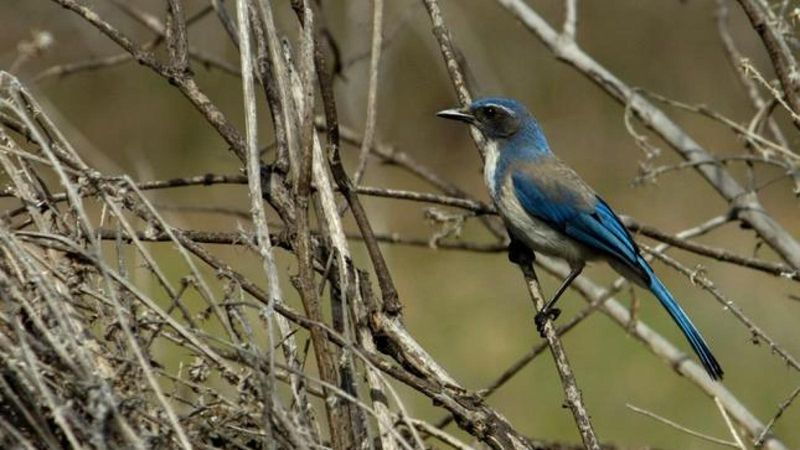
Leaving a visiting California Scrub-Jay alone is genuinely good advice. The bird is a ground forager that may occasionally eat a snail or slug while working through your yard, and there is no practical reason to chase it off.
Passive coexistence preserves whatever minor benefit the jay might provide without any effort on your part.
What you should not do is try to attract more jays by putting out food. USDA APHIS wildlife guidance explains that feeding wild birds and mammals can increase disease transmission, encourage nuisance behavior, cause property damage, and harm the animals’ long-term health.
Peanuts, pet food, and kitchen scraps are commonly suggested online as jay attractants, but scattering food to draw in more birds trades a possible minor benefit for a set of real problems. A jay that discovers a reliable food source in your yard may also discover your fruit trees, newly seeded areas, and the nests of other backyard birds.
California Department of Fish and Wildlife’s avian health program similarly cautions against concentrated feeding stations that bring wild birds into close contact with each other and with domestic animals.
There is also a legal dimension. California Scrub-Jays are protected under the federal Migratory Bird Treaty Act. 50 CFR 10.13 lists the species among those covered by the Act, which prohibits trapping, poisoning, injuring, handling, or otherwise harassing migratory birds without a federal permit.
Nonlethal coexistence is not just the ethical choice; it is the legally required one.
Treat the jay as a bonus, not a snail-control plan
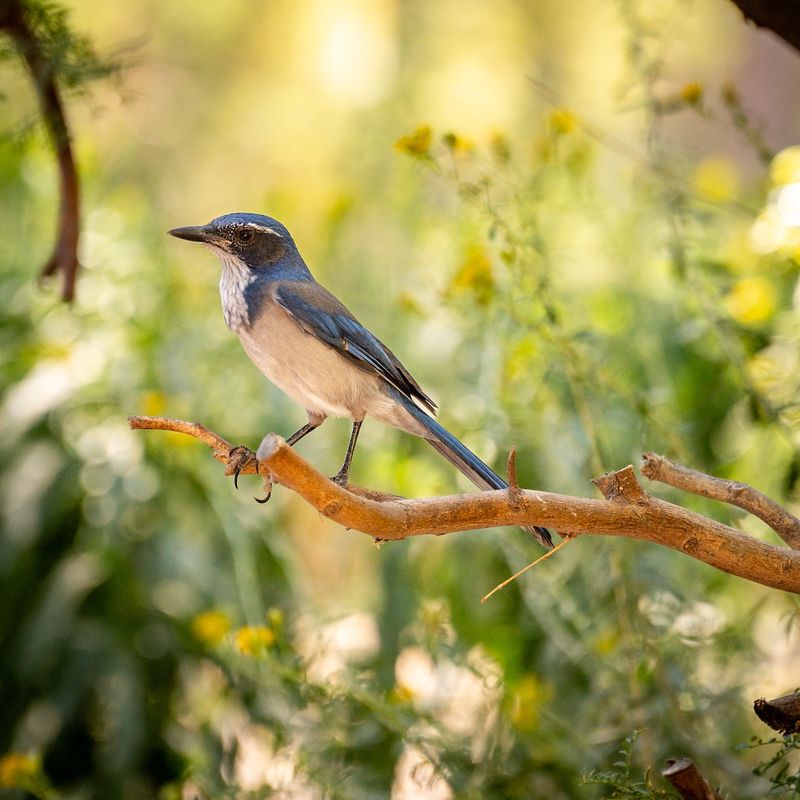
A California Scrub-Jay visiting your yard may eat the occasional snail, and Audubon confirms snails appear in the species’ diet, even if only as a minor item. That is worth knowing, and it means you can let the bird forage without concern.
What it does not mean is that the jay is targeting your specific snail population or that its presence will bring seedling damage down on its own.
The practical takeaway is straightforward. Do not chase the bird away, and do not feed it.
Confirm whether snails or slugs are actually the pest, then follow UC IPM’s integrated approach: clear daytime shelter, shift to drip irrigation, handpick at night, install copper barriers on raised beds, and use an iron-phosphate bait only if other methods are not enough.
The jay is a welcome visitor. Your seedlings still need you.