
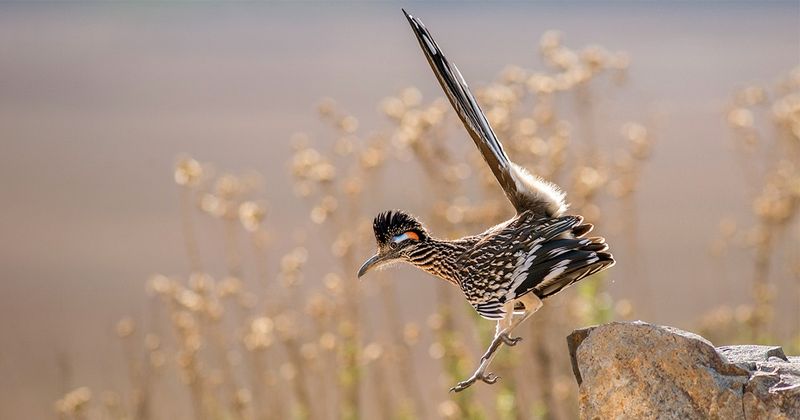
Greater Roadrunners are one of Texas’s most recognizable birds, and yes, they really do eat scorpions. Making your yard more welcoming to one of these fast, fearless hunters is a genuinely worthwhile project, though it works a little differently than you might expect. The goal is to give a wild bird useful habitat, not to hire a feathered exterminator, and understanding that difference will help you get the most out of both your yard and your scorpion protection plan.
Roadrunners eat scorpions, but they are not pest control
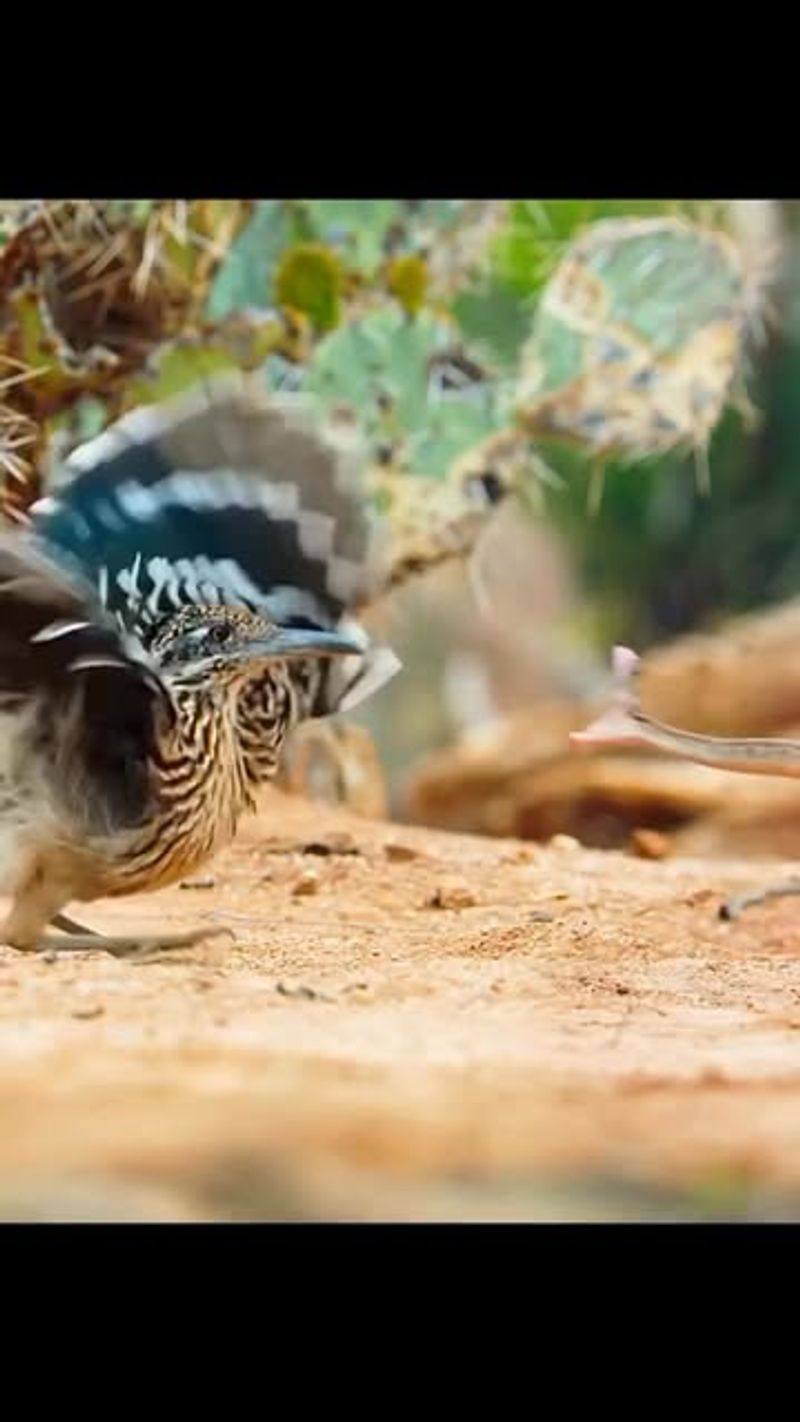
Greater Roadrunners genuinely do eat scorpions, and that fact alone makes them one of the most talked-about birds in Texas. According to Texas Parks and Wildlife’s roadrunner guide, scorpions are among the prey items these birds take as they forage across open ground. Watching one sprint across a yard with a scorpion in its bill is a real and documented event, not a folk tale.
What often gets left out of that story is how varied a roadrunner’s diet actually is. Cornell Lab’s life history profile documents a menu that includes insects, lizards, snakes, small rodents, frogs, other birds, eggs, and carrion. Scorpions are one item on a long and opportunistic list, and the bird takes whatever prey is available and catchable at a given moment.
That broad diet is exactly why roadrunners should not be framed as scorpion exterminators. A bird that eats scorpions when it encounters them is not the same as a bird that patrols your property to reduce your household scorpion population. No reliable research establishes that a roadrunner’s presence measurably lowers the number of scorpions around a home.
The practical goal here is more modest and more honest: creating yard conditions that may make the space more usable for a wild roadrunner. If one shows up and happens to catch a scorpion while it is there, that is a genuine bonus. Treating that possibility as the primary scorpion strategy, though, is likely to leave you underprotected.
Build a yard with open ground and scattered cover
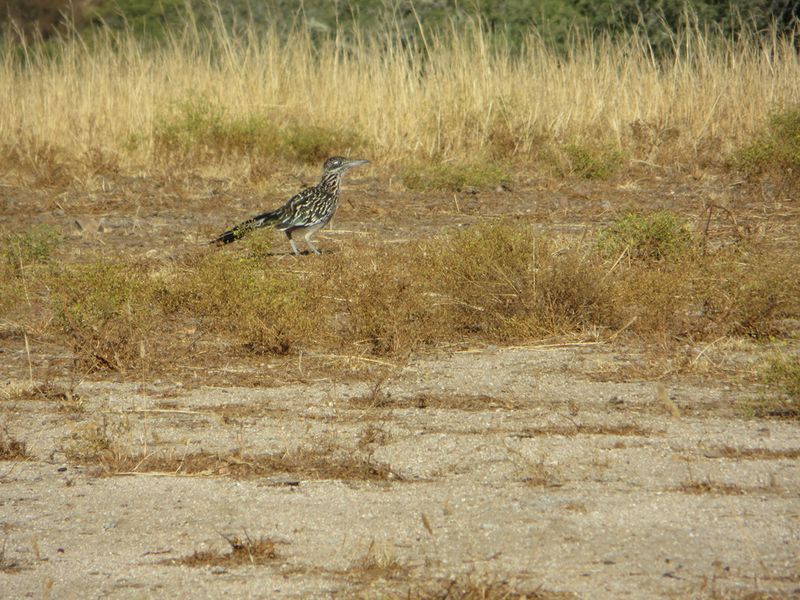
Roadrunners are ground birds built for speed, and the landscape they prefer reflects that. The Texas Breeding Bird Atlas account for the Greater Roadrunner describes the species as most closely associated with brush, brush-grassland, and semi-open country, particularly across western, central, and South Texas. Dense forest and heavily developed neighborhoods are less likely to support them.
What the bird actually needs is a combination of two things working together. Open ground or short vegetation gives it room to run and forage, since roadrunners chase prey on foot and need clear sightlines to spot movement. Scattered sturdy shrubs, small trees, cacti, or thorny vegetation provide places to rest, nest, and take refuge from predators or midday heat.
Neither element works well without the other. A yard that is all manicured lawn offers running room but nowhere to hide or nest. A yard that is all dense thicket offers cover but blocks the open foraging lanes the bird relies on. The useful habitat sits in between: patches of walkable ground alternating with native shrubs and low cover, similar in structure to the brush-grassland edges roadrunners occupy in the wild.
Suburban yards in the right parts of Texas can fit this description, especially if they border open land, creek corridors, or undeveloped lots. That broader landscape context matters. A single yard, no matter how well designed, sits inside a territory that Cornell Lab describes as covering a wide range. Making your yard more structurally suitable may make it a useful stop, but it cannot guarantee a roadrunner will treat it as a regular destination.
Preserve daytime running and hunting lanes
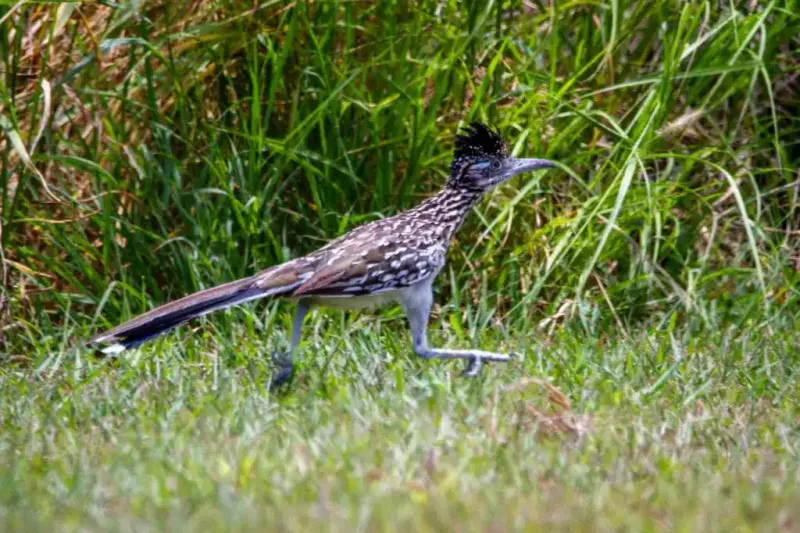
Translating roadrunner habitat into actual yard decisions starts with thinking about the ground itself. Roadrunners are active hunters during daylight hours, and they work by moving quickly across open terrain, scanning for prey. Short grass, packed earth paths, dry streambeds, and open edges along fences or property lines all give a bird room to cover ground efficiently.
Keeping at least some of the yard in this open, walkable condition is the single most practical thing a Texas homeowner can do to make the space more potentially usable. Letting the entire property grow into dense undergrowth eliminates the foraging lanes the bird depends on. The Texas Breeding Bird Atlas is clear that roadrunners are less associated with closed, dense vegetation, and that preference shows up in every habitat description of the species.
At the same time, stripping away all cover to maximize open ground creates a different problem. Without scattered shrubs, cacti, or small trees nearby, a roadrunner has nowhere to retreat when it needs shade, shelter from a predator, or a place to nest. The open lanes are most useful when they sit alongside, not instead of, scattered native cover.
A practical approach is to treat open ground and cover as alternating zones rather than competing choices. Mow or maintain paths and clearings in some areas while leaving native shrubs and low vegetation standing in others. Cornell Lab’s life history notes confirm that roadrunners use edges and transitional zones heavily, which is exactly the kind of structure this alternating approach creates. These changes may improve the yard’s potential usability for the bird, though no yard design guarantees a visit.
Use native structure to support the wider food web
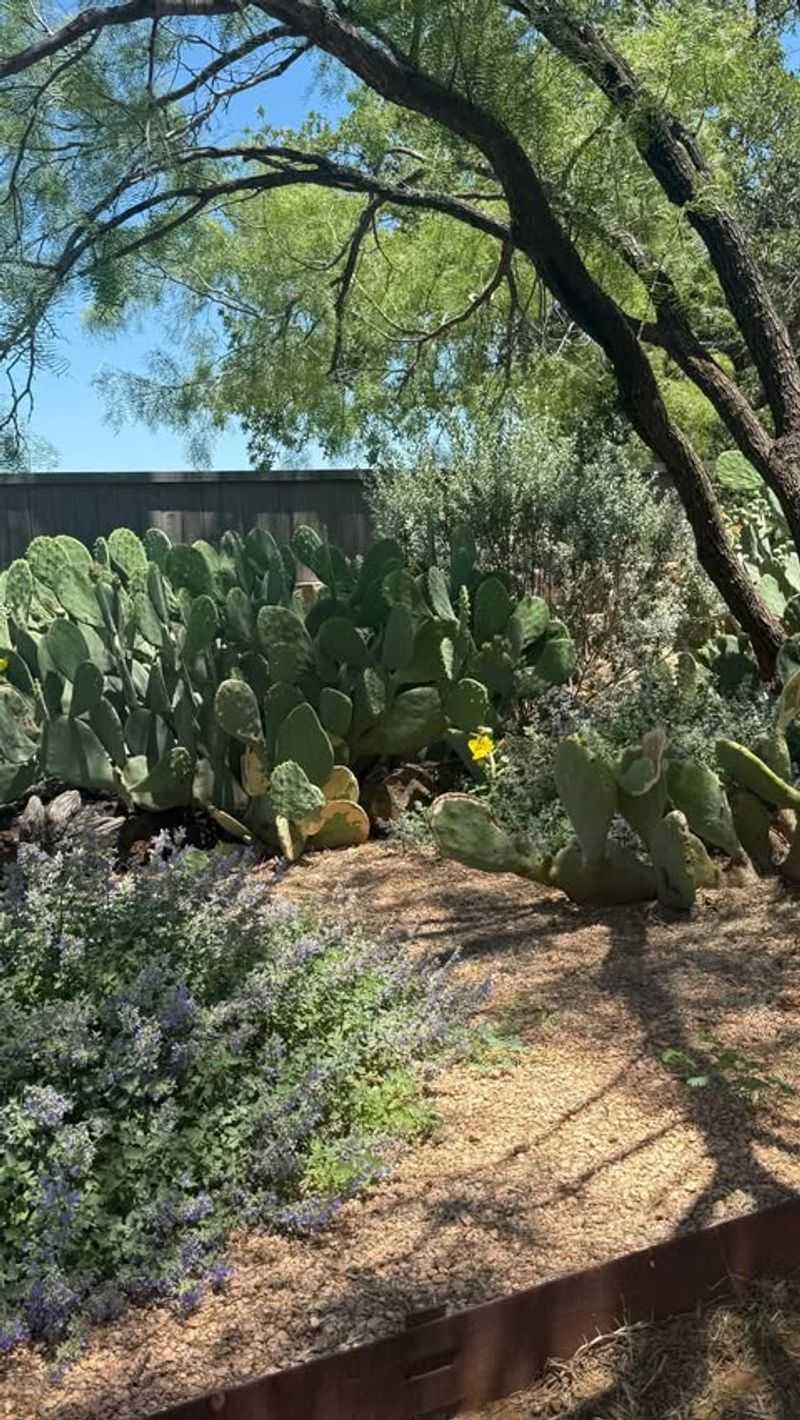
Texas-native shrubs, cacti, and small trees do more than look the part in a wildlife-friendly yard. They provide structural variety that supports a wide range of insects and small animals, and that prey base is ultimately what makes a yard interesting to a hunting bird. Texas Parks and Wildlife’s Partners in Flight action plan recommends native plants, varied cover, and reduced lawn as general bird-habitat practices across the state, and the reasoning is straightforward: native plants support the insects and other small animals that birds eat.
What native planting cannot do is serve as a proven formula for attracting roadrunners specifically. No named plant species has been demonstrated to draw roadrunners to a yard or to increase the number of scorpions a bird catches there. The Texas Breeding Bird Atlas points to habitat structure and landscape context as the relevant factors, not any particular plant combination.
That means skipping the idea of a single “roadrunner plant” and thinking instead about layers. A mix of low ground cover, mid-height native shrubs such as agarita or Texas sage, scattered prickly pear, and a small tree or two creates the kind of structural diversity that benefits many species, including the lizards, insects, and small snakes that roadrunners hunt. Reducing the proportion of mowed lawn in favor of this layered native planting can shift the yard’s overall character in a useful direction.
The payoff is a yard that works better for the wider food web, which is a more reliable foundation than trying to engineer a single-species outcome. Roadrunners may find more reasons to move through a yard that supports abundant prey, even if no individual plant or planting scheme can promise that result.
Protect wildlife without forcing a scorpion encounter
Keeping a yard healthy for wildlife requires a few deliberate choices about what not to use. Broad-spectrum pesticides are one of the clearest concerns. When applied widely, they reduce the insect populations that form the base of the food web, cutting off prey for roadrunners, lizards, and other predators. Texas Parks and Wildlife’s Bird City Texas threat resources identify pesticide use as a direct risk to birds, both through contact and through the loss of insect prey.
Rodent poisons carry a related risk that often goes unnoticed. When a poisoned rodent is eaten by a bird or reptile, the toxin moves up the food chain. Roadrunners eat rodents, and a yard that uses rodenticides can inadvertently harm the very wildlife it is meant to support. Targeted trapping is a safer alternative where rodent control is genuinely needed.
Free-ranging cats are another issue worth taking seriously. Texas Parks and Wildlife’s bird habitat guidance is direct about the threat outdoor cats pose to birds and reptiles. Keeping cats indoors or in a secured outdoor enclosure removes a significant source of predation pressure on the lizards, small snakes, and ground-nesting birds that make a yard ecologically interesting.
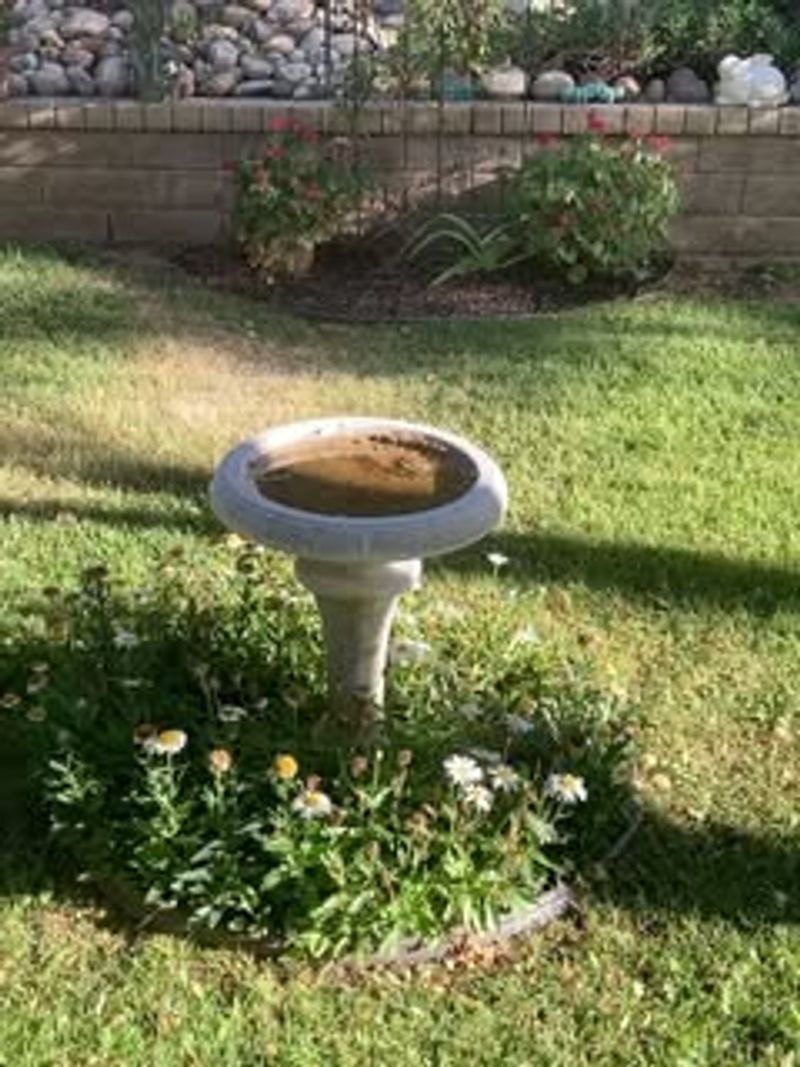
Birdbaths and feeders come up often in wildlife gardening conversations, but their value for roadrunners specifically is limited. Penn State Extension’s water-for-wildlife guidance recommends clean, regularly refreshed water placed where predators cannot hide nearby. A birdbath may benefit many backyard species, but there is no strong evidence it will establish a regular roadrunner stop. If you do offer one, place it in the open rather than tucked against dense shrubs where a cat could wait.
As a separate note from Cornell Lab, roadrunners sometimes prey on small birds at feeders and near nest boxes. Feeders attract a community of species, and roadrunners can be part of that community in a way that surprises homeowners expecting a purely beneficial visitor.
Separate wildlife habitat from the house
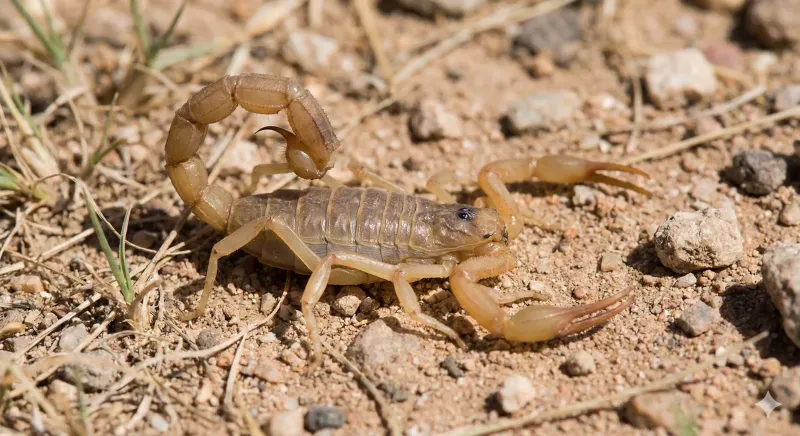
One of the most useful distinctions in any Texas wildlife-gardening project is understanding that a yard can be good for wildlife and still have a clean, scorpion-resistant perimeter around the house. Those two goals do not conflict as long as they occupy separate zones. The mistake is placing wildlife habitat features directly against the foundation, walls, or entry points of the home.
Logs, firewood, boards, flat stones, bricks, leaf piles, and general debris are all materials that scorpions use for daytime shelter. Texas A&M AgriLife Extension’s scorpion management guide recommends removing all of these materials from the immediate vicinity of a structure. That means not stacking firewood against the garage wall, not leaving old boards near the back door, and not piling rocks along the foundation as a decorative border.
Texas A&M’s guidance goes further than debris removal. Pruning tree branches and shrubs away from the roofline eliminates pathways scorpions use to reach upper parts of the structure. Repairing torn screens, sealing cracks in the foundation and exterior walls, closing gaps around roof or utility penetrations, and installing door weather-stripping all reduce the number of entry points available to scorpions moving indoors at night.
A brush pile or native plant bed placed in the middle of the yard, away from the house, can support lizards, insects, and ground-foraging birds without creating a scorpion highway into your living space. Think of the yard as having two distinct areas: a wildlife zone farther from the structure, and a clean, sealed perimeter immediately around it. Maintaining both at the same time is entirely practical, and it is the arrangement that gives you the best chance of benefiting wildlife without increasing household risk.
Treat a summer sighting as presence, not a patrol
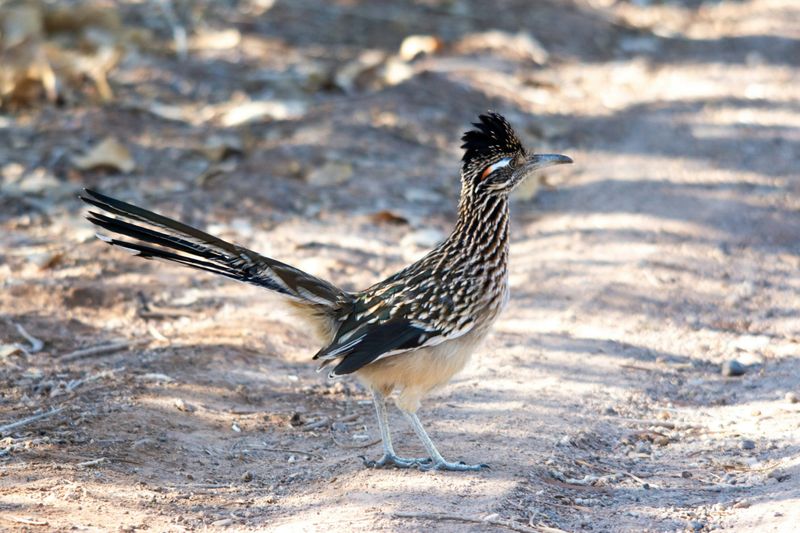
Spotting a roadrunner in your Texas yard on a July afternoon is genuinely exciting, and it does mean exactly one thing: a roadrunner was there. What it does not mean is that the bird has claimed your property as a regular hunting ground or that it will return on a predictable schedule throughout the summer.
Roadrunners are year-round Texas residents and breed roughly from early March through late October, according to the Texas Breeding Bird Atlas. That year-round residency sometimes gets translated into an expectation of continuous presence, but residency in a region is not the same as occupying a single yard. The bird’s movements, feeding behavior, and family-group activity shift with breeding stage, prey availability, weather, and season. A single sighting does not confirm the yard can support repeated use.
Territory size is a significant part of why predictable visits are unlikely. Published ornithological research on Greater Roadrunner territory and USGS distribution data both point to large home ranges, often spanning tens of hectares. A residential lot is a small fraction of the space one bird routinely covers, and whether it passes through your yard on any given day depends on broader conditions you cannot control from inside a property line.
There is also a timing mismatch worth understanding. Scorpions are nocturnal, moving and hunting primarily after dark. Cornell Lab’s life history describes roadrunners as primarily diurnal ground foragers. The two animals do cross paths, and roadrunners do catch scorpions, but the Texas A&M scorpion guide confirms that scorpions spend daylight hours hidden under objects and in cracks, not moving in the open where a daytime hunter can easily find them.
Sightings are worth celebrating as confirmation of presence in the wider landscape, and nothing more specific than that.
Invite the bird while protecting the home
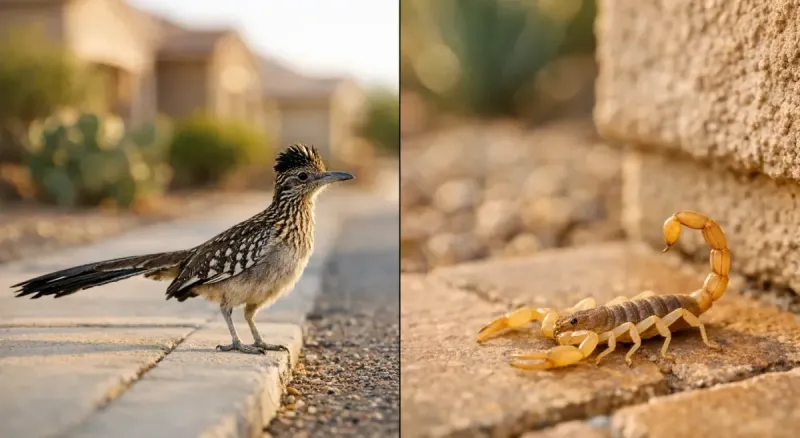
The corrected takeaway from all of this is practical and double-sided. Preserve open ground and scattered native cover so a roadrunner may find your yard more usable when it passes through. At the same time, rely on debris removal and structural exclusion, not the bird, for your actual household scorpion protection. Both things can be true at once, and doing both is smarter than betting on either alone.
A roadrunner encounter does not make a scorpion safe. Texas has multiple scorpion species with varying venom potency, and a sting from any of them deserves a measured response regardless of how many roadrunners live nearby. Texas A&M AgriLife Extension notes that the striped bark scorpion occurs statewide and is the species most commonly responsible for stings in Texas.
For a sting, wash the area with soap and water, apply a cool pack to reduce discomfort, and use appropriate over-the-counter pain relief if needed. Poison Control’s scorpion guidance recommends calling 1-800-222-1222 for advice on any sting. Seek urgent care immediately for breathing difficulty, neurologic symptoms such as muscle twitching or difficulty swallowing, persistent or severe symptoms, or any concerning symptoms in a young child, as outlined by CDC guidance on scorpion stings.
A yard that supports roadrunners is worth building for its own sake. The bird is one of Texas’s most distinctive wild neighbors, and a glimpse of one sprinting across open ground is the kind of moment that makes a yard feel like something larger than a patch of turf.