
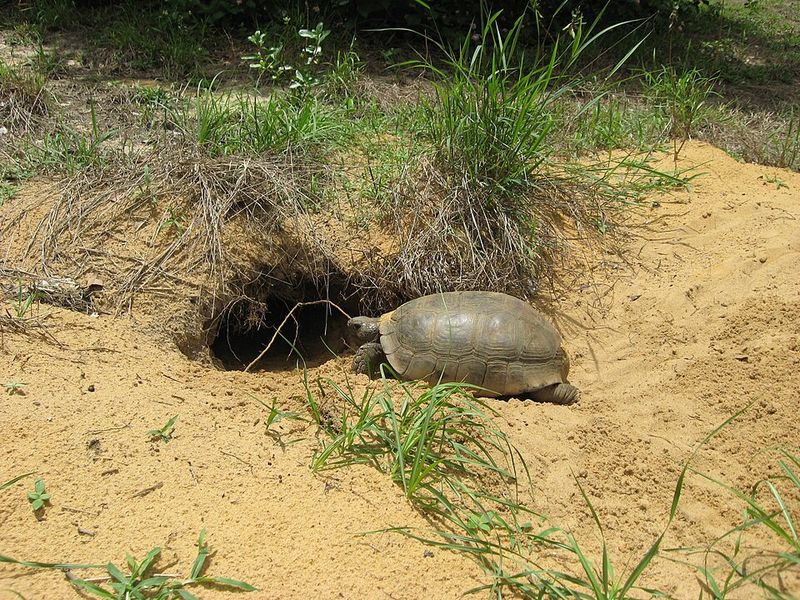
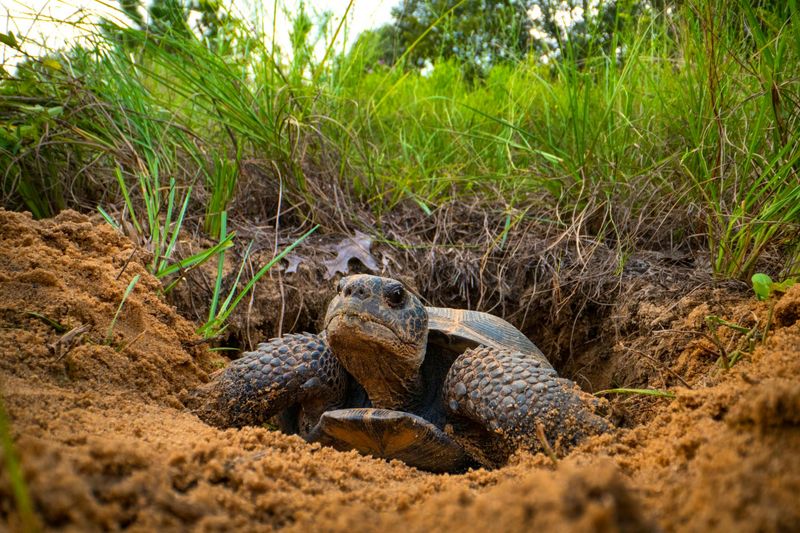
Spotting a big sandy mound and a half-moon hole in your Florida yard can feel like a problem. For wildlife, it can be a bright spot.
Gopher tortoises are a state-threatened species, and the burrows they dig matter to many other animals. Here is what the burrow means, what it does not mean, and how to live alongside it the right way.
A burrow supports more than one animal
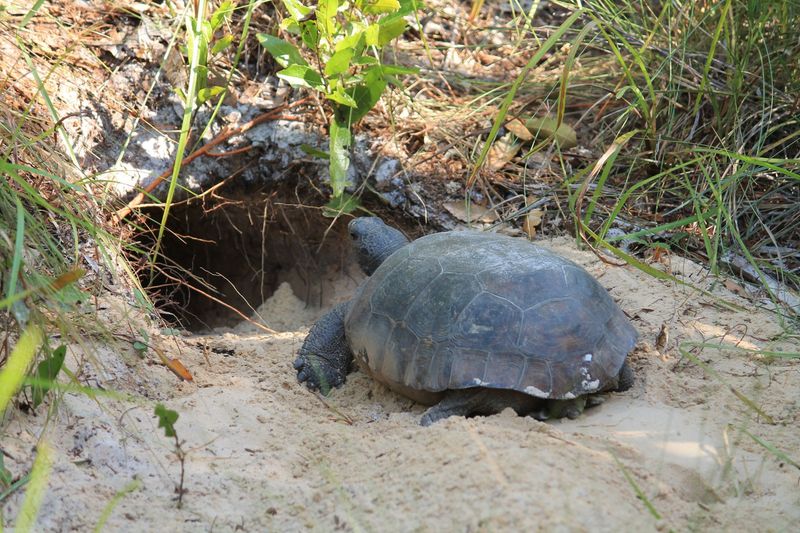
Florida protects gopher tortoises because they are a state-threatened species, so every tortoise that finds a home matters. Their digging is a big part of the story.
According to the FWC gopher tortoise profile, the burrows give shelter to other animals as well.
A burrow stays cooler than the surface on a hot day and offers cover from predators. Other creatures can use that shelter and the resources around it.
UF/IFAS notes that hundreds of species are known to use tortoise burrows.
That number covers the tortoise’s entire range, not one backyard. Your burrow may host a few guests, many, or none at the moment, and you cannot tell from the outside.
The good news is simpler: a protected animal has found a place to dig in, and that digging can help other wildlife.
Think of the burrow as a small piece of shared habitat. Leaving it undisturbed is the best way to let it keep doing its job.
The rest of this guide covers how to do that without upending your yard routine.
Good habitat clues, not a perfect-yard certificate
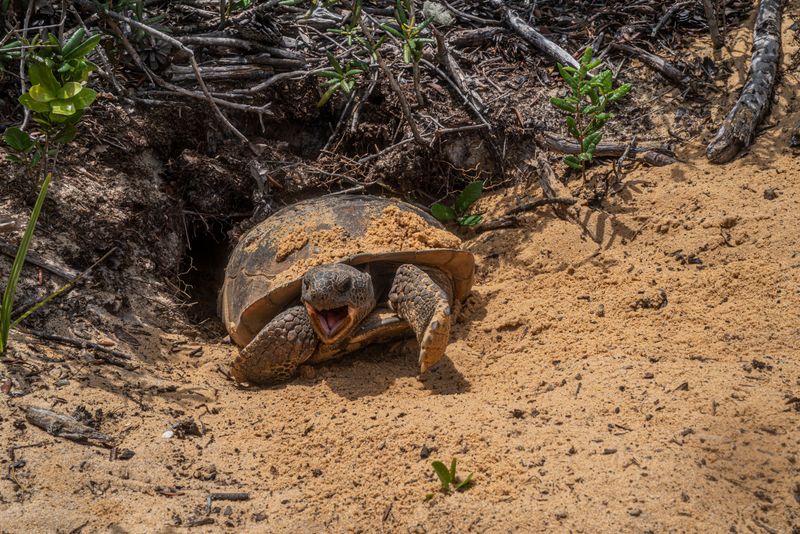
Tortoises dig where the ground suits them. Sandy, well-drained soil makes digging possible, and sunny open ground gives them room to bask.
Low plants nearby give them something to eat. The FWC profile describes these habitat features.
So a burrow suggests your spot offers some of what a tortoise needs. That is a fair clue.
It is not a grade for your whole property.
Tortoises also live in pastures and urban areas, so a burrow does not mean your yard is pristine, unusually fertile, or ideal habitat. A tortoise might dig in a neglected corner next to a busy street.
The presence of a burrow also says nothing about your lawn health, drainage, or curb appeal.
If you like the idea of being a good neighbor to tortoises, FWC runs a Gopher Tortoise Friendly Yard Recognition Program. It is a practical way to see what friendly care looks like in a real yard.
Could that opening be a gopher tortoise burrow?
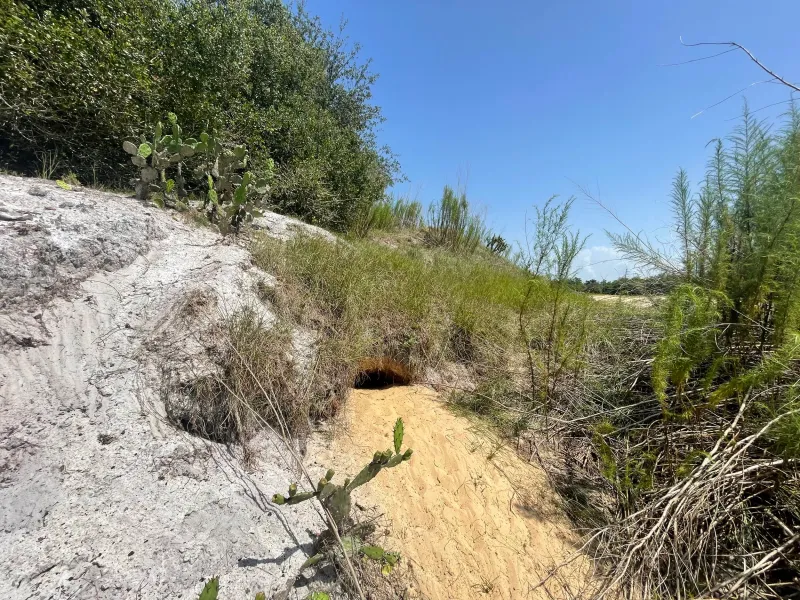
Not every hole in a Florida yard belongs to a tortoise. Other animals dig too, so look at the clues.
FWC’s burrow guide points to a half-moon-shaped entrance, wider than it is tall, with a gently sloping opening.
Many burrows also have a sandy apron, a fan of loose soil piled in front. Tracks or freshly loosened soil can hint at recent activity.
Treat each of these as a clue, not proof.
A quiet entrance does not mean an empty one. Burrows can look unused in winter and still be occupied.
Please do not poke sticks into it, shine lights deep inside, or decide on your own that it is safe to disturb.
If you think you have found one, take a photo from a distance and note where it sits. That is enough to get started.
Give the tortoise space and report the sighting
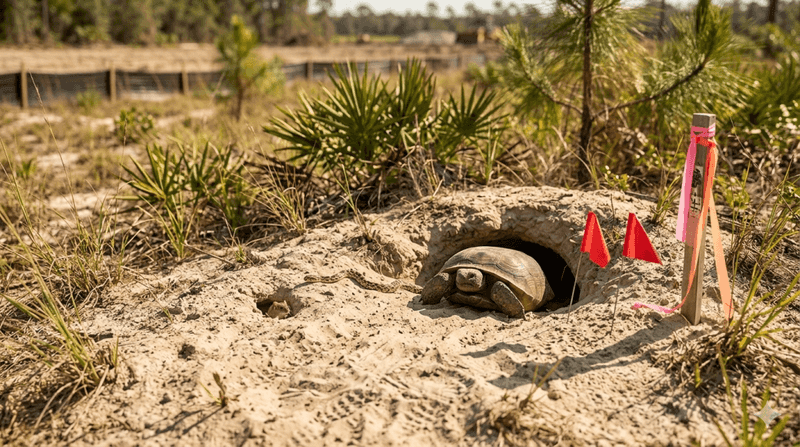
Once you suspect a burrow, the safest response is a hands-off one. FWC’s sighting guidance says to leave a healthy tortoise alone.
Do not pick it up, move it, or block its burrow.
Keep children and pets back from both the tortoise and the entrance. A curious dog can stress the animal, and small hands do not belong near a burrow opening.
A quick talk with the family about looking from a distance goes a long way.
Then report what you saw. FWC encourages people to report tortoises and burrows, and its How to Help page leads to the reporting form.
A short report with the location and a photo helps wildlife staff keep track of where tortoises live. It costs you a few minutes and does not require you to handle anything.
Routine yard care calls for caution, not panic
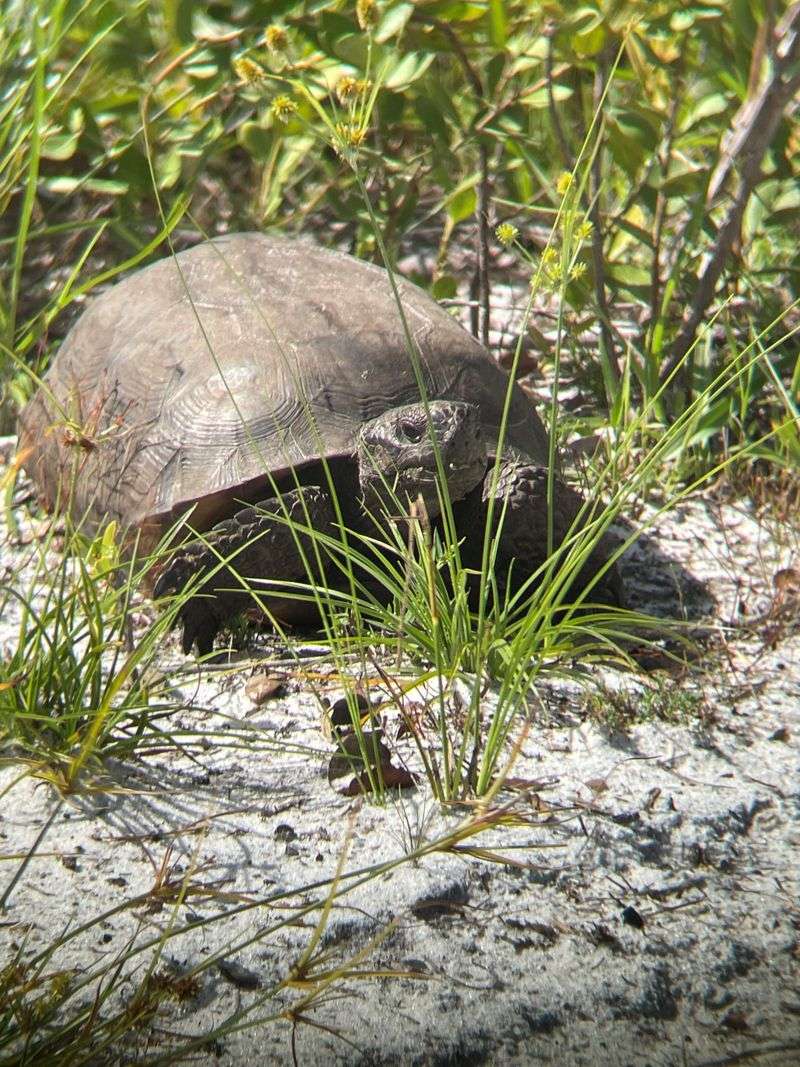
You do not have to stop caring for your yard. FWC’s advice for everyday upkeep is to minimize disturbance, keep heavy equipment away from the entrance, and use a weed trimmer on grass near the burrow.
The yard recognition program page lays out these habits.
UF/IFAS offers a more cautious rule of thumb. Its guidance suggests avoiding mowing, digging, or driving within 25 feet of a burrow.
That is protective advice, and it is a smart choice if you can manage it.
It is not a blanket legal ban. Under FWC’s permit rules, routine maintenance and landscaping generally do not need a permit as long as they do not harm tortoises or collapse burrows.
In practice, that means a trimmer for the nearby edges, parking the truck elsewhere, and skipping new trenches or heavy digging beside the entrance. When in doubt, ask FWC before you start.
Construction near a burrow requires an FWC check
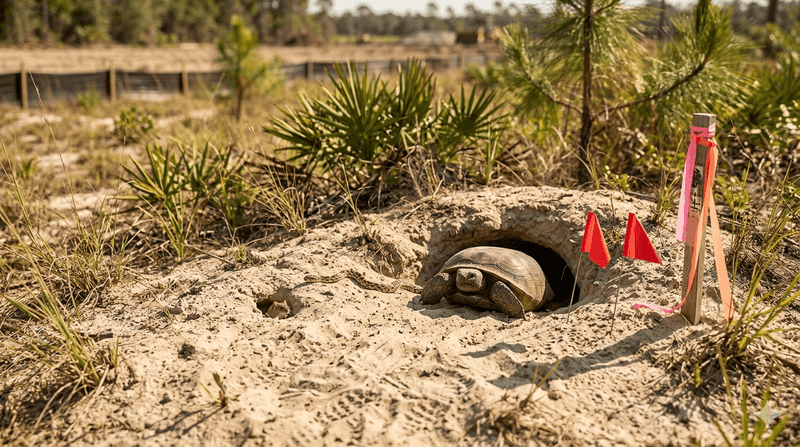
Planned projects are where the rules matter most. FWC says a relocation permit is required before disturbing a burrow or carrying out construction-related activity within 25 feet of one.
The details are on the FWC permits page.
Construction, grading, and clearing all belong on that list. A new patio, pool, shed, driveway, or leveled lot are the kinds of jobs to run past FWC first.
Contact them before any work begins, not after the equipment arrives.
That is different from routine upkeep, which generally needs no permit when it does not harm tortoises or collapse burrows. The line comes down to the activity and its effect on the animal.
Until you have checked, do not move the tortoise, fill the burrow, or block the entrance. Those moves can hurt a protected animal and may break Florida rules.
The FWC sightings page explains where to start.
Choose forage plants without disturbing the site
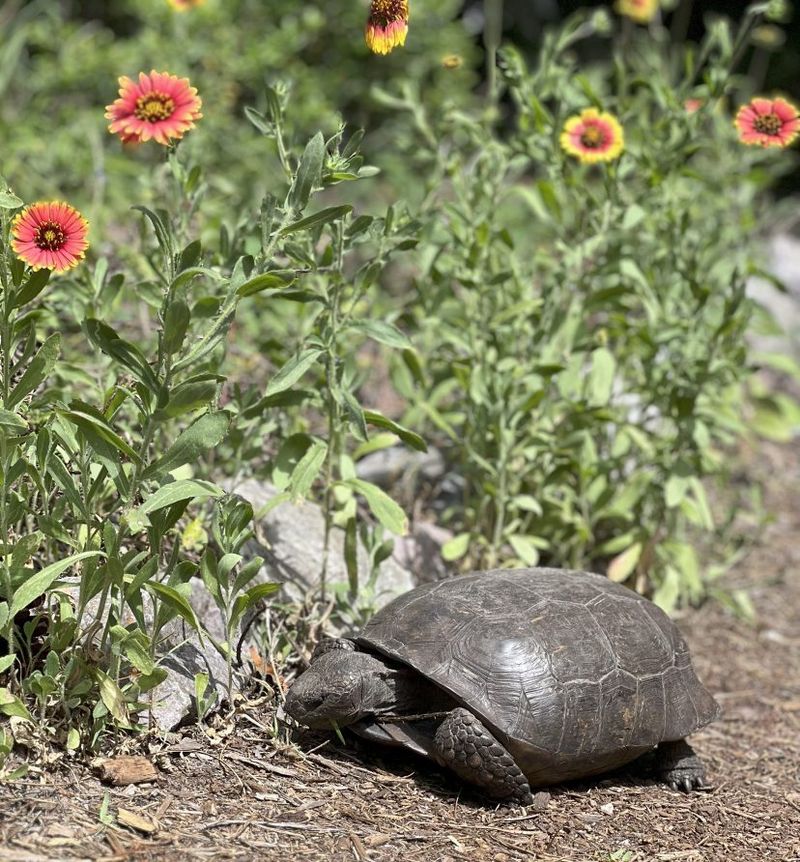
Planting for tortoises is a friendly next step, and it starts with your plant list. FWC publishes A Florida Guide to Gopher Tortoise Friendly Plants, organized by region.
Use it to pick locally appropriate forage plants, preferably native ones.
Tortoises graze on a variety of low-growing vegetation. They often feed close to the burrow, but they can wander farther, so plantings elsewhere in the yard can still be useful.
Choose a spot with the sun and sandy conditions the plants like.
Keep all the work away from the burrow itself. Do not plant into the entrance, rework the sand apron, or leave food out as bait.
Add plants gently at a comfortable distance, and follow the care advice on FWC’s How to Help page.
Plants will not guarantee a tortoise stays or that your lawn looks better. They simply give a protected neighbor something suitable to eat.
Keep the good news good
A burrow is a gift to local wildlife, and your response keeps it that way. Respect the entrance, report the sighting, use a trimmer instead of heavy equipment nearby, and call FWC before any planned construction.
The sightings page and permits page show the way.
Some of Florida’s best wildlife stories start with a patch of sand and a patient neighbor.