
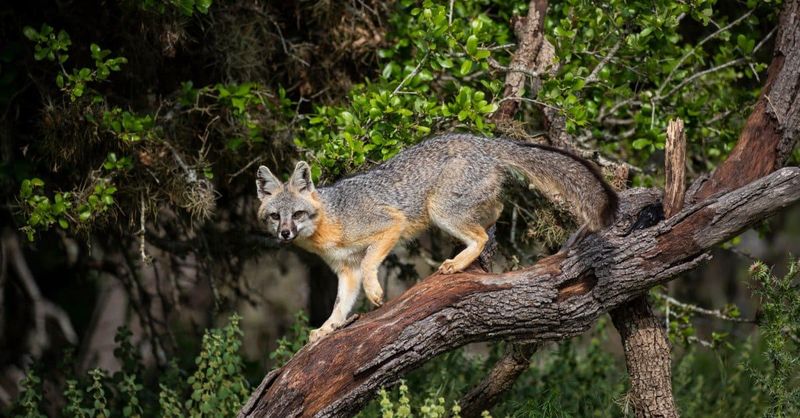
Spotting a gray fox slipping through your Texas yard at dusk is one of those sightings that makes you stop and stare. These native predators are quiet, quick, and genuinely useful to have around – they eat rodents along with a wide variety of other foods. Understanding what a fox visit actually means, and what it does not prove, helps you make smarter choices about managing both wildlife and rats on your property.
A gray fox at dusk may simply be using the neighborhood
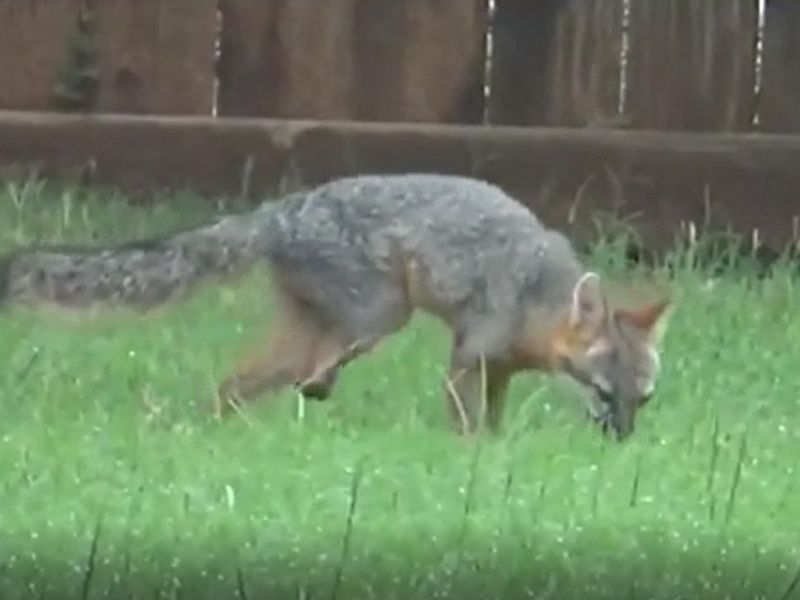
Catching a glimpse of a gray fox moving along your fence line at dusk is easier to misread than most people realize. The animal looks purposeful, and the timing feels significant, but the sighting by itself tells you only one thing with certainty: a fox is using the area. Texas Parks and Wildlife field guides describe the gray fox as mostly nocturnal and widely distributed across the state, found in chaparral, open woodlands, rocky terrain, and brushy cover from the Pineywoods to the Trans-Pecos.
The animal itself is worth knowing by sight. Gray foxes carry a salt-and-pepper gray coat along the back and sides, rust-orange along the neck, flanks, and legs, and a distinctive black stripe running the length of the tail. That combination separates them cleanly from the red fox, which has a white-tipped tail, and from the kit fox, which is smaller and paler and restricted mainly to far West Texas.
Crepuscular activity – movement around dawn and dusk – is completely normal for this species. A fox crossing your yard after sunset has not wandered off schedule. Repeated sightings during late spring or early summer deserve a slightly different interpretation, though. Texas Parks and Wildlife notes that gray foxes typically produce three to seven young between April and May, so a string of sightings during those months may simply mean a family is denning in nearby cover and adults are making regular feeding runs through your neighborhood.
None of that activity is a signal about your rat population. The fox may be hunting, traveling between habitat patches, checking out a water source, or passing through on its way somewhere else entirely. A sighting is worth noting and appreciating – just keep the interpretation grounded in what the evidence actually supports.
Rodents are part of the diet, not the whole explanation
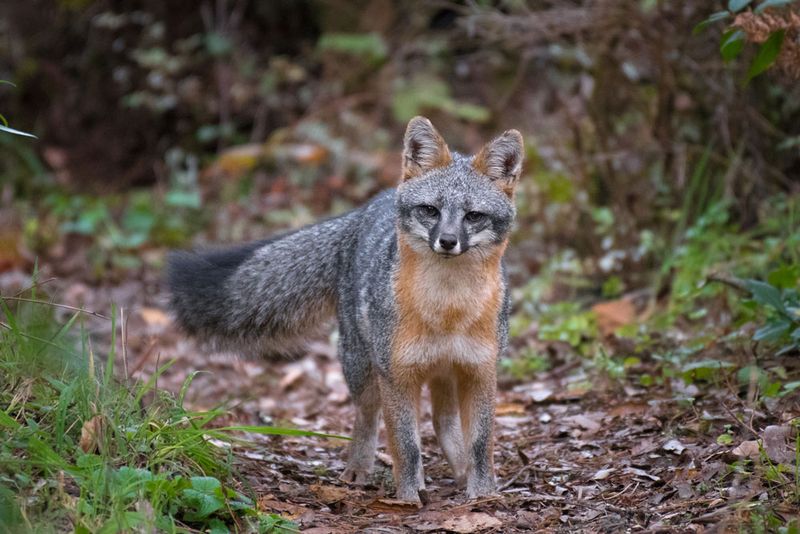
Gray foxes do eat rodents. Mice, woodrats, and cotton rats all appear in diet studies, and a fox hunting through tall grass or along a brushy fence line is doing exactly what its biology equips it to do. That part of the story is real. The part that gets oversimplified is what happens next, because rodents are one item on a long and variable menu, not the animal’s defining mission.
USDA Forest Service species-review data and National Park Service natural history notes on gray foxes both describe the species as an opportunistic omnivore whose diet shifts with season and location. Insects, birds, eggs, rabbits, carrion, acorns, fruit, nuts, and grain all contribute meaningfully to what a gray fox eats across the year. In some seasons and some regions, plant material and invertebrates can represent a larger share of the diet than small mammals do.
A fox crossing your yard at dusk might be chasing a mouse along the base of your compost bin. It might equally be hunting grasshoppers in the lawn, checking a pecan tree that dropped fruit the night before, or scavenging something it smelled near the alley. Additional NPS natural history documentation reinforces that gray foxes are highly adaptable foragers rather than specialists locked onto any single prey type.
What this means practically is that no Texas yard study shows a reliable link between more gray fox sightings and fewer household rats. The fox may remove some rodents over time, and that is genuinely useful, but it is incidental predation by an opportunist – not a targeted pest-control service. Treating it as the latter leads to management choices that can backfire, starting with the temptation to attract or retain a fox through feeding.
Why predator effects do not translate into a simple rat count
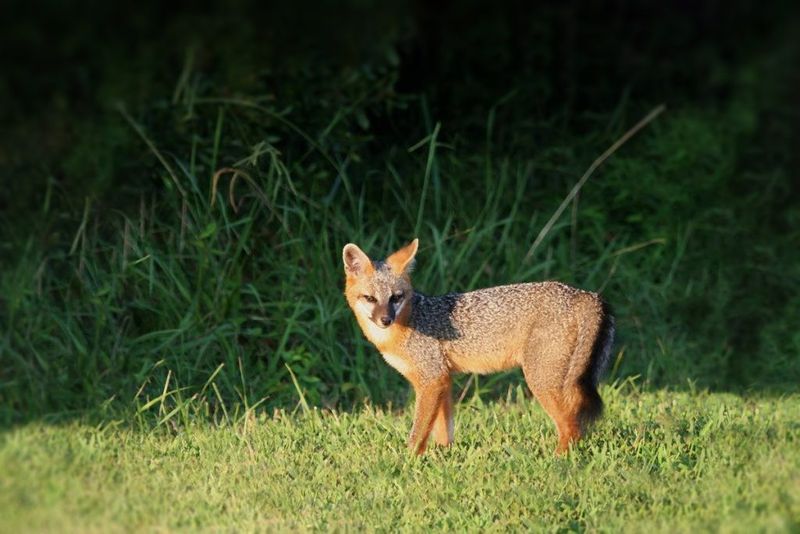
Predator-prey relationships look straightforward from a backyard fence, but the research tells a more complicated story. A useful reference point is a 1975 study published in the Southeastern Association of Fish and Wildlife Agencies journal examining what happened to rodent populations when gray foxes were intensively removed from an area. Rodent demographic characteristics did change, but overall woodmouse density did not simply rise or fall in a clean, predictable pattern. Another predator – the weasel – partly compensated for the fox’s absence, stepping in to fill the hunting role the fox had vacated.
That finding matters for how Texas homeowners interpret a fox visit. The food web around a residential yard involves multiple predators, multiple prey species, and seasonal shifts in behavior and abundance. Removing or adding one predator does not produce a one-for-one change in rodent numbers. The system adjusts in ways that are hard to predict from a single observation at the fence line.
A second piece of research adds another layer of nuance. An island-fox study published in PLOS ONE found that deer mice shifted their foraging behavior in response to fox density – moving differently, using space differently, and changing when and where they fed. That is real evidence of predator influence, but it is a behavioral change in prey, not proof that foxes eliminated a rodent population. Behavior change and population elimination are very different outcomes.
For the practical reader, the takeaway is this: a gray fox in your yard may genuinely affect how rodents move and behave nearby. That is worth something. But it does not substitute for exclusion, sanitation, and targeted trapping when an active infestation is present, because the ecological relationship is too variable and too indirect to rely on as pest control.
What may be drawing a fox through your yard
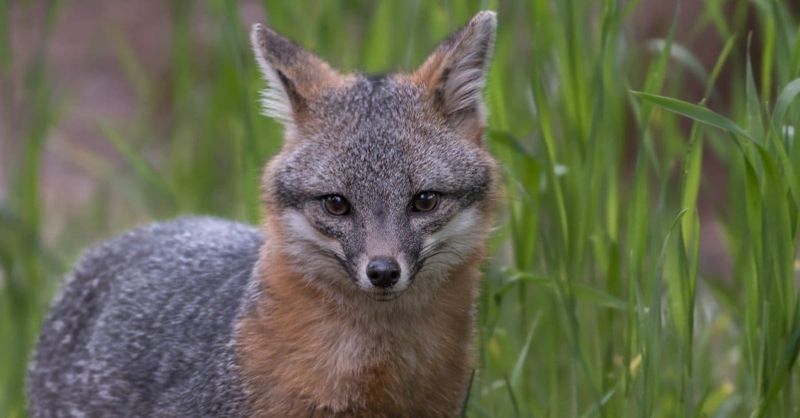
Yards attract foxes for reasons that have little to do with whether rats are present. Shelter is one of the strongest draws. A gray fox moving through a neighborhood is constantly evaluating cover – dense shrubs, brush piles, spaces under decks or sheds, hollow logs, and rocky outcroppings all register as potential rest sites or den locations. Water is another pull, and in a Texas summer a yard with a reliable water source can attract more wildlife than any food offering.
A residential-yard occupancy study published through USGS found that yard and landscape features influenced gray fox presence, but that research was conducted in Arkansas, not Texas, and it did not demonstrate that foxes were suppressing rat populations in those yards. The geographic gap matters: Texas conditions, habitat structure, and wildlife communities differ from Arkansas, so applying those findings directly to a Houston or San Antonio backyard requires caution.
NPS natural history notes confirm that gray foxes are highly adaptable and can use a wide range of habitat types, which is part of why they turn up in suburban and even semi-urban Texas settings. But adaptability cuts both ways. A fox visiting your yard may be responding to pet food left outside, garbage that was not fully secured, a bird feeder that dropped seed overnight, or a compost pile that smells interesting.
Texas Parks and Wildlife documentation notes that gray foxes den in hollow trees, logs, ground burrows, and spaces beneath rocks. A single fox visit is therefore evidence that the animal found something useful in the area – cover, food, water, or a travel corridor – not a diagnostic reading of your yard’s ecological health or its rodent load.
Support wildlife without creating a bait station
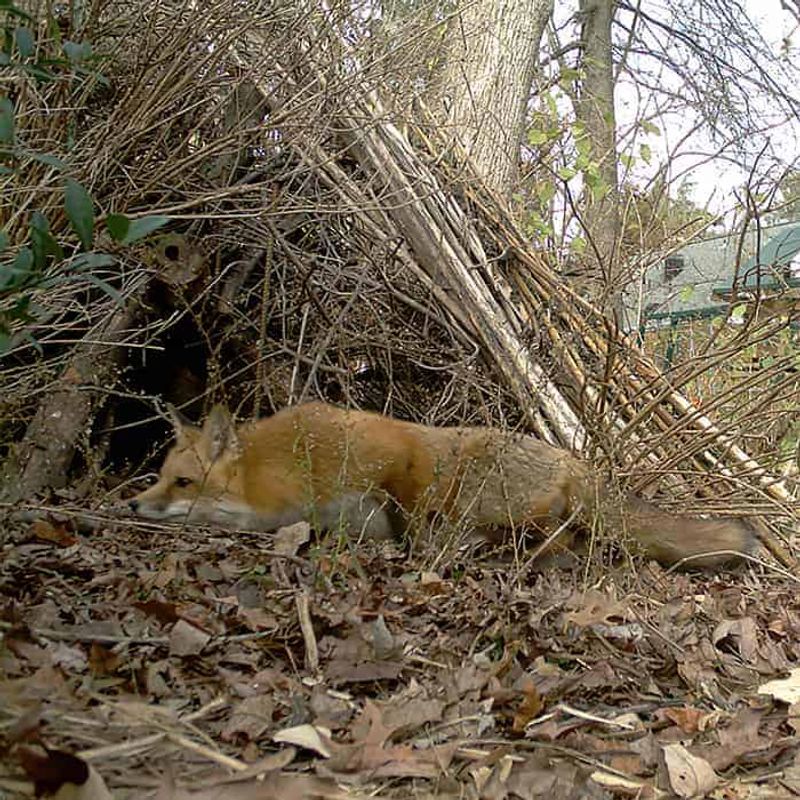
Making a yard friendlier to native wildlife is a reasonable goal, and gray foxes can benefit from thoughtful habitat choices without any direct baiting or feeding. Texas Parks and Wildlife habitat guidance identifies food, water, shelter, and space as the four basic requirements for wildlife, and a yard that provides some combination of native vegetation, a reliable water source, and undisturbed cover addresses those needs honestly. What it does not do is guarantee that a gray fox will visit, stay, or patrol for rodents.
TPWD Wildscapes guidance recommends native plants that support the insects and small animals forming the base of the local food web. Avoiding broad-spectrum pesticides that knock out insect populations is part of that strategy, because insects are a meaningful part of the gray fox diet and a healthy invertebrate community supports multiple native predators. TPWD conservation education materials reinforce that habitat quality, not individual animal management, drives wildlife presence over time.
The line to hold firmly is between habitat and bait station. Utah State University Extension wildlife guidance and TPWD coyote and predator management pages both advise against feeding foxes or placing meat, pet food, or other attractants outside to encourage repeated visits. Food conditioning makes wild animals bolder, increases the chance of conflicts with pets and people, and can draw in rodents and other wildlife that create their own problems.
TPWD’s wildlife damage management handbook notes that brush piles, woodpiles, rock piles, and dense shrubs can provide genuine wildlife cover, but placement matters. Keep natural features away from building foundations, entry doors, and children’s play areas. A brush pile at the far edge of a large lot is habitat; the same pile pushed against the back wall of a garage is a rodent harborage waiting to happen.
Remove the food and entrances that keep rats close
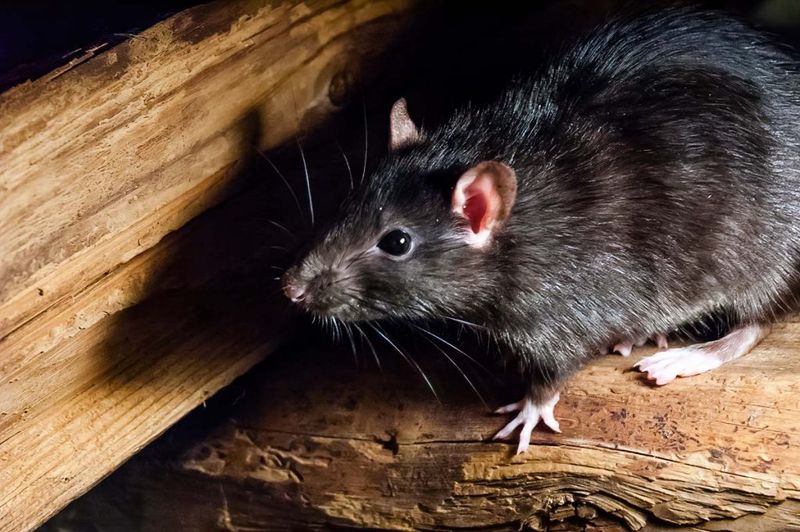
Reducing rats around a Texas home starts with two jobs that no predator can do for you: cutting off their food supply and closing the gaps they use to get inside. CDC rodent-control guidance on exclusion recommends sealing any opening larger than one-quarter inch, which includes gaps around pipes, utility lines, vents, doors, and the foundation. Steel wool, hardware cloth, and caulk are the standard materials for smaller gaps; sheet metal and cement work for larger breaches.
Sanitation removes the reason rats stay once they arrive. Garbage should go into cans with tight-fitting lids, secured overnight and not left at the curb longer than necessary. Pet food left outside – even briefly – is a reliable attractant, and bowls should come indoors after every feeding. Outdoor grills and cooking areas collect grease and food residue that rats investigate regularly, so cleaning the grate and drip tray after each use is a practical step that most homeowners overlook.
Bird feeders deserve special attention in this context. TPWD predator management guidance notes that spilled birdseed can concentrate rodents near structures, and a concentrated rodent food source close to the house creates exactly the kind of situation you are trying to avoid. Moving feeders away from the building, switching to no-waste seed mixes that produce less hull debris, and cleaning up spilled seed regularly all reduce that pull without forcing you to give up bird feeding entirely.
Clutter immediately around the house – stacked lumber, old equipment, dense ground cover planted against the foundation – gives rats both cover and easy access to entry points. Keeping a clear zone of a few feet around the building perimeter makes it harder for rodents to approach undetected and easier for you to spot new gaps before they become established entry routes. These steps work whether or not a fox ever visits your yard.
Use direct rodent control that does not endanger foxes
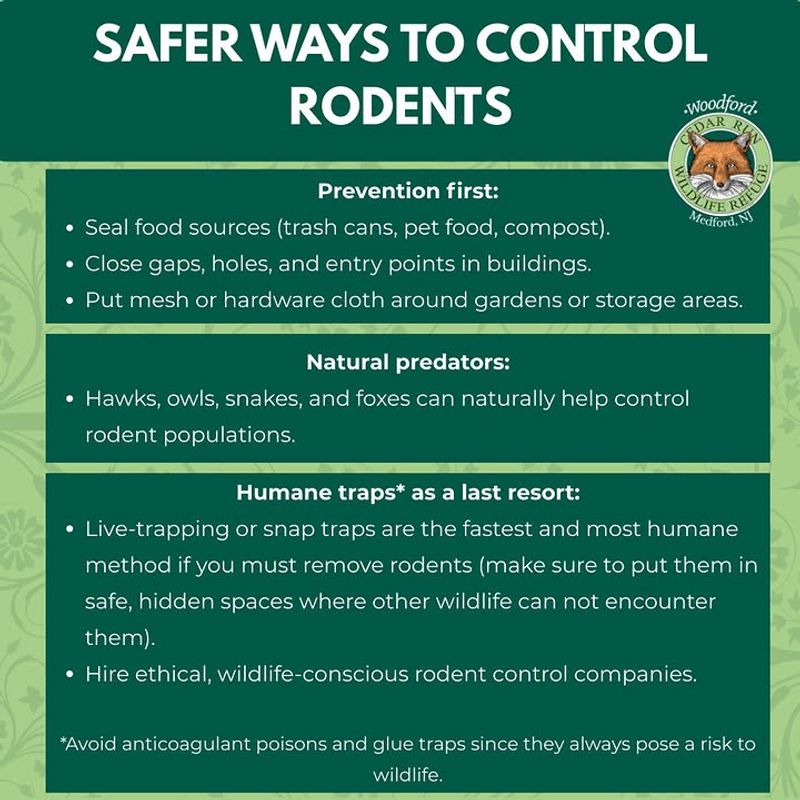
When exclusion and sanitation are not enough and signs of an active infestation persist, direct trapping is the next step. CDC guidance on rodent trapping recommends appropriately sized snap traps as the preferred method for household rodent control. Place them where you have found droppings, gnaw marks, grease trails, or other physical evidence – along walls, behind appliances, inside cabinets, and in other low-traffic areas where rodents travel. Keep traps away from children and pets, and check them frequently.
The same CDC guidance advises against glue traps and live-catch traps for household rodent control. Glue traps cause prolonged suffering, can catch non-target animals, and require close handling for disposal. Live traps create a relocation problem: dumping a rat somewhere else does not reduce the population and may spread disease. Snap traps, placed correctly and checked regularly, handle the job more cleanly and humanely.
Rodenticides present a direct conflict with the goal of keeping foxes safe. NPIC rodenticide fact sheets identify several anticoagulant rodenticides as presenting high secondary-poisoning risks to wild mammals. A fox that eats a poisoned rat can accumulate a lethal dose without ever contacting the bait directly. EPA rodenticide safety review documentation confirms that predators and scavengers are among the wildlife most at risk from rodenticide use in residential settings.
If a pesticide becomes genuinely necessary after other methods have failed, use it strictly according to label directions, place bait stations where non-target animals cannot access them, and dispose of any rodent carcasses promptly and properly so a fox or other scavenger does not feed on a contaminated body. Exclusion and snap trapping first, rodenticides only as a last resort with full label compliance – that sequence protects both your home and the predators working the area around it.
Watch the fox without turning a sighting into a conflict
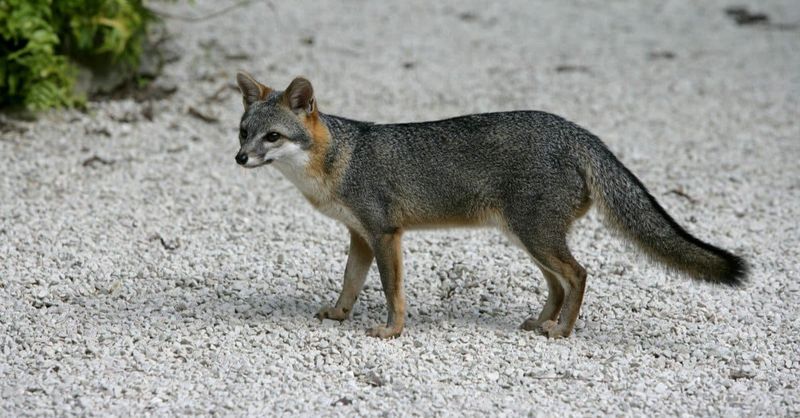
Gray foxes generally want nothing to do with people, and a healthy animal will usually move off quickly once it notices you. Watching from inside or from a distance is the right approach. Getting closer, attempting to hand-feed the animal, or leaving food to encourage repeat visits all push the fox toward habituation – a condition where a wild animal loses its wariness around people and becomes more likely to cause a conflict. Utah State University Extension guidance on living with foxes is direct on this point: never feed, handle, or attempt to tame a wild fox.
Pets need management around dusk and after dark. Keep dogs on leash or under direct supervision when a fox may be in the area, and keep cats indoors or in a securely enclosed run. TPWD wildlife damage management resources note that foxes can prey on poultry and small pets, so outdoor animals left unsupervised overnight face real risk. This is not a reason to fear every dusk sighting, but it is a reason to manage your pets deliberately.
On the question of rabies, daytime activity by itself is not a warning sign. Texas DSHS rabies information confirms that foxes can carry rabies, but the hour of observation alone does not indicate illness. DSHS rabies facts guidance points to behavioral signs as the meaningful indicators: abnormal tameness, unprovoked aggression, difficulty walking, paralysis, apparent disorientation, or obvious illness.
A fox that approaches people without hesitation, staggers, falls, or acts aggressively should not be approached. Contact your local animal control agency or Texas DSHS regional zoonosis office and describe the behavior. Do not attempt to handle or contain the animal yourself. For a healthy fox moving through the yard at dusk, the right response is simply to watch, keep your pets in, and let it pass.
Let the fox be an incidental ally, not the solution
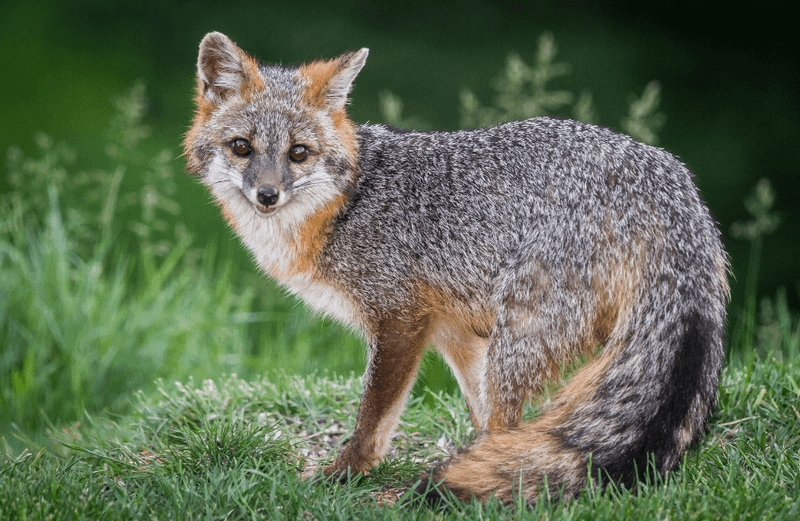
A gray fox using your Texas yard at dusk is a genuinely good thing to observe. Texas Parks and Wildlife species documentation confirms these are native predators with broad distributions and real ecological roles. The honest interpretation of a sighting is that the fox is using the area and may remove some rodents along the way – not that it is proof of a healthy food web or a sign that your rat problem is resolving itself.
Protecting that animal means removing the things that put it at risk. CDC exclusion guidance and CDC trapping guidance together outline the nonchemical steps that control rodents without leaving poisoned carcasses in the environment. If you handle an active infestation through sanitation, exclusion, and snap trapping, you reduce the chance that a fox or other scavenger picks up a toxic rodent. That is how the two goals – managing rats and supporting native wildlife – stay compatible rather than working against each other.
When an infestation is serious, call a licensed pest control professional. NPIC rodenticide guidance underscores that chemical options carry real risks to predators, and no homeowner should skip necessary control just to preserve a prey supply for one passing fox. The fox is a welcome visitor and a possible incidental ally – but one predator, hunting part-time through a suburban yard, was never going to win a war against rats on its own.