
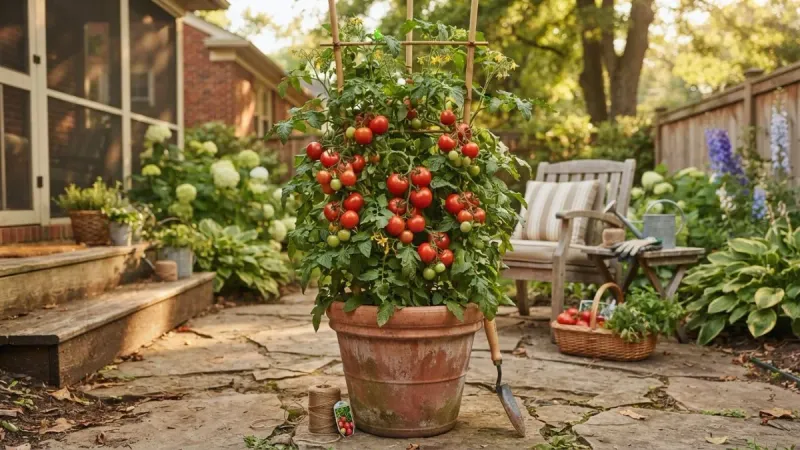
Your fall tomato in a pot is still green and loaded with blooms, and then the first chilly front shows up in the forecast. Many Texas and Florida gardeners wonder if sliding the pot against a sunny wall can save the harvest.
A wall can offer a small boost on some nights, but it is not a magic fix for new fruit. Here is what the move can and cannot do, and how to protect the plant and the tomatoes already on it.
A south wall offers only a modest cold-night advantage
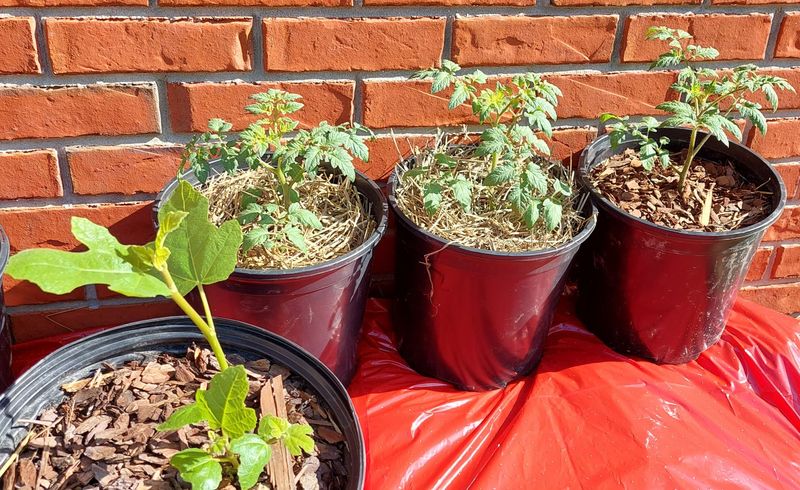
Stone, brick, and concrete soak up heat all day and let some of it go after dark. Texas A&M AgriLife Extension notes that buildings can release stored heat at night, but it describes the advantage as slight.
That small gain matters most on calm, clear nights, when cold air settles near the ground and radiative frost can form. A pot tucked beside a south or southwest wall may sit a degree or two warmer than one out in an open yard.
Wind changes the picture. In a severe or windy freeze, a wall is not dependable protection, and a lightweight cover alone may do little.
Treat the wall as one small helper, not a shield.
It also cannot promise that blossoms stay warm enough to set fruit through December. A slightly warmer corner may help the plant get through a rough night, and that is a more realistic goal.
Cool nights can inhibit new fruit set before a freeze
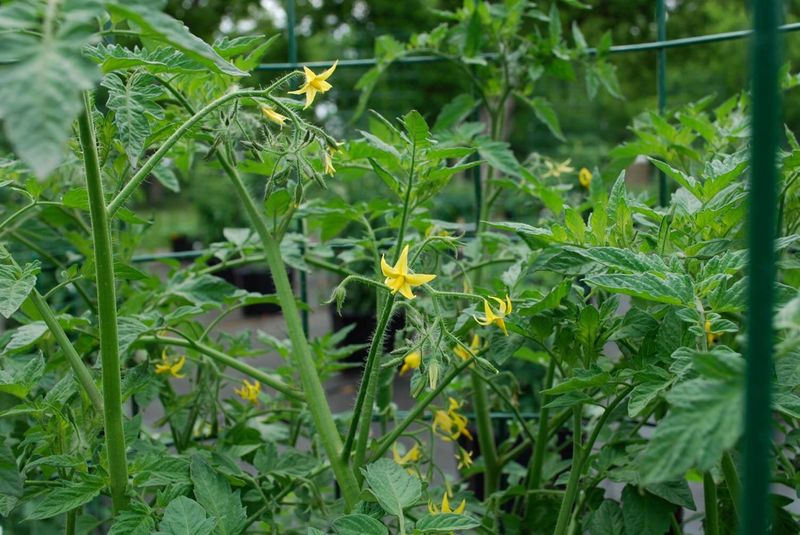
Here is the catch many gardeners miss: a night does not have to freeze to cause trouble. MU Extension says tomato pollination is inhibited below 55°F, so cool nights can impair new fruit set even when the leaves stay perfectly green.
It does not always stop fruit set entirely, but it can make it spotty.
A freeze is a different problem. UF/IFAS FAWN lists 30°F as a freeze point for tomato fruit, which is a far more serious threat than a chilly 50°F night.
Tomatoes already hanging on the plant are a separate story. They can keep growing and ripening, though UF/IFAS notes that ripening slows below 55°F, and color and flavor can suffer.
So a pot full of blooms in December may not turn into new tomatoes, while the fruit you already have may still come along, just more slowly.
Keep the moved pot sheltered but sunny
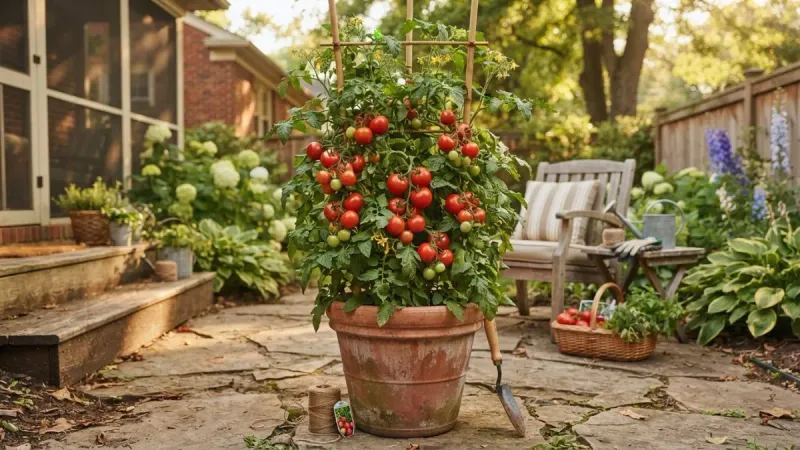
Shelter is only useful if the plant still gets light. According to Texas A&M AgriLife, tomatoes need at least six hours of sun daily, so pick a wall spot that is not shaded by eaves, fences, or trees.
A south-facing side usually delivers the most winter sun, and it can also block some of the chilly wind. Mississippi State University Extension points to sheltered spots as one way to reduce cold exposure for plants.
Put the pot on a wheeled caddy so you can roll it out when the sun swings low. Set it a few inches off the wall for airflow, and watch for leaf scorch if reflected heat is strong in warm spells.
Think of this as a practical adjustment. It may ease cold stress on some nights, but it does not guarantee more fruit.
Cover the foliage when a cold snap is forecast
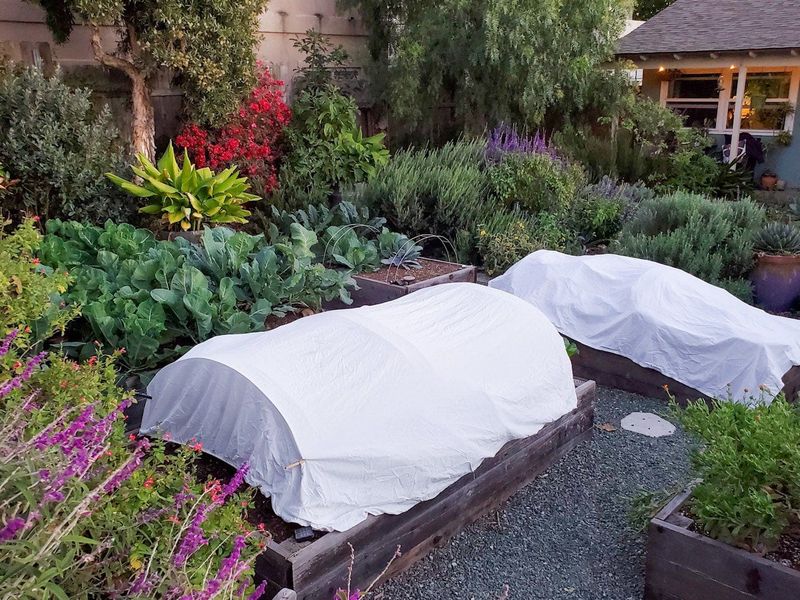
When the forecast calls for a short cold snap, cover the plant in the evening. UF/IFAS suggests frost cloth, a sheet, or a blanket draped all the way to the ground so it traps warmth rising from the soil.
Skip plastic touching the leaves, since direct contact can damage foliage and plastic can overheat plants in sun. If you use it at all, hold it off the plant with stakes or a frame.
Take the cover off once temperatures climb above freezing or the day warms. A cover left on in bright sunshine can cook tender growth.
Keep expectations realistic, too. AgriLife says lightweight covers alone offer little to no protection in a severe, windy freeze.
For that kind of night, bring the pot into a garage or porch if you can.
Protect container roots and avoid waterlogged soil
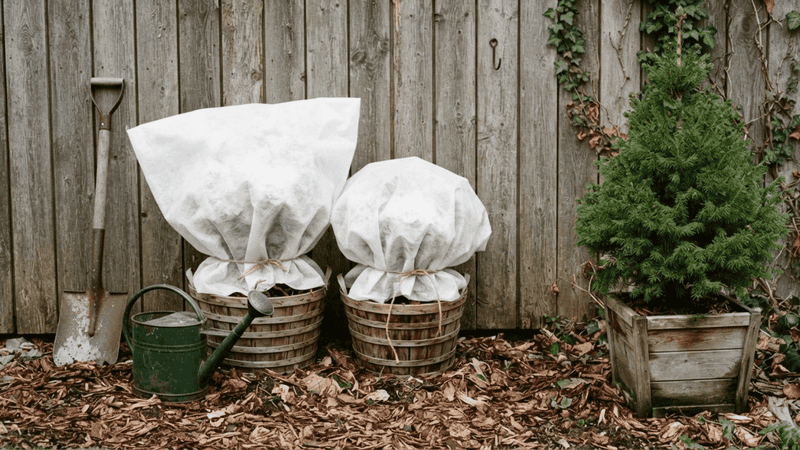
Roots in a pot have it harder than roots in the ground. Soil in a garden bed buffers temperature swings, while a container loses heat through its sides.
Mississippi State University Extension advises moving pots indoors or into shelter when practical, or insulating them.
Wrap the pot in burlap, an old blanket, or bubble wrap, and lift it off cold concrete with a pallet or pot feet. A layer of mulch on top adds a bit more cover.
Moisture matters as well. UF/IFAS recommends watering plants before a freeze, because a drought-stressed plant is more vulnerable.
Do not overdo it. Texas A&M cautions that overly wet soil can harm tomatoes.
Water when the top inch feels dry, and make sure the drainage holes stay clear.
Local planting windows shape the December outlook
Texas and Florida are not one big tomato zone. AgriLife’s fall guide lists last optimum transplant dates ranging from June 25 in Region I to September 1 in Region V, and it classes tomatoes as frost-susceptible.
Florida varies just as much. UF/IFAS gives South Florida a planting window running August through February, while UF/IFAS research on North Florida says the fall season there can be difficult, with protected plantings possibly yielding a November or early-December crop.
Those windows describe farms and planting dates. They do not prove a home container will keep setting fruit outdoors in December, since cool nights can still hold back pollination.
Use shelter, covers, and a well-cared-for pot to help preserve the plant and the fruit already on it, then let your local nights decide the rest.