
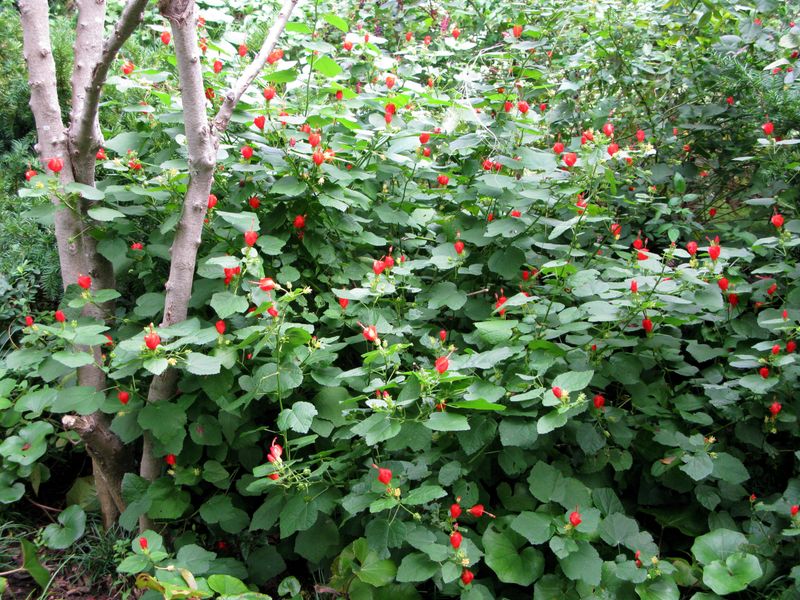
Few Texas shrubs keep their red flowers coming when the summer sun is at its worst. Turk’s cap is a Texas native that can flower in hot weather and well into fall.
Planting it now gives its roots a head start before next summer. Here is how to decide if it fits your yard and how to give it a good start.
Turk’s cap can flower through summer and into fall
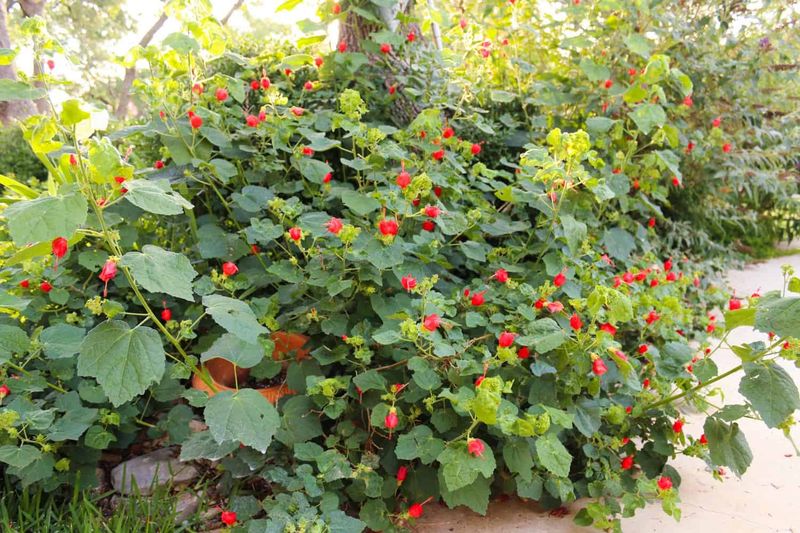
Ask a Texas gardener for a tough native that keeps color going when summer drags on, and Turk’s cap (Malvaviscus arboreus var. drummondii) comes up fast. Its red, twisted blooms look like they never fully open, and hummingbirds seem to know exactly where to find them.
The timing depends on which source you read. The Native Plant Society of Texas lists a June through November bloom season.
The University of Texas account adds that the plant often flowers during the driest, hottest part of summer, and says flowering can happen almost year-round in some places.
Both descriptions point to potential, not a promise. A plant in one yard may bloom heavily for months, while another a few miles away may pause, thin out, or flower mostly in fall.
Soil, shade, rainfall, and how the plant was cared for all shape the show. That is why it is smart to treat summer-to-fall flowering as a likely pattern, not an uninterrupted performance.
It also helps to avoid pinning flowers to a single temperature or date. Turk’s cap has a good record for blooming in hot weather, but no source says it will flower at a set number of degrees or by a set week in July.
Plan for color across the warm season and let the plant set its own pace.
What does a fall head start actually do?
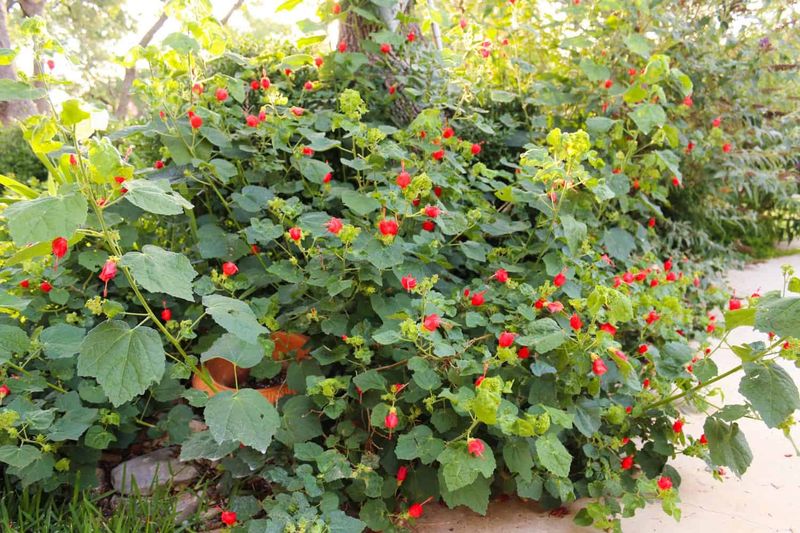
Roots are the whole point of planting in fall. Cooler air and softer sun let a suitable hardy perennial settle in before the next summer’s heat arrives.
A Collin County Master Gardener guide lists Turk’s cap among North Texas fall-planting options and explains this root-establishment advantage.
Timing matters. Get the plant in early enough that it can settle before your area’s hard-freeze period.
The same guide cautions that marginally hardy plants set out too late may have little time to establish, so a planting in a frosty North Texas November is a bigger gamble than one in early October or in a milder coastal or South Texas yard.
Buy a nursery-grown plant for this strategy. Sowing seed in fall is not the same thing, because the Native Plant Society of Texas notes that Turk’s cap seed germination is inhibited by cold and advises sowing outdoors after danger of frost has passed.
Do not expect much growth above ground over winter. The head start happens mostly below the soil, and how much root growth you get depends on weather, soil, and care.
Fall planting improves your odds, but it does not guarantee flowers by July.
Where will Turk’s cap fit in a Texas yard?
Native does not mean right for every spot. The University of Texas wildflower database records Turk’s cap in the Coastal Prairie, East Texas, North-Central Texas, and South Texas, and the Native Plant Society database lists additional ecoregions.
Check how your own soil, exposure, and winters compare before you buy.
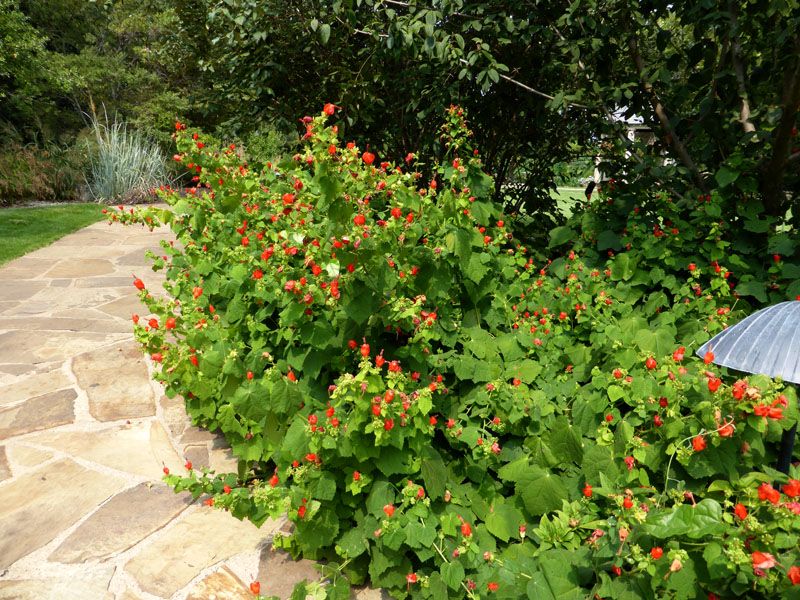
The plant is a spreading, deciduous shrub or perennial. Sources commonly list it at about 2 to 6 feet tall and 3 to 5 feet wide, so it needs elbow room.
Do not wedge it against a walkway or a small foundation bed and expect it to stay put.
Light is flexible but not unlimited. The City of Austin plant guide lists sun to part shade and low water needs, while the Native Plant Society of Texas includes shade in its range.
A spot with morning sun and some afternoon relief is a sensible place to start in hotter parts of the state.
Wildlife is a bonus. The flowers and fruit draw hummingbirds, birds, butterflies, moths, and small mammals.
Picture the plant at full width, then pick a place where that spread is welcome.
Keep the root ball and surrounding soil in view
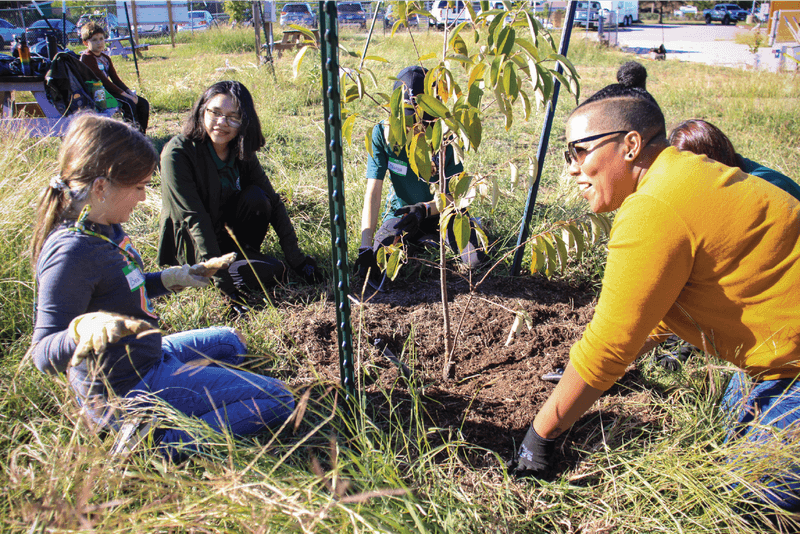
A new plant is not the same as an established one. Even though Turk’s cap is described as drought tolerant and low-water, that label applies to mature plants with deep roots.
A fresh transplant is still learning to reach beyond its container.
Start by watering thoroughly right after planting. From there, keep checking moisture through dry spells while the plant settles in.
The North Texas fall planting guide recommends looking at both the original root ball and the soil around it.
That two-spot check is useful because the two can dry at different rates. The nursery soil in the root ball may be bone dry while the surrounding ground feels damp, or the other way around.
Push a finger into each spot before you decide to water.
No source gives a fixed schedule, so let the soil guide you rather than the calendar. Rain, wind, soil type, and sun exposure all change how fast things dry out.
Once the plant is established, its low-water profile shows up, but a newcomer should not be left to fend for itself.
Heat and freezes can still change what the plant looks like
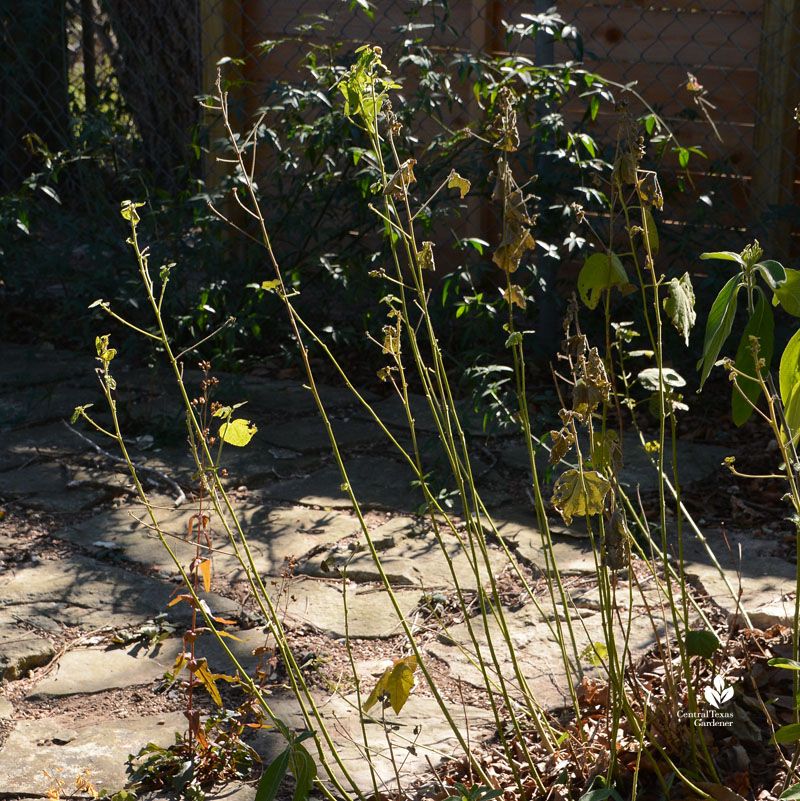
Blooming in the heat is not the same as looking fresh in the heat. The University of Texas account notes that Turk’s cap may be flowering in the hottest, driest weather while its leaves are wilted.
If you see droopy leaves on a hot afternoon, that alone is not a sign the plant is failing, though it is worth checking the soil.
Winter brings a different change. The City of Austin guide says the top may freeze, and this is a deciduous plant, not an evergreen one.
Brown, collapsed stems after a hard freeze are a common outcome in colder areas.
How it recovers varies. UF/IFAS notes that plants in Zone 8 may freeze to the ground and return in spring.
Keep in mind that Florida also uses the name Turk’s cap for a different plant, Malvaviscus penduliflorus, so that guidance is useful for cold response but is not about the Texas native alone.
Do not count on every specimen returning after every winter. Wait until spring growth is underway before cutting back or deciding a plant is gone.
Plant for the season, not a guaranteed bloom date
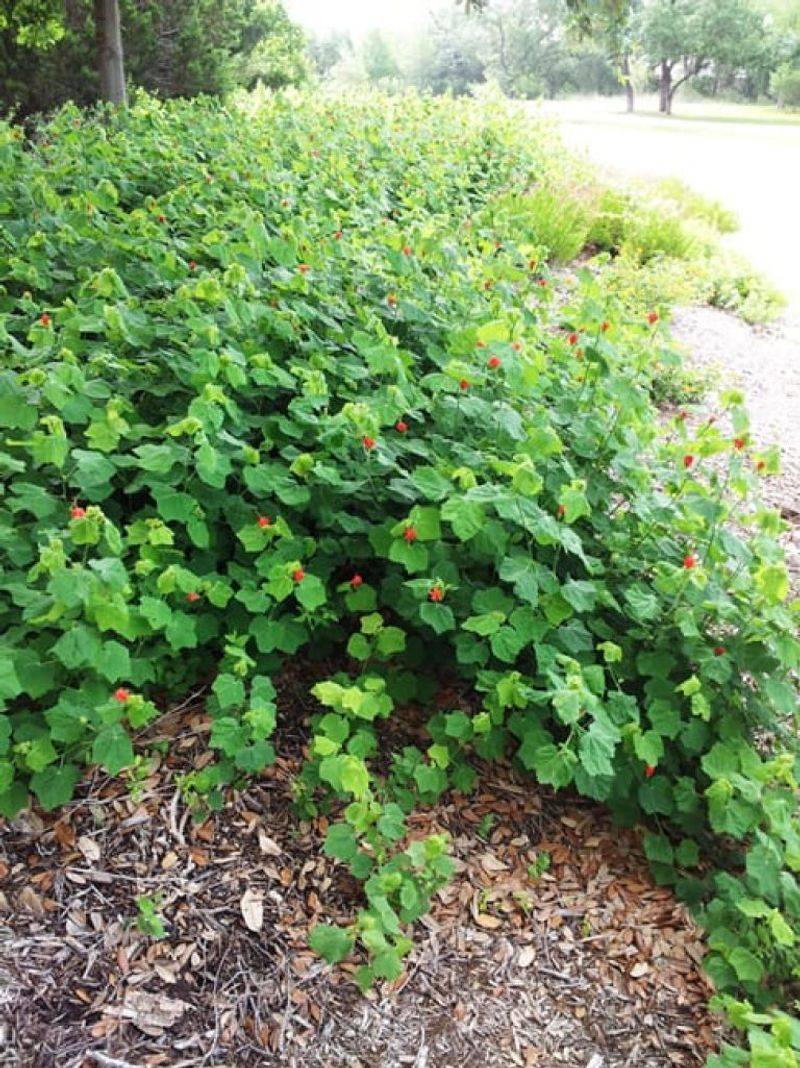
Pick a Turk’s cap that suits your part of Texas, set a nursery-grown plant in the ground with time to spare before hard freezes, and keep an eye on it as it settles. A fall planting gives roots a head start, not a bloom date.
Treat the first summer as a trial. The Native Plant Society of Texas describes a long bloom window, so patience tends to pay off.
Some years the best flowers come late, and that is fine.