
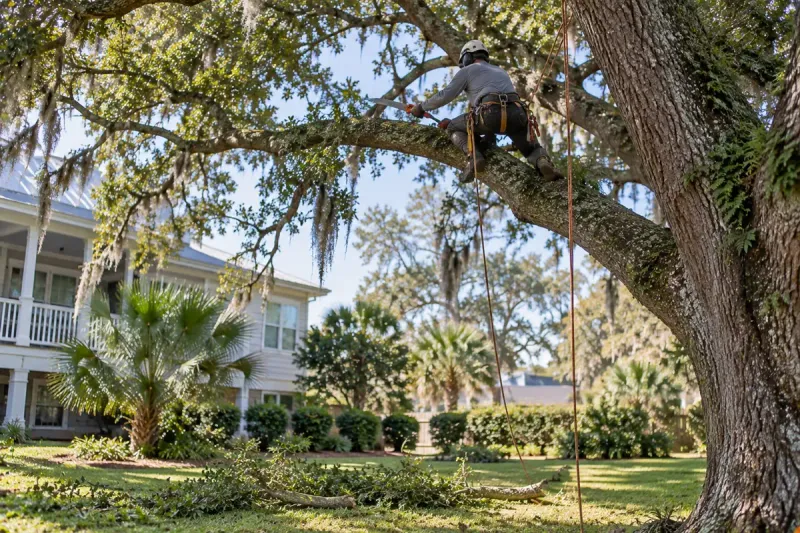
A big oak limb drifting over your fence can shade your patio, drop acorns on your lawn, and make you want to grab a saw. Florida does give you a right to trim, but it is smaller than most people think.
One cut in the wrong spot can turn a quick yard chore into a fight with the folks next door. Here is where your rights begin, where they stop, and what to check first.
Florida’s trimming right stops at the property line
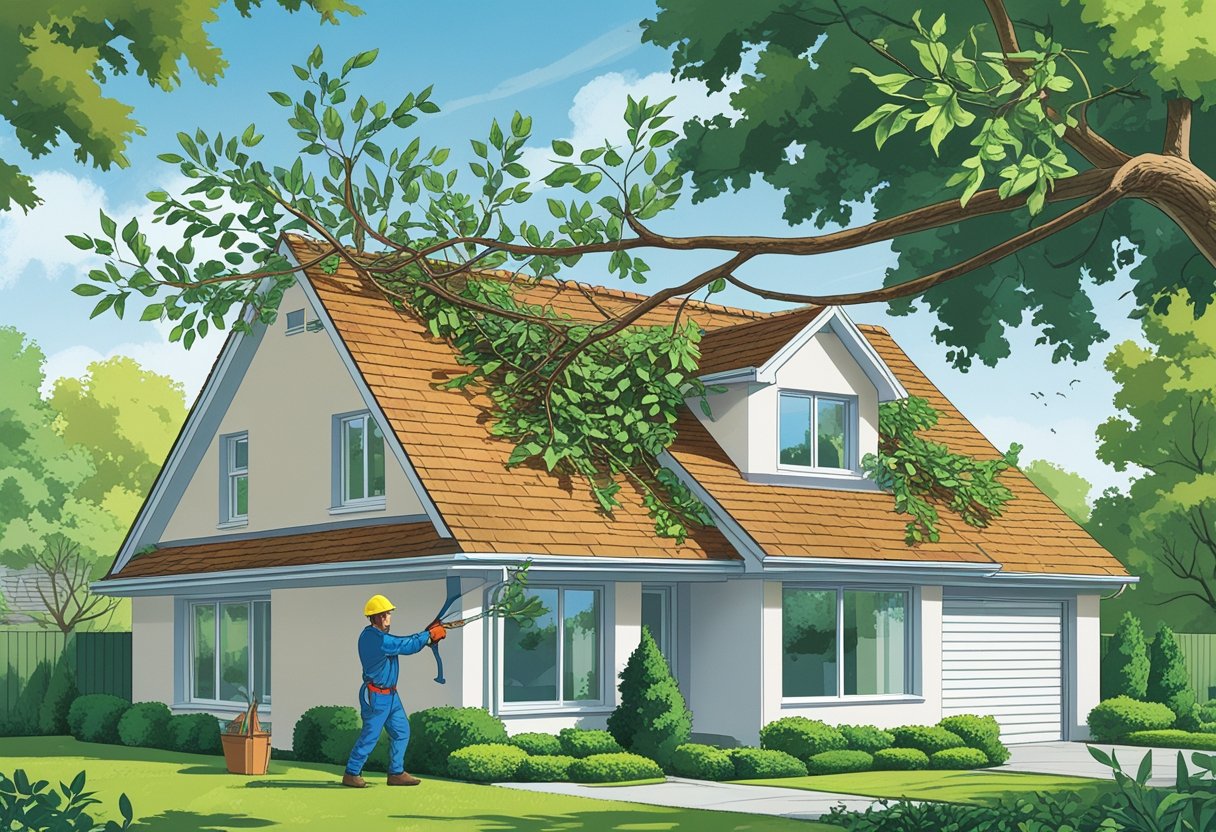
Florida courts have long treated trimming as a form of self-help. Under the rule often traced to Gallo v.
Heller, a homeowner generally may cut back the part of a neighbor’s tree that has grown over their own land. The cut goes back to the property line, and no further.
The cost is yours. In Scott v.
McCarty, a homeowner sued over branches and roots that crossed the boundary, and the court affirmed dismissal of the claim under this rule. The message was that the person bothered by the growth is the one expected to deal with it.
That is also how UF/IFAS summarizes Florida law. A tree owner is not ordinarily required to remove healthy branches just because they cross the line.
So asking a neighbor to pay for your trim, or to cut the limb for you, is a favor and not a legal duty.
Keep in mind that this is a limited rule. It covers growth that sits over your side of the boundary.
It is not a promise that any cut you make is safe from a dispute, and the next sections explain why.
How do you know where the line actually falls?
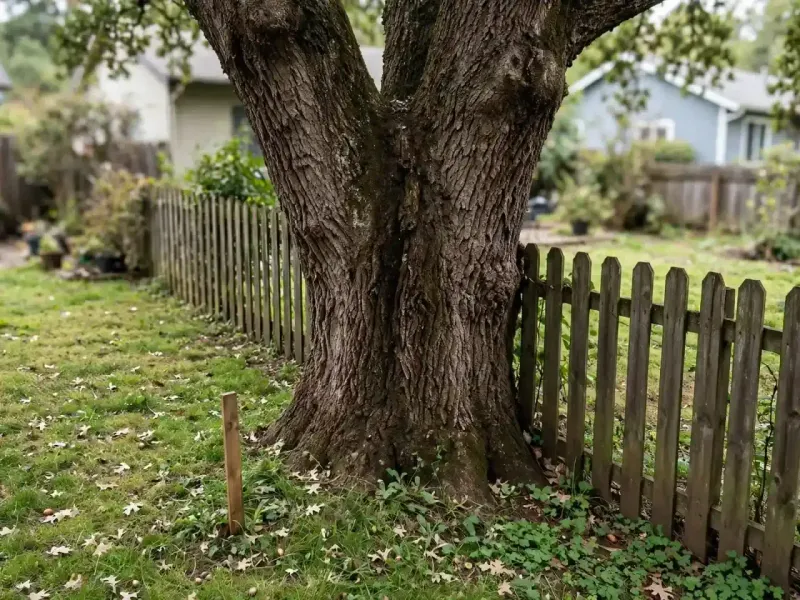
Before any saw comes out, confirm where your property ends. Fences are often built a little off the true boundary, so a fence should not automatically be treated as proof of the line.
A recorded survey or your closing documents are better places to start.
Next, look at where the trunk sits. If the trunk is fully on your neighbor’s land and only limbs reach over, you are dealing with ordinary overhanging branches.
Your trimming right applies to the part above your side.
A trunk that straddles the line is different. UF/IFAS Extension in Hillsborough County describes this as a jointly owned boundary tree.
Neither neighbor should remove it without the other’s consent.
If the line is unclear, a licensed surveyor can mark it. That small cost is usually far cheaper than guessing wrong on a large oak.
The right to trim is not a right to take over the tree
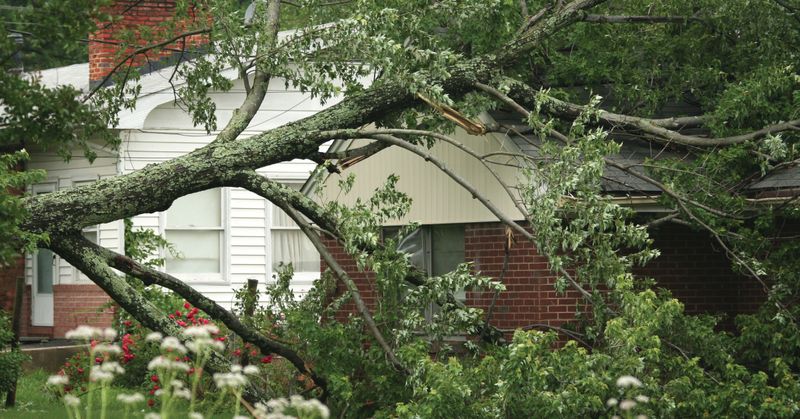
Self-help has edges. Your right covers growth on your side of the line.
It does not let you step onto the neighbor’s land, lean over the fence to shape the tree, or hire a crew to work from their yard without asking first.
It also does not let you remove the tree. The cases, including Gallo and Scott, describe trimming vegetation that has grown onto your land.
They do not describe taking over the tree itself.
The harder question is what happens if your trimming hurts the tree. Florida appellate courts have not clearly settled that.
In Balzer v. Ryan, the First District noted it had found no controlling Florida case on the issue, and it denied a certiorari petition.
That is a narrow procedural result. It does not mean a homeowner may damage or kill a neighbor’s tree without consequences.
Cutting conservatively and talking with your neighbor first is the safer path.
Make a careful cut—or stop and call a professional
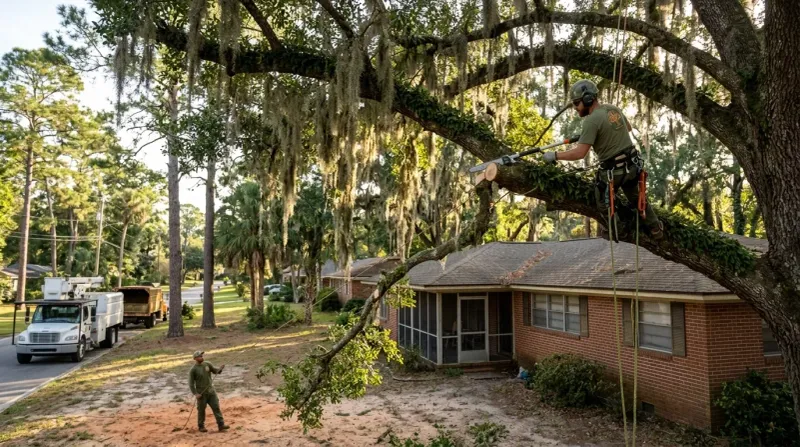
If the limb is small and you are well away from wires, cut with care. UF/IFAS pruning guidance recommends making the cut just outside the branch collar, the slightly swollen ring where the branch meets the trunk.
Cutting flush against the trunk is the mistake to avoid.
Some jobs are not for a homeowner. A large limb is heavy and can fall in unexpected ways.
A cut that could throw the tree off balance is another good reason to stop and hire a qualified pro.
Power lines are a hard stop. FPL warns that contact with a power line can cause severe injury or death.
Do not climb, and do not reach up with a pole saw near wires.
Call the utility or a qualified line-clearance professional instead. A delay of a week is a small price compared with the risk.
Warning signs call for an arborist’s assessment
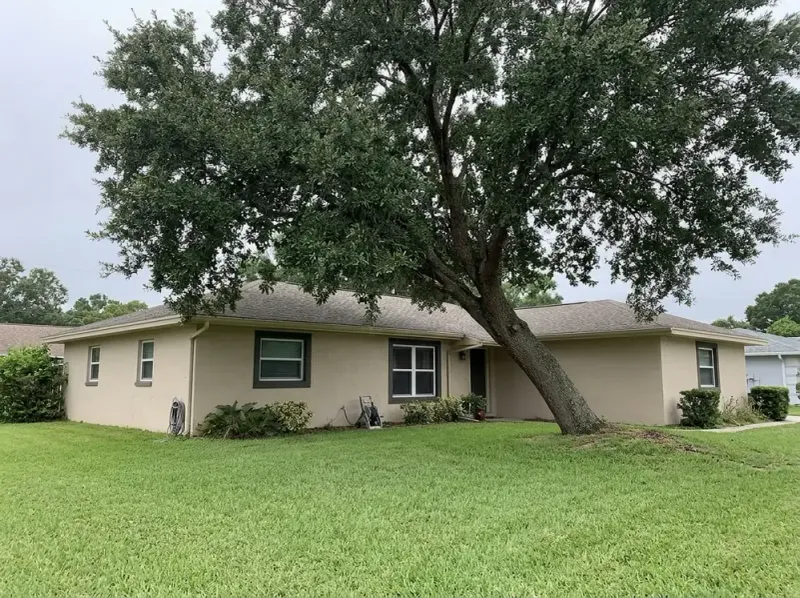
Some oak problems are not about trimming at all. Decay, a sudden lean, or cracked or weak branch unions can signal that a tree needs a closer look.
Those clues are reasons to get help, not a way to figure out the risk on your own.
UF/IFAS Gardening Solutions recommends consulting an ISA Certified Arborist when you have concerns about tree risk. An arborist can inspect the tree and explain what, if anything, should be done.
In the meantime, keep people, cars, and play areas away from the zone under a worrying limb. Do not climb or cut the limb yourself to see how bad it is.
If the tree is next door, share your concern with the owner in writing and keep a few dated photos. A calm note and a shared arborist visit can settle things before a storm forces the issue.
Check local rules before significant work
A common myth says Florida Statute 163.045 lets neighbors cut a dangerous tree next door. It does not.
The statute limits local permit requirements for qualifying trees on a owner’s own residential property, and only when specified professional documentation is provided.
State law also does not erase every local or community rule. Cities, counties, and some associations have tree requirements of their own, and Martin County’s tree FAQ is one example of what to look for.
Check yours before any significant pruning.
Here is a simple decision path. Verify the boundary first.
Limit any trimming to growth on your side, and plan to cover the cost, as UF/IFAS explains.
Stop if ownership is unclear, the tree looks troubled, the cut is large, or power lines are close. Local requirements that are unclear are also a reason to pause.
The best trim is the one your neighbor never has a reason to talk about.