
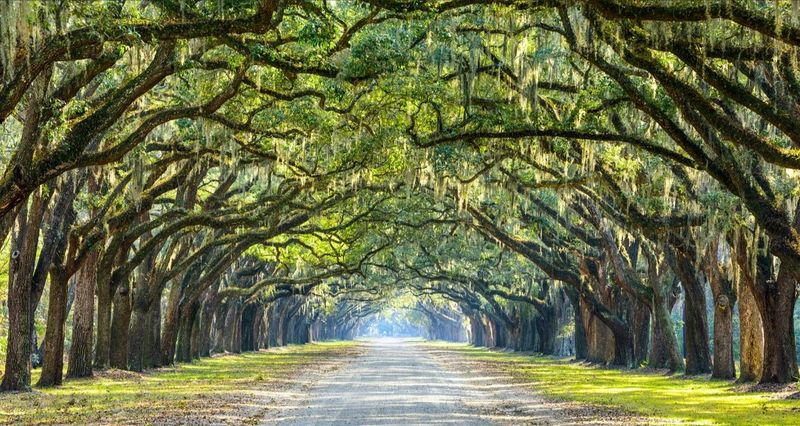
Southern live oaks are one of Florida’s most beloved shade trees, and it’s easy to see why. A mature tree can cool a yard, anchor a landscape, and outlast every other plant on the property.
But that same size and strength can create serious problems when a live oak is planted too close to a driveway, fence line, or property boundary, and the trouble often doesn’t show up until the tree has been in the ground for years.
The tree looks modest in a nursery pot—and enormous at maturity
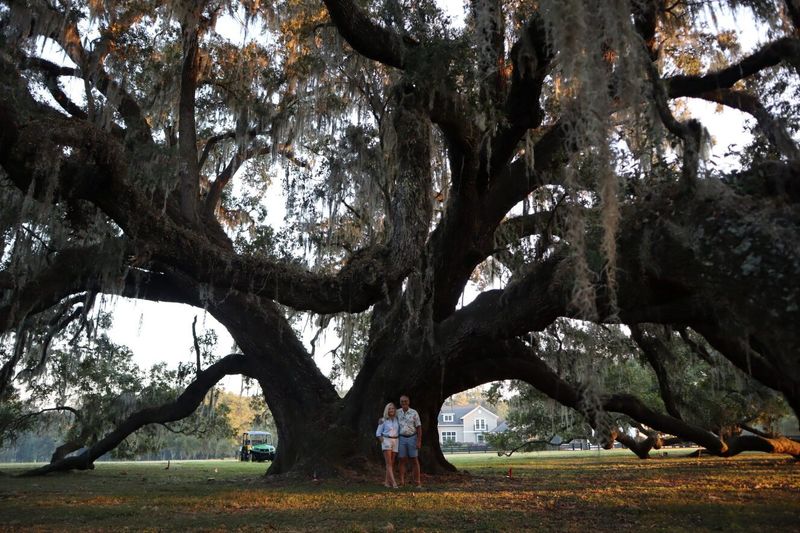
Southern live oak, Quercus virginiana, earns its reputation as Florida’s go-to shade tree. Hardy, long-lived, and capable of surviving salt wind, poor soil, and hurricane-force gusts, it’s a tree that generations of Florida families have planted in front yards and along property edges without a second thought.
The problem is not the tree itself. The problem is the mismatch between what it looks like at the nursery and what it becomes in your yard.
A live oak in a container might stand four or five feet tall with a trunk you can wrap one hand around. UF/IFAS documentation on southern live oak describes mature trees reaching roughly 60 to 80 feet in height with a canopy spread that can run from 60 to as wide as 120 feet.
That canopy spread matters more than the height. A tree 80 feet wide occupies a circle of ground larger than many residential lots, and its root system extends to match.
Homeowners consistently underestimate this scale because the nursery container is the only reference point at planting time. A five-gallon oak looks fine next to a driveway edge or a fence.
A 70-foot oak with a canopy wider than two houses side by side is a completely different calculation. UF/IFAS guidance on selecting the right tree stresses that the mature size, not the purchase size, is the relevant measurement for site planning.
Live oak is genuinely a good tree for Florida. Few species match its storm resilience, wildlife value, or longevity.
The right-tree, right-place warning is not a case against live oak. It is a case for giving it the space it actually needs, which is considerably more than most residential planting strips, driveway edges, or fence-line gaps can provide.
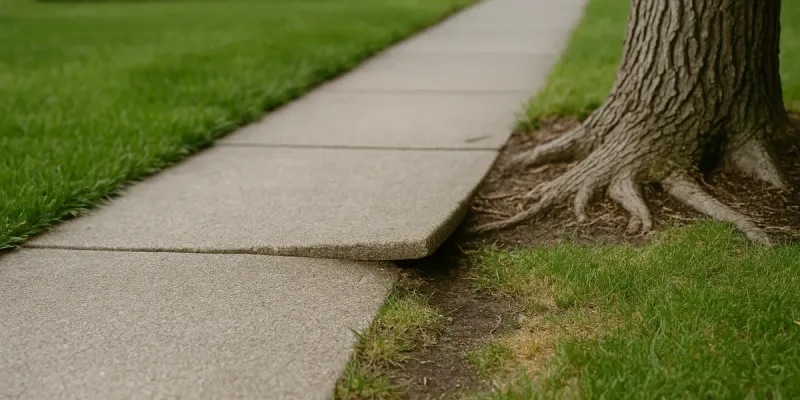
Why live-oak roots can lift a driveway
Most people picture tree roots as deep anchors driving straight down into the earth. Live-oak roots don’t work that way.
UF/IFAS planting guidance confirms that most tree roots are found within the top two feet of soil, where oxygen is available. In Florida’s sandy soils, roots are often concentrated even closer to the surface because sandy profiles drain quickly and oxygen levels stay relatively high near the top.
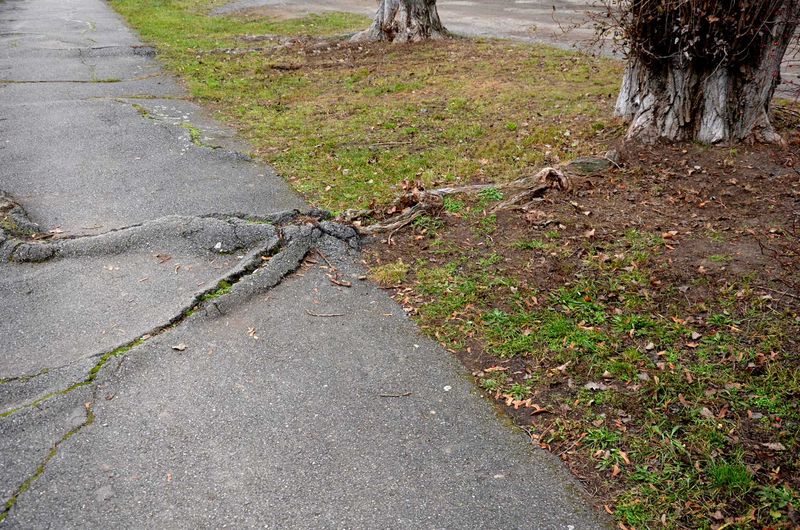
Roots follow the path of least resistance. When a live oak is planted near a driveway, roots grow outward in every direction, and some of them travel beneath the pavement.
For years, nothing looks wrong. The roots are small and the concrete sits flat.
Then the roots enlarge. As they thicken, they displace the soil beneath the slab and push upward against the pavement from below.
The result is a raised, cracked, or buckled section of driveway. UF/IFAS live oak documentation specifically warns that roots in confined soil can eventually lift sidewalks, curbs, and driveways.
The mechanism is expansion and displacement, not drilling. Roots do not bore through solid concrete the way a drill bit would.
They grow where soil and moisture allow, and when they enlarge beneath a rigid slab, the slab has nowhere to go but up. Extension guidance on trees near sidewalks describes this process as gradual root thickening that eventually overcomes the weight and rigidity of the pavement above it.
Not every crack in a driveway near a tree means the tree is responsible. UF/IFAS analysis of roots and buildings notes that pavement can also settle, heave, or crack from poor base preparation, soil movement, or drainage problems that have nothing to do with roots.
A site inspection is necessary before drawing conclusions. The risk from a large, shallow-rooted tree planted close to rigid hardscape is real, but it is not automatic, and the outcome depends on planting distance, soil conditions, drainage, available root space, and how the pavement was constructed.
A narrow planting strip is the real warning sign
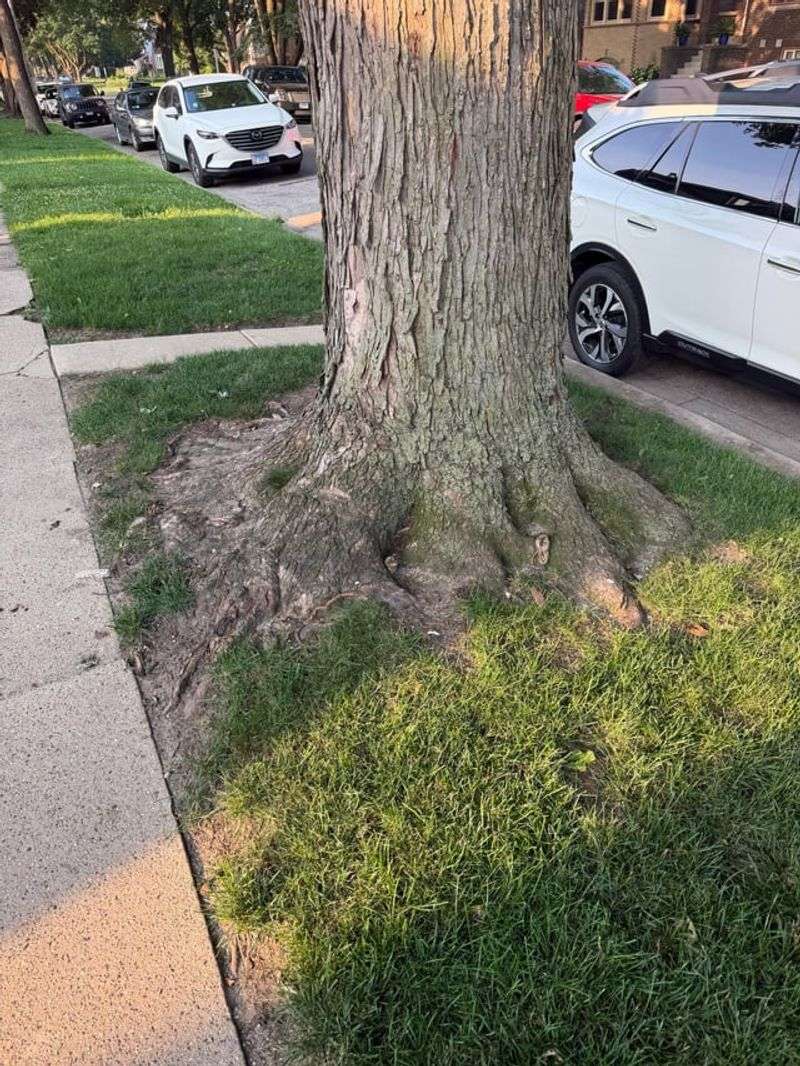
Knowing that live-oak roots grow shallow and wide is useful. Translating that knowledge into a real planting decision requires measuring the actual space available, not just eyeballing the gap between a nursery trunk and the nearest driveway edge.
The relevant number is not the width of the tree at purchase. The relevant number is the amount of continuous, unobstructed soil the mature tree will have to work with.
UF/IFAS guidance on placing trees away from hardscape recommends positioning large trees such as oaks at least 10 feet from pavement, curbs, walls, foundations, and comparable root barriers. That recommendation is a general planning minimum, not a guarantee that a tree placed exactly 10 feet away will never create a conflict.
Soil conditions, drainage, available volume, and tree size all influence how roots behave over time.
The narrow strip between a street curb and a sidewalk is one of the most common places homeowners try to plant live oaks, and it is usually the wrong choice. UF/IFAS research on Florida street tree root space requirements found that mature live oaks may need a planting area roughly 15 feet wide to accommodate trunk flare and reduce infrastructure conflict.
That figure comes from an urban street-tree study and should not be read as a universal setback from every driveway or property line, but it gives a concrete sense of how much space a full-size tree actually needs at the base.
A strip that is four or five feet wide between a sidewalk and a curb, or between a driveway and a fence, simply cannot provide enough soil volume for a tree of this scale. UF/IFAS coverage of street-tree conflict research reinforces that trunk flare and root expansion in confined spaces are the primary sources of hardscape damage.
The screening question to ask before planting is simple: does this site offer continuous, open soil in every direction for a mature tree that may spread 60 to 120 feet across? If the honest answer is no, the site is not suitable for a full-size live oak.
What happens when the roots reach the property line?
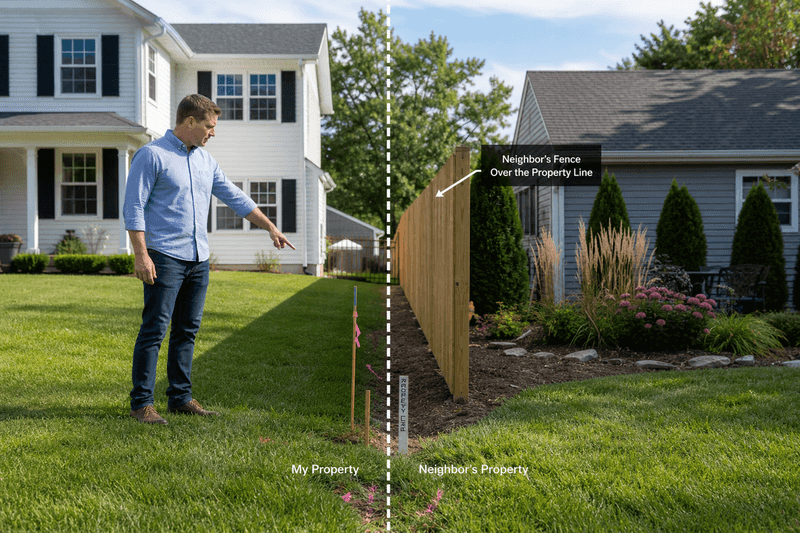
Root systems do not follow property lines. They grow where soil oxygen, moisture, drainage, and available space allow, and those conditions do not stop at a fence post.
UF/IFAS guidance on tree root behavior cautions against assuming that a root system maps neatly onto the canopy outline or follows a predictable radius. Roots are irregular, and their spread depends on compaction, water table, soil composition, and construction history on and around the property.
When roots cross into a neighbor’s yard, the legal picture becomes more complicated than most homeowners expect. Florida’s general common-law rule, as summarized by UF/IFAS guidance on trees and landowner responsibility, generally allows a neighbor to trim encroaching roots or branches back to the property line at that neighbor’s own expense.
That is not a license to trespass, destroy the tree, or cut roots in a way that kills or destabilizes it. The rule permits self-help trimming up to the boundary, not beyond it.
Ownership questions often turn on where the trunk is located, not where individual roots travel. A tree rooted entirely on one parcel is generally that owner’s tree, even if its roots extend across the line.
A tree growing directly on the boundary can create shared ownership and shared liability, which is a more complicated situation. Florida Bar analysis of nuisance-tree law notes that liability distinctions between healthy trees and dead or hazardous ones can also shift the legal analysis significantly.
Local ordinances, HOA rules, easements, protected-tree regulations, and boundary-tree status can all change what is and is not permitted. Casually cutting large roots near the trunk because they crossed a fence line is not a safe or legally straightforward act.
Root loss near the trunk can destabilize the tree and increase windthrow risk, which in a Florida storm becomes everyone’s problem. Before any trimming or trenching near a shared boundary, a qualified arborist assessment and possibly a conversation with a property attorney are the more prudent steps than assuming the fence line is a simple cutting boundary.
Plan the planting hole around roots, utilities, and future storms
Choosing the right spot for a live oak before it goes in the ground is far easier than managing the consequences after it has been growing for a decade. A good pre-planting process starts with a physical map of everything already in the yard: driveway edges, sidewalks, walls, the foundation perimeter, fence lines, drainage swales, overhead power lines, and any utility infrastructure at or below grade.
Underground utilities deserve special attention. Florida Power and Light’s tree placement guidance reinforces the standard rule: call 811 before digging.
That call will prompt a locate for participating underground utilities, but private lines, irrigation systems, or homeowner-owned electrical runs may not be included in that service and may require separate investigation. Planting a large tree over an unmarked line creates a future excavation problem that can be expensive and disruptive to resolve.
UF/IFAS live oak documentation describes the tree as a large, long-lived species that requires substantial soil space and benefits from early structural pruning to address weak branch unions, multiple trunks, and clearance issues. That pruning is not optional for storm safety.
UF/IFAS hurricane-preparation guidance for trees links small root zones, construction damage, and poor soil conditions to reduced wind resistance, which matters considerably in Florida.
A live oak planted in a confined space with inadequate soil volume may develop a compromised root system that cannot anchor the tree securely. UF/IFAS guidance on establishing strong roots emphasizes that early site conditions shape the root architecture a tree carries for its entire life.
Getting the site right once, before planting, is the most effective storm-safety and infrastructure-protection measure available to a homeowner.
Existing trees need assessment, not a fence-line haircut
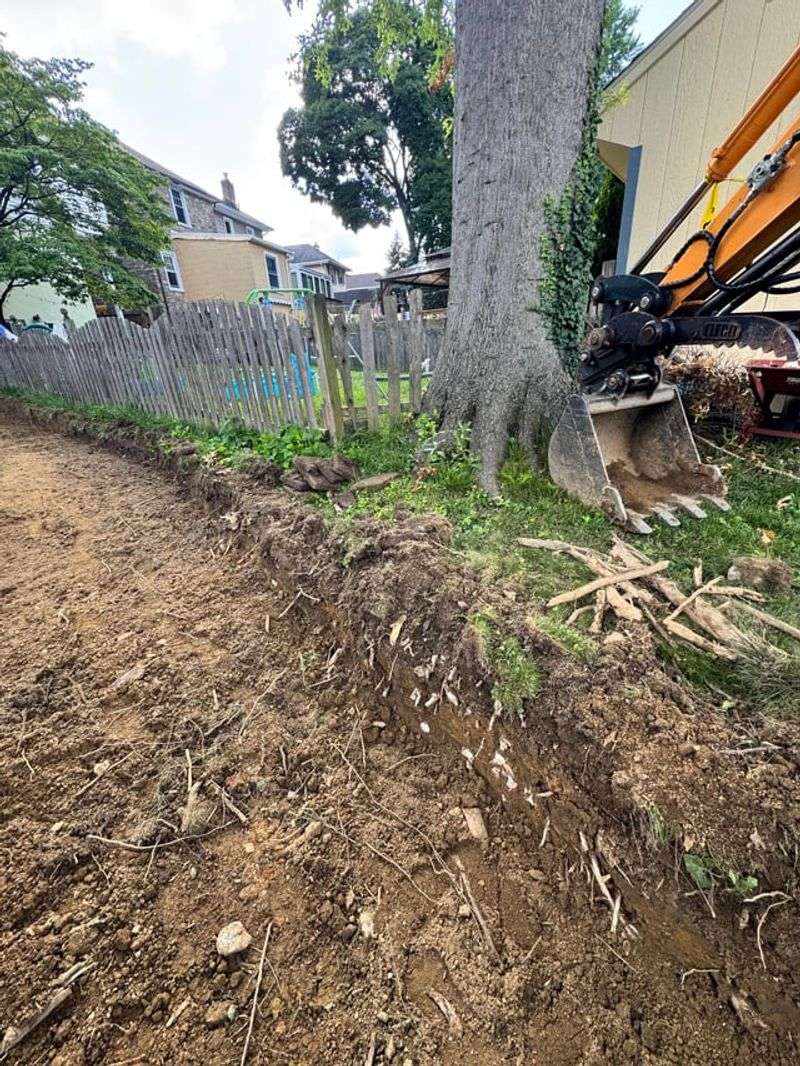
Homeowners who already have a live oak growing near a driveway, foundation, fence, or planned construction face a different set of decisions than someone choosing a planting site. The tree is already there, the roots are already established, and the temptation to solve a visible problem with a shovel or a chainsaw is understandable.
Acting on that temptation without professional guidance, however, can create a more dangerous situation than the one it was meant to fix.
Cutting large roots near the trunk can impair the tree’s structural stability and reduce its resistance to wind. UF/IFAS guidance on wind-resistant urban forests and UF/IFAS analysis of roots near buildings both warn that root damage affects a tree’s ability to anchor itself, which becomes a safety issue during Florida’s storm season.
Before replacing a driveway, grading a yard, excavating near a foundation, or doing any trenching that could sever roots, a qualified arborist should assess which roots are critical and what work the tree can tolerate.
For situations where an existing driveway must stay near a tree, surface materials matter. UF/IFAS planting guidance and urban forestry research both discuss flexible or porous surfaces, including gravel, brick set in sand, wood decking, and porous pavers, as options that can accommodate some root expansion better than rigid concrete.
Site drainage, vehicle loads, accessibility requirements, and local construction standards still determine whether any of those alternatives are practical for a given property.
Root barriers are sometimes proposed as a solution, but their effectiveness is conditional. A UF/IFAS study on root barrier effects in live oaks found that barriers altered root distribution for several years, yet some roots later returned toward the surface under high water-table conditions.
Barriers work best as pre-planned design tools installed before the tree and hardscape are both in place. Retrofitting a barrier around an established tree in a high water-table Florida yard is a more uncertain proposition, and homeowners should discuss realistic expectations with an arborist before committing to that approach.
Give the oak room now, or choose a different tree
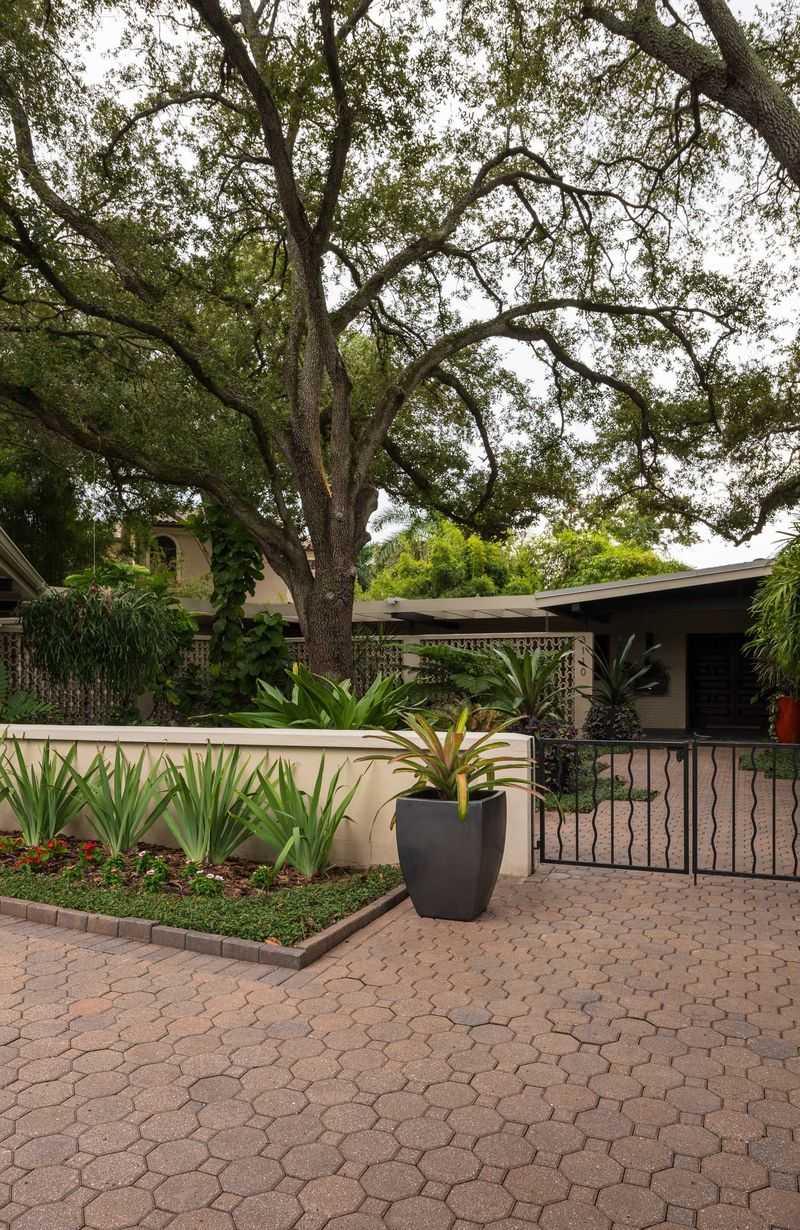
A southern live oak thrives when it has generous, continuous soil space, meaningful separation from rigid infrastructure, and room to develop a full root system without running into pavement, utilities, or boundary complications. When a site can genuinely offer those conditions, live oak is a strong choice.
UF/IFAS tree selection guidance frames the decision around matching the mature tree to the available space, not squeezing a large species into a tight gap and hoping maintenance will compensate later.
If the available space is a narrow strip, a driveway edge, or a fence line with limited soil on both sides, the honest answer is that a full-size live oak is not the right fit. UF/IFAS placement guidance points toward keeping large oaks at least 10 feet from pavement and similar root barriers as a general starting point.
A smaller native species suited to the actual dimensions of the space will provide shade and wildlife value without the infrastructure risk. Choosing a more appropriate site or a smaller tree can help avoid potential hardscape repairs and neighbor conflicts that are far harder to resolve once a 60-foot tree is fully established.
UF/IFAS live oak documentation describes this species as a long-lived tree capable of outlasting every other element of a residential landscape. That longevity is part of its value, but it also means that a planting mistake compounds for decades.
The goal is not to avoid live oak or to treat every root as a threat. The goal is to give a genuinely remarkable tree the space it deserves, because a live oak planted in the right place is one of the best decisions a Florida homeowner can make.