
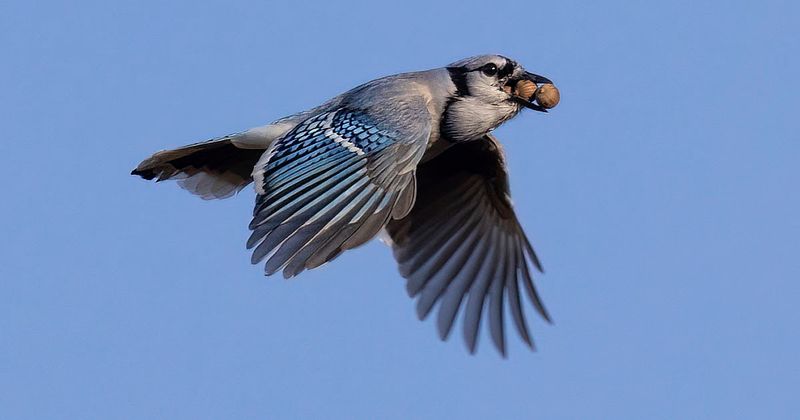
A noisy blue jay lands on your lawn, grabs an acorn, and flies off again. Minutes later it is back for another.
That quick routine is food storage, but it can also move oak seeds around your neighborhood. Here is what the habit means for Central Texas oaks, and what you can do about it.
Repeat jay visits can signal a food cache
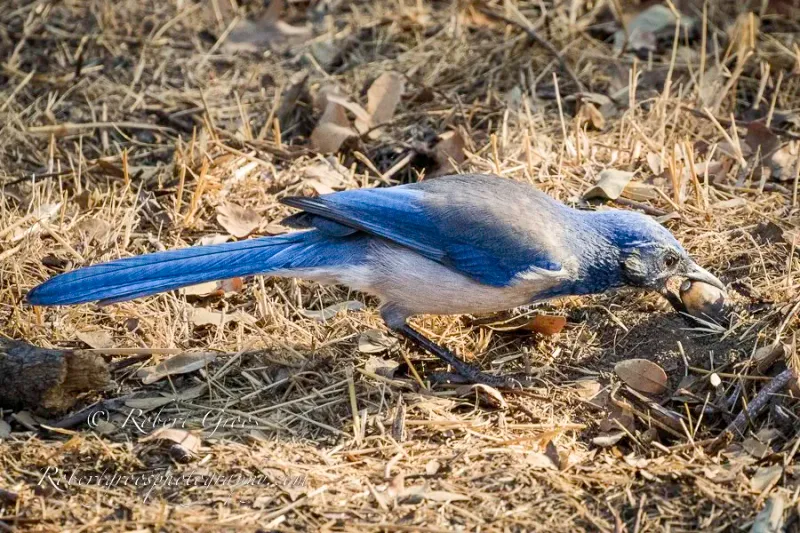
If a blue jay keeps showing up in your yard in fall, it may be working. Texas Parks and Wildlife describes blue jays as birds of yards, gardens, and parks in East and Central Texas, and reports that they bury acorns and other nuts for later use.
So a jay trotting across your grass with an acorn is likely shopping for a pantry, not scouting a spot for a new tree.
Acorns and other plant foods make up much of the blue jay diet, and the Cornell Lab of Ornithology notes that jays store food for later. It also summarizes observations of individual birds caching thousands of acorns in autumn.
That is a lot of trips, and a lot of seeds changing location.
Here is the useful distinction. The jay’s goal is a meal during leaner weeks.
Planting an oak is never part of the plan. But a seed carried off and tucked into the ground is no longer sitting under its parent tree, and that is how a snack run can turn into a side effect with real ecological meaning.
Watch for clues around your yard. Jays often make quick, repeated trips between an oak and the same general area, pausing to push something into soil or leaf litter.
Spotting that pattern tells you caching is happening nearby, even if you never find a single hidden acorn.
A hidden acorn can travel beyond its parent tree
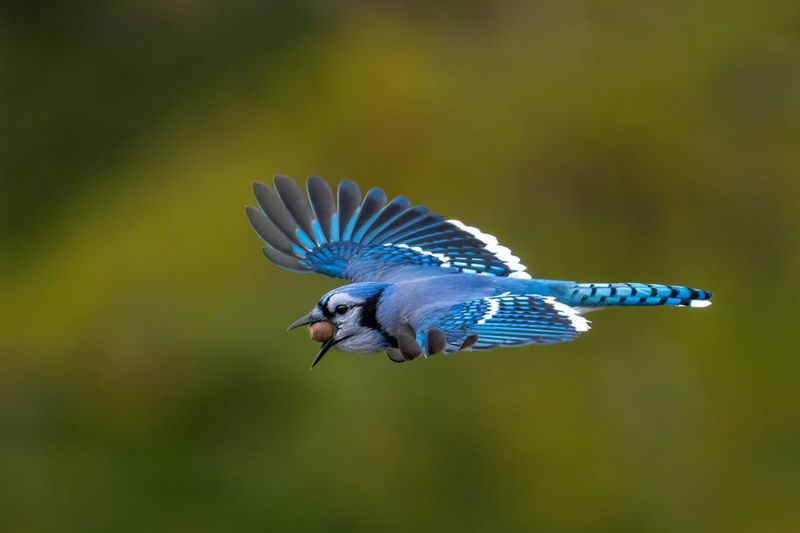
An acorn that drops under its parent tree stays put unless something moves it. A jay changes that.
It picks up acorns, flies off, and hides them in the ground, which carries seeds away from the crowded shade of the source tree.
The classic study here, a Virginia study of acorn dispersal by the blue jay, documented blue jays moving and caching pin-oak acorns. Researchers also found oak seedlings at jay caching sites.
That is good support for calling jays oak seed dispersers.
Keep the location in mind, though. The work was done in Virginia, not Texas.
The average distance from source trees to caches there was 1.1 km, and that number is a Virginia finding. It is not a typical distance for a Central Texas yard, and your jays may carry acorns shorter or longer distances.
The study also found caches in suburban settings, which makes the idea feel familiar to anyone with a neighborhood full of oaks. Still, it shows that oak recruitment is possible.
It does not promise that a jay’s visit to your yard will produce a tree you can count on.
Why doesn’t every cache become an oak?
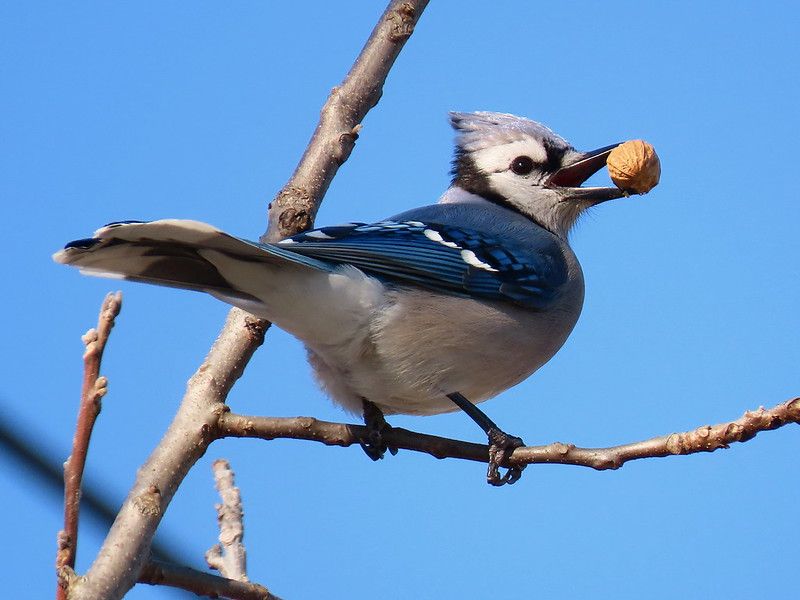
Moving a seed is only step one. A cached acorn has to be left alone, stay viable, and land in conditions that let it sprout and grow.
Jays may come back for what they stored, and an acorn that gets eaten is not going to become a tree.
It is tempting to think jays choose great planting spots. An Indiana experiment says otherwise.
In a study of acorn germination near cache sites, acorns placed near known cache locations did not germinate more often than acorns at random spots. Germination was often lower near cache sites.
The study also did not establish long-term differences in seedling survival or growth.
Which acorns get carried matters too. Research on nut selection by captive blue jays found that the nuts jays use can vary with what is available.
So do not assume every Texas oak drops acorns that jays treat the same way. Acorn traits and local supply both play a part.
Nobody has pinned down how many jay-cached acorns sprout or survive in Central Texas yards, so avoid any tidy number. The honest picture is a chance, not a guarantee.
Some unretrieved, viable acorns may get a start. Many will not.
A volunteer seedling needs a suitable place to grow
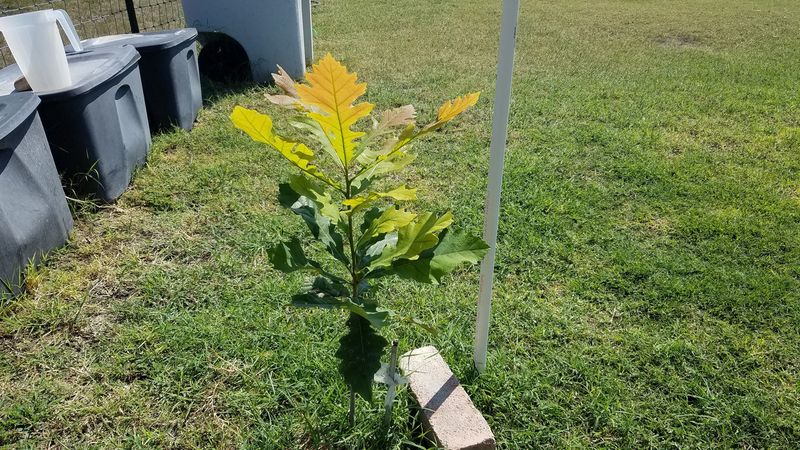
Say a small oak shows up where you never planted one. Your first job is identification.
Check the leaves and growth habit against a trusted reference. The Texas A&M Forest Service has a chinkapin oak profile that helps with that one species, but it is not a complete guide to every oak, so compare against more than one source.
Next, think about size. Oaks grow big, so look at overhead lines, the house, fences, and septic or utility areas.
A seedling in the wrong spot is easier to move or remove now than later. Soil, moisture, shade, and species all affect its prospects, and no source reviewed here puts a number on survival in Central Texas yards.
If the spot and species suit you, protect it. Mowers and string trimmers are common seedling killers, so mark the spot with stakes or a small cage.
Water during dry Texas stretches while the roots settle, and keep mulch from piling against the stem.
Caring for a volunteer is different from sowing acorns. Texas A&M Forest Service direct-seeding guidance is written for reforestation, and its depth and spacing are tied to that setting.
Treat it as a large-scale planting reference, not a home-garden recipe.
Fallen acorns also deserve a pet-safety check
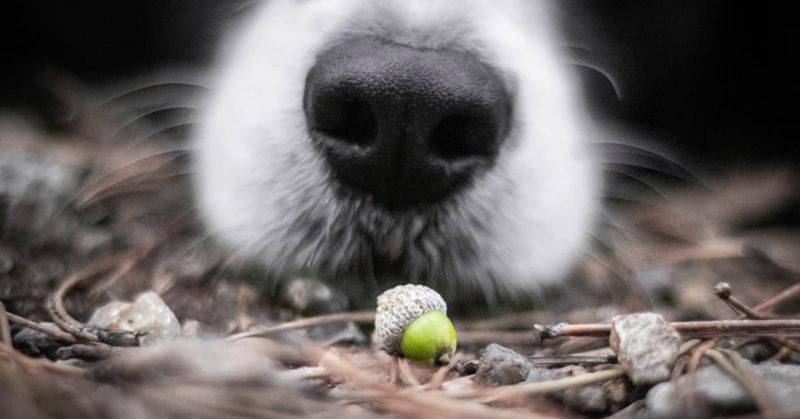
The same acorns that feed jays can be a problem for dogs. If you have oaks dropping acorns in fall, keep an eye on what your pet picks up in the yard, and rake or clear areas where a dog likes to nose around.
Texas A&M’s veterinary school advises monitoring dogs that swallow acorns and seeking veterinary care if concerning symptoms show up. The Merck Veterinary Manual notes possible gastrointestinal blockage and, in some cases, kidney or liver effects.
Nobody can give you a safe number of acorns, and a dog’s risk depends on its size, health, and how much it ate. So do not wait and hope.
If your dog has eaten acorns and you are worried, or you see vomiting, belly pain, or unusual behavior, call your veterinarian.
This is a separate issue from the jays and the seedlings. Welcoming oaks and wildlife into your yard works best when pets are part of the plan.
Watch for the tree, but don’t count on one
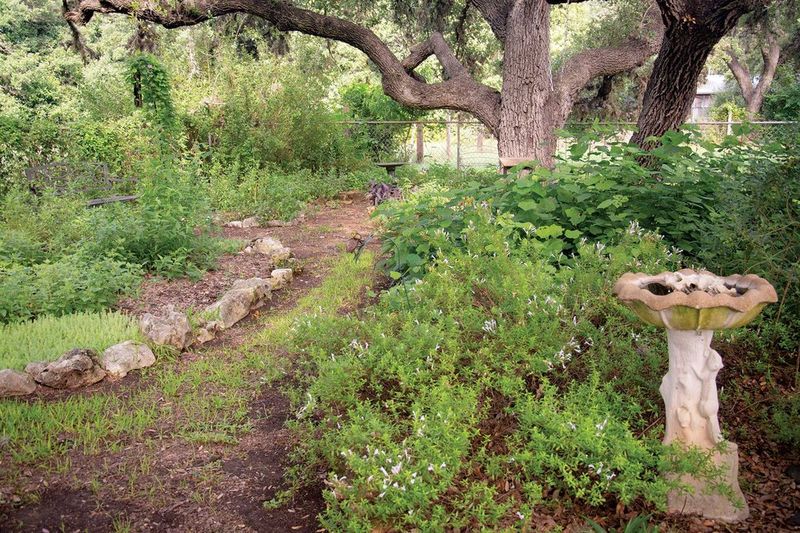
Blue jays can move acorns, and research in Virginia found seedlings at jay caching sites. A visit from a jay, though, promises nothing.
Walk your yard in spring, look for young oaks in odd places, and identify any you find, perhaps starting with the chinkapin oak entry if it fits. If one suits your space, shield it.
The jay never planned a thing, yet your yard might still get a surprise.