
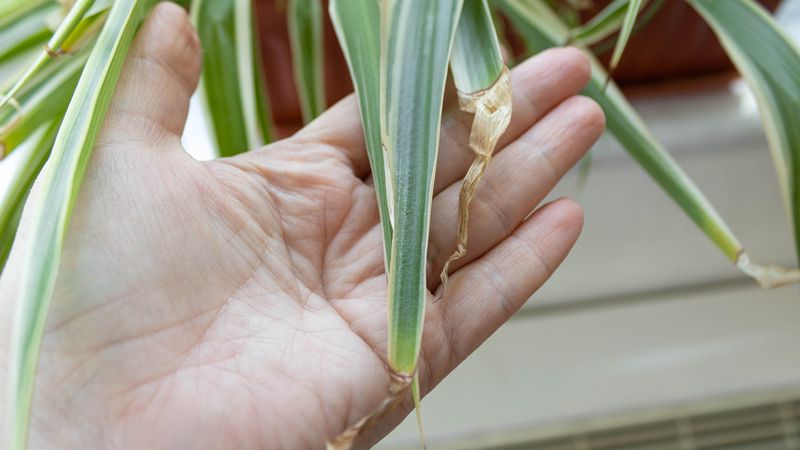
Crispy brown tips on a spider plant are easy to spot, and they tend to show up more as indoor heating and cooling kick in. It is tempting to blame one thing and change your care right away.
But several different conditions can cause the same symptom. A few quick checks can help you sort out what is going on before you change anything.
Brown tips are a symptom, not a diagnosis
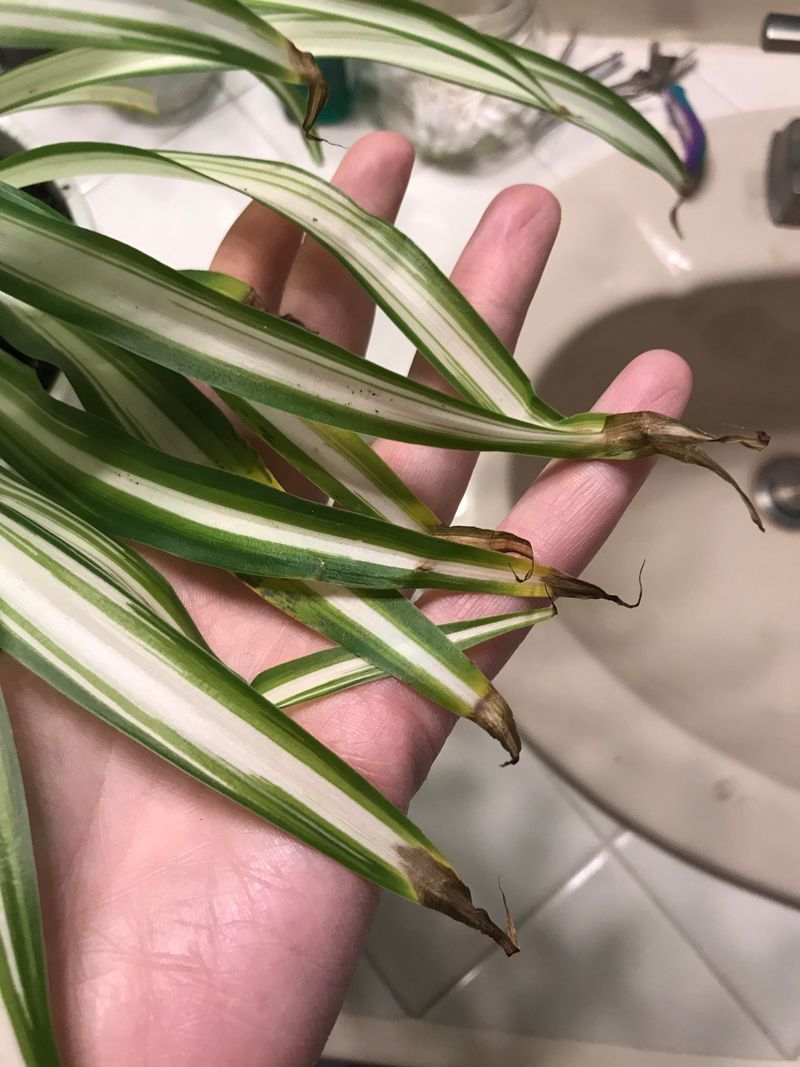
You know the look: long, arching spider plant leaves with dry, papery brown tips that crackle when touched. It is one of the most common houseplant complaints, and it can be frustrating when the rest of the plant looks healthy.
The tips themselves do not tell you why they browned. University of California IPM guidance on houseplant problems describes several possible causes for leaf tip burn, and Clemson Extension lists soil that dries out too much, overwatering, dry air, fertilizer problems, water chemicals, and insect feeding among the possibilities.
That means brown tips alone cannot show that watering is to blame, and they do not mean the plant needs more water. Iowa State Extension also points to a range of causes for brown leaf edges on houseplants.
So instead of guessing, work through the clues in order. Start with the soil and the pot, then look at the air around the plant, and finally consider the water and fertilizer you use.
No single step is a guaranteed cure, but each check narrows the list.
Heating-season air can add stress
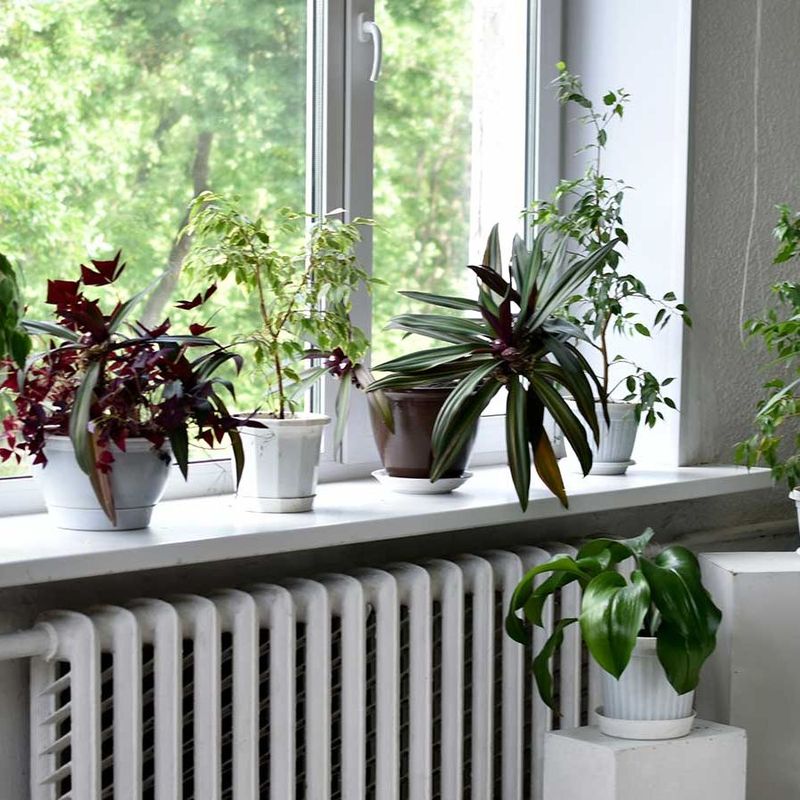
When the heat or air conditioning starts running, the air inside a home can get noticeably drier. Penn State Extension explains that indoor humidity often drops when heating systems run, which can stress houseplants.
Moving air matters too. Colorado State University Extension notes that temperature and humidity both affect houseplants, and air blowing straight from a vent can make conditions harder on leaves.
Neither of these points to a watering mistake. They are separate possibilities worth ruling in or out.
Take a look at where your spider plant lives. Is it right above a floor vent, beside a space heater, or in a room that feels very dry?
Homes across the South differ a lot, so some will have mild winter air and others will not. Just notice what your own plant is facing.
Check the soil and the pot before changing your routine
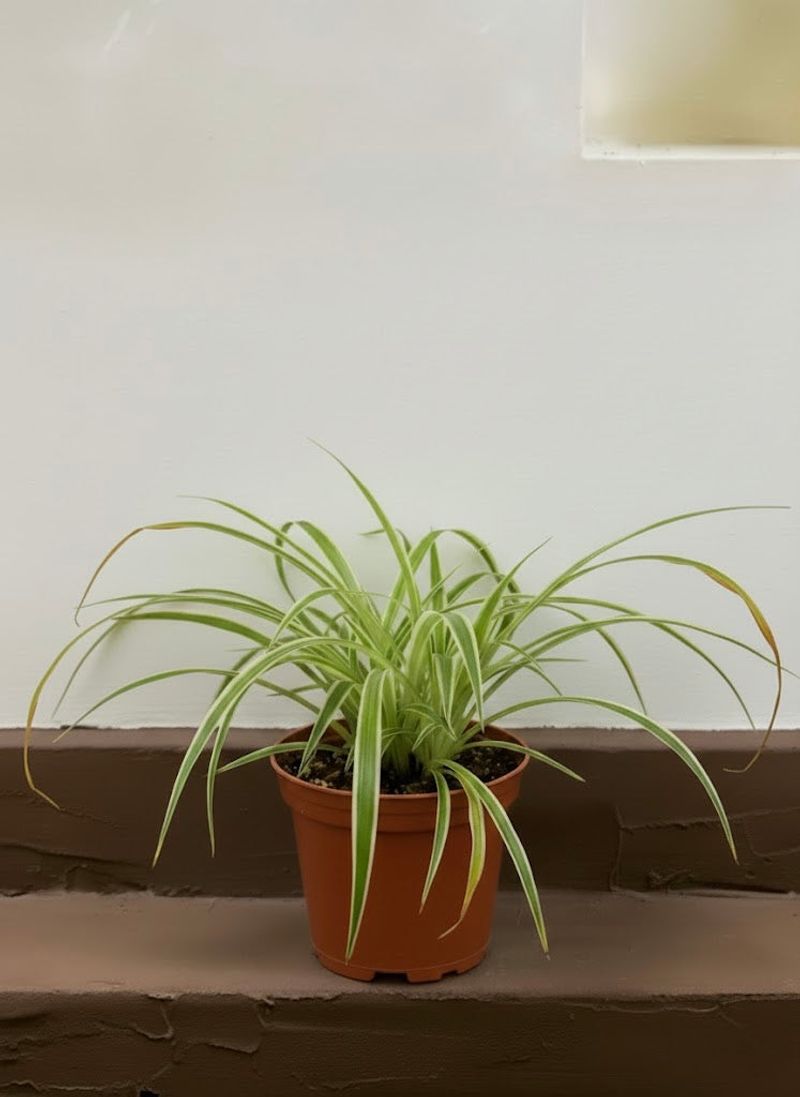
Before you touch your watering habits, find out what the soil is doing right now. Push a finger into the potting mix and feel for moisture, then lift the pot to judge its weight.
Check that the drainage holes are open and that the pot is not sitting in a full saucer.
Spider plants do best when the soil dries slightly between thorough waterings, as described by Wisconsin Horticulture Extension. Soil that stays dry for too long can contribute to tip burn, while soggy soil and poor drainage can lead to root rot, according to Clemson Extension.
Those are two different problems with different fixes. A pot that cannot drain calls for a different response than soil that repeatedly bakes dry.
Neither brown tips nor a calendar can tell you which one you have. UF/IFAS guidance centers on the condition of the soil, so let the soil tell you.
Water thoroughly, then let the top inch dry
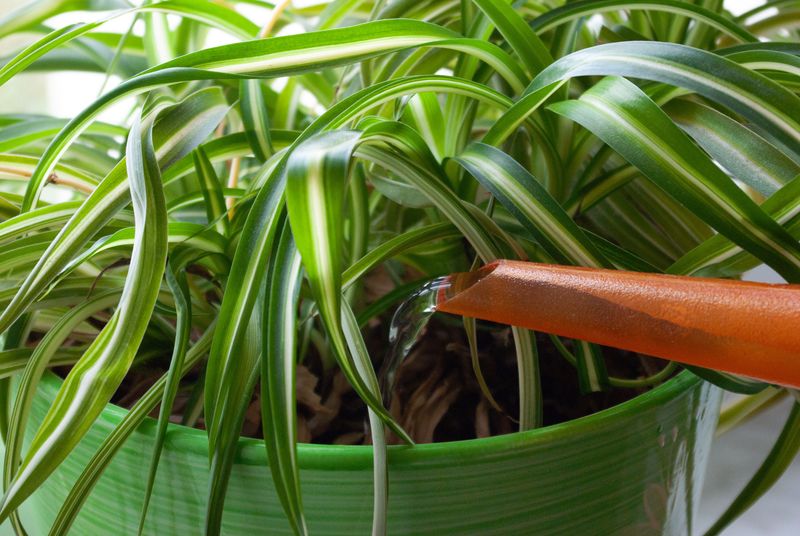
Here is a simple method. Check the top inch of soil, and if it has dried briefly, water until the excess flows out of the drainage holes.
Let the pot drain fully, then empty any runoff instead of leaving the plant standing in it.
UF/IFAS suggests allowing the upper inch of soil to dry between waterings. Illinois Extension also stresses watering thoroughly and checking the soil rather than following a rigid habit.
This is why checking beats simply watering more often. Extra water on soil that is still damp can make drainage problems worse, and it will not fix brown tips caused by dry air or salts.
There is no weekly schedule that fits every home. Drying time shifts with the pot size, soil mix, light, and indoor conditions, a point also made by Wisconsin Horticulture Extension.
Test first, then water.
Review water quality and fertilizer if browning continues
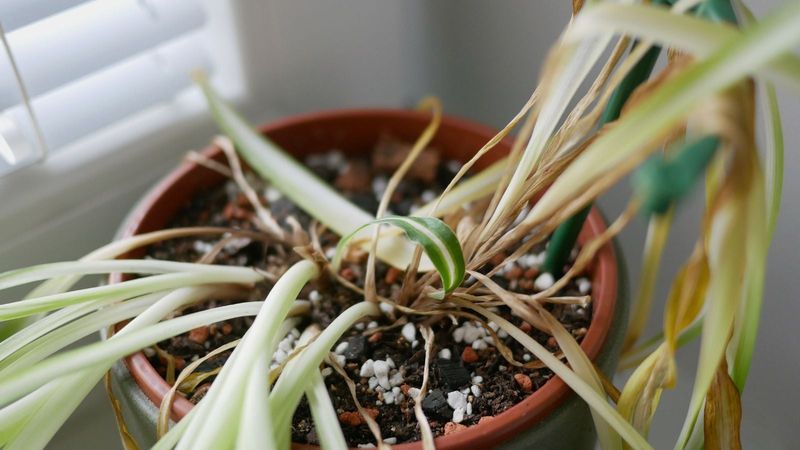
If the soil and drainage look fine and the tips keep browning, look at what goes into the pot. Spider plants can be sensitive to fluoride.
UF/IFAS recommends rainwater or distilled water when fluoridated water is a concern.
That advice is conditional. University of Missouri Extension says ordinary tap or well water is usually fine for houseplants in general, so tap water is not automatically the culprit.
Some sources suggest letting water sit, but that is not a promised fix for fluoride.
Fertilizer is the other piece. Too much can add salts and contribute to brown tips, as noted by Wisconsin Horticulture Extension.
A white-to-gray crust on the soil or pot rim can be a clue to salt buildup, though it is not proof.
Do not add more feed as a response. Follow label directions, and consider the periodic drenching that Clemson Extension describes for leaching some salts from houseplant soil.
Move the plant out of hot, dry airflow
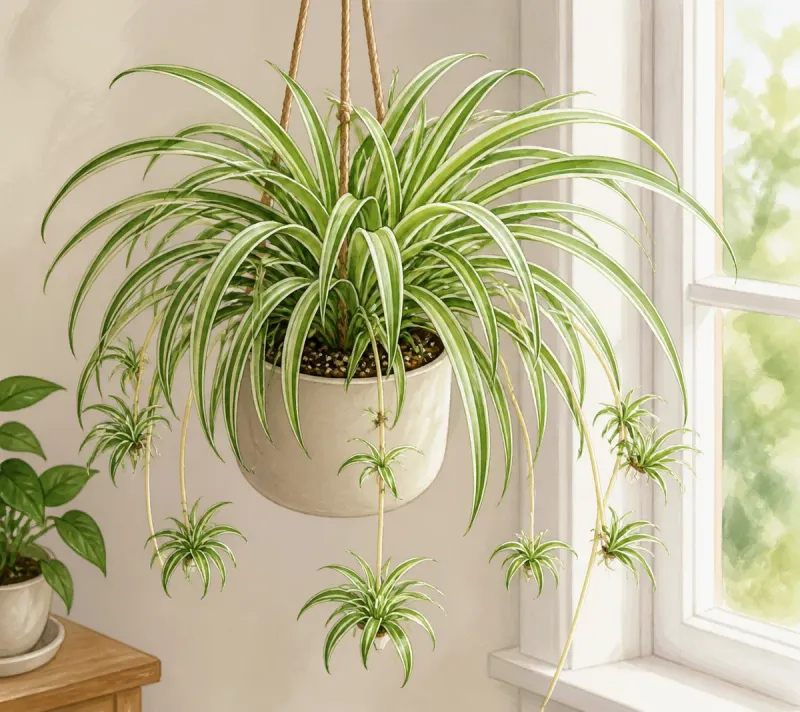
If your check found a plant parked in the path of a heater or air conditioner, a simple move may help. Shift it away from direct blasts of air, as Colorado State University Extension advises for houseplants.
Harsh direct sun is worth avoiding too. Illinois Extension care guidance points readers toward suitable light for houseplants, and bright, indirect light is a safer spot than a scorching windowsill.
To raise humidity, a room humidifier is a practical option, according to Penn State Extension. A pebble tray can add a little moisture to the air as well, but keep the pot itself above the water line so the roots are not sitting in standing water.
Treat these as ways to improve conditions, not as guaranteed cures. Existing brown tips will stay brown, so judge your changes by how the new growth looks over the coming weeks.
Trim damaged tips and watch for new browning
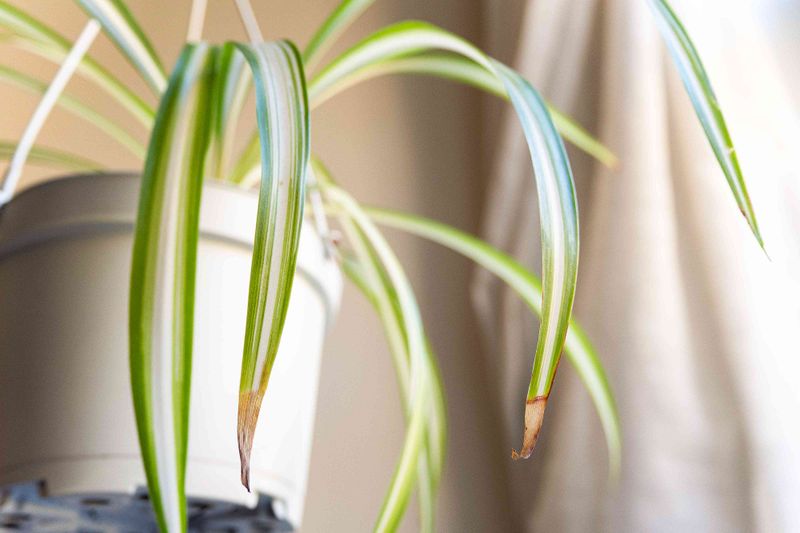
Once you have worked through the checks, you can tidy the plant. Snip off the brown portions with clean scissors if the look bothers you.
Brown tissue will not turn green again, as Iowa State Extension explains, so trimming is cosmetic.
New browning can keep appearing if the underlying stress is still there. That is your signal to watch the next few leaves rather than the old ones.
If browning continues after you address a likely cause, go back and reassess the soil, drainage, air, water, and feeding. Avoid swinging your watering up and down without checking the soil first.
Brown tips are a prompt to investigate, not a reason to pour on more water.